
Subclass of Phenolics
Curcuminoids
Yellow diarylheptanoid pigments of turmeric, potent anti-inflammatories and antioxidants.
Overview
About Curcuminoids
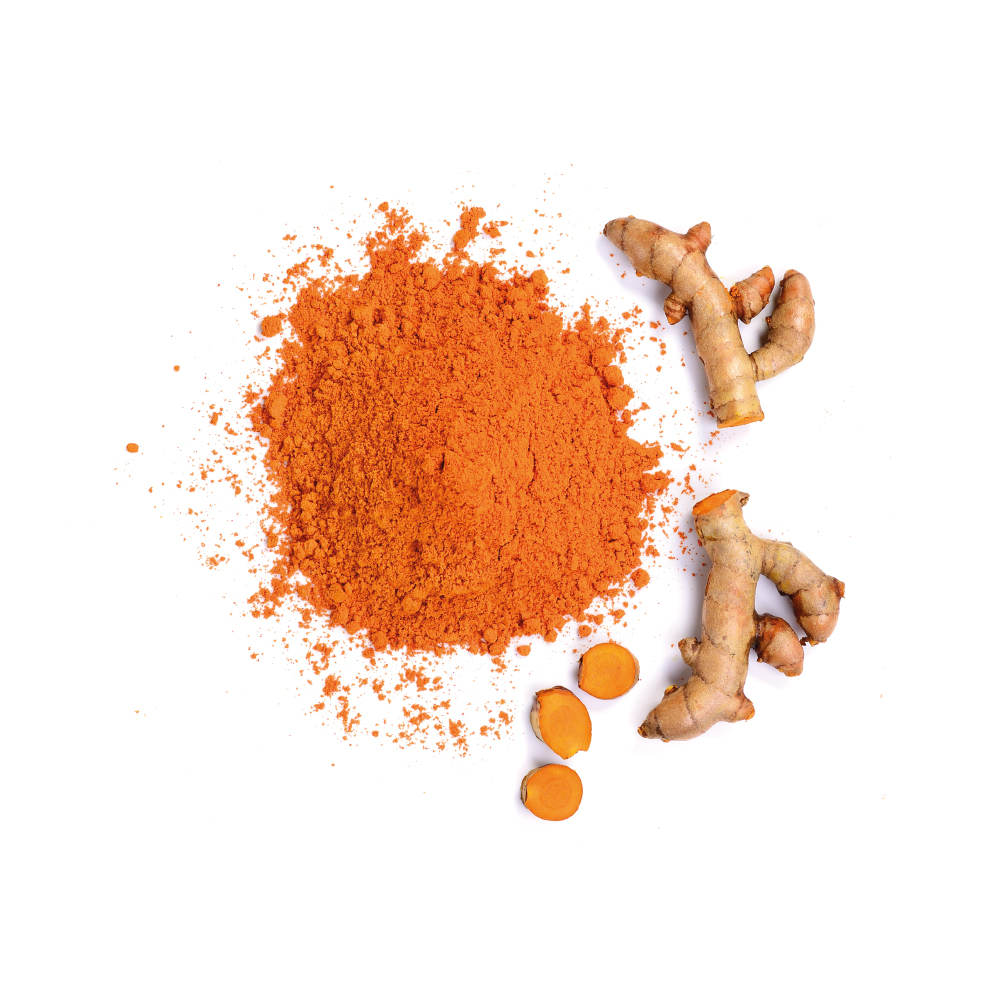
Curcuminoids are linear diarylheptanoids — two substituted aromatic rings joined by a seven-carbon chain carrying a reactive diketone in the middle. They are the yellow pigments of turmeric and, with ginger's gingerols, the defining chemistry of the ginger family.
Three account for essentially all of it: curcumin, demethoxycurcumin and bisdemethoxycurcumin, in roughly a 3:2:1 ratio in ordinary turmeric rhizome. Together they make up only about 2–5% of the dried spice.
Where Curcuminoids Occur
A narrow, almost entirely Zingiberaceae distribution:
Turmeric (Curcuma longa)
curcumin and its two demethoxy relatives
Javanese turmeric and zedoary
related curcuminoid and sesquiterpene profiles
Mango ginger and a handful of other Curcuma species
Tetrahydrocurcumin, often sold as a supplement, is not really a plant compound at all — it is curcumin's principal human metabolite, colourless and more stable than its parent.
The Bioavailability Problem — And the Honest Caveat
Curcumin is the archetype of a compound that does everything in a test tube and very little in plasma. It is poorly soluble, poorly absorbed, rapidly glucuronidated and sulfated in the gut wall and liver, and quickly excreted — free curcumin is barely detectable after an ordinary oral dose. This is why the market is full of phospholipid complexes, piperine co-administration and nanoparticle formulations, all attacking the same problem from different angles.
There is a second caveat the enthusiasm usually omits. Curcumin is a recognized pan-assay interference compound: it is a metal chelator, a redox cycler, membrane-disruptive and fluorescent, and it produces apparent hits across an implausible range of unrelated screening assays. A large share of the thousands of published curcumin "mechanisms" are artefacts of those properties. This does not mean turmeric does nothing — it means the mechanism literature should be read sceptically and the human trial data weighted far more heavily.
Pharmacological Importance
What survives the caveats is a reasonable body of randomized-trial evidence in osteoarthritis, where curcumin preparations show pain and function improvements broadly comparable to NSAIDs in several trials, and reasonable signals in ulcerative colitis maintenance and in metabolic and inflammatory markers.
Where the effect comes from is genuinely unresolved — the conjugated metabolites, tetrahydrocurcumin, direct local action in the gut, and effects on the microbiome are all plausible contributors alongside whatever little parent compound circulates.
Toxicity & Safety
Culinary turmeric is safe and has been eaten in quantity for millennia. High-dose supplements have a good but not spotless record: gastrointestinal upset is common, and there is an established signal of idiosyncratic hepatotoxicity, concentrated in high-bioavailability formulations and reported more often in people carrying the HLA-B*35:01 allele.
Curcumin also has antiplatelet activity and inhibits several CYP enzymes and P-glycoprotein, so it interacts. And piperine — added to most products specifically to raise absorption — raises the absorption of co-administered drugs too, which is an under-appreciated interaction route in its own right. Turmeric is additionally a moderate oxalate source, relevant in recurrent calcium-oxalate stone formers.
Constituents
All Curcuminoids
5 totalNo curcuminoids match.
Source Plants
Herbs Containing Curcuminoids
1 herbPlants in the materia medica documented to carry curcuminoids, with the compounds each one is listed for. The bar counts how many DISTINCT curcuminoids are on record for a plant, relative to the best-documented — it measures breadth of record, not potency, so a plant with one well-studied compound can outrank a richer source that has simply been analysed less. Where a measured concentration is on record it is quoted inline; most entries have none yet.
Keep Exploring
Other Compound Classes
Keep Reading
 GuidesThe Best Kava: A Buyer's GuideHow to buy good kava: noble vs two-day cultivars, which part of the root, chemotype codes, origin, form, and the batch tests a seller should show you.
Read more
 GuidesThe Amazon's Endangered Medicinal PlantsThe Amazon gives us some of our most important medicines — but which healing plants are actually endangered?
Read more
 NutritionThe Best Yerba Maté Brands [Reviewed]A drinker's guide to buying yerba maté — what actually changes the taste, and ten brands worth your money.
Read more
 GuidesHow to Prepare Yerba Maté — The Five Best MethodsHow to brew yerba maté properly — the traditional gourd method, plus tereré, french press and cold brew.
Read more