
Compound Monograph
Caulophyllumine B
Caulophyllumine B is a minor piperidine-type alkaloid of blue cohosh (Caulophyllum thalictroides), isolated in 2008 and documented in vitro as a cytochrome P450 inhibitor — a molecule of interest mainly for blue cohosh's herb-drug-interaction potential rather than any therapeutic use of its own.

Sources · 1
Where Does It Come From?
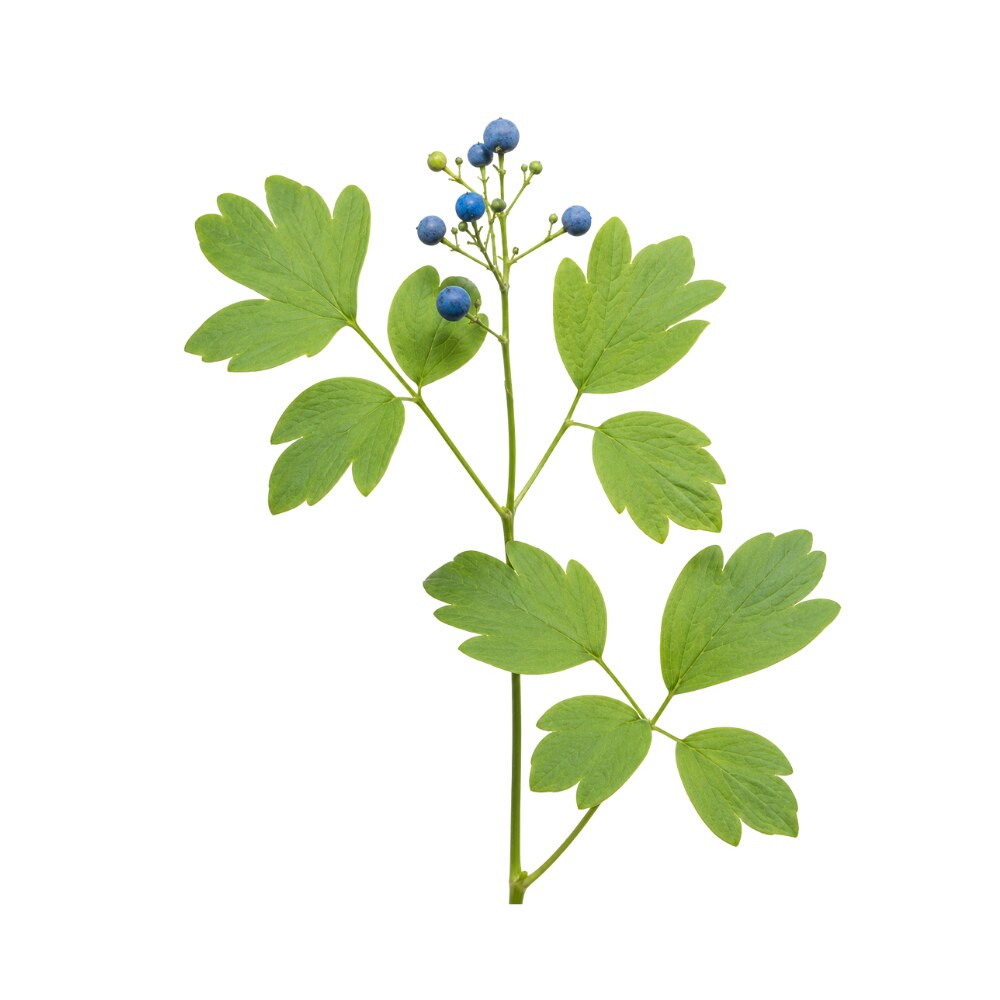
Caulophyllumine B is a naturally occurring piperidine alkaloid, found in Blue cohosh. It is flagged as moderately toxic.
Concentration
Content by Source
Concentrations not reported. No percent-dry-weight or mg/g figures have been published for this compound in its source plants.
Caulophyllumine B at a Glance
Caulophyllumine B is a piperidine-type alkaloid of blue cohosh (Caulophyllum thalictroides), first reported in 2008. It is a minor constituent and companion of caulophyllumine A — and, unlike the plant’s better-known nicotinic quinolizidines such as N-methylcytisine, it is not itself a documented toxin and has no traditional or therapeutic use. It exists here as a named molecule mainly because it is one of the alkaloids that helps explain blue cohosh’s herb-drug-interaction potential.
The single pharmacological property recorded for it is cytochrome P450 (CYP450) inhibition in vitro 2Reference 2In vitroAlkaloids and saponins as cytochrome P450 inhibitors from blue cohosh (Caulophyllum thalictroides) in an in vitro assayView study →. That is a mechanism relevant to drug metabolism — a CYP-inhibiting constituent can, in principle, slow the clearance of co-administered medicines — but for caulophyllumine B specifically it has been shown only in an isolated-compound assay, never in people.
This is a deliberately thin page: the honest state of the evidence is a structure, an occurrence, and one in-vitro enzyme finding. Everything else about “blue cohosh safety” — the oxytocic and reproductive-toxicity concerns — belongs to the plant and to its quinolizidine and saponin fractions, not to this molecule.
A Piperidine Alkaloid of Blue Cohosh With CYP450-Inhibition / Herb-Drug-Interaction Relevance
Blue cohosh’s alkaloid profile is dominated by quinolizidine alkaloids (N-methylcytisine, anagyrine, baptifoline, lupanine and relatives) plus the aporphine magnoflorine. Caulophyllumine A and B are different: they are piperidine-type alkaloids, a smaller structural class within the same root 1Reference 1Alkaloids and saponins from blue cohoshView study →. Keeping that distinction is the point — the teratogenic, nicotinic-receptor activity that gives blue cohosh its fearsome reputation is a quinolizidine story (led by N-methylcytisine and anagyrine), whereas caulophyllumine B has no such receptor activity on record.
What it does have on record is CYP450 inhibition. Madgula and colleagues screened blue cohosh alkaloids and saponins in an in-vitro cytochrome-P450 system and reported caulophyllumine B among the constituents that inhibited CYP activity 2Reference 2In vitroAlkaloids and saponins as cytochrome P450 inhibitors from blue cohosh (Caulophyllum thalictroides) in an in vitro assayView study →. Because several of the plant’s alkaloids and saponins share this property, blue cohosh as a whole carries a plausible herb-drug-interaction liability: taken alongside medicines cleared by the affected CYP enzymes, it could in theory raise their blood levels. Caulophyllumine B is one small contributor to that composite picture — it is not the driver, and its individual contribution has not been isolated or quantified in a clinical setting.
What It's Used For
The evidence base for caulophyllumine B is one isolation paper and one in-vitro enzyme screen. There are no cell-model efficacy studies, no animal work, and no human data on the isolated molecule.
Support is an experimental score — weighted by study type (human > animal > in vitro) and volume. A beta, not a validated metric. For this molecule every score is low by construction: the data are a single isolation and a single in-vitro enzyme screen.
The only functional property reported for caulophyllumine B. In a screen of blue cohosh alkaloids and saponins against cytochrome P450 enzymes in an in-vitro system, it was identified among the constituents that inhibited CYP activity 2Reference 2In vitroAlkaloids and saponins as cytochrome P450 inhibitors from blue cohosh (Caulophyllum thalictroides) in an in vitro assayView study →.
This is an isolated-compound finding, not a whole-plant or human result, and the study characterised relative inhibition rather than a clinically anchored interaction. Its significance is additive: caulophyllumine B is one of several CYP-inhibiting blue cohosh constituents, so it contributes to — but does not by itself define — the plant’s herb-drug-interaction risk.
Gap: no potency ranking (IC50), no identification of which specific CYP isoforms are affected by caulophyllumine B individually, and no in-vivo or human confirmation that this trace alkaloid reaches concentrations capable of altering drug metabolism.
Not a therapeutic application, but the reason the molecule has a name. Caulophyllumine A and B were isolated and structurally characterised from blue cohosh root and rhizome in 2008 as piperidine-type alkaloids, part of a broader phytochemical inventory of the species that also resolved several saponins 1Reference 1Alkaloids and saponins from blue cohoshView study →.
This work sits within the wider analytical effort to fingerprint blue cohosh’s alkaloid and saponin content for quality-control and safety purposes 6,
Gap: the isolation established structure and occurrence, not abundance — caulophyllumine B has never been individually quantified across plant parts or commercial products, so its typical exposure level is unknown.
Mechanisms
| Target / pathway | Effect | Relevant to |
|---|---|---|
| Cytochrome P450 enzymes (in-vitro) | inhibition of CYP activity (isoform-level detail not resolved for this alkaloid) | herb-drug-interaction potential |
| Nicotinic acetylcholine receptors | not reported — the nicotinic/teratogenic activity of blue cohosh belongs to its quinolizidine alkaloids, not the caulophyllumines | (contrast only) |
The load-bearing point is what is absent: caulophyllumine B is a CYP-interaction constituent, not a receptor-active toxin. Blue cohosh’s teratogenic and oxytocic signature is carried by N-methylcytisine, anagyrine and the triterpene saponins — a different set of molecules on a different axis.
Pharmacokinetics
No pharmacokinetic data exist for caulophyllumine B. Absorption, oral bioavailability, distribution, metabolism and half-life are all uncharacterised for the isolated molecule. Because it is a trace alkaloid in a plant whose total individual-alkaloid content runs at roughly 0.02–1.1% by weight and varies more than a hundredfold between commercial products 6,
Clinical Trials
There are no clinical trials of caulophyllumine B — none completed, planned or terminated. Human evidence relating to blue cohosh concerns the whole herb (largely toxicity case reports and its historical use as a labour-inducing agent), not this isolated constituent.
| Completed | Planned | Terminated | Preclinical |
|---|---|---|---|
| — | — | — | One in-vitro CYP450 screen (isolate) 2Reference 2In vitroAlkaloids and saponins as cytochrome P450 inhibitors from blue cohosh (Caulophyllum thalictroides) in an in vitro assayView study → |
Last checked: July 2026.
Isolate vs. Plant Studies
For caulophyllumine B the isolate-vs-plant split is stark and worth stating plainly. The isolated molecule appears in exactly two contexts: its structure-elucidation report 1Reference 1Alkaloids and saponins from blue cohoshView study → and the in-vitro CYP inhibition screen 2Reference 2In vitroAlkaloids and saponins as cytochrome P450 inhibitors from blue cohosh (Caulophyllum thalictroides) in an in vitro assayView study →. The plant, blue cohosh, carries a much larger literature — teratogenicity screening of its alkaloids 3Reference 3In vitroDetecting potential teratogenic alkaloids from blue cohosh rhizomes using an in vitro rat embryo cultureView study →, quantification of its primary constituents and their toxic potential 6Reference 6Primary constituents of blue cohosh: quantification in dietary supplements and potential for toxicityView study →, analytical methods for its markers 7Reference 7Determination of saponins and alkaloids in Caulophyllum thalictroides (blue cohosh) by high-performance liquid chromatographyView study →, and human toxicity from its misuse as an abortifacient 4Reference 4Nicotinic toxicity from tincture of blue cohosh (Caulophyllum thalictroides) used as an abortifacientView study → — but essentially none of that plant-level evidence is about caulophyllumine B. It is driven by the quinolizidine alkaloids (N-methylcytisine, anagyrine) and the triterpene saponins. So the transferability caveat runs the opposite way from usual: one must not read blue cohosh’s documented dangers onto this molecule, nor its (absent) benefits either.
Prevalence in Nature
Caulophyllumine B is reported from blue cohosh (Caulophyllum thalictroides), a woodland perennial of the Berberidaceae native to eastern North America, where it occurs in the root and rhizome alongside its companion caulophyllumine A 1Reference 1Alkaloids and saponins from blue cohoshView study →. It has not, on the available literature, been reported outside the genus Caulophyllum, and its concentration has not been quantified — it is a minor component of an alkaloid fraction dominated by the quinolizidines.
A species-discipline note matters here: C. thalictroides is the North American blue cohosh, distinct from the Chinese C. robustum (studied separately for its own saponins) and entirely unrelated to black cohosh (Actaea/Cimicifuga racemosa), a different family with different chemistry. Findings should not be transferred between them.
Discovery & Synthesis
Caulophyllumine B was first isolated in 2008 by Zulfiqar Ali and Ikhlas A. Khan at the University of Mississippi’s National Center for Natural Products Research, reported together with caulophyllumine A and a set of blue cohosh saponins in Phytochemistry 1Reference 1Alkaloids and saponins from blue cohoshView study →. The isolation was part of the sustained analytical characterisation of Caulophyllum thalictroides undertaken by that group and others to inventory the plant’s alkaloids and saponins for quality-control and safety assessment 2,
Patents: not yet researched.
Toxicity & Safety
Caulophyllumine B carries a moderate flag, but the reason is specific and worth reading carefully. The molecule itself has no measured direct toxicity — no genotoxicity, reproductive-toxicity or repeat-dose data exist for the isolate. The flag reflects two things: its one documented action is enzyme inhibition (CYP450), which is a herb-drug-interaction liability rather than a benefit, and it occurs only in blue cohosh, an oxytocic herb with well-documented reproductive toxicity whose products should not be treated as benign. The flag is a caution about context and interaction, not a claim that this trace alkaloid is intrinsically poisonous.
- Herb-drug-interaction potential. Caulophyllumine B inhibited CYP450 activity in vitro, one of several blue cohosh constituents that could, in principle, slow the clearance of co-administered medicines 2Reference 2In vitroAlkaloids and saponins as cytochrome P450 inhibitors from blue cohosh (Caulophyllum thalictroides) in an in vitro assayView study →.
- The exposure context is a toxic herb. Blue cohosh is an oxytocic, historically abortifacient plant; its alkaloids include teratogens (N-methylcytisine, anagyrine) and its misuse has caused serious human nicotinic toxicity 3,
4, . These harms belong to other constituents, but they are the setting in which any exposure to caulophyllumine B occurs.5Reference 3In vitroDetecting potential teratogenic alkaloids from blue cohosh rhizomes using an in vitro rat embryo cultureView study →Reference 4Nicotinic toxicity from tincture of blue cohosh (Caulophyllum thalictroides) used as an abortifacientView study →Reference 5Actions of piperidine alkaloid teratogens at fetal nicotinic acetylcholine receptorsView study → - Absence of evidence, not evidence of safety. No dedicated toxicity, genotoxicity or reproductive-toxicity data exist for the isolated molecule; the CYP interaction has not been characterised at isoform level or confirmed in vivo.
- Not used as an isolated supplement. There is no product, dose or clinical use of caulophyllumine B on its own — human exposure is only as a trace constituent of blue-cohosh root preparations.
Dosage
There is no dose for caulophyllumine B. It is not sold or used as an isolated compound, and no study has administered it to animals or people. Exposure is entirely indirect — as one trace alkaloid within blue-cohosh root products, whose total alkaloid load varies more than a hundredfold between commercial preparations, so even the amount delivered is unpredictable 6,
References
- Ali Z, Khan IA (2008). Alkaloids and saponins from blue cohosh. Phytochemistry. https://pubmed.ncbi.nlm.nih.gov/18048069/
- Madgula VL, Ali Z, Smillie T, Khan IA (2009). Alkaloids and saponins as cytochrome P450 inhibitors from blue cohosh (Caulophyllum thalictroides) in an in vitro assay. Planta Medica. https://pubmed.ncbi.nlm.nih.gov/19137500/
- Kennelly EJ, Flynn TJ, Mazzola EP, Roach JA (1999). Detecting potential teratogenic alkaloids from blue cohosh rhizomes using an in vitro rat embryo culture. Journal of Natural Products. https://pubmed.ncbi.nlm.nih.gov/10543898/
- Rao RB, Hoffman RS (2002). Nicotinic toxicity from tincture of blue cohosh (Caulophyllum thalictroides) used as an abortifacient. Veterinary and Human Toxicology. https://pubmed.ncbi.nlm.nih.gov/12136970/
- Green BT, Lee ST, Panter KE, Welch KD (2010). Actions of piperidine alkaloid teratogens at fetal nicotinic acetylcholine receptors. Neurotoxicology and Teratology. https://pubmed.ncbi.nlm.nih.gov/20116429/
- Rader JI, Pawar RS (2013). Primary constituents of blue cohosh: quantification in dietary supplements and potential for toxicity. Analytical and Bioanalytical Chemistry. https://pubmed.ncbi.nlm.nih.gov/23420136/
- Ganzera M, Dharmaratne HR, Nanayakkara NP, Khan IA (2003). Determination of saponins and alkaloids in Caulophyllum thalictroides (blue cohosh) by high-performance liquid chromatography. Phytochemical Analysis. https://pubmed.ncbi.nlm.nih.gov/12597249/



