
Compound Monograph
Cinnamoylcocaine
Cinnamoylcocaine (methylecgonine cinnamate) is a minor tropane alkaloid of coca — cocaine with a cinnamoyl group in place of the benzoyl. Its documented importance is chemotaxonomic and forensic: the cis-/trans-cinnamoylcocaine pair and their ratio to cocaine help fingerprint Erythroxylum species and profile seized coca and cocaine. Its own pharmacology is barely characterised.

Sources · 4
Where Does It Come From?
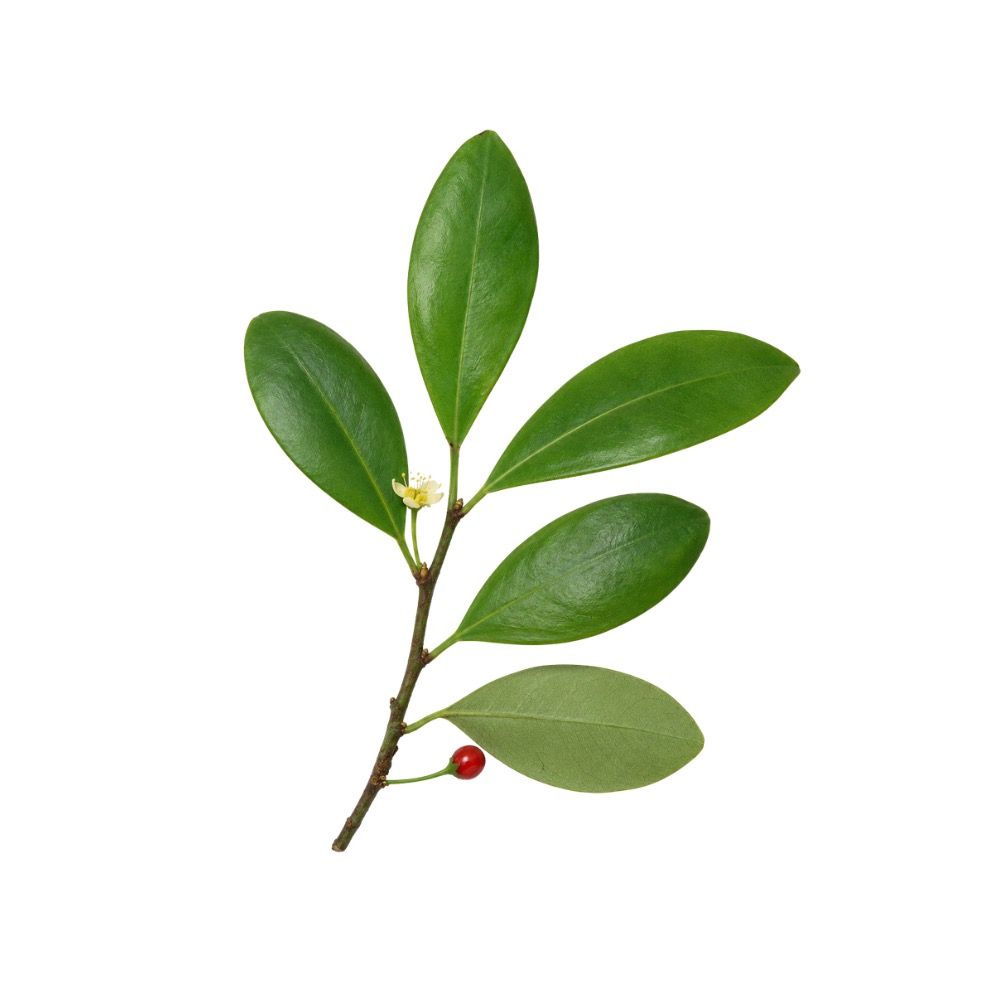
Cinnamoylcocaine is a naturally occurring tropane alkaloid (ecgonine cinnamate ester; cocaine analogue), found in Coca, Colombian coca, Trujillo coca and 1 other source. It is flagged as moderately toxic.
Concentration
Content by Source
Concentrations not reported. No percent-dry-weight or mg/g figures have been published for this compound in its source plants.
Cinnamoylcocaine at a Glance
Cinnamoylcocaine is a minor tropane alkaloid of coca (Erythroxylum). Structurally it is cocaine with a cinnamoyl group in place of the benzoyl group — an ecgonine ester, hence its systematic name methylecgonine cinnamate. It occurs naturally as two geometric isomers, cis- and trans-cinnamoylcocaine, and both are genuine endogenous constituents of the leaf rather than extraction artefacts 1Reference 1Analysis of alkaloids in leaves of cultivated Erythroxylum and characterization of alkaline substances used during coca chewingView study →.
Its documented significance is chemotaxonomic and forensic, not therapeutic. The two isomers, and their ratio to cocaine, feature in the analytical “fingerprint” used to characterise Erythroxylum species and cultigens and to profile seized coca leaf and illicit cocaine 1,
This page treats the molecule in that scholarly frame. Cinnamoylcocaine belongs to the controlled cocaine family; nothing here is a use, preparation or dosing guide.
The Chemotaxonomic & Origin-Fingerprinting Marker
The reason cinnamoylcocaine has its own literature is analytical chemistry, not pharmacology. Because it travels with cocaine through the coca plant and through illicit processing, its two isomers and their proportions carry information about which plant and what handling produced a given sample.
A confirmed endogenous pair. Careful GC–MS work established that cocaine and cis- and trans-cinnamoylcocaine are the true endogenous alkaloids of E. coca leaf, and that ecgonine methyl ester appearing in some extracts is a breakdown product of harsh solvent extraction rather than a native constituent 1Reference 1Analysis of alkaloids in leaves of cultivated Erythroxylum and characterization of alkaline substances used during coca chewingView study →. This matters: a chemotaxonomic marker is only meaningful once the analyst can tell a real leaf alkaloid from an artefact.
A qualified taxonomic marker. The relative amounts of these alkaloids change with species, variety and leaf age 1Reference 1Analysis of alkaloids in leaves of cultivated Erythroxylum and characterization of alkaline substances used during coca chewingView study →. That variation is the basis for using them to tell Erythroxylum taxa apart — and forms part of broader Erythroxylaceae chemosystematics 2Reference 2Chemotaxonomy of Erythroxylaceae (including some ethnobotanical notes on Old World species)View study →, including the chemosystematic identification of fifteen new cocaine-bearing cultigens grown in Colombia 5Reference 5Chemosystematic identification of fifteen new cocaine-bearing Erythroxylum cultigens grown in Colombia for illicit cocaine productionView study →. But the same study that pinned down the endogenous alkaloids also delivered the honest caveat: leaf-to-leaf variation was too great to use a simple cocaine-to-cinnamoylcocaine ratio, on its own, as a taxonomic marker 1Reference 1Analysis of alkaloids in leaves of cultivated Erythroxylum and characterization of alkaline substances used during coca chewingView study →. The signal is real but noisy, and works best as one input to a multi-alkaloid profile rather than a single decisive ratio.
A forensic signature compound. In illicit-cocaine analysis, cis- and trans-cinnamoylcocaine are standard manufacturing by-product / impurity peaks in the chromatographic “signature profile” of a seizure, used alongside benzoylecgonine, the truxillines and other alkaloids to compare and classify samples 6,
What It's Used For
The evidence here is unusual for a compound page: it is strong on analytical / forensic use and thin-to-absent on pharmacology. The split below reflects that.
Support is an experimental score — here weighted toward the volume and directness of the documentation for each role (established analytical use > single focused studies > in-vitro pharmacology). A beta, not a validated metric. This molecule’s roles are chemotaxonomic/forensic, so read each row as “how well documented is this use,” not “how effective a medicine.”
The best-documented role, and the isolated molecule is the analyte. In illicit-cocaine casework, cis- and trans-cinnamoylcocaine are routine impurity / by-product peaks in the chromatographic signature used to compare and classify seizures 6Reference 6Analysis of manufacturing by-products and impurities in illicit cocaine via high-performance liquid chromatography and photodiode array detectionView study →, and in-depth alkaloid analyses of South American versus greenhouse-cultivated coca leaf place them among the profile compounds that differ by source 7Reference 7Determination and in-depth chromatographic analyses of alkaloids in South American and greenhouse-cultivated coca leavesView study →.
The isomers also seed second-order markers: their oxidation during crude-base refining produces characteristic diastereomeric dihydroxy-phenylpropionylecgonine methyl ester diols, whose presence signals a modified oxidation/processing route 8Reference 8Four new illicit cocaine impurities from the oxidation of crude cocaine base: formation and characterization of the diastereomeric 2,3-dihydroxy-3-phenylpropionylecgonine methyl esters from cis- and trans-cinnamoylcocaineView study →.
Such profiling supports cross-border strategic drug intelligence 11Reference 11Cocaine profiling for strategic intelligence purposes, a cross-border project between France and SwitzerlandView study →.
Gap: this is analytical identification and sample comparison, not a validated single-marker geographic assignment — cinnamoylcocaine is one contributor within a multi-alkaloid impurity profile, and its levels co-vary with plant and processing factors 1,
A focused human application. In a hair-analysis study of 26 Argentinean coca chewers versus 22 German cocaine users, cinnamoylcocaine was one of nine coca alkaloids/metabolites quantified by HILIC–MS/MS, and the cinnamoylcocaine-to-cocaine ratio (CIN/COC) — together with cuscohygrine/cocaine and ecgonine methyl ester/cocaine — was among the most useful criteria for distinguishing traditional coca-leaf chewing from abuse of processed cocaine, with means and medians several-fold higher in chewers 9Reference 9Possibilities for discrimination between chewing of coca leaves and abuse of cocaine by hair analysis including hygrine, cuscohygrine, cinnamoylcocaine and cocaine metabolite/cocaine ratiosView study →.
Gap: a single study with modest, geographically specific groups; the authors note the ratios cannot exclude concurrent cocaine use on top of coca chewing, and the approach needs wider validation 9Reference 9Possibilities for discrimination between chewing of coca leaves and abuse of cocaine by hair analysis including hygrine, cuscohygrine, cinnamoylcocaine and cocaine metabolite/cocaine ratiosView study →.
The classic rationale for studying this molecule. The relative amounts of cocaine and cis-/trans-cinnamoylcocaine change between Erythroxylum species and varieties and with leaf age 1Reference 1Analysis of alkaloids in leaves of cultivated Erythroxylum and characterization of alkaline substances used during coca chewingView study →, feeding the broader chemotaxonomy of Erythroxylaceae 2Reference 2Chemotaxonomy of Erythroxylaceae (including some ethnobotanical notes on Old World species)View study → and the chemosystematic identification of new cocaine-bearing cultigens 5Reference 5Chemosystematic identification of fifteen new cocaine-bearing Erythroxylum cultigens grown in Colombia for illicit cocaine productionView study →.
Both isomers are confirmed endogenous leaf alkaloids, so the marker is built on real constituents rather than extraction artefacts 1Reference 1Analysis of alkaloids in leaves of cultivated Erythroxylum and characterization of alkaline substances used during coca chewingView study →.
Gap: the load-bearing caveat comes from the same primary source — variation between individual leaves was too great to use the cocaine:cinnamoylcocaine ratio alone as a taxonomic marker 1Reference 1Analysis of alkaloids in leaves of cultivated Erythroxylum and characterization of alkaline substances used during coca chewingView study →. It is one axis in a multi-alkaloid profile, not a standalone species test.
Its pharmacology is essentially a footnote. In rat brain synaptic membranes, (−)-cinnamoylcocaine inhibited [³H]cocaine binding and blocked norepinephrine and dopamine reuptake, but was less potent than cocaine and norcocaine (rank order: cocaine > norcocaine > cinnamoylcocaine) 4Reference 4Central and peripheral cocaine receptorsView study →.
A review of the coca alkaloids catalogues cinnamoylcocaine among the tropanes but concludes that, cocaine and nicotine aside, “hardly anything is known” about the biological activity of the minor alkaloids 3Reference 3Biological activity of the alkaloids of Erythroxylum coca and Erythroxylum novogranatenseView study →.
Gap: in-vitro only, on the isolated molecule, with no whole-plant, animal-behavioural or human data isolating cinnamoylcocaine’s contribution; its pharmacology is uncharacterised beyond this qualitative cocaine-like, lower-potency signal 3,
Mechanisms
| Target / pathway | Effect | Relevant to |
|---|---|---|
| Cocaine binding site (rat brain synaptic membranes) | (−)-cinnamoylcocaine displaces [³H]cocaine, but weaker than cocaine/norcocaine | in-vitro pharmacology |
| Norepinephrine / dopamine reuptake | inhibits monoamine uptake in synaptosomes, lower potency than cocaine | in-vitro pharmacology |
| — (behavioural / systemic actions) | not characterised for the isolate | — |
The one real pharmacology datum is a qualitative “cocaine-like but weaker” in-vitro profile 4Reference 4Central and peripheral cocaine receptorsView study →; everything downstream — potency in vivo, CNS effects, local-anaesthetic activity — is unstudied for cinnamoylcocaine specifically 3Reference 3Biological activity of the alkaloids of Erythroxylum coca and Erythroxylum novogranatenseView study →.
Pharmacokinetics
No dedicated pharmacokinetic data exist for cinnamoylcocaine as an isolate — no absorption, oral bioavailability, metabolism, active-metabolite or half-life figures have been established for the pure compound. What is documented is analytical detectability rather than disposition: cinnamoylcocaine incorporates into hair after coca-leaf use and can be measured there 9Reference 9Possibilities for discrimination between chewing of coca leaves and abuse of cocaine by hair analysis including hygrine, cuscohygrine, cinnamoylcocaine and cocaine metabolite/cocaine ratiosView study →, and it survives (and partly oxidises) through illicit-cocaine processing, which is why it appears in seizure signature profiles 8Reference 8Four new illicit cocaine impurities from the oxidation of crude cocaine base: formation and characterization of the diastereomeric 2,3-dihydroxy-3-phenylpropionylecgonine methyl esters from cis- and trans-cinnamoylcocaineView study →. Any assumption of cocaine-like handling is inference from structure, not measured data.
Clinical Trials
There are no clinical trials of cinnamoylcocaine — it is not a therapeutic candidate and is studied only as an analytical marker. The nearest human data are the forensic hair-analysis cohort used to discriminate coca chewing from cocaine abuse 9Reference 9Possibilities for discrimination between chewing of coca leaves and abuse of cocaine by hair analysis including hygrine, cuscohygrine, cinnamoylcocaine and cocaine metabolite/cocaine ratiosView study →.
| Completed | Planned | Terminated | Preclinical |
|---|---|---|---|
| — | — | — | In-vitro binding/uptake only 4Reference 4Central and peripheral cocaine receptorsView study → |
Last checked: July 2026.
Isolate vs. Plant Studies
The usual isolate-vs-plant tension is nearly absent here because there is almost no pharmacology to attribute in either direction. The pharmacological signal that does exist is isolate work — (−)-cinnamoylcocaine tested directly in vitro, where it is a weaker cocaine-like ligand 4Reference 4Central and peripheral cocaine receptorsView study →. Everything else is plant-matrix analytical chemistry: cinnamoylcocaine is detected and quantified within coca leaf, seed, illicit cocaine and human hair, where it is one alkaloid among many and its behaviour (species variation, processing oxidation, hair incorporation) is a property of the mixture and its handling 1,
Prevalence in Nature
Cinnamoylcocaine occurs in cultivated Erythroxylum — E. coca and E. novogranatense and their varieties — as a minor leaf alkaloid, well below cocaine, the principal alkaloid (~0.5–1% leaf dry weight). Both cis- and trans-cinnamoylcocaine are confirmed endogenous constituents of the leaf, and their amounts relative to cocaine shift with species, variety and leaf age 1Reference 1Analysis of alkaloids in leaves of cultivated Erythroxylum and characterization of alkaline substances used during coca chewingView study →. It sits within the roughly eighteen alkaloids catalogued across the four cultivated varieties, alongside benzoylecgonine, tropacocaine, ecgonine methyl ester, the truxillines, hygrine and cuscohygrine 3Reference 3Biological activity of the alkaloids of Erythroxylum coca and Erythroxylum novogranatenseView study →.
It is not confined to the leaf: analysis of E. coca var. coca seeds from Bolivia detected both cis- and trans-cinnamoylcocaine (with methylecgonidine as the primary seed constituent) — relevant because seed-extraction material added to leaf-derived cocaine can alter impurity signatures 10Reference 10Alkaloid content of the seeds from Erythroxylum coca var. cocaView study →. Absolute concentrations of the isomers are not cleanly quantified as a stable percentage — the leaf-to-leaf variation that limits their taxonomic use also means no single representative figure applies 1Reference 1Analysis of alkaloids in leaves of cultivated Erythroxylum and characterization of alkaline substances used during coca chewingView study →.
Discovery & Synthesis
Cinnamoylcocaine is a long-known minor alkaloid of coca, catalogued as part of the nineteenth- and twentieth-century characterisation of the Erythroxylum tropanes that began with cocaine itself. Its modern definition rests on Rivier’s 1981 GC–MS analysis of cultivated Erythroxylum, which established that cocaine and cis- and trans-cinnamoylcocaine are the genuine endogenous leaf alkaloids (distinguishing them from solvent-derived breakdown products) and quantified them by stable-isotope dilution 1Reference 1Analysis of alkaloids in leaves of cultivated Erythroxylum and characterization of alkaline substances used during coca chewingView study →. Structurally it is the cinnamate ester of methylecgonine — cocaine’s benzoyl group replaced by a cinnamoyl group — which is why it co-elutes and co-processes with cocaine and generates related oxidation impurities 8Reference 8Four new illicit cocaine impurities from the oxidation of crude cocaine base: formation and characterization of the diastereomeric 2,3-dihydroxy-3-phenylpropionylecgonine methyl esters from cis- and trans-cinnamoylcocaineView study →.
There is no commercial manufacture of cinnamoylcocaine: it is not a product but an analyte, obtained as a natural constituent of coca or synthesised in reference quantities for forensic identification and structure confirmation 8Reference 8Four new illicit cocaine impurities from the oxidation of crude cocaine base: formation and characterization of the diastereomeric 2,3-dihydroxy-3-phenylpropionylecgonine methyl esters from cis- and trans-cinnamoylcocaineView study →. No extraction, isolation or preparation methods are given here.
Patents: not yet researched.
Toxicity & Safety
Cinnamoylcocaine carries a moderate flag on a class basis, not on dedicated data. It is a bona-fide cocaine-family tropane with demonstrated (if weaker) cocaine-like activity in vitro 4Reference 4Central and peripheral cocaine receptorsView study →, and it belongs to a controlled-substance context — so it is treated conservatively even though no isolate toxicology, no dose-response and no human safety dataset exist for it. Its documented role is analytical and scholarly; it is not consumed as an isolate, and any real-world exposure is incidental, as a trace component of coca leaf.
- Not encountered as an isolate. Human exposure is incidental — a minor constituent of coca leaf — never a standalone product.
- Cocaine-family analogue. Shown to be a weaker cocaine-like ligand at the cocaine site and monoamine transporters in vitro; treated with cocaine-class caution 4Reference 4Central and peripheral cocaine receptorsView study →.
- No dedicated toxicology. No isolate safety, genotoxicity, reproductive or repeat-dose data exist; absence of findings is not evidence of safety.
- Controlled-substance context. A coca tropane alkaloid; handled and discussed only in a forensic/chemotaxonomic frame, not as a therapeutic.
Dosage
There is no dose. Cinnamoylcocaine is not used therapeutically, is not sold as a supplement or drug, and has no studied human dosing. It appears in people only incidentally, as a trace alkaloid of coca leaf, and in the laboratory only as a reference analyte for forensic and chemotaxonomic work 8,
References
- Rivier L (1981). Analysis of alkaloids in leaves of cultivated Erythroxylum and characterization of alkaline substances used during coca chewing. Journal of Ethnopharmacology. https://pubmed.ncbi.nlm.nih.gov/7242114/
- Hegnauer R (1981). Chemotaxonomy of Erythroxylaceae (including some ethnobotanical notes on Old World species). Journal of Ethnopharmacology. https://pubmed.ncbi.nlm.nih.gov/7242111/
- Novák M, Salemink CA, Khan I (1984). Biological activity of the alkaloids of Erythroxylum coca and Erythroxylum novogranatense. Journal of Ethnopharmacology. https://pubmed.ncbi.nlm.nih.gov/6379304/
- Calligaro DO, Eldefrawi ME (1987). Central and peripheral cocaine receptors. Journal of Pharmacology and Experimental Therapeutics. https://pubmed.ncbi.nlm.nih.gov/2822906/
- Casale JF, Mallette JR, Jones LM (2014). Chemosystematic identification of fifteen new cocaine-bearing Erythroxylum cultigens grown in Colombia for illicit cocaine production. Forensic Science International. https://pubmed.ncbi.nlm.nih.gov/24561557/
- Lurie IS, Moore JM, Cooper DA, Kram TC (1987). Analysis of manufacturing by-products and impurities in illicit cocaine via high-performance liquid chromatography and photodiode array detection. Journal of Chromatography. https://pubmed.ncbi.nlm.nih.gov/3693467/
- Moore JM, Casale JF (1994). Determination and in-depth chromatographic analyses of alkaloids in South American and greenhouse-cultivated coca leaves. Journal of Chromatography A. https://pubmed.ncbi.nlm.nih.gov/8118557/
- Casale JF, Hays PA, Toske SG, Berrier AL (2007). Four new illicit cocaine impurities from the oxidation of crude cocaine base: formation and characterization of the diastereomeric 2,3-dihydroxy-3-phenylpropionylecgonine methyl esters from cis- and trans-cinnamoylcocaine. Journal of Forensic Sciences. https://pubmed.ncbi.nlm.nih.gov/17553089/
- Rubio NC, Hastedt M, Gonzalez J, Pragst F (2015). Possibilities for discrimination between chewing of coca leaves and abuse of cocaine by hair analysis including hygrine, cuscohygrine, cinnamoylcocaine and cocaine metabolite/cocaine ratios. International Journal of Legal Medicine. https://pubmed.ncbi.nlm.nih.gov/25138383/
- Casale JF, Toske SG, Colley VL (2005). Alkaloid content of the seeds from Erythroxylum coca var. coca. Journal of Forensic Sciences. https://pubmed.ncbi.nlm.nih.gov/16382835/
- Lociciro S, Hayoz P, Esseiva P, Dujourdy L, Besacier F, Margot P (2007). Cocaine profiling for strategic intelligence purposes, a cross-border project between France and Switzerland. Part I. Optimisation and harmonisation of the profiling method. Forensic Science International. https://pubmed.ncbi.nlm.nih.gov/16876353/



