
Compound Monograph
Crispuside A
Crispuside A is a trace seco-anthraquinone glucoside described in 2022 from the root of yellow dock (Rumex crispus). It is a newly characterised phytochemistry marker with essentially no pharmacology: in the single study that isolated it, it showed only weak antifungal and anti-inflammatory activity in a screening panel, and no follow-up, mechanism, pharmacokinetic or human data exist.

Sources · 1
Where Does It Come From?
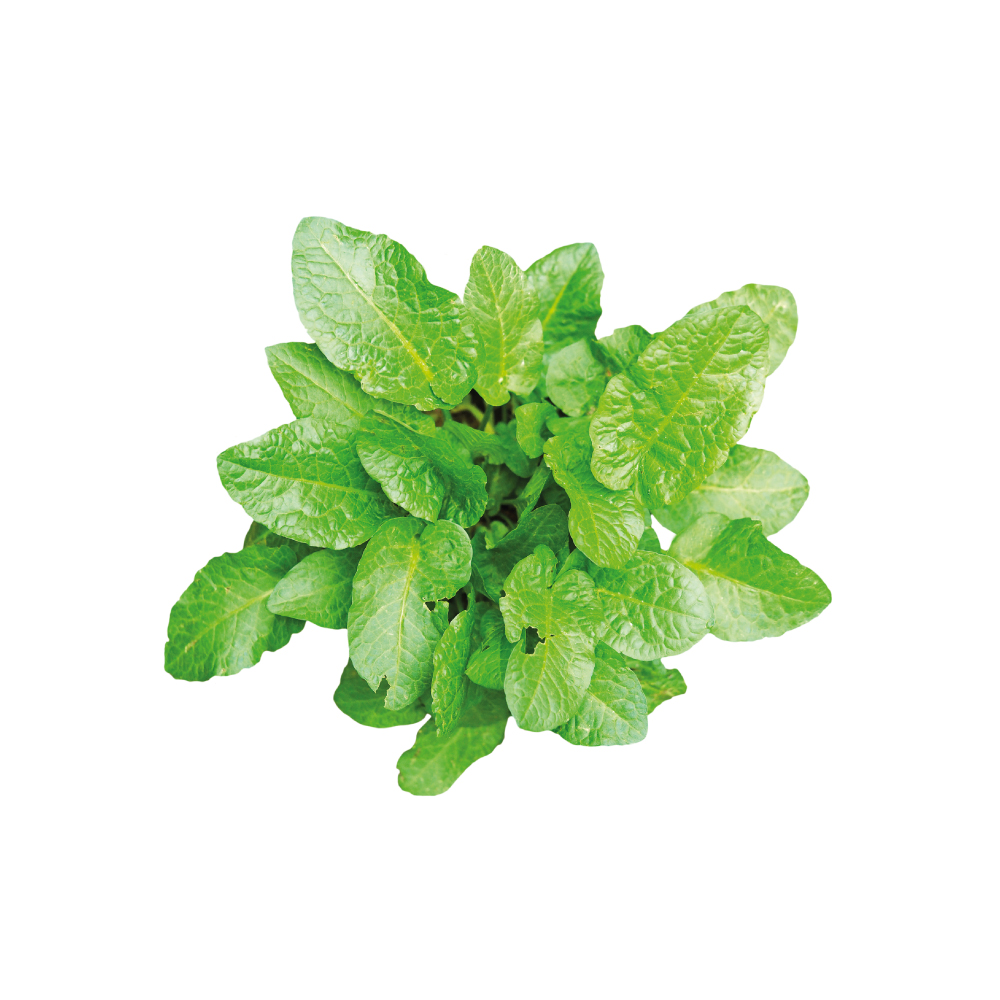
Crispuside A is a naturally occurring seco-anthraquinone glucoside, found in Yellow dock. It is well tolerated orally (low toxicity).
Concentration
Content by Source
Concentrations not reported. No percent-dry-weight or mg/g figures have been published for this compound in its source plants.
Crispuside A at a Glance
Crispuside A is a seco-anthraquinone glucoside (molecular formula C₂₁H₂₂O₁₁) first described in 2022, when it was isolated from the roots of yellow dock (Rumex crispus) 1Reference 1New seco-anthraquinone glucoside from the roots of Rumex crispusView study →. Structurally it is a ring-opened (“seco”) anthraquinone — a carboxylated benzophenone core carrying a methyl group and a β-D-glucopyranosyl sugar — rather than one of the intact hydroxyanthraquinones (emodin, chrysophanol) that dominate the same root 1Reference 1New seco-anthraquinone glucoside from the roots of Rumex crispusView study →.
It is a genuinely obscure molecule. It has been reported exactly once, as one of several new compounds in a single phytochemical survey, and only 7.0 mg was recovered from 10 kg of dried root — a trace constituent 1Reference 1New seco-anthraquinone glucoside from the roots of Rumex crispusView study →. In that study it was screened for antifungal and anti-inflammatory activity and ranked among the weakest of the compounds tested; no potency value (MIC or IC₅₀) was even quantified for it 1Reference 1New seco-anthraquinone glucoside from the roots of Rumex crispusView study →.
There is no pharmacology, pharmacokinetic data, mechanism of action, or human evidence for crispuside A. This page documents what is actually known — which is little — and places the molecule in the better-studied phytochemistry of its source root. It does not ascribe any therapeutic activity to it, because none has been shown.
A Yellow-Dock Constituent
Crispuside A’s significance is as a phytochemistry marker of Rumex crispus — a newly resolved structure in a root whose chemistry is otherwise dominated by well-known anthraquinones.
Yellow dock root is a classic anthraquinone-bearing herb. Its traditional use as a mild stimulant laxative and iron-rich “blood tonic” rests on a pool of anthraquinone glycosides (roughly 3–4% of the dried root), which colonic bacteria cleave to active aglycones, alongside catechol-type tannins that supply the root’s astringency 2,
Crispuside A sits at the edge of that chemistry. It is a seco-anthraquinone — the anthraquinone skeleton has been cleaved to a benzophenone — and it is glycosylated, both of which set it apart from the intact aglycones that carry yellow dock’s laxative and pharmacological reputation 1Reference 1New seco-anthraquinone glucoside from the roots of Rumex crispusView study →. It was isolated in the same 2022 survey that reported three new naphthalenone derivatives from the root, reflecting the naphthalene/anthraquinone-rich character of the genus Rumex generally 1,
What It's Used For
There is very little to report, and it is important not to overstate it. Crispuside A has been examined in a single study — the paper that first isolated it — and only within that paper’s screening panel 1Reference 1New seco-anthraquinone glucoside from the roots of Rumex crispusView study →.
Support is an experimental score — weighted by study type (human > animal > in vitro) and volume. A beta, not a validated metric. Crispuside A has a single in-vitro screen and no positive result, so its score is at the floor by design.
In the 2022 isolation study, crispuside A (compound 1) was tested alongside ten known anthraquinones against three dermatophytic skin fungi (Epidermophyton floccosum, Trichophyton rubrum, Microsporum gypseum) and in an anti-inflammatory (nitric-oxide) assay 1Reference 1New seco-anthraquinone glucoside from the roots of Rumex crispusView study →.
Most of the isolates showed weak activity, and only a simple emodin-type anthraquinone (compound 9) showed clear antifungal potency; crispuside A was not among the active compounds and placed near the bottom of the anti-inflammatory ranking 1Reference 1New seco-anthraquinone glucoside from the roots of Rumex crispusView study →.
This is the isolated molecule being tested directly, so the weak result reflects the compound itself, not a diluted plant extract 1Reference 1New seco-anthraquinone glucoside from the roots of Rumex crispusView study →.
Gap: no potency value (MIC/IC₅₀) was determined for crispuside A, no target or mechanism was proposed, and the compound has never been re-tested, taken into an animal model, or examined pharmacokinetically. There is no basis for any therapeutic claim.
Mechanisms
No mechanism of action has been characterised for crispuside A. No molecular target, pathway or binding study exists for the compound 1Reference 1New seco-anthraquinone glucoside from the roots of Rumex crispusView study →.
Pharmacokinetics
No pharmacokinetic data exist. Crispuside A has never been dosed in an animal or human, so nothing is known about its absorption, distribution, metabolism, half-life or bioavailability 1Reference 1New seco-anthraquinone glucoside from the roots of Rumex crispusView study →. By analogy to other anthraquinone glucosides, an oral dose would be expected to reach the colon largely as the intact glycoside and depend on gut-flora cleavage for any aglycone exposure — but this is a general expectation for the class, not a measured property of crispuside A 2,
Clinical Trials
None. Crispuside A has never entered a clinical trial, and there are no animal efficacy studies. Its entire evidence base is a single in-vitro isolation-and-screening paper 1Reference 1New seco-anthraquinone glucoside from the roots of Rumex crispusView study →.
| Completed | Planned | Terminated | Preclinical |
|---|---|---|---|
| — | — | — | One in-vitro isolation screen (weak/negative) 1Reference 1New seco-anthraquinone glucoside from the roots of Rumex crispusView study → |
Last checked: July 2026.
Major Natural Sources
Crispuside A has been reported from a single source: the root of yellow dock (Rumex crispus). It is not known to occur in any other species.
| Source (Botanical) | Part | Reported level | Notes |
|---|---|---|---|
| Yellow dock (Rumex crispus) | Root | Trace (7.0 mg from 10 kg dried root) 1Reference 1New seco-anthraquinone glucoside from the roots of Rumex crispusView study → | The only reported source; co-occurs with emodin, chrysophanol, physcion and rhein |
Because the molecule has only ever been isolated once, no concentration range, provenance or harvest-dependent figures are available — the 7 mg / 10 kg recovery is a preparative yield, not a measured content, and should not be read as a whole-root percentage.
Discovery & Synthesis
Crispuside A was first isolated and structurally described in 2022 by Li and colleagues, in a phytochemical study of yellow-dock roots published in Natural Products and Bioprospecting 1Reference 1New seco-anthraquinone glucoside from the roots of Rumex crispusView study →. The name derives from the source species, Rumex crispus. The compound was obtained by extracting air-dried root (10 kg) with 90% aqueous methanol at 60 °C, followed by sequential column chromatography (macroporous resin, Sephadex LH-20, silica gel and RP-18) and semi-preparative HPLC, yielding 7.0 mg; its structure — a seco-anthraquinone glucoside — was assigned by spectroscopic analysis including ECD 1Reference 1New seco-anthraquinone glucoside from the roots of Rumex crispusView study →.
No total synthesis of crispuside A has been reported, and no manufacture exists: it is a research isolate obtained in milligram quantity by extraction, not a produced material. Given its trace abundance, absence of demonstrated activity and single literature appearance, there is no commercial or preparative pipeline for it.
Patents: not yet researched.
Toxicity & Safety
No toxicology has been performed on crispuside A. Its safety profile is uncharacterised — there are no genotoxicity, repeat-dose, reproductive or organ-toxicity studies of the isolated molecule, and it has never been ingested by an animal or human at a defined dose 1Reference 1New seco-anthraquinone glucoside from the roots of Rumex crispusView study →. The low flag here reflects trace exposure and the absence of any measured hazard, not a positive demonstration of safety; it should not be read as evidence that the compound is safe.
The relevant cautions belong to the source root, not this molecule. Yellow dock is an anthraquinone-bearing laxative herb, and the hydroxyanthraquinone class it belongs to carries a recognised genotoxicity/laxative-abuse caution; yellow dock root and leaf also contain oxalate, the basis of its kidney-stone and renal caution, and the whole herb is generally avoided in pregnancy and lactation on stimulant-laxative grounds 2,
- Trace research isolate. Present in yellow-dock root at trace levels (milligram recovery from kilograms of root); not a supplement, food additive or medicine.
- No safety data on the molecule. No genotoxicity, repeat-dose or reproductive testing of crispuside A exists — its safety is unknown, not established.
- Source-herb cautions apply to yellow dock, not this compound. The anthraquinone-laxative, oxalate/renal and pregnancy cautions belong to ingesting the whole root; decide them on the herb page.
References
- Li YX, Li N, Li JJ, Zhang M, Zhu HT, Wang D, Zhang YJ (2022). New seco-anthraquinone glucoside from the roots of Rumex crispus. Natural Products and Bioprospecting. https://pubmed.ncbi.nlm.nih.gov/35918556/
- Vasas A, Orbán-Gyapai O, Hohmann J (2015). The Genus Rumex: review of traditional uses, phytochemistry and pharmacology. Journal of Ethnopharmacology. https://pubmed.ncbi.nlm.nih.gov/26384001/
- Qian H, Jia Y, Zheng K, Li C, Shao J, Wang J, Xu H, Zhou X (2024). Rumex crispus L.: a comprehensive review on botany, traditional uses, phytochemistry, pharmacology, and safety. International Immunopharmacology. https://pubmed.ncbi.nlm.nih.gov/39520965/
- Eom T, Kim E, Kim JS (2020). In vitro antioxidant, antiinflammation, and anticancer activities and anthraquinone content from Rumex crispus root extract and fractions. Antioxidants (Basel). https://pubmed.ncbi.nlm.nih.gov/32784977/



