
Compound Monograph
Deoxyandrographolide
Deoxyandrographolide (14-deoxyandrographolide) is a minor labdane diterpene lactone of andrographis — the 14-deoxy analogue of andrographolide — best known for an animal/in-vitro vasorelaxant and anti-inflammatory signal working through the NO/cGMP pathway and calcium-channel blockade. Its data are modest and preclinical; there are no human trials of the isolate.

Sources · 1
Where Does It Come From?
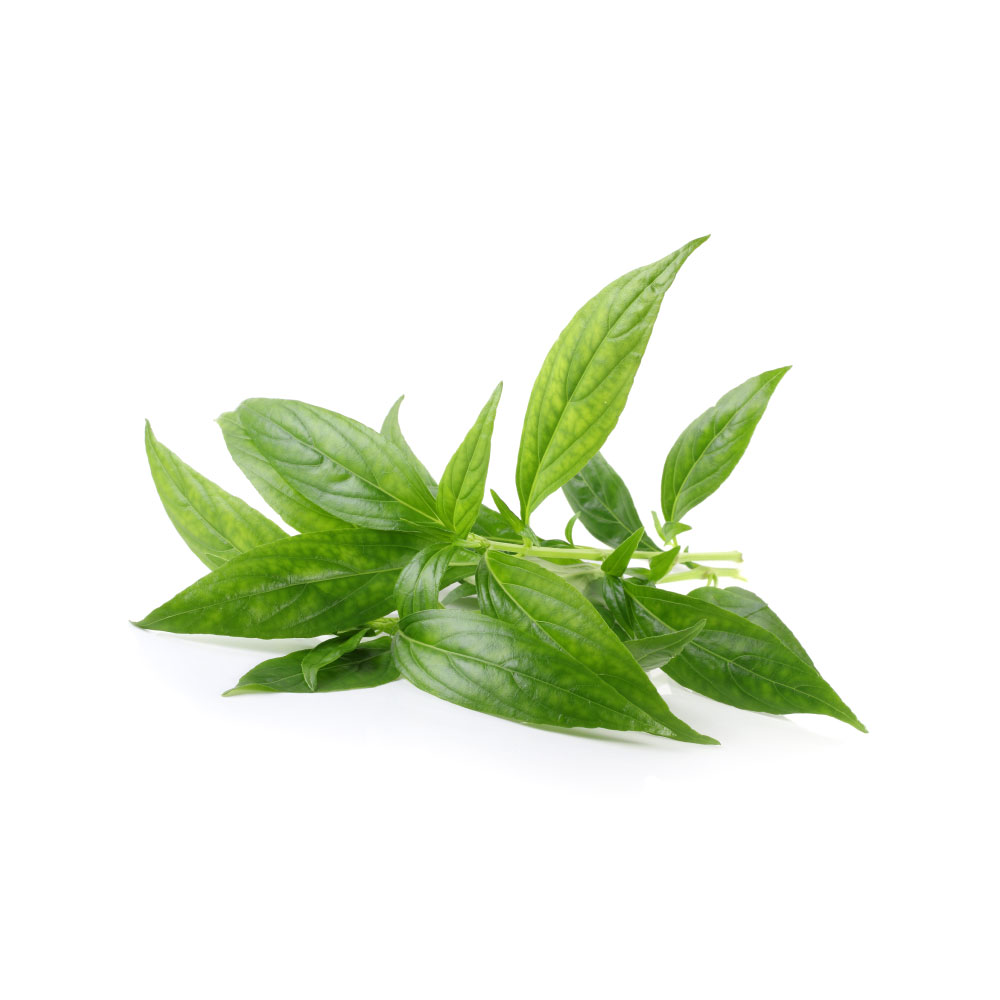
Deoxyandrographolide is a naturally occurring labdane diterpenoid (ent-labdane diterpene lactone), found in Andrographis. It is well tolerated orally (low toxicity).
Concentration
Content by Source
Concentrations not reported. No percent-dry-weight or mg/g figures have been published for this compound in its source plants.
Deoxyandrographolide at a Glance
Deoxyandrographolide — more precisely 14-deoxyandrographolide — is a labdane diterpene lactone from the aerial parts of andrographis (Andrographis paniculata). It is the 14-deoxy analogue of andrographolide, the herb’s marker molecule: the same ent-labdane skeleton, minus the hydroxyl at C-14. It is a minor constituent — andrographolide dominates the diterpenoid fraction, and this deoxy relative sits well below it in abundance 7Reference 7ReviewAndrographis paniculata (Burm. f.) Wall. ex Nees: a review of ethnobotany, phytochemistry, and pharmacologyView study →.
Where andrographolide’s research reputation is built on anti-inflammatory, antiviral and anticancer work, deoxyandrographolide’s own literature is smaller and points in a slightly different direction: a vasorelaxant / cardiovascular and anti-inflammatory signal, running through nitric-oxide/cGMP signalling and calcium-channel blockade in isolated vessels and cells 1,
Deoxyandrographolide Among the Andrographis Diterpenoids
Andrographis carries a family of closely related labdane diterpene lactones, and they are easy to confuse — the naming is dense and the structures differ by a single group. Three matter here:
- Andrographolide — the marker diterpene, bearing the C-14 hydroxyl; the anti-inflammatory/antiviral/anticancer workhorse and the compound extracts are standardised to.
- Deoxyandrographolide (14-deoxyandrographolide) — this molecule: andrographolide minus the C-14 hydroxyl. Carries the vasorelaxant/cardiovascular and anti-inflammatory isolate signal below.
- 14-Deoxy-11,12-didehydroandrographolide — a different, distinct compound: it is the 14-deoxy form plus an additional 11,12 double bond. It is often studied side-by-side with deoxyandrographolide and shares some of the endothelial nitric-oxide activity, but it is not the same molecule and should not be conflated with it 2Reference 2Effects of 14-deoxyandrographolide and 14-deoxy-11,12-didehydroandrographolide on nitric oxide production in cultured human endothelial cellsView study →.
That last distinction is the one most often blurred. In the endothelial-cell work below, both the 14-deoxy compound and the 14-deoxy-11,12-didehydro compound stimulated nitric-oxide release — but the didehydro analogue produced the larger effect, which is exactly why keeping them separate matters when reading the cardiovascular literature 2Reference 2Effects of 14-deoxyandrographolide and 14-deoxy-11,12-didehydroandrographolide on nitric oxide production in cultured human endothelial cellsView study →. This page is about the plain 14-deoxy compound; the didehydro relative has its own entry.
The practical upshot: the andrographis cardiovascular signal is attributed disproportionately to the deoxy analogues (14-deoxy and 14-deoxy-11,12-didehydro), whereas andrographolide itself is more the anti-inflammatory/immunomodulatory story 1,
What It's Used For
The evidence for deoxyandrographolide is thin and preclinical, but it is unusually coherent around one mechanism — nitric-oxide/cGMP signalling and calcium handling — which surfaces across its vasorelaxant, anti-inflammatory and hepatoprotective reports.
Support is an experimental score — weighted by study type (human > animal > in vitro) and volume. A beta, not a validated metric. Every row here is preclinical (animal/in-vitro) isolate or extract-fraction work, so all scores stay low by design.
The best-characterised and most compound-specific signal. In isolated rat thoracic aorta, 14-deoxyandrographolide (~2.5–120 µmol/L) inhibited contractions induced by phenylephrine and high K⁺ concentration-dependently; the effect was larger in endothelium-intact than endothelium-denuded rings, and the authors concluded it is mediated by activation of nitric-oxide synthase and guanylate cyclase together with blockade of Ca²⁺ influx through voltage- and receptor-operated channels 1Reference 1AnimalVasorelaxation of rat thoracic aorta caused by 14-deoxyandrographolideView study →.
In cultured human endothelial cells the compound stimulated nitric-oxide release (its didehydro analogue more so), giving an endothelial basis for the relaxation 2Reference 2Effects of 14-deoxyandrographolide and 14-deoxy-11,12-didehydroandrographolide on nitric oxide production in cultured human endothelial cellsView study →.
Independent work on an A. paniculata chloroform extract confirmed vasorelaxation of rat aortic rings by the deoxy diterpenoids, emphasising the calcium-channel-blocking component 3Reference 3AnimalVasorelaxant effect of diterpenoid lactones from Andrographis paniculata chloroform extract on rat aortic ringsView study →.
Gap: all animal/in-vitro; isolated vessels and cultured cells, no whole-animal blood-pressure or human data for the isolate, and the endothelial vs. calcium-channel contributions are not fully partitioned 1,
In bovine neutrophils, 14-deoxyandrographolide (10–100 µM) acted as a platelet-activating-factor (PAF) antagonist: it reduced the extracellular acidification rate and intracellular alkalinisation dose-dependently, blunted PAF-induced calcium flux in the presence of extracellular calcium, and suppressed tyrosine phosphorylation of a 44-kDa protein (ERK1/MAPK); binding data pointed to a competitive interaction at PAF-associated sites 4Reference 4Burgos RA, Hidalgo MA, Monsalve J, LaBranche TP, Eyre P, Hancke JL (2005). 14-deoxyandrographolide as a platelet activating factor antagonist in bovine neutrophils. Planta Medica. https://pubmed.ncbi.nlm.nih.gov/16041644/View study →. This overlaps mechanistically with the vasorelaxant story — the same calcium-channel-blocking behaviour plausibly underlies both.
Gap: a single in-vitro study in one cell type (bovine neutrophils); no in-vivo inflammation model or human confirmation for the isolate, and the anti-inflammatory reputation of andrographis as a whole rests on andrographolide and standardised extracts, not this compound 4Reference 4Burgos RA, Hidalgo MA, Monsalve J, LaBranche TP, Eyre P, Hancke JL (2005). 14-deoxyandrographolide as a platelet activating factor antagonist in bovine neutrophils. Planta Medica. https://pubmed.ncbi.nlm.nih.gov/16041644/View study →.
In a rat model of chronic ethanol liver injury, 14-deoxyandrographolide given over the final weeks of an 8-week ethanol exposure reduced hepatotoxicity; the proposed route was adenylate-cyclase / cAMP activation driving constitutive NOS (cNOS), up-regulated γ-glutamylcysteine synthetase and lowered oxidative stress 5Reference 5AnimalMandal S, Nelson VK, Mukhopadhyay S, Bandhopadhyay S, Maganti L, Ghoshal N, Sen G, Biswas T (2013). 14-Deoxyandrographolide targets adenylate cyclase and prevents ethanol-induced liver injury through constitutive NOS dependent reduced redox signaling in rats. Food and Chemical Toxicology. https://pubmed.ncbi.nlm.nih.gov/23764359/View study → — again a nitric-oxide-centred mechanism, consistent with the vessel and neutrophil work.
Gap: a single research group’s rat study; no independent replication and no human data, and one earlier related paper from the same lab has since been retracted, so this hepatoprotective signal should be read cautiously as a single-lab preclinical finding 5Reference 5AnimalMandal S, Nelson VK, Mukhopadhyay S, Bandhopadhyay S, Maganti L, Ghoshal N, Sen G, Biswas T (2013). 14-Deoxyandrographolide targets adenylate cyclase and prevents ethanol-induced liver injury through constitutive NOS dependent reduced redox signaling in rats. Food and Chemical Toxicology. https://pubmed.ncbi.nlm.nih.gov/23764359/View study →.
Mechanisms
| Target / pathway | Effect | Relevant to |
|---|---|---|
| Nitric-oxide synthase (eNOS/NOS) → guanylate cyclase → cGMP | activation; NO release from endothelium → smooth-muscle relaxation | vasorelaxant / cardiovascular |
| Voltage- and receptor-operated Ca²⁺ channels | blockade of Ca²⁺ influx (calcium-channel-blocker behaviour) | vasorelaxant; anti-inflammatory |
| Platelet-activating-factor (PAF) signalling | antagonism → ↓ PAF-induced Ca²⁺ flux and ERK1/MAPK phosphorylation | anti-inflammatory |
| Adenylate cyclase / cAMP → constitutive NOS | activation → ↓ oxidative stress (rat, single lab) | hepatoprotective |
The unifying thread is a nitric-oxide / cGMP action paired with calcium-channel blockade — the same two levers recur across the vessel, neutrophil and liver studies, which is what makes the otherwise-thin evidence internally consistent 1,
Pharmacokinetics
Dedicated pharmacokinetics for 14-deoxyandrographolide are not well characterised. As a labdane diterpene lactone of the andrographolide family, it is expected to share the family’s central PK limitation — poor oral bioavailability, the recurring caveat that tempers translation of the andrographolides’ in-vitro potency 7Reference 7ReviewAndrographis paniculata (Burm. f.) Wall. ex Nees: a review of ethnobotany, phytochemistry, and pharmacologyView study →. No reliable human Cmax, half-life or oral-bioavailability figures exist for the isolate, and because herbal exposure is as a minor diterpenoid within an andrographolide-standardised extract, the compound’s own systemic exposure from a herbal dose is likely very low and unquantified 7Reference 7ReviewAndrographis paniculata (Burm. f.) Wall. ex Nees: a review of ethnobotany, phytochemistry, and pharmacologyView study →. This bioavailability gap is the main reason the potent in-vitro vessel and cell effects cannot be assumed to occur at ordinary oral intake.
Clinical Trials
There are no clinical trials of isolated deoxyandrographolide. All human evidence for andrographis belongs to whole standardised aerial-part extracts titrated to andrographolide (often combination products), within which this compound is one minor constituent 7Reference 7ReviewAndrographis paniculata (Burm. f.) Wall. ex Nees: a review of ethnobotany, phytochemistry, and pharmacologyView study →.
| Completed | Planned | Terminated | Preclinical |
|---|---|---|---|
| —(none for the isolate) | — | — | Vasorelaxant, anti-inflammatory (PAF), hepatoprotective mechanistic |
Last checked: July 2026.
Isolate vs. Plant Studies
The evidence divides cleanly. The mechanistic vasorelaxant, PAF-antagonist and hepatoprotective findings are isolate work — purified 14-deoxyandrographolide on isolated rat aorta 1Reference 1AnimalVasorelaxation of rat thoracic aorta caused by 14-deoxyandrographolideView study →, cultured human endothelial cells 2Reference 2Effects of 14-deoxyandrographolide and 14-deoxy-11,12-didehydroandrographolide on nitric oxide production in cultured human endothelial cellsView study →, bovine neutrophils 4Reference 4Burgos RA, Hidalgo MA, Monsalve J, LaBranche TP, Eyre P, Hancke JL (2005). 14-deoxyandrographolide as a platelet activating factor antagonist in bovine neutrophils. Planta Medica. https://pubmed.ncbi.nlm.nih.gov/16041644/View study → and ethanol-exposed rats 5Reference 5AnimalMandal S, Nelson VK, Mukhopadhyay S, Bandhopadhyay S, Maganti L, Ghoshal N, Sen G, Biswas T (2013). 14-Deoxyandrographolide targets adenylate cyclase and prevents ethanol-induced liver injury through constitutive NOS dependent reduced redox signaling in rats. Food and Chemical Toxicology. https://pubmed.ncbi.nlm.nih.gov/23764359/View study →. That is a genuine strength for reading the molecule’s own pharmacology, but it is all preclinical. The one plant/extract data point that names this compound directly is the chloroform-extract aortic-ring study, where the deoxy diterpenoids drove the extract’s vasorelaxation 3Reference 3AnimalVasorelaxant effect of diterpenoid lactones from Andrographis paniculata chloroform extract on rat aortic ringsView study →. Crucially, the human andrographis evidence — for respiratory infections, inflammation and related uses — is for standardised extracts standardised to andrographolide, not to deoxyandrographolide, so none of it can be attributed to this molecule 7Reference 7ReviewAndrographis paniculata (Burm. f.) Wall. ex Nees: a review of ethnobotany, phytochemistry, and pharmacologyView study →. The correct framing: coherent isolate mechanism, one supporting extract-fraction study, and no human isolate evidence at all.
Prevalence in Nature
Deoxyandrographolide is, as far as the literature records, essentially confined to andrographis (Andrographis paniculata) and reported from its aerial parts — the medicinally used tissue. Reviews of the herb’s phytochemistry list it among the main diterpenoids alongside andrographolide, neoandrographolide, 14-deoxy-11,12-didehydroandrographolide and isoandrographolide 6,
Discovery & Synthesis
Deoxyandrographolide is one of the classic Andrographis paniculata labdane diterpenoids characterised during the twentieth-century work on the herb’s bitter principles, in the same lineage as andrographolide and neoandrographolide 6Reference 6Isolation and identification of bioactive compounds in Andrographis paniculata (Chuanxinlian)View study →. A precise first-isolation date and discoverer for the deoxy analogue specifically are not well documented in the accessible literature, so none is asserted one. Manufacture today is by isolation from the aerial parts of A. paniculata via solvent extraction and chromatographic fractionation of the diterpenoid mixture; there is no commercially significant total synthesis, and the compound reaches the research market as a plant-derived reference standard rather than a made molecule 6Reference 6Isolation and identification of bioactive compounds in Andrographis paniculata (Chuanxinlian)View study →.
Patents: not yet researched.
Toxicity & Safety
Deoxyandrographolide carries a low flag: it is a diterpene lactone of a widely consumed medicinal herb, with no signal of notable acute toxicity in the isolate studies above and low-toxicity behaviour typical of the andrographolide family. That flag is a judgement in the absence of a dedicated isolate toxicology package, not a clean bill of health — repeat-dose, genotoxicity and reproductive datasets for the pure compound are not characterised here.
Two honest cautions belong on the record. First, the molecule’s signature action is vasorelaxation / nitric-oxide-mediated blood-vessel relaxation in animal tissue 1,
- Low apparent toxicity as an isolate. A diterpene lactone of a widely used herb, with no notable toxicity signal in the vessel/cell/rat studies to date.
- No dedicated isolate safety package. Repeat-dose, genotoxicity and reproductive datasets for the pure compound are not characterised; “low” reflects absence of alarming findings, not proof of safety.
- Vasorelaxant / hypotensive mechanism. Its core action is nitric-oxide-mediated vessel relaxation in animals — a theoretical additive concern with antihypertensive or vasodilator drugs.
- Andrographis reproductive caution. The parent herb is generally avoided in pregnancy on animal antifertility grounds; the isolate’s reproductive safety is unknown, and this is decided at the herb level.
Dosage
There is no established or recommended human dose for isolated deoxyandrographolide. The figures in the literature are preclinical research concentrations — roughly 2.5–120 µmol/L on isolated rat aorta 1Reference 1AnimalVasorelaxation of rat thoracic aorta caused by 14-deoxyandrographolideView study → and 10–100 µM in bovine neutrophils 4Reference 4Burgos RA, Hidalgo MA, Monsalve J, LaBranche TP, Eyre P, Hancke JL (2005). 14-deoxyandrographolide as a platelet activating factor antagonist in bovine neutrophils. Planta Medica. https://pubmed.ncbi.nlm.nih.gov/16041644/View study → — and are not convertible to human self-dosing. Human exposure is indirect: as one minor diterpenoid within standardised Andrographis paniculata aerial-part extracts, which are dosed and standardised to andrographolide, not to this compound 7Reference 7ReviewAndrographis paniculata (Burm. f.) Wall. ex Nees: a review of ethnobotany, phytochemistry, and pharmacologyView study →. These are doses studied in research and are not a personal recommendation.
References
- Zhang CY, Tan BK (1998). Vasorelaxation of rat thoracic aorta caused by 14-deoxyandrographolide. Clinical and Experimental Pharmacology and Physiology. https://pubmed.ncbi.nlm.nih.gov/9673817/
- Zhang CY, Tan BK (1999). Effects of 14-deoxyandrographolide and 14-deoxy-11,12-didehydroandrographolide on nitric oxide production in cultured human endothelial cells. Phytotherapy Research. https://pubmed.ncbi.nlm.nih.gov/10190192/
- Sriramaneni RN, Omar AZ, Ibrahim SM, Amirin S, Zaini AM (2010). Vasorelaxant effect of diterpenoid lactones from Andrographis paniculata chloroform extract on rat aortic rings. Pharmacognosy Research. https://pubmed.ncbi.nlm.nih.gov/21808575/
- Burgos RA, Hidalgo MA, Monsalve J, LaBranche TP, Eyre P, Hancke JL (2005). 14-deoxyandrographolide as a platelet activating factor antagonist in bovine neutrophils. Planta Medica. https://pubmed.ncbi.nlm.nih.gov/16041644/
- Mandal S, Nelson VK, Mukhopadhyay S, Bandhopadhyay S, Maganti L, Ghoshal N, Sen G, Biswas T (2013). 14-Deoxyandrographolide targets adenylate cyclase and prevents ethanol-induced liver injury through constitutive NOS dependent reduced redox signaling in rats. Food and Chemical Toxicology. https://pubmed.ncbi.nlm.nih.gov/23764359/
- Chao WW, Lin BF (2010). Isolation and identification of bioactive compounds in Andrographis paniculata (Chuanxinlian). Chinese Medicine. https://pubmed.ncbi.nlm.nih.gov/20465823/
- Hossain MS, Urbi Z, Sule A, Rahman KMH (2014). Andrographis paniculata (Burm. f.) Wall. ex Nees: a review of ethnobotany, phytochemistry, and pharmacology. The Scientific World Journal. https://pubmed.ncbi.nlm.nih.gov/25950015/



