
Compound Monograph
Digitoxin
Digitoxin is a cardenolide glycoside and a prescription heart-failure drug — the principal glycoside of foxglove leaf, and the one cardiac glycoside cleared independently of the kidneys. DIGIT-HF, reported in 2025, is the first randomised trial to test it properly.

Sources · 3
Where Does It Come From?
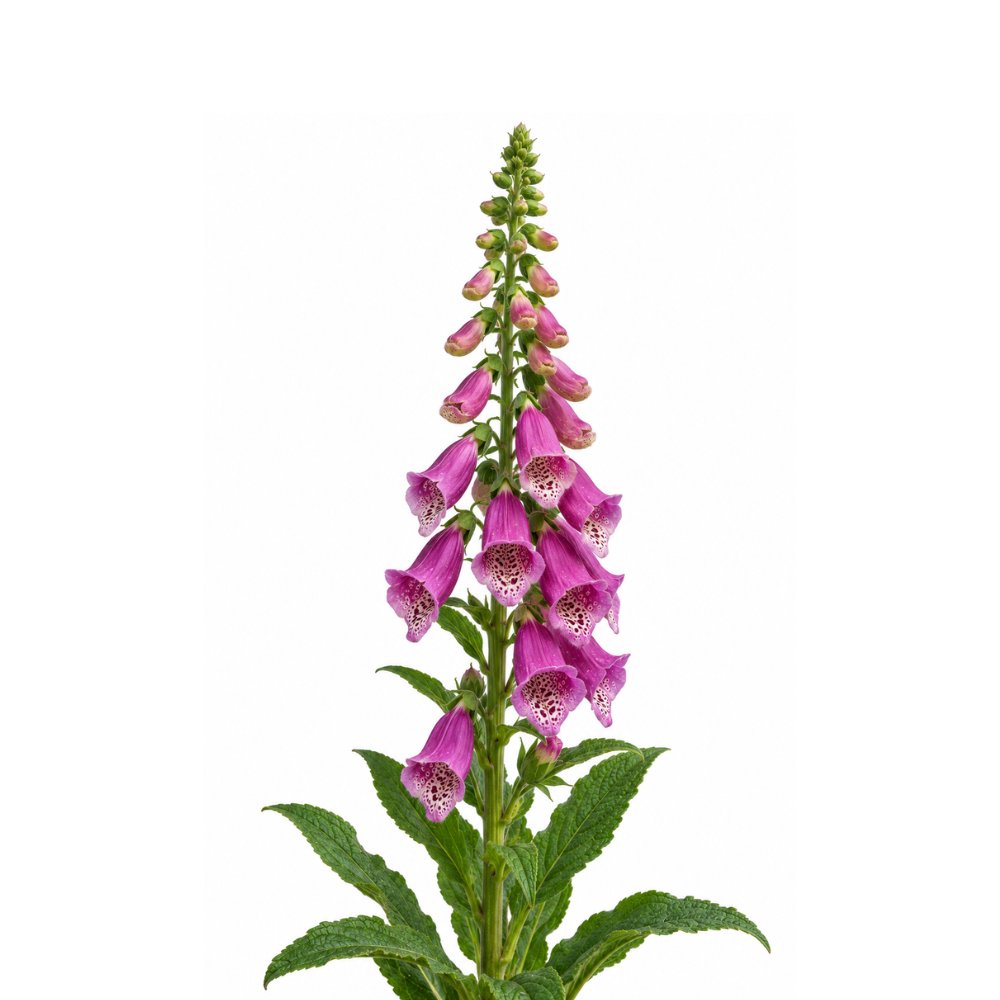
Digitoxin is a naturally occurring cardenolide (cardiac glycoside), found in Foxglove and 2 other sources. It is flagged as poisonous.
Concentration
Content by Source
Concentrations not reported. No percent-dry-weight or mg/g figures have been published for this compound in its source plants.
Digitoxin at a Glance
Digitoxin is a prescription heart-failure drug. It is a cardenolide glycoside — a steroid core with a sugar chain — that inhibits the sodium–potassium pump, and it belongs to the oldest drug class still in cardiological use.
For most of the twentieth century it was prescribed on inherited practice rather than trial evidence. That changed in 2025: DIGIT-HF randomised 1,240 patients with heart failure and reduced ejection fraction to 0.07 mg daily or placebo on top of guideline-directed therapy, and over a median 36 months the composite of death or first heart-failure hospitalisation fell from 44.1% to 39.5%, hazard ratio 0.82 (95% CI 0.69–0.98) 1Reference 1RCTDigitoxin in Patients with Heart Failure and Reduced Ejection Fraction — randomised controlled trialView study →. Neither component reached significance on its own. It is a modest, real result for a drug that had been used for two centuries without one.
What distinguishes digitoxin from its better-known relative digoxin is not what it does but how the body clears it. Digitoxin is eliminated largely independently of kidney function, with high and consistent oral bioavailability and an elimination half-life of four to seven days 3Reference 3ReviewFender, J., Klöcker, J., Boivin-Jahns, V., et al. (2024). “Cardiac glycosides”-quo vaditis?-past, present, and future? — review. Naunyn Schmiedebergs Arch Pharmacol. https://pubmed.ncbi.nlm.nih.gov/39007928/View study →. That makes it the glycoside of choice where renal function is poor — and it also means that when exposure is too high, it stays too high for a week.
It comes from foxglove leaf, and that is where the plant story ends. The leaf is unassayable: total glycoside content swings several-fold with season, plant part, developmental stage and provenance 12Reference 12High-resolution tandem mass spectrometry dataset reveals fragmentation patterns of cardiac glycosides in leaves of the foxglove plantsView study →, so a weighed quantity is not a dose. Foxglove leaf was abandoned as a medicine once the glycosides could be purified, and nothing about the drug’s evidence transfers back to it.
Digitoxin vs. Digoxin
The two drugs share a mechanism, a therapeutic index and a toxidrome. They differ almost entirely in pharmacokinetics, and the difference is the reason both still exist.
| Digitoxin | Digoxin | |
|---|---|---|
| Principal plant source | Digitalis purpurea leaf | Digitalis lanata leaf |
| Oral bioavailability | >90%, consistent | 55–75%, variable |
| Elimination route | Hepatic metabolism + enterohepatic recirculation; largely independent of renal function | Predominantly renal excretion |
| Elimination half-life | ~4–7 days | ~30–50 hours |
| Plasma protein binding | High | Low |
| Practical consequence | Stable levels in renal impairment; slow to correct if too high | Levels track kidney function; faster to clear |
Kinetics from a 2024 review of the class 3Reference 3ReviewFender, J., Klöcker, J., Boivin-Jahns, V., et al. (2024). “Cardiac glycosides”-quo vaditis?-past, present, and future? — review. Naunyn Schmiedebergs Arch Pharmacol. https://pubmed.ncbi.nlm.nih.gov/39007928/View study →.
The clinical corollary is narrow and specific: in patients with reduced renal function, digitoxin may be considered where digoxin would accumulate unpredictably 3,
Most of the famous cardiac-glycoside literature is digoxin’s, not digitoxin’s. The DIG trial, the mortality meta-analyses, the atrial-fibrillation controversy and the cancer-epidemiology signal all concern digoxin 2Reference 2RCTThe effect of digoxin on mortality and morbidity in patients with heart failure — randomised controlled trialView study →. Treating the two as interchangeable is the standing error in this area, and it runs in both directions: digitoxin inherits digoxin’s reputation for harm and digoxin inherits digitoxin’s one positive randomised trial.
The Therapeutic Index — and the Antidote
Digitoxin has a narrow therapeutic range for a structural reason. It inhibits Na⁺/K⁺-ATPase, and that pump exists in every cell in the body. The rise in intracellular calcium that strengthens cardiac contraction is the same rise that, pushed a little further, produces spontaneous depolarisations and arrhythmia. There is no separate toxic mechanism to design around: therapy and poisoning are the same action a short distance apart 3Reference 3ReviewFender, J., Klöcker, J., Boivin-Jahns, V., et al. (2024). “Cardiac glycosides”-quo vaditis?-past, present, and future? — review. Naunyn Schmiedebergs Arch Pharmacol. https://pubmed.ncbi.nlm.nih.gov/39007928/View study →.
The toxidrome is distinctive and easy to miss. Gastrointestinal symptoms first — nausea, vomiting, abdominal pain — then visual disturbance, classically xanthopsia, a yellow-green cast to vision with halos around lights, and confusion in older patients. The dangerous features are electrical and electrolytic: hyperkalaemia in acute overdose, because the poisoned pump is what moves potassium into cells; bradycardia and AV block; ventricular ectopy and, characteristically, bidirectional ventricular tachycardia. Myocardial injury with rising troponin is documented in severe cases 19Reference 19Case reportTausendfreund, O., Hoppe, J. M., Wörnle, M. (2026). [Dangerous Overdose: Myocardial Injury from Digitoxin Intoxication] — case report. Dtsch Med Wochenschr. https://pubmed.ncbi.nlm.nih.gov/42442727/View study →.
Unlike colchicine, this poisoning has a real antidote. Digoxin-specific antibody fragments (Fab) bind circulating glycoside and reverse the toxicity; a 150-case multicentre study established their effectiveness for life-threatening digitalis intoxication 10Reference 10Clinical trialTreatment of 150 cases of life-threatening digitalis intoxication with digoxin-specific Fab antibody fragmentsView study →. Despite the name, they work for digitoxin too — cross-reactivity between the cardenolides is high enough that severe digitoxin poisoning has been treated successfully with the same product 11Reference 11Case reportTreatment of severe digitoxin intoxication by digoxin-specific Fab antibody fragments — case reportView study →. That single fact is why cardiac-glycoside poisoning is one of the more survivable serious plant poisonings, and it is the sharpest contrast available with the other drug in this group.
What It's Used For
The evidence divides cleanly: one adequately powered randomised trial in heart failure, one small early-phase trial in cystic fibrosis, and a body of laboratory work on the same Na⁺/K⁺-ATPase signalling that has not reached patients.
The indication, and now the one with a trial behind it. DIGIT-HF randomised 1,240 patients — ejection fraction 40% or less with NYHA class III–IV, or 30% or less with class II — to digitoxin 0.07 mg once daily or placebo, added to guideline-directed medical therapy. In the modified intention-to-treat population of 1,212, over a median 36 months, a primary-outcome event (death from any cause or first admission for worsening heart failure) occurred in 39.5% on digitoxin versus 44.1% on placebo, hazard ratio 0.82 (95% CI 0.69–0.98, P=0.03) 1Reference 1RCTDigitoxin in Patients with Heart Failure and Reduced Ejection Fraction — randomised controlled trialView study →.
Read the components rather than the headline. Death from any cause: 27.2% versus 29.5%, HR 0.86 (95% CI 0.69–1.07). First heart-failure admission: 28.1% versus 30.4%, HR 0.85 (95% CI 0.69–1.05). Neither reached significance alone; the composite did. Serious adverse events occurred in 4.7% on digitoxin against 2.8% on placebo 1Reference 1RCTDigitoxin in Patients with Heart Failure and Reduced Ejection Fraction — randomised controlled trialView study →.
Gap: this is a symptom-and-hospitalisation drug, not a survival drug — the same shape of result the DIG trial produced for digoxin nearly thirty years earlier 2Reference 2RCTThe effect of digoxin on mortality and morbidity in patients with heart failure — randomised controlled trialView study →. The reputation of the class has always run ahead of what it demonstrably delivers.
Cardiac glycosides slow atrioventricular conduction through increased vagal tone as well as through direct pump inhibition, which is the basis for using them to control ventricular rate in atrial fibrillation — particularly where a beta-blocker or calcium-channel blocker would drop an already marginal blood pressure 4Reference 4Systematic reviewClinical Use of Digitalis: A State of the Art Review — systematic reviewView study →. It is a genuine niche and a guideline-recognised one.
Gap: the trial evidence in atrial fibrillation is digoxin’s, and digitoxin is used here by class inference rather than by direct demonstration 2,
A genuine, non-cardiac drug programme built on the observation that cardiac glycosides suppress NF-κB signalling, and that NF-κB-driven interleukin-8 sustains the neutrophilic airway inflammation of cystic fibrosis. A single-site, randomised, double-blind, placebo-controlled Phase II study evaluated digitoxin in cystic fibrosis and reported on safety, pharmacokinetics and dose-finding 5Reference 5RCTDigitoxin for Airway Inflammation in Cystic Fibrosis: Preliminary Assessment of Safety, Pharmacokinetics, and Dose Finding — randomised controlled trialView study →.
Gap: the study was explicitly preliminary and not powered for an anti-inflammatory efficacy endpoint 5Reference 5RCTDigitoxin for Airway Inflammation in Cystic Fibrosis: Preliminary Assessment of Safety, Pharmacokinetics, and Dose Finding — randomised controlled trialView study →. The programme has not advanced, and using a drug with this therapeutic index for a non-cardiac inflammatory indication is a hard proposition regardless of mechanism.
Digitoxin is antiproliferative and pro-apoptotic in cancer cell lines. In KRAS-mutant human colon cancer cells it promoted apoptosis and reduced proliferation and migration by lowering HIF-1α and STAT3 signalling 6Reference 6Digitoxin promotes apoptosis and inhibits proliferation and migration by reducing HIF-1α and STAT3 in KRAS mutant human colon cancer cellsView study →, consistent with the broader literature treating Na⁺/K⁺-ATPase as a signalling hub rather than only an ion pump 7Reference 7ReviewNa(+)/K(+)-ATPase Revisited: On Its Mechanism of Action, Role in Cancer, and Activity Modulation — reviewView study →.
Gap: cell lines at concentrations a tolerated human dose does not reach, and no clinical programme. The related epidemiology is a caution rather than encouragement — large cohort studies of long-term digoxin use found increased incidence of estrogen-sensitive cancers, not decreased. That work is digoxin’s and is covered on its own page, but it is the reason this row should be read as a mechanism, not a lead.
Many viruses depend on host Na⁺/K⁺-ATPase activity and intracellular ion gradients to replicate, so cardiac glycosides inhibit a broad range of them in cell culture. Repurposing reviews position digitoxin and its relatives as candidate broad-spectrum antivirals on that basis 8Reference 8ReviewRepurposing Cardiac Glycosides: Drugs for Heart Failure Surmounting Viruses — reviewView study →.
Gap: entirely in vitro and class-level, with no animal efficacy model and no human data. A drug with a four-to-seven-day half-life and a narrow therapeutic index is a poor candidate for acute antiviral dosing whatever the cell-culture result shows.
Mechanisms
| Target / pathway | Effect | Relevant to |
|---|---|---|
| Na⁺/K⁺-ATPase | Inhibition → intracellular Na⁺ rises → Na⁺/Ca²⁺ exchanger stalls → intracellular Ca²⁺ rises → stronger contraction | positive inotropy in heart failure |
| Same pump, pushed further | Calcium overload generates spontaneous depolarisations | arrhythmia — the toxicitynot a separate mechanism |
| Vagal afferents and baroreceptors | Increased vagal tone, reduced sympathetic drive; slowed AV conduction | rate control in atrial fibrillation |
| Na⁺/K⁺-ATPase signalosome → NF-κB, IL-8 | Suppressed inflammatory transcription | cystic-fibrosis airway inflammation |
| HIF-1α, STAT3 | Downregulated in KRAS-mutant colon cancer cells | antiproliferativein vitro |
| Host ion gradients required for viral replication | Replication inhibited in cell culture | antiviralin vitro |
| Serum potassium | Acute inhibition drives hyperkalaemia — potassium cannot enter cells | the diagnostic tell in acute poisoning |
The sugar chain is not the pharmacophore. Digitoxigenin, the aglycone core, is what docks into the pump; the three digitoxose sugars govern potency, protein binding and pharmacokinetics rather than the binding event itself 3,
Pharmacokinetics
The kinetics are what make digitoxin a distinct drug rather than a variant of digoxin. Oral bioavailability is above 90% and consistent between doses and patients — unusually so for a glycoside. It is highly bound to plasma protein, metabolised in the liver, and subject to enterohepatic recirculation, which together give an elimination half-life of about four to seven days. Critically, elimination is largely independent of renal function, in contrast to digoxin’s predominantly renal clearance 3Reference 3ReviewFender, J., Klöcker, J., Boivin-Jahns, V., et al. (2024). “Cardiac glycosides”-quo vaditis?-past, present, and future? — review. Naunyn Schmiedebergs Arch Pharmacol. https://pubmed.ncbi.nlm.nih.gov/39007928/View study →.
Three consequences follow. Steady state takes weeks rather than days, so dose changes take effect slowly. Renal impairment does not force a dose adjustment the way it does for digoxin, which is the drug’s clinical niche 3,
Clinical Trials
| Completed | Planned | Terminated | Preclinical |
|---|---|---|---|
| 2(DIGIT-HF; cystic-fibrosis Phase II) | — | — | Extensive class-level in vitro (oncology, antiviral) |
Last checked: September 2026.
Isolate vs. Plant Studies
All of it is the isolate, and that is not an oversight.
Every result above used pharmaceutical digitoxin at a measured dose — 0.07 mg daily in DIGIT-HF, a dose-finding range in the cystic-fibrosis study 1,
The plant-side literature that exists is toxicological. Foxglove poisoning follows misidentification — the non-flowering first-year rosette is soft, downy and grey-green, and is taken for comfrey, borage or mullein; one published case is a spring “wild herb smoothie” 15Reference 15Case reportKingma, J. S., Frenay, I. M., Meinders, A. J., et al. (2020). [A poisonous spring smoothie with wild herbs: accidental intoxication with foxglove (Digitalis purpurea)] — case report. Ned Tijdschr Geneeskd. https://pubmed.ncbi.nlm.nih.gov/33331728/View study →. Modern analytical work on foxglove leaf is about detecting the glycosides in poisonings and distinguishing the species, not about preparing a medicine 12,
Prevalence in Nature
Digitoxin is the principal cardenolide of Digitalis purpurea leaf, alongside gitoxin and the characteristic formyl derivative gitaloxin — the latter being the best chemical marker separating purpurea from lanata 12,
No content figure is quotable, and that is the finding rather than a gap in the data. Leaf total-glycoside content is low and swings several-fold with season, plant part, developmental stage and provenance 12Reference 12High-resolution tandem mass spectrometry dataset reveals fragmentation patterns of cardiac glycosides in leaves of the foxglove plantsView study →. High-resolution tandem mass spectrometry has characterised the fragmentation patterns that identify these glycosides in leaf material 12Reference 12High-resolution tandem mass spectrometry dataset reveals fragmentation patterns of cardiac glycosides in leaves of the foxglove plantsView study →, and validated HPLC methods exist for the isolated compounds 13Reference 13HPLC method validation for Digitalis and its analogue by pulsed amperometric detectionView study → — the analytical chemistry is not the limitation; the plant’s variability is.
Biosynthesis proceeds from a steroid precursor through the cardenolide pathway, with a 3β-hydroxysteroid dehydrogenase among the characterised enzymes converting pregnenolone-type intermediates on the route to digitoxin 16Reference 16Han, Y., Xia, M., Zhang, Y. F., et al. (2024). [Cloning and functional analysis of 3β-hydroxysteroid dehydrogenase gene involved in biosynthesis of digitoxin]. Zhongguo Zhong Yao Za Zhi. https://pubmed.ncbi.nlm.nih.gov/38403313/View study →. The pathway is not fully elucidated, and commercial supply has never depended on understanding it.
Discovery & Synthesis
Foxglove leaf entered orthodox medicine through William Withering’s Account of the Foxglove in 1785, a graded case series in 163 patients with dropsy that established the plant had to be titrated against the individual 14Reference 14Norn, S., Kruse, P. R. (2004). [Cardiac glycosides: From ancient history through Withering’s foxglove to endogeneous cardiac glycosides]. Dan Medicinhist Arbog. https://pubmed.ncbi.nlm.nih.gov/15685783/View study →. The chemistry came a century later. Digitoxin was isolated from Digitalis purpurea in the 1860s–70s and obtained as a pure crystalline substance by the 1890s — the first of the Digitalis glycosides to be purified, decades before digoxin was isolated from D. lanata in 1930 14Reference 14Norn, S., Kruse, P. R. (2004). [Cardiac glycosides: From ancient history through Withering’s foxglove to endogeneous cardiac glycosides]. Dan Medicinhist Arbog. https://pubmed.ncbi.nlm.nih.gov/15685783/View study →.
Purification is what ended the plant’s medical career. Once the glycoside could be weighed and assayed, biological standardisation against animal hearts became unnecessary and crude leaf preparations became indefensible 14Reference 14Norn, S., Kruse, P. R. (2004). [Cardiac glycosides: From ancient history through Withering’s foxglove to endogeneous cardiac glycosides]. Dan Medicinhist Arbog. https://pubmed.ncbi.nlm.nih.gov/15685783/View study →.
Manufacture today is still extraction. Digitoxin is obtained from Digitalis leaf rather than synthesised — the cardenolide skeleton with its three digitoxose sugars is a poor target for economical total synthesis, and the plant makes it well. Prescribing has declined sharply across Europe over the past three decades, while poison-centre exposure reports involving digitoxin have risen year on year, a divergence quantified for Germany between 1990 and 2023 9Reference 9Critical analysis of digitalis glycosides: declining use but increasing poison-center exposure cases for digitoxinView study →.
Patents: not yet researched.
Toxicity & Safety
Digitoxin is flagged poisonous. This describes the purified drug, not only the plant: a therapeutic dose and a dangerous one are close together, and the long half-life means a mistake persists.
- Narrow therapeutic index. Therapy and toxicity are the same pump inhibition at slightly different exposures — there is no separate toxic mechanism to avoid 3Reference 3ReviewFender, J., Klöcker, J., Boivin-Jahns, V., et al. (2024). “Cardiac glycosides”-quo vaditis?-past, present, and future? — review. Naunyn Schmiedebergs Arch Pharmacol. https://pubmed.ncbi.nlm.nih.gov/39007928/View study →.
- Cardiac toxidrome. Bradycardia, AV block, ventricular ectopy and bidirectional ventricular tachycardia; myocardial injury in severe cases 19Reference 19Case reportTausendfreund, O., Hoppe, J. M., Wörnle, M. (2026). [Dangerous Overdose: Myocardial Injury from Digitoxin Intoxication] — case report. Dtsch Med Wochenschr. https://pubmed.ncbi.nlm.nih.gov/42442727/View study →.
- Hyperkalaemia in acute overdose — the poisoned pump cannot move potassium into cells, and serum potassium was the classic predictor of death before Fab fragments existed 3Reference 3ReviewFender, J., Klöcker, J., Boivin-Jahns, V., et al. (2024). “Cardiac glycosides”-quo vaditis?-past, present, and future? — review. Naunyn Schmiedebergs Arch Pharmacol. https://pubmed.ncbi.nlm.nih.gov/39007928/View study →.
- A 4–7 day half-life means an overdose does not wash out. Stopping the drug takes days to matter 3Reference 3ReviewFender, J., Klöcker, J., Boivin-Jahns, V., et al. (2024). “Cardiac glycosides”-quo vaditis?-past, present, and future? — review. Naunyn Schmiedebergs Arch Pharmacol. https://pubmed.ncbi.nlm.nih.gov/39007928/View study →.
- A real antidote exists. Digoxin-specific Fab fragments reverse life-threatening digitalis toxicity and cross-react well enough to treat digitoxin poisoning 10,
11Reference 10Clinical trialTreatment of 150 cases of life-threatening digitalis intoxication with digoxin-specific Fab antibody fragmentsView study →Reference 11Case reportTreatment of severe digitoxin intoxication by digoxin-specific Fab antibody fragments — case reportView study → . - Xanthopsia — a yellow-green cast to vision with halos — is characteristic, easily dismissed, and often the first non-gastrointestinal sign 3Reference 3ReviewFender, J., Klöcker, J., Boivin-Jahns, V., et al. (2024). “Cardiac glycosides”-quo vaditis?-past, present, and future? — review. Naunyn Schmiedebergs Arch Pharmacol. https://pubmed.ncbi.nlm.nih.gov/39007928/View study →.
- Interactions are transporter-mediated, not CYP450. Quinidine, verapamil, amiodarone, macrolides and ketoconazole raise levels; potassium-losing diuretics potentiate toxicity without changing the level at all 3,
18Reference 3ReviewFender, J., Klöcker, J., Boivin-Jahns, V., et al. (2024). “Cardiac glycosides”-quo vaditis?-past, present, and future? — review. Naunyn Schmiedebergs Arch Pharmacol. https://pubmed.ncbi.nlm.nih.gov/39007928/View study →Reference 18Digitoxin-quinidine interaction: pharmacokinetic evaluationView study → . - Poison-centre exposures are rising even as prescribing falls, with elderly patients over-represented 9Reference 9Critical analysis of digitalis glycosides: declining use but increasing poison-center exposure cases for digitoxinView study →.
Full Safety & Interactions Detail
The toxidrome and its sequence. Poisoning opens with nausea, vomiting and abdominal pain, progresses to visual disturbance — xanthopsia, halos, blurring — and confusion, and becomes dangerous in the cardiac and electrolyte findings: hyperkalaemia, profound bradycardia and heart block, ventricular arrhythmias including the characteristic bidirectional ventricular tachycardia. Troponin rise and documented myocardial injury occur in severe intoxication 19Reference 19Case reportTausendfreund, O., Hoppe, J. M., Wörnle, M. (2026). [Dangerous Overdose: Myocardial Injury from Digitoxin Intoxication] — case report. Dtsch Med Wochenschr. https://pubmed.ncbi.nlm.nih.gov/42442727/View study →. Because the drug’s half-life is measured in days, clinical improvement after withdrawal alone is slow, and severity should be judged on the rhythm and the potassium rather than on how the patient looks at presentation 3,
The antidote. Digoxin-specific antibody fragments bind circulating glycoside and reverse toxicity; the definitive multicentre series covered 150 cases of life-threatening digitalis intoxication 10Reference 10Clinical trialTreatment of 150 cases of life-threatening digitalis intoxication with digoxin-specific Fab antibody fragmentsView study →. Cross-reactivity across the cardenolides is sufficient that severe digitoxin poisoning has been treated with the same product, including in children 11Reference 11Case reportTreatment of severe digitoxin intoxication by digoxin-specific Fab antibody fragments — case reportView study →. Supportive care addresses the hyperkalaemia and the rhythm. (The long-taught warning that intravenous calcium causes a fatal “stone heart” in digitalis toxicity is widely repeated and contested in the modern literature — it is disputed rather than settled.)
Interactions run through transporters, not cytochromes. This is the commonest labelling error in the class. Quinidine raises digitoxin levels through a documented pharmacokinetic interaction 18Reference 18Digitoxin-quinidine interaction: pharmacokinetic evaluationView study →; verapamil, amiodarone, macrolide antibiotics and ketoconazole act similarly. Separately and more insidiously, potassium-depleting diuretics, laxatives and corticosteroids potentiate toxicity without changing the drug level at all — a normal serum concentration in a hypokalaemic patient is not reassurance. Hypomagnesaemia and hypercalcaemia act in the same direction.
Populations. Renal impairment is the one setting where digitoxin has an advantage over digoxin, since its elimination does not depend on the kidney 3,
Reproductive findings. A 2026 study reported that digitoxin induces apoptosis in ovarian granulosa cells, reducing granulosa-cell viability to about 15% and proliferation to 3% at 100 nM over 48 hours in porcine follicle culture, with disrupted follicular development and impaired reproductive performance in a mouse model 17Reference 17Digitoxin-induced apoptosis in ovarian granulosa cells disrupts follicular development and impairs reproductive performanceView study →. This is cell-culture and rodent work on the isolated molecule, not a human finding, and its relevance to therapeutic exposure is unestablished — but it is the only dedicated reproductive-toxicity dataset for this glycoside and it points one way. Pregnancy and lactation decisions belong to the prescribing context, not to a molecule page.
Dosage
Prescription-only. The figures below are the doses used in the trials, recorded for reference and not a recommendation.
| Application | Form | Dose |
|---|---|---|
| Heart failure with reduced ejection fraction | Oral digitoxin, added to guideline-directed therapy | 0.07 mg once daily (DIGIT-HF starting dose) 1Reference 1RCTDigitoxin in Patients with Heart Failure and Reduced Ejection Fraction — randomised controlled trialView study → |
| Cystic-fibrosis airway inflammation (Phase II) | Oral digitoxin | Dose-finding, in the region of 0.05–0.1 mg/day 5Reference 5RCTDigitoxin for Airway Inflammation in Cystic Fibrosis: Preliminary Assessment of Safety, Pharmacokinetics, and Dose Finding — randomised controlled trialView study → |
Two features of the dosing are worth stating plainly. The therapeutic dose is seventy micrograms — a quantity no domestic measurement can approach. And with a four-to-seven-day half-life, steady state takes weeks, so the drug is not titrated by immediate response the way Withering titrated his leaf.
No plant-material equivalent can be given. Foxglove leaf glycoside content varies several-fold with season, part and provenance 12Reference 12High-resolution tandem mass spectrometry dataset reveals fragmentation patterns of cardiac glycosides in leaves of the foxglove plantsView study →, and a conversion figure on a molecule with this therapeutic index would be an invitation rather than an estimate.
References
- Bavendiek, U., Großhennig, A., Schwab, J., et al. (2025). Digitoxin in Patients with Heart Failure and Reduced Ejection Fraction — randomised controlled trial. N Engl J Med. https://pubmed.ncbi.nlm.nih.gov/40879434/
- Digitalis Investigation Group (1997). The effect of digoxin on mortality and morbidity in patients with heart failure — randomised controlled trial. N Engl J Med. https://pubmed.ncbi.nlm.nih.gov/9036306/
- Fender, J., Klöcker, J., Boivin-Jahns, V., et al. (2024). “Cardiac glycosides”-quo vaditis?-past, present, and future? — review. Naunyn Schmiedebergs Arch Pharmacol. https://pubmed.ncbi.nlm.nih.gov/39007928/
- Whayne TF Jr (2018). Clinical Use of Digitalis: A State of the Art Review — systematic review. Am J Cardiovasc Drugs. https://pubmed.ncbi.nlm.nih.gov/30066080/
- Zeitlin, P. L., Diener-West, M., Callahan, K. A., et al. (2017). Digitoxin for Airway Inflammation in Cystic Fibrosis: Preliminary Assessment of Safety, Pharmacokinetics, and Dose Finding — randomised controlled trial. Ann Am Thorac Soc. https://pubmed.ncbi.nlm.nih.gov/28006108/
- Mi, C., Cao, X., Ma, K., et al. (2022). Digitoxin promotes apoptosis and inhibits proliferation and migration by reducing HIF-1α and STAT3 in KRAS mutant human colon cancer cells. Chem Biol Interact. https://pubmed.ncbi.nlm.nih.gov/34717917/
- Bejček, J., Spiwok, V., Kmoníčková, E., et al. (2021). Na(+)/K(+)-ATPase Revisited: On Its Mechanism of Action, Role in Cancer, and Activity Modulation — review. Molecules. https://pubmed.ncbi.nlm.nih.gov/33800655/
- Škubník, J., Bejček, J., Pavlíčková, V. S., et al. (2021). Repurposing Cardiac Glycosides: Drugs for Heart Failure Surmounting Viruses — review. Molecules. https://pubmed.ncbi.nlm.nih.gov/34577097/
- Ecker, P. A. M., Schaper, A., Bräunig, H. J., et al. (2026). Critical analysis of digitalis glycosides: declining use but increasing poison-center exposure cases for digitoxin. Eur J Clin Pharmacol. https://pubmed.ncbi.nlm.nih.gov/42334625/
- Antman, E. M., Wenger, T. L., Butler VP Jr, et al. (1990). Treatment of 150 cases of life-threatening digitalis intoxication with digoxin-specific Fab antibody fragments. Final report of a multicenter study — clinical trial. Circulation. https://pubmed.ncbi.nlm.nih.gov/2188752/
- Lignian, H., Vincent, J. L., Hallemans, R. (1984). Treatment of severe digitoxin intoxication by digoxin-specific Fab antibody fragments — case report. Acta Cardiol. https://pubmed.ncbi.nlm.nih.gov/6333127/
- Ravi, B. G., Guardian, M. G. E., Dickman, R., et al. (2020). High-resolution tandem mass spectrometry dataset reveals fragmentation patterns of cardiac glycosides in leaves of the foxglove plants. Data Brief. https://pubmed.ncbi.nlm.nih.gov/32300626/
- Kwon, H. J., Sim, H. J., Lee, S. I., et al. (2011). HPLC method validation for Digitalis and its analogue by pulsed amperometric detection. J Pharm Biomed Anal. https://pubmed.ncbi.nlm.nih.gov/20800985/
- Norn, S., Kruse, P. R. (2004). [Cardiac glycosides: From ancient history through Withering’s foxglove to endogeneous cardiac glycosides]. Dan Medicinhist Arbog. https://pubmed.ncbi.nlm.nih.gov/15685783/
- Kingma, J. S., Frenay, I. M., Meinders, A. J., et al. (2020). [A poisonous spring smoothie with wild herbs: accidental intoxication with foxglove (Digitalis purpurea)] — case report. Ned Tijdschr Geneeskd. https://pubmed.ncbi.nlm.nih.gov/33331728/
- Han, Y., Xia, M., Zhang, Y. F., et al. (2024). [Cloning and functional analysis of 3β-hydroxysteroid dehydrogenase gene involved in biosynthesis of digitoxin]. Zhongguo Zhong Yao Za Zhi. https://pubmed.ncbi.nlm.nih.gov/38403313/
- Jiang, Y., Lv, M., Zhong, Y., et al. (2026). Digitoxin-induced apoptosis in ovarian granulosa cells disrupts follicular development and impairs reproductive performance. J Ovarian Res. https://pubmed.ncbi.nlm.nih.gov/41578307/
- Fenster, P. E., Powell, J. R., Graves, P. E., et al. (1980). Digitoxin-quinidine interaction: pharmacokinetic evaluation. Ann Intern Med. https://pubmed.ncbi.nlm.nih.gov/7212478/
- Tausendfreund, O., Hoppe, J. M., Wörnle, M. (2026). [Dangerous Overdose: Myocardial Injury from Digitoxin Intoxication] — case report. Dtsch Med Wochenschr. https://pubmed.ncbi.nlm.nih.gov/42442727/
- Storstein, L. (1977). Studies on digitalis. VIII. Digitoxin metabolism on a maintenance regimen and after a single dose. Clin Pharmacol Ther. https://pubmed.ncbi.nlm.nih.gov/837632/



