
Subclass of Terpenoids
Cardiac Glycosides
Steroid glycosides that slow and strengthen the heartbeat — digoxin from foxglove, convallatoxin from lily of the valley. Highly toxic, with a narrow margin between dose and poisoning.
Overview
About Cardiac Glycosides
Cardiac glycosides are steroid molecules with a small lactone ring at one end and a chain of sugars at the other. They all act on the same target, the sodium-potassium pump in heart muscle cells, and in small doses they make the heart beat more strongly and more slowly.
They are also among the most dangerous compounds plants make. The dose that treats is close to the dose that poisons, and every plant that carries them is toxic. Foxglove, lily of the valley, oleander and squill all owe their reputation to this group.
Two Families
The class divides by the size of the lactone ring:
- Cardenolides, with a five-membered ring
- digoxin and digitoxin from foxglove, convallatoxin from lily of the valley, oleandrin from oleander, ouabain from Strophanthus, and the milkweed glycosides
- Bufadienolides, with a six-membered ring
- scillaren from squill, hellebrin from hellebore, the bryophyllins of Kalanchoe, and the toxins in the skin of some toads, which gave the family its name
The sugars matter too. They change how the molecule is absorbed and how long it stays in the body: digitoxin lasts about a week, digoxin about a day and a half.
Where They Occur
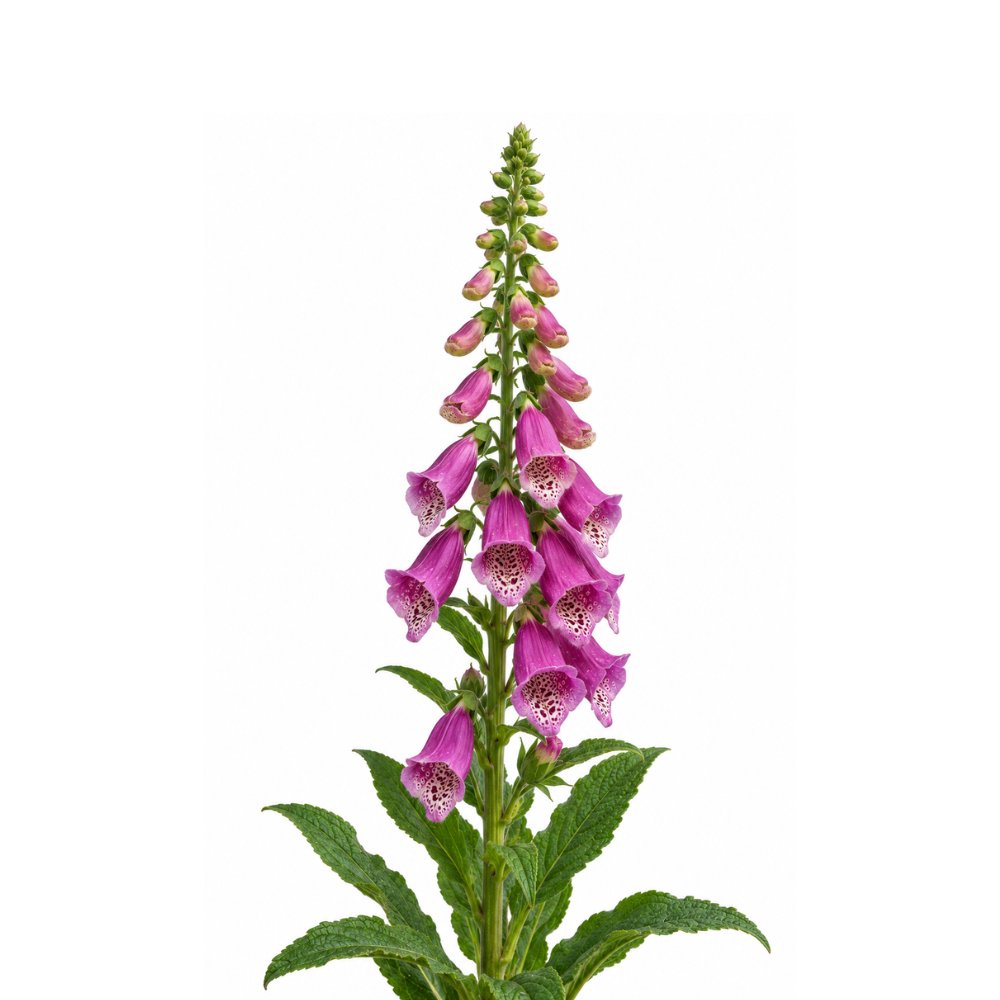
Foxglove (Digitalis purpurea and D. lanata)
digitoxin, gitoxin and digoxin; woolly foxglove, D. lanata, is the commercial source of digoxin
Lily of the valley
convallatoxin and convalloside
Oleander and yellow oleander
oleandrin and the thevetins
Strophanthus and Acokanthera
ouabain, once an African arrow poison
Squill (Drimia maritima)
scillaren and proscillaridin; red squill was sold as a rat poison
Hellebores and pheasant's eye (Adonis)
hellebrin and adonitoxin
Kalanchoe (Bryophyllum)
the bryophyllins and daigremontianin, a cause of livestock poisoning
Milkweeds
the cardenolides that monarch butterflies store to make themselves poisonous to birds
What They Do
Every cardiac glycoside blocks the same pump, the Na+/K+-ATPase. With the pump slowed, sodium builds up inside heart muscle cells, more calcium stays inside with it, and the muscle contracts harder. They also act through the vagus nerve to slow conduction through the heart, which slows a fast, irregular rhythm.
So the members do not have different effects. They have the same effect at different strengths and for different lengths of time. That is why foxglove could be replaced by purified digoxin: the drug did what the leaf did, at a dose that could be measured.
William Withering described foxglove for dropsy, the swelling of heart failure, in 1785. Digoxin is still prescribed for atrial fibrillation and heart failure, with blood levels monitored. No herbal preparation of any of these plants is a safe substitute.
Toxicity & Safety
Poisoning starts with nausea, vomiting and loss of appetite, often with blurred or yellow-tinted vision, and goes on to slow or irregular heartbeats that can be fatal.
Low potassium makes it worse. Diuretics, stimulant laxatives such as senna, and liquorice all raise the risk for anyone taking digoxin.
Whole-plant poisonings come from mistaken identity and from self-harm. Foxglove leaves have been mistaken for comfrey and lily of the valley leaves for wild garlic, and yellow oleander seeds are a common means of self-poisoning in South Asia.
The antidote is digoxin-specific antibody fragments, which bind other cardiac glycosides well enough to be used in oleander poisoning. None of these plants is suitable for home use.
Constituents
All Cardiac Glycosides
8 totalNo cardiac glycosides match.
Not yet in the database: Convallatoxin, Convalloside, Bryophyllin A, Daigremontianin, Ouabain, Oleandrin, Lanatoside C, Scillaren A, Proscillaridin, Hellebrin, Adonitoxin, Thevetin A, Calotropin, Cymarin.
Source Plants
Herbs Containing Cardiac Glycosides
2 herbsPlants in the materia medica documented to carry cardiac glycosides, with the compounds each one is listed for. The bar counts how many DISTINCT cardiac glycosides are on record for a plant, relative to the best-documented — it measures breadth of record, not potency, so a plant with one well-studied compound can outrank a richer source that has simply been analysed less. No concentration figures are on record for this class yet, so nothing here distinguishes a major source from a trace.
Keep Exploring
Other Compound Classes
Keep Reading
 GuidesThe Best Kava: A Buyer's GuideHow to buy good kava: noble vs two-day cultivars, which part of the root, chemotype codes, origin, form, and the batch tests a seller should show you.
Read more
 GuidesThe Amazon's Endangered Medicinal PlantsThe Amazon gives us some of our most important medicines — but which healing plants are actually endangered?
Read more
 NutritionThe Best Yerba Maté Brands [Reviewed]A drinker's guide to buying yerba maté — what actually changes the taste, and ten brands worth your money.
Read more
 GuidesHow to Prepare Yerba Maté — The Five Best MethodsHow to brew yerba maté properly — the traditional gourd method, plus tereré, french press and cold brew.
Read more