Materia Medica
Foxglove ☠️
Digitalis purpurea
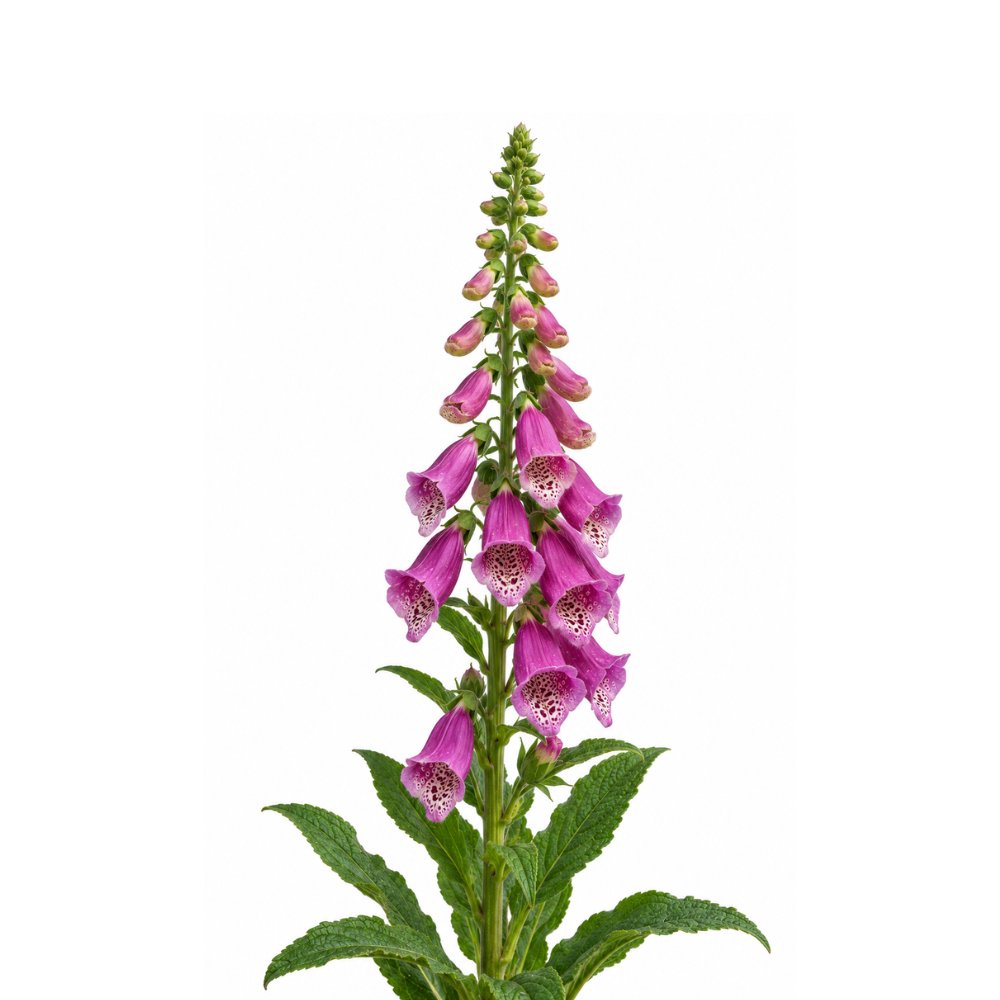
Foxglove is a tall European biennial with spikes of purple, bell-shaped flowers, and every part of it is poisonous. Its leaves contain the cardiac glycosides digitoxin and gitoxin, and it is the source of the heart drug digitoxin.
What Is Foxglove?
Foxglove is a tall European biennial with one-sided spikes of drooping, purple, bell-shaped flowers, and every part of it is poisonous. Its leaves contain cardiac glycosides, chiefly digitoxin and gitoxin, which act directly on the heart 14,
Digitalis purpurea grows wild in western Europe and northern Morocco, on acid soils in woodland clearings, heaths and hedge banks 29,
The same glycosides that poison also treat heart failure. Foxglove leaf entered medicine through William Withering’s Account of the Foxglove (1785), and its glycosides are now purified and prescribed as measured doses under medical supervision 20,
In its first year foxglove is a low rosette of soft grey-green leaves. At that stage it has been mistaken for comfrey, borage and sorrel, and eaten 15,
Identification & Lookalikes
Foxglove spends its first year as a flat basal rosette of softly downy, grey-green, conspicuously veined leaves with a scalloped edge, and no flower stalk 29,
| Plant confused with it | How it differs |
|---|---|
| Comfrey (Symphytum officinale) | The best-documented confusion. In the published cases the leaves were picked as comfrey and brewed into a home-made tea 26, |
| Borage (Borago officinalis) | Mistaken for foxglove in a home-made pie and in a dish of garden vegetables 16, |
| Sorrel (Rumex acetosa) | Mistaken for foxglove in a wild-herb smoothie picked in woodland 15Reference 15Case reportKingma JS, Frenay IM, et al. (2020). [A poisonous spring smoothie with wild herbs: accidental intoxication with foxglove (Digitalis purpurea)] — case report. Ned Tijdschr Geneeskd 164:D5306. https://pubmed.ncbi.nlm.nih.gov/33331728/View study → |
| Mullein (Verbascum thapsus) | Also forms a first-year rosette of large grey-green, velvety leaves. Mullein’s leaves and stems are densely woolly, and its second-year spike carries yellow flowers 32Reference 32Symphytum officinale, Borago officinalis and Verbascum thapsusView study → |
Taste and appearance give no guide to how much glycoside a leaf holds. Levels vary with the season and the place the plant grew, and with how the leaf is dried 14,
Botany
Foxglove is a biennial herb in the plantain family (Plantaginaceae) 31Reference 31Digitalis purpurea (common foxglove)View study →. Older floras place it in Scrophulariaceae, where Flora of China still treats it 30Reference 30Digitalis purpureaView study →.
In its first year the plant forms a rosette of oblong to lance-shaped, softly hairy, grey-green leaves with rounded teeth along the edge 29,
In the second year a flowering stem grows from the centre of the rosette, usually 60–120 cm tall and occasionally up to 2 m 29,
The fruit is a capsule about 1.1–1.5 cm long holding around 1,000 tiny seeds, and an average plant produces about 85,000 seeds, shaken out by the wind 29,
The related woolly foxglove, Digitalis lanata, is the species whose leaves contain digoxin and supply the drug 16Reference 16Case reportA Case Report of Accidental Intoxication following Ingestion of Foxglove Confused with Borage — case reportView study →. The decorative foxgloves grown in gardens are mostly forms of D. purpurea itself 29Reference 29Digitalis purpurea L., Foxglove — Fermanagh Species AccountsView study →.
Distribution
Foxglove is native to western and south-western Europe and northern Morocco 29,
It grows mainly on dry or well-drained acid soils, particularly where the ground has been disturbed by woodland clearing, fire or grazing animals 29Reference 29Digitalis purpurea L., Foxglove — Fermanagh Species AccountsView study →. Typical habitats are open woodland, heathland, scrub margins, clearings, hedge banks, road verges and waste ground, and it also grows on cliffs and walls 29Reference 29Digitalis purpurea L., Foxglove — Fermanagh Species AccountsView study →. It is much rarer in limestone districts 29Reference 29Digitalis purpurea L., Foxglove — Fermanagh Species AccountsView study →. In Britain and Ireland it reaches about 885 m 29Reference 29Digitalis purpurea L., Foxglove — Fermanagh Species AccountsView study →.
Foxglove has been spread well beyond its native range as a garden and medicinal plant. It is now naturalised in parts of central and northern Europe, North and South America, southern Australia and New Zealand 29Reference 29Digitalis purpurea L., Foxglove — Fermanagh Species AccountsView study →, and in disturbed ground at low elevations in China 30Reference 30Digitalis purpureaView study →.
In some of these places it is a listed environmental weed. It has invaded moist and wet forest, riparian areas and rainforest in Victoria and Tasmania 34Reference 34Digitalis purpurea — fact sheetView study →. Tasmania declared every seed-producing foxglove a pest under its Biosecurity Act 2019; sterile garden cultivars are exempt 35Reference 35Foxglove (Digitalis) — declared weeds indexView study →. In New Zealand, where it was first recorded as naturalised in 1867, it is on the Department of Conservation’s 2024 list of environmental weeds 36Reference 36Digitalis purpureaView study →.
The species is abundant and not of conservation concern 29Reference 29Digitalis purpurea L., Foxglove — Fermanagh Species AccountsView study →.
Phytochemistry
Foxglove leaf is characterised by cardenolides, steroid glycosides carrying chains of sugars 12,
Digitoxin is the main glycoside of D. purpurea leaf, alongside gitoxin 14,
The glycosides are built on the aglycones digitoxigenin, gitoxigenin and gitaloxigenin, the last giving gitaloxin 13Reference 13High-resolution tandem mass spectrometry dataset reveals fragmentation patterns of cardiac glycosides in leaves of the foxglove plantsView study →. The sugar chains attached to them affect how the glycosides are absorbed and how long they last.
Digoxin is the leaf glycoside of D. lanata, the species that supplies the drug, and D. purpurea leaf generally does not contain it 16Reference 16Case reportA Case Report of Accidental Intoxication following Ingestion of Foxglove Confused with Borage — case reportView study →. Laboratory digoxin tests cross-react with the other glycosides, so a raised “digoxin” reading is common in foxglove poisoning 15,
Digitonin is a steroidal saponin, not a cardenolide, and has no action on the heart. The seed is especially rich in it, at 18.4 mg/g, against 0.11 mg/g in the leaf 14Reference 14HPLC method validation for Digitalis and its analogue by pulsed amperometric detectionView study →.
Glycoside levels vary greatly with the season and the place the plant grew 15Reference 15Case reportKingma JS, Frenay IM, et al. (2020). [A poisonous spring smoothie with wild herbs: accidental intoxication with foxglove (Digitalis purpurea)] — case report. Ned Tijdschr Geneeskd 164:D5306. https://pubmed.ncbi.nlm.nih.gov/33331728/View study →. This is why the crude leaf cannot be dosed.
Constituent Summary
Amounts are for dried leaf unless stated.
Cardiac Glycoside6 compounds5 with data
Steroidal Saponin1 compound1 with data
Toxicology
Class of poison. Cardenolide (cardiac glycoside), an inhibitor of the sodium–potassium pump (Na⁺/K⁺-ATPase) 12Reference 12ReviewNa⁺/K⁺-ATPase Revisited: On Its Mechanism of Action, Role in Cancer, and Activity Modulation — reviewView study →.
Mechanism. Digitoxin and its relatives block the Na⁺/K⁺-ATPase, the pump every cell uses to keep sodium out 12Reference 12ReviewNa⁺/K⁺-ATPase Revisited: On Its Mechanism of Action, Role in Cancer, and Activity Modulation — reviewView study →. In heart muscle, sodium builds up inside the cell and calcium follows it, so each contraction is stronger. Past a narrow point the same calcium loading triggers abnormal beats, which is why poisoning shows itself as arrhythmia. The therapeutic effect and the toxic effect come from the same action.
Course. Poisoning begins in the gut, with nausea, vomiting and weakness 22,
Potassium. Because the poisoned pump is what moves potassium into cells, severe acute poisoning raises blood potassium 22Reference 22ReviewAntidote use for cardiac arrest or hemodynamic instability due to cardiac glycoside poisoning: a narrative review — reviewView study →. Marked hyperkalaemia goes with severe poisoning and a poor outcome 22Reference 22ReviewAntidote use for cardiac arrest or hemodynamic instability due to cardiac glycoside poisoning: a narrative review — reviewView study →. A woman who died after drinking foxglove leaf brewed as comfrey tea had a potassium of 7.6 mEq/L on arrival 26Reference 26Case reportFatal cardiac glycoside poisoning due to mistaking foxglove for comfrey — case reportView study →.
Potency. No reliable figure exists for plant material, because glycoside content varies with season, place and drying 14,
Antidote. Digoxin-specific antibody fragments (Fab) bind the glycoside. They are associated with better survival in poisoning by the medicines 22Reference 22ReviewAntidote use for cardiac arrest or hemodynamic instability due to cardiac glycoside poisoning: a narrative review — reviewView study →. The evidence in plant poisoning is scarcer, and Fab has failed in some foxglove cases 22,
Fatalities. Deaths are documented. A 55-year-old woman died of refractory ventricular arrhythmia after drinking foxglove leaf tea she believed was comfrey, despite Fab and heart–lung bypass 26Reference 26Case reportFatal cardiac glycoside poisoning due to mistaking foxglove for comfrey — case reportView study →. In an outbreak from the same mistake, nine people were poisoned and all recovered 27Reference 27Case reportAn outbreak of foxglove leaf poisoning — case seriesView study →. Deliberate self-poisoning with foxglove also occurs 18Reference 18ReviewDeliberate Self-Poisoning with Plants in Southeastern France, a Poison Center 20-Year Report — reviewView study →. Livestock can be poisoned by hay that contains foxglove 29Reference 29Digitalis purpurea L., Foxglove — Fermanagh Species AccountsView study →.
Traditional & Historical Use
Early Use and Withering’s Account (1785)
Foxglove appears in medical writing as early as 1250, among the remedies of the Physicians of Myddfai, a Welsh family of healers 20Reference 20Norn S, Kruse PR (2004). [Cardiac glycosides: From ancient history through Withering’s foxglove to endogenous cardiac glycosides] — historical article. Dan Medicinhist Arbog 32:119-132. https://pubmed.ncbi.nlm.nih.gov/15685783/View study →. It was used erratically until the eighteenth century 20Reference 20Norn S, Kruse PR (2004). [Cardiac glycosides: From ancient history through Withering’s foxglove to endogenous cardiac glycosides] — historical article. Dan Medicinhist Arbog 32:119-132. https://pubmed.ncbi.nlm.nih.gov/15685783/View study →.
The Birmingham physician William Withering published An Account of the Foxglove and Some of Its Medical Uses in 1785 20Reference 20Norn S, Kruse PR (2004). [Cardiac glycosides: From ancient history through Withering’s foxglove to endogenous cardiac glycosides] — historical article. Dan Medicinhist Arbog 32:119-132. https://pubmed.ncbi.nlm.nih.gov/15685783/View study →. He reported the results of 163 patients with dropsy (water retention), including those it failed to help 21Reference 21Pagliaro L, Colli A, Bobbio M (2015). [Individual response to treatment: from Withering to contemporary medicine] — historical article. Recenti Prog Med 106(7):308-315. https://pubmed.ncbi.nlm.nih.gov/26228721/View study →. He sorted them into those who responded and those who did not, and recognised the responders as people with heart failure 21Reference 21Pagliaro L, Colli A, Bobbio M (2015). [Individual response to treatment: from Withering to contemporary medicine] — historical article. Recenti Prog Med 106(7):308-315. https://pubmed.ncbi.nlm.nih.gov/26228721/View study →.
The fluid loss Withering saw follows from a stronger heartbeat rather than from a direct action on the kidney.
Irish Folk Use and Child Deaths (19th Century)
In nineteenth-century Ireland, foxglove was known as luss-more, “the great herb”. A handful of fresh leaves was boiled in water and the liquid given to a sick child believed to be a fairy changeling, in order to drive the fairy out 37Reference 37Case reportDeleterious practice of some of the Irish peasantry connected with the belief in fairies — [historical case report]View study →. It was also given to children with epilepsy, who were thought to be fairy-struck 37Reference 37Case reportDeleterious practice of some of the Irish peasantry connected with the belief in fairies — [historical case report]View study →.
The practice killed children. William Pickells, a Cork physician, described a family in which two of three children given the herb died, and a local botanic-garden curator who knew of nearly a dozen fatal cases in his own neighbourhood 37Reference 37Case reportDeleterious practice of some of the Irish peasantry connected with the belief in fairies — [historical case report]View study →. In March 1851 a woman in Nenagh, County Tipperary, was convicted of causing the death of a girl of about six by giving her large doses of foxglove 37Reference 37Case reportDeleterious practice of some of the Irish peasantry connected with the belief in fairies — [historical case report]View study →.
Pharmacopoeial Use (Now Obsolete)
Dried foxglove leaf remained an official drug into the twentieth century. In Denmark the leaves of D. purpurea and D. lanata were tested for glycoside activity, and the standardised powder was made into tinctures, infusions and tablets 20Reference 20Norn S, Kruse PR (2004). [Cardiac glycosides: From ancient history through Withering’s foxglove to endogenous cardiac glycosides] — historical article. Dan Medicinhist Arbog 32:119-132. https://pubmed.ncbi.nlm.nih.gov/15685783/View study →. Foxglove tinctures were in the Danish pharmacopoeia by 1828, before the drug could be standardised 20Reference 20Norn S, Kruse PR (2004). [Cardiac glycosides: From ancient history through Withering’s foxglove to endogenous cardiac glycosides] — historical article. Dan Medicinhist Arbog 32:119-132. https://pubmed.ncbi.nlm.nih.gov/15685783/View study →.
Once the glycosides were isolated and their structures known, the purified compounds replaced the leaf 20Reference 20Norn S, Kruse PR (2004). [Cardiac glycosides: From ancient history through Withering’s foxglove to endogenous cardiac glycosides] — historical article. Dan Medicinhist Arbog 32:119-132. https://pubmed.ncbi.nlm.nih.gov/15685783/View study →. Foxglove has no place in modern herbal practice.
The Drugs Derived From It
Foxglove’s glycosides are prescription medicines for heart failure and for controlling the heart rate in atrial fibrillation. Digitoxin is the main glycoside of D. purpurea, and digoxin comes from D. lanata, the source of that drug 16Reference 16Case reportA Case Report of Accidental Intoxication following Ingestion of Foxglove Confused with Borage — case reportView study →. Both are given at measured doses with blood-level monitoring, because the gap between a working dose and a toxic one is small.
The heart-failure evidence comes from two large randomised trials. Digitoxin lowered the combined risk of death or hospital admission for heart failure in DIGIT-HF, and digoxin reduced hospital admissions, without reducing deaths, in the DIG trial 1,
Long-term digoxin use is linked to a higher incidence of breast and uterine cancer, through an estrogen-like effect 9,
All of this evidence belongs to the purified glycosides at controlled doses. None of it was measured on the leaf.
Prescriptions for these drugs have fallen, but reports of digitoxin exposure to a German poison centre rose steadily from 1990 to 2023 19Reference 19Critical analysis of digitalis glycosides: declining use but increasing poison-center exposure cases for digitoxinView study →.
1. Cardiotonic (Heart Failure)
Cardiac glycosides increase the force of the heart’s contraction and slow conduction through the AV node, the basis of their use in heart failure and in rate control for atrial fibrillation.
The DIGIT-HF trial randomised 1,240 patients with heart failure and reduced ejection fraction to digitoxin, starting at 0.07 mg once daily, or placebo, on top of standard therapy 1Reference 1RCTDigitoxin in Patients with Heart Failure and Reduced Ejection Fraction — randomised controlled trial (DIGIT-HF)View study →. Over a median 36 months, death from any cause or first hospital admission for worsening heart failure occurred in 39.5% on digitoxin and 44.1% on placebo (HR 0.82, 95% CI 0.69–0.98, P=0.03). Deaths alone did not differ significantly (HR 0.86, 95% CI 0.69–1.07) 1Reference 1RCTDigitoxin in Patients with Heart Failure and Reduced Ejection Fraction — randomised controlled trial (DIGIT-HF)View study →.
The earlier DIG trial randomised 6,800 patients to digoxin (median 0.25 mg/day) or placebo. Mortality was unchanged (34.8% vs 35.1%), and fewer patients were admitted to hospital for worsening heart failure (26.8% vs 34.7%) 2Reference 2RCTThe effect of digoxin on mortality and morbidity in patients with heart failure — randomised controlled trial (DIG)View study →.
Meta-analyses of mostly observational data link digoxin with higher all-cause mortality: HR 1.21 across 326,426 patients, and 1.29 in atrial fibrillation 3,
Gap: the drugs improve symptoms and hospital admissions, and their effect on survival is neutral at best. No modern controlled trial has tested a whole-leaf preparation.
2. Anti-Inflammatory
Cardiac glycosides suppress NF-κB signalling, a driver of the neutrophil-rich airway inflammation of cystic fibrosis 11,
A single-site, randomised, double-blind, placebo-controlled trial gave digitoxin at 0.05 or 0.1 mg daily, or placebo, to 24 adults with cystic fibrosis for 28 days 6Reference 6RCTDigitoxin for Airway Inflammation in Cystic Fibrosis: Preliminary Assessment of Safety, Pharmacokinetics, and Dose Finding — Phase II randomised controlled trialView study →. The drug was safe at 0.1 mg daily. It did not significantly lower sputum IL-8 or neutrophil counts, the primary outcomes, although the higher dose reduced the expression of inflammatory genes in nasal cells 6Reference 6RCTDigitoxin for Airway Inflammation in Cystic Fibrosis: Preliminary Assessment of Safety, Pharmacokinetics, and Dose Finding — Phase II randomised controlled trialView study →.
Gap: one small, 28-day trial of the isolated drug, which missed its primary outcome.
3. Anticancer
In KRAS-mutant colon-cancer cells, digitoxin promoted apoptosis and reduced proliferation and migration by lowering HIF-1α and STAT3 7Reference 7In vitroDigitoxin promotes apoptosis and inhibits proliferation and migration by reducing HIF-1α and STAT3 in KRAS mutant human colon cancer cells — in vitroView study →. This fits a wider body of cell work on the Na⁺/K⁺-ATPase as a cancer target 12Reference 12ReviewNa⁺/K⁺-ATPase Revisited: On Its Mechanism of Action, Role in Cancer, and Activity Modulation — reviewView study →.
The human data point the other way. In Danish national registries, women currently taking digoxin had more breast cancer (RR 1.39) and uterine cancer (RR 1.48), and the breast-cancer risk returned to baseline once the drug was stopped 9,
Gap: the anticancer signal is from cell lines only, while the human data show higher cancer risk with long-term use.
Mechanisms
Foxglove’s cardenolides inhibit the Na⁺/K⁺-ATPase 12Reference 12ReviewNa⁺/K⁺-ATPase Revisited: On Its Mechanism of Action, Role in Cancer, and Activity Modulation — reviewView study →. In heart muscle this raises intracellular sodium and then calcium, which strengthens contraction and, at higher levels, triggers arrhythmia. The glycosides also slow conduction through the AV node.
The same pump inhibition has been studied for its effects on NF-κB signalling, on cancer-cell survival and on viral replication, almost entirely in cells 7,
| Mechanism | Drives | Key compounds |
|---|---|---|
| Na⁺/K⁺-ATPase inhibition → ↑ intracellular Na⁺ → ↑ Ca²⁺ via Na⁺/Ca²⁺ exchange | positive inotropy (heart failure)toxicity | digitoxin, digoxin, gitoxin |
| Vagal tone ↑, AV-node conduction ↓ | rate control in atrial fibrillation | digitoxin, digoxin |
| NF-κB ↓, IL-8 ↓ | anti-inflammatory (airway) | digitoxin |
| Na⁺/K⁺-ATPase signalling → HIF-1α ↓, STAT3 ↓ | antiproliferative (preclinical) | digitoxin |
| Host Na⁺/K⁺-ATPase-dependent viral replication blocked | antiviral (preclinical) | cardenolide glycosides |
Clinical Trials
Three completed human trials test the isolated glycosides: DIGIT-HF (digitoxin) and DIG (digoxin) in heart failure, and a Phase II digitoxin study in cystic fibrosis. No trial has tested a crude D. purpurea leaf preparation.
| Completed | Planned | Terminated | Preclinical |
|---|---|---|---|
| 3(DIGIT-HF, DIG, CF Phase II) | 0 | 0 | many(class-level cell and animal work) |
Last checked: August 2026.
Pharmaceutical Doses — Not Herbal Ones
These are the doses of the purified prescription drugs used in the trials, given under blood-level monitoring. There is no herbal dose of foxglove.
| Indication | Preparation | Dose | Est. dried-herb equivalent | Source |
|---|---|---|---|---|
| Heart failure (reduced ejection fraction) | Isolated digitoxin (prescription drug) | 0.07 mg once daily to start | Not derivable | 1Reference 1RCTDigitoxin in Patients with Heart Failure and Reduced Ejection Fraction — randomised controlled trial (DIGIT-HF)View study → |
| Heart failure | Isolated digoxin (prescription drug) | median 0.25 mg/day | Not derivable | 2Reference 2RCTThe effect of digoxin on mortality and morbidity in patients with heart failure — randomised controlled trial (DIG)View study → |
| Cystic-fibrosis airway inflammation | Isolated digitoxin (Phase II) | 0.05 or 0.1 mg/day for 28 days | Not derivable | 6Reference 6RCTDigitoxin for Airway Inflammation in Cystic Fibrosis: Preliminary Assessment of Safety, Pharmacokinetics, and Dose Finding — Phase II randomised controlled trialView study → |
No dried-leaf equivalent can be given, because leaf glycoside content varies too widely 14,
Historical Leaf Dose (Obsolete)
| System | Preparation | Dose |
|---|---|---|
| Western medicine (historical, obsolete) | Powdered dried leaf, tincture or infusion | Adjusted to the individual patient’s response (Withering, 1785). Not used in modern practice 20, |
Safety & Pregnancy
Foxglove is poisonous in every part. Its glycosides have a narrow margin between a working dose and a lethal one, and the leaf’s content cannot be predicted.
- A poisonous plant. A few leaves can cause dangerous heart rhythms, and deaths are documented 16,
26Reference 16Case reportA Case Report of Accidental Intoxication following Ingestion of Foxglove Confused with Borage — case reportView study →Reference 26Case reportFatal cardiac glycoside poisoning due to mistaking foxglove for comfrey — case reportView study → . - Mistaken identity is the usual route. The first-year rosette has been eaten in place of comfrey, borage and sorrel 15,
16, .26Reference 15Case reportKingma JS, Frenay IM, et al. (2020). [A poisonous spring smoothie with wild herbs: accidental intoxication with foxglove (Digitalis purpurea)] — case report. Ned Tijdschr Geneeskd 164:D5306. https://pubmed.ncbi.nlm.nih.gov/33331728/View study →Reference 16Case reportA Case Report of Accidental Intoxication following Ingestion of Foxglove Confused with Borage — case reportView study →Reference 26Case reportFatal cardiac glycoside poisoning due to mistaking foxglove for comfrey — case reportView study → - Heart poisoning. Vomiting, slow or irregular heart rhythm, heart block, high potassium, and sometimes yellow vision 22,
23, .26Reference 22ReviewAntidote use for cardiac arrest or hemodynamic instability due to cardiac glycoside poisoning: a narrative review — reviewView study →Reference 23Case reportXanthopsia due to digoxin toxicity as a cause of traffic accidents — case reportView study →Reference 26Case reportFatal cardiac glycoside poisoning due to mistaking foxglove for comfrey — case reportView study → - The medicines are prescription-only. The benefits belong to purified digitoxin or digoxin under monitoring, never to the leaf 1,
2Reference 1RCTDigitoxin in Patients with Heart Failure and Reduced Ejection Fraction — randomised controlled trial (DIGIT-HF)View study →Reference 2RCTThe effect of digoxin on mortality and morbidity in patients with heart failure — randomised controlled trial (DIG)View study → . - Drug interactions. Digitoxin, the main glycoside, is cleared by CYP3A and carried by P-glycoprotein, so drugs acting on either can change its levels; rifampicin sharply lowered it in a patient 38,
39, .40Reference 38In vitroP-glycoprotein-mediated transport of digitoxin, alpha-methyldigoxin and beta-acetyldigoxin — in vitroView study →Reference 39In vitroSpecies differences in the toxicity and cytochrome P450 IIIA-dependent metabolism of digitoxin — in vitro (human and animal liver microsomes)View study →Reference 40Case reportInteraction of rifampin and digitoxin — case reportView study → - Unpredictable content. Glycoside levels vary with season, place and drying, so the leaf has no safe dose 14,
15Reference 14HPLC method validation for Digitalis and its analogue by pulsed amperometric detectionView study →Reference 15Case reportKingma JS, Frenay IM, et al. (2020). [A poisonous spring smoothie with wild herbs: accidental intoxication with foxglove (Digitalis purpurea)] — case report. Ned Tijdschr Geneeskd 164:D5306. https://pubmed.ncbi.nlm.nih.gov/33331728/View study → .
Full Safety Detail
How poisoning shows itself. Glycoside poisoning begins with nausea, vomiting and weakness, and can bring confusion 22Reference 22ReviewAntidote use for cardiac arrest or hemodynamic instability due to cardiac glycoside poisoning: a narrative review — reviewView study →. The dangerous features are in the heart: high blood potassium, a slow heart rate, heart block and ventricular arrhythmias that can be fatal 22,
How people are poisoned. Foxglove has almost no herbal use, so poisoning comes from mistaking the leaves for something edible. Published cases include foxglove brewed as comfrey tea 26,
Drug interactions. Digitoxin, the main glycoside of this species, is carried by the P-glycoprotein transporter in the same way as digoxin 38Reference 38In vitroP-glycoprotein-mediated transport of digitoxin, alpha-methyldigoxin and beta-acetyldigoxin — in vitroView study →. In people, drugs that block or induce this transporter change digoxin levels 25Reference 25Systematic reviewA systematic review and classification of the effects of P-glycoprotein inhibitors and inducers in humans, using digoxin, fexofenadine, and dabigatran as probe drugs — systematic reviewView study →.
Digitoxin is broken down mainly by the liver enzyme CYP3A 39Reference 39In vitroSpecies differences in the toxicity and cytochrome P450 IIIA-dependent metabolism of digitoxin — in vitro (human and animal liver microsomes)View study →. In a patient taking digitoxin, adding rifampicin, which induces CYP3A, made blood digitoxin fall markedly until it was stopped 40Reference 40Case reportInteraction of rifampin and digitoxin — case reportView study →. Potassium-losing diuretics add to toxicity by lowering blood potassium. These interactions are known for the purified drugs. No crude foxglove preparation is in legitimate use.
Avoid. Foxglove must not be used in pregnancy or while breastfeeding. It is a poisonous plant with no safe dose, and its glycoside content is unpredictable. The crude plant has never been studied in pregnancy or lactation.
References
- Bavendiek U, Großhennig A, et al. (2025). Digitoxin in Patients with Heart Failure and Reduced Ejection Fraction — randomised controlled trial (DIGIT-HF). N Engl J Med 393(12):1155-1165. https://pubmed.ncbi.nlm.nih.gov/40879434/
- Digitalis Investigation Group (1997). The effect of digoxin on mortality and morbidity in patients with heart failure — randomised controlled trial (DIG). N Engl J Med 336(8):525-533. https://pubmed.ncbi.nlm.nih.gov/9036306/
- Vamos M, Erath JW, Hohnloser SH (2015). Digoxin-associated mortality: a systematic review and meta-analysis of the literature. Eur Heart J 36(28):1831-1838. https://pubmed.ncbi.nlm.nih.gov/25939649/
- Ziff OJ, Lane DA, et al. (2015). Safety and efficacy of digoxin: systematic review and meta-analysis of observational and controlled trial data. BMJ 351:h4451. https://pubmed.ncbi.nlm.nih.gov/26321114/
- Vamos M, Erath JW, et al. (2019). Meta-Analysis of Effects of Digoxin on Survival in Patients with Atrial Fibrillation or Heart Failure: An Update. Am J Cardiol 123(1):69-74. https://pubmed.ncbi.nlm.nih.gov/30539748/
- Zeitlin PL, Diener-West M, et al. (2017). Digitoxin for Airway Inflammation in Cystic Fibrosis: Preliminary Assessment of Safety, Pharmacokinetics, and Dose Finding — Phase II randomised controlled trial. Ann Am Thorac Soc 14(2):220-229. https://pubmed.ncbi.nlm.nih.gov/28006108/
- Mi C, Cao X, Ma K, et al. (2022). Digitoxin promotes apoptosis and inhibits proliferation and migration by reducing HIF-1α and STAT3 in KRAS mutant human colon cancer cells — in vitro. Chem Biol Interact 351:109729. https://pubmed.ncbi.nlm.nih.gov/34717917/
- Boursi B, Huber JS, et al. (2021). Digoxin use is associated with pancreatic cancer risk but does not affect survival — nested case-control cohort. Cancer Causes Control 32(1):41-48. https://pubmed.ncbi.nlm.nih.gov/33064241/
- Biggar RJ, Wohlfahrt J, Oudin A, et al. (2011). Digoxin use and the risk of breast cancer in women — cohort. J Clin Oncol 29(16):2165-2170. https://pubmed.ncbi.nlm.nih.gov/21422417/
- Biggar RJ, Wohlfahrt J, Melbye M (2012). Digoxin use and the risk of cancers of the corpus uteri, ovary and cervix — cohort. Int J Cancer 131(3):716-721. https://pubmed.ncbi.nlm.nih.gov/21913187/
- Škubník J, Bejček J, et al. (2021). Repurposing Cardiac Glycosides: Drugs for Heart Failure Surmounting Viruses — review. Molecules 26(18):5627. https://pubmed.ncbi.nlm.nih.gov/34577097/
- Bejček J, Spiwok V, et al. (2021). Na⁺/K⁺-ATPase Revisited: On Its Mechanism of Action, Role in Cancer, and Activity Modulation — review. Molecules 26(7):1905. https://pubmed.ncbi.nlm.nih.gov/33800655/
- Ravi BG, Guardian MGE, et al. (2020). High-resolution tandem mass spectrometry dataset reveals fragmentation patterns of cardiac glycosides in leaves of the foxglove plants. Data Brief 30:105464. https://pubmed.ncbi.nlm.nih.gov/32300626/
- Kwon HJ, Sim HJ, et al. (2011). HPLC method validation for Digitalis and its analogue by pulsed amperometric detection. J Pharm Biomed Anal 54(1):217-221. https://pubmed.ncbi.nlm.nih.gov/20800985/
- Kingma JS, Frenay IM, et al. (2020). [A poisonous spring smoothie with wild herbs: accidental intoxication with foxglove (Digitalis purpurea)] — case report. Ned Tijdschr Geneeskd 164:D5306. https://pubmed.ncbi.nlm.nih.gov/33331728/
- Negroni MS, Marengo A, et al. (2019). A Case Report of Accidental Intoxication following Ingestion of Foxglove Confused with Borage — case report. Case Rep Cardiol 2019:9707428. https://pubmed.ncbi.nlm.nih.gov/31871798/
- Iraci F, Herdeg C, et al. (2023). Of mixed vegetables and cardiac arrhythmias — foxglove poisoning case series. J Cardiol Cases 28(2):86-90. https://pubmed.ncbi.nlm.nih.gov/37521578/
- Torrents R, Reynoard J, et al. (2023). Deliberate Self-Poisoning with Plants in Southeastern France, a Poison Center 20-Year Report — review. Toxins (Basel) 15(12):671. https://pubmed.ncbi.nlm.nih.gov/38133175/
- Ecker PAM, Schaper A, et al. (2026). Critical analysis of digitalis glycosides: declining use but increasing poison-center exposure cases for digitoxin. Eur J Clin Pharmacol 82(7):186. https://pubmed.ncbi.nlm.nih.gov/42334625/
- Norn S, Kruse PR (2004). [Cardiac glycosides: From ancient history through Withering’s foxglove to endogenous cardiac glycosides] — historical article. Dan Medicinhist Arbog 32:119-132. https://pubmed.ncbi.nlm.nih.gov/15685783/
- Pagliaro L, Colli A, Bobbio M (2015). [Individual response to treatment: from Withering to contemporary medicine] — historical article. Recenti Prog Med 106(7):308-315. https://pubmed.ncbi.nlm.nih.gov/26228721/
- Beaulieu J, St-Onge M (2024). Antidote use for cardiac arrest or hemodynamic instability due to cardiac glycoside poisoning: a narrative review — review. Resusc Plus 19:100690. https://pubmed.ncbi.nlm.nih.gov/39006132/
- Haruna Y, Kawasaki T, Kikkawa Y, Mizuno R, Matoba S (2020). Xanthopsia due to digoxin toxicity as a cause of traffic accidents — case report. Am J Case Rep 21:e924025. https://pubmed.ncbi.nlm.nih.gov/32769961/
- Grimard C, De Labriolle A, Charbonnier B, Babuty D (2005). Bidirectional ventricular tachycardia resulting from digoxin toxicity — case report. J Cardiovasc Electrophysiol 16(7):807-808. https://pubmed.ncbi.nlm.nih.gov/16050845/
- Coumau C, Csajka C (2025). A systematic review and classification of the effects of P-glycoprotein inhibitors and inducers in humans, using digoxin, fexofenadine, and dabigatran as probe drugs — systematic review. Clin Pharmacokinet 64(6):849-863. https://pubmed.ncbi.nlm.nih.gov/40349292/
- Wu IL, Yu JH, Lin CC, Seak CJ, Olson KR, Chen HY (2017). Fatal cardiac glycoside poisoning due to mistaking foxglove for comfrey — case report. Clin Toxicol (Phila) 55(7):670-673. https://pubmed.ncbi.nlm.nih.gov/28463019/
- Lin CC, Yang CC, Phua DH, Deng JF, Lu LH (2010). An outbreak of foxglove leaf poisoning — case series. J Chin Med Assoc 73(2):97-100. https://pubmed.ncbi.nlm.nih.gov/20171590/
- Vithayathil MK, Edwards M (2016). Comfrey herbal remedy causing second-degree heart block: do not be outfoxed by digitalis — case report. BMJ Case Rep 2016:bcr2016216995. https://pubmed.ncbi.nlm.nih.gov/27908913/
- Botanical Society of Britain and Ireland (n.d.). Digitalis purpurea L., Foxglove — Fermanagh Species Accounts. https://fermanagh.bsbi.org/digitalis-purpurea-l
- Hong D, Yang H, Jin C, Fischer MA, Holmgren NH, Mill RR (n.d.). Digitalis purpurea. In: Flora of China, Vol. 18 (Scrophulariaceae). http://www.efloras.org/florataxon.aspx?flora_id=2&taxon_id=200020644
- NC State Extension (n.d.). Digitalis purpurea (common foxglove). North Carolina Extension Gardener Plant Toolbox. https://plants.ces.ncsu.edu/plants/digitalis-purpurea/
- NC State Extension (n.d.). Symphytum officinale, Borago officinalis and Verbascum thapsus. North Carolina Extension Gardener Plant Toolbox. https://plants.ces.ncsu.edu/plants/symphytum-officinale/ · https://plants.ces.ncsu.edu/plants/borago-officinalis/ · https://plants.ces.ncsu.edu/plants/verbascum-thapsus/
- Plants of the World Online (n.d.). Digitalis purpurea L. Royal Botanic Gardens, Kew. https://powo.science.kew.org/taxon/urn:lsid:ipni.org:names:802077-1
- Weeds of Australia (2016). Digitalis purpurea — fact sheet. Identic Pty Ltd. https://keyserver.lucidcentral.org/weeds/data/media/Html/digitalis_purpurea.htm
- Department of Natural Resources and Environment Tasmania (n.d.). Foxglove (Digitalis) — declared weeds index. https://nre.tas.gov.au/invasive-species/weeds/weeds-index/declared-weeds-index/foxglove-(digitalis)
- New Zealand Plant Conservation Network (n.d.). Digitalis purpurea. https://www.nzpcn.org.nz/flora/species/digitalis-purpurea/
- Pickells W (1851). Deleterious practice of some of the Irish peasantry connected with the belief in fairies — [historical case report]. Edinb Med Surg J, 76(188), 57-63. https://pubmed.ncbi.nlm.nih.gov/30332233/
- Pauli-Magnus C, Mürdter T, Godel A, et al. (2001). P-glycoprotein-mediated transport of digitoxin, alpha-methyldigoxin and beta-acetyldigoxin — in vitro. Naunyn Schmiedebergs Arch Pharmacol 363(3):337-343. https://pubmed.ncbi.nlm.nih.gov/11284449/
- Eberhart DC, Gemzik B, Halvorson MR, et al. (1991). Species differences in the toxicity and cytochrome P450 IIIA-dependent metabolism of digitoxin — in vitro (human and animal liver microsomes). Mol Pharmacol 40(5):859-867. https://pubmed.ncbi.nlm.nih.gov/1944247/
- Poor DM, Self TH, Davis HL (1983). Interaction of rifampin and digitoxin — case report. Arch Intern Med 143(3):599. https://pubmed.ncbi.nlm.nih.gov/6830398/