
Compound Monograph
Digoxin
Digoxin is a cardenolide glycoside and one of the oldest prescription drugs still in use — chiefly from woolly foxglove rather than the common one. It reduces heart-failure hospitalisation without improving survival, and its observational safety record is a case study in confounding.

Sources · 2
Where Does It Come From?
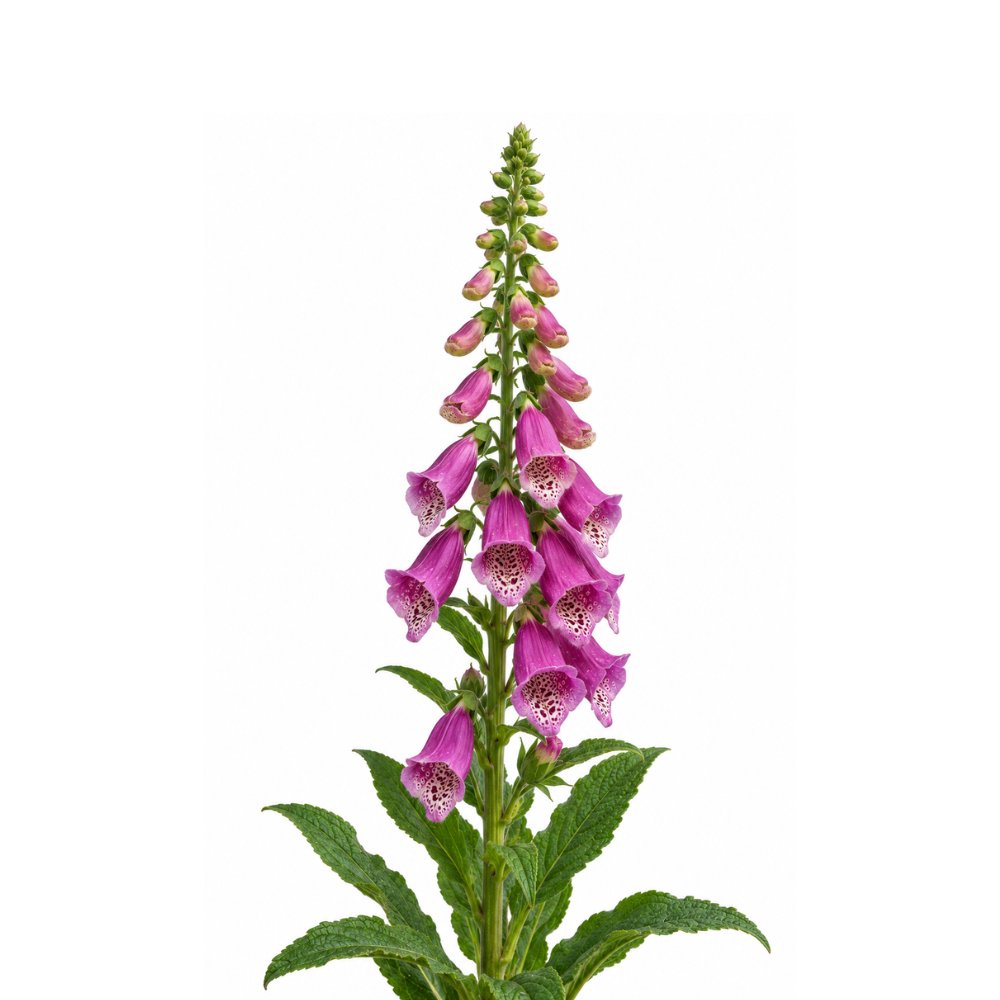
Digoxin is a naturally occurring cardenolide (cardiac glycoside), found in Foxglove and 1 other source. It is flagged as poisonous.
Concentration
Content by Source
Concentrations not reported. No percent-dry-weight or mg/g figures have been published for this compound in its source plants.
Digoxin at a Glance
Digoxin is a prescription cardiac drug, and among the most-prescribed and most-argued-about medicines of the twentieth century. It is a cardenolide glycoside that inhibits the sodium–potassium pump, strengthening cardiac contraction and slowing conduction through the AV node.
Its evidence has a distinctive shape. The DIG trial randomised 6,800 patients with heart failure and found mortality completely unchanged — 34.8% versus 35.1% — while hospitalisation for worsening heart failure fell from 34.7% to 26.8% 1Reference 1RCTThe effect of digoxin on mortality and morbidity in patients with heart failure — randomised controlled trialView study →. That is a real result and a narrow one, and the drug’s reputation has run ahead of it in both directions ever since.
Its main source plant is not the one people assume. Digoxin is chiefly a molecule of Digitalis lanata, the woolly foxglove, and is only a minor component of the common foxglove D. purpurea — though it is detectable in purpurea poisonings 14,
It also carries a signal that runs against its own laboratory reputation. Cardiac glycosides look antiproliferative in cell culture; digoxin in people is a phyto-estrogen, and large Danish cohorts link current use to increased incidence of oestrogen-sensitive cancers, with risk returning to baseline when the drug is stopped 7,
None of this is a use for foxglove. The leaf cannot be assayed to the resolution a drug with this therapeutic index requires — content swings several-fold with season, part and provenance 14Reference 14High-resolution tandem mass spectrometry dataset reveals fragmentation patterns of cardiac glycosides in leaves of the foxglove plantsView study → — and crude Digitalis preparations were abandoned once the glycosides could be purified.
The Confounding Problem
Digoxin is the clearest example in cardiology of a drug that looks dangerous in observational data and neutral in randomised data, and the reason is not subtle: the sickest patients are the ones who get it.
The 2015 BMJ meta-analysis pooled 52 studies and 621,845 patients — over four million patient-years — and reported the pooled risk ratio for death by study design 3Reference 3Meta-analysisSafety and efficacy of digoxin: systematic review and meta-analysis of observational and controlled trial data — meta-analysisView study →:
| Analysis type | Pooled risk ratio for death (95% CI) |
|---|---|
| Unadjusted observational | 1.76 (1.57–1.97) |
| Adjusted observational | 1.61 (1.31–1.97) |
| Propensity-matched | 1.18 (1.09–1.26) |
| Randomised controlled trials | 0.99 (0.93–1.05) |
The gradient runs one way, and it does not stop until the design removes the confounding entirely. The same analysis found that digoxin users were 2.4 years older than controls, with a lower ejection fraction (33% versus 42%), more diabetes, and greater use of diuretics and antiarrhythmics — and that studies with better methods and lower risk of bias were significantly more likely to report a neutral association 3Reference 3Meta-analysisSafety and efficacy of digoxin: systematic review and meta-analysis of observational and controlled trial data — meta-analysisView study →. Across all study types, digoxin reduced all-cause hospital admission (risk ratio 0.92, 0.89–0.95) 3Reference 3Meta-analysisSafety and efficacy of digoxin: systematic review and meta-analysis of observational and controlled trial data — meta-analysisView study →.
The observational meta-analyses that report harm are not wrong about their own data. Pooling 19 adjusted studies in 326,426 patients gives a hazard ratio for all-cause mortality of 1.21, rising to 1.29 in the atrial-fibrillation subgroup 4Reference 4Meta-analysisDigoxin-associated mortality: a systematic review and meta-analysis of the literature — meta-analysisView study →; a 2019 update across 825,061 patients found 1.17 overall, 1.23 in atrial fibrillation and 1.11 in heart failure 5Reference 5Meta-analysisMeta-Analysis of Effects of Digoxin on Survival in Patients with Atrial Fibrillation or Heart Failure: An Update — meta-analysisView study →. Adjustment is what these analyses lack the information to do, not what they failed to attempt.
What the randomised data does support is a dose-response for harm at higher exposure. A post hoc analysis of the DIG trial in 3,782 men found mortality of 29.9% at serum concentrations of 0.5–0.8 ng/mL, 38.8% at 0.9–1.1 ng/mL and 48.0% at 1.2 ng/mL or above. Compared with placebo, the lowest band had a 6.3% lower absolute mortality; the highest band had an 11.8% higher one 2Reference 2RCTAssociation of serum digoxin concentration and outcomes in patients with heart failure — randomised controlled trialView study →. The modern practice of targeting a low serum concentration comes from that analysis, not from the trial’s headline.
Digoxin vs. Digitoxin
The two drugs share a mechanism, a toxidrome and a therapeutic index, and differ almost entirely in how the body handles them 12Reference 12ReviewFender, J., Klöcker, J., Boivin-Jahns, V., et al. (2024). “Cardiac glycosides”-quo vaditis?-past, present, and future? — review. Naunyn Schmiedebergs Arch Pharmacol. https://pubmed.ncbi.nlm.nih.gov/39007928/View study →:
| Digoxin | Digitoxin | |
|---|---|---|
| Principal plant source | Digitalis lanata | Digitalis purpurea |
| Oral bioavailability | 55–75%, variable | >90%, consistent |
| Elimination | Predominantly renal | Hepatic + enterohepatic; largely renal-independent |
| Half-life | ~30–50 hours | ~4–7 days |
| Consequence | Levels track kidney function — an advantage when clearing an overdose, a hazard when renal function falls | Stable in renal impairment; an overdose takes a week to clear |
The practical rule that follows is that renal function governs digoxin dosing in a way it does not govern digitoxin’s, and a falling eGFR in a patient on a stable digoxin dose is a rising digoxin level 12,
A “Digoxin Level” Does Not Mean Digoxin
Digoxin immunoassays cross-react with other cardenolides, which turns them into a general screening test for cardiac-glycoside poisoning — and a source of misleading results.
The assay’s usefulness for detecting foxglove and oleander ingestion is established, and a study across five commercial digoxin immunoassays showed they also detect convallatoxin, the principal glycoside of lily of the valley 21Reference 21In vitroRapid detection of convallatoxin using five digoxin immunoassays — in vitroView study →. A published case series records three patients with detectable “digoxin” concentrations after eating lily of the valley mistaken for ramps — none of whom had taken digoxin 22Reference 22Case reportDetectable Digoxin Concentrations in 3 Patients with Ramps Misadventure — case reportView study →.
Two things follow, in opposite directions. A positive digoxin level in someone with a cardiac-glycoside toxidrome and no digoxin prescription is useful evidence of a plant ingestion, and should be read that way rather than dismissed as an error. And a numerical “digoxin concentration” in that setting is a qualitative signal, not a quantitative one — the assay is calibrated for digoxin and the cross-reacting molecule has its own potency, so the number cannot be used to gauge severity or to dose the antidote.
What It's Used For
The evidence splits into three tiers that are rarely kept apart: one large randomised trial with a modest positive result, a much larger observational literature that is confounded, and a laboratory literature whose human epidemiology points the other way.
The DIG trial randomised 3,397 patients to digoxin (median 0.25 mg/day) and 3,403 to placebo, all with ejection fraction 45% or less and on diuretics and an ACE inhibitor, over an average 37 months. Mortality was unaffected — 1,181 deaths (34.8%) versus 1,194 (35.1%), risk ratio 0.99 (95% CI 0.91–1.07). Hospitalisation for worsening heart failure fell from 34.7% to 26.8%, risk ratio 0.72 (0.66–0.79, P<0.001), with 6% fewer hospitalisations overall 1Reference 1RCTThe effect of digoxin on mortality and morbidity in patients with heart failure — randomised controlled trialView study →.
The post hoc concentration analysis refines it into something more usable: in 3,782 men, digoxin at a serum concentration of 0.5–0.8 ng/mL was associated with 6.3% lower absolute mortality than placebo, while concentrations of 1.2 ng/mL or above were associated with 11.8% higher absolute mortality 2Reference 2RCTAssociation of serum digoxin concentration and outcomes in patients with heart failure — randomised controlled trialView study →. Same drug, same trial, opposite direction of effect depending on exposure.
Gap: DIG predates modern heart-failure therapy — its comparator was diuretics plus an ACE inhibitor, with no beta-blocker, no mineralocorticoid antagonist, no ARNI and no SGLT2 inhibitor. Whether the hospitalisation benefit survives on top of contemporary therapy has not been retested, and the post hoc concentration finding, however plausible, is post hoc 1,
Digoxin slows AV-node conduction by increasing vagal tone as well as by direct pump inhibition, and its distinguishing practical feature is that it does this without lowering blood pressure — which is what keeps it in guidelines for patients whose pressure is already marginal 13Reference 13Systematic reviewClinical Use of Digitalis: A State of the Art Review — systematic reviewView study →.
RATE-AF randomised 160 patients aged 60 or over with permanent atrial fibrillation and NYHA class II or worse dyspnoea to low-dose digoxin (mean 161 µg/day) or bisoprolol (mean 3.2 mg/day). The primary endpoint — SF-36 physical component score at 6 months — showed no significant difference (adjusted mean difference 1.4, 95% CI −1.1 to 3.8). Resting heart rate was the same in both arms. But 53% of the digoxin group reported a two-class improvement in modified EHRA symptom class against 9% on bisoprolol (adjusted odds ratio 10.3), 8 of 20 outcomes at 12 months favoured digoxin including a lower NT-proBNP, and adverse events occurred in 25% on digoxin versus 64% on bisoprolol 6Reference 6RCTEffect of Digoxin vs Bisoprolol for Heart Rate Control in Atrial Fibrillation on Patient-Reported Quality of Life: The RATE-AF Randomized Clinical Trial — randomised controlled trialView study →.
Gap: 160 patients, open-label with blinded endpoints, and negative on its own primary outcome. The tolerability difference is the robust finding; the symptom and NT-proBNP results are secondary endpoints in a small trial.
Cardiac glycosides are antiproliferative in cell culture, and the Na⁺/K⁺-ATPase “signalosome” literature treats the pump as a signalling hub rather than only an ion transporter 17Reference 17ReviewNa(+)/K(+)-ATPase Revisited: On Its Mechanism of Action, Role in Cancer, and Activity Modulation — reviewView study →.
Gap: the human data point the other way, and they are the better data. Digoxin binds oestrogen receptors and can cause gynaecomastia; among current users, breast and uterine cancer incidence rise by roughly 30–50%, while ovarian and cervical cancers — relatively oestrogen-insensitive — are unaffected, and incidence reverts rapidly on stopping 7,
Viral replication depends on host Na⁺/K⁺-ATPase activity and intracellular ion gradients, so cardiac glycosides inhibit a broad range of viruses in cell culture, and repurposing reviews list digoxin among the candidates 18Reference 18ReviewRepurposing Cardiac Glycosides: Drugs for Heart Failure Surmounting Viruses — reviewView study →.
Gap: in vitro and class-level only, with no human data. A drug titrated to a 0.5–0.8 ng/mL serum window is a poor vehicle for an acute antiviral dose whatever the cell-culture result.
Mechanisms
| Target / pathway | Effect | Relevant to |
|---|---|---|
| Na⁺/K⁺-ATPase | Inhibition → intracellular Na⁺ rises → Na⁺/Ca²⁺ exchanger stalls → Ca²⁺ rises → stronger contraction | positive inotropy |
| Same pump, higher exposure | Calcium overload → spontaneous depolarisations | arrhythmia — the same actionnot a separate one |
| Vagal afferents, baroreceptors, AV node | Increased vagal tone, slowed conduction, without lowering blood pressure | rate control in atrial fibrillation |
| Oestrogen receptor | Binding; gynaecomastia; proliferation of ductal and acinar cells | the cancer-incidence signal |
| Na⁺/K⁺-ATPase signalosome | Antiproliferative signalling in cell culture | in-vitro oncology |
| Host ion gradients required for viral replication | Replication inhibited in vitro | antiviralpreclinical |
| Serum potassium | Acute inhibition drives hyperkalaemia; hypokalaemia potentiates toxicity at any given level | the two directions of the electrolyte problem |
Pharmacokinetics
Oral bioavailability is 55–75% and variable between preparations and patients. Plasma protein binding is low, and elimination is predominantly renal — largely unchanged drug through glomerular filtration and tubular secretion, with P-glycoprotein as the transporter involved. Elimination half-life is about 30–50 hours in normal renal function and lengthens substantially as it falls 12Reference 12ReviewFender, J., Klöcker, J., Boivin-Jahns, V., et al. (2024). “Cardiac glycosides”-quo vaditis?-past, present, and future? — review. Naunyn Schmiedebergs Arch Pharmacol. https://pubmed.ncbi.nlm.nih.gov/39007928/View study →.
Two clinical consequences dominate. First, renal function is the dose: a falling eGFR raises the level on an unchanged prescription, which is the commonest route into chronic digoxin toxicity. Second, because the therapeutic window is defined by concentration rather than tablet strength, digoxin is one of the few oral drugs routinely monitored by serum level — with the DIG post hoc analysis pointing to 0.5–0.8 ng/mL rather than the older, higher targets 2,
Clinical Trials
| Completed | Planned | Terminated | Preclinical |
|---|---|---|---|
| 2major (DIG; RATE-AF) plus a large observational literature | — | — | Extensive class-level in vitro (oncology, antiviral) |
Last checked: September 2026.
Isolate vs. Plant Studies
Every result above is the isolated drug at a measured dose, monitored by serum concentration. No controlled trial has ever tested a Digitalis leaf preparation, and the reason is the same one that ended the crude drug’s career: leaf glycoside content is low and swings several-fold with season, plant part, developmental stage and provenance 14Reference 14High-resolution tandem mass spectrometry dataset reveals fragmentation patterns of cardiac glycosides in leaves of the foxglove plantsView study →, so a weighed quantity is not a dose. Before chemical assay was possible, pharmacies standardised digitalis leaf by biological assay against animal hearts 19Reference 19Norn, S., Kruse, P. R. (2004). [Cardiac glycosides: From ancient history through Withering’s foxglove to endogeneous cardiac glycosides]. Dan Medicinhist Arbog. https://pubmed.ncbi.nlm.nih.gov/15685783/View study →. A drug that requires a live animal to establish its strength cannot be dosed to a 0.5–0.8 ng/mL window, and once the glycosides could be purified and measured the leaf preparations were displaced entirely.
The species question is a second layer of the same problem. Digoxin is chiefly a Digitalis lanata glycoside; the common foxglove D. purpurea is dominated by digitoxin, gitoxin and gitaloxin, and carries digoxin only as a minor component — though enough to be detected in purpurea poisonings 14,
Prevalence in Nature
Digoxin is the principal cardenolide of Digitalis lanata (woolly foxglove, a Balkan and central European species) and the reason that plant, rather than the ornamental D. purpurea, became the commercial source. In D. purpurea it is a minor constituent alongside digitoxin, gitoxin and gitaloxin — the last being the best chemical marker separating the two species 14Reference 14High-resolution tandem mass spectrometry dataset reveals fragmentation patterns of cardiac glycosides in leaves of the foxglove plantsView study →.
Cardenolides of the same class occur widely outside Digitalis: convallatoxin in Convallaria majalis, oleandrin in Nerium oleander, ouabain in Strophanthus, scillaren in Urginea maritima, and bufadienolides in toad skin. Mammals are also thought to produce endogenous digitalis-like compounds acting as hormonal regulators of Na⁺/K⁺-ATPase, though the measurement difficulties at those concentrations keep the field contested 12Reference 12ReviewFender, J., Klöcker, J., Boivin-Jahns, V., et al. (2024). “Cardiac glycosides”-quo vaditis?-past, present, and future? — review. Naunyn Schmiedebergs Arch Pharmacol. https://pubmed.ncbi.nlm.nih.gov/39007928/View study →.
No content figure is quotable for either species. Leaf glycoside levels vary several-fold with season, part, developmental stage and provenance 14Reference 14High-resolution tandem mass spectrometry dataset reveals fragmentation patterns of cardiac glycosides in leaves of the foxglove plantsView study →; the analytical methods to measure them are well established 14,
Discovery & Synthesis
Foxglove entered orthodox medicine through William Withering’s Account of the Foxglove (1785), and the glycoside chemistry followed a century later. Digitoxin was purified from D. purpurea first; digoxin was isolated from Digitalis lanata in 1930, some sixty years later, and rapidly displaced both digitoxin and crude leaf across most of the world on the strength of its shorter half-life and easier titration 19Reference 19Norn, S., Kruse, P. R. (2004). [Cardiac glycosides: From ancient history through Withering’s foxglove to endogeneous cardiac glycosides]. Dan Medicinhist Arbog. https://pubmed.ncbi.nlm.nih.gov/15685783/View study →.
Purification is what ended the plant preparations. Once the glycoside could be weighed and assayed, standardisation against a frog’s or pigeon’s heart became indefensible 19Reference 19Norn, S., Kruse, P. R. (2004). [Cardiac glycosides: From ancient history through Withering’s foxglove to endogeneous cardiac glycosides]. Dan Medicinhist Arbog. https://pubmed.ncbi.nlm.nih.gov/15685783/View study →.
Manufacture is still extraction. Digoxin is obtained from Digitalis lanata leaf; the cardenolide skeleton with its three digitoxose sugars has never been an economical synthetic target, and the plant makes it well. Prescribing has fallen sharply across Europe over the past three decades as heart-failure therapy has expanded 20Reference 20Critical analysis of digitalis glycosides: declining use but increasing poison-center exposure cases for digitoxinView study →.
Patents: not yet researched.
Toxicity & Safety
Digoxin is flagged poisonous — a description of the purified drug as much as of the plant. Therapy and toxicity are the same pump inhibition at slightly different exposures.
- Narrow therapeutic index, defined by serum concentration rather than dose. Mortality rose stepwise with concentration across the DIG cohort 2Reference 2RCTAssociation of serum digoxin concentration and outcomes in patients with heart failure — randomised controlled trialView study →.
- Cardiac toxidrome — bradycardia, AV block, ventricular ectopy, bidirectional ventricular tachycardia. Hyperkalaemia in acute overdose 12Reference 12ReviewFender, J., Klöcker, J., Boivin-Jahns, V., et al. (2024). “Cardiac glycosides”-quo vaditis?-past, present, and future? — review. Naunyn Schmiedebergs Arch Pharmacol. https://pubmed.ncbi.nlm.nih.gov/39007928/View study →.
- Renal function is the dose. A falling eGFR on an unchanged prescription is a rising digoxin level — the commonest route into chronic toxicity 12Reference 12ReviewFender, J., Klöcker, J., Boivin-Jahns, V., et al. (2024). “Cardiac glycosides”-quo vaditis?-past, present, and future? — review. Naunyn Schmiedebergs Arch Pharmacol. https://pubmed.ncbi.nlm.nih.gov/39007928/View study →.
- Hypokalaemia potentiates toxicity without changing the level. A normal serum digoxin in a hypokalaemic patient is not reassurance 12Reference 12ReviewFender, J., Klöcker, J., Boivin-Jahns, V., et al. (2024). “Cardiac glycosides”-quo vaditis?-past, present, and future? — review. Naunyn Schmiedebergs Arch Pharmacol. https://pubmed.ncbi.nlm.nih.gov/39007928/View study →.
- A real antidote exists — digoxin-specific Fab fragments reverse life-threatening digitalis toxicity 16Reference 16Clinical trialTreatment of 150 cases of life-threatening digitalis intoxication with digoxin-specific Fab antibody fragmentsView study →.
- Xanthopsia — a yellow-green cast to vision with halos — is characteristic and easily dismissed 12Reference 12ReviewFender, J., Klöcker, J., Boivin-Jahns, V., et al. (2024). “Cardiac glycosides”-quo vaditis?-past, present, and future? — review. Naunyn Schmiedebergs Arch Pharmacol. https://pubmed.ncbi.nlm.nih.gov/39007928/View study →.
- Interactions are transporter-mediated (P-glycoprotein), not CYP450. Verapamil, amiodarone, quinidine, macrolides and ketoconazole raise levels 12Reference 12ReviewFender, J., Klöcker, J., Boivin-Jahns, V., et al. (2024). “Cardiac glycosides”-quo vaditis?-past, present, and future? — review. Naunyn Schmiedebergs Arch Pharmacol. https://pubmed.ncbi.nlm.nih.gov/39007928/View study →.
- An oestrogenic off-target effect. Current use is associated with increased incidence of oestrogen-sensitive cancers and with gynaecomastia in men 7,
8, .10Reference 7ObservationalDigoxin use and the risk of breast cancer in women — cohort studyView study →Reference 8ObservationalDigoxin use and the risk of cancers of the corpus uteri, ovary and cervix — cohort studyView study →Reference 10ReviewMolecular pathways: digoxin use and estrogen-sensitive cancers—risks and possible therapeutic implications — reviewView study →
Full Safety & Interactions Detail
The toxidrome. Poisoning opens with nausea, vomiting and abdominal pain, moves to visual disturbance — classically xanthopsia, a yellow-green cast with halos around lights — and confusion, and becomes dangerous in the cardiac and electrolyte findings: hyperkalaemia in acute overdose (because the inhibited pump is what moves potassium into cells), profound bradycardia and heart block, and ventricular arrhythmias including the characteristic bidirectional ventricular tachycardia 12Reference 12ReviewFender, J., Klöcker, J., Boivin-Jahns, V., et al. (2024). “Cardiac glycosides”-quo vaditis?-past, present, and future? — review. Naunyn Schmiedebergs Arch Pharmacol. https://pubmed.ncbi.nlm.nih.gov/39007928/View study →. Serum potassium was the classic predictor of death in acute poisoning before specific antibody fragments existed.
The antidote. Digoxin-specific antibody fragments (Fab) bind circulating glycoside and reverse toxicity; the definitive multicentre series covered 150 cases of life-threatening digitalis intoxication 16Reference 16Clinical trialTreatment of 150 cases of life-threatening digitalis intoxication with digoxin-specific Fab antibody fragmentsView study →. Their availability is why cardiac-glycoside poisoning is among the more survivable serious poisonings. (The long-taught warning that intravenous calcium causes a fatal “stone heart” in digitalis toxicity is widely repeated and contested in the modern literature — disputed rather than settled.)
Interactions run through transporters, not cytochromes — the standing mislabelling in this class. Digoxin is a P-glycoprotein substrate: verapamil, amiodarone, quinidine, macrolide antibiotics and ketoconazole raise serum levels. Separately, potassium-depleting diuretics, laxatives and corticosteroids potentiate toxicity without raising the level at all, and hypomagnesaemia and hypercalcaemia act in the same direction. Because both routes exist, neither a normal drug level nor an unchanged prescription rules out toxicity.
Renal function. Predominantly renal elimination means the dose must track the kidney. Acute kidney injury, dehydration, and the gradual decline of eGFR with age all raise exposure on an unchanged prescription, and elderly patients are correspondingly over-represented in cardiac-glycoside exposure reports 12,
The oestrogenic effect is a real pharmacological property, not an epidemiological artefact. Digoxin binds oestrogen receptors and causes gynaecomastia. In a Danish nationwide cohort, current users had a breast-cancer risk ratio of 1.39 (95% CI 1.32–1.46), with no increase in former users — risk normalised on stopping — and no increase at all in a control group of women taking angina drugs, which rules out “being under cardiac care” as the explanation 7Reference 7ObservationalDigoxin use and the risk of breast cancer in women — cohort studyView study →. Uterine cancer, also oestrogen-sensitive, showed a risk ratio of 1.48 (1.32–1.65) in current users, while ovarian (1.06) and cervical (1.00) cancers — relatively oestrogen-insensitive — showed none 8Reference 8ObservationalDigoxin use and the risk of cancers of the corpus uteri, ovary and cervix — cohort studyView study →. Men on digoxin have a lower prostate-cancer risk (0.76), the direction an oestrogenic mechanism predicts 10Reference 10ReviewMolecular pathways: digoxin use and estrogen-sensitive cancers—risks and possible therapeutic implications — reviewView study →. A separate UK nested case-control study (4,113 incident pancreatic cancers against 16,072 matched controls) found an adjusted odds ratio of 1.41 (1.16–1.72) for pancreatic cancer in active digoxin users, with no effect on survival once diagnosed (HR 0.97, 0.81–1.18) 11Reference 11ObservationalDigoxin use is associated with pancreatic cancer risk but does not affect survival — case-control studyView study →. In women already diagnosed with breast cancer, overall relapse risk was not significantly raised (HR 1.13, 0.88–1.46), though first-year relapse in oestrogen-receptor-positive tumours was (2.51, 1.39–4.55) 9Reference 9ObservationalBreast cancer in women using digoxin: tumor characteristics and relapse risk — cohort studyView study →.
Assay interference. Digoxin immunoassays cross-react with other cardenolides, so a measurable “digoxin level” can arise from foxglove, oleander or lily-of-the-valley ingestion in someone who has never taken the drug 21,
Dosage
Prescription-only, and monitored by serum concentration rather than by dose. The figures below are the doses used in the trials.
| Application | Form | Dose |
|---|---|---|
| Heart failure with reduced ejection fraction | Oral digoxin | ~0.25 mg/day (DIG median), targeting a serum concentration of 0.5–0.8 ng/mL 1, |
| Rate control in permanent atrial fibrillation | Oral digoxin, low dose | 62.5–250 µg/day (RATE-AF mean 161 µg/day) 6Reference 6RCTEffect of Digoxin vs Bisoprolol for Heart Rate Control in Atrial Fibrillation on Patient-Reported Quality of Life: The RATE-AF Randomized Clinical Trial — randomised controlled trialView study → |
The dose is a starting point and the serum concentration is the target — the DIG post hoc analysis found mortality rising stepwise across concentration bands, with harm above 1.2 ng/mL 2Reference 2RCTAssociation of serum digoxin concentration and outcomes in patients with heart failure — randomised controlled trialView study →. Renal function, age, body composition and interacting drugs all move the concentration on a fixed dose.
No plant-material equivalent can be stated. Digitalis leaf glycoside content varies several-fold 14Reference 14High-resolution tandem mass spectrometry dataset reveals fragmentation patterns of cardiac glycosides in leaves of the foxglove plantsView study →, the species differ in which glycoside dominates 14,
References
- Digitalis Investigation Group (1997). The effect of digoxin on mortality and morbidity in patients with heart failure — randomised controlled trial. N Engl J Med. https://pubmed.ncbi.nlm.nih.gov/9036306/
- Rathore, S. S., Curtis, J. P., Wang, Y., et al. (2003). Association of serum digoxin concentration and outcomes in patients with heart failure — randomised controlled trial. JAMA. https://pubmed.ncbi.nlm.nih.gov/12588271/
- Ziff, O. J., Lane, D. A., Samra, M., et al. (2015). Safety and efficacy of digoxin: systematic review and meta-analysis of observational and controlled trial data — meta-analysis. BMJ. https://pubmed.ncbi.nlm.nih.gov/26321114/
- Vamos, M., Erath, J. W., Hohnloser, S. H. (2015). Digoxin-associated mortality: a systematic review and meta-analysis of the literature — meta-analysis. Eur Heart J. https://pubmed.ncbi.nlm.nih.gov/25939649/
- Vamos, M., Erath, J. W., Benz, A. P., et al. (2019). Meta-Analysis of Effects of Digoxin on Survival in Patients with Atrial Fibrillation or Heart Failure: An Update — meta-analysis. Am J Cardiol. https://pubmed.ncbi.nlm.nih.gov/30539748/
- Kotecha, D., Bunting, K. V., Gill, S. K., et al. (2020). Effect of Digoxin vs Bisoprolol for Heart Rate Control in Atrial Fibrillation on Patient-Reported Quality of Life: The RATE-AF Randomized Clinical Trial — randomised controlled trial. JAMA. https://pubmed.ncbi.nlm.nih.gov/33351042/
- Biggar, R. J., Wohlfahrt, J., Oudin, A., et al. (2011). Digoxin use and the risk of breast cancer in women — cohort study. J Clin Oncol. https://pubmed.ncbi.nlm.nih.gov/21422417/
- Biggar, R. J., Wohlfahrt, J., Melbye, M. (2012). Digoxin use and the risk of cancers of the corpus uteri, ovary and cervix — cohort study. Int J Cancer. https://pubmed.ncbi.nlm.nih.gov/21913187/
- Biggar, R. J., Andersen, E. W., Kroman, N., et al. (2013). Breast cancer in women using digoxin: tumor characteristics and relapse risk — cohort study. Breast Cancer Res. https://pubmed.ncbi.nlm.nih.gov/23421975/
- Biggar, R. J. (2012). Molecular pathways: digoxin use and estrogen-sensitive cancers—risks and possible therapeutic implications — review. Clin Cancer Res. https://pubmed.ncbi.nlm.nih.gov/22368159/
- Boursi, B., Huber, J. S., Haynes, K., et al. (2021). Digoxin use is associated with pancreatic cancer risk but does not affect survival — case-control study. Cancer Causes Control. https://pubmed.ncbi.nlm.nih.gov/33064241/
- Fender, J., Klöcker, J., Boivin-Jahns, V., et al. (2024). “Cardiac glycosides”-quo vaditis?-past, present, and future? — review. Naunyn Schmiedebergs Arch Pharmacol. https://pubmed.ncbi.nlm.nih.gov/39007928/
- Whayne TF Jr (2018). Clinical Use of Digitalis: A State of the Art Review — systematic review. Am J Cardiovasc Drugs. https://pubmed.ncbi.nlm.nih.gov/30066080/
- Ravi, B. G., Guardian, M. G. E., Dickman, R., et al. (2020). High-resolution tandem mass spectrometry dataset reveals fragmentation patterns of cardiac glycosides in leaves of the foxglove plants. Data Brief. https://pubmed.ncbi.nlm.nih.gov/32300626/
- Kwon, H. J., Sim, H. J., Lee, S. I., et al. (2011). HPLC method validation for Digitalis and its analogue by pulsed amperometric detection. J Pharm Biomed Anal. https://pubmed.ncbi.nlm.nih.gov/20800985/
- Antman, E. M., Wenger, T. L., Butler VP Jr, et al. (1990). Treatment of 150 cases of life-threatening digitalis intoxication with digoxin-specific Fab antibody fragments. Final report of a multicenter study — clinical trial. Circulation. https://pubmed.ncbi.nlm.nih.gov/2188752/
- Bejček, J., Spiwok, V., Kmoníčková, E., et al. (2021). Na(+)/K(+)-ATPase Revisited: On Its Mechanism of Action, Role in Cancer, and Activity Modulation — review. Molecules. https://pubmed.ncbi.nlm.nih.gov/33800655/
- Škubník, J., Bejček, J., Pavlíčková, V. S., et al. (2021). Repurposing Cardiac Glycosides: Drugs for Heart Failure Surmounting Viruses — review. Molecules. https://pubmed.ncbi.nlm.nih.gov/34577097/
- Norn, S., Kruse, P. R. (2004). [Cardiac glycosides: From ancient history through Withering’s foxglove to endogeneous cardiac glycosides]. Dan Medicinhist Arbog. https://pubmed.ncbi.nlm.nih.gov/15685783/
- Ecker, P. A. M., Schaper, A., Bräunig, H. J., et al. (2026). Critical analysis of digitalis glycosides: declining use but increasing poison-center exposure cases for digitoxin. Eur J Clin Pharmacol. https://pubmed.ncbi.nlm.nih.gov/42334625/
- Fink, S. L., Robey, T. E., Tarabar, A. F., et al. (2014). Rapid detection of convallatoxin using five digoxin immunoassays — in vitro. Clin Toxicol (Phila). https://pubmed.ncbi.nlm.nih.gov/24980812/
- Trebach, J., Calleo, V., Akbar, S., et al. (2022). Detectable Digoxin Concentrations in 3 Patients with Ramps Misadventure — case report. Wilderness Environ Med. https://pubmed.ncbi.nlm.nih.gov/35691768/



