
Compound Monograph
Dihydrohelenalin
11α,13-Dihydrohelenalin is helenalin with one of its two Michael-acceptor warheads switched off — the exocyclic methylene of the γ-lactone reduced away. That single change is the class's cleanest natural experiment: it is consistently the weaker of the pair on NF-κB, cytotoxicity and thiol alkylation, and it is the sesquiterpene lactone that dominates Iberian Arnica montana.

Sources · 4
Where Does It Come From?
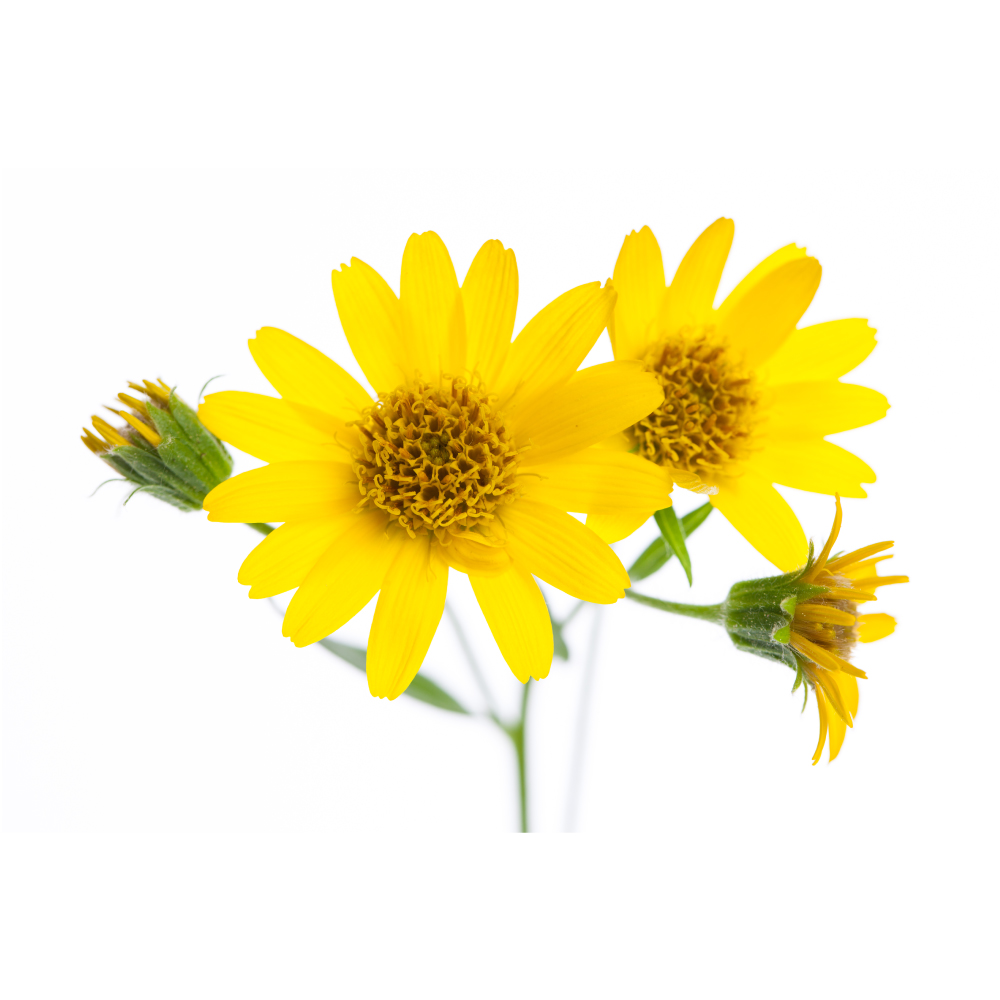
Dihydrohelenalin is a naturally occurring sesquiterpene lactone (pseudoguaianolide, helenanolide type), found in Arnica and 3 other sources. It is flagged as moderately toxic.
Concentration
Content by Source
Reported concentrations across the plants that contain dihydrohelenalin — the bar marks the typical level, the line shows the reported range.
Literature figures for varying plant parts and preparations. Read them as a comparative guide, not exact assays.
Dihydrohelenalin at a Glance
11α,13-Dihydrohelenalin is a pseudoguaianolide sesquiterpene lactone of the helenanolide type, and the second of the two lactones that define the chemistry of arnica. In the plant it barely exists as the free alcohol — it occurs almost entirely as esters with small carboxylic acids (acetate, isobutyrate, methacrylate, tiglate, 2-methylbutyrate) 15,
Structurally it is helenalin with one modification: the exocyclic α-methylene of the γ-lactone has been reduced, adding two hydrogens at C-11 and C-13. That is the entire difference between the two molecules, and it is why it matters. Sesquiterpene lactones act largely by covalently alkylating cysteine thiols in proteins, and helenalin carries two such electrophilic centres. Dihydrohelenalin carries one. Almost every measured difference between the pair — NF-κB inhibition, cytotoxicity, thiol reactivity, allergenic potential — follows from that 1,
It is also the molecule that makes where the arnica came from a pharmacological question rather than a botanical footnote. Flowers from the Iberian Peninsula are dominated by dihydrohelenalin esters; flowers from Central and Eastern Europe are dominated by helenalin esters — and the two are not interchangeable in potency 14,
Helenalin vs. Dihydrohelenalin: One Warhead Removed
The α-methylene-γ-lactone Michael acceptor is a class property of sesquiterpene lactones — hundreds of them alkylate cysteine and thereby hit NF-κB, so “inhibits NF-κB in vitro” says almost nothing about any individual lactone. Dihydrohelenalin is the exception that is genuinely informative, because it is defined by lacking that group. It is the class’s own controlled experiment.
What is left, and what it does. Helenalin is bifunctional: an α,β-unsaturated cyclopentenone in the five-membered ring plus the exocyclic methylene on the lactone. Dihydrohelenalin is monofunctional — only the cyclopentenone remains. NMR work on the reaction with physiological thiols mapped the two sites precisely: glutathione adds with high regio- and stereoselectivity at the C-2 β-position of the cyclopentenone, while addition to the exocyclic methylene proceeds about ten times more slowly; free cysteine, by contrast, strongly favours the methylene group. Glutathione addition to the cyclopentenone of 11α,13-dihydrohelenalin showed the same characteristics as helenalin’s 1Reference 1In vitroHelenanolide-type sesquiterpene lactones—IIIView study →. So the remaining warhead is not a lesser version of the missing one — it is the other one, with its own selectivity, and it is the site cysteine cares about least.
The consequences, measured.
| Read-out | Helenalin | Dihydrohelenalin | Source |
|---|---|---|---|
| Reactive Michael acceptors | 2 (cyclopentenone + exocyclic methylene) | 1 (cyclopentenone only) | 1Reference 1In vitroHelenanolide-type sesquiterpene lactones—IIIView study → |
| NF-κB activation | strongly inhibited | inhibited “to a much lesser degree” | 2Reference 2In vitroHelenalin, an anti-inflammatory sesquiterpene lactone from Arnica, selectively inhibits transcription factor NF-kappaB — in vitroView study → |
| p65 DNA-binding block | direct alkylation of p65 Cys38 | not achieved at anti-inflammatory concentrations (as the acetate) | 3, |
| Cytotoxicity, cell lines | strongest of the Arnica lactones tested (IC₅₀ 0.44 µM, GLC4, 2 h) | free alcohol was the least toxic of its ester series | 8, |
| Effect of excess cysteine on cytotoxicity | reduced (the methylene is quenched) | unaffected (no methylene to quench) | 7Reference 7In vitroThe influence of glutathione and cysteine levels on the cytotoxicity of helenanolide type sesquiterpene lactones against KB cells — in vitroView study → |
| LTC₄ synthase inhibition, human platelets | IC₅₀ 12 µM | ”less potent” (as the acetate) | 11Reference 11In vitroInhibitory effects of helenalin and related compounds on 5-lipoxygenase and leukotriene C(4) synthase in human blood cells — in vitroView study → |
| Anti-trypanosomal IC₅₀, T. b. rhodesiense | 0.051 µM | active, but helenalin most active of the six tested | 31Reference 31In vitroAnti-trypanosomal activity of helenalin and some structurally related sesquiterpene lactones — in vitroView study → |
The cysteine-competition result 7Reference 7In vitroThe influence of glutathione and cysteine levels on the cytotoxicity of helenanolide type sesquiterpene lactones against KB cells — in vitroView study → is the sharpest confirmation that the structural story is the causal one. Adding 20–100 molar equivalents of free cysteine lowered helenalin’s cytotoxicity against KB cells — the excess thiol mops up the highly cysteine-reactive methylene group — but left 11α,13-dihydrohelenalin acetate’s cytotoxicity unchanged, because that compound has no such group to mop up. The structure–activity relationship is not an inference from potency rankings; it was tested directly by removing the target.
Where the simple story breaks. Reducing the potency does not reduce it to nothing, and it does not reduce it proportionally across every endpoint. In Jurkat T cells and human peripheral blood mononuclear cells, the monofunctional 11α,13-dihydrohelenalin acetate significantly reduced mitogen-induced cytokine and iNOS mRNA at low micromolar concentrations — while not inhibiting p65 DNA binding at those same concentrations 5Reference 5In vitroInfluence of helenanolide-type sesquiterpene lactones on gene transcription profiles in Jurkat T cells and human peripheral blood cells: anti-inflammatory and cytotoxic effects — in vitroView study →. The authors’ conclusion is the one to carry away: the biological effects of sesquiterpene lactones “are not only due to NF-κB inhibition, but must be coupled to other mechanisms.” Dihydrohelenalin is the compound that proves it, precisely because it is the one that gave up the NF-κB activity and kept the anti-inflammatory gene signature.
Conformation matters too, not just count. Molecular-dynamics work on helenalin, its esters and the 11,13-dihydro derivatives found real conformational differences between the two series 37Reference 37Helenanolide type sesquiterpene lactonesView study → — and the original NF-κB paper attributed the efficacy gap to “differences in structure and conformation,” not to warhead arithmetic alone 2Reference 2In vitroHelenalin, an anti-inflammatory sesquiterpene lactone from Arnica, selectively inhibits transcription factor NF-kappaB — in vitroView study →.
The Two Arnica Chemotypes
Arnica montana is not one chemical drug. European populations split into a helenalin-ester-dominant type and a dihydrohelenalin-ester-dominant type, and the split has a geography.
Material from Central and Eastern Europe is typically helenalin-dominant; material from the Iberian Peninsula contains almost exclusively 11α,13-dihydrohelenalin derivatives 15Reference 15ReviewArnica montana L.: doesn’t origin matter? — reviewView study →. The quantitative survey that established this examined flowers from 16 wild Spanish populations and found the pattern tracked habitat and altitude: meadow and peat-bog populations at lower altitude carried the expected dihydrohelenalin chemotype at total dihydrohelenalins of 10.9–18.2 mg/g dry weight, while high-altitude heathland populations (1,330–1,460 m) carried a previously unreported Spanish helenalin chemotype at total helenalins of 5.2–10.3 mg/g 14Reference 14Sesquiterpene lactones in Arnica montana: helenalin and dihydrohelenalin chemotypes in SpainView study →. The heathland samples were also the ones whose flavonoid and caffeoylquinic-acid profiles most resembled Central European arnica 14Reference 14Sesquiterpene lactones in Arnica montana: helenalin and dihydrohelenalin chemotypes in SpainView study →.
The proposal on the table is that this is a subspecies difference — A. montana subsp. montana in Central and Eastern Europe, subsp. atlantica in the south-west of the range — and that because pharmacological potency differs between the two lactone types, pharmacopoeial monographs arguably ought to distinguish them 15Reference 15ReviewArnica montana L.: doesn’t origin matter? — reviewView study →. They currently do not.
Within a single chemotype the ratio is remarkably stable. Across ten German grassland and heathland sites spanning a north–south climatic gradient, the helenalin : 11α,13-dihydrohelenalin ratio for the free lactones held at roughly 1.5–2 : 1 regardless of soil and climate, with the ester ratio several-fold higher but again near-identical between habitats 16Reference 16Variation of sesquiterpene lactone contents in different Arnica montana populations: influence of ecological parametersView study →. Chemotype, in other words, looks genetic rather than environmental — while total lactone content is very much environmental and developmental, rising from 0.512% in buds to 0.943% in withered flowers and concentrated in the disk florets over ray florets, receptacle and stem 17Reference 17Sesquiterpene lactones in Arnica montana: a rapid analytical method and the effects of flower maturity and simulated mechanical harvesting on quality and yieldView study →.
The practical upshot: two arnica tinctures made to the same pharmacopoeial specification can deliver different molecules at different potencies, and a Spanish-sourced tincture is delivering mostly the weaker, less NF-κB-active — and, on structural grounds, probably less sensitising — of the pair.
The Ester Forms
The free alcohol is largely a laboratory object. What occurs in Arnica montana, and what a tincture actually delivers, is a family of 6-O-esters with low-molecular-weight carboxylic acids: acetic, isobutyric, methacrylic, 2-methylbutyric and tiglic 15Reference 15ReviewArnica montana L.: doesn’t origin matter? — reviewView study →. The classical phytochemical survey isolated 13 helenanolides from arnica flowers — 11,13-dihydrohelenalin, helenalin and eleven ester derivatives — and reported that the qualitative composition varied between regions 18Reference 18Willuhn, G., Röttger, P. M., & Matthiesen, U. (1983). [Helenalin- and 11,13-dihydrohelenalin esters from flowers of Arnica montana]. Planta Medica. https://pubmed.ncbi.nlm.nih.gov/17405058/View study →, which is the chemotype story in its original form.
The acyl group is not inert packaging. In the NF-κB EMSA and in the mouse croton-oil ear-oedema test, dihydrohelenalin esters with unsaturated acyl moieties — methacrylate and tiglinate — were more active than the acetate 6Reference 6AnimalStudies on the anti-inflammatory activity of phytopharmaceuticals prepared from Arnica flowers — mouse croton-oil ear oedema modelView study →. Cytotoxicity ran the same direction: within the 11α,13-dihydrohelenalin ester series, activity was directly related to the size and lipophilicity of the ester side chain, with the parent free alcohol the least toxic member 8Reference 8In vitroStructure-cytotoxicity relationships of some helenanolide-type sesquiterpene lactones — in vitroView study →. (Notably, the helenalin series behaves differently — its acetate and isobutyrate beat the free alcohol, but its bulkier tiglate and isovalerate fall below it 8Reference 8In vitroStructure-cytotoxicity relationships of some helenanolide-type sesquiterpene lactones — in vitroView study →, so ester rules do not transfer between the two lactone types.)
The esters also decide what gets through skin. In human epidermal membranes mounted in Franz cells, the only tincture constituents detected in the receptor phase were two dihydrohelenalin analogues — the methacrylate and tiglate esters 20Reference 20In vitroPermeation of bioactive constituents from Arnica montana preparations through human skin — in vitroView study →. Whatever else is in an arnica tincture, those were the molecules that crossed.
What It's Used For
Every application below rests on isolated dihydrohelenalin or one of its esters in cell, enzyme or animal systems. There is no human trial of the molecule; the human evidence in this area belongs to whole arnica preparations.
Support is an experimental score — weighted by study type (human > animal > in vitro) and volume. A beta, not a validated metric. Every row here is preclinical; the scores rank the quality and depth of the preclinical case, not clinical usefulness, and none of them should be read as a human claim.
Isolate and ester, plus plant preparation. Arnica phytopharmaceuticals made from Spanish flowerheads — i.e. dihydrohelenalin-dominant material — impaired activation of both NF-κB and NF-AT and reduced IL-1 and TNF-α release, with inhibitory activity correlating to sesquiterpene-lactone content and composition 6Reference 6AnimalStudies on the anti-inflammatory activity of phytopharmaceuticals prepared from Arnica flowers — mouse croton-oil ear oedema modelView study →. Critically, that study went to the individual molecules: among the 11α,13-dihydrohelenalin derivatives that are the main lactones in Spanish flowers, the methacrylate and tiglinate esters were more active than the acetate in both the NF-κB EMSA and the mouse croton-oil ear test 6Reference 6AnimalStudies on the anti-inflammatory activity of phytopharmaceuticals prepared from Arnica flowers — mouse croton-oil ear oedema modelView study →. The parent comparison is unflattering, though: helenalin, and “to a much lesser degree” 11α,13-dihydrohelenalin and chamissonolide, inhibit NF-κB activation — a difference in efficacy the authors noted correlates with the compounds’ in-vivo anti-inflammatory potency 2Reference 2In vitroHelenalin, an anti-inflammatory sesquiterpene lactone from Arnica, selectively inhibits transcription factor NF-kappaB — in vitroView study →. Arnica’s own topical human evidence (osteoarthritis, bruising) is for the whole tincture or gel, not for this molecule 15Reference 15ReviewArnica montana L.: doesn’t origin matter? — reviewView study →.
Gap: no dose–response for a purified dihydrohelenalin ester in any human inflammatory endpoint, and no head-to-head in-vivo oedema comparison of matched helenalin and dihydrohelenalin esters at equal molar dose.
Isolate (the acetate ester). This is the finding that stops dihydrohelenalin being simply “helenalin, but worse.” In CD4⁺ Jurkat T cells and human peripheral blood mononuclear cells, the monofunctional 11α,13-dihydrohelenalin acetate significantly reduced mitogen-induced cytokine and iNOS mRNA at low micromolar concentrations — and in PBMCs it did so at concentrations that did not inhibit p65 DNA binding 5Reference 5In vitroInfluence of helenanolide-type sesquiterpene lactones on gene transcription profiles in Jurkat T cells and human peripheral blood cells: anti-inflammatory and cytotoxic effects — in vitroView study →. It also moved housekeeping genes (GAPDH, β-actin) and NF-ATc, p65, IκBα, bcl-2 and cyclin D1, and moderately induced apoptosis in Jurkat cells; bifunctional helenalin, by contrast, down-regulated essentially every transcript measured and induced apoptosis strongly 5Reference 5In vitroInfluence of helenanolide-type sesquiterpene lactones on gene transcription profiles in Jurkat T cells and human peripheral blood cells: anti-inflammatory and cytotoxic effects — in vitroView study →. The authors concluded that sesquiterpene-lactone effects “must be coupled to other mechanisms” beyond NF-κB.
Gap: the alternative mechanism is named but not identified — no target has been assigned for the NF-κB-independent transcriptional effect, and the breadth of the housekeeping-gene changes leaves general cytotoxicity as an unexcluded explanation.
Isolate, ester series. Across 21 helenanolides tested against a cloned Ehrlich ascites line, cytotoxicity within the 11α,13-dihydrohelenalin ester series rose with the size and lipophilicity of the acyl side chain, and the free dihydrohelenalin alcohol was the least toxic compound in that group 8Reference 8In vitroStructure-cytotoxicity relationships of some helenanolide-type sesquiterpene lactones — in vitroView study →. Against GLC4 lung and COLO 320 colorectal lines, helenalin — carrying both reactive groups — was the most cytotoxic sesquiterpene lactone tested (IC₅₀ 0.44 µM against GLC4 at 2 h exposure) 9Reference 9In vitroCytotoxicity of flavonoids and sesquiterpene lactones from Arnica species against the GLC4 and the COLO 320 cell lines — in vitroView study →. The mechanistic test is the cysteine-competition experiment in KB cells: excess free cysteine reduced helenalin’s cytotoxicity but left 11α,13-dihydrohelenalin acetate’s unchanged, exactly as predicted if the quenched target is the exocyclic methylene that dihydrohelenalin does not have 7Reference 7In vitroThe influence of glutathione and cysteine levels on the cytotoxicity of helenanolide type sesquiterpene lactones against KB cells — in vitroView study →.
Gap: no in-vivo tumour model and no selectivity index for dihydrohelenalin or its esters; these are cell-line potencies at micromolar concentrations, and this is a toxicological observation, not an oncology lead.
Isolate, human cells. Helenalin and 11α,13-dihydrohelenalin both inhibited collagen-induced platelet aggregation, thromboxane formation and 5-hydroxytryptamine secretion concentration-dependently over 3–300 µM 10Reference 10In vitroHelenalin and 11 alpha,13-dihydrohelenalin, two constituents from Arnica montana L., inhibit human platelet function via thiol-dependent pathways — in vitroView study →. Both reduced the number of acid-soluble sulfhydryl groups in platelets by up to 78% at anti-aggregatory concentrations, and cysteine prevented the inhibition — identifying the mechanism as thiol interaction, probably via reduced phospholipase A₂ activity 10Reference 10In vitroHelenalin and 11 alpha,13-dihydrohelenalin, two constituents from Arnica montana L., inhibit human platelet function via thiol-dependent pathways — in vitroView study →. When arachidonic acid rather than collagen was the stimulus, aggregation was still inhibited but thromboxane formation was not, placing part of the effect upstream of the cyclo-oxygenase step.
Gap: a single 1990 study, with no separation of relative potency between the two lactones reported in the abstract and no bleeding-time or in-vivo haemostasis follow-up; the concentrations are far above anything plausible from topical arnica.
Isolate (the acetate ester), human blood cells. Helenalin irreversibly inhibited LTC₄ synthase in human platelets (IC₅₀ 12 µM after 60 min pre-incubation) and inhibited 5-lipoxygenase in granulocytes (IC₅₀ 9 µM), without touching LTA₄ hydrolase; 11α,13-dihydrohelenalin acetate was less potent 11Reference 11In vitroInhibitory effects of helenalin and related compounds on 5-lipoxygenase and leukotriene C(4) synthase in human blood cells — in vitroView study →. The glutathione adducts of both compounds did not significantly inhibit LTC₄ synthase, which matters mechanistically — it means the free electrophile, not the conjugate, is the active species at this target 11Reference 11In vitroInhibitory effects of helenalin and related compounds on 5-lipoxygenase and leukotriene C(4) synthase in human blood cells — in vitroView study →. An oddity worth recording: donors fell into two distinct groups by how strongly helenalin suppressed platelet LTC₄ synthase 11Reference 11In vitroInhibitory effects of helenalin and related compounds on 5-lipoxygenase and leukotriene C(4) synthase in human blood cells — in vitroView study →.
Gap: no IC₅₀ is reported for dihydrohelenalin acetate itself — “less potent” is the ceiling of what can be stated — and no leukotriene endpoint has been measured in skin, the only tissue this molecule realistically reaches.
Isolate (the acetate ester), in vitro. In a six-lactone panel against Trypanosoma brucei rhodesiense and T. cruzi, all compounds were active including 11α,13-dihydrohelenalin acetate, with the African parasite generally more sensitive — but helenalin was the most active of the series (IC₅₀ 0.051 µM against T. b. rhodesiense, 0.695 µM against T. cruzi) 31Reference 31In vitroAnti-trypanosomal activity of helenalin and some structurally related sesquiterpene lactones — in vitroView study →. The wider antileishmanial programme on arnica tincture likewise points to helenalin-type esters, not dihydrohelenalin, as the drivers: in a seven-lactone Leishmania infantum screen the pseudoguaianolides with the highest selectivity and potency against intracellular amastigotes were mexicanin I and helenalin acetate 38Reference 38In vitroInvestigation of the anti-Leishmania (Leishmania) infantum activity of some natural sesquiterpene lactones — in vitroView study →.
Gap: dihydrohelenalin’s own antiparasitic IC₅₀ values were not separated out in the abstract-level data, and no selectivity index against mammalian cells is available for it — an important omission for a thiol alkylator.
Mechanisms
| Target / pathway | Effect | Relevant to |
|---|---|---|
| α,β-unsaturated cyclopentenone (C-2) | the one remaining Michael acceptor; adds glutathione with the same regio- and stereoselectivity seen in helenalin | everything below |
| α-methylene-γ-lactone | absent — reduced to the 11α,13-dihydro form; the faster, cysteine-preferring second electrophile is gone | the entire helenalin contrast |
| NF-κB p65 (Cys38) | alkylation blocks p65 DNA binding for bifunctional lactones; dihydrohelenalin achieves this only weakly, and its acetate not at all at anti-inflammatory concentrations | anti-inflammatory |
| Cytokine and iNOS transcription | suppressed at low µM independently of p65 DNA binding | anti-inflammatory |
| Platelet sulfhydryl groups / phospholipase A₂ | acid-soluble SH groups reduced up to 78%; aggregation, thromboxane and 5-HT secretion blocked; reversed by cysteine | antiplatelet |
| 5-Lipoxygenase / LTC₄ synthase | inhibited, less potently than helenalin; the GSH adducts are inactive here | anti-inflammatory |
| Glutathione S-transferase | the spontaneously formed 2-monoglutathionyl adduct of the acetate inhibits horse-liver GST, while the free lactone does not — the conjugate has its own pharmacology | toxicology |
| Skin proteins | a large fraction of absorbed lactone becomes irreversibly bound in the epidermis and cannot be extracted | topical PKsensitisation |
The load-bearing row is the second one. Nearly every “sesquiterpene lactone inhibits X” result in the literature is really a statement about the α-methylene-γ-lactone; this molecule is the control that shows which of those results survive its removal — and cytokine/iNOS suppression is the one that does.
Pharmacokinetics
There is no human pharmacokinetic data for dihydrohelenalin, and the animal data are old but unusually informative. In BDF1 mice, [³H]-plenolin (11,13-dihydrohelenalin) fitted a two-compartment model with a maximum terminal (β) half-life of 57.3 hours; urinary excretion accounted for 40.3–64.4% of the dose and faecal excretion 9.3–39.7%, with the faecal pattern suggesting biliary secretion 25Reference 25AnimalDisposition of an antineoplastic sesquiterpene lactone, [3H]-plenolin, in BDF1 mice — animal modelView study →. Nothing was sequestered in the major organs, but radioactivity persisted in the carcass and skin for 24 days; the compound was taken up rapidly by tumour cells and human fibroblasts and did not associate appreciably with DNA, RNA or protein 25Reference 25AnimalDisposition of an antineoplastic sesquiterpene lactone, [3H]-plenolin, in BDF1 mice — animal modelView study →.
Metabolism is dominated by glutathione conjugation. Liver-microsome experiments (rat, pig, human) on helenalin acetate and 11α,13-dihydrohelenalin acetate found glutathione conjugation to play the major role, alongside hydroxides and water conjugates — fast and extensive enough that the authors judged the low levels absorbed dermally unlikely to be of toxicological concern 22Reference 22In vitroIn vitro metabolism of helenalin acetate and 11α,13-dihydrohelenalin acetate: natural sesquiterpene lactones from Arnica — in vitroView study →. In blood, plasma protein binding is moderate and structure-dependent: dihydrohelenalin methacrylate < dihydrohelenalin acetate < helenalin isobutyrate << parthenolide, with roughly 30–50% bound in plasma; less than 6% reacted with the free thiol at albumin’s Cys-34 within 60 minutes, so non-covalent binding dominates 21Reference 21In vitroIn vitro behaviour of sesquiterpene lactones and sesquiterpene lactone-containing plant preparations in human blood, plasma and human serum albumin solutions — in vitroView study →. Lactones in ethanolic preparations were less protein-bound than the isolates 21Reference 21In vitroIn vitro behaviour of sesquiterpene lactones and sesquiterpene lactone-containing plant preparations in human blood, plasma and human serum albumin solutions — in vitroView study →.
Dermally, the picture is “into the skin, not through it.” In diffusion cells, at most 8.4% (porcine), 14.6% and 36.4% (two human skin samples) of applied arnica lactones permeated within 48 h, while 97.6–99.3% was absorbed into the skin — much of it unextractable and presumed irreversibly protein-bound, with fluorescence imaging showing accumulation in the epidermis 23Reference 23In vitroDermal absorption of sesquiterpene lactones from Arnica tincture — in vitro (porcine and human skin)View study →. Stratum-corneum stripping showed isolated lactones permeate poorly on their own but far better from a tincture, with helenalin and dihydrohelenalin derivatives differing in behaviour 19Reference 19In vitroSkin penetration studies of Arnica preparations and of their sesquiterpene lactones — in vitroView study →; in human epidermal membranes, the two constituents that actually appeared in the receptor phase were dihydrohelenalin methacrylate and tiglate 20Reference 20In vitroPermeation of bioactive constituents from Arnica montana preparations through human skin — in vitroView study →. In rats, 84% of a dermally applied tincture’s lactones were absorbed, yet plasma, urine and faeces were all below a 0.3 ng/mL detection limit — consistent with extensive metabolism plus skin retention 24Reference 24AnimalEvaluation of pharmacokinetic and toxicological parameters of Arnica tincture after dermal application — rats, animal modelView study →.
Clinical Trials
None. No clinical trial has been conducted on isolated dihydrohelenalin or any of its esters, in any indication or by any route. The human evidence in this area is for whole topical arnica preparations, where this molecule is one constituent among many and its share depends entirely on the chemotype of the source material 15Reference 15ReviewArnica montana L.: doesn’t origin matter? — reviewView study →.
| Completed | Planned | Terminated | Preclinical |
|---|---|---|---|
| 0(isolate) | — | — | ~20+in-vitro / animal studies |
Last checked: July 2026.
Isolate vs. Plant Studies
This molecule sits at an unusual midpoint. All of its pharmacology is isolate work — the NF-κB comparisons, the thiol-reactivity NMR, the cytotoxicity SAR, the platelet and leukotriene assays, the antiparasitic panel are all purified compound or purified ester 1,
All of its human relevance, however, is plant work — and not even plant work that names it. Arnica’s topical trials test tinctures and gels, and none of them report which chemotype the flowers came from 15Reference 15ReviewArnica montana L.: doesn’t origin matter? — reviewView study →. The one place the two levels meet is the study that took Spanish (dihydrohelenalin-dominant) flowerheads, measured the whole preparation’s NF-κB/NF-AT inhibition and croton-oil oedema, and then attributed the differences to the specific esters present 6Reference 6AnimalStudies on the anti-inflammatory activity of phytopharmaceuticals prepared from Arnica flowers — mouse croton-oil ear oedema modelView study →.
Two transferability caveats are worth stating plainly. First, the isolate is less skin-permeable than the plant preparation — isolated lactones permeated the stratum corneum “only in a very small amount,” while the same lactones in a tincture permeated much better 19Reference 19In vitroSkin penetration studies of Arnica preparations and of their sesquiterpene lactones — in vitroView study →, so isolate potency understates what a preparation delivers. Second, whole arnica is not additive: flavonoids from arnica decrease helenalin-induced cytotoxicity in a human lung-carcinoma line 39Reference 39In vitroDecreased helenalin-induced cytotoxicity by flavonoids from Arnica as studied in a human lung carcinoma cell line — in vitroView study →, so the matrix modifies the lactone’s effect in at least one direction that has been measured.
Prevalence in Nature
Dihydrohelenalin is a helenanolide, a subclass of pseudoguaianolide sesquiterpene lactone concentrated in the Asteraceae — and within that, largely in the Arnica and Helenium lineages.
Its principal source is arnica (Arnica montana), where it occurs almost exclusively as 6-O-esters rather than as the free alcohol 18Reference 18Willuhn, G., Röttger, P. M., & Matthiesen, U. (1983). [Helenalin- and 11,13-dihydrohelenalin esters from flowers of Arnica montana]. Planta Medica. https://pubmed.ncbi.nlm.nih.gov/17405058/View study →. Quantity depends on chemotype: Iberian populations from meadows and peat bogs run 10.9–18.2 mg/g dry flower of total dihydrohelenalins, whereas Central and Eastern European material is helenalin-ester-dominant with dihydrohelenalin the minor partner 14,
It occurs also in Arnica chamissonis subsp. foliosa, the second species admitted to Arnicae flos, alongside helenalin and chamissonolide 2Reference 2In vitroHelenalin, an anti-inflammatory sesquiterpene lactone from Arnica, selectively inhibits transcription factor NF-kappaB — in vitroView study →. Beyond Arnica, the same molecule appears in the older literature under the name plenolin: it was isolated from Helenium microcephalum 35Reference 35Antitumor agents XXXVI: structural elucidation of sesquiterpene lactones microhelenins-A, B, and C, microlenin acetate, and plenolin from Helenium microcephalumView study → and a new plenolin ester was described from Centipeda minima, a small Asteraceae herb of East and South Asian traditional medicine, in a study of that plant’s antiallergy sesquiterpene lactones 36Reference 36Biologically active constituents of Centipeda minima: isolation of a new plenolin ester and the antiallergy activity of sesquiterpene lactonesView study →.
Discovery & Synthesis
The molecule was characterised twice, under two names, from two directions.
As plenolin, it arrived through the American antitumour natural-products programme of the 1970s: its structure and absolute configuration were assigned in 1974 by Lee, Ibuka, McPhail and co-workers 33Reference 33The structure and absolute configuration of plenolin, a cytotoxic sesquiterpene lactoneView study → and confirmed the following year by X-ray analysis of plenolin p-iodobenzoate 34Reference 34Structure and absolute configuration of plenolin: X-ray analysis of plenolin p-iodobenzoateView study →. It was subsequently isolated from Helenium microcephalum alongside the microhelenins and microlenin acetate in the same antitumour-agents series 35Reference 35Antitumor agents XXXVI: structural elucidation of sesquiterpene lactones microhelenins-A, B, and C, microlenin acetate, and plenolin from Helenium microcephalumView study →.
As 11,13-dihydrohelenalin, it entered the European Arnica literature through Willuhn’s group in Düsseldorf, whose 1983 survey isolated and identified 13 helenanolides from Arnica montana flowers — 11,13-dihydrohelenalin, helenalin and eleven esters, four of them reported as natural products for the first time — and noted that composition varied with region 18Reference 18Willuhn, G., Röttger, P. M., & Matthiesen, U. (1983). [Helenalin- and 11,13-dihydrohelenalin esters from flowers of Arnica montana]. Planta Medica. https://pubmed.ncbi.nlm.nih.gov/17405058/View study →, the observation that became the chemotype story. That the two names denote the same skeleton is why the older Helenium pharmacology and the Arnica pharmacology have to be read together.
Manufacture today is extraction, not synthesis. There is no commercial synthetic route and no reason for one: the compound reaches people only as a constituent of arnica preparations, and research quantities are isolated chromatographically from flowerheads or obtained by catalytic reduction of helenalin’s exocyclic methylene — which is also, conveniently, exactly how the structure–activity comparison was set up 1,
Patents: not yet researched.
Toxicity & Safety
Dihydrohelenalin is flagged moderate — one step below where a bifunctional helenanolide belongs, and the reason for the step down is measured rather than assumed. It has one alkylating centre instead of two 1Reference 1In vitroHelenanolide-type sesquiterpene lactones—IIIView study →; it is the least cytotoxic member of its own ester series 8Reference 8In vitroStructure-cytotoxicity relationships of some helenanolide-type sesquiterpene lactones — in vitroView study →; its cytotoxicity is untouched by the cysteine competition that blunts helenalin’s 7Reference 7In vitroThe influence of glutathione and cysteine levels on the cytotoxicity of helenanolide type sesquiterpene lactones against KB cells — in vitroView study →; and it is the weaker of the pair on NF-κB 2Reference 2In vitroHelenalin, an anti-inflammatory sesquiterpene lactone from Arnica, selectively inhibits transcription factor NF-kappaB — in vitroView study →, LTC₄ synthase 11Reference 11In vitroInhibitory effects of helenalin and related compounds on 5-lipoxygenase and leukotriene C(4) synthase in human blood cells — in vitroView study → and antiparasitic potency 31Reference 31In vitroAnti-trypanosomal activity of helenalin and some structurally related sesquiterpene lactones — in vitroView study →. What stops it earning low is equally concrete: it is still a covalent thiol alkylator, still cytotoxic at low micromolar concentrations, still an Asteraceae sensitiser by class, and it has no acute-toxicity study, no LD₅₀ and no repeat-dose package of its own — the 43 mg/kg intraperitoneal LD₅₀ in mice belongs to helenalin, not to this molecule 32Reference 32AnimalAcute toxicity of helenalin in BDF1 mice — animal modelView study →.
- Topical systemic exposure appears negligible. After dermal application of arnica tincture in rats, plasma, urine and faeces were all below a 0.3 ng/mL detection limit despite 84% of the applied lactones being absorbed into skin 24Reference 24AnimalEvaluation of pharmacokinetic and toxicological parameters of Arnica tincture after dermal application — rats, animal modelView study →.
- It is still a covalent alkylator. The cyclopentenone Michael acceptor remains intact and reacts with glutathione and protein cysteines exactly as helenalin’s does at that site 1Reference 1In vitroHelenanolide-type sesquiterpene lactones—IIIView study → — a “reduced” lactone is not an inert one.
- Not for internal use. Arnica is a topical-only herb on intact skin; nothing here supports oral exposure to the molecule or the plant 15Reference 15ReviewArnica montana L.: doesn’t origin matter? — reviewView study →.
- Asteraceae contact allergy. Arnica’s allergens are its sesquiterpene lactones 27,
28Reference 27Helenalin methacrylate, a new pseudoguaianolide from the flowers of Arnica montana L. and the sensitizing capacity of their sesquiterpene lactonesView study →Reference 28Identification of the allergens of Arnica montana LView study → , and it is one of the extracts in the Compositae/sesquiterpene-lactone patch-test mixes used to diagnose the condition 29,30Reference 29In vitroQuantification of sesquiterpene lactones in Asteraceae plant extracts: evaluation of their allergenic potential — in vitroView study →Reference 30Clinical trialPatch testing with constituents of Compositae mixes — observational, in patientsView study → . - Platelet function. Both arnica lactones inhibited human platelet aggregation and depleted platelet sulfhydryls at 3–300 µM in vitro 10Reference 10In vitroHelenalin and 11 alpha,13-dihydrohelenalin, two constituents from Arnica montana L., inhibit human platelet function via thiol-dependent pathways — in vitroView study →; clinically untested, but a theoretical bleeding-relevant mechanism.
- No isolate toxicology. No LD₅₀, no genotoxicity, no repeat-dose or reproductive study exists for dihydrohelenalin or its esters — absence of findings here is absence of testing.
Full Safety & Interactions Detail
The sensitisation question, stated precisely. Allergic contact dermatitis is arnica’s characteristic real-world adverse effect, and the responsible constituents are its sesquiterpene lactones 27,
A genuine counterweight. Despite arnica’s classification as a strong potential sensitiser, contact hypersensitivity to arnica tincture and its lactones could not be induced in immunocompetent mice, even with undiluted material on inflamed skin — the lactones’ own NF-κB-suppressing, IL-12-lowering action on dendritic cells appears to prevent sensitisation, and hypersensitivity emerged only in acutely CD4-depleted MHC-II knockout animals 26Reference 26AnimalAnti-inflammatory and immune-regulatory mechanisms prevent contact hypersensitivity to Arnica montana L. — mouse contact-hypersensitivity modelView study →. The same study found the lactones immunostimulatory at low concentrations and immunosuppressive at high ones 26Reference 26AnimalAnti-inflammatory and immune-regulatory mechanisms prevent contact hypersensitivity to Arnica montana L. — mouse contact-hypersensitivity modelView study →, which complicates any simple dose-linear reading of allergenic risk.
Cytotoxicity in context. Dihydrohelenalin’s cytotoxicity is real but comparatively modest, and it rises with ester lipophilicity 8Reference 8In vitroStructure-cytotoxicity relationships of some helenanolide-type sesquiterpene lactones — in vitroView study →; the concentrations involved (low micromolar) are cell-culture concentrations, far above anything reachable through intact skin 23,
Interactions: not assessed. No drug-interaction study exists for dihydrohelenalin. No CYP inhibition or induction phenotyping has been performed on the isolate; the only enzyme-level interaction documented is with glutathione S-transferase, and that via its conjugate 12Reference 12In vitroGlutathione adducts of helenalin and 11 alpha,13-dihydrohelenalin acetate inhibit glutathione S-transferase from horse liver — in vitroView study →. The plasma-protein-binding data (30–50%, structure-dependent, largely non-covalent) 21Reference 21In vitroIn vitro behaviour of sesquiterpene lactones and sesquiterpene lactone-containing plant preparations in human blood, plasma and human serum albumin solutions — in vitroView study → would be the starting point for a displacement question that has never been asked. Interactions here should be described as not assessed, not as absent.
Reproductive and developmental data (prose note). None exist for this molecule. No reproductive, developmental or genotoxicity study has been run on dihydrohelenalin or its esters. Pregnancy and lactation decisions belong to the arnica herb page, where intake and route are decided, not to a molecule page.
Dosage
There is no human dose for dihydrohelenalin, and one should not be constructed from the figures below. The molecule has never been administered to humans as an isolate. Real-world exposure is exclusively topical, as its esters within an arnica preparation applied to intact skin — where the delivered amount depends on the chemotype of the flowers, the total lactone content of the drug, and the formulation.
For orientation, these are the concentrations and content figures the research uses:
| Context | Figure |
|---|---|
| Total dihydrohelenalins, Iberian A. montana flower | 10.9–18.2 mg/g dry weight 14Reference 14Sesquiterpene lactones in Arnica montana: helenalin and dihydrohelenalin chemotypes in SpainView study → |
| Total sesquiterpene lactones, A. montana flower head | 0.51% (buds) → 0.94% (withered flowers) 17Reference 17Sesquiterpene lactones in Arnica montana: a rapid analytical method and the effects of flower maturity and simulated mechanical harvesting on quality and yieldView study → |
| Anti-inflammatory / gene-suppression assays (acetate) | low micromolar 5Reference 5In vitroInfluence of helenanolide-type sesquiterpene lactones on gene transcription profiles in Jurkat T cells and human peripheral blood cells: anti-inflammatory and cytotoxic effects — in vitroView study → |
| Platelet inhibition, human platelets | 3–300 µM 10Reference 10In vitroHelenalin and 11 alpha,13-dihydrohelenalin, two constituents from Arnica montana L., inhibit human platelet function via thiol-dependent pathways — in vitroView study → |
| LTC₄ synthase inhibition, human platelets (helenalin reference) | IC₅₀ 12 µM; dihydrohelenalin acetate less potent 11Reference 11In vitroInhibitory effects of helenalin and related compounds on 5-lipoxygenase and leukotriene C(4) synthase in human blood cells — in vitroView study → |
| Cytotoxicity, cell lines (helenalin reference) | IC₅₀ 0.44 µM, GLC4, 2 h; dihydrohelenalin markedly weaker 8, |
| Dermal permeation, 48 h diffusion cell | 8.4% (porcine) to 36.4% (human skin) of applied lactones 23Reference 23In vitroDermal absorption of sesquiterpene lactones from Arnica tincture — in vitro (porcine and human skin)View study → |
These are doses and concentrations studied in research and are not a personal recommendation.
References
- Schmidt, T. J. (1997). Helenanolide-type sesquiterpene lactones—III. Rates and stereochemistry in the reaction of helenalin and related helenanolides with sulfhydryl containing biomolecules — in vitro. Bioorganic & Medicinal Chemistry. https://pubmed.ncbi.nlm.nih.gov/9158862/
- Lyss, G., Schmidt, T. J., Merfort, I., & Pahl, H. L. (1997). Helenalin, an anti-inflammatory sesquiterpene lactone from Arnica, selectively inhibits transcription factor NF-kappaB — in vitro. Biological Chemistry. https://pubmed.ncbi.nlm.nih.gov/9348104/
- Lyss, G., Knorre, A., Schmidt, T. J., Pahl, H. L., & Merfort, I. (1998). The anti-inflammatory sesquiterpene lactone helenalin inhibits the transcription factor NF-kappaB by directly targeting p65 — in vitro. Journal of Biological Chemistry. https://pubmed.ncbi.nlm.nih.gov/9837931/
- García-Piñeres, A. J., Castro, V., Mora, G., Schmidt, T. J., Strunck, E., Pahl, H. L., & Merfort, I. (2001). Cysteine 38 in p65/NF-kappaB plays a crucial role in DNA binding inhibition by sesquiterpene lactones — in vitro. Journal of Biological Chemistry. https://pubmed.ncbi.nlm.nih.gov/11500489/
- Gertsch, J., Sticher, O., Schmidt, T., & Heilmann, J. (2003). Influence of helenanolide-type sesquiterpene lactones on gene transcription profiles in Jurkat T cells and human peripheral blood cells: anti-inflammatory and cytotoxic effects — in vitro. Biochemical Pharmacology. https://pubmed.ncbi.nlm.nih.gov/14609739/
- Klaas, C. A., Wagner, G., Laufer, S., Sosa, S., Della Loggia, R., Bomme, U., Pahl, H. L., & Merfort, I. (2002). Studies on the anti-inflammatory activity of phytopharmaceuticals prepared from Arnica flowers — mouse croton-oil ear oedema model. Planta Medica. https://pubmed.ncbi.nlm.nih.gov/12058311/
- Heilmann, J., Wasescha, M. R., & Schmidt, T. J. (2001). The influence of glutathione and cysteine levels on the cytotoxicity of helenanolide type sesquiterpene lactones against KB cells — in vitro. Bioorganic & Medicinal Chemistry. https://pubmed.ncbi.nlm.nih.gov/11504656/
- Beekman, A. C., Woerdenbag, H. J., van Uden, W., Pras, N., Konings, A. W., Wikström, H. V., & Schmidt, T. J. (1997). Structure-cytotoxicity relationships of some helenanolide-type sesquiterpene lactones — in vitro. Journal of Natural Products. https://pubmed.ncbi.nlm.nih.gov/9090867/
- Woerdenbag, H. J., Merfort, I., Passreiter, C. M., Schmidt, T. J., Willuhn, G., van Uden, W., Pras, N., Kampinga, H. H., & Konings, A. W. (1994). Cytotoxicity of flavonoids and sesquiterpene lactones from Arnica species against the GLC4 and the COLO 320 cell lines — in vitro. Planta Medica. https://pubmed.ncbi.nlm.nih.gov/7997472/
- Schröder, H., Lösche, W., Strobach, H., Leven, W., Willuhn, G., Till, U., & Schrör, K. (1990). Helenalin and 11 alpha,13-dihydrohelenalin, two constituents from Arnica montana L., inhibit human platelet function via thiol-dependent pathways — in vitro. Thrombosis Research. https://pubmed.ncbi.nlm.nih.gov/2116680/
- Tornhamre, S., Schmidt, T. J., Näsman-Glaser, B., Ericsson, I., & Lindgren, J. Å. (2001). Inhibitory effects of helenalin and related compounds on 5-lipoxygenase and leukotriene C(4) synthase in human blood cells — in vitro. Biochemical Pharmacology. https://pubmed.ncbi.nlm.nih.gov/11543725/
- Schmidt, T. J. (2000). Glutathione adducts of helenalin and 11 alpha,13-dihydrohelenalin acetate inhibit glutathione S-transferase from horse liver — in vitro. Planta Medica. https://pubmed.ncbi.nlm.nih.gov/10763580/
- Schmidt, T. J., Lyss, G., Pahl, H. L., & Merfort, I. (1999). Helenanolide type sesquiterpene lactones. Part 5: the role of glutathione addition under physiological conditions — in vitro. Bioorganic & Medicinal Chemistry. https://pubmed.ncbi.nlm.nih.gov/10658589/
- Perry, N. B., Burgess, E. J., Rodríguez Guitián, M. A., Romero Franco, R., López Mosquera, E., Smallfield, B. M., Joyce, N. I., & Littlejohn, R. P. (2009). Sesquiterpene lactones in Arnica montana: helenalin and dihydrohelenalin chemotypes in Spain. Planta Medica. https://pubmed.ncbi.nlm.nih.gov/19235681/
- Schmidt, T. J. (2023). Arnica montana L.: doesn’t origin matter? — review. Plants (Basel). https://pubmed.ncbi.nlm.nih.gov/37895999/
- Seemann, A., Wallner, T., Poschlod, P., & Heilmann, J. (2010). Variation of sesquiterpene lactone contents in different Arnica montana populations: influence of ecological parameters. Planta Medica. https://pubmed.ncbi.nlm.nih.gov/20101561/
- Douglas, J. A., Smallfield, B. M., Burgess, E. J., Perry, N. B., Anderson, R. E., Douglas, M. H., & Glennie, V. L. (2004). Sesquiterpene lactones in Arnica montana: a rapid analytical method and the effects of flower maturity and simulated mechanical harvesting on quality and yield. Planta Medica. https://pubmed.ncbi.nlm.nih.gov/14994196/
- Willuhn, G., Röttger, P. M., & Matthiesen, U. (1983). [Helenalin- and 11,13-dihydrohelenalin esters from flowers of Arnica montana]. Planta Medica. https://pubmed.ncbi.nlm.nih.gov/17405058/
- Wagner, S., Suter, A., & Merfort, I. (2004). Skin penetration studies of Arnica preparations and of their sesquiterpene lactones — in vitro. Planta Medica. https://pubmed.ncbi.nlm.nih.gov/15490315/
- Tekko, I. A., Bonner, M. C., Bowen, R. D., & Williams, A. C. (2006). Permeation of bioactive constituents from Arnica montana preparations through human skin — in vitro. Journal of Pharmacy and Pharmacology. https://pubmed.ncbi.nlm.nih.gov/16945174/
- Wagner, S., Kratz, F., & Merfort, I. (2004). In vitro behaviour of sesquiterpene lactones and sesquiterpene lactone-containing plant preparations in human blood, plasma and human serum albumin solutions — in vitro. Planta Medica. https://pubmed.ncbi.nlm.nih.gov/15114499/
- Jürgens, F. M., Behrens, M., Humpf, H. U., Robledo, S. M., & Schmidt, T. J. (2022). In vitro metabolism of helenalin acetate and 11α,13-dihydrohelenalin acetate: natural sesquiterpene lactones from Arnica — in vitro. Metabolites. https://pubmed.ncbi.nlm.nih.gov/35050210/
- Jürgens, F. M., Herrmann, F. C., Robledo, S. M., & Schmidt, T. J. (2022). Dermal absorption of sesquiterpene lactones from Arnica tincture — in vitro (porcine and human skin). Pharmaceutics. https://pubmed.ncbi.nlm.nih.gov/35456576/
- Jürgens, F. M., Robledo, S. M., & Schmidt, T. J. (2022). Evaluation of pharmacokinetic and toxicological parameters of Arnica tincture after dermal application — rats, animal model. Pharmaceutics. https://pubmed.ncbi.nlm.nih.gov/36365196/
- Grippo, A. A., Wyrick, S. D., Lee, K. H., Shrewsbury, R. P., & Hall, I. H. (1991). Disposition of an antineoplastic sesquiterpene lactone, [3H]-plenolin, in BDF1 mice — animal model. Planta Medica. https://pubmed.ncbi.nlm.nih.gov/1723209/
- Lass, C., Vocanson, M., Wagner, S., Schempp, C. M., Nicolas, J. F., Merfort, I., & Martin, S. F. (2008). Anti-inflammatory and immune-regulatory mechanisms prevent contact hypersensitivity to Arnica montana L. — mouse contact-hypersensitivity model. Experimental Dermatology. https://pubmed.ncbi.nlm.nih.gov/18341569/
- Herrmann, H. D., Willuhn, G., & Hausen, B. M. (1978). Helenalin methacrylate, a new pseudoguaianolide from the flowers of Arnica montana L. and the sensitizing capacity of their sesquiterpene lactones. Planta Medica. https://pubmed.ncbi.nlm.nih.gov/704699/
- Hausen, B. M. (1978). Identification of the allergens of Arnica montana L. Contact Dermatitis. https://pubmed.ncbi.nlm.nih.gov/154377/
- Salapovic, H., Geier, J., & Reznicek, G. (2013). Quantification of sesquiterpene lactones in Asteraceae plant extracts: evaluation of their allergenic potential — in vitro. Scientia Pharmaceutica. https://pubmed.ncbi.nlm.nih.gov/24106675/
- Paulsen, E., & Andersen, K. E. (2012). Patch testing with constituents of Compositae mixes — observational, in patients. Contact Dermatitis. https://pubmed.ncbi.nlm.nih.gov/22486566/
- Schmidt, T. J., Brun, R., Willuhn, G., & Khalid, S. A. (2002). Anti-trypanosomal activity of helenalin and some structurally related sesquiterpene lactones — in vitro. Planta Medica. https://pubmed.ncbi.nlm.nih.gov/12221603/
- Chapman, D. E., Roberts, G. B., Reynolds, D. J., Grippo, A. A., Holbrook, D. J., Hall, I. H., Chaney, S. G., Chang, J., & Lee, K. H. (1988). Acute toxicity of helenalin in BDF1 mice — animal model. Fundamental and Applied Toxicology. https://pubmed.ncbi.nlm.nih.gov/3356317/
- Lee, K. H., Ibuka, T., McPhail, A. T., Onan, K. D., Geissman, T. A., & Waddell, T. G. (1974). The structure and absolute configuration of plenolin, a cytotoxic sesquiterpene lactone. Tetrahedron Letters. https://doi.org/10.1016/S0040-4039(01)82430-8
- McPhail, A. T., & Onan, K. D. (1975). Structure and absolute configuration of plenolin: X-ray analysis of plenolin p-iodobenzoate. Journal of the Chemical Society, Perkin Transactions 2. https://doi.org/10.1039/P29750000487
- Imakura, Y., Lee, K. H., Sims, D., Wu, R. Y., Hall, I. H., Furukawa, H., Itoigawa, M., & Yonaha, K. (1980). Antitumor agents XXXVI: structural elucidation of sesquiterpene lactones microhelenins-A, B, and C, microlenin acetate, and plenolin from Helenium microcephalum. Journal of Pharmaceutical Sciences. https://pubmed.ncbi.nlm.nih.gov/7411405/
- Wu, J. B., Chun, Y. T., Ebizuka, Y., & Sankawa, U. (1985). Biologically active constituents of Centipeda minima: isolation of a new plenolin ester and the antiallergy activity of sesquiterpene lactones. Chemical and Pharmaceutical Bulletin. https://pubmed.ncbi.nlm.nih.gov/2418993/
- Schmidt, T. J. (1996). Helenanolide type sesquiterpene lactones. Part 1: conformations and molecular dynamics of helenalin, its esters and 11,13-dihydro derivatives. Journal of Molecular Structure. https://doi.org/10.1016/S0022-2860(96)09349-0
- Wulsten, I. F., Costa-Silva, T. A., Mesquita, J. T., Lima, M. L., Galuppo, M. K., Taniwaki, N. N., Borborema, S. E. T., Da Costa, F. B., Schmidt, T. J., & Tempone, A. G. (2017). Investigation of the anti-Leishmania (Leishmania) infantum activity of some natural sesquiterpene lactones — in vitro. Molecules. https://pubmed.ncbi.nlm.nih.gov/28441357/
- Woerdenbag, H. J., Merfort, I., Schmidt, T. J., Passreiter, C. M., Willuhn, G., Van Uden, W., Pras, N., & Konings, A. W. (1995). Decreased helenalin-induced cytotoxicity by flavonoids from Arnica as studied in a human lung carcinoma cell line — in vitro. Phytomedicine. https://doi.org/10.1016/S0944-7113(11)80057-7



