
Compound Monograph
Helenalin
Helenalin is the pseudoguaianolide sesquiterpene lactone that makes arnica work on skin and makes it dangerous to swallow. It is the textbook direct alkylator of the NF-κB p65 subunit at cysteine 38 — one of the cleanest structure-function results in the whole sesquiterpene-lactone class — and the same reactive warhead drives its oral toxicity and its capacity to cause Asteraceae contact allergy.

Sources · 5
Where Does It Come From?
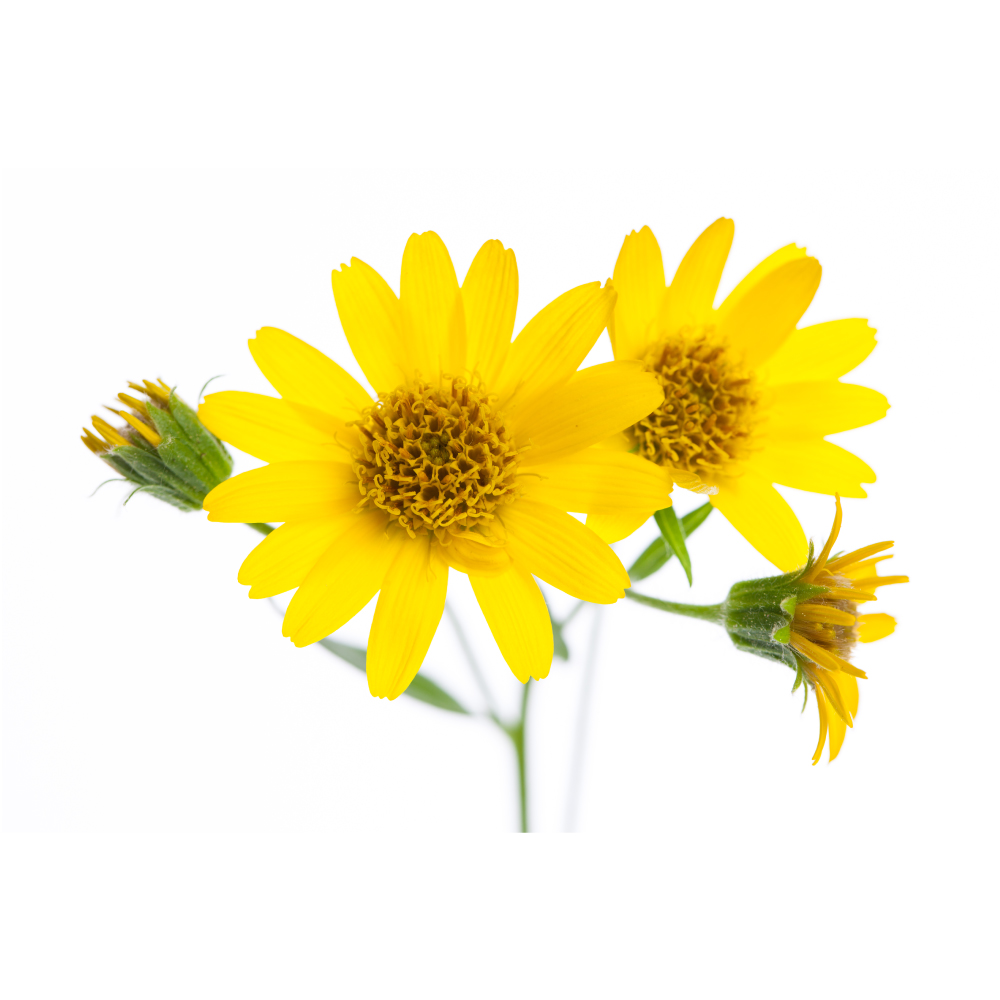
Helenalin is a naturally occurring sesquiterpene lactone (pseudoguaianolide, helenanolide type), found in Arnica, Arnica chamissonis and 3 other sources. It is flagged as toxic.
Concentration
Content by Source
Reported concentrations across the plants that contain helenalin — the bar marks the typical level, the line shows the reported range.
Literature figures for varying plant parts and preparations. Read them as a comparative guide, not exact assays.
Helenalin at a Glance
Helenalin is a pseudoguaianolide sesquiterpene lactone — the helenanolide type, named for the Helenium (sneezeweed) genus it was first pulled out of. It is the single most important molecule in arnica, and it earns that position twice over: it is arnica’s principal anti-inflammatory constituent and its principal toxin. Those are not two facts about one plant. They are one fact about one chemical group.
The molecule carries an α-methylene-γ-lactone and an α,β-unsaturated cyclopentenone — two electrophilic Michael acceptors that react with the free thiol (–SH) groups of cysteine residues in proteins. Aim that reactivity at the right cysteine and you get a precise anti-inflammatory effect. Aim it at everything else, which is what happens once the molecule is inside a body rather than on top of one, and you get gastrointestinal corrosion, immune-organ damage and death in animals 20,
In the plant, helenalin is stored almost entirely as esters — tiglate, methacrylate, isobutyrate, acetate — and the ester matters: unsaturated acyl groups make the molecule more potent than the acetate 7Reference 7In vitroStudies on the anti-inflammatory activity of phytopharmaceuticals prepared from Arnica flowers — in vitro and animal model (mouse ear oedema)View study →. Arnica montana populations split into helenalin-dominant and dihydrohelenalin-dominant chemotypes, which changes both the anti-inflammatory potency and the sensitising capacity of the resulting tincture 17,
The honest evidence posture: the mechanism is exceptionally well characterised for a plant molecule, and the human clinical evidence is entirely for topical arnica preparations, not for the isolate. There are no human trials of helenalin, and there will not be — the molecule’s therapeutic window as a systemic drug does not exist.
Why Helenalin Heals Topically and Poisons Orally
This is the whole page in one section, and it hangs on a single question: which cysteines does the molecule reach?
On skin. Applied in a tincture or gel to intact skin, helenalin esters penetrate the stratum corneum and reach the viable epidermis and dermis at low local concentrations 16Reference 16In vitroSkin penetration studies of Arnica preparations and of their sesquiterpene lactones — in vitroView study →. There they hit NF-κB in resident immune and epithelial cells, damp down the transcription of inflammatory cytokines and adhesion molecules, and reduce local oedema — the effect measured as reduced croton-oil ear oedema in mice 7Reference 7In vitroStudies on the anti-inflammatory activity of phytopharmaceuticals prepared from Arnica flowers — in vitro and animal model (mouse ear oedema)View study →. The skin barrier is doing the dosing: it limits how much crosses, keeps concentrations local, and keeps systemic exposure trivially small.
Swallowed. Every one of those limits disappears. The molecule meets the gastric and intestinal mucosa directly at high concentration, where indiscriminate thiol alkylation is corrosive rather than modulatory, and what survives reaches liver, thymus, spleen and lymph nodes. The oral median lethal dose of helenalin is 85–105 mg/kg across five mammalian species 21Reference 21AnimalMammalian toxicity of helenalin, the toxic principle of Helenium microcephalum DC (smallhead sneezeweed) — animal model, five speciesView study → — it is the reason Helenium species are a recognised livestock poison. In mice, a single intraperitoneal dose has a 14-day LD50 of 43 mg/kg, and repeated dosing damages lymphoid organs, suppresses hepatic cytochrome-P450 enzymes and raises liver and kidney serum markers 20Reference 20AnimalAcute toxicity of helenalin in BDF1 mice — animal modelView study →.
The mechanistic proof that this is a thiol problem is the most quotable experiment in the file: pre-treating mice with diethyl maleate, which depletes glutathione, significantly increases helenalin’s toxicity 20Reference 20AnimalAcute toxicity of helenalin in BDF1 mice — animal modelView study →. Glutathione is the buffer standing between the molecule and everything else in the cell. Exhaust it and helenalin’s reactivity lands on proteins.
So the traditional and regulatory rule is not squeamishness, it is the pharmacology: arnica is for external use on unbroken skin. The German Commission E monograph of 1984 explicitly limited arnica to external use and did not accept internal use, and the EMA’s HMPC assessment covers only semi-solid and liquid preparations for cutaneous use 23Reference 23ReviewAssessment report on Arnica montana L., flos (EMA/HMPC/198794/2012) — regulatory monograph. https://www.ema.europa.eu/en/documents/herbal-report/final-assessment-report-arnica-montana-l-flos_en.pdfView study →. Broken skin, open wounds and mucous membranes remove the barrier that makes topical use safe.
Homeopathic “Arnica” Is Not This Molecule
Worth stating plainly, because the two get conflated constantly. Most of the trial literature people cite as “arnica research” — post-surgical bruising, oral pellets marked 30C — is homeopathic arnica: ultra-dilutions in which helenalin is present in vanishingly small amounts or not at all. That is a different product class from the herbal tincture or gel, and its trial record is separate and largely null.
Nothing here transfers to a homeopathic pellet, and nothing about a homeopathic pellet says anything about the safety of a herbal tincture. The reverse trap also exists: products labelled homeopathic are not all ultra-dilute. A case report describes bilateral toxic optic neuropathy with severe preceding vomiting after a person consumed a large quantity of an alcohol-based homeopathic “Arnica-30” preparation 26Reference 26Case reportToxic optic neuropathy following ingestion of homeopathic medication Arnica-30 — case reportView study → — a reminder that the label is not the formulation, and that swallowing large volumes of an arnica-labelled tincture is a real-world hazard rather than a theoretical one.
What Is Specific to Helenalin — and What Is Class Reactivity
The trap. The α-methylene-γ-lactone warhead is a class property of sesquiterpene lactones, not a helenalin feature. Nearly every SL alkylates cysteine thiols, and therefore nearly every SL “inhibits NF-κB in vitro.” A structure-activity study across 103 sesquiterpene lactones from six structural groups found NF-κB inhibitory activity tracking the number and reactivity of alkylating structural elements — the warhead count, not the skeleton 5Reference 5In vitroQuantitative structure-activity relationship of sesquiterpene lactones as inhibitors of the transcription factor NF-kappaB — in vitroView study →. So the sentence “compound X inhibits NF-κB in vitro” is close to uninformative about any individual SL, and the shared warhead is also exactly why selectivity in this class is usually poor.
What is genuinely specific to helenalin, and unusual for a plant molecule:
- The named residue. Mutational work identified cysteine 38 in the DNA-binding domain of p65 as the residue whose alkylation blocks NF-κB from binding DNA — the experimental confirmation of the mechanism that had previously only been modelled 3Reference 3In vitroCysteine 38 in p65/NF-kappaB plays a crucial role in DNA binding inhibition by sesquiterpene lactones — in vitroView study →. Helenalin is the compound this mechanism was established on.
- The mechanism arc is documented, including its own correction. The 1997 paper reported that helenalin selectively inhibits NF-κB — and not four other transcription factors (Oct-1, TBP, Sp1, STAT5) — proposing that it modified the NF-κB/IκB complex 1Reference 1In vitroHelenalin, an anti-inflammatory sesquiterpene lactone from Arnica, selectively inhibits transcription factor NF-kappaB — in vitroView study →. The 1998 follow-up showed the target was p65 itself, directly, not IκB degradation 2Reference 2In vitroThe anti-inflammatory sesquiterpene lactone helenalin inhibits the transcription factor NF-kappaB by directly targeting p65 — in vitroView study →. The 2001 Cys38 work nailed the residue 3Reference 3In vitroCysteine 38 in p65/NF-kappaB plays a crucial role in DNA binding inhibition by sesquiterpene lactones — in vitroView study →. Later work found that in most cell systems SLs inhibit both DNA binding and IκB kinase, with DNA-binding inhibition predominating 4Reference 4In vitroRole of cysteine residues of p65/NF-kappaB on the inhibition by the sesquiterpene lactone parthenolide and N-ethyl maleimide, and on its transactivating potential — in vitroView study →.
- Comparative potency. Helenalin is at the potent end of the class, and the comparison that matters most is with its own sibling: it inhibits NF-κB activation at 1–20 µM, while 11α,13-dihydrohelenalin — which lacks one of the two Michael acceptors — needs around 200 µM for a comparable effect 1,
23Reference 1In vitroHelenalin, an anti-inflammatory sesquiterpene lactone from Arnica, selectively inhibits transcription factor NF-kappaB — in vitroView study →Reference 23ReviewAssessment report on Arnica montana L., flos (EMA/HMPC/198794/2012) — regulatory monograph. https://www.ema.europa.eu/en/documents/herbal-report/final-assessment-report-arnica-montana-l-flos_en.pdfView study → . Two Michael acceptors versus one, roughly a ten-fold-plus difference in potency.
Everything else in helenalin’s in-vitro repertoire — the apoptosis, the autophagy, the antiparasitic activity, the enzyme inhibition — should be read as thiol-reactivity effects that most cytotoxic SLs share, not as helenalin-specific pharmacology. The class review by Merfort, who led much of this work, treats helenalin and parthenolide as the two reference compounds for the whole group precisely because they are the ones whose mechanisms were worked out in detail 32Reference 32ReviewPerspectives on sesquiterpene lactones in inflammation and cancer — reviewView study →.
Chemotypes: Helenalin vs. 11α,13-Dihydrohelenalin
Arnica montana is not chemically one plant. European populations divide into two chemotypes defined by which lactone dominates, and the difference is functional, not cosmetic.
- The Central European (CL) chemotype is helenalin-dominant, its tinctures characterised by helenalin isobutyrate 23Reference 23ReviewAssessment report on Arnica montana L., flos (EMA/HMPC/198794/2012) — regulatory monograph. https://www.ema.europa.eu/en/documents/herbal-report/final-assessment-report-arnica-montana-l-flos_en.pdfView study →. In New Zealand-grown material of this type, the tigloyl and methacryloyl esters of helenalin made up over 50% of total sesquiterpene lactones 18Reference 18Sesquiterpene lactones in Arnica montana: a rapid analytical method and the effects of flower maturity and simulated mechanical harvesting on quality and yield — analytical/agronomic studyView study →.
- The Spanish (SP) chemotype is conventionally dihydrohelenalin-dominant, its tinctures characterised by dihydrohelenalin isobutyrate and methacrylate 23Reference 23ReviewAssessment report on Arnica montana L., flos (EMA/HMPC/198794/2012) — regulatory monograph. https://www.ema.europa.eu/en/documents/herbal-report/final-assessment-report-arnica-montana-l-flos_en.pdfView study →.
That neat geography is an approximation. Analysing flowers from 16 wild Spanish populations, Perry and colleagues reported a helenalin-rich chemotype in Spain for the first time — total helenalins 5.2–10.3 mg/g dry weight in samples from high-altitude heathland (1330–1460 m) — while the lower-altitude meadow and peat-bog populations were the expected dihydrohelenalin type (total dihydrohelenalins 10.9–18.2 mg/g) 17Reference 17Sesquiterpene lactones in Arnica montana: helenalin and dihydrohelenalin chemotypes in Spain — analytical/phytochemical studyView study →. Altitude and habitat predicted chemotype better than country did.
Why it matters. Since helenalin is roughly an order of magnitude more potent than dihydrohelenalin at NF-κB 1Reference 1In vitroHelenalin, an anti-inflammatory sesquiterpene lactone from Arnica, selectively inhibits transcription factor NF-kappaB — in vitroView study →, a helenalin-chemotype tincture is a stronger anti-inflammatory and a more reactive, more sensitising preparation than a dihydrohelenalin-chemotype one of the same nominal strength. Ester identity layers on top: derivatives with unsaturated acyl groups (methacrylate, tiglinate) are more active than the acetate, both in the NF-κB assay and in the mouse ear-oedema test 7Reference 7In vitroStudies on the anti-inflammatory activity of phytopharmaceuticals prepared from Arnica flowers — in vitro and animal model (mouse ear oedema)View study →. And maturity moves the target — total sesquiterpene lactones rise from 0.512% in buds to 0.943% in withered flowers, and are concentrated in the disk florets (0.872% w/w) over ray florets (0.712%), receptacles (0.354%) and stems (0.028%) 18Reference 18Sesquiterpene lactones in Arnica montana: a rapid analytical method and the effects of flower maturity and simulated mechanical harvesting on quality and yield — analytical/agronomic studyView study →.
Findings for dihydrohelenalin belong to that molecule; only helenalin is covered except where the comparison is the point.
What It's Used For
Helenalin’s mechanistic file is unusually strong and its clinical file is empty. Read every row below as isolated-molecule, in-vitro or animal work; the only human evidence in arnica’s orbit is for topical whole preparations, where helenalin is one constituent among several 7,
Support is an experimental score — weighted by study type (human > animal > in vitro) and volume. A beta, not a validated metric. Every row here is isolate-level preclinical work; the scores are capped accordingly, and none of them is a human use of the molecule.
The application that justifies arnica’s existence, and the only one with a real-world route. Isolated helenalin inhibits NF-κB activation at 1–20 µM in T cells, B cells and epithelial cells, abolishing κB-driven gene expression in response to four different stimuli, while leaving Oct-1, TBP, Sp1 and STAT5 untouched 1Reference 1In vitroHelenalin, an anti-inflammatory sesquiterpene lactone from Arnica, selectively inhibits transcription factor NF-kappaB — in vitroView study →.
The mechanism is direct alkylation of p65 at Cys38, blocking DNA binding 2,
In whole arnica preparations, NF-κB and NF-AT inhibition and reduction of IL-1 and TNF-α release correlate with the quantitative and qualitative sesquiterpene-lactone content, and the same preparations reduce croton-oil-induced ear oedema in mice — with methacrylate and tiglinate esters outperforming the acetate 7Reference 7In vitroStudies on the anti-inflammatory activity of phytopharmaceuticals prepared from Arnica flowers — in vitro and animal model (mouse ear oedema)View study →.
Skin-penetration studies confirm that helenalin isobutyrate and dihydrohelenalin acetate cross the stratum corneum from alcoholic tinctures and gels, so the mechanism is reachable by the topical route 16Reference 16In vitroSkin penetration studies of Arnica preparations and of their sesquiterpene lactones — in vitroView study →.
Gap: the mechanism is isolate-level in vitro plus mouse oedema; the human evidence (osteoarthritis, bruising, muscle soreness) is for whole topical arnica, in which helenalin content is rarely quantified and chemotype rarely stated — no human trial has ever tested isolated helenalin 7,
Potent, well replicated, and not a therapeutic proposition. In a comparison of 21 flavonoids and 5 sesquiterpene lactones from Arnica species, helenalin was among the most cytotoxic compounds tested, with an IC50 of 0.44 µM against the GLC4 human small-cell lung carcinoma line 12Reference 12In vitroCytotoxicity of flavonoids and sesquiterpene lactones from Arnica species against the GLC4 and the COLO 320 cell lines — in vitroView study →; helenalin and its mono- and difunctional esters are potently cytotoxic across murine L1210, human Tmolt3 leukaemia, colon adenocarcinoma, HeLaS3, lung, KB, osteosarcoma and glioma lines 13Reference 13In vitroThe cytotoxicity of helenalin, its mono and difunctional esters, and related sesquiterpene lactones in murine and human tumor cells — in vitroView study →.
Mechanistically, isolated helenalin at 10–50 µM triggers apoptosis in Jurkat leukaemia T cells that is independent of the CD95 death receptor and not prevented by Bcl-2 or Bcl-xL overexpression, acting via caspase-3/-8 9Reference 9In vitroHelenalin triggers a CD95 death receptor-independent apoptosis that is not affected by overexpression of Bcl-x(L) or Bcl-2 — in vitroView study → — a property shared with ambrosin, alantolactone and hymenin, i.e. a class behaviour 10Reference 10In vitroCytotoxic sesquiterpene lactones mediate their death-inducing effect in leukemia T cells by triggering apoptosis — in vitroView study →.
Separately, p65 repression by helenalin induces autophagic cell death, tying the anticancer signal back to the same NF-κB mechanism 11Reference 11In vitroNF-κB p65 repression by the sesquiterpene lactone, helenalin, contributes to the induction of autophagy cell death — in vitroView study →.
Gap: entirely cell-line work on the isolate, with no in-vivo tumour model, no selectivity index against normal cells, and no clinical evidence. The cytotoxicity is thiol chemistry that hits any cell; the whole-body LD50 21Reference 21AnimalMammalian toxicity of helenalin, the toxic principle of Helenium microcephalum DC (smallhead sneezeweed) — animal model, five speciesView study → is what that looks like in an animal 9,
A coherent extension of the NF-κB mechanism into adaptive immunity. Isolated helenalin at 0.5–2 µM suppresses essential immune functions of activated CD4+ T cells by multiple mechanisms, including induction of apoptosis through the mitochondrial pathway, leading the authors to propose it as a candidate immunosuppressive compound for deregulated T-cell-mediated responses 8Reference 8In vitroHelenalin suppresses essential immune functions of activated CD4+ T cells by multiple mechanisms — in vitroView study →.
This is consistent with the earlier finding that helenalin blocks κB-driven cytokine and adhesion-molecule transcription in T cells, B cells and epithelial cells 1Reference 1In vitroHelenalin, an anti-inflammatory sesquiterpene lactone from Arnica, selectively inhibits transcription factor NF-kappaB — in vitroView study →, and it is the flip side of the toxicology: the lymphoid organs — thymus, spleen, mesenteric lymph nodes — are among the tissues most damaged in acutely dosed mice 20Reference 20AnimalAcute toxicity of helenalin in BDF1 mice — animal modelView study →.
Gap: in vitro on the isolate only. The concentrations that suppress T cells overlap those that kill them, and the same activity read as “immunosuppressive” in a dish reads as “lymphoid toxicity” in a mouse 8,
One of the few helenalin findings on human cells, though still ex vivo. In venous blood from healthy volunteers who had taken no anti-inflammatory medication for two weeks, isolated helenalin and 11α,13-dihydrohelenalin inhibited collagen-induced platelet aggregation, thromboxane formation and 5-hydroxytryptamine secretion in a concentration-dependent manner at 3–300 µM, with helenalin the more potent of the two; the authors attributed the effect to thiol-dependent pathways 14Reference 14Clinical trialHelenalin and 11 alpha,13-dihydrohelenalin, two constituents from Arnica montana L., inhibit human platelet function via thiol-dependent pathways — in vitro, human volunteers’ plateletsView study → — the same reactivity, on a different set of proteins.
Gap: ex-vivo human platelets at concentrations far above anything topical use could produce systemically; no bleeding-outcome data, and no evidence that topical arnica affects platelet function in a person 14,
A genuinely striking number with no therapeutic follow-through. Against African Trypanosoma brucei rhodesiense and American T. cruzi, isolated helenalin was the most active of six sesquiterpene lactones tested, with IC50 values of 0.051 µM and 0.695 µM respectively 30Reference 30In vitroAnti-trypanosomal activity of helenalin and some structurally related sesquiterpene lactones — in vitroView study →. The EMA assessment additionally records helenalin as the most active of the arnica lactones against asexual blood-stage Plasmodium falciparum in vitro 23Reference 23ReviewAssessment report on Arnica montana L., flos (EMA/HMPC/198794/2012) — regulatory monograph. https://www.ema.europa.eu/en/documents/herbal-report/final-assessment-report-arnica-montana-l-flos_en.pdfView study →.
Gap: in vitro only, on the isolate, and the sub-micromolar potency has to be read next to the sub-micromolar mammalian cytotoxicity (IC50 ≈ 0.44 µM against a human cell line) 12Reference 12In vitroCytotoxicity of flavonoids and sesquiterpene lactones from Arnica species against the GLC4 and the COLO 320 cell lines — in vitroView study → — the selectivity window has not been established, and a systemic antiparasitic use is precluded by the toxicity 21,
Mechanisms
| Target / pathway | Effect | Relevant to |
|---|---|---|
| p65/RelA cysteine 38 (NF-κB DNA-binding domain) | direct Michael alkylation → blocks NF-κB binding to DNA; the defining, residue-level mechanism | anti-inflammatoryanticancerimmunosuppression |
| NF-κB/IκB complex & IκB kinase | additional inhibition of IKK and of IκB release; DNA-binding block predominates across cell systems | anti-inflammatory |
| NF-AT; IL-1 and TNF-α release | suppressed in arnica preparations, tracking sesquiterpene-lactone content | anti-inflammatory |
| Mitochondrial apoptotic pathway; caspase-3/-8 | apoptosis independent of CD95 and unaffected by Bcl-2/Bcl-xL overexpression | cytotoxicityT-cell suppression |
| Autophagy machinery (downstream of p65 repression) | autophagic cell death in cancer cells | cytotoxicity |
| Platelet thiol-dependent pathways | ↓ collagen-induced aggregation, thromboxane formation, 5-HT secretion | platelet inhibition |
| Glutathione and glutathione S-transferase | spontaneous non-enzymatic Michael addition forms mono- and bis-glutathionyl adducts; the adducts then inhibit GST | pharmacokineticstoxicity |
| Hepatic microsomal P450 (aminopyrine demethylase, aniline hydroxylase) | reduced activity and lowered cytochrome P-450/b5 content after repeated dosing in mice | toxicity |
| Non-selective protein thiols (mucosa, lymphoid tissue) | indiscriminate alkylation once systemic — the toxicity, not the therapy | oral toxicity |
The load-bearing distinction: Cys38 on p65 is specific enough to name, but the chemistry that reaches it is a blunt electrophile. Every row below the first two is what happens when that electrophile meets a thiol that is not Cys38.
Pharmacokinetics
There is no human pharmacokinetic dataset for helenalin, and the regulatory record says so explicitly: the EMA’s HMPC assessment of Arnica montana flos records “no data available” for pharmacokinetics and notes that specific data on resorption, distribution, metabolism and elimination are not available 23Reference 23ReviewAssessment report on Arnica montana L., flos (EMA/HMPC/198794/2012) — regulatory monograph. https://www.ema.europa.eu/en/documents/herbal-report/final-assessment-report-arnica-montana-l-flos_en.pdfView study →. What exists is chemistry and in-vitro work, and it is coherent.
Fate is dominated by non-enzymatic conjugation. Helenalin reacts spontaneously with glutathione at physiological pH by Michael addition, forming 2-mono- and 2,13-bis-glutathionyl adducts. Notably, glutathione S-transferase does not accelerate this reaction — the conjugation is spontaneous, not enzyme-driven — and the resulting GSH adducts then inhibit the transferase itself 15Reference 15In vitroGlutathione adducts of helenalin and 11 alpha,13-dihydrohelenalin acetate inhibit glutathione S-transferase from horse liver — in vitroView study →. A dedicated in-vitro metabolism study of helenalin acetate and 11α,13-dihydrohelenalin acetate confirms glutathione conjugation as the dominant transformation of these arnica lactones 24Reference 24In vitroIn vitro metabolism of helenalin acetate and 11α,13-dihydrohelenalin acetate: natural sesquiterpene lactones from Arnica — in vitroView study →.
Consequences that actually matter:
- Glutathione is the safety margin. Depleting it with diethyl maleate significantly increases helenalin’s toxicity in mice 20Reference 20AnimalAcute toxicity of helenalin in BDF1 mice — animal modelView study → — direct evidence that GSH capacity, not an enzyme, sets the dose that is tolerated.
- Absorption is barrier-limited, not absent. Helenalin isobutyrate penetrates the stratum corneum from alcoholic tinctures and gels 16Reference 16In vitroSkin penetration studies of Arnica preparations and of their sesquiterpene lactones — in vitroView study →; the intact barrier is what keeps topical exposure local. Broken or inflamed skin removes it.
- Plasma protein binding is modest. In human blood, plasma and albumin solutions, 30–50% of the sesquiterpene lactones were protein-bound, with lower binding from ethanolic preparations 23Reference 23ReviewAssessment report on Arnica montana L., flos (EMA/HMPC/198794/2012) — regulatory monograph. https://www.ema.europa.eu/en/documents/herbal-report/final-assessment-report-arnica-montana-l-flos_en.pdfView study →.
- Repeated exposure suppresses hepatic metabolism. In mice, repeated dosing reduced aminopyrine demethylase and aniline hydroxylase activity and lowered cytochrome P-450 and b5 content 20Reference 20AnimalAcute toxicity of helenalin in BDF1 mice — animal modelView study → — a molecule that impairs the machinery that would otherwise clear it.
No oral bioavailability figure, no half-life and no clearance value exist for helenalin in any species. That absence is not reassuring; it is a gap.
Clinical Trials
There are no clinical trials of isolated helenalin, and none should be expected for a molecule with an oral LD50 of 85–105 mg/kg 21Reference 21AnimalMammalian toxicity of helenalin, the toxic principle of Helenium microcephalum DC (smallhead sneezeweed) — animal model, five speciesView study →. The human trial record belongs to topical whole-arnica preparations — hand and knee osteoarthritis, laser-induced bruising, delayed-onset muscle soreness — where helenalin is one constituent of a tincture or gel, usually unquantified and of unstated chemotype 7,
| Completed | Planned | Terminated | Preclinical |
|---|---|---|---|
| 0(isolate) — human data are topical whole-preparation only | 0 | 0 | Extensive: NF-κB/p65 mechanism, cytotoxicity, immunosuppression, antiparasitic, rodent toxicology |
Last checked: July 2026.
Isolate vs. Plant Studies
Helenalin sits at an unusual point on this axis: the mechanistic evidence is almost entirely the isolate, and the human evidence is entirely the plant — with no overlap at all.
The isolate side is strong. The NF-κB selectivity work 1Reference 1In vitroHelenalin, an anti-inflammatory sesquiterpene lactone from Arnica, selectively inhibits transcription factor NF-kappaB — in vitroView study →, the p65-targeting demonstration 2Reference 2In vitroThe anti-inflammatory sesquiterpene lactone helenalin inhibits the transcription factor NF-kappaB by directly targeting p65 — in vitroView study →, the Cys38 mutagenesis 3Reference 3In vitroCysteine 38 in p65/NF-kappaB plays a crucial role in DNA binding inhibition by sesquiterpene lactones — in vitroView study →, the 103-compound structure-activity series 5Reference 5In vitroQuantitative structure-activity relationship of sesquiterpene lactones as inhibitors of the transcription factor NF-kappaB — in vitroView study →, the Jurkat apoptosis studies 9,
The plant side owns every human data point. Arnica’s clinical literature — the osteoarthritis and bruising and muscle-soreness trials — tests tinctures, gels and creams, not helenalin 23Reference 23ReviewAssessment report on Arnica montana L., flos (EMA/HMPC/198794/2012) — regulatory monograph. https://www.ema.europa.eu/en/documents/herbal-report/final-assessment-report-arnica-montana-l-flos_en.pdfView study →. Klaas and colleagues bridge the two by showing that whole-preparation NF-κB/NF-AT inhibition and mouse ear-oedema reduction correlate with sesquiterpene-lactone content and ester pattern 7Reference 7In vitroStudies on the anti-inflammatory activity of phytopharmaceuticals prepared from Arnica flowers — in vitro and animal model (mouse ear oedema)View study →, which is the strongest link available — a correlation across preparations, not a trial of the molecule.
The transferability caveat cuts both ways. Preparations vary by chemotype (helenalin- vs dihydrohelenalin-dominant), by flower maturity, by plant part and by ester profile 17,
Prevalence in Nature
Helenalin is an Asteraceae molecule, restricted to a narrow slice of the family rather than widespread like most terpenoids.
Its namesake genus is Helenium (sneezeweed). It was characterised from common sneezeweed, Helenium autumnale, as the bitter, sternutative (sneeze-provoking) principle 27Reference 27HelenalinView study →, and in smallhead sneezeweed, H. microcephalum, it is described as the only significant toxic constituent present — the molecule responsible for the genus’s reputation as a livestock poison 21Reference 21AnimalMammalian toxicity of helenalin, the toxic principle of Helenium microcephalum DC (smallhead sneezeweed) — animal model, five speciesView study →.
Its medicinally important source is arnica (Arnica montana), along with A. chamissonis ssp. foliosa, whose flower heads are the “Arnicae flos” of European pharmacy 1Reference 1In vitroHelenalin, an anti-inflammatory sesquiterpene lactone from Arnica, selectively inhibits transcription factor NF-kappaB — in vitroView study →. Key points on how it is actually distributed within the plant:
| Where | Reported level | Note |
|---|---|---|
| A. montana flower head, helenalin chemotype (Spain, high-altitude heathland) | 5.2–10.3 mg/g dry wt total helenalin esters | First report of a helenalin chemotype in Spanish material 17Reference 17Sesquiterpene lactones in Arnica montana: helenalin and dihydrohelenalin chemotypes in Spain — analytical/phytochemical studyView study → |
| A. montana flower head, dihydrohelenalin chemotype (Spain, meadow/peat bog) | 10.9–18.2 mg/g dry wt total dihydrohelenalins | The sibling molecule, not helenalin 17Reference 17Sesquiterpene lactones in Arnica montana: helenalin and dihydrohelenalin chemotypes in Spain — analytical/phytochemical studyView study → |
| Disk florets | 0.872% w/w total sesquiterpene lactones | Richest plant part 18Reference 18Sesquiterpene lactones in Arnica montana: a rapid analytical method and the effects of flower maturity and simulated mechanical harvesting on quality and yield — analytical/agronomic studyView study → |
| Ray florets | 0.712% w/w | 18Reference 18Sesquiterpene lactones in Arnica montana: a rapid analytical method and the effects of flower maturity and simulated mechanical harvesting on quality and yield — analytical/agronomic studyView study → |
| Flower receptacle | 0.354% w/w | 18Reference 18Sesquiterpene lactones in Arnica montana: a rapid analytical method and the effects of flower maturity and simulated mechanical harvesting on quality and yield — analytical/agronomic studyView study → |
| Stems | 0.028% w/w | Effectively negligible 18Reference 18Sesquiterpene lactones in Arnica montana: a rapid analytical method and the effects of flower maturity and simulated mechanical harvesting on quality and yield — analytical/agronomic studyView study → |
| Buds → withered flowers | 0.512% → 0.943% w/w total SLs | Content rises with maturity 18Reference 18Sesquiterpene lactones in Arnica montana: a rapid analytical method and the effects of flower maturity and simulated mechanical harvesting on quality and yield — analytical/agronomic studyView study → |
Two things follow. First, helenalin exists in the plant almost entirely as esters, not as the free alcohol — tiglate and methacrylate esters alone exceeded 50% of total sesquiterpene lactones in one helenalin-chemotype analysis 18Reference 18Sesquiterpene lactones in Arnica montana: a rapid analytical method and the effects of flower maturity and simulated mechanical harvesting on quality and yield — analytical/agronomic studyView study →. Second, quantifying “helenalin content” without stating chemotype, plant part and maturity is meaningless, since each of those moves the figure by a factor of several.
The related pseudoguaianolides — mexicanin I, chamissonolide and the dihydro series — occur alongside it in the same genera and are frequently the compounds actually measured when a paper reports “arnica lactones” 1,
Discovery & Synthesis
First characterised, 1936. Helenalin was named and described by Earl P. Clark as “the bitter sternutative substance occurring in Helenium autumnale” — the compound behind sneezeweed’s sneeze 27Reference 27HelenalinView study →. The name is straight from the genus, and the sternutative property is the plant’s common name in reverse: it is not the pollen that makes people sneeze, it is the dried, powdered plant.
Toxicology came before pharmacology. The molecule’s first sustained scientific attention was as a poison of grazing livestock — the 1976 determination that helenalin is the toxic principle of smallhead sneezeweed, with an oral LD50 between 85 and 105 mg/kg in five mammalian species, is still the most-cited toxicity figure here 21Reference 21AnimalMammalian toxicity of helenalin, the toxic principle of Helenium microcephalum DC (smallhead sneezeweed) — animal model, five speciesView study →. Its anti-inflammatory identity arrived decades later, through arnica.
Total synthesis, 1978–1979. Helenalin’s dense, stereochemically demanding pseudoguaianolide skeleton made it a landmark target. Ohfune, Grieco, Wang and Majetich reported a stereospecific total synthesis of dl-helenalin in 1978, framed as a general route to helenanolides and ambrosanolides 29Reference 29Stereospecific total synthesis of dl-helenalin: a general route to helenanolides and ambrosanolidesView study →, and Roberts and Schlessinger published a total synthesis of dl-helenalin in 1979 31Reference 31Total synthesis of dl-helenalinView study →. Later stereocontrolled routes followed in the early 1980s.
Manufacture today. There is no commercial manufacture of helenalin as a therapeutic substance. It is produced only at research scale, by isolation from Arnica or Helenium plant material, for use as an analytical reference standard and as a laboratory NF-κB inhibitor. Total synthesis remains a methodology exercise rather than a supply route, and the herbal products people actually use are plant extracts standardised (where standardised at all) to total sesquiterpene lactones, not to purified helenalin.
Patents: not yet researched.
Toxicity & Safety
Helenalin carries a toxic flag, and it is one of the better-justified flags here — the classification rests on measured lethal doses in multiple mammalian species, not on inference from chemical class.
Acute Toxicity — The Measured Numbers
- Oral LD50: 85–105 mg/kg across five mammalian species — the figure that established helenalin as the toxic principle of sneezeweed 21Reference 21AnimalMammalian toxicity of helenalin, the toxic principle of Helenium microcephalum DC (smallhead sneezeweed) — animal model, five speciesView study →.
- Intraperitoneal LD50 (mice): 43 mg/kg over 14 days 20Reference 20AnimalAcute toxicity of helenalin in BDF1 mice — animal modelView study →.
- Target organs. A single 25 mg/kg i.p. dose raised serum ALT, LDH, urea nitrogen and sorbitol dehydrogenase within 6 hours; repeated dosing at 25 mg/kg/day reduced liver, thymus and spleen relative weights, produced substantial histological damage to lymphocytes of the thymus, spleen and mesenteric lymph nodes, shifted white-cell differentials, and suppressed hepatic microsomal drug-metabolising enzymes 20Reference 20AnimalAcute toxicity of helenalin in BDF1 mice — animal modelView study →.
- Glutathione is protective. Depleting glutathione with diethyl maleate significantly increased helenalin’s toxicity 20Reference 20AnimalAcute toxicity of helenalin in BDF1 mice — animal modelView study →.
- Cardiac effects are reported but less firmly pinned to helenalin itself. Transient cardiotoxicity was documented for the semisynthetic derivative bis(helenalinyl)malonate in mice — a compound explicitly less toxic than helenalin, whose i.p. LD50 was more than twice the parent’s 19Reference 19AnimalRenal, hepatic, cardiac and thymic acute toxicity afforded by bis(helenalinyl)malonate in BDF1 mice — animal modelView study →. The cardiac-arrhythmia warning that appears in herbal and regulatory sources for ingested arnica is a traditional and regulatory caution, not a well-replicated helenalin cardiotoxicity experiment 23,
28Reference 23ReviewAssessment report on Arnica montana L., flos (EMA/HMPC/198794/2012) — regulatory monograph. https://www.ema.europa.eu/en/documents/herbal-report/final-assessment-report-arnica-montana-l-flos_en.pdfView study →Reference 28ReviewFinal report on the safety assessment of Arnica montana extract and Arnica montana — reviewView study → . It is retained here because the direction of the risk is clear and the cost of being wrong is high.
The Ingestion Hazard
Arnica preparations are for external application to unbroken skin. The German Commission E monograph of 1984 limited arnica to external use and did not accept internal use because of the risks; the EMA’s HMPC assessment covers only semi-solid and liquid dosage forms for cutaneous use 23Reference 23ReviewAssessment report on Arnica montana L., flos (EMA/HMPC/198794/2012) — regulatory monograph. https://www.ema.europa.eu/en/documents/herbal-report/final-assessment-report-arnica-montana-l-flos_en.pdfView study →. Reported consequences of ingesting arnica preparations include severe gastroenteritis, and older toxicological summaries record an oral LD50 of an arnica extract of 123 mg/kg in mice alongside 31 mg/kg intraperitoneally 23,
Two practical corollaries:
- Do not apply to broken skin, open wounds, ulcers or mucous membranes. The stratum corneum is the dosing control 16Reference 16In vitroSkin penetration studies of Arnica preparations and of their sesquiterpene lactones — in vitroView study →; without it, systemic absorption is unbounded, and EMA product entries specifically record oedematous dermatitis after application to injured skin or leg ulcers 23Reference 23ReviewAssessment report on Arnica montana L., flos (EMA/HMPC/198794/2012) — regulatory monograph. https://www.ema.europa.eu/en/documents/herbal-report/final-assessment-report-arnica-montana-l-flos_en.pdfView study →.
- Long-term or high-quantity topical use has its own ceiling. Marketed-product safety information records that prolonged use or application of large quantities can cause skin inflammation, vesication, eczema or skin necrosis 23Reference 23ReviewAssessment report on Arnica montana L., flos (EMA/HMPC/198794/2012) — regulatory monograph. https://www.ema.europa.eu/en/documents/herbal-report/final-assessment-report-arnica-montana-l-flos_en.pdfView study →.
Asteraceae Contact Allergy
Helenalin is a documented contact sensitiser, and this is its most common real-world adverse effect. Hausen’s survey of the arnica-allergy literature — over 100 published cases of contact dermatitis, the first reported in 1844 — identified helenalin, its acetate and its methacrylate as the primary sensitisers, with most sensitisation arising from self-treatment with arnica tincture 22Reference 22ReviewHausen BM. (1980). [Arnica allergy] — review of the contact-dermatitis case literature plus four new cases. Der Hautarzt. https://pubmed.ncbi.nlm.nih.gov/6993423/View study →.
A correction worth making precisely: helenalin is not one of the components of the standard sesquiterpene-lactone (SL) mix patch-test allergen. The SL mix is composed of dehydrocostus lactone, alantolactone and costunolide 6Reference 6ObservationalSensitization and cross-reaction patterns in Danish Compositae-allergic patients — observational patch-test seriesView study →; arnica is screened instead through the Compositae mix, which contains arnica extract among other Asteraceae extracts. In a Danish series of 190 Compositae-allergic patients, dehydrocostus lactone was the most frequent elicitor within the SL mix, and within the Compositae mix arnica ranked behind feverfew, tansy, wild chamomile and yarrow 6Reference 6ObservationalSensitization and cross-reaction patterns in Danish Compositae-allergic patients — observational patch-test seriesView study →. So the accurate statement is: helenalin is a potent Asteraceae sensitiser and the principal allergen of arnica specifically, screened via the Compositae mix rather than the SL mix.
The modern prevalence picture is also gentler than the 1970s–80s literature implied. The EMA assessment concludes that, given arnica’s wide distribution, the occurrence of contact allergy is relatively low, with adverse effects — itching, redness, eczema, occasionally contact dermatitis — occurring at roughly 1 in 100, and no serious adverse reactions or deaths reported across 1,280 patients tested for marketing-authorisation safety 23Reference 23ReviewAssessment report on Arnica montana L., flos (EMA/HMPC/198794/2012) — regulatory monograph. https://www.ema.europa.eu/en/documents/herbal-report/final-assessment-report-arnica-montana-l-flos_en.pdfView study →. Anyone with known Asteraceae/Compositae allergy should still avoid arnica-containing topicals.
Interactions & Scope
No human drug-interaction studies of helenalin exist. Two mechanistically plausible, unquantified concerns are worth naming rather than pretending away:
- Antiplatelet additivity. Helenalin inhibits collagen-induced human platelet aggregation and thromboxane formation ex vivo via thiol-dependent pathways 14Reference 14Clinical trialHelenalin and 11 alpha,13-dihydrohelenalin, two constituents from Arnica montana L., inhibit human platelet function via thiol-dependent pathways — in vitro, human volunteers’ plateletsView study →. Whether topical arnica achieves any systemic platelet effect is unknown and probably not, but the mechanism is real.
- Hepatic enzyme suppression. Repeated helenalin dosing lowered cytochrome P-450 and b5 content and microsomal enzyme activity in mice 20Reference 20AnimalAcute toxicity of helenalin in BDF1 mice — animal modelView study →. This is an animal finding at toxic doses, not a demonstrated human CYP interaction, and no specific isoform has been implicated.
What is not known. The EMA assessment records that adequate reproductive-toxicity, genotoxicity and carcinogenicity testing has not been performed for arnica flower 23Reference 23ReviewAssessment report on Arnica montana L., flos (EMA/HMPC/198794/2012) — regulatory monograph. https://www.ema.europa.eu/en/documents/herbal-report/final-assessment-report-arnica-montana-l-flos_en.pdfView study →; an Ames test of an arnica extract produced a 2–4 fold increase in revertants, which the authors attributed to the extract’s flavonols, not its lactones 23Reference 23ReviewAssessment report on Arnica montana L., flos (EMA/HMPC/198794/2012) — regulatory monograph. https://www.ema.europa.eu/en/documents/herbal-report/final-assessment-report-arnica-montana-l-flos_en.pdfView study →. Reproductive and developmental data for isolated helenalin are absent — silence, not clearance. Pregnancy and lactation decisions belong on the herb or product page where intake is actually decided, and are not adjudicated for this molecule here.
- Toxic if swallowed — the flag is measured, not inferred. Oral LD50 85–105 mg/kg in five mammalian species 21Reference 21AnimalMammalian toxicity of helenalin, the toxic principle of Helenium microcephalum DC (smallhead sneezeweed) — animal model, five speciesView study →; i.p. LD50 43 mg/kg in mice, with damage to liver, thymus, spleen and lymph nodes 20Reference 20AnimalAcute toxicity of helenalin in BDF1 mice — animal modelView study →.
- Arnica is topical-only, on unbroken skin. Commission E did not accept internal use; the EMA monograph covers cutaneous preparations only 23Reference 23ReviewAssessment report on Arnica montana L., flos (EMA/HMPC/198794/2012) — regulatory monograph. https://www.ema.europa.eu/en/documents/herbal-report/final-assessment-report-arnica-montana-l-flos_en.pdfView study →. Never ingest an arnica tincture, tea or oil.
- Not on broken skin, wounds, ulcers, mucous membranes or near the eyes. The intact stratum corneum is what limits absorption 16Reference 16In vitroSkin penetration studies of Arnica preparations and of their sesquiterpene lactones — in vitroView study →; applying to injured skin has produced oedematous dermatitis 23Reference 23ReviewAssessment report on Arnica montana L., flos (EMA/HMPC/198794/2012) — regulatory monograph. https://www.ema.europa.eu/en/documents/herbal-report/final-assessment-report-arnica-montana-l-flos_en.pdfView study →.
- Asteraceae contact allergy. Helenalin and its acetate/methacrylate are the primary sensitisers behind arnica dermatitis 22Reference 22ReviewHausen BM. (1980). [Arnica allergy] — review of the contact-dermatitis case literature plus four new cases. Der Hautarzt. https://pubmed.ncbi.nlm.nih.gov/6993423/View study →; adverse skin reactions occur at roughly 1 in 100 and prolonged or heavy use raises the risk, up to eczema and necrosis 23Reference 23ReviewAssessment report on Arnica montana L., flos (EMA/HMPC/198794/2012) — regulatory monograph. https://www.ema.europa.eu/en/documents/herbal-report/final-assessment-report-arnica-montana-l-flos_en.pdfView study →.
- Homeopathic ≠ herbal. Ultra-dilute homeopathic arnica is a different product class that does not deliver this molecule — but a “homeopathic”-labelled alcoholic preparation swallowed in quantity has caused serious harm 26Reference 26Case reportToxic optic neuropathy following ingestion of homeopathic medication Arnica-30 — case reportView study →.
- Interactions not assessed. No human interaction studies exist; ex-vivo antiplatelet activity 14Reference 14Clinical trialHelenalin and 11 alpha,13-dihydrohelenalin, two constituents from Arnica montana L., inhibit human platelet function via thiol-dependent pathways — in vitro, human volunteers’ plateletsView study → and animal hepatic-enzyme suppression 20Reference 20AnimalAcute toxicity of helenalin in BDF1 mice — animal modelView study → are plausible but unquantified. Reproductive, genotoxicity and carcinogenicity testing has not been done 23Reference 23ReviewAssessment report on Arnica montana L., flos (EMA/HMPC/198794/2012) — regulatory monograph. https://www.ema.europa.eu/en/documents/herbal-report/final-assessment-report-arnica-montana-l-flos_en.pdfView study →.
Dosage
There is no human dose of isolated helenalin, and there should not be one. Nothing below is a recommendation; it is a record of the concentrations at which the molecule has been studied, given so the in-vitro numbers here can be read in proportion.
| Setting | Form | Concentration or dose studied |
|---|---|---|
| NF-κB inhibition, cell lines | isolated helenalin | 1–20 µM (11α,13-dihydrohelenalin ≈ 200 µM) 1, |
| Apoptosis, leukaemia T cells | isolated helenalin | 10–50 µM 9Reference 9In vitroHelenalin triggers a CD95 death receptor-independent apoptosis that is not affected by overexpression of Bcl-x(L) or Bcl-2 — in vitroView study → |
| CD4+ T-cell suppression | isolated helenalin | 0.5–2 µM 8Reference 8In vitroHelenalin suppresses essential immune functions of activated CD4+ T cells by multiple mechanisms — in vitroView study → |
| Cytotoxicity, human carcinoma line | isolated helenalin | IC50 ≈ 0.44 µM 12Reference 12In vitroCytotoxicity of flavonoids and sesquiterpene lactones from Arnica species against the GLC4 and the COLO 320 cell lines — in vitroView study → |
| Human platelet inhibition (ex vivo) | isolated helenalin | 3–300 µM 14Reference 14Clinical trialHelenalin and 11 alpha,13-dihydrohelenalin, two constituents from Arnica montana L., inhibit human platelet function via thiol-dependent pathways — in vitro, human volunteers’ plateletsView study → |
| Antitrypanosomal (T. b. rhodesiense) | isolated helenalin | IC50 0.051 µM 30Reference 30In vitroAnti-trypanosomal activity of helenalin and some structurally related sesquiterpene lactones — in vitroView study → |
| Acute toxicity, mice | isolated helenalin | i.p. LD50 43 mg/kg; 25 mg/kg/day damaging 20Reference 20AnimalAcute toxicity of helenalin in BDF1 mice — animal modelView study → |
| Acute toxicity, five mammalian species | isolated helenalin | oral LD50 85–105 mg/kg 21Reference 21AnimalMammalian toxicity of helenalin, the toxic principle of Helenium microcephalum DC (smallhead sneezeweed) — animal model, five speciesView study → |
Human Exposure Is Topical and Indirect
The only route by which people encounter helenalin medicinally is arnica applied to unbroken skin. For scale, the tinctures characterised in the EMA assessment contained roughly 0.7–0.83 mg/mL total sesquiterpene lactones — the helenalin-chemotype (Central European) tincture at about 0.83 mg/mL calculated as helenalin isobutyrate, the Spanish dihydrohelenalin-chemotype tincture at about 0.7 mg/mL 23Reference 23ReviewAssessment report on Arnica montana L., flos (EMA/HMPC/198794/2012) — regulatory monograph. https://www.ema.europa.eu/en/documents/herbal-report/final-assessment-report-arnica-montana-l-flos_en.pdfView study →. Marketed products are typically gels, creams and ointments made from tinctures at DER 1:10 to 1:20, applied a few times daily; arnica preparations are generally standardised to total sesquiterpene lactones (expressed as dihydrohelenalin tiglate), not to helenalin 23Reference 23ReviewAssessment report on Arnica montana L., flos (EMA/HMPC/198794/2012) — regulatory monograph. https://www.ema.europa.eu/en/documents/herbal-report/final-assessment-report-arnica-montana-l-flos_en.pdfView study →.
These are research concentrations and preparation strengths, not a personal recommendation — and for this molecule the only dosing guidance that matters is the negative one: do not take it internally.
References
- Lyss G, Schmidt TJ, Merfort I, Pahl HL. (1997). Helenalin, an anti-inflammatory sesquiterpene lactone from Arnica, selectively inhibits transcription factor NF-kappaB — in vitro. Biological Chemistry. https://pubmed.ncbi.nlm.nih.gov/9348104/
- Lyss G, Knorre A, Schmidt TJ, Pahl HL, Merfort I. (1998). The anti-inflammatory sesquiterpene lactone helenalin inhibits the transcription factor NF-kappaB by directly targeting p65 — in vitro. Journal of Biological Chemistry. https://pubmed.ncbi.nlm.nih.gov/9837931/
- García-Piñeres AJ, Castro V, Mora G, Schmidt TJ, Strunck E, Pahl HL, Merfort I. (2001). Cysteine 38 in p65/NF-kappaB plays a crucial role in DNA binding inhibition by sesquiterpene lactones — in vitro. Journal of Biological Chemistry. https://pubmed.ncbi.nlm.nih.gov/11500489/
- García-Piñeres AJ, Lindenmeyer MT, Merfort I. (2004). Role of cysteine residues of p65/NF-kappaB on the inhibition by the sesquiterpene lactone parthenolide and N-ethyl maleimide, and on its transactivating potential — in vitro. Life Sciences. https://pubmed.ncbi.nlm.nih.gov/15183076/
- Siedle B, García-Piñeres AJ, Murillo R, et al. (2004). Quantitative structure-activity relationship of sesquiterpene lactones as inhibitors of the transcription factor NF-kappaB — in vitro. Journal of Medicinal Chemistry. https://pubmed.ncbi.nlm.nih.gov/15537359/
- Paulsen E, Andersen KE, Hausen BM. (2001). Sensitization and cross-reaction patterns in Danish Compositae-allergic patients — observational patch-test series. Contact Dermatitis. https://pubmed.ncbi.nlm.nih.gov/11683829/
- Klaas CA, Wagner G, Laufer S, et al. (2002). Studies on the anti-inflammatory activity of phytopharmaceuticals prepared from Arnica flowers — in vitro and animal model (mouse ear oedema). Planta Medica. https://pubmed.ncbi.nlm.nih.gov/12058311/
- Berges C, Fuchs D, Opelz G, Daniel V, Naujokat C. (2009). Helenalin suppresses essential immune functions of activated CD4+ T cells by multiple mechanisms — in vitro. Molecular Immunology. https://pubmed.ncbi.nlm.nih.gov/19656571/
- Dirsch VM, Stuppner H, Vollmar AM. (2001). Helenalin triggers a CD95 death receptor-independent apoptosis that is not affected by overexpression of Bcl-x(L) or Bcl-2 — in vitro. Cancer Research. https://pubmed.ncbi.nlm.nih.gov/11479221/
- Dirsch VM, Stuppner H, Vollmar AM. (2001). Cytotoxic sesquiterpene lactones mediate their death-inducing effect in leukemia T cells by triggering apoptosis — in vitro. Planta Medica. https://pubmed.ncbi.nlm.nih.gov/11509981/
- Lim CB, Fu PY, Ky N, et al. (2012). NF-κB p65 repression by the sesquiterpene lactone, helenalin, contributes to the induction of autophagy cell death — in vitro. BMC Complementary and Alternative Medicine. https://pubmed.ncbi.nlm.nih.gov/22784363/
- Woerdenbag HJ, Merfort I, Passreiter CM, et al. (1994). Cytotoxicity of flavonoids and sesquiterpene lactones from Arnica species against the GLC4 and the COLO 320 cell lines — in vitro. Planta Medica. https://pubmed.ncbi.nlm.nih.gov/7997472/
- Grippo AA, Hall IH, Kiyokawa H, Muraoka O, Shen YC, Lee KH. (1992). The cytotoxicity of helenalin, its mono and difunctional esters, and related sesquiterpene lactones in murine and human tumor cells — in vitro. Drug Design and Discovery. https://pubmed.ncbi.nlm.nih.gov/1525302/
- Schröder H, Lösche W, Strobach H, et al. (1990). Helenalin and 11 alpha,13-dihydrohelenalin, two constituents from Arnica montana L., inhibit human platelet function via thiol-dependent pathways — in vitro, human volunteers’ platelets. Thrombosis Research. https://pubmed.ncbi.nlm.nih.gov/2116680/
- Schmidt TJ. (2000). Glutathione adducts of helenalin and 11 alpha,13-dihydrohelenalin acetate inhibit glutathione S-transferase from horse liver — in vitro. Planta Medica. https://pubmed.ncbi.nlm.nih.gov/10763580/
- Wagner S, Suter A, Merfort I. (2004). Skin penetration studies of Arnica preparations and of their sesquiterpene lactones — in vitro. Planta Medica. https://pubmed.ncbi.nlm.nih.gov/15490315/
- Perry NB, Burgess EJ, Rodríguez Guitián MA, et al. (2009). Sesquiterpene lactones in Arnica montana: helenalin and dihydrohelenalin chemotypes in Spain — analytical/phytochemical study. Planta Medica. https://pubmed.ncbi.nlm.nih.gov/19235681/
- Douglas JA, Smallfield BM, Burgess EJ, et al. (2004). Sesquiterpene lactones in Arnica montana: a rapid analytical method and the effects of flower maturity and simulated mechanical harvesting on quality and yield — analytical/agronomic study. Planta Medica. https://pubmed.ncbi.nlm.nih.gov/14994196/
- Hall IH, Grippo AA, Holbrook DJ, et al. (1990). Renal, hepatic, cardiac and thymic acute toxicity afforded by bis(helenalinyl)malonate in BDF1 mice — animal model. Toxicology. https://pubmed.ncbi.nlm.nih.gov/2219141/
- Chapman DE, Roberts GB, Reynolds DJ, et al. (1988). Acute toxicity of helenalin in BDF1 mice — animal model. Fundamental and Applied Toxicology. https://pubmed.ncbi.nlm.nih.gov/3356317/
- Witzel DA, Ivie GW, Dollahite JW. (1976). Mammalian toxicity of helenalin, the toxic principle of Helenium microcephalum DC (smallhead sneezeweed) — animal model, five species. American Journal of Veterinary Research. https://pubmed.ncbi.nlm.nih.gov/937811/
- Hausen BM. (1980). [Arnica allergy] — review of the contact-dermatitis case literature plus four new cases. Der Hautarzt. https://pubmed.ncbi.nlm.nih.gov/6993423/
- Committee on Herbal Medicinal Products (HMPC), European Medicines Agency. (2014). Assessment report on Arnica montana L., flos (EMA/HMPC/198794/2012) — regulatory monograph. https://www.ema.europa.eu/en/documents/herbal-report/final-assessment-report-arnica-montana-l-flos_en.pdf
- Jürgens FM, Behrens M, Humpf HU, Robledo SM, Schmidt TJ. (2022). In vitro metabolism of helenalin acetate and 11α,13-dihydrohelenalin acetate: natural sesquiterpene lactones from Arnica — in vitro. Metabolites. https://pubmed.ncbi.nlm.nih.gov/35050210/
- Lass C, Vocanson M, Wagner S, et al. (2008). Anti-inflammatory and immune-regulatory mechanisms prevent contact hypersensitivity to Arnica montana L. — animal model (mouse). Experimental Dermatology. https://pubmed.ncbi.nlm.nih.gov/18341569/
- Venkatramani DV, Goel S, Ratra V, Gandhi RA. (2013). Toxic optic neuropathy following ingestion of homeopathic medication Arnica-30 — case report. Cutaneous and Ocular Toxicology. https://pubmed.ncbi.nlm.nih.gov/22877081/
- Clark EP. (1936). Helenalin. I. Helenalin, the bitter sternutative substance occurring in Helenium autumnale L. Journal of the American Chemical Society. https://doi.org/10.1021/ja01301a046
- Cosmetic Ingredient Review Expert Panel. (2001). Final report on the safety assessment of Arnica montana extract and Arnica montana — review. International Journal of Toxicology. https://doi.org/10.1080/10915810160233712
- Ohfune Y, Grieco PA, Wang CLJ, Majetich G. (1978). Stereospecific total synthesis of dl-helenalin: a general route to helenanolides and ambrosanolides. Journal of the American Chemical Society. https://doi.org/10.1021/ja00486a059
- Schmidt TJ, Brun R, Willuhn G, Khalid SA. (2002). Anti-trypanosomal activity of helenalin and some structurally related sesquiterpene lactones — in vitro. Planta Medica. https://pubmed.ncbi.nlm.nih.gov/12221603/
- Roberts MR, Schlessinger RH. (1979). Total synthesis of dl-helenalin. Journal of the American Chemical Society. https://doi.org/10.1021/ja00519a032
- Merfort I. (2011). Perspectives on sesquiterpene lactones in inflammation and cancer — review. Current Drug Targets. https://pubmed.ncbi.nlm.nih.gov/21561425/



