
Compound Monograph
Ephedrannin A
Ephedrannin A is a dimeric A-type proanthocyanidin (a bis-flavonoid condensed tannin) from the roots of Ephedra sinica — one of ma huang's non-alkaloid constituents, with an in-vitro anti-inflammatory signal and a historical billing as a root hypotensive principle. It is chemically and pharmacologically distinct from the ephedrine alkaloids ephedra is known for.

Sources · 3
Where Does It Come From?
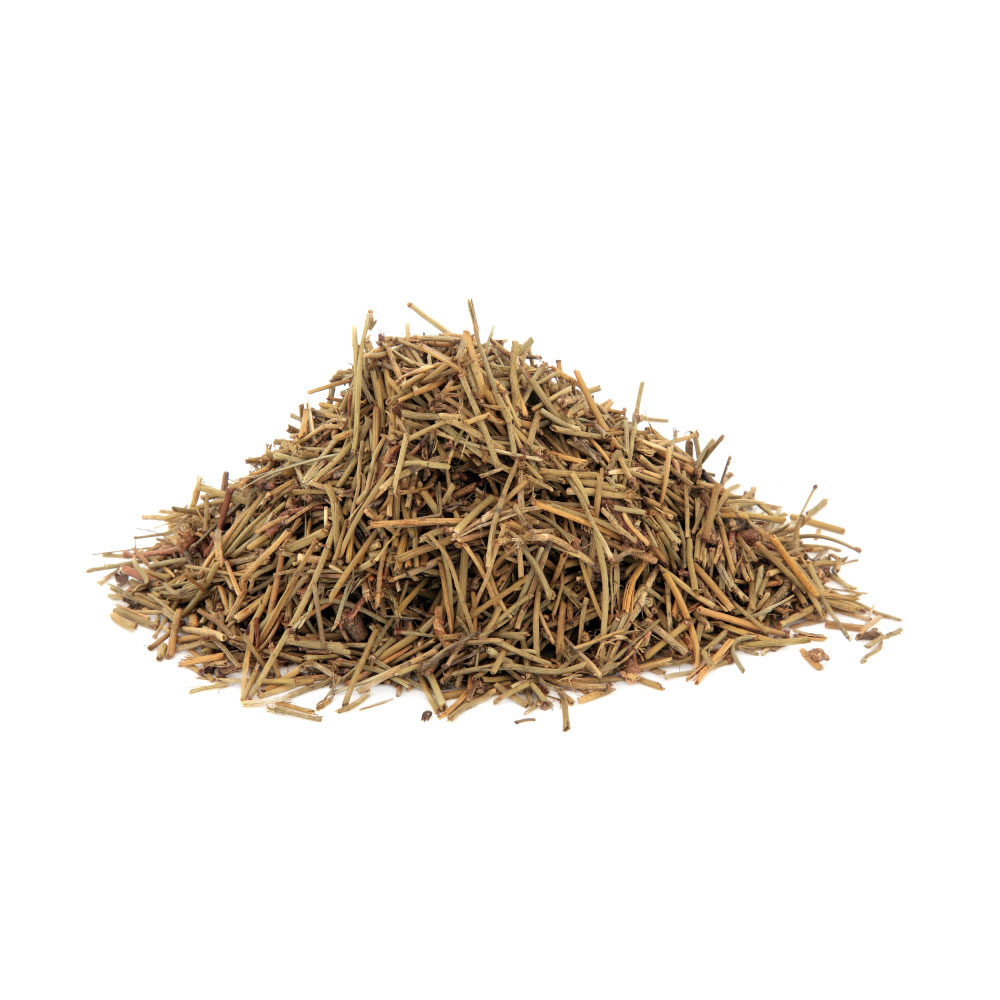
Ephedrannin A is a naturally occurring dimeric a-type proanthocyanidin (bis-flavonoid / condensed tannin), found in Ephedra roots and 2 other sources. It is well tolerated orally (low toxicity).
Concentration
Content by Source
Concentrations not reported. No percent-dry-weight or mg/g figures have been published for this compound in its source plants.
Ephedrannin A at a Glance
Ephedrannin A is a dimeric A-type proanthocyanidin — a bis-flavonoid condensed tannin — isolated from the roots of Ephedra sinica, the same shrub that yields the stimulant drug ma huang. It belongs to ephedra’s non-alkaloid chemistry: a polyphenol, not a phenylpropylamine, and a constituent of the root rather than the alkaloid-rich green stem 1Reference 1Structure of ephedrannin A, a hypotensive principle of Ephedra roots.
Its documented activity is anti-inflammatory. In cultured macrophages, ephedrannin A (with its companion ephedrannin B) suppresses the pro-inflammatory transcription factor NF-κB, cutting production of TNF-α and IL-1β 2Reference 2Ephedrannin A and B from roots of Ephedra sinica inhibit lipopolysaccharide-induced inflammatory mediators by suppressing nuclear factor-κB activation in RAW 264.7 macrophagesView study →. It was originally described in 1982 as one of the hypotensive principles of ephedra root 1Reference 1Structure of ephedrannin A, a hypotensive principle of Ephedra roots — a direction worth flagging precisely because it runs opposite to the blood-pressure-raising effect of ephedra’s alkaloids.
The honest headline: the evidence is thin and entirely non-human. What exists is in-vitro isolate work plus animal studies of whole root extracts. Do not read ephedrine’s pharmacology — or its cardiovascular risk — onto this molecule; it is a different compound in a different plant part.
Ephedra’s Tannins, Not Its Alkaloids
Ephedra is famous for two molecules: ephedrine and pseudoephedrine, the sympathomimetic alkaloids of the green stem — together the large majority of the plant’s alkaloid fraction 5Reference 5Chemical composition of various Ephedra speciesView study → — that drive its bronchodilator, decongestant and stimulant actions, and its cardiovascular risk and regulatory bans. Ephedrannin A is none of that. It is a condensed tannin from the root (ma huang gen, traditionally regarded as a separate material with an action opposite to the stem’s), and it carries neither the alkaloid structure nor the adrenergic pharmacology.
The contrast is load-bearing and points the opposite way:
- The alkaloids (ephedrine, pseudoephedrine) are pressors — they raise heart rate and blood pressure through α/β-adrenergic agonism.
- Ephedrannin A was first characterised as a hypotensive root principle 1Reference 1Structure of ephedrannin A, a hypotensive principle of Ephedra roots, and its measured activity is anti-inflammatory via NF-κB suppression 2Reference 2Ephedrannin A and B from roots of Ephedra sinica inhibit lipopolysaccharide-induced inflammatory mediators by suppressing nuclear factor-κB activation in RAW 264.7 macrophagesView study → — a profile with no stimulant or pressor component at all.
This matters for how the regulatory story transfers, which is: it doesn’t. The 2004 US ban and the ongoing restrictions on ephedra apply to the ephedrine alkaloids and the stimulant stem, not to a root polyphenol. Interest in ephedra’s non-alkaloid fractions is in fact partly motivated by removing the alkaloids: an ephedrine-alkaloid-free Ephedra Herb extract retains analgesic, anti-inflammatory and antiviral activity attributed to non-alkaloid constituents, and is explicitly framed as a safer alternative to the crude stimulant herb 4Reference 4Ephedrine alkaloids-free Ephedra Herb extract: a safer alternative to ephedra with comparable analgesic, anticancer, and anti-influenza activitiesView study →. Ephedrannin A sits on that non-alkaloid, non-stimulant side of the plant. None of this makes it a proven remedy — the point is only that its risks and its actions are its own, not the alkaloids’.
A Macrocyclic Proanthocyanidin
Structurally, ephedrannin A is a bis-flavonoid: two flavan/flavonol units joined into a single dimer. It is classed among the A-type proanthocyanidins — the condensed-tannin subclass in which the two flavonoid units are joined by a double interflavan linkage (a C–C bond plus an additional C–O–C ether bond), rather than the single bond of the commoner B-type dimers. That second, ether linkage closes an extra ring, which is why ephedra-root bis-flavonols of this family are described as doubly-linked, macrocyclic proanthocyanidins 1,
This places ephedrannin A firmly in the proanthocyanidin family — condensed tannins built from flavan-3-ol units, the same broad class as the catechin-derived tannins of grape seed and pine bark. Its close relatives in the ephedra root — ephedrannin B and the mahuannins (A–C) — are the same A-type dimeric proanthocyanidin type 3Reference 3Rapid screening of proanthocyanidins from the roots of Ephedra sinica Stapf and its preventative effects on dextran-sulfate-sodium-induced ulcerative colitisView study →. As with condensed tannins generally, the large, polar, doubly-linked structure predicts poor oral absorption, which is a standing caveat over any in-vitro potency.
What It's Used For
The research base is small, preclinical, and split between the isolated molecule (one in-vitro macrophage study) and whole-root extracts in which ephedrannin A is one proanthocyanidin among several. There are no human data.
Support is an experimental score — weighted by study type (human > animal > in vitro) and volume. A beta, not a validated metric. Every row here is preclinical and thin; read the per-row basis.
The best-defined result, and the one place the isolated molecule was tested. In LPS-stimulated RAW 264.7 macrophages, ephedrannin A and ephedrannin B suppressed the transcription of TNF-α and IL-1β by blocking NF-κB translocation and the phosphorylation of p38 MAP kinase 2Reference 2Ephedrannin A and B from roots of Ephedra sinica inhibit lipopolysaccharide-induced inflammatory mediators by suppressing nuclear factor-κB activation in RAW 264.7 macrophagesView study →. This is a coherent anti-inflammatory mechanism at the level of a single cell type.
Gap: it is a single in-vitro study in a cell line — no animal or human confirmation for the isolate, no dose-response in a living organism, and no account of whether an orally-dosed tannin ever reaches macrophages at the concentrations used. 2Reference 2Ephedrannin A and B from roots of Ephedra sinica inhibit lipopolysaccharide-induced inflammatory mediators by suppressing nuclear factor-κB activation in RAW 264.7 macrophagesView study →
Extends the anti-inflammatory theme to an animal model, but with a whole-root proanthocyanidin fraction rather than purified ephedrannin A. An ethyl-acetate extract of Ephedra sinica roots — in which ephedrannin A, ephedrannin B and the mahuannins are identified as the A-type proanthocyanidin constituents — reduced disease-activity scores and inflammatory markers in dextran-sulfate-sodium-induced ulcerative colitis in mice, with the proanthocyanidins showing binding affinity for LPS 3Reference 3Rapid screening of proanthocyanidins from the roots of Ephedra sinica Stapf and its preventative effects on dextran-sulfate-sodium-induced ulcerative colitisView study →.
Gap: this is plant-extract data, not isolate data — ephedrannin A is one of several proanthocyanidins present, its individual contribution was not separated, and the readout is an animal colitis model with no human follow-up. 3Reference 3Rapid screening of proanthocyanidins from the roots of Ephedra sinica Stapf and its preventative effects on dextran-sulfate-sodium-induced ulcerative colitisView study →
The oldest and thinnest claim. When ephedrannin A’s structure was published in 1982, it was described as one of the hypotensive principles of ephedra root (“mao-kon”) 1Reference 1Structure of ephedrannin A, a hypotensive principle of Ephedra roots — notable mainly because it is opposite in direction to the pressor ephedrine alkaloids of the stem. It is not a demonstrated therapeutic effect.
Gap: this rests on a decades-old isolation/structure report, not on reproduced modern pharmacology; there is no quantified dose-response, no mechanism worked out for the blood-pressure effect, and no clinical evidence. Treat it as a historical descriptor, not a use. 1Reference 1Structure of ephedrannin A, a hypotensive principle of Ephedra roots
Mechanisms
| Target / pathway | Effect | Relevant to |
|---|---|---|
| NF-κB translocation; p38 MAPK phosphorylation | suppressed → lower TNF-α and IL-1β transcription in LPS-stimulated macrophages | anti-inflammatory (isolate) |
| LPS binding (A-type proanthocyanidin) | root proanthocyanidins bind LPS; associated with reduced colitis inflammation | anti-inflammatory / gut (extract) |
| Root vasodepressor activity (mechanism uncharacterised) | basis for the 1982 “hypotensive principle” designation | blood-pressure (historical) |
The load-bearing point: every mechanism here is non-adrenergic — ephedrannin A does not act on the α/β-adrenergic receptors that define the ephedrine alkaloids, so its pharmacology neither overlaps nor competes with theirs.
Pharmacokinetics
No pharmacokinetic data exist for ephedrannin A. No study reports its oral bioavailability, absorption, distribution, metabolism or half-life in any species. As a large, polar, doubly-linked A-type proanthocyanidin, it would be expected to be poorly absorbed across the gut on general condensed-tannin grounds — a standing caveat that undercuts extrapolating the in-vitro macrophage potency 2Reference 2Ephedrannin A and B from roots of Ephedra sinica inhibit lipopolysaccharide-induced inflammatory mediators by suppressing nuclear factor-κB activation in RAW 264.7 macrophagesView study → to any oral effect. This is a genuine hole, tracked in the compound’s gaps file.
Clinical Trials
There are no clinical trials of ephedrannin A — no human study of the isolate, and none planned. The only human-adjacent work on ephedra’s non-alkaloid fraction concerns whole ephedrine-alkaloid-free extracts 4Reference 4Ephedrine alkaloids-free Ephedra Herb extract: a safer alternative to ephedra with comparable analgesic, anticancer, and anti-influenza activitiesView study →, not this molecule.
| Completed | Planned | Terminated | Preclinical |
|---|---|---|---|
| — | — | — | In-vitro macrophage anti-inflammatory (isolate) 2Reference 2Ephedrannin A and B from roots of Ephedra sinica inhibit lipopolysaccharide-induced inflammatory mediators by suppressing nuclear factor-κB activation in RAW 264.7 macrophagesView study →; animal colitis (root extract) 3Reference 3Rapid screening of proanthocyanidins from the roots of Ephedra sinica Stapf and its preventative effects on dextran-sulfate-sodium-induced ulcerative colitisView study → |
Last checked: July 2026.
Isolate vs. Plant Studies
The evidence divides cleanly. The one isolate study is the in-vitro macrophage work, where purified ephedrannin A (and B) suppressed NF-κB and pro-inflammatory cytokines 2Reference 2Ephedrannin A and B from roots of Ephedra sinica inhibit lipopolysaccharide-induced inflammatory mediators by suppressing nuclear factor-κB activation in RAW 264.7 macrophagesView study → — a real but single data point. Everything else is whole-plant: the colitis result used an Ephedra sinica root proanthocyanidin extract in which ephedrannin A is one of several A-type dimers 3Reference 3Rapid screening of proanthocyanidins from the roots of Ephedra sinica Stapf and its preventative effects on dextran-sulfate-sodium-induced ulcerative colitisView study →, and the broader “non-alkaloid ephedra is useful” case rests on ephedrine-alkaloid-free whole-herb extracts whose activity is attributed to a mix of constituents, not to ephedrannin A specifically 4Reference 4Ephedrine alkaloids-free Ephedra Herb extract: a safer alternative to ephedra with comparable analgesic, anticancer, and anti-influenza activitiesView study →. So the honest position is: a thin isolate signal for anti-inflammatory action, embedded in extract-level data where its individual contribution has not been isolated. No human study of either the isolate or the root extract exists.
Prevalence in Nature
Ephedrannin A is a narrowly-distributed compound. It is documented in the roots of Ephedra sinica (ma huang gen) 1,
Major Natural Sources
| Source (botanical) | Part | Notes |
|---|---|---|
| Ephedra / ma huang (Ephedra sinica) | Root (ma huang gen) | Type source; where the structure was first isolated 1, |
| Other Ephedra species | Root | Related A-type root proanthocyanidins reported 3Reference 3Rapid screening of proanthocyanidins from the roots of Ephedra sinica Stapf and its preventative effects on dextran-sulfate-sodium-induced ulcerative colitisView study → |
Not found in the alkaloid-bearing green stem in any quantified report; a root-tissue compound.
Discovery & Synthesis
Ephedrannin A was first characterised in 1982, when Hikino, Takahashi and Konno published its structure in Tetrahedron Letters as a hypotensive principle of ephedra roots (the crude drug “mao-kon”), part of a run of Japanese phytochemical work on the root’s bis-flavonols that also named the closely-related mahuannins 1Reference 1Structure of ephedrannin A, a hypotensive principle of Ephedra roots. It is obtained by extraction and chromatographic isolation from ephedra root — the ethyl-acetate/proanthocyanidin fraction — rather than by synthesis; modern screening work still recovers it this way from E. sinica roots 3Reference 3Rapid screening of proanthocyanidins from the roots of Ephedra sinica Stapf and its preventative effects on dextran-sulfate-sodium-induced ulcerative colitisView study →. No total synthesis of ephedrannin A is documented in the accessible literature, which is unsurprising for a doubly-linked A-type proanthocyanidin (a synthetically demanding class); manufacture, to the extent it happens at all, is plant extraction for research use, not commercial production.
Patents: not yet researched.
Toxicity & Safety
Ephedrannin A carries a low flag, consistent with its class — dietary A-type proanthocyanidins are generally low-toxicity, poorly-absorbed polyphenols — but this rating reflects the condensed-tannin class and the absence of any alarming finding, not a dedicated toxicology package: no isolate safety, genotoxicity, or repeat-dose data exist for ephedrannin A specifically. The single most important safety point is a negative one: ephedrannin A is not ephedrine, does not share the alkaloids’ sympathomimetic/pressor pharmacology, and therefore does not carry the cardiovascular and CNS risk — or the regulatory bans — that attach to ephedra’s stimulant alkaloids and to the crude stem. Any pregnancy, lactation or intake decision belongs to the whole ephedra-root herb/product page, where dosing is actually decided, not to this molecule.
- Non-alkaloid, non-stimulant. A root condensed tannin with no adrenergic/pressor activity — the alkaloid cardiovascular risks and ephedra bans do not transfer to it.
- Low-toxicity class. Dietary A-type proanthocyanidins are generally well-tolerated, poorly-absorbed polyphenols.
- No isolate safety data. No dedicated toxicology, genotoxicity or repeat-dose study exists for ephedrannin A itself; the low rating is by class inference.
- Root-material caveat. Exposure is only via whole ephedra-root preparations; safety and dosing of those products are decided on the herb/product page, not here.
References
- Hikino H, Takahashi M, Konno C (1982). Structure of ephedrannin A, a hypotensive principle of Ephedra roots. Tetrahedron Letters, 23(6), 673-676.
- Kim IS, Park YJ, Yoon SJ, Lee HB (2010). Ephedrannin A and B from roots of Ephedra sinica inhibit lipopolysaccharide-induced inflammatory mediators by suppressing nuclear factor-κB activation in RAW 264.7 macrophages. International Immunopharmacology. https://pubmed.ncbi.nlm.nih.gov/20939997/
- Lv M, Wang Y, Wan X, et al. (2022). Rapid screening of proanthocyanidins from the roots of Ephedra sinica Stapf and its preventative effects on dextran-sulfate-sodium-induced ulcerative colitis. Metabolites. https://pubmed.ncbi.nlm.nih.gov/36295859/
- Hyuga S, Hyuga M, Oshima N, et al. (2016). Ephedrine alkaloids-free Ephedra Herb extract: a safer alternative to ephedra with comparable analgesic, anticancer, and anti-influenza activities. Journal of Natural Medicines. https://pubmed.ncbi.nlm.nih.gov/26943796/
- Ibragic S, Sofić E (2015). Chemical composition of various Ephedra species. Bosnian Journal of Basic Medical Sciences. https://pubmed.ncbi.nlm.nih.gov/26295290/



