
Compound Monograph
Ginsenoside Rg2
A minor protopanaxatriol-type saponin of Asian ginseng and a partial deglycosylation product of the more abundant ginsenoside Re. Best known in the lab for anti-platelet, anti-apoptotic/neuroprotective and anti-shock activity, it exists as 20(S)- and 20(R)- epimers — but like its siblings it is poorly absorbed by mouth, and none of the isolated-molecule data has been confirmed in a human trial.

Sources · 1
Where Does It Come From?
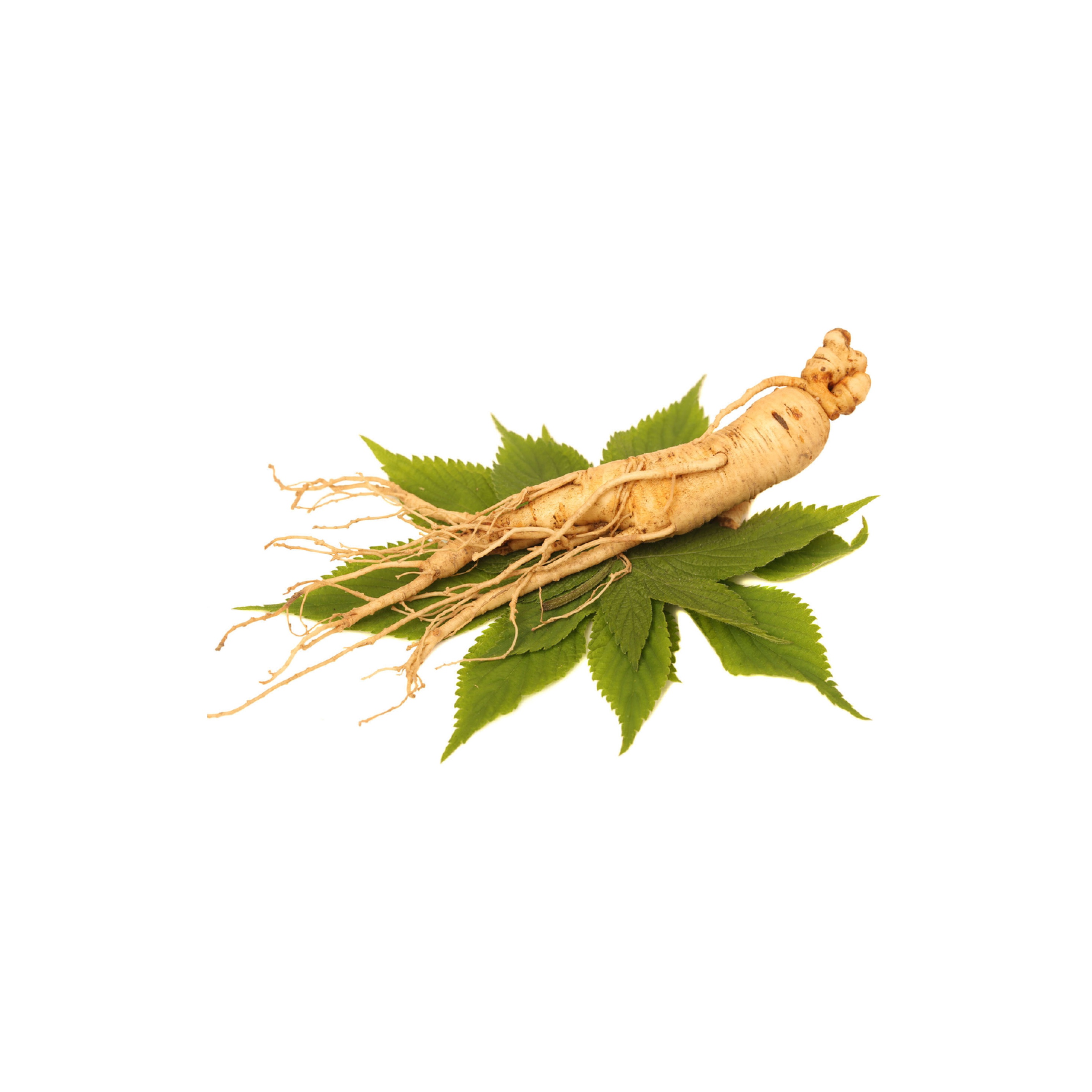
Ginsenoside Rg2 is a naturally occurring dammarane triterpenoid saponin (protopanaxatriol group), found in Asian ginseng. It is well tolerated orally (low toxicity).
Concentration
Content by Source
Concentrations not reported. No percent-dry-weight or mg/g figures have been published for this compound in its source plants.
Ginsenoside Rg2 at a Glance
Ginsenoside Rg2 is a protopanaxatriol (PPT)-type dammarane saponin of Asian ginseng (Panax ginseng). It sits in the same PPT family as the marquee saponin ginsenoside Rg1, but it is a minor constituent of the root — most of the Rg2 in a ginseng product is generated when the far more abundant ginsenoside Re loses a terminal sugar during steaming and processing, so red and black (processed) ginseng are comparatively Rg2-rich 11Reference 11In vitroMicrobial transformation of ginsenoside Rb1, Re and Rg1 and its contribution to the improved anti-inflammatory activity of ginseng — in vitroView study →.
Its most-cited laboratory signals are anti-platelet activity (Rg2 is one of the saponins that suppress the platelet release reaction) 5Reference 5In vitroAntiplatelet components in Panax ginseng — in vitroView study →, anti-apoptotic / neuroprotective effects on memory in rodent dementia and ischemia models 1,
The recurring caveat runs through everything below: all of this is preclinical, Rg2 is a large glycosylated saponin that is poorly absorbed by mouth, and there is no human trial of the isolated molecule — ginseng’s clinical reputation rests on whole-extract data, not on Rg2 given alone.
Ginsenoside Rg2 & Neuroprotection
Rg2’s most developed story is neuroprotection through anti-apoptosis, and it is worth telling as a single thread because the same molecular moves recur across otherwise unrelated models.
In a rat model of vascular dementia, Rg2 improved neurological performance and memory and did so by shifting the apoptotic balance — the study framed Rg2 explicitly as protecting memory “via anti-apoptosis” 1Reference 1AnimalPanax ginseng ginsenoside-Rg2 protects memory impairment via anti-apoptosis in a rat model with vascular dementia — animal modelView study →. In an amyloid-β (Aβ25-35) Alzheimer’s model, Rg2 rescued Morris-water-maze performance and reduced hippocampal CA1 neuronal death by raising the Bcl-2/Bax ratio, cutting caspase-3 cleavage, and activating PI3K/Akt signalling 2Reference 2AnimalProtective effects of ginsenoside Rg2 against memory impairment and neuronal death induced by Aβ25-35 in rats — animal modelView study →. And in an oxygen-glucose-deprivation/reperfusion model of ischemic cortical neurons, both epimers improved cell viability by boosting anti-apoptotic and antioxidant capacity and reducing Ca²⁺ influx 3Reference 3In vitroEffect of ginsenoside Rg2 and its stereoisomers on oxygen-glucose deprivation and reperfusion induced cortical neuronal injury model — in vitroView study →. A 2023 review pulls these together, cataloguing Rg2 (and its metabolite Rh1) as broadly active across Alzheimer’s, ischemia and other CNS models 4Reference 4ReviewResearch progress on effects of ginsenoside Rg2 and Rh1 on nervous system and related mechanisms — reviewView study →.
Two neighbouring signals round out the picture. Rg2 has a long-standing anti-platelet reputation — a classic screen of Panax ginseng identified Rg2 among the saponins that suppress the platelet release reaction 5Reference 5In vitroAntiplatelet components in Panax ginseng — in vitroView study → — and a distinctive anti-shock action: in dogs it out-performed a reference formula at restoring haemodynamics and activating superoxide dismutase after hemorrhagic shock 6Reference 6AnimalEffect of Rg2 on hemodynamics of hemorrhagic shock and its antioxidation in dogs — animal modelView study →, and in a modern rat study it protected the gut against hemorrhagic-shock/reperfusion injury by up-regulating Lilrb4 and inhibiting NF-κB 7Reference 7AnimalGinsenoside Rg2 upregulates expression of Lilrb4 and inhibits the NF-κB signaling pathway to alleviate hemorrhagic shock/reperfusion-induced intestinal injury — animal modelView study →. There is even an anxiolytic signal — Rg2 reversed anxiety-like behaviour in a single-prolonged-stress (PTSD) rat model 9Reference 9AnimalThe anxiolytic-like effects of ginsenoside Rg2 on an animal model of PTSD — animal modelView study →.
The Re → Rg2 relationship matters for interpreting all of it: because Rg2 is largely a processing product of Re rather than a major native saponin, the amount of Rg2 you are exposed to depends heavily on how the ginseng was prepared 11Reference 11In vitroMicrobial transformation of ginsenoside Rb1, Re and Rg1 and its contribution to the improved anti-inflammatory activity of ginseng — in vitroView study →. And the epimer distinction is real, not cosmetic — the 20(S) and 20(R) forms behave differently in the neuronal-injury work and in pharmacokinetics 3,
Protopanaxatriol vs. Protopanaxadiol
Ginsenosides split into two dammarane sub-families defined by their aglycone (the steroid-like core left after the sugars come off), and Rg2’s behaviour follows from which side it is on.
- Protopanaxatriol (PPT) — Rg2’s family (also Rg1, Re, Rf, Rh1, F1). PPT saponins carry an extra hydroxyl at C-6 and tend toward the CNS-stimulating, vasoactive end of ginseng’s pharmacology.
- Protopanaxadiol (PPD) (ginsenoside Rb1, Rb2, Rc, Rd, Rg3). PPD saponins lean toward the sedating, and their deglycosylation endpoint is the famous metabolite compound K.
This split governs metabolism, and it is a common point of confusion: PPT saponins do not yield compound K. Gut bacteria strip a PPT saponin’s sugars stepwise toward Rh1, then F1, and finally the protopanaxatriol aglycone — so Rg2’s downstream actives are Rh1/F1/PPT, not compound K (which is a PPD-line metabolite) 4,
What It's Used For
The evidence base is entirely preclinical — isolated Rg2 (or Rg2 epimers) in cells and rodents — with the neuroprotection line the deepest and the rest thinner and more mechanistic.
Support is an experimental score — weighted by study type (human > animal > in vitro) and volume, tempered for isolate-vs-plant match and bioavailability. A beta, not a validated metric. Every row rests on isolated Rg2 (or its epimers) in animals or cells — no human isolate data — so scores are capped accordingly. Each application links to its write-up.
The strongest and most consistent Rg2-specific line, all on isolated Rg2 and all preclinical. In vascular-dementia rats, Rg2 improved memory and neurological scores through anti-apoptotic signalling 1Reference 1AnimalPanax ginseng ginsenoside-Rg2 protects memory impairment via anti-apoptosis in a rat model with vascular dementia — animal modelView study →; in an amyloid-β (Aβ25-35) rat model it reduced hippocampal neuronal death and rescued cognition by raising Bcl-2/Bax, cutting caspase-3 cleavage and activating PI3K/Akt 2Reference 2AnimalProtective effects of ginsenoside Rg2 against memory impairment and neuronal death induced by Aβ25-35 in rats — animal modelView study →; and in ischemic cortical neurons (oxygen-glucose deprivation/reperfusion) both 20(S)- and 20(R)-Rg2 improved viability via anti-apoptotic, antioxidant and Ca²⁺-lowering effects 3Reference 3In vitroEffect of ginsenoside Rg2 and its stereoisomers on oxygen-glucose deprivation and reperfusion induced cortical neuronal injury model — in vitroView study →. A 2023 review consolidates Rg2/Rh1 activity across CNS disease models 4Reference 4ReviewResearch progress on effects of ginsenoside Rg2 and Rh1 on nervous system and related mechanisms — reviewView study →.
Gap: every study is in rodents or cultured neurons; there is no human trial of isolated Rg2, and its poor oral bioavailability means the exposures that work in animals may not be reachable by mouth in people 4,
A distinctive Rg2 signal, tested as isolated Rg2 in shock models. In dogs subjected to hemorrhagic shock, Rg2 improved the haemodynamic state and activated superoxide dismutase more effectively than a reference ginseng formula, reducing oxidative markers and prolonging survival 6Reference 6AnimalEffect of Rg2 on hemodynamics of hemorrhagic shock and its antioxidation in dogs — animal modelView study →.
A modern rat study extended this to organ protection: Rg2 alleviated hemorrhagic-shock/reperfusion intestinal injury by up-regulating the immunoreceptor Lilrb4 and inhibiting NF-κB-driven inflammation 7Reference 7AnimalGinsenoside Rg2 upregulates expression of Lilrb4 and inhibits the NF-κB signaling pathway to alleviate hemorrhagic shock/reperfusion-induced intestinal injury — animal modelView study →.
Gap: dog and rodent shock models only, several using injected Rg2; no human data, and the older haemodynamic work predates modern reporting standards 6,
Rg2’s oldest documented property. A classic fractionation of Panax ginseng identified Rg2 (with Ro and Rg1) among the saponins that suppress the platelet release reaction — the secretion step that amplifies aggregation — placing Rg2 among ginseng’s antiplatelet components 5Reference 5In vitroAntiplatelet components in Panax ginseng — in vitroView study →. Mechanistically this fits the PPT-saponin pattern of damping agonist-induced intracellular calcium mobilisation.
Gap: an in-vitro/ex-vivo platelet finding from isolated saponins; it has not been developed into a controlled human antiplatelet study of Rg2, and it doubles as a safety consideration (bleeding risk) rather than a proven therapy 5Reference 5In vitroAntiplatelet components in Panax ginseng — in vitroView study →.
Isolated Rg2 shows anti-inflammatory activity, though the best-characterised study pairs it with its metabolite Rh1. In LPS-stimulated macrophages and LPS-treated mice, a Rg2 + Rh1 combination reduced iNOS/NO and pro-inflammatory cytokines and attenuated acute liver and kidney damage by blocking LPS binding to TLR4 and downstream STAT1 activation 8Reference 8In vitroMinor ginsenoside Rg2 and Rh1 attenuates LPS-induced acute liver and kidney damages via downregulating activation of TLR4-STAT1 and inflammatory cytokine production in macrophages — in vitro and animal modelView study →.
Gap: the pivotal result is a Rg2/Rh1 combination, not Rg2 alone, in cells and mice — so the Rg2-specific contribution is not cleanly isolated, and there is no human data 8Reference 8In vitroMinor ginsenoside Rg2 and Rh1 attenuates LPS-induced acute liver and kidney damages via downregulating activation of TLR4-STAT1 and inflammatory cytokine production in macrophages — in vitro and animal modelView study →.
A single, small behavioural line. In rats exposed to single prolonged stress (a PTSD model), isolated Rg2 reversed anxiety-like behaviour and normalised stress-hormone and neurotransmitter changes 9Reference 9AnimalThe anxiolytic-like effects of ginsenoside Rg2 on an animal model of PTSD — animal modelView study →. It sits alongside the neuroprotection data as another CNS signal, but on much thinner evidence.
Gap: one rodent behavioural study; no replication and no human data for isolated Rg2 9Reference 9AnimalThe anxiolytic-like effects of ginsenoside Rg2 on an animal model of PTSD — animal modelView study →.
Mechanisms
| Target / pathway | Effect | Relevant to |
|---|---|---|
| ↑ Bcl-2/Bax; ↓ caspase-3 cleavage; ↑ PI3K/Akt | Pro-survival, anti-apoptotic neuronal signalling | Neuroprotection & memory |
| ↓ Ca²⁺ influx; ↑ SOD / antioxidant capacity; ↓ ROS | Protects against oxidative/ischemic injury | Neuroprotectionanti-shock |
| Suppresses platelet release reaction (↓ Ca²⁺ mobilisation) | Anti-platelet / anti-aggregatory | Anti-plateletbleeding-risk safety |
| ↓ TLR4 binding → ↓ STAT1; ↓ iNOS/NO, TNF-α, IL-6, IL-1β | Anti-inflammatory (macrophage) | Anti-inflammatory (with Rh1) |
| ↑ Lilrb4; ↓ NF-κB | Limits reperfusion inflammation | Anti-shock (intestinal I/R) |
| Hepatic metabolism to SIRT1-activating aglycone metabolites | Bioactivation | Pharmacokinetics / metabolism |
Pharmacokinetics
Poor oral bioavailability is the load-bearing caveat, as it is for every large glycosylated ginsenoside. Rg2 is a tri-hydroxy PPT saponin that crosses the gut wall badly; a reliable isolated-Rg2 human oral-bioavailability figure is not established (a genuine gap), and the practical exposure is shaped by gut-bacterial metabolism rather than by the intact molecule. Colonic bacteria deglycosylate Rg2 stepwise toward Rh1, then F1, and the protopanaxatriol aglycone — the PPT endpoint, not compound K 4,
Clinical Trials
There are no registered trials of isolated ginsenoside Rg2. All human ginseng data are at the whole-extract level, standardised to total ginsenosides, so no benefit can be attributed to Rg2 specifically. The isolated-molecule literature is entirely preclinical.
| Completed | Planned | Terminated | Preclinical |
|---|---|---|---|
| None(isolated Rg2) | None identified | None | Moderate |
Last checked: July 2026.
Isolate vs. Plant Studies
Every finding above uses the isolated molecule (often as a defined 20(S)- or 20(R)-epimer) in rodents or cell culture; the vehicle plant, where one is named, is Panax ginseng 1,
Prevalence in Nature
Rg2 is a minor protopanaxatriol saponin of Panax ginseng root, present natively at far lower levels than the headline saponins Rb1 (~5.8 mg/g) and Rg1 (~3.3 mg/g). It is also reported in other Panax species, including notoginseng. Its abundance is unusually processing-dependent: steaming and heat convert the abundant ginsenoside Re into Rg2 (and onward to Rg4/Rg6), so red and black ginseng are relatively Rg2-enriched compared with raw white ginseng 11Reference 11In vitroMicrobial transformation of ginsenoside Rb1, Re and Rg1 and its contribution to the improved anti-inflammatory activity of ginseng — in vitroView study →. A precise, well-replicated per-gram figure for native Rg2 is not documented in the sources verified here — the quantification is a gap, tracked separately.
Discovery & Synthesis
Rg2 is one of the classical ginseng saponins, catalogued as the Panax ginseng “R” series was separated by chromatographic polarity in the early 1970s; a precise first-isolation date and discoverer are not well documented in the accessible record. Its name follows the standard ginsenoside convention (the “Rg” mobility group).
Manufacture today rarely relies on direct extraction — Rg2’s low native abundance makes isolation from raw root inefficient. The practical route is conversion from the abundant precursor Re: thermal processing (steaming) partially deglycosylates Re to Rg2, and enzymatic or microbial biotransformation achieves the same step more selectively (documented microbial pathways include Re → Rg2) 11Reference 11In vitroMicrobial transformation of ginsenoside Rb1, Re and Rg1 and its contribution to the improved anti-inflammatory activity of ginseng — in vitroView study →. Thermal and enzymatic routes typically yield a 20(S)/20(R) epimer mixture, which is why much of the isolated-Rg2 pharmacology is reported for defined single epimers prepared afterwards.
Patents: not yet researched.
Toxicity & Safety
Isolated Rg2 is regarded as low-toxicity, and its poor oral absorption and heavy first-pass deglycosylation keep systemic exposure low, further limiting the chance of reaching harmful levels. The one mechanism worth flagging is its anti-platelet action: Rg2 suppresses the platelet release reaction 5Reference 5In vitroAntiplatelet components in Panax ginseng — in vitroView study →, so — in theory and in keeping with general ginseng cautions — it could add to the effect of anticoagulant or antiplatelet drugs (e.g. warfarin, aspirin, clopidogrel) and is a consideration around surgery. No dedicated human drug-interaction studies of isolated Rg2 exist, so whole-ginseng cautions are the practical reference point rather than isolate data.
Reproductive and developmental toxicity has not been assessed for isolated Rg2; any pregnancy or lactation decision belongs at the level of the herb or supplement actually taken, not the molecule. Do not read the absence of findings as evidence of safety.
- Low intrinsic toxicity; very poor oral absorption keeps systemic exposure low.
- Anti-platelet activity — theoretical additive bleeding risk with anticoagulant/antiplatelet drugs and around surgery 5Reference 5In vitroAntiplatelet components in Panax ginseng — in vitroView study →.
- No human isolate trials, no dedicated interaction studies, and no reproductive-toxicity data for isolated Rg2 — safety is inferred, not established.
Dosage
There is no established human dose of isolated ginsenoside Rg2. The figures in the literature are preclinical: rodent and canine studies dose in the low milligrams-per-kilogram range, frequently by injection to bypass poor oral uptake — for example the hemorrhagic-shock and neuroprotection models used parenteral or gavage dosing chosen for the experiment, not validated for people 1,
These are doses studied in research and are not a personal recommendation.
References
- Zhang G, Liu A, Zhou Y, San X, Jin T, Jin Y. (2008). Panax ginseng ginsenoside-Rg2 protects memory impairment via anti-apoptosis in a rat model with vascular dementia — animal model. Journal of Ethnopharmacology, 115(3), 441–448. https://pubmed.ncbi.nlm.nih.gov/18083315/
- Cui J, Shan R, Cao Y, Zhou Y, Liu C, Fan Y. (2021). Protective effects of ginsenoside Rg2 against memory impairment and neuronal death induced by Aβ25-35 in rats — animal model. Journal of Ethnopharmacology, 266, 113466. https://pubmed.ncbi.nlm.nih.gov/33049344/
- Pi MS, Ru Q, Gong XK, Wu RH, Tian X, Qi X, Li CY. (2016). Effect of ginsenoside Rg2 and its stereoisomers on oxygen-glucose deprivation and reperfusion induced cortical neuronal injury model — in vitro. Zhongguo Zhong Xi Yi Jie He Za Zhi, 36(3), 333–338. https://pubmed.ncbi.nlm.nih.gov/27236892/
- Liu S, Chen W, Zhao Y, Zong Y, Li J, He Z. (2023). Research progress on effects of ginsenoside Rg2 and Rh1 on nervous system and related mechanisms — review. Molecules, 28(23), 7935. https://pubmed.ncbi.nlm.nih.gov/38067664/
- Kuo SC, Teng CM, Lee JC, Ko FN, Chen SC, Wu TS. (1990). Antiplatelet components in Panax ginseng — in vitro. Planta Medica, 56(2), 164–167. https://pubmed.ncbi.nlm.nih.gov/2353062/
- Lu J, Lu WW, Tian JM, Li LY. (2001). Effect of Rg2 on hemodynamics of hemorrhagic shock and its antioxidation in dogs — animal model. Zhongguo Zhong Yao Za Zhi, 26(8), 556–558. https://pubmed.ncbi.nlm.nih.gov/12776372/
- Wang N, Jia D, Ge X. (2026). Ginsenoside Rg2 upregulates expression of Lilrb4 and inhibits the NF-κB signaling pathway to alleviate hemorrhagic shock/reperfusion-induced intestinal injury — animal model. Journal of Clinical Biochemistry and Nutrition, 78(2), 109–120. https://pubmed.ncbi.nlm.nih.gov/41841109/
- Huynh DTN, Baek N, Sim S, Myung CS, Heo KS. (2020). Minor ginsenoside Rg2 and Rh1 attenuates LPS-induced acute liver and kidney damages via downregulating activation of TLR4-STAT1 and inflammatory cytokine production in macrophages — in vitro and animal model. International Journal of Molecular Sciences, 21(18), 6656. https://pubmed.ncbi.nlm.nih.gov/32932915/
- Gao ZW, Ju RL, Luo M, Wu SL, Zhang WT. (2019). The anxiolytic-like effects of ginsenoside Rg2 on an animal model of PTSD — animal model. Psychiatry Research, 279, 130–137. https://pubmed.ncbi.nlm.nih.gov/31103345/
- Ma LY, Zhou QL, Yang XB, Wang HP, Yang XW. (2016). Metabolism of 20(S)-ginsenoside Rg2 by rat liver microsomes: bioactivation to SIRT1-activating metabolites — in vitro. Molecules, 21(6), 757. https://pubmed.ncbi.nlm.nih.gov/27294899/
- Yu S, Zhou X, Li F, Xu C, Zheng F, Li J, Zhao H, Dai Y, Liu S, Feng Y. (2017). Microbial transformation of ginsenoside Rb1, Re and Rg1 and its contribution to the improved anti-inflammatory activity of ginseng — in vitro. Scientific Reports, 7, 138. https://pubmed.ncbi.nlm.nih.gov/28273939/



