
Compound Monograph
Protopanaxatriol
Protopanaxatriol (PPT) is the dammarane tetrol aglycone at the base of the second great ginseng-saponin family — the shared scaffold that ginsenosides Re, Rf, Rg1, Rg2, Rh1 and F1 are all built on. It is the sister of protopanaxadiol (PPD), differing by a single extra hydroxyl at C-6, and unlike the PPD branch its deglycosylation cascade never produces compound K. As an isolate it is a genuine multi-receptor ligand — glucocorticoid, oestrogen, FXR and PPARγ — driving eNOS-mediated vasodilation and anti-inflammatory effects, though as ever with ginseng the human evidence belongs to the whole extract.

Sources · 6
Where Does It Come From?
Protopanaxatriol is a naturally occurring dammarane triterpenoid (protopanaxatriol-type sapogenin / aglycone), found in Asian ginseng, American ginseng, Notoginseng and 3 other sources. It is well tolerated orally (low toxicity).
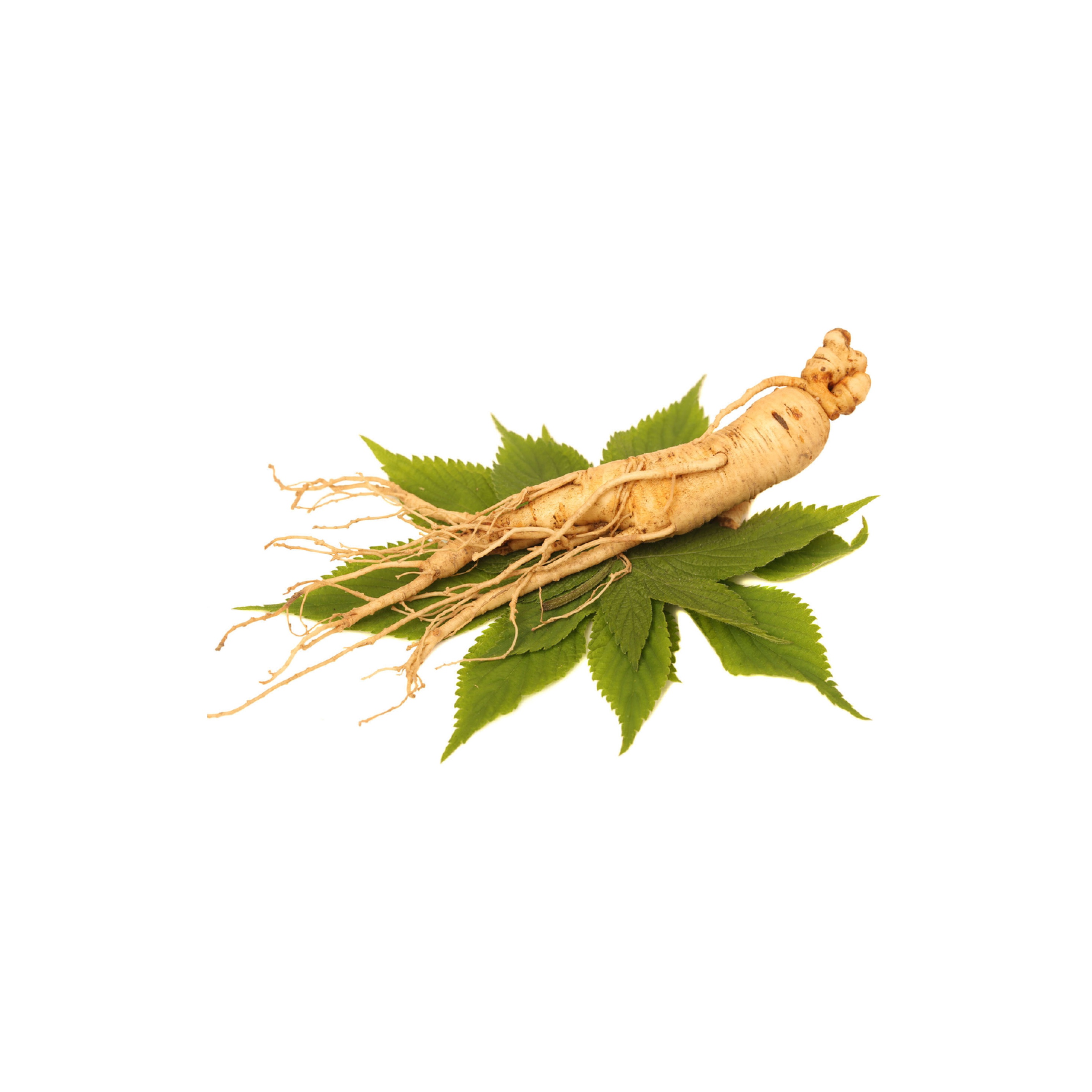 Principal source Asian Ginseng Panax ginseng Herb monograph →
 Source American Ginseng Panax quinquefolius Herb monograph →
 Source Notoginseng Panax notoginseng Herb monograph →
Concentration
Content by Source
Concentrations not reported. No percent-dry-weight or mg/g figures have been published for this compound in its source plants.
Protopanaxatriol at a Glance
Protopanaxatriol, or 20(S)-protopanaxatriol (PPT), is the dammarane triterpene aglycone at the foundation of one of the two great families of ginseng saponins. It is the bare, fully deglycosylated scaffold: strip every sugar off ginsenosides Re, Rf, Rg1, Rg2, Rh1 or F1 and you are left with this same molecule. Everything in the “PPT-type” class is a decorated version of it.
That makes it the anchor the whole protopanaxatriol family points back to, and the natural counterpart to its sibling scaffold protopanaxadiol (PPD). The two aglycones differ by a single hydroxyl at C-6 — present in PPT, absent in PPD — and that one oxygen atom defines the entire PPD/PPT divide that organises ginseng chemistry 7Reference 7Cytochrome P450 CYP716A53v2 catalyzes the formation of protopanaxatriol from protopanaxadiol during ginsenoside biosynthesis in Panax ginseng — plant enzymologyView study →. It also sends the two branches down different metabolic roads: the PPT cascade ends in Rh1, F1 and PPT and never produces compound K, the signature terminal metabolite of the PPD side.
The molecule matters in two ways. First as structure — it defines the class and sits at the end of the gut-bacterial deglycosylation cascade that converts the poorly-absorbed parent saponins into smaller, more lipophilic actives. Second as a bioactive isolate — PPT is an unusually promiscuous nuclear-receptor ligand (glucocorticoid, oestrogen, FXR, PPARγ), driving eNOS-mediated vasodilation, anti-inflammatory/hepatoprotective and metabolic effects in cell and animal models 1,
The Protopanaxatriol Scaffold
This is the reason the page exists. Protopanaxatriol is not just another ginsenoside — it is the common aglycone (sapogenin) that the entire protopanaxatriol-type class is assembled on.
The dammarane backbone, plus one oxygen. PPT is a tetracyclic dammarane triterpene, formally dammar-24-ene-3β,6α,12β,20(S)-tetrol — a steroid-like four-ring core carrying hydroxyls at C-3, C-6, C-12 and C-20. Its sister aglycone protopanaxadiol is identical except that it lacks the C-6 hydroxyl (it is the 3β,12β,20-triol). That single extra oxygen at C-6 is the whole difference between the two ginseng saponin lineages 7Reference 7Cytochrome P450 CYP716A53v2 catalyzes the formation of protopanaxatriol from protopanaxadiol during ginsenoside biosynthesis in Panax ginseng — plant enzymologyView study →. In the intact plant saponins, sugar chains are hung off the C-6 and C-20 hydroxyls (whereas the PPD-type saponins glycosylate at C-3 and C-20); the number, position and identity of those sugars is the only thing that distinguishes one PPT-type ginsenoside from another:
- Ginsenoside Re, Rg1 — the abundant parent PPT-type saponins; Rg1 is the dominant PPT-type marker of Asian ginseng.
- Ginsenoside Rf — a PPT-type saponin characteristically present in Panax ginseng but near-absent in American ginseng, making it a species fingerprint.
- Ginsenoside Rg2, Rh1, F1 — partially deglycosylated intermediates on the way down to the aglycone.
- Protopanaxatriol — the endpoint: no sugars at all.
The deglycosylation cascade ends here — and never at compound K. Taken by mouth, the large parent saponins are barely absorbed — their dammarane skeleton plus bulky sugars gives poor solubility and poor membrane permeability 12Reference 12ReviewMethods on improvements of the poor oral bioavailability of ginsenosides: pre-processing, structural modification, drug combination, and micro- or nano-delivery system — review (inclView study →. Colonic bacteria strip their sugars stepwise — for the Rg1 branch, roughly Rg1 → Rh1 → F1 → PPT — each step making the molecule smaller, less polar and more absorbable 9Reference 9ReviewProof of the mysterious efficacy of ginseng: metabolic activation of ginsenoside — deglycosylation by intestinal bacteria and esterification with fatty acid — reviewView study →. Protopanaxatriol is the terminal aglycone of that pathway. This is the sharpest metabolic contrast with the PPD side: because PPT already carries a C-6 hydroxyl and is glycosylated at C-6/C-20 rather than C-3/C-20, its cascade produces Rh1, F1 and PPT — not compound K, the C-20 monoglucoside that is the hallmark absorbable metabolite of the protopanaxadiol branch. “Which aglycone family a ginsenoside belongs to” therefore predicts which metabolites a person will actually be exposed to 9Reference 9ReviewProof of the mysterious efficacy of ginseng: metabolic activation of ginsenoside — deglycosylation by intestinal bacteria and esterification with fatty acid — reviewView study →.
Why the bare scaffold behaves differently. Sugars are hydrophilic anchors. Removing them progressively raises lipophilicity, and binding of ginsenosides to lipid membranes rises inversely with the number of sugar residues — the fewer the sugars, the deeper the molecule partitions into the membrane hydrophobic core 10Reference 10ReviewLipid membranes as key targets for the pharmacological actions of ginsenosides — reviewView study →. The naked aglycone is therefore the most membrane-permeable member of its family, better able to cross the gut wall and cell membranes 10Reference 10ReviewLipid membranes as key targets for the pharmacological actions of ginsenosides — reviewView study →. That single physical fact — lipophilicity climbing as glycosylation falls — links the scaffold’s structure to both its absorption and much of its bioactivity, exactly as for PPD.
PPT versus PPD, pharmacologically. The two aglycones do not just look different; they act differently. In immobilised-mouse anti-stress work the sister molecules split cleanly by mechanism: PPD’s anxiolytic effect ran through GABAergic signalling, while PPT’s ran through serotonergic signalling (its effect was abolished by the 5-HT1A antagonist WAY-100635), and — unlike PPD — PPT did not suppress the stress-driven rise in corticosterone and IL-6 5Reference 5AnimalAnti-stress effects of 20(S)-protopanaxadiol and 20(S)-protopanaxatriol in immobilized mice — mouse, in vivoView study →. The PPD:PPT ratio (often read as Rb1:Rg1) is the classic chemotaxonomic fingerprint separating Panax ginseng from P. quinquefolius, and the two branches carry genuinely different pharmacology down to the aglycone.
Protopanaxatriol as a Bioactive Aglycone
Beyond its structural role, isolated PPT has been pursued as a molecule in its own right — and its standout feature is an unusual breadth of nuclear-receptor activity. Where many ginsenosides act on one target, PPT is a functional ligand for the glucocorticoid receptor, oestrogen receptor β, FXR and PPARγ, which ties together its vascular, anti-inflammatory and metabolic effects 1,
Vascular / eNOS. PPT (and PPD) bind the glucocorticoid receptor and oestrogen receptor β in human endothelial cells, triggering rapid, non-genomic signalling that raises intracellular calcium, phosphorylates endothelial nitric-oxide synthase (eNOS) and increases nitric-oxide output — the classic endothelium-dependent vasodilation pathway 1Reference 1In vitroProtopanaxadiol and protopanaxatriol bind to glucocorticoid and oestrogen receptors in endothelial cells — in vitro (human endothelial cells)View study →. This is the same glucocorticoid-receptor/eNOS axis credited to the PPT-type saponin ginsenoside Rg1, converging on the aglycone. A dedicated receptor study went further, characterising PPT (and PPD) as a “dissociative” glucocorticoid-receptor ligand — engaging GR in a way that may separate wanted from unwanted glucocorticoid actions 2Reference 2In vitroPotential dissociative glucocorticoid receptor activity for protopanaxadiol and protopanaxatriol — in vitro / in silico receptor studyView study →.
Anti-inflammatory / hepatoprotective. As an isolate PPT is repeatedly anti-inflammatory in the liver: it acts as an FXR (farnesoid X receptor) agonist, reducing hepatic stellate-cell activation, P2X7 receptor secretion and extracellular-matrix deposition in a mouse hepatic-fibrosis model 3Reference 3AnimalSong J, Cui ZY, Lian LH, et al. (2020). 20S-protopanaxatriol ameliorates hepatic fibrosis, potentially involving FXR-mediated inflammatory signaling cascades — mouse, in vivo. Journal of Agricultural and Food Chemistry. https://pubmed.ncbi.nlm.nih.gov/32662640/View study →, and it inhibits the NLRP3 inflammasome, easing systemic inflammation, restoring liver function and attenuating inflammation and fibrosis in a mouse model of metabolic-associated fatty liver disease 4Reference 4AnimalLu B, Wang D, Xie D, et al. (2023). 20(S)-protopanaxatriol ameliorates MAFLD by inhibiting NLRP3 inflammasome — mouse, in vivo. European Journal of Pharmacology. https://pubmed.ncbi.nlm.nih.gov/36566009/View study →.
Metabolic. PPT is a PPARγ ligand — in 3T3-L1 adipocytes it transactivated PPARγ dose-dependently with potency comparable to the drug troglitazone and raised glucose-transporter expression, an insulin-sensitising signal 6Reference 6In vitroGinsenoside 20S-protopanaxatriol (PPT) activates peroxisome proliferator-activated receptor gamma (PPARgamma) in 3T3-L1 adipocytes — in vitroView study →.
What It's Used For
PPT’s pharmacology is genuine but almost entirely preclinical and almost entirely on the isolate — and it is shadowed by the fact that free PPT is a metabolite, generated variably by each person’s gut flora, not a molecule people dose directly 9Reference 9ReviewProof of the mysterious efficacy of ginseng: metabolic activation of ginsenoside — deglycosylation by intestinal bacteria and esterification with fatty acid — reviewView study →.
Support is an experimental score — weighted by study type (human > animal > in vitro) and volume, tempered for isolate-vs-plant match and the fact that PPT is a variably-generated metabolite. A beta, not a validated metric. Every row rests on the isolated molecule in animals or cells; no human isolate data exist, so scores are capped accordingly. Each application links to its write-up.
PPT’s most-developed non-vascular line — all isolate, all preclinical, and notably both studies are in vivo in mice. As an FXR agonist, 20S-protopanaxatriol reduced thioacetamide-induced hepatic fibrosis by suppressing hepatic stellate-cell activation, P2X7-receptor secretion and extracellular-matrix deposition, with the anti-inflammatory effect tied to FXR activation 3Reference 3AnimalSong J, Cui ZY, Lian LH, et al. (2020). 20S-protopanaxatriol ameliorates hepatic fibrosis, potentially involving FXR-mediated inflammatory signaling cascades — mouse, in vivo. Journal of Agricultural and Food Chemistry. https://pubmed.ncbi.nlm.nih.gov/32662640/View study →.
Separately, PPT inhibited the NLRP3 inflammasome across several primary-cell types and, in a mouse model of metabolic-associated fatty liver disease (MAFLD), suppressed systemic inflammation, restored liver function and attenuated hepatic inflammation and fibrosis 4Reference 4AnimalLu B, Wang D, Xie D, et al. (2023). 20(S)-protopanaxatriol ameliorates MAFLD by inhibiting NLRP3 inflammasome — mouse, in vivo. European Journal of Pharmacology. https://pubmed.ncbi.nlm.nih.gov/36566009/View study →.
The two mechanisms (nuclear-receptor FXR agonism; inflammasome inhibition) are independent but point the same way.
Gap: entirely rodent and cell work on the isolate, concentrated on the liver; no human trials, and PPT’s real-world exposure is confounded by variable gut generation and first-pass metabolism 9Reference 9ReviewProof of the mysterious efficacy of ginseng: metabolic activation of ginsenoside — deglycosylation by intestinal bacteria and esterification with fatty acid — reviewView study →.
A tidy, well-mapped mechanism and the point where PPT most clearly converges with its glycoside ginsenoside Rg1. In human umbilical-vein endothelial cells, PPT (like PPD) acts as a functional ligand of the glucocorticoid receptor and oestrogen receptor β: receptor engagement drives rapid, non-genomic signalling that raises intracellular calcium, phosphorylates eNOS and increases nitric-oxide production, with combined GR + ER blockade needed for complete inhibition 1Reference 1In vitroProtopanaxadiol and protopanaxatriol bind to glucocorticoid and oestrogen receptors in endothelial cells — in vitro (human endothelial cells)View study →.
A follow-up receptor study characterised PPT and PPD as dissociative glucocorticoid-receptor ligands, engaging GR selectively rather than as full classical agonists 2Reference 2In vitroPotential dissociative glucocorticoid receptor activity for protopanaxadiol and protopanaxatriol — in vitro / in silico receptor studyView study →.
This is the aglycone-level basis for the “PPT-type saponins are the vascular/NO ginsenosides” story.
Gap: endothelial-cell and receptor-level work on the isolate; the elegant GR/eNOS mechanism has not been tested as isolated PPT in humans, and the pro-vasodilatory/pro-angiogenic activity is a double-edged property in disease contexts 1,
A coherent isolate signal, and the cleanest demonstration of the PPD/PPT split. In immobilised (restraint-stressed) mice, PPT increased time in the open arms of the elevated-plus-maze to a degree comparable with buspirone — but where PPD’s anxiolytic effect was blocked by GABA antagonists, PPT’s was abolished by the 5-HT1A antagonist WAY-100635, implicating serotonergic rather than GABAergic signalling 5Reference 5AnimalAnti-stress effects of 20(S)-protopanaxadiol and 20(S)-protopanaxatriol in immobilized mice — mouse, in vivoView study →.
Notably, and again unlike PPD, PPT did not suppress the stress-induced rise in serum corticosterone and IL-6 — so the two aglycones reach a similar behavioural endpoint by different routes 5Reference 5AnimalAnti-stress effects of 20(S)-protopanaxadiol and 20(S)-protopanaxatriol in immobilized mice — mouse, in vivoView study →.
Gap: a single rodent isolate study; no human anxiolytic data, and the divergence from PPD underlines that “ginseng anti-stress activity” is not one mechanism 5Reference 5AnimalAnti-stress effects of 20(S)-protopanaxadiol and 20(S)-protopanaxatriol in immobilized mice — mouse, in vivoView study →.
The clearest metabolic application, and another nuclear-receptor action. In 3T3-L1 adipocytes, 20S-protopanaxatriol activated PPARγ dose-dependently, with transactivation potency comparable to the thiazolidinedione drug troglitazone, enhanced adipocyte differentiation and raised glucose-transporter expression — an insulin-sensitising profile proposed as relevant to type-2 diabetes 6Reference 6In vitroGinsenoside 20S-protopanaxatriol (PPT) activates peroxisome proliferator-activated receptor gamma (PPARgamma) in 3T3-L1 adipocytes — in vitroView study →.
Gap: in-vitro adipocyte work on the isolate only; PPARγ activation can be metabolically double-edged (adipogenesis/weight gain), and there is no in-vivo or human confirmation for isolated PPT here 6Reference 6In vitroGinsenoside 20S-protopanaxatriol (PPT) activates peroxisome proliferator-activated receptor gamma (PPARgamma) in 3T3-L1 adipocytes — in vitroView study →.
Mechanisms
| Target / pathway | Effect | Relevant to |
|---|---|---|
| Glucocorticoid receptor (dissociative / non-genomic ligand) | receptor engagement → PI3K/Akt-type signalling | vascularanti-inflammatory |
| Oestrogen receptor β | co-mediates the endothelial response (with GR) | vascular |
| eNOS phosphorylation → ↑ nitric oxide; ↑ intracellular Ca²⁺ | endothelium-dependent vasodilation | vascular |
| FXR (farnesoid X receptor) | agonism → ↓ stellate-cell activation, ↓ P2X7r, ↓ ECM | anti-inflammatory / antifibrotic |
| NLRP3 inflammasome | inhibition → ↓ IL-1β, ↓ systemic inflammation | anti-inflammatory (MAFLD) |
| Serotonergic (5-HT1A) signalling | anxiolytic effect blocked by WAY-100635 | anti-stress |
| PPARγ | transactivation ~troglitazone; ↑ glucose transporters | metabolic / insulin sensitivity |
| Lipid membranes | high partitioning as the least-glycosylated form of its class | scaffold physicochemistry |
The load-bearing point is the breadth: PPT is a genuine ligand at four distinct nuclear receptors (GR, ERβ, FXR, PPARγ), unusual for a single aglycone, and this promiscuity — not one pathway — is what ties its vascular, hepatic and metabolic effects together 1,
Pharmacokinetics
PPT’s kinetics follow the scaffold logic. Its parent PPT-type saponins are large, polar molecules with very poor oral bioavailability — measured oral bioavailability of the marker PPT-type saponin Rg1 sits at only a few per cent up to roughly 18% in rats, with most of the dose recovered unabsorbed 11Reference 11AnimalPharmacokinetics and bioavailability of ginsenoside Rb1 and Rg1 from Panax notoginseng in rats — rat pharmacokineticsView study →. As a general rule the PPT-type ginsenosides absorb and eliminate faster than the PPD-type, but all remain low-bioavailability 12Reference 12ReviewMethods on improvements of the poor oral bioavailability of ginsenosides: pre-processing, structural modification, drug combination, and micro- or nano-delivery system — review (inclView study →. The deglycosylated aglycone is comparatively lipophilic and membrane-permeable — partitioning into membranes rises as sugars are removed 10Reference 10ReviewLipid membranes as key targets for the pharmacological actions of ginsenosides — reviewView study → — so PPT crosses the gut wall better than its glycosides, but it then undergoes extensive hepatic hydroxylation to numerous oxidised metabolites, keeping net systemic exposure of the parent aglycone low 13Reference 13AnimalExploring in vivo existence forms of Notoginseng Radix et Rhizoma by UHPLC-Q-TOF-MS/MS, proposing in vivo metabolic pathways of protopanaxatriol in rats — rat metabolite identificationView study →. Two consequences for the page: (1) PPT is more absorbable than the glycosides above it but is not a high-exposure molecule in its own right; and (2) because free PPT in the body is largely made from the parent ginsenosides by gut bacteria, systemic exposure varies between individuals and depends on the microbiome 9Reference 9ReviewProof of the mysterious efficacy of ginseng: metabolic activation of ginsenoside — deglycosylation by intestinal bacteria and esterification with fatty acid — reviewView study →. Crucially, and unlike the PPD branch, this cascade does not generate compound K 9Reference 9ReviewProof of the mysterious efficacy of ginseng: metabolic activation of ginsenoside — deglycosylation by intestinal bacteria and esterification with fatty acid — reviewView study →.
Clinical Trials
There are no registered clinical trials of isolated protopanaxatriol. Human evidence attached to “ginseng” is at the whole-extract level and cannot be assigned to PPT specifically; the entire isolated-molecule literature is preclinical.
| Completed | Planned | Terminated | Preclinical |
|---|---|---|---|
| None(isolated PPT) | None identified | None | Extensive(vascular/eNOS, anti-inflammatory, anti-stress, metabolic, PK) |
Last checked: July 2026.
Isolate vs. Plant Studies
PPT sits at an unusual place on the isolate-vs-plant axis, because it is both an isolate and a metabolite of the plant’s own saponins. The pharmacology — vascular/eNOS 1Reference 1In vitroProtopanaxadiol and protopanaxatriol bind to glucocorticoid and oestrogen receptors in endothelial cells — in vitro (human endothelial cells)View study →, anti-inflammatory/hepatoprotective 3,
Its Role in Plants
In the plant, protopanaxatriol is a biosynthetic branch product, not an end product — and its formation is the exact molecular event that creates the PPD/PPT divide. The dammarane skeleton is built by dammarenediol-II synthase (PgDDS), which cyclises the universal triterpene precursor 2,3-oxidosqualene to dammarenediol-II. The cytochrome P450 CYP716A47 hydroxylates that at C-12 to give protopanaxadiol 8Reference 8The Cyt P450 enzyme CYP716A47 catalyzes the formation of protopanaxadiol from dammarenediol-II during ginsenoside biosynthesis in Panax ginseng — plant enzymologyView study →. Protopanaxatriol is then made in a single further step: a second P450, CYP716A53v2 (protopanaxadiol 6-hydroxylase), hydroxylates protopanaxadiol at C-6 to yield protopanaxatriol 7Reference 7Cytochrome P450 CYP716A53v2 catalyzes the formation of protopanaxatriol from protopanaxadiol during ginsenoside biosynthesis in Panax ginseng — plant enzymologyView study →. That enzyme is the PPD→PPT switch; overexpressing or silencing it shifts a ginseng plant’s whole saponin profile between the two families. Glycosyltransferases then decorate the C-6 and C-20 hydroxyls to build the mature Re/Rf/Rg1-series ginsenosides. Because the plant rapidly glycosylates the aglycone into storage saponins, free protopanaxatriol is scarce in living root tissue — it exists mostly transiently in biosynthesis, and is released later by digestion or processing rather than stored as such.
Prevalence in Nature
Protopanaxatriol occurs across the Panax genus — Asian ginseng (Panax ginseng), American ginseng (P. quinquefolius) and notoginseng (P. notoginseng) — but almost always in bound (glycosylated) form, as the aglycone core of the abundant PPT-type ginsenosides rather than as the free molecule. In the raw dried root the free aglycone is present only in trace amounts; the PPT-type saponins it underlies, by contrast, are major constituents (in Asian ginseng root, ginsenoside Rg1 — the dominant PPT-type marker — runs around 3.3 mg/g of dried root). The PPT-type profile is also chemotaxonomically informative: ginsenoside Rf is present in P. ginseng but near-absent in American ginseng, and the Rg1:Rb1 (PPT:PPD) ratio is high in Asian and low in American ginseng. Free PPT accumulates chiefly through two routes downstream of the intact plant: gut-bacterial deglycosylation of the ingested saponins 9Reference 9ReviewProof of the mysterious efficacy of ginseng: metabolic activation of ginsenoside — deglycosylation by intestinal bacteria and esterification with fatty acid — reviewView study →, and thermal/fermentation processing — steaming to make red ginseng, and microbial fermentation, both hydrolyse sugars off the parent saponins and raise levels of deglycosylated species including PPT. So the honest statement is that this molecule’s “abundance in nature” is really the abundance of its glycosides; the free aglycone is a metabolite and a processing product, quantified far less often than its parent saponins.
Discovery & Synthesis
Protopanaxatriol was defined by the mid-twentieth-century Japanese ginseng-chemistry school that mapped the ginseng saponins — Shoji Shibata, Osamu Tanaka and colleagues — as the “genuine sapogenin” (the true aglycone) shared by the protopanaxatriol-type ginsenosides, the sister structure to their protopanaxadiol work and distinguished from it by the extra C-6 hydroxyl. The name encodes the chemistry: the proto (“original/parent”) panaxatriol aglycone, the counterpart to protopanaxadiol, both named to separate the genuine sapogenins from the artefactual “panaxadiol/panaxatriol” that harsher acid hydrolysis had produced earlier by cyclising the C-20 side chain.
Manufacture today does not rely on extracting the trace free aglycone from root. Two routes dominate: enzymatic or acid/thermal deglycosylation of the plentiful parent saponins (steaming, fermentation, or β-glucosidase treatment to strip sugars down toward PPT), and microbial biosynthesis — the PPD→PPT hydroxylation step has been reconstituted in yeast by expressing CYP716A53v2 alongside the upstream PgDDS/CYP716A47 system, opening a fermentation route to the aglycone directly from simple feedstocks 7Reference 7Cytochrome P450 CYP716A53v2 catalyzes the formation of protopanaxatriol from protopanaxadiol during ginsenoside biosynthesis in Panax ginseng — plant enzymologyView study →. The molecule is thus best made either by taking apart the abundant saponins or by building it up in engineered yeast — not by isolating it from the plant where it barely exists free.
Patents: not yet researched.
Toxicity & Safety
Protopanaxatriol carries a low toxicity flag, consistent with its status as a normal ginseng metabolite that humans generate whenever they consume ginseng. It is well tolerated in the cell and rodent studies above, and its low net systemic exposure (better absorption than the glycosides, but heavy first-pass hydroxylation) limits how much circulates from an oral dose 13Reference 13AnimalExploring in vivo existence forms of Notoginseng Radix et Rhizoma by UHPLC-Q-TOF-MS/MS, proposing in vivo metabolic pathways of protopanaxatriol in rats — rat metabolite identificationView study →. The caveats are isolate-level and largely theoretical rather than drawn from ginseng use:
- A normal, well-tolerated ginseng metabolite. PPT is generated by everyone’s gut flora from dietary PPT-type ginsenosides and shows low toxicity in the preclinical work at the doses used 3,
5Reference 3AnimalSong J, Cui ZY, Lian LH, et al. (2020). 20S-protopanaxatriol ameliorates hepatic fibrosis, potentially involving FXR-mediated inflammatory signaling cascades — mouse, in vivo. Journal of Agricultural and Food Chemistry. https://pubmed.ncbi.nlm.nih.gov/32662640/View study →Reference 5AnimalAnti-stress effects of 20(S)-protopanaxadiol and 20(S)-protopanaxatriol in immobilized mice — mouse, in vivoView study → . - Isolate ≠ ginseng. The vascular, anti-inflammatory and metabolic data are the pure aglycone in animals/cells at defined doses — they do not license taking concentrated PPT, and its genuine multi-receptor activity (GR, ERβ, FXR, PPARγ) implies real pharmacology that could interact with steroid, hormone, statin/lipid or antidiabetic drugs 1,
2, .6Reference 1In vitroProtopanaxadiol and protopanaxatriol bind to glucocorticoid and oestrogen receptors in endothelial cells — in vitro (human endothelial cells)View study →Reference 2In vitroPotential dissociative glucocorticoid receptor activity for protopanaxadiol and protopanaxatriol — in vitro / in silico receptor studyView study →Reference 6In vitroGinsenoside 20S-protopanaxatriol (PPT) activates peroxisome proliferator-activated receptor gamma (PPARgamma) in 3T3-L1 adipocytes — in vitroView study → - Membrane-active by design. As one of the most lipophilic, membrane-partitioning forms of its class 10Reference 10ReviewLipid membranes as key targets for the pharmacological actions of ginsenosides — reviewView study →, PPT can perturb membranes directly; relevance to normal tissue at physiological exposure is unquantified.
- Metabolite variability. Real-world exposure depends on the gut microbiome and on first-pass metabolism, so response to ginseng-derived PPT varies between people and is blunted by antibiotics 9Reference 9ReviewProof of the mysterious efficacy of ginseng: metabolic activation of ginsenoside — deglycosylation by intestinal bacteria and esterification with fatty acid — reviewView study →.
Dedicated human interaction, reproductive and repeat-dose toxicology for isolated PPT is not characterised; pregnancy/lactation is a per-herb/per-supplement decision made on the ginseng monograph, not on this molecule page. Absence of data here is not evidence of safety.
Dosage
There is no established human dose of isolated protopanaxatriol — it is a research compound and a metabolite, not a standardised supplement. For orientation only, the preclinical studies used defined micromolar concentrations in cells (endothelial NO, PPARγ, NLRP3 work) and research doses in mice (anti-stress, hepatic models) chosen for the experiment and not convertible to a human dose 3,
References
- Leung KW, Leung FP, Mak NK, et al. (2009). Protopanaxadiol and protopanaxatriol bind to glucocorticoid and oestrogen receptors in endothelial cells — in vitro (human endothelial cells). British Journal of Pharmacology. https://pubmed.ncbi.nlm.nih.gov/19226254/
- Karra AG, Konstantinou M, Tzortziou M, et al. (2018). Potential dissociative glucocorticoid receptor activity for protopanaxadiol and protopanaxatriol — in vitro / in silico receptor study. International Journal of Molecular Sciences. https://pubmed.ncbi.nlm.nih.gov/30591629/
- Song J, Cui ZY, Lian LH, et al. (2020). 20S-protopanaxatriol ameliorates hepatic fibrosis, potentially involving FXR-mediated inflammatory signaling cascades — mouse, in vivo. Journal of Agricultural and Food Chemistry. https://pubmed.ncbi.nlm.nih.gov/32662640/
- Lu B, Wang D, Xie D, et al. (2023). 20(S)-protopanaxatriol ameliorates MAFLD by inhibiting NLRP3 inflammasome — mouse, in vivo. European Journal of Pharmacology. https://pubmed.ncbi.nlm.nih.gov/36566009/
- Oh HA, Kim DE, Choi HJ, et al. (2015). Anti-stress effects of 20(S)-protopanaxadiol and 20(S)-protopanaxatriol in immobilized mice — mouse, in vivo. Biological & Pharmaceutical Bulletin. https://pubmed.ncbi.nlm.nih.gov/25747994/
- Han KL, Jung MH, Sohn JH, Hwang JK. (2006). Ginsenoside 20S-protopanaxatriol (PPT) activates peroxisome proliferator-activated receptor gamma (PPARgamma) in 3T3-L1 adipocytes — in vitro. Biological & Pharmaceutical Bulletin. https://pubmed.ncbi.nlm.nih.gov/16394521/
- Han JY, Hwang HS, Choi SW, et al. (2012). Cytochrome P450 CYP716A53v2 catalyzes the formation of protopanaxatriol from protopanaxadiol during ginsenoside biosynthesis in Panax ginseng — plant enzymology. Plant & Cell Physiology. https://pubmed.ncbi.nlm.nih.gov/22875608/
- Han JY, Kim HJ, Kwon YS, Choi YE. (2011). The Cyt P450 enzyme CYP716A47 catalyzes the formation of protopanaxadiol from dammarenediol-II during ginsenoside biosynthesis in Panax ginseng — plant enzymology. Plant & Cell Physiology. https://pubmed.ncbi.nlm.nih.gov/22039120/
- Hasegawa H. (2004). Proof of the mysterious efficacy of ginseng: metabolic activation of ginsenoside — deglycosylation by intestinal bacteria and esterification with fatty acid — review. Journal of Pharmacological Sciences. https://pubmed.ncbi.nlm.nih.gov/15215638/
- Verstraeten SL, Lorent JH, Mingeot-Leclercq MP. (2020). Lipid membranes as key targets for the pharmacological actions of ginsenosides — review. Frontiers in Pharmacology. https://pubmed.ncbi.nlm.nih.gov/33041822/
- Xu QF, Fang XL, Chen DF. (2003). Pharmacokinetics and bioavailability of ginsenoside Rb1 and Rg1 from Panax notoginseng in rats — rat pharmacokinetics. Journal of Ethnopharmacology. https://pubmed.ncbi.nlm.nih.gov/12648814/
- Hu QR, Hong H, Zhang ZH, et al. (2023). Methods on improvements of the poor oral bioavailability of ginsenosides: pre-processing, structural modification, drug combination, and micro- or nano-delivery system — review (incl. PPT-type vs PPD-type absorption/elimination). Journal of Ginseng Research. https://pubmed.ncbi.nlm.nih.gov/38107396/
- Feng MG, Xiang LH, Zhang J, et al. (2025). Exploring in vivo existence forms of Notoginseng Radix et Rhizoma by UHPLC-Q-TOF-MS/MS, proposing in vivo metabolic pathways of protopanaxatriol in rats — rat metabolite identification. Zhongguo Zhong Yao Za Zhi (China Journal of Chinese Materia Medica). https://pubmed.ncbi.nlm.nih.gov/40461209/



