
Compound Monograph
Gypenoside IX
Gypenoside IX is one of the individually named dammarane saponins of jiaogulan (Gynostemma pentaphyllum), the herb nicknamed "southern ginseng." As an isolated molecule its evidence is thin and preclinical — a single in-vivo neuroprotection study and an in-vitro anti-neuroinflammation study — while jiaogulan's better-known cardiovascular and metabolic reputation rests on the whole gypenoside mixture, not on this one compound.

Sources · 3
Where Does It Come From?
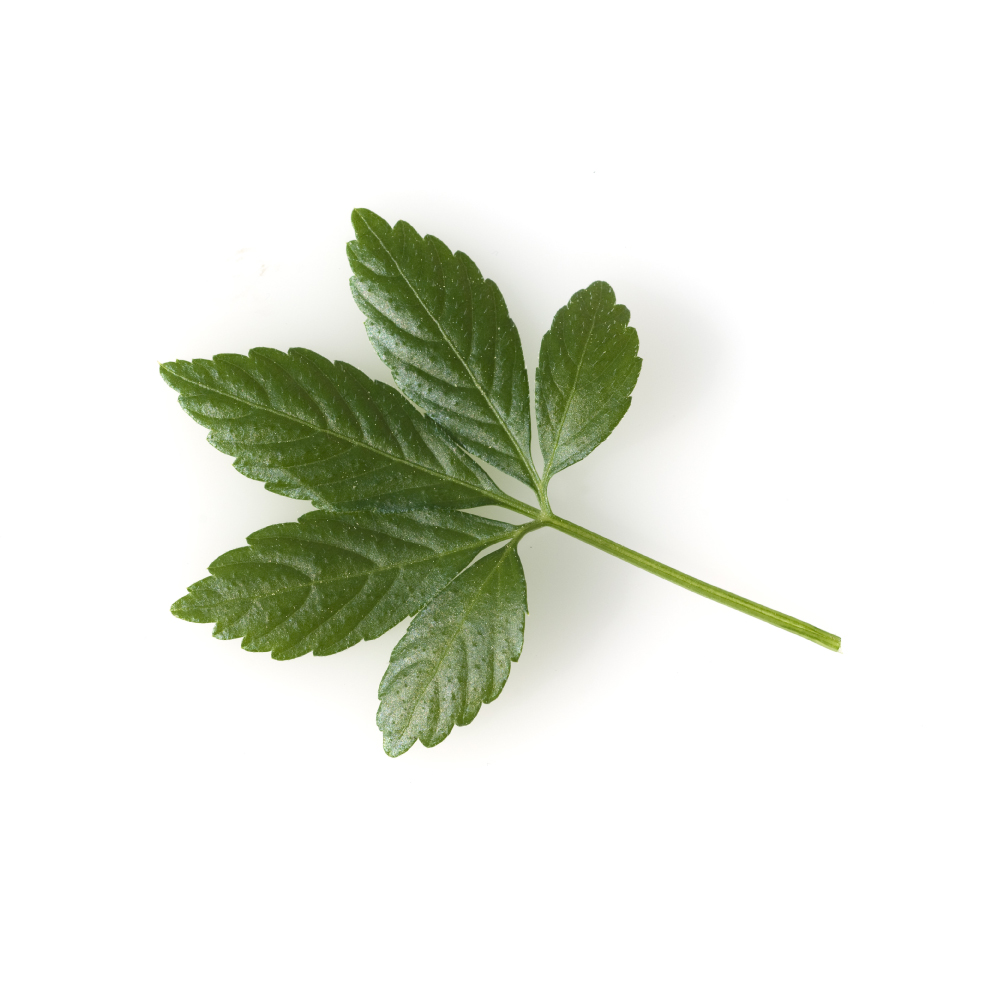
Gypenoside IX is a naturally occurring dammarane triterpenoid saponin (protopanaxadiol-type), found in Jiaogulan, Notoginseng — leaves and 1 other source. It is well tolerated orally (low toxicity).
Concentration
Content by Source
Concentrations not reported. No percent-dry-weight or mg/g figures have been published for this compound in its source plants.
Gypenoside IX at a Glance
Gypenoside IX is a dammarane-type triterpenoid saponin — one of the individually named gypenosides that give jiaogulan (Gynostemma pentaphyllum) its activity. Jiaogulan is nicknamed “southern ginseng” because a large share of its saponins are structurally the same dammarane molecules found in Panax ginseng, and gypenoside IX sits in the protopanaxadiol branch of that family alongside cousins like ginsenoside Rb1 3Reference 3ReviewTriterpenoids from the genus Gynostemma: chemistry and pharmacological activities — review (328 dammarane saponins)View study →.
The honest headline is scarcity. “Gypenosides” is a family of more than three hundred saponins, and almost all human and animal work is done on the mixture, not on single members 3Reference 3ReviewTriterpenoids from the genus Gynostemma: chemistry and pharmacological activities — review (328 dammarane saponins)View study →. For gypenoside IX as an isolated molecule the literature is small and entirely preclinical: one in-vivo study in an Alzheimer’s model and one in-vitro study in brain immune cells. The cardiovascular, antithrombotic and ferroptosis-cardioprotection signals often attached to jiaogulan belong to the whole gypenoside fraction or to related molecules, not to gypenoside IX specifically — a distinction worth keeping front and centre.
A Jiaogulan Dammarane Saponin
Gypenoside IX is worth a page mainly to fix what the isolated molecule does and does not have behind it.
What is real for the isolate. Two studies used purified gypenoside IX. In a staurosporine-driven Alzheimer’s model (neurons and rats), isolated gypenoside IX restored the Akt/GSK-3β signalling axis, lowered tau hyperphosphorylation, cut amyloid-β production (via BACE1/presenilin-1 downregulation), restored synaptic proteins and improved cognition 1Reference 1AnimalGypenoside IX restores Akt/GSK-3β pathway and alleviates Alzheimer’s disease-like neuropathology and cognitive deficits — neuron + rat modelView study →. Separately, isolated gypenoside IX suppressed p38 MAPK/Akt/NF-κB signalling in cytokine-stimulated astrocytes, lowering TNF-α, iNOS, IL-6, IL-1β and COX-2 2Reference 2In vitroGypenoside IX suppresses p38 MAPK/Akt/NFκB signaling pathway activation and inflammatory responses in astrocytes stimulated by proinflammatory mediators — in vitroView study →. Both point the same way — an anti-inflammatory, pro-survival signal in the brain — and both stop at the preclinical stage.
What is not the isolate. Jiaogulan’s headline reputation is cardiometabolic — glucose lowering, lipid modulation, anti-fatigue, cardioprotection — and it is AMPK-driven work on the whole gypenoside mixture, where no single saponin is standardised 3Reference 3ReviewTriterpenoids from the genus Gynostemma: chemistry and pharmacological activities — review (328 dammarane saponins)View study →. The vascular and anti-atherosclerosis data name other gypenosides: gypenoside XVII and XLIX for endothelial protection, and the mixed gypenoside fraction for endothelial anti-apoptosis via PI3K/Akt/Bad 5Reference 5Gypenoside inhibits endothelial cell apoptosis in atherosclerosis by modulating mitochondria through PI3K/Akt/Bad pathway — mixed gypenosides, not gypenoside IXView study →. The ferroptosis/cardioprotection story most often cited belongs to gypensapogenin I, a sapogenin (the sugar-free core), in myocardial ischaemia-reperfusion — again, not gypenoside IX 4Reference 4Gypensapogenin I alleviates PANoptosis, ferroptosis, and oxidative stress in myocardial ischemic–reperfusion injury by targeting the NOX2/AMPK pathway — animal + cell model (sapogenin, not gypenoside IX)View study →.
So while it is fair to say gypenoside IX is a jiaogulan saponin with a plausible neuroprotective signal, it is not demonstrated to be the molecule behind jiaogulan’s antithrombotic or cardiovascular effects. Those are properties of the mixture, and possibly of different members of it.
What It's Used For
The isolated-molecule evidence is small enough to state plainly: two preclinical studies, both in the brain, plus a class of cardiovascular claims that were tested on other material.
Support is an experimental score — weighted by study type (human > animal > in vitro) and volume, tempered for isolate-vs-plant match and bioavailability. A beta, not a validated metric. Every row here rests on isolated IX in animals/cells or, for the last row, on other material entirely — so scores are low by design. Each application links to its write-up.
The strongest — and only in-vivo — signal for the isolated molecule. Using staurosporine to model Alzheimer’s-like pathology in neurons and rats, isolated gypenoside IX reactivated the Akt/GSK-3β signalling axis, reduced neuronal apoptosis, lowered tau hyperphosphorylation at multiple sites, cut amyloid-β production by downregulating BACE1 and presenilin-1, restored the synaptic proteins PSD95 and synaptophysin, and improved cognitive function 1Reference 1AnimalGypenoside IX restores Akt/GSK-3β pathway and alleviates Alzheimer’s disease-like neuropathology and cognitive deficits — neuron + rat modelView study →.
Gap: a single isolated-IX study in cells and rats — no human data, no independent replication, and as a large saponin its brain exposure after oral dosing is unquantified, so the effective doses may not be reachable in people 1,
The mechanistically adjacent finding, at the cell level. In astrocytes stimulated by pro-inflammatory mediators, isolated gypenoside IX suppressed p38 MAPK/Akt/NF-κB pathway activation and downregulated TNF-α, iNOS, IL-6, IL-1β and COX-2 2Reference 2In vitroGypenoside IX suppresses p38 MAPK/Akt/NFκB signaling pathway activation and inflammatory responses in astrocytes stimulated by proinflammatory mediators — in vitroView study →. This dovetails with the neuroprotection work — both describe an anti-inflammatory, pro-survival action in nervous tissue.
Gap: in-vitro only, one study; it establishes a plausible mechanism, not an outcome, and says nothing about what an oral dose achieves in brain 2Reference 2In vitroGypenoside IX suppresses p38 MAPK/Akt/NFκB signaling pathway activation and inflammatory responses in astrocytes stimulated by proinflammatory mediators — in vitroView study →.
Included precisely because it is so often mis-attributed to gypenoside IX. Jiaogulan’s cardiovascular and metabolic effects are AMPK-driven properties of the whole gypenoside mixture, in which no single saponin is standardised 3Reference 3ReviewTriterpenoids from the genus Gynostemma: chemistry and pharmacological activities — review (328 dammarane saponins)View study →.
The vascular data name other molecules: the mixed gypenoside fraction protects endothelial cells from apoptosis via PI3K/Akt/Bad in atherosclerosis models 5Reference 5Gypenoside inhibits endothelial cell apoptosis in atherosclerosis by modulating mitochondria through PI3K/Akt/Bad pathway — mixed gypenosides, not gypenoside IXView study →, while gypenoside XVII and XLIX (not IX) carry the endothelial/anti-atherosclerosis signal. The ferroptosis-and-cardioprotection work most cited uses gypensapogenin I, the sugar-free sapogenin, against myocardial ischaemia-reperfusion via NOX2/AMPK 4Reference 4Gypensapogenin I alleviates PANoptosis, ferroptosis, and oxidative stress in myocardial ischemic–reperfusion injury by targeting the NOX2/AMPK pathway — animal + cell model (sapogenin, not gypenoside IX)View study →.
Gap: gypenoside IX itself was not the agent tested in any of these — attributing jiaogulan’s antithrombotic or cardioprotective effects to this specific molecule is not supported 3,
Mechanisms
| Target / pathway | Effect | Relevant to |
|---|---|---|
| Akt / GSK-3β axis | restored Akt activity, inhibited GSK-3β → ↓ tau hyperphosphorylation | neuroprotection (isolated IX) |
| BACE1 / presenilin-1 (PS1) | downregulated → ↓ amyloid-β production | neuroprotection (isolated IX) |
| PSD95, synaptophysin | synaptic proteins restored | neuroprotection (isolated IX) |
| p38 MAPK / Akt / NF-κB | suppressed → ↓ TNF-α, iNOS, IL-6, IL-1β, COX-2 | neuroinflammation (isolated IX) |
| AMPK | activation underlies the gypenoside metabolic/cardio effects — shown for the mixture/sapogenin, not IX | cardio-metabolic (class) |
| PI3K / Akt / Bad | anti-apoptotic endothelial/cardiomyocyte protection — mixture, not IX | vascular/cardio (class) |
The load-bearing point: the Akt/GSK-3β and NF-κB signals in rows 1–4 are the only ones actually demonstrated for the isolated molecule. Rows 5–6 are class-level context — they are why “gypenosides” have a cardiovascular reputation, and why that reputation does not transfer cleanly to gypenoside IX.
Pharmacokinetics
There is no dedicated pharmacokinetic study of isolated gypenoside IX. What can be said is inferred from its structure and its family. As a large, multiply-glycosylated dammarane saponin it behaves like its ginsenoside cousins ginsenoside Rb1 and ginsenoside Rg1, which are very poorly absorbed by mouth and are progressively deglycosylated by gut bacteria into smaller, more absorbable metabolites — so the parent saponin that acts in a cell assay is largely not what reaches the bloodstream after an oral dose 3Reference 3ReviewTriterpenoids from the genus Gynostemma: chemistry and pharmacological activities — review (328 dammarane saponins)View study →. This class behaviour is the main reason isolated-saponin potency in vitro should not be read as an oral effect, and it applies to gypenoside IX until measured otherwise.
Clinical Trials
There are no clinical trials of isolated gypenoside IX. All human jiaogulan evidence is at the whole-leaf tea or standardised-extract level, where gypenoside IX is one saponin among hundreds and its individual contribution is unknown 3Reference 3ReviewTriterpenoids from the genus Gynostemma: chemistry and pharmacological activities — review (328 dammarane saponins)View study →.
| Completed | Planned | Terminated | Preclinical |
|---|---|---|---|
| None(isolated IX) | None identified | None | Sparse(2 isolate studies, both neurological) |
Last checked: July 2026.
Isolate vs. Plant Studies
This molecule sits at the extreme “plant, not isolate” end of the spectrum. The entire human record is whole-plant — jiaogulan tea and standardised gypenoside extracts — and even most animal work uses the mixed saponin fraction, not purified members 3Reference 3ReviewTriterpenoids from the genus Gynostemma: chemistry and pharmacological activities — review (328 dammarane saponins)View study →. Only two studies isolated gypenoside IX at all, both preclinical and both neurological 1,
Prevalence in Nature
Gypenoside IX is a constituent of jiaogulan (Gynostemma pentaphyllum), the plant whose leaves carry a very large family of dammarane-type triterpenoid saponins — more than three hundred distinct structures have been isolated and characterised from the genus Gynostemma 3Reference 3ReviewTriterpenoids from the genus Gynostemma: chemistry and pharmacological activities — review (328 dammarane saponins)View study →. Within that family, gypenoside IX is a protopanaxadiol-type member, chemically in the same branch as the Panax ginsenosides — part of the structural overlap that earns jiaogulan the name “southern ginseng,” since a substantial share of its saponins are the same molecules found in true ginseng 3Reference 3ReviewTriterpenoids from the genus Gynostemma: chemistry and pharmacological activities — review (328 dammarane saponins)View study →. The same saponin has also been reported from the leaves of Panax notoginseng and Panax ginseng, where dammarane oligoglycosides of this type occur. Only a handful of the family’s members are individually characterised — gypenoside IX among them, alongside gypenoside L and gypenoside A — the rest remaining an undifferentiated part of the “total gypenosides” pool. Its concentration in any given jiaogulan product is not individually quantified and not standardised, and it varies with cultivar, ploidy and processing 3Reference 3ReviewTriterpenoids from the genus Gynostemma: chemistry and pharmacological activities — review (328 dammarane saponins)View study →.
Discovery & Synthesis
Gypenoside IX is one of the named gypenosides isolated from jiaogulan (Gynostemma pentaphyllum) during the systematic phytochemical work that catalogued this plant’s dammarane saponins; the same compound was subsequently reported among the dammarane oligoglycosides of Panax leaves 3Reference 3ReviewTriterpenoids from the genus Gynostemma: chemistry and pharmacological activities — review (328 dammarane saponins)View study →. It is obtained by extraction and chromatographic isolation from plant material rather than by synthesis — there is no established total synthesis, and as a research compound it is supplied as a purified natural isolate. Commercial jiaogulan products are not made or standardised to gypenoside IX; they are standardised (if at all) to total gypenosides or to other marker saponins 3Reference 3ReviewTriterpenoids from the genus Gynostemma: chemistry and pharmacological activities — review (328 dammarane saponins)View study →.
Patents: not yet researched.
Toxicity & Safety
Gypenoside IX carries a low flag — but that reflects the class, not a dedicated toxicology package for the isolate. Gynostemma and its gypenosides are well tolerated at dietary and supplemental levels, and no specific toxicity signal has been reported for gypenoside IX; there is simply very little isolate-specific data of any kind. The practical cautions below are the jiaogulan-class cautions, applied conservatively.
- No specific toxicity signal. Gypenoside IX has no reported isolate-level adverse findings, and its parent herb jiaogulan is well tolerated as tea/extract.
- Isolate toxicology is uncharacterised. “Low” is a class inference — there is no dedicated repeat-dose, genotoxicity or reproductive dataset for the pure molecule, so the badge reflects absence of alarms, not a clean bill.
- Whole-jiaogulan cautions carry over. The herb’s metabolic activity (glucose lowering, via the saponin mixture) means additive effects with anti-diabetic drugs are plausible; decisions about intake belong to the jiaogulan herb page, where the mixture and dose are defined.
Dosage
There is no established human dose of isolated gypenoside IX — it is a research compound, not a standardised supplement. The preclinical studies used purified gypenoside IX at experiment-specific concentrations in cells and rats, chosen for the model rather than validated for people 1,
References
- Lei L, Luo Y, Kang D, Yang F, Meng D, Wang JZ, Liu R, Wang X, Li HL (2023). Gypenoside IX restores Akt/GSK-3β pathway and alleviates Alzheimer’s disease-like neuropathology and cognitive deficits — neuron + rat model. Aging (Albany NY). https://pubmed.ncbi.nlm.nih.gov/38095632/
- Wang X, Yang L, Yang L, Xing F, Yang H, Qin L, Lan Y, Wu H, Zhang B, Shi H, Lu C, Huang F, Wu X, Wang Z (2017). Gypenoside IX suppresses p38 MAPK/Akt/NFκB signaling pathway activation and inflammatory responses in astrocytes stimulated by proinflammatory mediators — in vitro. Inflammation. https://pubmed.ncbi.nlm.nih.gov/28822019/
- Nguyen NH, Ha TKQ, Yang JL, Pham HTT, Oh WK (2021). Triterpenoids from the genus Gynostemma: chemistry and pharmacological activities — review (328 dammarane saponins). Journal of Ethnopharmacology. https://pubmed.ncbi.nlm.nih.gov/33186700/
- Chen Y, Guan B, Lu J, et al. (2025). Gypensapogenin I alleviates PANoptosis, ferroptosis, and oxidative stress in myocardial ischemic–reperfusion injury by targeting the NOX2/AMPK pathway — animal + cell model (sapogenin, not gypenoside IX). Frontiers in Cell and Developmental Biology. https://pubmed.ncbi.nlm.nih.gov/40766780/
- Song N, Jia L, Cao H, Ma Y, Chen N, Chen S, Lv X, Yang G (2020). Gypenoside inhibits endothelial cell apoptosis in atherosclerosis by modulating mitochondria through PI3K/Akt/Bad pathway — mixed gypenosides, not gypenoside IX. BioMed Research International. https://pubmed.ncbi.nlm.nih.gov/32685460/



