Compound Monograph
Hydroxytyramine (Dopamine)
Hydroxytyramine is dopamine — 3,4-dihydroxyphenethylamine — a catecholamine that occurs in banana, purslane, broom and many other plants as well as in our own nerves and gut. The point that governs every claim made about it: dopamine swallowed in food or a herb is destroyed at the gut wall and cannot cross the blood-brain barrier, so plant dopamine does not raise brain dopamine.

Sources · 6
Where Does It Come From?
Hydroxytyramine (Dopamine) is a naturally occurring (and made in the body) catecholamine (biogenic amine; phenethylamine class), found in Banana, Common purslane, Broom and 3 other sources. It is flagged as moderately toxic.
Concentration
Content by Source
Reported concentrations across the plants that contain hydroxytyramine (Dopamine) — the bar marks the typical level, the line shows the reported range.
Literature figures for varying plant parts and preparations. Read them as a comparative guide, not exact assays.
Hydroxytyramine (Dopamine) at a Glance
Hydroxytyramine is dopamine. The two names are the same molecule — 3,4-dihydroxyphenethylamine, also written 3-hydroxytyramine — and older herbal and pharmacopoeial texts (including the ones that describe broom) tend to use the hydroxytyramine spelling. Chemically it is tyramine with a second hydroxyl group on the ring, which is why the two amines so often turn up together in the same plant.
This page covers dopamine as a plant constituent, not as a neurotransmitter. That distinction is the whole point, because the two stories barely touch. Dopamine occurs in real quantities in plants — banana peel and pulp, purslane, broom’s flowering tops, various other families — where it works as an antioxidant and a stress-response signal 1,
Swallowed dopamine does not reach the brain. It is conjugated and deaminated in the gut wall before it gets into the circulation 6,
Dietary Dopamine Does Not Reach The Brain
This is the reason the page exists. “This plant contains dopamine” is a true statement that implies almost nothing, because there are two independent barriers between a mouthful of plant dopamine and a dopaminergic effect in the central nervous system.
Barrier one — the gut. The human gastrointestinal tract expresses the sulfotransferase SULT1A3 in large quantities (the liver does not), and it sulfates dietary biogenic amines on the way through. Eisenhofer and colleagues describe this explicitly as an enzymatic “gut–blood barrier” whose function is to detoxify dietary amines and contain the gut’s own dopamine signalling; more than 75% of the body’s dopamine sulfate is produced by the gastrointestinal tract, and plasma dopamine sulfate rises dramatically after amine-rich meals — the sulfate, not the free amine 6Reference 6Dopamine sulphate: an enigma resolvedView study →. Monoamine oxidase in the gut wall and liver deaminates most of the rest 8Reference 8Catecholamine metabolism: a contemporary view with implications for physiology and medicineView study →. Free dopamine circulates at trivial concentrations by comparison 9Reference 9Sources and significance of plasma levels of catechols and their metabolites in humansView study →.
Barrier two — the blood–brain barrier. Circulating monoamines are excluded at the luminal membrane of brain capillary endothelium, and the small fraction that does cross is deaminated and O-methylated inside the endothelial cells and pericytes — a morphological barrier backed by an enzymatic one 5Reference 5Barrier mechanisms for neurotransmitter monoamines and their precursors at the blood-brain interfaceView study →. This is precisely why Parkinson’s disease is treated with L-DOPA rather than dopamine: the amino-acid precursor is carried across, then decarboxylated to dopamine on the far side, and peripheral decarboxylase inhibitors are added to stop that conversion happening before it gets there 5,
The practical consequences are worth stating flatly:
- Eating a banana — the richest documented dietary source, at up to 10 mg per 100 g of pulp 1Reference 1High content of dopamine, a strong antioxidant, in Cavendish bananaView study → — does not raise brain dopamine.
- No herb, extract or “dopamine-containing” supplement raises brain dopamine by supplying dopamine.
- What dietary dopamine can plausibly do is act peripherally: in the gut lumen and wall, on vascular and renal dopamine receptors if enough reaches plasma, and as a dietary antioxidant 1,
10, .13Reference 1High content of dopamine, a strong antioxidant, in Cavendish bananaView study →Reference 10Dopamine receptors: from structure to functionView study →Reference 13Minireview: new roles for peripheral dopamine on metabolic control and tumor growth — let’s seek the balanceView study → - The one thing it reliably does is inflate laboratory results — dietary amines raise plasma and urinary catecholamine metabolites, which matters when those are being measured 6,
9Reference 6Dopamine sulphate: an enigma resolvedView study →Reference 9Sources and significance of plasma levels of catechols and their metabolites in humansView study → .
Dopamine vs. L-DOPA In Plants
Almost all of the neurological interest attached to plants in this space actually belongs to L-DOPA, dopamine’s immediate biosynthetic precursor, not to dopamine itself.
| Dopamine (hydroxytyramine) | L-DOPA (levodopa) | |
|---|---|---|
| Crosses the blood–brain barrier | No — excluded physically and enzymatically 5Reference 5Barrier mechanisms for neurotransmitter monoamines and their precursors at the blood-brain interfaceView study → | Yes — carried by the large-neutral-amino-acid transporter 5Reference 5Barrier mechanisms for neurotransmitter monoamines and their precursors at the blood-brain interfaceView study → |
| Survives oral dosing | Poorly — sulfated and deaminated at the gut wall 6, | Yes, enough to be a drug (with a decarboxylase inhibitor) 15Reference 15RCTMucuna pruriens in Parkinson’s disease: a double blind clinical and pharmacological studyView study → |
| Main herbal source | Banana, purslane, broom, many plants at low levels 1, | Velvet bean (Mucuna pruriens) seed 15Reference 15RCTMucuna pruriens in Parkinson’s disease: a double blind clinical and pharmacological studyView study → |
| Established human use | Intravenous infusion in critical care 11, | Oral, the mainstay Parkinson’s therapy 15, |
Velvet bean is the clean illustration. In a randomised, double-blind crossover challenge in eight people with Parkinson’s disease, 30 g of Mucuna pruriens seed powder produced a faster onset (34.6 vs. 68.5 min), 110% higher peak plasma L-DOPA and a 165% larger AUC than standard levodopa/carbidopa, with longer “on” time and no increase in dyskinesia 15Reference 15RCTMucuna pruriens in Parkinson’s disease: a double blind clinical and pharmacological studyView study →. That is an L-DOPA result. Velvet bean is a natural L-DOPA source, and describing it as a “natural dopamine source” gets the pharmacology backwards.
The corollary matters for how the rest of the database reads: when a herb page mentions dopamine, check whether the claim runs through dopamine content (peripheral at best) or through L-DOPA content, dopamine receptors, or dopamine reuptake/release (which are entirely different mechanisms belonging to other molecules).
The MAOI Caution It Shares With Tyramine
Broom’s traditional contraindication with monoamine-oxidase inhibitors is written against its biogenic amines — tyramine and hydroxytyramine together (see the broom monograph). The mechanism is a genuine one, but the weight sits on tyramine rather than on dopamine.
Monoamine oxidase in the gut wall and liver is the enzyme that destroys dietary amines on first pass. Inhibit it and dietary amines survive into the circulation; tyramine then acts as an indirect sympathomimetic, displacing noradrenaline from sympathetic nerve terminals and producing the pressor response that gave MAOIs their “cheese reaction” reputation 16Reference 16A reassessment of the safety profile of monoamine oxidase inhibitors: elucidating tired old tyramine mythsView study →. Gillman’s reassessment of that literature argues the risk from modern foods has been substantially overstated — most present-day cheeses are safe in normal portions — but the pharmacology of the interaction is not in dispute 16Reference 16A reassessment of the safety profile of monoamine oxidase inhibitors: elucidating tired old tyramine mythsView study →.
Dopamine rides along on the same mechanism with two differences. It is a direct agonist at dopamine and adrenergic receptors rather than a pure releasing agent 10Reference 10Dopamine receptors: from structure to functionView study →, and it is additionally handled by the SULT1A3 sulfation barrier that tyramine largely escapes 6Reference 6Dopamine sulphate: an enigma resolvedView study →. In practice this makes dopamine the junior partner in the caution: for a herb like broom the pressor risk under MAOI cover is chiefly a tyramine risk, with dopamine contributing.
For an amine-containing herb the honest statement is therefore: avoid combining it with an MAOI, because the interaction basis is real, well-characterised at the enzyme level, and has never been formally tested for that herb.
What It's Used For
Dopamine’s central pharmacology is one of the best-characterised subjects in biology and is almost entirely irrelevant here. What follows is the peripheral and dietary pharmacology — the part a plant constituent can actually touch — plus the honest zero on the oral/CNS question.
Support is an experimental score — weighted by study type (human > animal > in vitro) and volume. A beta, not a validated metric. Note that a high score here can still be a negative clinical verdict (dopamine in shock works pharmacologically and is still second-line), and the lowest row is low because the question has been answered, not because it is unstudied. Read the per-row basis.
The isolated molecule’s real clinical footprint, and it is entirely intravenous. Infused dopamine is a dose-dependent agonist: at low rates it acts mainly on peripheral dopamine (D1-like) receptors in kidney and vasculature; at intermediate rates it recruits β₁-adrenergic inotropy; at high rates α₁-adrenergic vasoconstriction dominates 10Reference 10Dopamine receptors: from structure to functionView study →.
In SOAP II, a multicentre randomised trial of 1,679 patients with shock, dopamine as first-line vasopressor produced no significant 28-day mortality difference versus noradrenaline (52.5% vs. 48.5%, p = 0.10) but more arrhythmic events, and did worse in the cardiogenic-shock subgroup 12Reference 12Comparison of dopamine and norepinephrine in the treatment of shock (SOAP II)View study →.
This is the isolate, at doses no oral or herbal route can produce.
Gap: none of this transfers to plant dopamine. The effect requires continuous parenteral infusion precisely because oral dopamine is destroyed pre-systemically 6,
The application most relevant to dopamine as a plant constituent. Kanazawa and Sakakibara identified dopamine as the strong water-soluble antioxidant of Cavendish banana, with greater antioxidative potency than glutathione, BHA, BHT, luteolin, quercetin and catechin, and similar potency to gallocatechin gallate and ascorbic acid, in linoleic-acid oxidation and DPPH assays; peel contained 80–560 mg/100 g and ripe pulp 2.5–10 mg/100 g 1Reference 1High content of dopamine, a strong antioxidant, in Cavendish bananaView study →.
Purslane (Portulaca oleracea) carries dopamine at an average ~0.2% alongside noradrenaline 4Reference 4Determination of dopamine and norepinephrine in Portulaca oleracea L. by micellar electrokinetic capillary chromatography with amperometric detectionView study →.
In the plant itself, the same catechol chemistry underpins dopamine’s documented role in tolerance to drought, salt and nutrient stress 2,
Gap: these are in-vitro chemical assays and plant-physiology outcomes, not human antioxidant endpoints. Given that swallowed dopamine is largely conjugated at the gut wall 6Reference 6Dopamine sulphate: an enigma resolvedView study →, a systemic dietary antioxidant contribution is plausible in the gut lumen and unproven beyond it.
Dopamine is not only a brain molecule, and this is the part of its biology that dietary dopamine plausibly meets. Sampling across the portal and hepatic circulation in humans showed mesenteric organs produce close to half of all the dopamine formed in the body (12.0 nmol/min), with tyrosine hydroxylase present in non-neuronal cells of stomach and duodenum — a non-neuronal “third catecholamine system” independent of sympathetic nerves 7Reference 7Substantial production of dopamine in the human gastrointestinal tractView study →.
Peripheral dopamine receptors are expressed prominently in kidney, vasculature and pituitary, where they govern sodium handling, vascular tone and hormone secretion 10Reference 10Dopamine receptors: from structure to functionView study →, and interest has extended to peripheral roles in metabolic control 13Reference 13Minireview: new roles for peripheral dopamine on metabolic control and tumor growth — let’s seek the balanceView study →.
The SULT1A3 sulfation system appears to exist partly to keep this local signalling local 6Reference 6Dopamine sulphate: an enigma resolvedView study →.
Gap: this is human physiology and receptor distribution, not evidence that dietary dopamine modulates any of it to a measurable clinical endpoint. No trial has fed plant dopamine and measured a peripheral outcome.
The instructive negative. Low-dose (“renal-dose”) dopamine was given for decades on the reasoning that D1-mediated renal vasodilation and natriuresis would protect the kidney. The ANZICS Clinical Trials Group tested it properly: 328 critically ill patients with early renal dysfunction randomised to 2 µg/kg/min dopamine or placebo showed no difference in peak serum creatinine (245 vs. 249 µmol/L, p = 0.93), in creatinine rise, in the need for renal replacement therapy, or in ICU or hospital stay 11Reference 11RCTLow-dose dopamine in patients with early renal dysfunction: a placebo-controlled randomised trial (ANZICS Clinical Trials Group)View study →.
The receptor pharmacology was right; the clinical benefit was not there.
Gap: this is a well-executed refutation of a parenteral indication. It says nothing about plant dopamine — but it is a useful reminder that a clean peripheral mechanism does not guarantee an outcome.
The claim to close. There is no human evidence that dopamine taken by mouth — as food, herb, extract or supplement — produces any central dopaminergic effect, and two well-characterised mechanisms explain why not: pre-systemic sulfation by gut SULT1A3 plus MAO deamination 6,
The pharmaceutical industry’s own workaround is the proof: because “the therapeutic usefulness of intravenously infused dopamine” could not be reproduced orally, chemists synthesised ester prodrugs such as ibopamine specifically to obtain an orally active dopamine-like agent with adequate absorption — and deliberately designed them to avoid central-nervous-system accumulation 14Reference 14Synthesis and chemical properties of ibopamine and of related esters of N-substituted dopamines — synthesis of ibopamine metabolitesView study →.
Gap: none needed in the usual sense — the negative is mechanistically established rather than merely untested. What is genuinely untested is whether repeated high-dopamine dietary intake (banana peel preparations, purslane) produces any measurable peripheral effect in humans.
Mechanisms
| Target / pathway | Effect | Relevant to |
|---|---|---|
| D1-like dopamine receptors (kidney, vasculature) | renal and splanchnic vasodilation; natriuresis, sodium handling | low-dose IV infusion; the failed renal indication |
| D2-like dopamine receptors (presynaptic, pituitary, gut) | inhibits noradrenaline release; suppresses prolactin; modulates motility | peripheral signalling |
| β₁-adrenergic receptors | positive inotropy and chronotropy at intermediate infusion rates | circulatory support; the arrhythmia signal |
| α₁-adrenergic receptors | vasoconstriction at high infusion rates | pressor effect in shock |
| SULT1A3 (gut sulfotransferase) | sulfates dietary and locally-produced dopamine — the enzymatic “gut–blood barrier” | why oral dopamine is inert |
| Monoamine oxidase (MAO-A/MAO-B) | oxidative deamination to DOPAC → homovanillic acid | first-pass destruction; the MAOI interaction |
| Catechol-O-methyltransferase (COMT) | O-methylation to 3-methoxytyramine | metabolite chemistry; catecholamine turnover markers |
| Blood–brain barrier endothelium | physical exclusion plus intra-endothelial deamination/O-methylation | why plant dopamine is not a brain molecule |
| Catechol radical scavenging | direct antioxidant chemistry; plant abiotic-stress tolerance | dietary/plant antioxidant role |
The two rows that decide the whole reading are SULT1A3 and the blood–brain barrier. Everything dopamine famously does centrally is inaccessible by the oral route, and the receptor rows only become live at parenteral concentrations.
Pharmacokinetics
This section is the page. Oral bioavailability of free dopamine is effectively nil for central purposes. Ingested dopamine meets the gut’s SULT1A3 sulfotransferase — expressed heavily in the gastrointestinal tract and not in liver — which conjugates it to dopamine sulfate; the gut generates more than 75% of the body’s dopamine sulfate, and plasma dopamine sulfate rises sharply after amine-rich meals while free dopamine does not 6Reference 6Dopamine sulphate: an enigma resolvedView study →. Whatever escapes sulfation meets monoamine oxidase in the gut wall and liver, which deaminates it to DOPAC and thence homovanillic acid, and COMT, which O-methylates it to 3-methoxytyramine 8,
Distribution is then blocked a second time. Circulating monoamines are prevented from entering brain at the luminal endothelial membrane, and the fraction that slips through is deaminated and O-methylated within endothelial cells and pericytes 5Reference 5Barrier mechanisms for neurotransmitter monoamines and their precursors at the blood-brain interfaceView study →. The precursor L-DOPA does cross, but is decarboxylated and immediately deaminated in the same cells — which is why clinical levodopa is co-administered with a peripheral decarboxylase inhibitor 5Reference 5Barrier mechanisms for neurotransmitter monoamines and their precursors at the blood-brain interfaceView study →.
Clearance of circulating dopamine is fast. It is given clinically only as a continuous intravenous infusion, titrated in µg/kg/min, because bolus dosing has no useful duration 11,
For a herbal reader the summary is short: plant dopamine behaves as a gut-restricted dietary amine. It is a real antioxidant molecule in the food and in the plant, a substrate for gut sulfation and deamination on the way through, and a non-event centrally.
Clinical Trials
Human trials of dopamine are numerous and all intravenous: it is a licensed critical-care drug. The two that matter for an honest page are both essentially negative — SOAP II found no mortality advantage over noradrenaline and more arrhythmias 12Reference 12Comparison of dopamine and norepinephrine in the treatment of shock (SOAP II)View study →, and the ANZICS trial refuted low-dose renal protection 11Reference 11RCTLow-dose dopamine in patients with early renal dysfunction: a placebo-controlled randomised trial (ANZICS Clinical Trials Group)View study →. There are no clinical trials of oral or plant-derived dopamine for any indication, and none should be expected given the pharmacokinetics. The relevant herbal trial in this space is a Mucuna pruriens study, and its active principle is L-DOPA 15Reference 15RCTMucuna pruriens in Parkinson’s disease: a double blind clinical and pharmacological studyView study →.
| Completed | Planned | Terminated | Preclinical |
|---|---|---|---|
| Many(IV, critical care) — 0 oral/herbal | — | — | Antioxidant chemistry; plant stress physiology |
Last checked: July 2026.
Isolate vs. Plant Studies
The split here is unusually clean, and unusually unhelpful to herbal claims.
Every human study is of the isolate, by injection. Dopamine hydrochloride infused in an intensive-care unit is a defined molecule at a defined rate 11,
Every plant study is of content or chemistry, not effect. Banana’s dopamine has been quantified and its radical-scavenging potency ranked against reference antioxidants in vitro 1Reference 1High content of dopamine, a strong antioxidant, in Cavendish bananaView study →; purslane’s has been quantified by capillary electrophoresis 4Reference 4Determination of dopamine and norepinephrine in Portulaca oleracea L. by micellar electrokinetic capillary chromatography with amperometric detectionView study →; the plant-physiology literature documents dopamine’s role in the plant’s own stress responses 2,
The one herbal clinical result in the neighbourhood is not about dopamine at all. The velvet-bean Parkinson’s crossover trial is an L-DOPA pharmacokinetic and clinical study 15Reference 15RCTMucuna pruriens in Parkinson’s disease: a double blind clinical and pharmacological studyView study →; dopamine is what the body makes from it after the barrier has been crossed.
So the usual caveat inverts. Normally the worry is that isolate data over-promise for a whole plant. Here the isolate data are strong, human, and completely non-transferable, because the route that makes them work is one no plant can offer.
Its Role In Plants
Dopamine was first reported in plants in 1968 and has since been documented across many families 2Reference 2ReviewFunctions of dopamine in plants: a reviewView study →. Plants make it on the same short pathway animals use — tyrosine → L-DOPA (tyrosine hydroxylase / phenolase activity) → dopamine (aromatic amino-acid decarboxylase) — and it sits at a branch point feeding onward into benzylisoquinoline alkaloids in the families that make them 3Reference 3Catecholamines are active compounds in plantsView study →.
Its documented plant functions are not neurological but protective and regulatory 2,
- Antioxidant defence. The catechol ring makes dopamine a potent radical scavenger, which is how it was found in banana in the first place 1Reference 1High content of dopamine, a strong antioxidant, in Cavendish bananaView study →.
- Abiotic-stress tolerance. Endogenous or applied dopamine improves tolerance to drought, salinity and nutrient stress, and shifts expression of a broad set of stress-response genes 2Reference 2ReviewFunctions of dopamine in plants: a reviewView study →.
- Growth and development. Effects on germination, growth, senescence and nutrient uptake have been reported 2Reference 2ReviewFunctions of dopamine in plants: a reviewView study →.
- Immunity. Contributions to plant defence against disease are described 2Reference 2ReviewFunctions of dopamine in plants: a reviewView study →.
- Substrate for browning. As an o-diphenol, dopamine is oxidised by polyphenol oxidase — part of why cut banana tissue darkens.
None of this is human pharmacology. A molecule that helps a banana handle salt stress has no claim on what it will do in a person, and the plant literature should not be read as a bridge to the neuroscience one.
Prevalence In Nature
Dopamine is far more widespread in plants than its reputation as a brain chemical suggests, though usually at trace-to-low levels 3Reference 3Catecholamines are active compounds in plantsView study →.
Banana (Musa spp.) is the standout food source. Cavendish banana contains dopamine at 80–560 mg/100 g in the peel and 2.5–10 mg/100 g in the ripe pulp — high enough that banana is properly described as an antioxidative food on that basis 1Reference 1High content of dopamine, a strong antioxidant, in Cavendish bananaView study →. Plantains and other Musa cultivars carry it similarly.
Common purslane (Portulaca oleracea) is the highest-reported herb: an average ~0.2% dopamine together with ~0.015% noradrenaline 4Reference 4Determination of dopamine and norepinephrine in Portulaca oleracea L. by micellar electrokinetic capillary chromatography with amperometric detectionView study →.
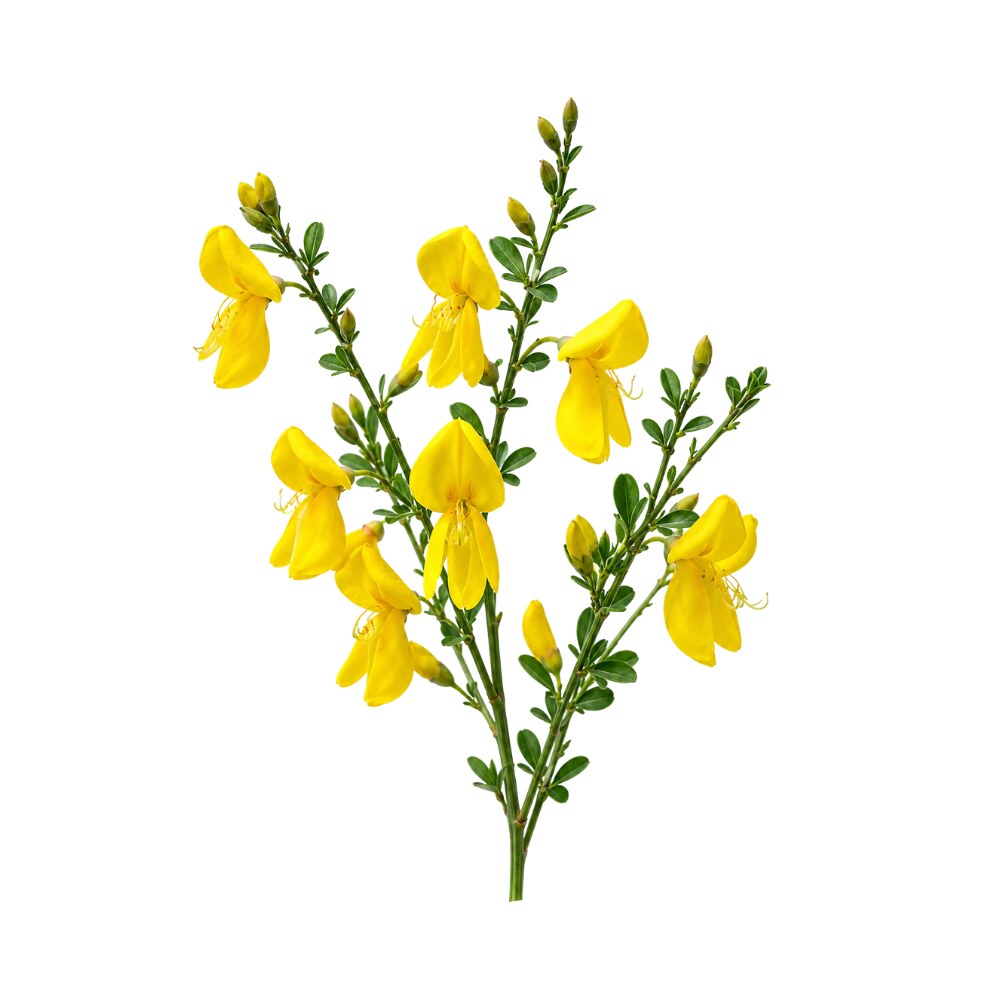
Broom (Cytisus scoparius) carries dopamine and tyramine in its flowering tops as part of a biogenic-amine fraction — the basis of its traditional MAOI contraindication. Published quantitative figures for broom are lacking; the herb’s constituent table records No Data, and alkaloid and amine content in broom varies widely with strain, plant part and season.
Velvet bean (Mucuna pruriens) is repeatedly listed as a “dopamine plant” and should be read carefully: its seed is a L-DOPA source, and that precursor — not dopamine — is what produces its clinical effect 15Reference 15RCTMucuna pruriens in Parkinson’s disease: a double blind clinical and pharmacological studyView study →.
Beyond these, catecholamines including dopamine have been detected across a wide range of flowering plants and crop species, with the Solanaceae and various fruits among the reported sources 3Reference 3Catecholamines are active compounds in plantsView study →. Concentrations outside banana and purslane are rarely well quantified.
It is also endogenous in us, and mostly not in the brain. Roughly half of the dopamine produced in the human body is made by mesenteric organs — the gastrointestinal tract, spleen and pancreas — through non-neuronal cells expressing tyrosine hydroxylase, independent of sympathetic nerves 7Reference 7Substantial production of dopamine in the human gastrointestinal tractView study →. Plasma dopamine sulfate, three-quarters of it made in the gut, reflects this and rises with diet 6Reference 6Dopamine sulphate: an enigma resolvedView study →.
Discovery & Synthesis
Dopamine’s name is a contraction of DOPA + amine, and for decades after it was first made in the laboratory it was regarded as nothing more than an intermediate on the way to noradrenaline and adrenaline. Its promotion to a molecule in its own right came in 1957, when Carlsson, Lindqvist and Magnusson showed that L-DOPA (and 5-hydroxytryptophan) reversed the effects of reserpine 17Reference 17Carlsson A, Lindqvist M, Magnusson T (1957). 3,4-Dihydroxyphenylalanine and 5-hydroxytryptophan as reserpine antagonists. Nature. https://pubmed.ncbi.nlm.nih.gov/13483658/View study → — work that, alongside Hornykiewicz’s demonstration of dopamine depletion in the parkinsonian brain, opened the dopamine era and led to Cotzias’s introduction of high-dose levodopa therapy in 1967 18Reference 18The 200-year journey of Parkinson disease: reflecting on the past and looking towards the futureView study →. Its identification as a plant constituent came later still, in 1968, and the plant-physiology literature has only accumulated substantially in the last two decades 2Reference 2ReviewFunctions of dopamine in plants: a reviewView study →.
Manufacture today is entirely synthetic. Dopamine hydrochloride for injection is a bulk chemical, not a botanical extract; no commercial supply is obtained from banana peel or any other plant, and the concentrations in plants — high as they are by phytochemical standards — are irrelevant to production. Where oral activity was wanted, the industry did not extract dopamine but derivatised it: ester prodrugs such as ibopamine were synthesised from N-substituted dopamines specifically to achieve oral absorption and duration, with the design deliberately avoiding central-nervous-system accumulation 14Reference 14Synthesis and chemical properties of ibopamine and of related esters of N-substituted dopamines — synthesis of ibopamine metabolitesView study →.
Patents: not yet researched.
Toxicity & Safety
Dopamine’s safety profile is genuinely two-sided, and the badge reflects the molecule, not the banana. As a dietary and plant constituent it is about as benign as a compound gets — the same gut metabolism that makes it pharmacologically inert also makes it safe, and humans have eaten milligram quantities in fruit forever. As a parenteral drug it is a potent catecholamine with real hazards, and as a biogenic amine in a herb it carries the MAOI-interaction caution alongside tyramine.
- Dietary exposure is benign. Banana, purslane and other food sources deliver milligram amounts that are sulfated and deaminated at the gut wall; no toxicity is associated with normal dietary intake.
- Not psychoactive by mouth. Oral dopamine has no central effect and no abuse potential — it cannot cross the blood–brain barrier.
- Avoid amine-containing herbs with MAOIs. Inhibiting monoamine oxidase removes the first-pass defence against dietary amines; the pressor risk is chiefly tyramine’s, with dopamine contributing.
- The intravenous drug is a different proposition. Infused dopamine causes arrhythmias more often than noradrenaline, and extravasation can cause local tissue injury — a prescription critical-care intervention only.
- Interferes with catecholamine testing. Amine-rich foods raise plasma and urinary catecholamine metabolites, which can confound tests for pheochromocytoma and related conditions.
Full Safety & Interactions Detail
Dietary and herbal exposure. No toxicity is documented for dopamine at dietary concentrations. The gut’s SULT1A3 sulfation and MAO deamination systems appear to exist in part to handle exactly this load, described in the literature as an enzymatic “gut–blood barrier” for dietary biogenic amines 6Reference 6Dopamine sulphate: an enigma resolvedView study →. Banana pulp delivers up to ~10 mg per 100 g and peel far more 1Reference 1High content of dopamine, a strong antioxidant, in Cavendish bananaView study →; neither is associated with adverse effects.
Monoamine-oxidase inhibitors — the load-bearing interaction. MAO is the enzyme that clears dietary amines on first pass. With MAO inhibited, dietary amines survive into the circulation, and the classic outcome is a hypertensive pressor response, historically the “cheese reaction” 16Reference 16A reassessment of the safety profile of monoamine oxidase inhibitors: elucidating tired old tyramine mythsView study →. Gillman’s review of over 150 primary papers argues the food-related risk has been overstated for modern foods — most matured cheeses are safe in normal portions today because of changes in production and hygiene — while confirming the underlying cardiovascular pharmacology and the wide inter-individual variability in pressor sensitivity 16Reference 16A reassessment of the safety profile of monoamine oxidase inhibitors: elucidating tired old tyramine mythsView study →. Tyramine is the principal culprit; dopamine, being a direct receptor agonist and additionally subject to sulfation, is the lesser contributor. For an amine-containing herb like broom the practical rule stands: do not combine with an MAOI, and treat the combination as untested rather than tested-safe. No formal interaction study exists for any dopamine-containing herb.
The intravenous drug. Dopamine infusion is a hospital intervention with characteristic risks. In SOAP II, first-line dopamine produced significantly more arrhythmic events than noradrenaline and was associated with worse outcomes in the cardiogenic-shock subgroup 12Reference 12Comparison of dopamine and norepinephrine in the treatment of shock (SOAP II)View study →; low-dose “renal” dopamine conferred no protection and is no longer recommended 11Reference 11RCTLow-dose dopamine in patients with early renal dysfunction: a placebo-controlled randomised trial (ANZICS Clinical Trials Group)View study →. Extravasation of a vasoconstricting catecholamine can cause local ischaemic tissue injury. None of this applies to any oral or herbal exposure, but it is why the molecule as such does not carry a “low” flag.
Laboratory interference. Because dietary amines raise plasma dopamine sulfate and urinary catecholamine metabolites 6,
What is not known. No dedicated genotoxicity, carcinogenicity or repeat-dose toxicology package for dopamine as a dietary constituent is characterised here; the toxicology of record is that of the parenteral drug. Reproductive and developmental toxicity has not been assessed for plant-derived dopamine; pregnancy and lactation decisions belong to the herb or product page where intake is actually decided, not to a molecule page.
Dosage
There is no oral dose of dopamine. No dietary, herbal or supplemental amount produces a dopaminergic effect, because the molecule is conjugated and deaminated before it reaches the circulation and cannot enter the brain 5,
The only real dosing is intravenous infusion in a hospital setting, given as µg per kilogram per minute and titrated to effect. The figures below are the doses used in the trials cited here, recorded for reference:
| Application | Route | Dose studied |
|---|---|---|
| Renal protection in early renal dysfunction (no benefit shown) | Continuous IV infusion, central line | 2 µg/kg/min 11Reference 11RCTLow-dose dopamine in patients with early renal dysfunction: a placebo-controlled randomised trial (ANZICS Clinical Trials Group)View study → |
| First-line vasopressor in shock | Continuous IV infusion, titrated | up to 20 µg/kg/min 12Reference 12Comparison of dopamine and norepinephrine in the treatment of shock (SOAP II)View study → |
| Dietary exposure (for scale, not as a dose) | Oral, food | ~2.5–10 mg per 100 g banana pulp 1Reference 1High content of dopamine, a strong antioxidant, in Cavendish bananaView study → |
These are research and clinical-protocol figures for a prescription intravenous drug, recorded to show what an effective dose of dopamine actually looks like. They are not a personal recommendation, and there is no oral equivalent.
References
- Kanazawa K, Sakakibara H (2000). High content of dopamine, a strong antioxidant, in Cavendish banana. Journal of Agricultural and Food Chemistry. https://pubmed.ncbi.nlm.nih.gov/10725161/
- Liu Q, et al. (2020). Functions of dopamine in plants: a review. Plant Signaling & Behavior. https://pubmed.ncbi.nlm.nih.gov/33040671/
- Kulma A, Szopa J (2007). Catecholamines are active compounds in plants. Plant Science. https://doi.org/10.1016/j.plantsci.2006.10.013
- Weng Q, et al. (2005). Determination of dopamine and norepinephrine in Portulaca oleracea L. by micellar electrokinetic capillary chromatography with amperometric detection. Se Pu (Chinese Journal of Chromatography). https://pubmed.ncbi.nlm.nih.gov/15881360/
- Hardebo JE, Owman C (1980). Barrier mechanisms for neurotransmitter monoamines and their precursors at the blood-brain interface. Annals of Neurology. https://pubmed.ncbi.nlm.nih.gov/6105837/
- Eisenhofer G, Coughtrie MW, Goldstein DS (1999). Dopamine sulphate: an enigma resolved. Clinical and Experimental Pharmacology and Physiology (Supplement). https://pubmed.ncbi.nlm.nih.gov/10386253/
- Eisenhofer G, et al. (1997). Substantial production of dopamine in the human gastrointestinal tract. The Journal of Clinical Endocrinology and Metabolism. https://pubmed.ncbi.nlm.nih.gov/9360553/
- Eisenhofer G, Kopin IJ, Goldstein DS (2004). Catecholamine metabolism: a contemporary view with implications for physiology and medicine. Pharmacological Reviews. https://pubmed.ncbi.nlm.nih.gov/15317907/
- Goldstein DS, Eisenhofer G, Kopin IJ (2003). Sources and significance of plasma levels of catechols and their metabolites in humans. The Journal of Pharmacology and Experimental Therapeutics. https://pubmed.ncbi.nlm.nih.gov/12649306/
- Missale C, et al. (1998). Dopamine receptors: from structure to function. Physiological Reviews. https://pubmed.ncbi.nlm.nih.gov/9457173/
- Bellomo R, et al. (2000). Low-dose dopamine in patients with early renal dysfunction: a placebo-controlled randomised trial (ANZICS Clinical Trials Group). The Lancet. https://pubmed.ncbi.nlm.nih.gov/11191541/
- De Backer D, et al. (2010). Comparison of dopamine and norepinephrine in the treatment of shock (SOAP II). The New England Journal of Medicine. https://pubmed.ncbi.nlm.nih.gov/20200382/
- Rubí B, Maechler P (2010). Minireview: new roles for peripheral dopamine on metabolic control and tumor growth — let’s seek the balance. Endocrinology. https://pubmed.ncbi.nlm.nih.gov/21047943/
- Casagrande C, et al. (1986). Synthesis and chemical properties of ibopamine and of related esters of N-substituted dopamines — synthesis of ibopamine metabolites. Arzneimittel-Forschung. https://pubmed.ncbi.nlm.nih.gov/3707640/
- Katzenschlager R, et al. (2004). Mucuna pruriens in Parkinson’s disease: a double blind clinical and pharmacological study. Journal of Neurology, Neurosurgery and Psychiatry. https://pubmed.ncbi.nlm.nih.gov/15548480/
- Gillman PK (2018). A reassessment of the safety profile of monoamine oxidase inhibitors: elucidating tired old tyramine myths. Journal of Neural Transmission. https://pubmed.ncbi.nlm.nih.gov/30255284/
- Carlsson A, Lindqvist M, Magnusson T (1957). 3,4-Dihydroxyphenylalanine and 5-hydroxytryptophan as reserpine antagonists. Nature. https://pubmed.ncbi.nlm.nih.gov/13483658/
- Fahn S (2018). The 200-year journey of Parkinson disease: reflecting on the past and looking towards the future. Parkinsonism & Related Disorders. https://pubmed.ncbi.nlm.nih.gov/28784297/