
Compound Monograph
Intermedine
Intermedine is a 7-hydroxy monoester pyrrolizidine alkaloid and the single stereocentre that separates it from lycopsamine is the only thing that distinguishes them. The two occur together in comfrey and in every boneset sample surveyed, and intermedine is the one whose hepatocyte mechanism has been worked out in detail.

Sources · 4
Where Does It Come From?
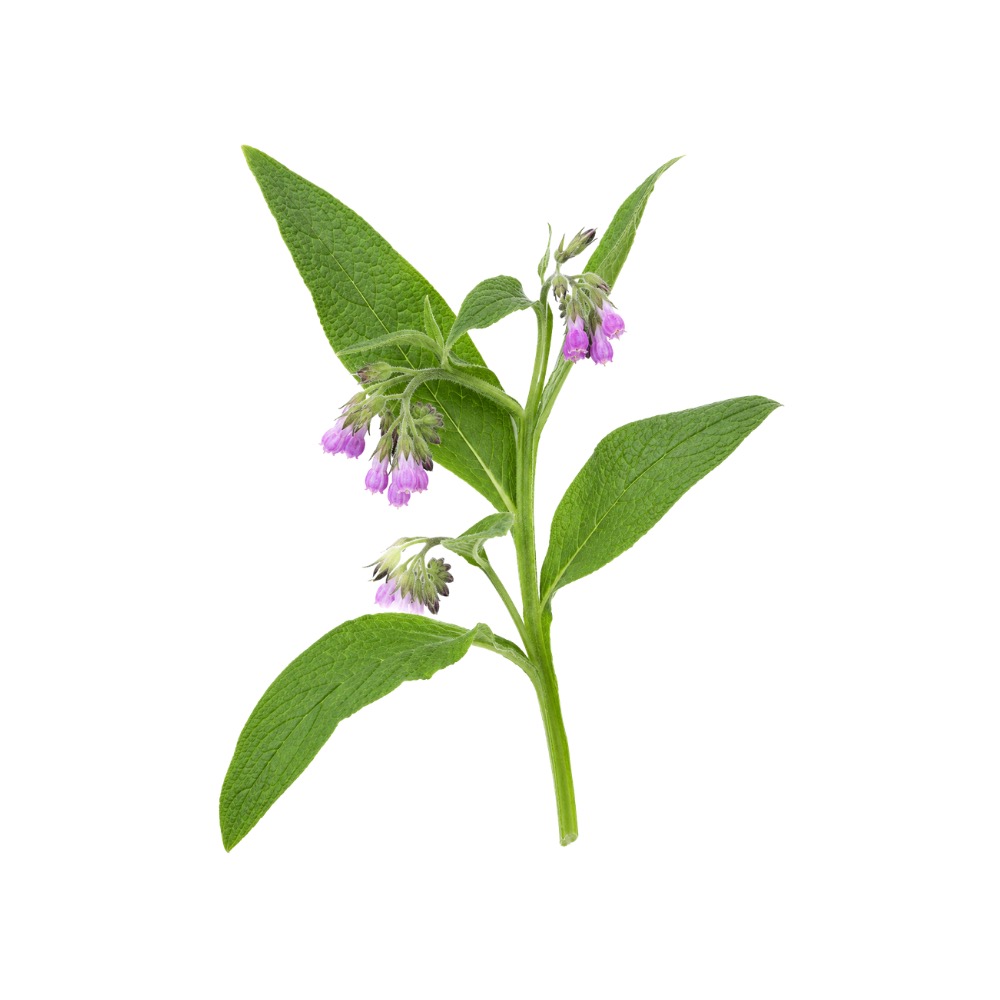
Intermedine is a naturally occurring retronecine-type dehydropyrrolizidine alkaloid (7-hydroxy c9-monoester), found in Comfrey, Boneset and 2 other sources. It is flagged as toxic.
Concentration
Content by Source
Concentrations not reported. No percent-dry-weight or mg/g figures have been published for this compound in its source plants.
Intermedine at a Glance
Intermedine is a pyrrolizidine alkaloid of comfrey, boneset and other Boraginaceae, and the C-2′ epimer of lycopsamine. The two are the same molecule with one stereocentre inverted, they occur together in essentially every plant that makes either, and separating them analytically is difficult enough to have its own literature 5,
They share a toxicological identity as well. Both are 7-hydroxy C9-monoesters — the least genotoxic structural class of pyrrolizidine alkaloid, roughly a thousandfold below the macrocyclic diesters in the same assay 7Reference 7AnimalStructure/activity relationships of the genotoxic potencies of sixteen pyrrolizidine alkaloids assayed for the induction of somatic mutation and recombination in wing cells of Drosophila melanogaster — animal modelView study → — and both carry through into alcoholic tinctures, hot-water infusions and decoctions rather than staying behind in the plant 4Reference 4Potentially toxic pyrrolizidine alkaloids in Eupatorium perfoliatum and three related speciesView study →.
What intermedine has that its epimer does not is a worked-out cellular mechanism of its own. It is the alkaloid the hepatotoxicity work chose to characterise in detail, on the grounds that it is the main pyrrolizidine alkaloid of comfrey 1Reference 1In vitroHepatotoxicity of pyrrolizidine alkaloid compound intermedine: comparison with other pyrrolizidine alkaloids and its toxicological mechanism — in vitroView study →.
Bioactivation, adduct formation, the exposure limits and the plant biosynthesis are common to both epimers, and are set out under lycopsamine. What follows is what belongs to intermedine alone.
One Stereocentre Apart
Intermedine and lycopsamine differ at a single carbon. Both esterify retronecine — the 1,2-unsaturated necine base that makes hepatic activation possible — with a hydroxylated seven-carbon necic acid, and the epimeric relationship sits in that acid half of the molecule.
The consequence is analytical rather than biological. Because the two co-elute on ordinary reversed-phase systems, quantifying either one in a plant or a product requires methods built for the job: boronate-phase chromatography on soda glass beads or quartz sand can separate them at gram scale, and NMR comparison against the heliotridine-based analogues echinatine and rinderine was needed to confirm which was which 5Reference 5Semi-automated separation of the epimeric dehydropyrrolizidine alkaloids lycopsamine and intermedine: preparation of their N-oxides and NMR comparison with diastereoisomeric rinderine and echinatineView study →; chiral stationary phases have been developed for the same separation from Symphytum × uplandicum 6Reference 6Chiral stationary phases for separation of intermedine and lycopsamine enantiomers from Symphytum uplandicumView study →. Their N-oxides must be reduced before either can be measured accurately, since both plants store most of their alkaloid in that form 5Reference 5Semi-automated separation of the epimeric dehydropyrrolizidine alkaloids lycopsamine and intermedine: preparation of their N-oxides and NMR comparison with diastereoisomeric rinderine and echinatineView study →.
This is not pedantry. A survey that reports “lycopsamine” without separating the epimers is reporting the pair, and a supplier’s certificate of analysis is only as good as the method behind it. Where structure-activity work has compared stereoisomeric pyrrolizidine alkaloids directly, potencies were mostly similar but sometimes clearly unequal 7Reference 7AnimalStructure/activity relationships of the genotoxic potencies of sixteen pyrrolizidine alkaloids assayed for the induction of somatic mutation and recombination in wing cells of Drosophila melanogaster — animal modelView study → — so the epimers cannot simply be assumed interchangeable either.
What It's Used For
Intermedine has no therapeutic pharmacology. What it has is the most detailed hepatocyte mechanism of any alkaloid in its structural class.
The one place intermedine leads rather than follows. Chosen for study as the main pyrrolizidine alkaloid of comfrey, it was tested against primary mouse hepatocytes, human hepatocytes, mouse hepatoma-22 and HepG2 cells using cell-counting, colony-formation, wound-healing and live/dead imaging assays. All the retronecine-type alkaloids tested were cytotoxic and induced dose-dependent apoptosis; for intermedine the route was traced to excessive ROS generation, loss of mitochondrial membrane potential, cytochrome c release and caspase-3 activation, with mitochondrial structural destruction visible on electron microscopy — the first direct demonstration of mitochondria-mediated apoptosis for this alkaloid 1Reference 1In vitroHepatotoxicity of pyrrolizidine alkaloid compound intermedine: comparison with other pyrrolizidine alkaloids and its toxicological mechanism — in vitroView study →.
A follow-up on the intermedine–lycopsamine mixture found the same apoptotic outcome plus a distinct endoplasmic-reticulum arm: raised intracellular Ca²⁺ driving the PERK/eIF2α/ATF4/CHOP pathway 2Reference 2In vitroCombined hepatotoxicity and toxicity mechanism of intermedine and lycopsamine — in vitroView study →.
At the whole-animal level, chicks dosed orally for ten days with 0.04–1.04 mmol/kg body weight per day of purified intermedine, purified lycopsamine or a reduced crude comfrey alkaloid extract showed the extract to be the most toxic on clinical signs, serum biochemistry and histopathology — attributed to greater-than-additive interaction between alkaloids and/or to more potent acetylated derivatives in the extract 3Reference 3AnimalThe comparative toxicity of a reduced, crude comfrey (Symphytum officinale) alkaloid extract and the pure, comfrey-derived pyrrolizidine alkaloids, lycopsamine and intermedine in chicks (Gallus gallus domesticus) — animal modelView study →.
Gap: cell lines and one avian study. No rodent repeat-dose study and no human pharmacokinetics exist for intermedine specifically; the human hepatotoxicity record — sinusoidal obstruction syndrome, over 8,000 reported cases — belongs to the class, and its best-documented cases involve macrocyclic diesters 10Reference 10Case reportHepatic sinusoidal obstruction syndrome associated with consumption of Gynura segetum — case reportView study →.
Assessed at class level, as for every pyrrolizidine alkaloid. The structural position is favourable: 7-hydroxy C9-monoesters were the least genotoxic of sixteen PAs in the Drosophila wing-spot test after oral dosing, with potencies across the set spanning about three orders of magnitude, and with the ranking correlating with rodent hepatotoxicity 7Reference 7AnimalStructure/activity relationships of the genotoxic potencies of sixteen pyrrolizidine alkaloids assayed for the induction of somatic mutation and recombination in wing cells of Drosophila melanogaster — animal modelView study →.
The regulatory position is unfavourable and deliberately so: 1,2-unsaturated PAs are treated as a group of genotoxic carcinogens, with a chronic assessment built on a BMDL₁₀ of 237 µg/kg body weight per day derived from riddelliine, and herbal teas and teas identified as the main dietary source 8Reference 8ReviewRisk assessment of pyrrolizidine alkaloids in food of plant and animal origin — reviewView study →.
A proposed acute reference dose of 1 µg/kg body weight per day covers short-term intake 9Reference 9ReviewRisk assessment of short-term intake of pyrrolizidine alkaloids in food: derivation of an acute reference dose — reviewView study →.
Gap: no carcinogenicity bioassay has been run on intermedine itself. The group assumption is protective rather than measured, and the structure-activity data suggest its own potency is well below the alkaloids the group limit was derived from — a discrepancy that has not been resolved with compound-specific data.
None. Intermedine has never been proposed as a therapeutic agent. Its only appearance in a medicinal-chemistry context is as a synthetic target alongside indicine and lycopsamine in 1985, when indicine N-oxide was under investigation as an antitumour agent — a programme the class’s hepatotoxicity ended 12Reference 12Synthesis of pyrrolizidine alkaloids indicine, intermedine, lycopsamine, and analogues and their N-oxidesView study →.
Gap: an absence rather than a gap. This molecule is studied as a contaminant.
Mechanisms
| Target / pathway | Effect | Relevant to |
|---|---|---|
| Hepatic cytochrome P450 | oxidation of the 1,2-unsaturated retronecine base to a reactive pyrrolic ester | bioactivation — shared with the whole class |
| Mitochondria | ROS burst, membrane-potential collapse, cytochrome c release, caspase-3 activation, structural damage | hepatocyte apoptosis |
| ER stress: PERK/eIF2α/ATF4/CHOP with raised cytosolic Ca²⁺ | second apoptotic arm, demonstrated for the intermedine–lycopsamine mixture | hepatocyte apoptosis |
| Cellular proteins and DNA | pyrrole adduct formation; the basis of the blood pyrrole-protein adduct biomarker | hepatotoxicitygenotoxicityexposure assessment |
| Gut reduction of the N-oxide | restores the free base from the stored oxidised form | why N-oxides count toward the total |
Pharmacokinetics
No compound-specific human data exist. Intermedine follows the class pattern set out on the lycopsamine page: well absorbed orally, poorly absorbed dermally, activated in the liver by cytochrome P450 to a reactive dehydropyrrolizidine ester that alkylates proteins and DNA. The resulting pyrrole-protein adducts are the practical biomarker of exposure and injury, since the parent alkaloid clears long before the damage is apparent 11Reference 11ReviewBlood pyrrole-protein adducts — a biomarker of pyrrolizidine alkaloid-induced liver injury in humans — reviewView study →. The N-oxide, which is how most of the alkaloid is stored in the plant, is reduced back to the free base in the gut and must therefore be counted in any exposure estimate 5Reference 5Semi-automated separation of the epimeric dehydropyrrolizidine alkaloids lycopsamine and intermedine: preparation of their N-oxides and NMR comparison with diastereoisomeric rinderine and echinatineView study →.
Clinical Trials
None, and none appropriate.
| Completed | Planned | Terminated | Preclinical |
|---|---|---|---|
| None | — | — | Hepatocyte mechanism (two studies), oral chick toxicity, analytical method development |
Last checked: September 2026.
Isolate vs. Plant Studies
The direct comparison exists and points the uncomfortable way. Purified intermedine, purified lycopsamine and a crude comfrey alkaloid extract were given to the same animals at the same molar doses, and the crude extract was the more toxic of the three 3Reference 3AnimalThe comparative toxicity of a reduced, crude comfrey (Symphytum officinale) alkaloid extract and the pure, comfrey-derived pyrrolizidine alkaloids, lycopsamine and intermedine in chicks (Gallus gallus domesticus) — animal modelView study →. Whether that reflects interaction between the co-occurring alkaloids or the greater potency of the acetylated derivatives the extract contains, the conclusion for a reader is the same: a figure derived from the pure compound is a floor, not a ceiling.
Everything else is isolate work in cells 1,
Prevalence in Nature
Intermedine travels with lycopsamine, and where one is quantified the other usually is too.
| Source | Part | What is reported |
|---|---|---|
| Comfrey (Symphytum officinale) | root ≫ leaf | Described as the main pyrrolizidine alkaloid of the plant; largely present as the N-oxide 1, |
| Boneset (Eupatorium perfoliatum) | aerial parts | Co-dominant with lycopsamine in 49 of 49 samples; total alkaloids 0.0002–0.07% w/w, concentrating into tinctures and infusions 4Reference 4Potentially toxic pyrrolizidine alkaloids in Eupatorium perfoliatum and three related speciesView study → |
| Russian comfrey (Symphytum × uplandicum) | aerial parts and root | Both epimers present; the plant used to develop the chiral separation 6Reference 6Chiral stationary phases for separation of intermedine and lycopsamine enantiomers from Symphytum uplandicumView study → |
| Blue heliotrope (Heliotropium amplexicaule) | whole plant | 7% of the reduced pyrrolizidine alkaloid content, behind indicine at 84% 13Reference 13Pyrrolizidine alkaloids of blue heliotrope (Heliotropium amplexicaule) and their presence in Australian honeyView study → |
| Honey | — | Honeys with profiles matching blue heliotrope carried up to 2.0 µg total PAs per gram 13Reference 13Pyrrolizidine alkaloids of blue heliotrope (Heliotropium amplexicaule) and their presence in Australian honeyView study → |
The honey route deserves a note of its own, because it is the exposure nobody chooses. Bees foraging on pyrrolizidine-bearing weeds carry the alkaloids into the hive, and single-origin honey from a region where such a weed is naturalised can reach measurable levels 13Reference 13Pyrrolizidine alkaloids of blue heliotrope (Heliotropium amplexicaule) and their presence in Australian honeyView study →. Herbal teas and teas remain the larger dietary source in European exposure assessments 8Reference 8ReviewRisk assessment of pyrrolizidine alkaloids in food of plant and animal origin — reviewView study →, and PA-producing weeds harvested alongside a tea crop are a documented contamination route.
Discovery & Synthesis
Intermedine belongs to the same mid-twentieth-century Boraginaceae alkaloid chemistry as its epimer, and the indexed record does not resolve a single first-isolation paper for it. Its first synthesis is documented: Zalkow’s group prepared intermedine along with lycopsamine, indicine and their N-oxides in 1985 12Reference 12Synthesis of pyrrolizidine alkaloids indicine, intermedine, lycopsamine, and analogues and their N-oxidesView study →.
There is no commercial production. Intermedine is prepared as an analytical standard, extracted from comfrey root and separated from lycopsamine by boronate or chiral chromatography 5,
Patents: not yet researched.
Toxicity & Safety
Intermedine is a hepatotoxin of a genotoxic class, at the low-potency end of that class, present at low percentages, and best understood through the preparation it arrives in rather than through the plant it came from.
- Not for internal use. Oral exposure is the route that causes hepatic sinusoidal obstruction syndrome, and PA-bearing herbs are restricted to external use in most jurisdictions 8,
10Reference 8ReviewRisk assessment of pyrrolizidine alkaloids in food of plant and animal origin — reviewView study →Reference 10Case reportHepatic sinusoidal obstruction syndrome associated with consumption of Gynura segetum — case reportView study → . - Tinctures and infusions carry it. Alcoholic tinctures, hot-water infusions and decoctions of boneset all showed high alkaloid concentrations 4Reference 4Potentially toxic pyrrolizidine alkaloids in Eupatorium perfoliatum and three related speciesView study →.
- Its structural class is the least genotoxic of the pyrrolizidines, by roughly three orders of magnitude against the macrocyclic diesters 7Reference 7AnimalStructure/activity relationships of the genotoxic potencies of sixteen pyrrolizidine alkaloids assayed for the induction of somatic mutation and recombination in wing cells of Drosophila melanogaster — animal modelView study →.
- The plant tested more toxic than the pure alkaloid. Purified-compound figures are a floor 3Reference 3AnimalThe comparative toxicity of a reduced, crude comfrey (Symphytum officinale) alkaloid extract and the pure, comfrey-derived pyrrolizidine alkaloids, lycopsamine and intermedine in chicks (Gallus gallus domesticus) — animal modelView study →.
- What to look for is the label. Leaf rather than root, a named species, a stated alkaloid content or a PA-reduced cultivar, and a method that separates the epimers rather than lumping them 4,
5Reference 4Potentially toxic pyrrolizidine alkaloids in Eupatorium perfoliatum and three related speciesView study →Reference 5Semi-automated separation of the epimeric dehydropyrrolizidine alkaloids lycopsamine and intermedine: preparation of their N-oxides and NMR comparison with diastereoisomeric rinderine and echinatineView study → .
Full Safety & Interactions Detail
Mechanism of injury. Intermedine requires hepatic cytochrome P450 activation of its 1,2-unsaturated retronecine base to a reactive pyrrolic ester, which alkylates proteins and DNA 10,
The clinical syndrome. Acute poisoning presents as hepatic sinusoidal obstruction syndrome — hepatomegaly, ascites, abdominal pain, and in severe cases liver failure. More than 8,000 cases have been reported worldwide, overwhelmingly from PA-containing herbal preparations and contaminated grain, and the best-documented series involve macrocyclic-diester alkaloids rather than these monoesters 10Reference 10Case reportHepatic sinusoidal obstruction syndrome associated with consumption of Gynura segetum — case reportView study →.
Exposure figures. Chronic assessment uses a BMDL₁₀ of 237 µg/kg bw/day; herbal teas and teas are the main dietary source, and food supplements based on PA-producing plants can contribute enough for both acute and chronic concern 8Reference 8ReviewRisk assessment of pyrrolizidine alkaloids in food of plant and animal origin — reviewView study →. A proposed acute reference dose of 1 µg/kg bw/day applies to short-term intake 9Reference 9ReviewRisk assessment of short-term intake of pyrrolizidine alkaloids in food: derivation of an acute reference dose — reviewView study →.
Populations. Pregnancy, lactation and infancy carry the greatest class-level concern, since pyrrolizidine alkaloids cross the placenta and appear in milk 8Reference 8ReviewRisk assessment of pyrrolizidine alkaloids in food of plant and animal origin — reviewView study →. Existing liver disease and concurrent hepatotoxic medication reduce the margin.
Interactions. None characterised for intermedine. At class level, induction of the activating CYP enzymes is the plausible direction of concern, and PA exposure adds to any other hepatic burden.
What is not known. No carcinogenicity bioassay, no repeat-dose rodent study and no human pharmacokinetic dataset exists for intermedine specifically. It is assessed as part of the 1,2-unsaturated pyrrolizidine alkaloid group.
Dosage
There is no dose. The numbers below are exposure limits and measured contents.
| Context | Basis | Figure |
|---|---|---|
| Acute reference dose (PAs as a class) | sub-acute rat study plus human case reports | 1 µg/kg body weight/day 9Reference 9ReviewRisk assessment of short-term intake of pyrrolizidine alkaloids in food: derivation of an acute reference dose — reviewView study → |
| Chronic assessment (PAs as a class) | model averaging on riddelliine | BMDL₁₀ 237 µg/kg body weight/day 8Reference 8ReviewRisk assessment of pyrrolizidine alkaloids in food of plant and animal origin — reviewView study → |
| Boneset dry herb | 49-sample survey | Total dehydropyrrolizidine alkaloids 0.0002–0.07% w/w 4Reference 4Potentially toxic pyrrolizidine alkaloids in Eupatorium perfoliatum and three related speciesView study → |
| Blue heliotrope honey | regional-market survey | Up to 2.0 µg total PAs per gram of honey 13Reference 13Pyrrolizidine alkaloids of blue heliotrope (Heliotropium amplexicaule) and their presence in Australian honeyView study → |
| Chick oral toxicity study | purified alkaloid, 10 days | 0.04–1.04 mmol/kg body weight/day 3Reference 3AnimalThe comparative toxicity of a reduced, crude comfrey (Symphytum officinale) alkaloid extract and the pure, comfrey-derived pyrrolizidine alkaloids, lycopsamine and intermedine in chicks (Gallus gallus domesticus) — animal modelView study → |
These are exposure limits and research figures, not a personal recommendation.
References
- Wang Z, Han H, Wang C, et al. (2021). Hepatotoxicity of pyrrolizidine alkaloid compound intermedine: comparison with other pyrrolizidine alkaloids and its toxicological mechanism — in vitro. Toxins (Basel). https://pubmed.ncbi.nlm.nih.gov/34941687/
- Wang Z, Qiao L, Zheng Q, et al. (2022). Combined hepatotoxicity and toxicity mechanism of intermedine and lycopsamine — in vitro. Toxins (Basel). https://pubmed.ncbi.nlm.nih.gov/36136571/
- Brown AW, Stegelmeier BL, Colegate SM, et al. (2016). The comparative toxicity of a reduced, crude comfrey (Symphytum officinale) alkaloid extract and the pure, comfrey-derived pyrrolizidine alkaloids, lycopsamine and intermedine in chicks (Gallus gallus domesticus) — animal model. J Appl Toxicol. https://pubmed.ncbi.nlm.nih.gov/26177929/
- Colegate SM, Upton R, Gardner DR, et al. (2018). Potentially toxic pyrrolizidine alkaloids in Eupatorium perfoliatum and three related species. Implications for herbal use as boneset. Phytochem Anal. https://pubmed.ncbi.nlm.nih.gov/29968391/
- Colegate SM, Gardner DR, Betz JM, et al. (2014). Semi-automated separation of the epimeric dehydropyrrolizidine alkaloids lycopsamine and intermedine: preparation of their N-oxides and NMR comparison with diastereoisomeric rinderine and echinatine. Phytochem Anal. https://pubmed.ncbi.nlm.nih.gov/24816769/
- Pawar RS, Grundel E, Mazzola E, et al. (2010). Chiral stationary phases for separation of intermedine and lycopsamine enantiomers from Symphytum uplandicum. J Sep Sci. https://pubmed.ncbi.nlm.nih.gov/20029846/
- Frei H, Lüthy J, Brauchli J, et al. (1992). Structure/activity relationships of the genotoxic potencies of sixteen pyrrolizidine alkaloids assayed for the induction of somatic mutation and recombination in wing cells of Drosophila melanogaster — animal model. Chem Biol Interact. https://pubmed.ncbi.nlm.nih.gov/1643665/
- Dusemund B, Nowak N, Sommerfeld C, et al. (2018). Risk assessment of pyrrolizidine alkaloids in food of plant and animal origin — review. Food Chem Toxicol. https://pubmed.ncbi.nlm.nih.gov/29524571/
- Eckert E, Lepper H, Hintzsche H (2023). Risk assessment of short-term intake of pyrrolizidine alkaloids in food: derivation of an acute reference dose — review. Food Addit Contam Part A Chem Anal Control Expo Risk Assess. https://pubmed.ncbi.nlm.nih.gov/36794362/
- Lin G, Wang JY, Li N, et al. (2011). Hepatic sinusoidal obstruction syndrome associated with consumption of Gynura segetum — case report. J Hepatol. https://pubmed.ncbi.nlm.nih.gov/21146894/
- Ruan J, Gao H, Li N, et al. (2015). Blood pyrrole-protein adducts — a biomarker of pyrrolizidine alkaloid-induced liver injury in humans — review. J Environ Sci Health C Environ Carcinog Ecotoxicol Rev. https://pubmed.ncbi.nlm.nih.gov/26398275/
- Zalkow LH, Glinski JA, Gelbaum LT, et al. (1985). Synthesis of pyrrolizidine alkaloids indicine, intermedine, lycopsamine, and analogues and their N-oxides. Potential antitumor agents. J Med Chem. https://pubmed.ncbi.nlm.nih.gov/4009589/
- Carpinelli de Jesus M, Hungerford NL, Carter SJ, et al. (2019). Pyrrolizidine alkaloids of blue heliotrope (Heliotropium amplexicaule) and their presence in Australian honey. J Agric Food Chem. https://pubmed.ncbi.nlm.nih.gov/31145604/
- Mei N, Guo L, Fu PP, et al. (2010). Metabolism, genotoxicity, and carcinogenicity of comfrey — review. J Toxicol Environ Health B Crit Rev. https://pubmed.ncbi.nlm.nih.gov/21170807/



