
Compound Monograph
Lycopsamine
Lycopsamine is a 7-hydroxy monoester pyrrolizidine alkaloid — the major PA of comfrey and, with its epimer intermedine, the alkaloid found in all 49 boneset samples ever surveyed. It is the least genotoxic structural class of PA, and it still carries through into tinctures and tea.

Sources · 5
Where Does It Come From?
Lycopsamine is a naturally occurring retronecine-type dehydropyrrolizidine alkaloid (7-hydroxy c9-monoester), found in Comfrey, Boneset and 3 other sources. It is flagged as toxic.
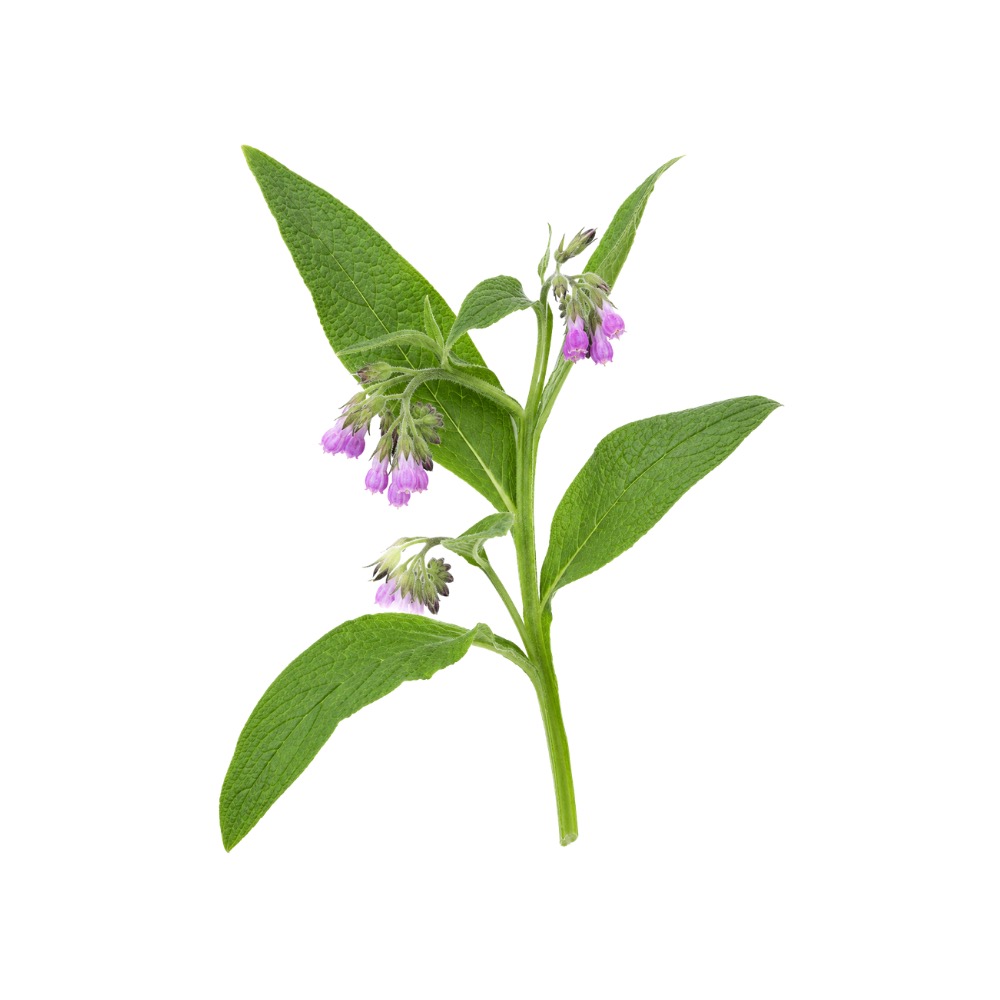
Concentration
Content by Source
Concentrations not reported. No percent-dry-weight or mg/g figures have been published for this compound in its source plants.
Lycopsamine at a Glance
Lycopsamine is a pyrrolizidine alkaloid of the Boraginaceae and of a few Asteraceae, and the major alkaloid of both comfrey and boneset. It almost always travels with its mirror-image partner intermedine, plus the N-oxides and acetyl derivatives of both.
Two facts about it point in opposite directions, and both are true at once.
The first is that it is a 7-hydroxy C9-monoester — structurally the least genotoxic kind of pyrrolizidine alkaloid. In a sixteen-alkaloid comparison the macrocyclic diesters were the most genotoxic and the 7-hydroxy monoesters the least, across a range spanning roughly three orders of magnitude 6Reference 6AnimalStructure/activity relationships of the genotoxic potencies of sixteen pyrrolizidine alkaloids assayed for the induction of somatic mutation and recombination in wing cells of Drosophila melanogaster — animal modelView study →. Lycopsamine is not senecionine, and the two should not be assigned the same weight.
The second is that it is there, reliably, in the finished preparation. A survey of Eupatorium perfoliatum found dehydropyrrolizidine alkaloids in 49 of 49 samples, dominated by lycopsamine and intermedine, and found high concentrations in the alcoholic tinctures, hot-water infusions and decoctions made from them 1Reference 1Potentially toxic pyrrolizidine alkaloids in Eupatorium perfoliatum and three related speciesView study →. Hot water does not leave these alkaloids behind.
So this is a preparation and sourcing question rather than a plant-avoidance one. It is also the reason comfrey settled into topical use: two independent Franz-cell studies of human skin found lycopsamine barely crosses it 12,
What a 7-Hydroxy Monoester Means
Pyrrolizidine alkaloids are not one thing, and the differences are large enough to matter practically.
All the toxic ones share a 1,2-unsaturated necine base — the double bond that makes hepatic activation possible. Beyond that they divide by how the base is esterified: macrocyclic diesters (senecionine, senkirkine, riddelliine) have two ester links closing a ring; open diesters have two separate ester groups; monoesters like lycopsamine have one.
Genotoxic potency tracks that structure directly. Assayed in the Drosophila wing-spot test after oral dosing, all sixteen alkaloids tested were genotoxic except one C9-monoester — but potency varied across about a thousandfold, with macrocyclic diesters at the top, 7-hydroxy C9-monoesters at the bottom, and open diesters in between. More hydroxyl groups meant less potency, and the ranking correlated well with hepatotoxicity in rodents 6Reference 6AnimalStructure/activity relationships of the genotoxic potencies of sixteen pyrrolizidine alkaloids assayed for the induction of somatic mutation and recombination in wing cells of Drosophila melanogaster — animal modelView study →.
Lycopsamine sits at the low end of that scale. That is a real, quantitative mitigation — and it is not an exemption, because regulators assess 1,2-unsaturated PAs as a group, on the reasoning that the activation chemistry is shared and mixed exposure is the norm 7Reference 7ReviewRisk assessment of pyrrolizidine alkaloids in food of plant and animal origin — reviewView study →.
Two more structural points are worth carrying:
- The N-oxides are not a separate problem, and not a safe form either. Comfrey and boneset both carry lycopsamine largely as its N-oxide, which is reduced back to the free base in the gut. Analytical methods that measure only free bases under-report the real alkaloid load, which is why modern surveys quantify both 5Reference 5Semi-automated separation of the epimeric dehydropyrrolizidine alkaloids lycopsamine and intermedine: preparation of their N-oxides and NMR comparison with diastereoisomeric rinderine and echinatineView study →.
- Lycopsamine and intermedine are epimers, differing at a single stereocentre in the necic-acid half of the molecule. They are hard enough to separate that dedicated chromatographic methods exist for it 5,
21Reference 5Semi-automated separation of the epimeric dehydropyrrolizidine alkaloids lycopsamine and intermedine: preparation of their N-oxides and NMR comparison with diastereoisomeric rinderine and echinatineView study →Reference 21Chiral stationary phases for separation of intermedine and lycopsamine enantiomers from Symphytum uplandicumView study → , and they occur together in essentially every plant that makes either.
The Boneset Finding
Boneset (Eupatorium perfoliatum) is a widely sold traditional fever herb, and the alkaloid question in it was long treated as unsettled — earlier reports were, as the survey that closed it put it, scant and contradictory.
The survey settled it. Forty-nine samples of E. perfoliatum, plus three related species, analysed by HPLC-ESI-MS/MS against standards: all 49 contained dehydropyrrolizidine alkaloids, at 0.0002–0.07% w/w, the majority dominated by lycopsamine and intermedine, their N-oxides and their acetylated derivatives. Alcoholic tinctures, hot-water infusions and decoctions all showed high alkaloid concentrations 1Reference 1Potentially toxic pyrrolizidine alkaloids in Eupatorium perfoliatum and three related speciesView study →.
The 350-fold spread across samples is itself informative. The authors attribute it to high- and low-alkaloid chemotypes, to hybridisation with related Eupatorium species, or to contamination of some samples with those species — an inference supported by finding both retronecine- and heliotridine-based alkaloids co-occurring, which a single clean species should not produce 1Reference 1Potentially toxic pyrrolizidine alkaloids in Eupatorium perfoliatum and three related speciesView study →. Lycopsamine is also documented in Eupatorium maculatum, one of the plants boneset can be confused with or grow beside 20Reference 20Lycopsamine and cumambrin B from Eupatorium maculatumView study →.
That is a sourcing problem with a sourcing shape: identity, provenance and testing, not a verdict on the species. What it rules out is treating a boneset tea as alkaloid-free because it is water-based.
What It's Used For
Lycopsamine has no therapeutic pharmacology. Its literature is toxicology, analytical chemistry, and one route-of-exposure question that turned out to have a reassuring answer.
Male California White chicks were dosed orally for ten days with 0.04–1.04 mmol/kg body weight per day of purified lycopsamine, purified intermedine, or a reduced crude comfrey alkaloid extract, then assessed on clinical signs, serum biochemistry and histopathology. The crude extract was more toxic than either pure alkaloid — a result the authors read as a greater-than-additive interaction between the alkaloids and/or greater potency of the acetylated derivatives present in the extract, and as a warning that safety limits derived from purified compounds may underestimate the toxicity of the plant 2Reference 2AnimalThe comparative toxicity of a reduced, crude comfrey (Symphytum officinale) alkaloid extract and the pure, comfrey-derived pyrrolizidine alkaloids, lycopsamine and intermedine in chicks (Gallus gallus domesticus) — animal modelView study →.
In human hepatocytes, lycopsamine and intermedine together inhibited proliferation, colony formation and migration and induced apoptosis dose-dependently, through a burst of reactive oxygen species, mitochondrial apoptosis, raised intracellular Ca²⁺ and endoplasmic-reticulum stress signalling through PERK/eIF2α/ATF4/CHOP 3Reference 3In vitroCombined hepatotoxicity and toxicity mechanism of intermedine and lycopsamine — in vitroView study →. Work on intermedine alone traced the mitochondrial arm in detail — membrane-potential collapse, cytochrome c release, caspase-3 activation, and mitochondrial structural damage visible on electron microscopy 4Reference 4In vitroHepatotoxicity of pyrrolizidine alkaloid compound intermedine: comparison with other pyrrolizidine alkaloids and its toxicological mechanism — in vitroView study →.
Gap: the whole-animal study is in chicks, and the mechanistic work is in cell lines. The human hepatotoxicity record — hepatic sinusoidal obstruction syndrome, with more than 8,000 PA-induced cases reported worldwide — is a class record, and the best-documented poisonings involve macrocyclic diesters rather than these monoesters 9Reference 9Case reportHepatic sinusoidal obstruction syndrome associated with consumption of Gynura segetum — case reportView study →.
This is handled at class level everywhere, and the honest position is that no compound-specific carcinogenicity bioassay exists for lycopsamine. What exists is a structure-activity framework in which it sits at the bottom: in the Drosophila wing-spot test, 7-hydroxy C9-monoesters were the least genotoxic of sixteen PAs assayed, roughly a thousandfold below the macrocyclic diesters, with the ranking correlating with rodent hepatotoxicity and, as far as the data go, with mammalian carcinogenicity 6Reference 6AnimalStructure/activity relationships of the genotoxic potencies of sixteen pyrrolizidine alkaloids assayed for the induction of somatic mutation and recombination in wing cells of Drosophila melanogaster — animal modelView study →.
Regulators nonetheless treat 1,2-unsaturated PAs as one group. The European chronic assessment works from a BMDL₁₀ of 237 µg/kg body weight per day, derived by model averaging on riddelliine data, and identifies herbal teas and teas as the main dietary source; food supplements based on PA-producing plants can contribute enough to raise both acute and chronic concern 7Reference 7ReviewRisk assessment of pyrrolizidine alkaloids in food of plant and animal origin — reviewView study →.
A proposed acute reference dose of 1 µg/kg body weight per day has since been derived from a sub-acute rat study and supported by human poisoning case reports 8Reference 8ReviewRisk assessment of short-term intake of pyrrolizidine alkaloids in food: derivation of an acute reference dose — reviewView study →.
Comfrey’s own genotoxicity and carcinogenicity have been reviewed as a whole-herb question 22Reference 22ReviewMetabolism, genotoxicity, and carcinogenicity of comfrey — reviewView study →.
Gap: the class assumption is conservative by design and is not a measurement of lycopsamine’s own potency, which the structure-activity data suggest is much lower. Neither position is available as a licence — the group approach is what regulators actually apply.
The finding that decides how comfrey is used, and it is a clean one, reached twice independently. In vertical Franz diffusion cells, lycopsamine from a Symphytum ointment penetrated a synthetic membrane at 0.11–0.72% over 24 hours and human epidermis at only 0.04–0.22% 12Reference 12In vitroPenetration of lycopsamine from a comfrey ointment through human epidermis — in vitroView study →.
A separate group, spiking a comfrey cream and applying it to abdominal skin from human donors, found no detectable lycopsamine within the skin in five of six cells and only 0.6 ± 0.4% of the applied dose in the receptor fluid; their worst-case calculation, which assumed limit-of-detection quantities where nothing was measurable, still came out at 4.9% 13Reference 13In vitroSafety of medicinal comfrey cream preparations (Symphytum officinale s.l.): the pyrrolizidine alkaloid lycopsamine is poorly absorbed through human skin — in vitroView study →.
Both groups drew the same conclusion: regulatory limits that apply the oral permitted daily exposure to topical products overestimate the risk, because oral absorption of PAs is good and dermal absorption is not 12,
Gap: ex-vivo skin models, not in-vivo human pharmacokinetics, and neither addresses damaged or inflamed skin — the state comfrey is most often applied to.
There is none. A 2020 paper reporting that lycopsamine inhibits lung-cancer cell proliferation was retracted in 2021 and is not treated as evidence here. Nothing else in the literature proposes a use for the isolated molecule; its close relative indicine N-oxide was investigated as an antitumour agent decades ago and abandoned on hepatotoxicity 18Reference 18Synthesis of pyrrolizidine alkaloids indicine, intermedine, lycopsamine, and analogues and their N-oxidesView study →.
Gap: not a gap so much as an absence — this molecule is studied as a contaminant, and rightly.
Mechanisms
| Target / pathway | Effect | Relevant to |
|---|---|---|
| Hepatic cytochrome P450 | oxidation of the 1,2-unsaturated necine base to a reactive dehydropyrrolizidine (pyrrolic) ester | bioactivation — the step everything else depends on |
| Cellular proteins and DNA | pyrrole adduct formation; the basis of the blood pyrrole-protein adduct biomarker | hepatotoxicitygenotoxicitydiagnosis |
| Hepatic sinusoidal endothelium | injury → sinusoidal obstruction syndrome (veno-occlusive disease) | the characteristic clinical syndrome of the class |
| Mitochondria | membrane-potential loss, cytochrome c release, caspase-3 activation, structural damage | hepatocyte apoptosis |
| ER stress: PERK/eIF2α/ATF4/CHOP | apoptosis pathway triggered by the intermedine–lycopsamine combination, with raised intracellular Ca²⁺ | hepatocyte apoptosis |
| Gut reduction of the N-oxide | converts the stored N-oxide back to the free base, restoring bioavailability | why N-oxides are counted in the total |
Pharmacokinetics
The load-bearing point is a route asymmetry: pyrrolizidine alkaloids are well absorbed from the gastrointestinal tract and poorly absorbed through skin 12,
Orally, lycopsamine reaches the liver, where cytochrome P450 oxidation of the 1,2-unsaturated necine base generates a reactive dehydropyrrolizidine ester. That electrophile is what does the damage: it alkylates proteins and DNA, and the resulting pyrrole-protein adducts are stable enough to serve as a biomarker of exposure and injury 10Reference 10ReviewBlood pyrrole-protein adducts — a biomarker of pyrrolizidine alkaloid-induced liver injury in humans — reviewView study →. The adducts have been detected in the blood of a patient with PA-induced sinusoidal obstruction syndrome 9Reference 9Case reportHepatic sinusoidal obstruction syndrome associated with consumption of Gynura segetum — case reportView study →, and pyrrole-haemoglobin adducts have since been developed into a more practical clinical marker with a longer window 11Reference 11Clinical trialClinical application of pyrrole-hemoglobin adducts as a biomarker of pyrrolizidine alkaloid exposure in humans — in patientsView study →. Adduct formation is the reason exposure is cumulative in a way blood alkaloid levels do not show.
No compound-specific human half-life, bioavailability or clearance figure exists for lycopsamine.
Clinical Trials
None, and none appropriate. The human data are poisoning case series, biomarker development and regulatory exposure assessment 7,
| Completed | Planned | Terminated | Preclinical |
|---|---|---|---|
| None(human data are case reports, biomarker and exposure assessment) | — | — | Chick oral toxicity, hepatocyte mechanism, human-skin permeation |
Last checked: September 2026.
Isolate vs. Plant Studies
Unusually, the isolate-versus-plant comparison here was run directly — and the plant won, in the wrong direction.
Purified lycopsamine, purified intermedine and a crude comfrey alkaloid extract were dosed side by side in the same animals at the same molar doses. The crude extract was the more toxic 2Reference 2AnimalThe comparative toxicity of a reduced, crude comfrey (Symphytum officinale) alkaloid extract and the pure, comfrey-derived pyrrolizidine alkaloids, lycopsamine and intermedine in chicks (Gallus gallus domesticus) — animal modelView study →. Two explanations are offered and neither is comforting: the alkaloids may interact more than additively, or the acetylated derivatives present in the plant but absent from the purified standards may be more potent. Either way, the practical conclusion the authors drew stands — safety recommendations built on purified compounds can underestimate what the plant does.
This inverts the usual caveat. On most compound pages the warning is that an isolate result may overstate what a plant delivers; here, the isolate understates it.
Its Role in Plants
Pyrrolizidine alkaloids are anti-herbivore defence chemistry, and they carry one of the best-told evolutionary stories in plant metabolism. The pathway’s first committed enzyme, homospermidine synthase, arose by gene duplication from deoxyhypusine synthase — an enzyme of primary metabolism that activates the translation factor eIF5A — and retained all its ancestor’s catalytic properties except the ability to bind the eIF5A precursor 14Reference 14In vitroHomospermidine synthase, the first pathway-specific enzyme of pyrrolizidine alkaloid biosynthesis, evolved from deoxyhypusine synthase — in vitro enzymologyView study →. A housekeeping enzyme was recruited, almost unchanged, into making a toxin.
Comfrey turns out to run the pathway twice over: two different homospermidine oxidases operate in different organs of Symphytum officinale, which is part of why root and leaf differ so much in alkaloid content 15Reference 15In vitroSeeing double: two different homospermidine oxidases are involved in pyrrolizidine alkaloid biosynthesis in different organs of comfrey (Symphytum officinale) — in vitro enzymologyView study →. That organ difference is not incidental — it is the reason comfrey root carries far more alkaloid than leaf, and the reason leaf-based preparations and low-PA cultivars are a coherent strategy rather than wishful thinking. Silencing homospermidine synthase by RNAi in comfrey hairy roots cut alkaloid levels directly, demonstrating the pathway is the right lever 16Reference 16In vitroReduction of pyrrolizidine alkaloid levels in comfrey (Symphytum officinale) hairy roots by RNAi silencing of homospermidine synthase — in vitroView study →. PA biosynthesis, distribution and occurrence across crop plants have been reviewed in full 19Reference 19ReviewPyrrolizidine alkaloids: biosynthesis, biological activities and occurrence in crop plants — reviewView study →.
Prevalence in Nature
Lycopsamine is a Boraginaceae signature that also appears in parts of the Asteraceae. Within a plant it is almost never alone: it co-occurs with intermedine, with both N-oxides, with the acetyl derivatives, and in comfrey with echimidine and symphytine as well.
| Source | Part | What is reported |
|---|---|---|
| Comfrey (Symphytum officinale) | root ≫ leaf | A major PA; largely present as the N-oxide; content varies strongly with species, chemotype and provenance 15, |
| Boneset (Eupatorium perfoliatum) | aerial parts | Dominant PA with intermedine in 49/49 samples; total PAs 0.0002–0.07% w/w 1Reference 1Potentially toxic pyrrolizidine alkaloids in Eupatorium perfoliatum and three related speciesView study → |
| Russian comfrey (Symphytum × uplandicum) | aerial parts and root | Intermedine and lycopsamine both present; the species used in several comfrey trials 21Reference 21Chiral stationary phases for separation of intermedine and lycopsamine enantiomers from Symphytum uplandicumView study → |
| Spotted Joe Pye weed (Eupatorium maculatum) | aerial parts | Lycopsamine isolated alongside cumambrin B 20Reference 20Lycopsamine and cumambrin B from Eupatorium maculatumView study → |
| Honey | — | PAs from bee forage on heliotrope and related Boraginaceae carry into honey 19Reference 19ReviewPyrrolizidine alkaloids: biosynthesis, biological activities and occurrence in crop plants — reviewView study → |
Two secondary routes matter for exposure and are worth knowing about. Honey picks up PAs when bees forage on PA-bearing plants. And tea and herbal tea can be contaminated by PA-producing weeds harvested alongside the crop — a documented contamination route, and the one that makes herbal infusions the largest dietary PA source in European assessments 7,
Discovery & Synthesis
Lycopsamine belongs to the mid-twentieth-century Boraginaceae alkaloid chemistry that mapped the pyrrolizidines, and it takes its name from Lycopsis, a borage genus. The indexed literature does not resolve a single first-isolation paper, so no date is asserted here.
Its first synthesis is documented: Zalkow’s group synthesised indicine, intermedine, lycopsamine and their analogues and N-oxides in 1985, work motivated by interest in indicine N-oxide as a potential antitumour agent 18Reference 18Synthesis of pyrrolizidine alkaloids indicine, intermedine, lycopsamine, and analogues and their N-oxidesView study →. That interest did not survive the class’s hepatotoxicity.
There is no commercial production. Lycopsamine is prepared as an analytical standard — extracted from comfrey root, enriched by liquid-liquid partitioning, reduced from the N-oxide and separated from intermedine by boronate chromatography, at gram scale 5Reference 5Semi-automated separation of the epimeric dehydropyrrolizidine alkaloids lycopsamine and intermedine: preparation of their N-oxides and NMR comparison with diastereoisomeric rinderine and echinatineView study →. The pharmaceutical interest in the molecule now runs the other way: removing it, whether by selecting low-PA comfrey cultivars, using leaf rather than root, or silencing the biosynthetic pathway outright 16Reference 16In vitroReduction of pyrrolizidine alkaloid levels in comfrey (Symphytum officinale) hairy roots by RNAi silencing of homospermidine synthase — in vitroView study →.
Patents: not yet researched.
Toxicity & Safety
Lycopsamine is a hepatotoxin of a genotoxic class. It is also the least potent structural type within that class, present at low percentages, and nearly unabsorbed through skin. All four things are true at once, and the practical guidance follows from the combination rather than from any one of them.
- Not for internal use. Oral pyrrolizidine alkaloid exposure is the route that causes hepatic sinusoidal obstruction syndrome; PA-bearing herbs are restricted to external use by regulators in most jurisdictions for exactly this reason 7,
9Reference 7ReviewRisk assessment of pyrrolizidine alkaloids in food of plant and animal origin — reviewView study →Reference 9Case reportHepatic sinusoidal obstruction syndrome associated with consumption of Gynura segetum — case reportView study → . - Hot water does not remove it. Boneset infusions, decoctions and tinctures all carried high alkaloid concentrations in the one survey that tested them 1Reference 1Potentially toxic pyrrolizidine alkaloids in Eupatorium perfoliatum and three related speciesView study →.
- Topical exposure is a different question. Two human-skin studies put penetration at a fraction of one percent of the applied dose 12,
13Reference 12In vitroPenetration of lycopsamine from a comfrey ointment through human epidermis — in vitroView study →Reference 13In vitroSafety of medicinal comfrey cream preparations (Symphytum officinale s.l.): the pyrrolizidine alkaloid lycopsamine is poorly absorbed through human skin — in vitroView study → . - Structure matters, and this is the low end. 7-Hydroxy monoesters are roughly a thousandfold less genotoxic than the macrocyclic diesters in the same assay 6Reference 6AnimalStructure/activity relationships of the genotoxic potencies of sixteen pyrrolizidine alkaloids assayed for the induction of somatic mutation and recombination in wing cells of Drosophila melanogaster — animal modelView study →.
- What to look for is the label. Leaf rather than root, a named species rather than “comfrey”, a stated PA content or PA-reduced cultivar, and a supplier who tests. The plant is variable; the testing is what makes it knowable 1,
15Reference 1Potentially toxic pyrrolizidine alkaloids in Eupatorium perfoliatum and three related speciesView study →Reference 15In vitroSeeing double: two different homospermidine oxidases are involved in pyrrolizidine alkaloid biosynthesis in different organs of comfrey (Symphytum officinale) — in vitro enzymologyView study → .
Full Safety & Interactions Detail
The syndrome. Acute pyrrolizidine alkaloid poisoning presents as hepatic sinusoidal obstruction syndrome (historically veno-occlusive disease) — hepatomegaly, ascites, abdominal pain, and in severe cases liver failure and death. More than 8,000 cases have been reported worldwide, most from PA-containing herbal preparations and contaminated grain 9Reference 9Case reportHepatic sinusoidal obstruction syndrome associated with consumption of Gynura segetum — case reportView study →. Chronic low-level exposure is assessed separately, on genotoxic-carcinogen grounds 7Reference 7ReviewRisk assessment of pyrrolizidine alkaloids in food of plant and animal origin — reviewView study →.
The activation step. Toxicity requires the 1,2-unsaturated necine base and hepatic cytochrome P450 oxidation to a reactive dehydropyrrolizidine ester, which alkylates proteins and DNA 9,
Exposure figures. The European chronic assessment uses a BMDL₁₀ of 237 µg/kg bw/day from riddelliine and identifies teas and herbal infusions as the main dietary source; supplements based on PA plants can contribute enough for both acute and chronic concern, while oil-based preparations of the same plants have been described as PA-free 7Reference 7ReviewRisk assessment of pyrrolizidine alkaloids in food of plant and animal origin — reviewView study →. A proposed acute reference dose of 1 µg/kg bw/day covers short-term intake 8Reference 8ReviewRisk assessment of short-term intake of pyrrolizidine alkaloids in food: derivation of an acute reference dose — reviewView study →. Against those numbers, boneset at 0.0002–0.07% w/w with alkaloids concentrating into the tincture is a real exposure, not a theoretical one 1Reference 1Potentially toxic pyrrolizidine alkaloids in Eupatorium perfoliatum and three related speciesView study →.
Populations. Pregnancy, lactation and infancy carry the greatest concern for the class — PAs cross the placenta and appear in breast milk, and infant cases of veno-occlusive disease following maternal or direct herbal-tea exposure are documented in the class literature 7Reference 7ReviewRisk assessment of pyrrolizidine alkaloids in food of plant and animal origin — reviewView study →. Anyone with existing liver disease, and anyone taking hepatotoxic medication, has less margin.
Interactions. Nothing specific has been characterised for lycopsamine. At class level, anything that induces the CYP enzymes performing the activation step could plausibly increase toxicity, and PA exposure adds to any other hepatic burden. No transporter or enzyme-specific interaction study exists for this molecule.
Reproductive note. Pyrrolizidine alkaloids as a class are assessed as reproductive and developmental hazards, with transfer to the fetus and into milk documented 7Reference 7ReviewRisk assessment of pyrrolizidine alkaloids in food of plant and animal origin — reviewView study →. No reproductive-toxicity study exists for isolated lycopsamine.
What is not known. No compound-specific carcinogenicity bioassay, repeat-dose rodent study or human pharmacokinetic dataset has been published for lycopsamine. Its risk is assessed as part of the 1,2-unsaturated PA group.
Dosage
There is no dose. The numbers that exist are limits and contents — what is present, and how much is considered tolerable.
| Context | Basis | Figure |
|---|---|---|
| Acute reference dose (PAs as a class) | sub-acute rat study, supported by human case reports | 1 µg/kg body weight/day 8Reference 8ReviewRisk assessment of short-term intake of pyrrolizidine alkaloids in food: derivation of an acute reference dose — reviewView study → |
| Chronic assessment (PAs as a class) | model averaging on riddelliine | BMDL₁₀ 237 µg/kg body weight/day 7Reference 7ReviewRisk assessment of pyrrolizidine alkaloids in food of plant and animal origin — reviewView study → |
| Boneset dry herb | 49-sample survey | Total dehydropyrrolizidine alkaloids 0.0002–0.07% w/w, concentrating into tinctures and infusions 1Reference 1Potentially toxic pyrrolizidine alkaloids in Eupatorium perfoliatum and three related speciesView study → |
| Human skin penetration | Franz diffusion cells, comfrey preparations | 0.04–0.22% and ~0.6% of applied dose 12, |
| Chick oral toxicity study | purified alkaloid, 10 days | 0.04–1.04 mmol/kg body weight/day 2Reference 2AnimalThe comparative toxicity of a reduced, crude comfrey (Symphytum officinale) alkaloid extract and the pure, comfrey-derived pyrrolizidine alkaloids, lycopsamine and intermedine in chicks (Gallus gallus domesticus) — animal modelView study → |
These are exposure limits and research figures, not a personal recommendation, and no intake of lycopsamine is being suggested.
References
- Colegate SM, Upton R, Gardner DR, et al. (2018). Potentially toxic pyrrolizidine alkaloids in Eupatorium perfoliatum and three related species. Implications for herbal use as boneset. Phytochem Anal. https://pubmed.ncbi.nlm.nih.gov/29968391/
- Brown AW, Stegelmeier BL, Colegate SM, et al. (2016). The comparative toxicity of a reduced, crude comfrey (Symphytum officinale) alkaloid extract and the pure, comfrey-derived pyrrolizidine alkaloids, lycopsamine and intermedine in chicks (Gallus gallus domesticus) — animal model. J Appl Toxicol. https://pubmed.ncbi.nlm.nih.gov/26177929/
- Wang Z, Qiao L, Zheng Q, et al. (2022). Combined hepatotoxicity and toxicity mechanism of intermedine and lycopsamine — in vitro. Toxins (Basel). https://pubmed.ncbi.nlm.nih.gov/36136571/
- Wang Z, Han H, Wang C, et al. (2021). Hepatotoxicity of pyrrolizidine alkaloid compound intermedine: comparison with other pyrrolizidine alkaloids and its toxicological mechanism — in vitro. Toxins (Basel). https://pubmed.ncbi.nlm.nih.gov/34941687/
- Colegate SM, Gardner DR, Betz JM, et al. (2014). Semi-automated separation of the epimeric dehydropyrrolizidine alkaloids lycopsamine and intermedine: preparation of their N-oxides and NMR comparison with diastereoisomeric rinderine and echinatine. Phytochem Anal. https://pubmed.ncbi.nlm.nih.gov/24816769/
- Frei H, Lüthy J, Brauchli J, et al. (1992). Structure/activity relationships of the genotoxic potencies of sixteen pyrrolizidine alkaloids assayed for the induction of somatic mutation and recombination in wing cells of Drosophila melanogaster — animal model. Chem Biol Interact. https://pubmed.ncbi.nlm.nih.gov/1643665/
- Dusemund B, Nowak N, Sommerfeld C, et al. (2018). Risk assessment of pyrrolizidine alkaloids in food of plant and animal origin — review. Food Chem Toxicol. https://pubmed.ncbi.nlm.nih.gov/29524571/
- Eckert E, Lepper H, Hintzsche H (2023). Risk assessment of short-term intake of pyrrolizidine alkaloids in food: derivation of an acute reference dose — review. Food Addit Contam Part A Chem Anal Control Expo Risk Assess. https://pubmed.ncbi.nlm.nih.gov/36794362/
- Lin G, Wang JY, Li N, et al. (2011). Hepatic sinusoidal obstruction syndrome associated with consumption of Gynura segetum — case report. J Hepatol. https://pubmed.ncbi.nlm.nih.gov/21146894/
- Ruan J, Gao H, Li N, et al. (2015). Blood pyrrole-protein adducts — a biomarker of pyrrolizidine alkaloid-induced liver injury in humans — review. J Environ Sci Health C Environ Carcinog Ecotoxicol Rev. https://pubmed.ncbi.nlm.nih.gov/26398275/
- Ma J, Zhang W, He Y, et al. (2021). Clinical application of pyrrole-hemoglobin adducts as a biomarker of pyrrolizidine alkaloid exposure in humans — in patients. Arch Toxicol. https://pubmed.ncbi.nlm.nih.gov/33210216/
- Jedlinszki N, Balázs B, Csányi E, et al. (2017). Penetration of lycopsamine from a comfrey ointment through human epidermis — in vitro. Regul Toxicol Pharmacol. https://pubmed.ncbi.nlm.nih.gov/27840092/
- Kuchta K, Schmidt M (2020). Safety of medicinal comfrey cream preparations (Symphytum officinale s.l.): the pyrrolizidine alkaloid lycopsamine is poorly absorbed through human skin — in vitro. Regul Toxicol Pharmacol. https://pubmed.ncbi.nlm.nih.gov/32941922/
- Ober D, Hartmann T (1999). Homospermidine synthase, the first pathway-specific enzyme of pyrrolizidine alkaloid biosynthesis, evolved from deoxyhypusine synthase — in vitro enzymology. Proc Natl Acad Sci U S A. https://pubmed.ncbi.nlm.nih.gov/10611289/
- Zakaria MM, Kruse LH, Engelhardt A, et al. (2024). Seeing double: two different homospermidine oxidases are involved in pyrrolizidine alkaloid biosynthesis in different organs of comfrey (Symphytum officinale) — in vitro enzymology. Plant J. https://pubmed.ncbi.nlm.nih.gov/38815125/
- Kruse LH, Stegemann T, Jensen-Kroll J, et al. (2019). Reduction of pyrrolizidine alkaloid levels in comfrey (Symphytum officinale) hairy roots by RNAi silencing of homospermidine synthase — in vitro. Planta Med. https://pubmed.ncbi.nlm.nih.gov/31450245/
- Jiao W, Shen T, Wang L, et al. (2022). Source and route of pyrrolizidine alkaloid contamination in tea samples. J Vis Exp. https://pubmed.ncbi.nlm.nih.gov/36282693/
- Zalkow LH, Glinski JA, Gelbaum LT, et al. (1985). Synthesis of pyrrolizidine alkaloids indicine, intermedine, lycopsamine, and analogues and their N-oxides. Potential antitumor agents. J Med Chem. https://pubmed.ncbi.nlm.nih.gov/4009589/
- Schramm S, Köhler N, Rozhon W (2019). Pyrrolizidine alkaloids: biosynthesis, biological activities and occurrence in crop plants — review. Molecules. https://pubmed.ncbi.nlm.nih.gov/30704105/
- Wiedenfeld H, Hösch G, Roeder E, et al. (2009). Lycopsamine and cumambrin B from Eupatorium maculatum. Pharmazie. https://pubmed.ncbi.nlm.nih.gov/19618682/
- Pawar RS, Grundel E, Mazzola E, et al. (2010). Chiral stationary phases for separation of intermedine and lycopsamine enantiomers from Symphytum uplandicum. J Sep Sci. https://pubmed.ncbi.nlm.nih.gov/20029846/
- Mei N, Guo L, Fu PP, et al. (2010). Metabolism, genotoxicity, and carcinogenicity of comfrey — review. J Toxicol Environ Health B Crit Rev. https://pubmed.ncbi.nlm.nih.gov/21170807/



