
Compound Monograph
Isoandrographolide
Isoandrographolide is a minor ent-labdane diterpenoid of andrographis (Andrographis paniculata) — a cyclized structural relative of the herb's marker compound andrographolide. Its evidence is limited to a small set of mouse anti-fibrotic studies; there is no human data.

Sources · 1
Where Does It Come From?
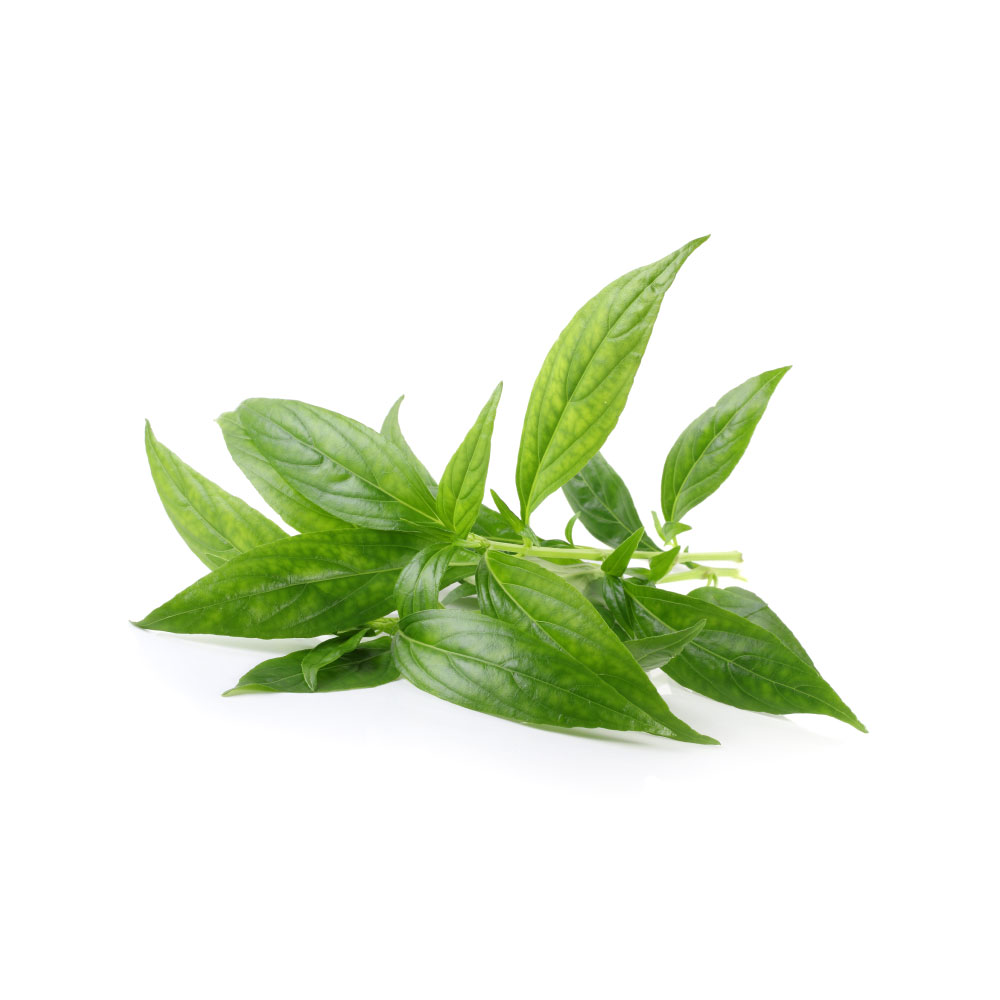
Isoandrographolide is a naturally occurring ent-labdane diterpenoid (andrographolide series), found in Andrographis. It is well tolerated orally (low toxicity).
Concentration
Content by Source
Concentrations not reported. No percent-dry-weight or mg/g figures have been published for this compound in its source plants.
Isoandrographolide at a Glance
Isoandrographolide is a minor ent-labdane diterpenoid of andrographis (Andrographis paniculata), the “king of bitters” whose activity is usually attributed to its marker compound andrographolide. Structurally, isoandrographolide is a cyclized relative of andrographolide — the same diterpene skeleton with an additional ether ring — and it sits alongside neoandrographolide, 14-deoxyandrographolide and dozens of other labdanes in the plant’s diterpenoid fraction 1,
It is not a headline constituent, and its evidence base is correspondingly thin. What exists is a small cluster of preclinical mouse studies showing an anti-fibrotic, anti-inflammatory effect in the kidney and lung, with lower cellular toxicity than andrographolide itself in the comparisons that were run 4,
A Minor Andrographis Diterpenoid
Andrographis produces a large family of ent-labdane diterpenoid lactones — one phytochemical review of the plant catalogues more than fifty 3Reference 3ReviewAndrographis paniculata (Burm. f.) Wall. ex Nees: a review of ethnobotany, phytochemistry, and pharmacologyView study →. Andrographolide dominates that family both by abundance (roughly 0.3–5% of the dry aerial parts, richest in the leaf) and by research attention; it is the compound extracts are standardised to. Isoandrographolide is one of the minor members of the same series.
Chemically it is best understood as a transformation product of andrographolide: the two share the labdane carbon skeleton, but in isoandrographolide the side chain has cyclized to form an additional oxygen-containing (ether/tetrahydrofuran) ring. It was long known from the laboratory rearrangement of andrographolide before being isolated from the plant, and its structure and stereochemistry — the (8R,12S) configuration — were settled by X-ray crystallography in 2006, in the same report that described the new diterpenoid andropanolide 1Reference 1Andropanolide and isoandrographolide, minor diterpenoids from Andrographis paniculata: structure and X-ray crystallographic analysisView study →. It should not be confused with andrographolide (the parent) or neoandrographolide (a glucoside of a related deoxy-diterpenoid) — these are distinct molecules with their own, larger evidence bases.
The genuine isolate signal for isoandrographolide is narrow but real: in two independent mouse studies it behaved as an anti-fibrotic, anti-inflammatory agent, suppressing the NLRP3 inflammasome in silica-induced lung disease and the AKT/GSK-3β/β-catenin axis in obstruction-induced kidney disease 4,
What It's Used For
The isoandrographolide literature is small enough to summarise directly: two preclinical fibrosis studies, both using the purified molecule in mice, from groups working on andrographis diterpenoids 4,
Support is an experimental score — weighted by study type (human > animal > in vitro) and volume. A beta, not a validated metric. Every row here rests on isolated-molecule mouse studies only, so the ceiling is low.
In a silica-induced silicosis model in mice, isoandrographolide (the isolated (8R,12S) compound) alleviated lung injury and reduced the inflammatory response, epithelial–mesenchymal transition and collagen deposition, and lowered expression of the NLRP3 inflammasome proteins NLRP3, ASC and caspase-1 4Reference 4AnimalIsoandrographolide inhibits NLRP3 inflammasome activation and attenuates silicosis in miceView study →. This is an isolated-molecule result in an animal model of an occupational lung disease — not whole-plant andrographis, and not a human finding.
Gap: a single preclinical study; no dose-ranging in humans, no lung-function endpoints, and no confirmation the same effect survives the molecule’s (uncharacterised) oral absorption 4Reference 4AnimalIsoandrographolide inhibits NLRP3 inflammasome activation and attenuates silicosis in miceView study →.
In a unilateral ureteral obstruction model in mice — and in TGF-β1- or TNF-α-stimulated human kidney tubular (HK-2) cells — isoandrographolide reduced tubulointerstitial fibrosis and kidney injury by inhibiting tubular epithelial–mesenchymal transition and inflammation, an effect the authors tied to suppression of the AKT/GSK-3β/β-catenin signalling pathway 5Reference 5AnimalIsoandrographolide from Andrographis paniculata ameliorates tubulointerstitial fibrosis in ureteral obstruction-induced mice, associated with negatively regulating AKT/GSK-3β/β-cat signaling pathwayView study →. Notably, in the same work the isomer showed lower cellular toxicity than andrographolide, which the authors framed as an advantage for a candidate anti-fibrotic lead 5Reference 5AnimalIsoandrographolide from Andrographis paniculata ameliorates tubulointerstitial fibrosis in ureteral obstruction-induced mice, associated with negatively regulating AKT/GSK-3β/β-cat signaling pathwayView study →.
Gap: again a single isolate study (one animal model plus a cell line); “promising lead compound” is the authors’ framing, not a demonstrated therapy — there is no human anti-fibrotic evidence for isoandrographolide 5Reference 5AnimalIsoandrographolide from Andrographis paniculata ameliorates tubulointerstitial fibrosis in ureteral obstruction-induced mice, associated with negatively regulating AKT/GSK-3β/β-cat signaling pathwayView study →.
Mechanisms
| Target / pathway | Effect | Relevant to |
|---|---|---|
| NLRP3 inflammasome (NLRP3 / ASC / caspase-1) | suppressed → less inflammatory signalling | anti-fibrotic (lung / silicosis) |
| AKT / GSK-3β / β-catenin signalling | suppressed aberrant activation → inhibits tubular EMT | anti-fibrotic (kidney) |
| TGF-β1-driven epithelial–mesenchymal transition (EMT) | inhibited in both lung tissue and tubular cells | anti-fibrotic (both models) |
| Inflammatory cytokines & collagen deposition | reduced in fibrotic tissue | anti-fibrotic (both models) |
Both mechanistic stories come from the same two anti-fibrosis papers; they are consistent (an anti-inflammatory, anti-EMT profile) but rest on a very small body of isolated-molecule animal work.
Pharmacokinetics
No pharmacokinetic data exist for isoandrographolide specifically — its oral absorption, bioavailability, metabolism and half-life have not been characterised. The only relevant context is class-level: the parent compound andrographolide has poor/low oral bioavailability, a recurring limitation that tempers translation of its preclinical potency 2Reference 2Clinical trialAndrographolide: a review of its pharmacology, pharmacokinetics, toxicity and clinical trials and pharmaceutical researchesView study →. Whether isoandrographolide’s extra ether ring changes that is unknown. This gap matters — the mouse anti-fibrosis effects 4,
Clinical Trials
There are no clinical trials of isoandrographolide — completed, ongoing or planned. All evidence is preclinical.
| Completed | Planned | Terminated | Preclinical |
|---|---|---|---|
| — | — | — | Anti-fibrotic(lung, kidney), isolated-molecule mouse studies 4, |
Last checked: July 2026.
Major Natural Sources
Isoandrographolide is, on current evidence, an andrographis-specific minor diterpenoid. It has not been reported at meaningful levels elsewhere, and its concentration in the plant has not been quantified.
| Source (botanical) | Part | Level | Notes |
|---|---|---|---|
| Andrographis (Andrographis paniculata) | Aerial parts | Minor (not quantified) | A trace member of the diterpenoid fraction, far below andrographolide 1, |
Discovery & Synthesis
Isoandrographolide was known from chemistry before botany: it was first described as a cyclization/rearrangement product of andrographolide obtained under acid/base treatment in the laboratory. Its definitive structure and (8R,12S) stereochemistry were established by X-ray crystallographic analysis in 2006 by Pramanick and colleagues, who isolated it from Andrographis paniculata leaves alongside the then-new diterpenoid andropanolide 1Reference 1Andropanolide and isoandrographolide, minor diterpenoids from Andrographis paniculata: structure and X-ray crystallographic analysisView study →. It is thus best understood as a naturally occurring cyclized isomer of the plant’s marker diterpenoid rather than a separately biosynthesised headline compound.
There is no notable commercial production: isoandrographolide is prepared for research either by isolation from andrographis or by transformation of the far more abundant andrographolide, and it is sold only as a reference/research chemical.
Patents: not yet researched.
Toxicity & Safety
Isoandrographolide carries a low flag, but this reflects absence of characterised hazard rather than a clean safety dossier — the toxicology of the isolated molecule has not been studied in its own right. The one relevant datapoint is comparative: in the renal-fibrosis work, isoandrographolide showed lower cellular toxicity than andrographolide at active concentrations 5Reference 5AnimalIsoandrographolide from Andrographis paniculata ameliorates tubulointerstitial fibrosis in ureteral obstruction-induced mice, associated with negatively regulating AKT/GSK-3β/β-cat signaling pathwayView study →. That is reassuring in direction but is a single in-vitro/animal comparison, not a safety clearance.
- No specific toxicity signal reported, and lower cellular toxicity than andrographolide in the one paired comparison run 5Reference 5AnimalIsoandrographolide from Andrographis paniculata ameliorates tubulointerstitial fibrosis in ureteral obstruction-induced mice, associated with negatively regulating AKT/GSK-3β/β-cat signaling pathwayView study →.
- Human safety is unknown. There is no clinical, repeat-dose or reproductive-toxicity data for isoandrographolide; “low” here means uncharacterised, not proven safe.
- Do not infer safety (or activity) from andrographis or andrographolide. This is a distinct minor isomer with its own, near-absent evidence base; any use would be experimental.
Reproductive note (prose only). No reproductive or developmental-toxicity data exist for isolated isoandrographolide. Whether the andrographolide-class cautions apply to this isomer is unknown, and any pregnancy/lactation decision belongs to the herb or product page where intake is actually decided — not to this molecule page.
Dosage
There is no human dose for isoandrographolide. It is not used clinically and has no established intake. The only figures on record are experimental doses in mice from the two anti-fibrosis studies 4,
These are research observations, not a personal recommendation.
References
- Pramanick S, Banerjee S, Achari B, et al. (2006). Andropanolide and isoandrographolide, minor diterpenoids from Andrographis paniculata: structure and X-ray crystallographic analysis. Journal of Natural Products. https://pubmed.ncbi.nlm.nih.gov/16562845/
- Zeng B, Wei A, Zhou Q, et al. (2022). Andrographolide: a review of its pharmacology, pharmacokinetics, toxicity and clinical trials and pharmaceutical researches. Phytotherapy Research. https://pubmed.ncbi.nlm.nih.gov/34818697/
- Hossain MS, Urbi Z, Sule A, Rahman KM (2014). Andrographis paniculata (Burm. f.) Wall. ex Nees: a review of ethnobotany, phytochemistry, and pharmacology. The Scientific World Journal. https://pubmed.ncbi.nlm.nih.gov/25950015/
- Song Z, Wang L, Cao Y, et al. (2022). Isoandrographolide inhibits NLRP3 inflammasome activation and attenuates silicosis in mice. International Immunopharmacology. https://pubmed.ncbi.nlm.nih.gov/35063750/
- Guan Z, Wang Y, Xu H, et al. (2022). Isoandrographolide from Andrographis paniculata ameliorates tubulointerstitial fibrosis in ureteral obstruction-induced mice, associated with negatively regulating AKT/GSK-3β/β-cat signaling pathway. International Immunopharmacology. https://pubmed.ncbi.nlm.nih.gov/36067652/



