
Compound Monograph
Isoliquiritin
Isoliquiritin is a yellow chalcone glucoside of licorice root — the chalcone-glycoside isomer of the flavanone glycoside liquiritin. Its research profile is preclinical: an antidepressant and neuroprotective signal (co-studied with liquiritin), plus antioxidant, anti-inflammatory and some antitumour activity, all in the isolated molecule or licorice extract, with no human trials of the isolate.

Sources · 3
Where Does It Come From?
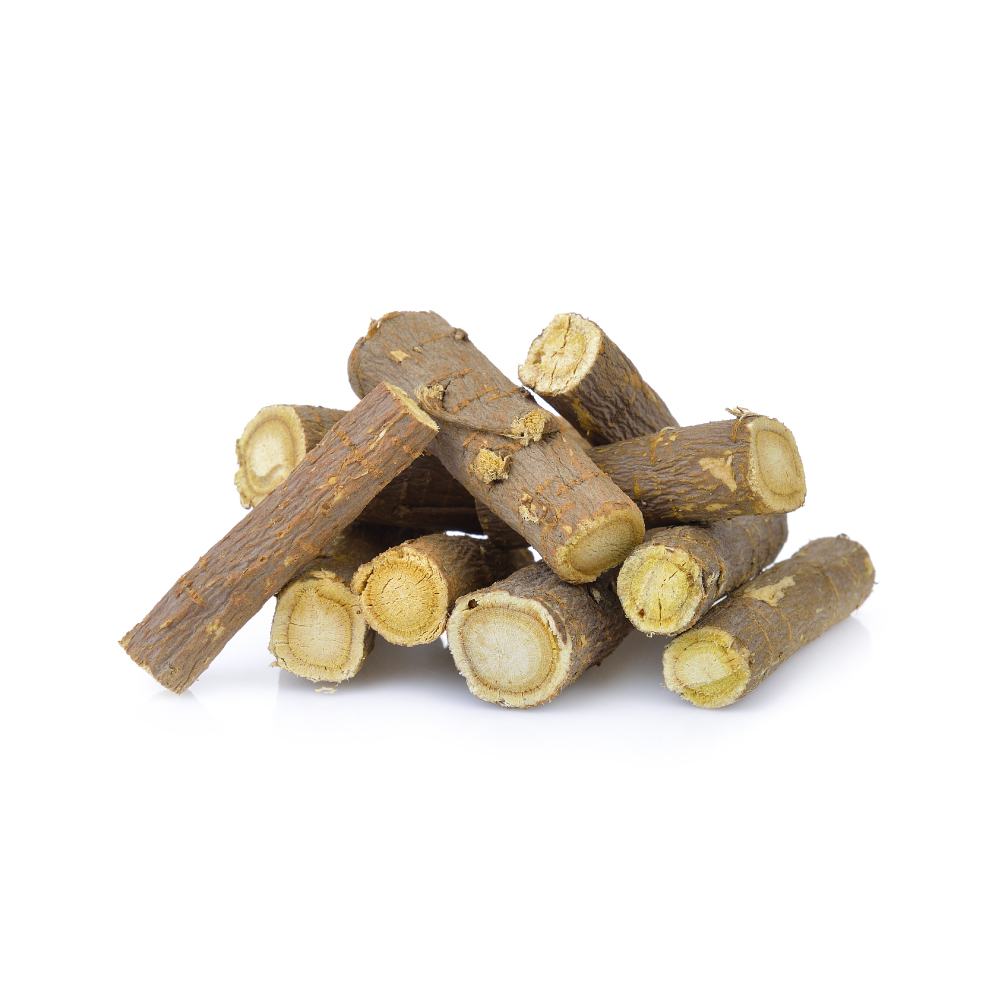
Isoliquiritin is a naturally occurring flavonoid (chalcone glycoside), found in Licorice, Chinese licorice and 1 other source. It is well tolerated orally (low toxicity).
Concentration
Content by Source
Concentrations not reported. No percent-dry-weight or mg/g figures have been published for this compound in its source plants.
Isoliquiritin at a Glance
Isoliquiritin is a chalcone glucoside — the glucoside of the chalcone isoliquiritigenin — found in the roots of licorice (Glycyrrhiza species). It is a minor member of the yellow-pigmented flavonoid fraction that gives licorice root its colour, and it is almost always studied alongside its structural partner liquiritin, the flavanone glucoside to which it is chemically related.
Its most developed research story is antidepressant and neuroprotective: isolated isoliquiritin reduces immobility in mouse behavioural despair tests and protects nerve-like cells from stress-induced death, effects tied to raised brain monoamines and to suppression of inflammatory cell-death pathways 1,
As a minor flavonoid of a widely consumed food and medicinal plant, isoliquiritin carries a low toxicity flag. The prominent safety cautions attached to licorice — pseudoaldosteronism and raised blood pressure — belong to a different constituent, the saponin glycyrrhizin, not to this chalcone.
Isoliquiritin, Liquiritin & the Chalcone–Flavanone Pair
The single most useful thing to hold onto about this molecule is that it is one half of an isomeric pair. Licorice makes two closely related flavonoid glucosides:
- Isoliquiritin — an open-chain chalcone glucoside (aglycone: isoliquiritigenin), yellow-pigmented.
- Liquiritin — the cyclised flavanone glucoside (aglycone: liquiritigenin), colourless.
Chalcones and flavanones are constitutional isomers interconverted by opening or closing the flavonoid C-ring — in the plant this is catalysed by chalcone isomerase, and it can also happen chemically. So isoliquiritigenin (chalcone) and liquiritigenin (flavanone) are two forms of the same carbon skeleton, and their glucosides, isoliquiritin and liquiritin, mirror that relationship 10Reference 10Phytochemistry, pharmacological activity, and potential health benefits of Glycyrrhiza glabraView study →. This is why the two compounds co-occur, are hard to separate cleanly in extracts, and are so often co-studied — the foundational antidepressant paper tested both together 2Reference 2AnimalAntidepressant-like effects of liquiritin and isoliquiritin from Glycyrrhiza uralensis in the forced swimming test and tail suspension test in miceView study →.
Three distinctions are worth keeping straight, because the literature blurs them:
- Isoliquiritin (this one) = the chalcone glucoside.
- Isoliquiritigenin = its chalcone aglycone (no sugar) — more lipophilic, generally more potent in vitro, and the likely active form after gut hydrolysis.
- Isoliquiritin apioside = a related chalcone apioside (a different sugar) studied separately, e.g. in molecular-docking antiviral work — not the same molecule as isoliquiritin 9Reference 9Potential leads from liquorice against SARS-CoV-2 main protease using molecular docking simulation studiesView study →.
What It's Used For
Isoliquiritin’s evidence base is preclinical and mechanism-rich, and it splits by application. The load-bearing caveat is the compound-page discipline: this is the isolated molecule in vitro and in rodents, with no human trials — and it is chemically entangled with liquiritin in every whole-licorice study.
Support is an experimental score — weighted by study type (human > animal > in vitro) and volume. A beta, not a validated metric. There are no human data on the isolate, so all scores stay modest by design.
The best-developed application, and it uses the isolated molecule. In the mouse forced-swim and tail-suspension tests, oral isoliquiritin (with liquiritin) reduced immobility at 10, 20 and 40 mg/kg without general stimulation, and raised serotonin and noradrenaline in the hippocampus, hypothalamus and cortex while slowing serotonin turnover 2Reference 2AnimalAntidepressant-like effects of liquiritin and isoliquiritin from Glycyrrhiza uralensis in the forced swimming test and tail suspension test in miceView study →.
A separate mechanistic study found isoliquiritin ameliorated depression in LPS and chronic-social-defeat models plus patient-serum-linked microglia by up-regulating miRNA-27a, which lowers SYK/NF-κB signalling and suppresses NLRP3-inflammasome pyroptosis 1Reference 1Isoliquiritin ameliorates depression by suppressing NLRP3 inflammasome-mediated pyroptosis via miRNA-27a/SYK/NF-κB axisView study →.
Underpinning both, isoliquiritin protected PC12 neuronal cells against corticosterone-induced apoptosis by cutting ROS, calcium overload and mitochondrial damage 3Reference 3Protective effect of isoliquiritin against corticosterone-induced neurotoxicity in PC12 cellsView study →.
Gap: all rodent/cell isolate work; no human antidepressant trial, and the mouse studies dose isoliquiritin together with liquiritin, so the two chalcone/flavanone partners are not fully disentangled 1,
A consistent isolate signal across several organ systems, always converging on NF-κB. In TNBS-induced ulcerative colitis in rats (and LPS-stimulated Caco-2 cells), isoliquiritin lowered IL-1β/IL-6/TNF-α and colon damage through a Caspase-3/HMGB1/TLR4 axis, quietening MyD88–NF-κB–MAPK signalling 4Reference 4AnimalIsoliquiritin ameliorates ulcerative colitis in rats through Caspase 3/HMGB1/TLR4 dependent signaling pathwayView study →.
In an atopic-dermatitis mouse model and mast cells it suppressed pro-inflammatory cytokines and immune-cell infiltration via CD177/JAK2/STAT while promoting apoptosis of activated cells 5Reference 5In vitroInhibitory effects of isoliquiritin on an atopic dermatitis model through the CD177/JAK2/STAT pathway in vitro and in vivoView study →.
And in cationic-BSA membranous glomerulonephritis in rats, the isolate was renoprotective through Nrf2 activation and NF-κB down-regulation 6Reference 6Renoprotective effects of isoliquiritin against cationic bovine serum albumin-induced membranous glomerulonephritisView study →.
Gap: three separate rodent isolate models with different readouts and no shared dose-response; none is human, and the shared “NF-κB down” theme is common to many flavonoids 4,
Isoliquiritin behaves as a cytoprotective antioxidant wherever it is tested. It raised SOD and GSH-Px and lowered MDA in a zebrafish photothrombotic ischaemic-stroke model, reducing telencephalon infarction and neurological deficit through multi-pathway (immune/apoptosis/necroptosis) regulation 7Reference 7Isoliquiritin exert protective effect on telencephalon infarction injury by regulating multi-pathways in zebrafish model of ischemic strokeView study →; it blunted ROS and mitochondrial apoptosis in corticosterone-stressed neurons 3Reference 3Protective effect of isoliquiritin against corticosterone-induced neurotoxicity in PC12 cellsView study →; and its renoprotection ran partly through the Nrf2 antioxidant programme 6Reference 6Renoprotective effects of isoliquiritin against cationic bovine serum albumin-induced membranous glomerulonephritisView study →.
Gap: in-vitro and non-mammalian/rodent models; antioxidant capacity is a near-universal flavonoid property and no human antioxidant outcome rests on isoliquiritin specifically 3,
The narrowest but most mechanistically specific signal. In triple-negative and ER-positive breast-cancer cells — including doxorubicin-resistant lines — and in nude-mouse xenografts, isoliquiritin reduced viability concentration- and time-dependently and re-sensitised resistant cells to doxorubicin by promoting ferroptosis: it raised Fe²⁺, ROS and MDA and lowered GSH, GPX4 and xCT, downstream of NF-κB inhibition 8Reference 8Isoliquiritin modulates ferroptosis via NF-κB signaling inhibition and alleviates doxorubicin resistance in breast cancerView study →.
Gap: a single in-vitro-plus-xenograft study; no other tumour type replicated for the isolate here, and no clinical data 8Reference 8Isoliquiritin modulates ferroptosis via NF-κB signaling inhibition and alleviates doxorubicin resistance in breast cancerView study →. (Related but distinct chalcones — isoliquiritin apioside and neoisoliquiritigenin — have their own anticancer reports and should not be merged in.)
The weakest, most provisional application. Molecular-docking screens of licorice flavonoids against the SARS-CoV-2 main protease (Mpro) flagged isoliquiritin apioside and glycyrrhizic acid among the better predicted binders 9Reference 9Potential leads from liquorice against SARS-CoV-2 main protease using molecular docking simulation studiesView study →. This is computational only, it is the apioside rather than isoliquiritin proper, and much of licorice’s antiviral reputation is carried by the unrelated saponin glycyrrhizin.
Gap: no wet-lab or animal antiviral confirmation for isoliquiritin the molecule; docking affinity is a prediction, not activity 9Reference 9Potential leads from liquorice against SARS-CoV-2 main protease using molecular docking simulation studiesView study →.
Mechanisms
| Target / pathway | Effect | Relevant to |
|---|---|---|
| NLRP3 inflammasome / pyroptosis (miRNA-27a → SYK → NF-κB) | ↑miRNA-27a, ↓SYK/NF-κB, ↓pyroptotic neuroinflammation | antidepressant / anti-inflammatory |
| Monoamines (5-HT, noradrenaline) | ↑hippocampal & cortical serotonin/noradrenaline, slowed 5-HT turnover | antidepressant |
| Nrf2 / antioxidant enzymes (SOD, GSH-Px) | Nrf2 activation; ↑SOD/GSH-Px, ↓MDA/ROS | antioxidant / cytoprotective |
| NF-κB inflammatory transcription | ↓NF-κB → ↓IL-1β/IL-6/TNF-α | anti-inflammatory (multi-organ) |
| TLR4 / HMGB1 / Caspase-3 (MyD88–MAPK) | dampened gut TLR4 signalling in colitis | anti-inflammatory (gut) |
| CD177 / JAK2 / STAT | ↓mast-cell cytokines; ↑apoptosis (BAX, cleaved caspase-3) | anti-inflammatory (skin) |
| Ferroptosis (GPX4 / xCT; Fe²⁺, ROS) via NF-κB | promotes ferroptosis; re-sensitises to doxorubicin | antitumour |
| Mitochondrial apoptosis / Ca²⁺ handling | prevents corticosterone-induced neuronal death | neuroprotection |
| SARS-CoV-2 Mpro (docking) | predicted binding (apioside form) — computational only | antiviral (in-silico) |
The recurring pair — Nrf2 up, NF-κB down — is the throughline that ties the antidepressant, anti-inflammatory, antioxidant and even the pro-ferroptotic anticancer findings together; the monoamine effect is the one mechanism specific to the mood story.
Pharmacokinetics
Isoliquiritin is a flavonoid glucoside, and that governs its pharmacokinetics. Like most polar glucosides it is poorly absorbed intact: LC-MS/MS and HPLC-MS/MS studies detect it in rat plasma only at low ng/mL concentrations after oral dosing of licorice-containing formulas 11,
Clinical Trials
There are no controlled human trials of isolated isoliquiritin. The human evidence that exists is for whole licorice or licorice-flavonoid extracts, within which isoliquiritin is one minor, co-eluting flavonoid — not an isolate result.
| Completed | Planned | Terminated | Preclinical |
|---|---|---|---|
| —(none on the isolate) | — | — | Antidepressant, anti-inflammatory, antioxidant, antitumour (cell + rodent/zebrafish) |
Last checked: July 2026.
Isolate vs. Plant Studies
Isoliquiritin sits at an unusually clean isolate end for its mechanistic work and an unusually murky one for anything human. The antidepressant, anti-inflammatory, antioxidant and antitumour studies almost all test the purified molecule in cells or rodents 1,
Prevalence in Nature
Isoliquiritin is a characteristic chalcone glucoside of the genus Glycyrrhiza, reported from G. glabra, G. uralensis (Chinese licorice) and G. inflata 10Reference 10Phytochemistry, pharmacological activity, and potential health benefits of Glycyrrhiza glabraView study →. It belongs to the root’s total-flavonoid fraction, roughly 1–1.5% of the dried root, and as a yellow chalcone it contributes to the pigment of licorice root; individual flavonoid levels vary with species and chemotype, provenance and extraction, the same variables that drive the rest of licorice’s chemistry. A reliable isolate-specific dry-weight figure for isoliquiritin is not well quantified in the accessible literature — it is consistently described as a minor constituent rather than a dominant one, and it is not established as occurring outside Glycyrrhiza 10Reference 10Phytochemistry, pharmacological activity, and potential health benefits of Glycyrrhiza glabraView study →.
Discovery & Synthesis
Isoliquiritin was characterised as the chalcone-glucoside counterpart of liquiritin among the principal flavonoids of licorice, the pair having been studied since the mid-twentieth century as the yellow (chalcone) and colourless (flavanone) forms of the same skeleton 10Reference 10Phytochemistry, pharmacological activity, and potential health benefits of Glycyrrhiza glabraView study →. It is obtained today chiefly by extraction and chromatographic isolation from licorice root for research use; a dedicated first total synthesis is not well documented, and the compound is not manufactured at scale — where a defined chalcone is wanted, the aglycone isoliquiritigenin is the more common synthetic target. Biosynthetically it arises on the flavonoid pathway, with chalcone isomerase governing the chalcone↔flavanone equilibrium that links it to liquiritin.
Patents: not yet researched.
Toxicity & Safety
Isoliquiritin carries a low toxicity flag: it is a minor flavonoid of licorice, a plant eaten and used medicinally for millennia, and the isolate has shown a cytoprotective rather than cytotoxic profile in normal cells across the studies above 3,
- A low-toxicity food-plant flavonoid. A minor constituent of licorice with a cytoprotective, antioxidant profile in normal cells; no isolate toxicity signal in the reviewed models 3,
6, .7Reference 3Protective effect of isoliquiritin against corticosterone-induced neurotoxicity in PC12 cellsView study →Reference 6Renoprotective effects of isoliquiritin against cationic bovine serum albumin-induced membranous glomerulonephritisView study →Reference 7Isoliquiritin exert protective effect on telencephalon infarction injury by regulating multi-pathways in zebrafish model of ischemic strokeView study → - Human data are absent. Every finding is in-vitro or rodent isolate work (or whole extract); there are no human trials of isoliquiritin, and its oral bioavailability as a glucoside is likely low 11,
12Reference 11AnimalSimultaneous quantification of multiple licorice flavonoids in rat plasmaView study →Reference 12AnimalSimultaneous quantification of catechin, epicatechin, liquiritin, isoliquiritin, and related compounds in rat plasma by HPLC-MS/MSView study → . - Do not inherit licorice’s marquee risk. Pseudoaldosteronism, potassium loss and raised blood pressure from heavy licorice use are caused by the saponin glycyrrhizin, not by this chalcone — but they still apply to whole-licorice intake.
- Interactions not characterised for the isolate. No CYP/transporter or drug-interaction dataset exists specifically for isoliquiritin; whole-licorice interaction cautions should be read at the herb level.
Reproductive and developmental data for the isolated molecule are not established; as a plant-constituent phytochemistry page this does not issue a pregnancy or lactation verdict — that decision belongs to the licorice herb page and any product page, where intake is actually decided.
Dosage
There is no established or recommended human dose for isolated isoliquiritin. The only quantified figures are preclinical: the mouse antidepressant work used oral isoliquiritin at 10, 20 and 40 mg/kg 2Reference 2AnimalAntidepressant-like effects of liquiritin and isoliquiritin from Glycyrrhiza uralensis in the forced swimming test and tail suspension test in miceView study →, and the other activities come from in-vitro concentrations and rodent/zebrafish doses that do not convert to human self-dosing.
| Application (research context) | Model | Dose / exposure |
|---|---|---|
| Antidepressant-like effect | Mouse (FST/TST) | 10–40 mg/kg oral (with liquiritin) 2Reference 2AnimalAntidepressant-like effects of liquiritin and isoliquiritin from Glycyrrhiza uralensis in the forced swimming test and tail suspension test in miceView study → |
| Anti-inflammatory / antioxidant | Rat, zebrafish, cell models | Study-specific; not standardised 4, |
| Human exposure | Diet / licorice extracts | Trace, as one minor flavonoid in the whole-root matrix 10Reference 10Phytochemistry, pharmacological activity, and potential health benefits of Glycyrrhiza glabraView study → |
Human exposure to isoliquiritin is indirect — through eating licorice or taking licorice/flavonoid extracts, where it is one minor flavonoid among many. These are doses studied in research and are not a personal recommendation.
References
- Li Y, et al. (2021). Isoliquiritin ameliorates depression by suppressing NLRP3 inflammasome-mediated pyroptosis via miRNA-27a/SYK/NF-κB axis. Journal of Neuroinflammation. https://pubmed.ncbi.nlm.nih.gov/33402173/
- Wang W, et al. (2008). Antidepressant-like effects of liquiritin and isoliquiritin from Glycyrrhiza uralensis in the forced swimming test and tail suspension test in mice. Progress in Neuro-Psychopharmacology & Biological Psychiatry. https://pubmed.ncbi.nlm.nih.gov/18289754/
- Zhou YZ, et al. (2017). Protective effect of isoliquiritin against corticosterone-induced neurotoxicity in PC12 cells. Food & Function. https://pubmed.ncbi.nlm.nih.gov/28229156/
- Miao Z, et al. (2024). Isoliquiritin ameliorates ulcerative colitis in rats through Caspase 3/HMGB1/TLR4 dependent signaling pathway. Current Gene Therapy. https://pubmed.ncbi.nlm.nih.gov/37526181/
- Wu Q, et al. (2022). Inhibitory effects of isoliquiritin on an atopic dermatitis model through the CD177/JAK2/STAT pathway in vitro and in vivo. Annals of Translational Medicine. https://pubmed.ncbi.nlm.nih.gov/36267759/
- Liu Y, et al. (2019). Renoprotective effects of isoliquiritin against cationic bovine serum albumin-induced membranous glomerulonephritis. Drug Design, Development and Therapy. https://pubmed.ncbi.nlm.nih.gov/31802848/
- Zhang XH, et al. (2021). Isoliquiritin exert protective effect on telencephalon infarction injury by regulating multi-pathways in zebrafish model of ischemic stroke. Phytomedicine. https://pubmed.ncbi.nlm.nih.gov/33535128/
- Wang J, et al. (2023). Isoliquiritin modulates ferroptosis via NF-κB signaling inhibition and alleviates doxorubicin resistance in breast cancer. Immunopharmacology and Immunotoxicology. https://pubmed.ncbi.nlm.nih.gov/36605015/
- Sinha SK, et al. (2021). Potential leads from liquorice against SARS-CoV-2 main protease using molecular docking simulation studies. Combinatorial Chemistry & High Throughput Screening. https://pubmed.ncbi.nlm.nih.gov/32807047/
- Hasan MK, et al. (2021). Phytochemistry, pharmacological activity, and potential health benefits of Glycyrrhiza glabra. Heliyon. https://pubmed.ncbi.nlm.nih.gov/34189299/
- Li L, et al. (2007). Simultaneous quantification of multiple licorice flavonoids in rat plasma. Journal of the American Society for Mass Spectrometry. https://pubmed.ncbi.nlm.nih.gov/17291779/
- Wang T, et al. (2016). Simultaneous quantification of catechin, epicatechin, liquiritin, isoliquiritin, and related compounds in rat plasma by HPLC-MS/MS. Biomedical Chromatography. https://pubmed.ncbi.nlm.nih.gov/26613237/



