
Compound Monograph
Glabridin
Glabridin is the characteristic prenylated isoflavan of licorice root (Glycyrrhiza glabra) and the core of its lipophilic flavonoid oil — best known as a potent tyrosinase inhibitor used in skin-lightening cosmetics, with a broad but largely preclinical profile spanning anti-inflammatory, antioxidant, phytoestrogenic, metabolic and serotonergic activity.

Sources · 2
Where Does It Come From?
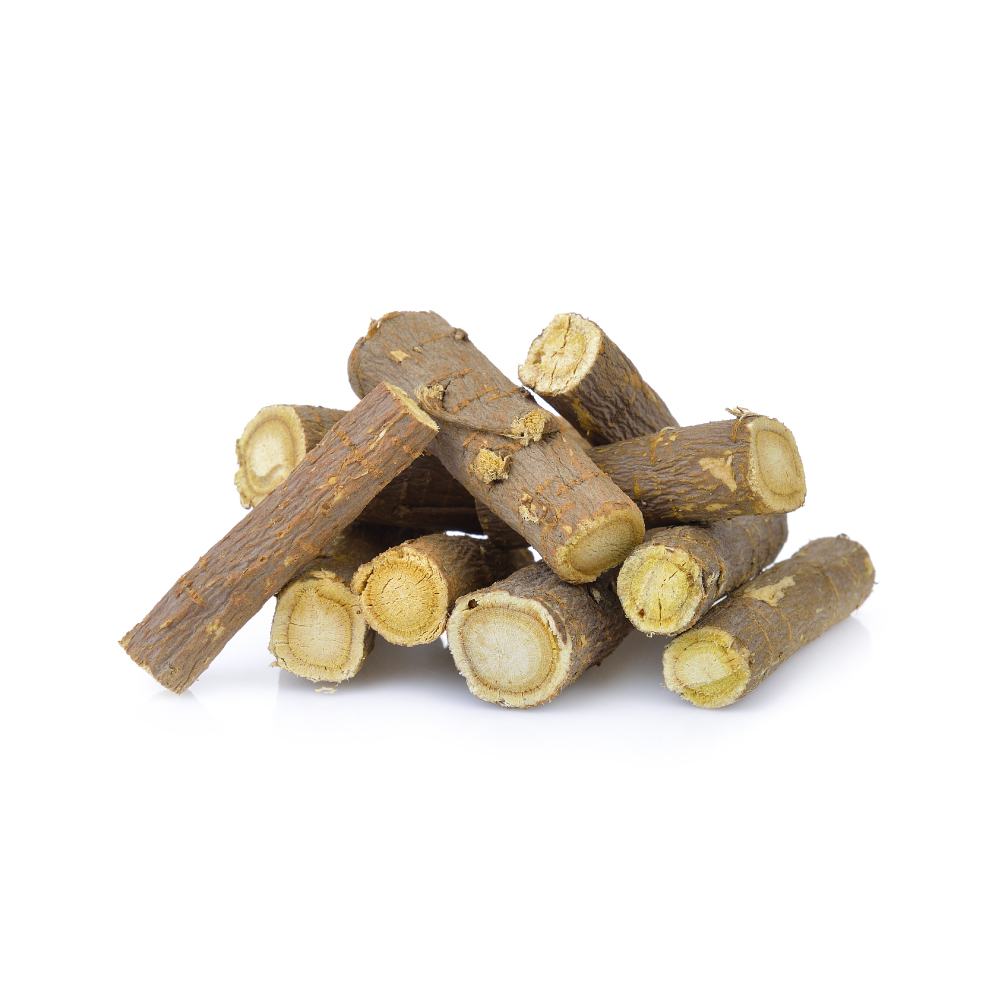
Glabridin is a naturally occurring isoflavonoid (prenylated isoflavan), found in Licorice and 1 other source. It is well tolerated orally (low toxicity).
Concentration
Content by Source
Reported concentrations across the plants that contain glabridin — the bar marks the typical level, the line shows the reported range.
Literature figures for varying plant parts and preparations. Read them as a comparative guide, not exact assays.
Glabridin at a Glance
Glabridin is a prenylated isoflavan — an isoflavonoid — and the signature lipophilic flavonoid of licorice root (Glycyrrhiza glabra). It is the principal component of the root’s hydrophobic “licorice flavonoid oil” and effectively marks the species: it is abundant in G. glabra but largely absent from Chinese licorice (G. uralensis), making it a chemotype fingerprint 18Reference 18ReviewGlycyrrhiza glabra (licorice): a comprehensive review on its phytochemistry, biological activities, clinical evidence and toxicologyView study →.
Its headline role is cosmetic. Glabridin is a potent tyrosinase inhibitor, and this underlies its biggest commercial use by far — as a skin-lightening / anti-hyperpigmentation active in topical cosmeceuticals 1,
The honest posture is that almost none of this is human-tested as the isolate. The evidence is in-vitro and rodent, its systemic relevance is undercut by poor oral bioavailability, and it is important to separate glabridin from glycyrrhizin — glabridin is not the licorice component that raises blood pressure and lowers potassium. Its own cautions are different: estrogenic activity and cytochrome-P450 inhibition 16Reference 16Cytochrome P450 inhibition by three licorice species and fourteen licorice constituentsView study →.
Skin Depigmentation — The Signature Activity
Glabridin’s defining, commercially load-bearing property is inhibition of tyrosinase, the rate-limiting enzyme of melanin synthesis. In the foundational study, glabridin inhibited tyrosinase activity in cultured B16 melanoma cells at 0.1–1.0 µg/mL without affecting DNA synthesis, and it suppressed UVB-induced pigmentation and erythema in guinea-pig skin — i.e. it lightened skin and calmed the inflammation that drives pigmentation, without being cytotoxic to the melanocytes 1Reference 1The inhibitory effect of glabridin from licorice extracts on melanogenesis and inflammationView study →. Biophysical work has since mapped how it does this: glabridin binds tyrosinase directly, quenching its fluorescence and acting as a mixed-type inhibitor of the enzyme 2Reference 2Inhibitory mechanisms of glabridin on tyrosinaseView study →.
This is why glabridin — usually delivered as a purified fraction of licorice extract — is one of the standard “natural” alternatives to hydroquinone and kojic acid in skin-whitening and anti-melasma cosmetics. Newer mechanistic work extends the picture beyond the enzyme itself: a 2025 study identified glabridin among the active skin-whitening components of G. glabra extract and tied the effect to down-regulation of the CRTC1/MITF pathway — the transcriptional master-switch for melanogenesis — not just to direct tyrosinase blockade 3Reference 3Glycyrrhiza glabra extract as a skin-whitening agent: identification of active components and CRTC1/MITF pathway-inhibition mechanismView study →.
Two caveats keep this grounded. First, most of the depigmentation evidence is cell-culture and animal, plus the accumulated cosmetic-formulation record, rather than large controlled human trials of the isolate. Second, glabridin’s poor water solubility is a genuine delivery problem, which is why much recent work is on nano-encapsulation and solubility-enhanced forms to get it into skin at all 15Reference 15Glabridin smartPearls — silica selection, production, amorphous stability and enhanced solubilityView study →.
Anti-Inflammatory Activity in Skin
Glabridin’s second-best-developed story runs alongside the first and reinforces it: it is anti-inflammatory in inflammatory skin-disease models, acting largely through the TLR4 → MyD88 → NF-κB axis. In an atopic-dermatitis model it attenuated disease progression by down-regulating TLR4/MyD88/NF-κB signalling 7Reference 7Glabridin attenuates atopic dermatitis progression through downregulating the TLR4/MyD88/NF-κB signaling pathwayView study →, and in an imiquimod-induced psoriasis-like model it ameliorated the skin inflammation and lowered inflammatory cytokines 8Reference 8AnimalGlabridin, an isoflavan from licorice root, ameliorates imiquimod-induced psoriasis-like inflammation of BALB/c miceView study →. Synthetic glabridin derivatives suppress LPS-induced inflammation via MAPK and NF-κB pathways, confirming the scaffold’s anti-inflammatory pharmacology 17Reference 17Synthetic glabridin derivatives inhibit LPS-induced inflammation via MAPKs and NF-κB pathwaysView study →. Because inflammation itself stimulates pigmentation, this anti-inflammatory action plausibly compounds the depigmenting effect in real skin.
What It's Used For
Beyond skin, glabridin has a genuinely broad activity list — but it is a preclinical list. The consistent theme is isolated molecule, in vitro or in rodents, with the systemic claims shadowed by low oral bioavailability.
Support is an experimental score — weighted by study type (human > animal > in vitro) and volume. A beta, not a validated metric. Scores mix a mechanism-backed cosmetic use with a broad set of preclinical isolate findings, so read the per-row basis.
The marquee application and the only one backed by mechanism and real-world use. Isolated glabridin inhibits tyrosinase in B16 melanoma cells at 0.1–1.0 µg/mL and suppresses UVB-induced pigmentation and erythema in guinea-pig skin without cytotoxicity 1Reference 1The inhibitory effect of glabridin from licorice extracts on melanogenesis and inflammationView study →.
Spectroscopic work shows it binds tyrosinase as a mixed-type inhibitor 2Reference 2Inhibitory mechanisms of glabridin on tyrosinaseView study →.
A 2025 study places glabridin among the active skin-whitening components of G. glabra and adds a transcriptional route — CRTC1/MITF down-regulation — on top of direct enzyme inhibition 3Reference 3Glycyrrhiza glabra extract as a skin-whitening agent: identification of active components and CRTC1/MITF pathway-inhibition mechanismView study →.
This is the isolate that is actually used (in topical cosmeceuticals).
Gap: the evidence is cell-culture, animal and formulation-based rather than large controlled human trials of pure glabridin, and its poor aqueous solubility limits skin delivery — hence the heavy focus on encapsulated/solubility-enhanced forms 15Reference 15Glabridin smartPearls — silica selection, production, amorphous stability and enhanced solubilityView study →.
A consistent rodent-isolate signal that overlaps the depigmentation story. Glabridin attenuated atopic-dermatitis progression by down-regulating TLR4/MyD88/NF-κB 7Reference 7Glabridin attenuates atopic dermatitis progression through downregulating the TLR4/MyD88/NF-κB signaling pathwayView study → and ameliorated imiquimod-induced psoriasis-like inflammation with lower inflammatory cytokines 8Reference 8AnimalGlabridin, an isoflavan from licorice root, ameliorates imiquimod-induced psoriasis-like inflammation of BALB/c miceView study →.
Synthetic glabridin derivatives blocked LPS-induced inflammation through MAPK and NF-κB pathways 17Reference 17Synthetic glabridin derivatives inhibit LPS-induced inflammation via MAPKs and NF-κB pathwaysView study →.
Because inflammation drives pigmentation, this action plausibly reinforces the cosmetic effect.
Gap: all preclinical (mouse models / cell lines) on the isolate or its derivatives — no human anti-inflammatory trials 7,
Glabridin is a lipophilic antioxidant that partitions into LDL and protects it from oxidation, the initiating step of atherogenesis 12Reference 12The effect of an endogenous antioxidant glabridin on oxidized LDLView study →.
In atherosclerosis-model work it reduced macrophage-mediated LDL oxidation and raised macrophage glutathione, and a later study framed a broader cardiovascular-protective effect via reduced LDL oxidation and inflammation 11,
This antioxidant behaviour is the mechanistic backbone under several of glabridin’s other activities.
Gap: in-vitro and animal (macrophage / apoE-deficient mouse) models of the isolate; no human cardiovascular-outcome data, and systemic exposure is limited by bioavailability 11,
A mechanistically clean isolate finding: glabridin stimulates glucose uptake through the AMPK pathway, driving GLUT4 translocation to the plasma membrane in L6 myotubes 9Reference 9Glabridin induces glucose uptake via the AMP-activated protein kinase pathway in muscle cellsView study →. At the whole-product level, licorice flavonoid oil (LFO) — the glabridin-rich extract, not the pure molecule — suppressed hyperglycaemia and enhanced skeletal-muscle GLUT4 signalling in animals 10Reference 10Liquorice flavonoid oil suppresses hyperglycaemia accompanied by skeletal muscle myocellular GLUT4 recruitmentView study →, so the antidiabetic evidence is split between the isolate’s mechanism and the extract’s in-vivo effect.
Gap: cell-based (isolate) plus animal (LFO extract) data; the in-vivo work uses the flavonoid oil, not purified glabridin, and there are no human glycaemic trials 9,
Because its structure and lipophilicity resemble estradiol, glabridin behaves as a phytoestrogen: it binds the human estrogen receptor and stimulates estrogen-responsive readouts (creatine-kinase activity, cell proliferation) at low concentrations, while showing anti-proliferative effects at higher ones in breast-cancer cells — a biphasic, ER-mediated profile 5Reference 5Estrogenic and antiproliferative properties of glabridin from licorice in human breast cancer cellsView study →. Related licorice constituents such as glabrene share estrogen-like activity, placing glabridin in a genuinely hormonally active fraction 6Reference 6Estrogen-like activity of glabrene and other constituents isolated from licorice rootView study →.
Gap: in-vitro receptor-binding and cell-proliferation assays; the dual estrogenic/antiproliferative behaviour is concentration-dependent and untested in humans — and it is the basis of a real caution in hormone-sensitive conditions rather than a therapeutic claim 5,
The most speculative thread. Glabridin (with related licorice isoflavans) inhibits serotonin re-uptake in vitro, interacting with the serotonin transporter (SERT) in a non-genomic, phytoestrogen-associated manner — the pharmacological premise behind licorice’s antidepressant interest 4Reference 4Inhibition of serotonin re-uptake by licorice constituentsView study →.
A 2025 rodent study reported that glabridin improved depression-like behaviour by modulating neuroinflammation 20Reference 20AnimalGlabridin improves depression-like behaviors in mice by modulating neuroinflammationView study →, and separate work reports neuroprotection in an ischaemic-stroke model.
Gap: in-vitro SERT data plus early rodent behavioural work; no human neuropsychiatric evidence, and CNS exposure after oral dosing is unproven given the bioavailability limits 4,
Mechanisms
| Target / pathway | Effect | Relevant to |
|---|---|---|
| Tyrosinase | direct mixed-type inhibition → less melanin synthesis | skin depigmentation |
| CRTC1 / MITF transcription | down-regulation of the melanogenesis master-switch | skin depigmentation |
| TLR4 / MyD88 / NF-κB | suppression of innate-immune inflammatory signalling | anti-inflammatory (skin) |
| MAPK signalling | reduced LPS-induced inflammatory activation | anti-inflammatory |
| LDL lipid oxidation | partitions into LDL, scavenges radicals → protects from oxidation | antioxidant / cardiovascular |
| AMPK → GLUT4 | stimulates glucose uptake / GLUT4 translocation in muscle | metabolic / antidiabetic |
| Estrogen receptor (ERα) | binds ER; estrogenic at low dose, antiproliferative at high | phytoestrogen |
| Serotonin transporter (SERT) | inhibits serotonin re-uptake in vitro | serotonergic / neuro |
| CYP3A4 / CYP2C isoforms | enzyme inhibition (drug-interaction potential) | pharmacokinetics / safety |
The load-bearing mechanism is tyrosinase inhibition — the only one tied to an established (cosmetic) use. The rest are real but preclinical, and the CYP row is a caution, not a benefit.
Pharmacokinetics
Glabridin’s pharmacokinetics are the reason to read its systemic claims cautiously. It is highly lipophilic and poorly water-soluble, which limits dissolution and absorption; in a Caco-2 intestinal model the absorbed species is the aglycone (not a conjugate), and oral dosing in rats confirms it reaches the circulation, establishing genuine but modest bioavailability 13Reference 13AnimalAbsorption of dietary licorice isoflavan glabridin to blood circulation in ratsView study →. The bigger constraint is first-pass metabolism: a detailed 2023 study characterised glabridin’s metabolic transformation and found the hepatic first-pass effect a major contributor to its low systemic exposure 14Reference 14Comprehensive evaluation of metabolism and the contribution of the hepatic first-pass effect in the low bioavailability of glabridinView study →. This is why so much formulation work — nano-encapsulation, amorphous “smartPearls,” lipid carriers — targets solubility and bioavailability rather than new pharmacology 15Reference 15Glabridin smartPearls — silica selection, production, amorphous stability and enhanced solubilityView study →. Distinctively, glabridin is also a cytochrome-P450 inhibitor (CYP3A4 and CYP2C isoforms among licorice constituents), which matters more for drug interactions than for its own clearance 16Reference 16Cytochrome P450 inhibition by three licorice species and fourteen licorice constituentsView study →. A well-defined human half-life and oral-bioavailability figure for the isolate is not established.
Clinical Trials
There are no substantial controlled efficacy trials of isolated glabridin. Its real human footprint is cosmetic/topical (licorice-extract skin-lightening products), and the metabolic in-vivo evidence belongs to the licorice flavonoid oil extract, not the pure molecule 10Reference 10Liquorice flavonoid oil suppresses hyperglycaemia accompanied by skeletal muscle myocellular GLUT4 recruitmentView study →. Everything else is in-vitro or rodent.
| Completed | Planned | Terminated | Preclinical |
|---|---|---|---|
| Cosmetic/topical use (licorice-extract depigmenting products); LFO-extract metabolic studies | — | — | Tyrosinase / TLR4-NF-κB / LDL-oxidation / AMPK / ER / SERT mechanistic (isolate) |
Last checked: July 2026.
Isolate vs. Plant Studies
Glabridin’s evidence base is overwhelmingly the isolated molecule — B16/melanocyte tyrosinase assays 1,
Prevalence in Nature
Glabridin is a chemotaxonomic marker of Glycyrrhiza glabra (European/Middle-Eastern licorice). It is concentrated in the root, at roughly 0.08–0.35% of dried root, as the principal isoflavan of the lipophilic licorice flavonoid oil 18Reference 18ReviewGlycyrrhiza glabra (licorice): a comprehensive review on its phytochemistry, biological activities, clinical evidence and toxicologyView study →. Crucially it is largely absent from Chinese licorice (G. uralensis), whose defining lipophilic marker is instead glycyrrhizol A — so the presence of glabridin effectively distinguishes G. glabra material from G. uralensis 18Reference 18ReviewGlycyrrhiza glabra (licorice): a comprehensive review on its phytochemistry, biological activities, clinical evidence and toxicologyView study →. This species discipline matters: much published “licorice” research uses G. uralensis or G. inflata, and glabridin-based findings should not be generalised across the genus.
Within G. glabra, glabridin sits in the same prenylated-isoflavonoid fraction as its relatives glabrene, glabrone and formononetin, next to the anti-inflammatory chalcone licochalcone A, the MAO-active glycyrrhisoflavone, and the root’s flavanone/chalcone glycosides liquiritin and isoliquiritin. Total root flavonoids run around 1–1.5% of dry weight, of which glabridin is a lipophilic minority component but the most pharmacologically studied 18,
Discovery & Synthesis
Glabridin was first isolated from the root of Glycyrrhiza glabra as the major isoflavan of the root’s hydrophobic (“licorice flavonoid oil”) fraction, characterised by 20th-century Japanese natural-product chemists working on licorice isoflavonoids. Structurally it is a prenylated pterocarpan-adjacent isoflavan — a 2,3-dihydro isoflavone core bearing a fused dimethylpyran (prenyl-derived) ring and a resorcinol B-ring — and it occurs naturally as the single (R)-enantiomer.
Total synthesis of glabridin has been reported, and the scaffold is tractable enough that synthetic glabridin derivatives have been made and tested for anti-inflammatory activity 17Reference 17Synthetic glabridin derivatives inhibit LPS-induced inflammation via MAPKs and NF-κB pathwaysView study →. Manufacture today is predominantly extraction: commercial glabridin is purified from G. glabra root — typically as a standardised licorice-flavonoid concentrate (the Kaneka “Glavonoid”/licorice-flavonoid-oil line) for cosmetic and nutraceutical use — because the plant is a cheap, reliable source of the (R)-isomer. Its poor solubility drives ongoing carrier/encapsulation development rather than any change in source 15Reference 15Glabridin smartPearls — silica selection, production, amorphous stability and enhanced solubilityView study →.
Patents: not yet researched.
Toxicity & Safety
Glabridin carries a low flag. At the levels encountered in food (whole licorice) and in topical cosmetics it is well tolerated, and — importantly — it is not the licorice component responsible for the blood-pressure and potassium effects (that is glycyrrhizin and its aglycone glycyrrhetinic acid, chemically unrelated saponins). Its low oral bioavailability further limits systemic exposure from ingestion. Two real, mechanism-based cautions keep it from being negligible.
- Well tolerated at cosmetic/dietary exposure. Long topical use as a skin-lightening active and dietary presence in licorice, with low systemic exposure from poor oral bioavailability.
- Not the pseudoaldosteronism component. Glabridin is distinct from glycyrrhizin and does not drive licorice’s blood-pressure/potassium effects.
- Estrogenic (phytoestrogen). It binds the human estrogen receptor and is estrogenic at low concentrations (antiproliferative at high) — a reason for caution in hormone-sensitive conditions; reproductive/hormonal safety is decided on the herb or product page, not here 5,
6Reference 5Estrogenic and antiproliferative properties of glabridin from licorice in human breast cancer cellsView study →Reference 6Estrogen-like activity of glabrene and other constituents isolated from licorice rootView study → . - CYP inhibition → drug-interaction potential. Glabridin (with other licorice constituents) inhibits CYP3A4 and CYP2C enzymes in vitro, so concentrated licorice-flavonoid extracts could in principle affect the metabolism of CYP-substrate drugs 16Reference 16Cytochrome P450 inhibition by three licorice species and fourteen licorice constituentsView study →.
- Isolate human-safety data are limited. Dedicated high-dose human toxicology of pure glabridin is not established; most safety inference is from in-vitro/animal work and the whole-plant record.
Dosage
There is no established or recommended human oral dose for isolated glabridin. Its real-world use is topical and cosmetic, where licorice-extract skin-lightening products typically supply glabridin at roughly 0.1–0.5% of the formulation. Systemic figures in the literature are preclinical rodent research doses (e.g. the AMPK/glucose-uptake and LDL-oxidation studies) and the antidiabetic in-vivo work used the licorice flavonoid oil extract, not the pure molecule 9,
References
- Yokota T, Nishio H, Kubota Y, Mizoguchi M (1998). The inhibitory effect of glabridin from licorice extracts on melanogenesis and inflammation. Pigment Cell Research. https://pubmed.ncbi.nlm.nih.gov/9870547/
- Chen J, et al. (2016). Inhibitory mechanisms of glabridin on tyrosinase. Spectrochimica Acta Part A: Molecular and Biomolecular Spectroscopy. https://pubmed.ncbi.nlm.nih.gov/27288962/
- Liu J, et al. (2025). Glycyrrhiza glabra extract as a skin-whitening agent: identification of active components and CRTC1/MITF pathway-inhibition mechanism. Journal of Ethnopharmacology. https://pubmed.ncbi.nlm.nih.gov/40350048/
- Ofir R, Tamir S, Khatib S, Vaya J (2003). Inhibition of serotonin re-uptake by licorice constituents. Journal of Molecular Neuroscience. https://pubmed.ncbi.nlm.nih.gov/12794307/
- Tamir S, et al. (2000). Estrogenic and antiproliferative properties of glabridin from licorice in human breast cancer cells. Cancer Research. https://pubmed.ncbi.nlm.nih.gov/11059763/
- Tamir S, et al. (2001). Estrogen-like activity of glabrene and other constituents isolated from licorice root. Journal of Steroid Biochemistry and Molecular Biology. https://pubmed.ncbi.nlm.nih.gov/11595510/
- Chang J, et al. (2021). Glabridin attenuates atopic dermatitis progression through downregulating the TLR4/MyD88/NF-κB signaling pathway. Genes & Genomics. https://pubmed.ncbi.nlm.nih.gov/34021857/
- Li P, et al. (2018). Glabridin, an isoflavan from licorice root, ameliorates imiquimod-induced psoriasis-like inflammation of BALB/c mice. International Immunopharmacology. https://pubmed.ncbi.nlm.nih.gov/29665498/
- Sawada K, Yamashita Y, Zhang T, et al. (2014). Glabridin induces glucose uptake via the AMP-activated protein kinase pathway in muscle cells. Molecular and Cellular Endocrinology. https://pubmed.ncbi.nlm.nih.gov/24953974/
- Yamashita Y, et al. (2019). Liquorice flavonoid oil suppresses hyperglycaemia accompanied by skeletal muscle myocellular GLUT4 recruitment. International Journal of Food Sciences and Nutrition. https://pubmed.ncbi.nlm.nih.gov/30304967/
- Kang MR, et al. (2015). Cardiovascular protective effect of glabridin: implications in LDL oxidation and inflammation. International Immunopharmacology. https://pubmed.ncbi.nlm.nih.gov/26526087/
- Carmeli E, Fogelman Y (2008). The effect of an endogenous antioxidant glabridin on oxidized LDL. Journal of Basic and Clinical Physiology and Pharmacology. https://pubmed.ncbi.nlm.nih.gov/19024795/
- Ito C, et al. (2007). Absorption of dietary licorice isoflavan glabridin to blood circulation in rats. Journal of Nutritional Science and Vitaminology. https://pubmed.ncbi.nlm.nih.gov/17934243/
- Xie L, et al. (2023). Comprehensive evaluation of metabolism and the contribution of the hepatic first-pass effect in the low bioavailability of glabridin. Journal of Agricultural and Food Chemistry. https://pubmed.ncbi.nlm.nih.gov/36649475/
- Hespeler D, et al. (2019). Glabridin smartPearls — silica selection, production, amorphous stability and enhanced solubility. International Journal of Pharmaceutics. https://pubmed.ncbi.nlm.nih.gov/30836152/
- Li G, et al. (2017). Cytochrome P450 inhibition by three licorice species and fourteen licorice constituents. European Journal of Pharmaceutical Sciences. https://pubmed.ncbi.nlm.nih.gov/28774812/
- Kim HJ, et al. (2023). Synthetic glabridin derivatives inhibit LPS-induced inflammation via MAPKs and NF-κB pathways. Molecules. https://pubmed.ncbi.nlm.nih.gov/36903379/
- Wahab S, et al. (2021). Glycyrrhiza glabra (licorice): a comprehensive review on its phytochemistry, biological activities, clinical evidence and toxicology. Plants (Basel). https://pubmed.ncbi.nlm.nih.gov/34961221/
- Asl MN, Hosseinzadeh H (2008). Review of pharmacological effects of Glycyrrhiza sp. and its bioactive compounds. Phytotherapy Research. https://pubmed.ncbi.nlm.nih.gov/18446848/
- Shan M, et al. (2025). Glabridin improves depression-like behaviors in mice by modulating neuroinflammation. Neurochemical Research. https://pubmed.ncbi.nlm.nih.gov/41165967/
- Zhang J, et al. (2023). Review on the diverse biological effects of glabridin. Drug Design, Development and Therapy. https://pubmed.ncbi.nlm.nih.gov/36647530/



