
Compound Monograph
Isoxanthohumol
Isoxanthohumol (IX) is the prenylflavanone of hops and beer — the cyclization isomer of xanthohumol and the main dietary precursor of the potent phytoestrogen 8-prenylnaringenin.

Sources · 3
Where Does It Come From?
Isoxanthohumol is a naturally occurring prenylflavonoid (flavanone), found in Hops, Beer and 1 other source. It is well tolerated orally (low toxicity).
Concentration
Content by Source
Concentrations not reported. No percent-dry-weight or mg/g figures have been published for this compound in its source plants.
Isoxanthohumol at a Glance
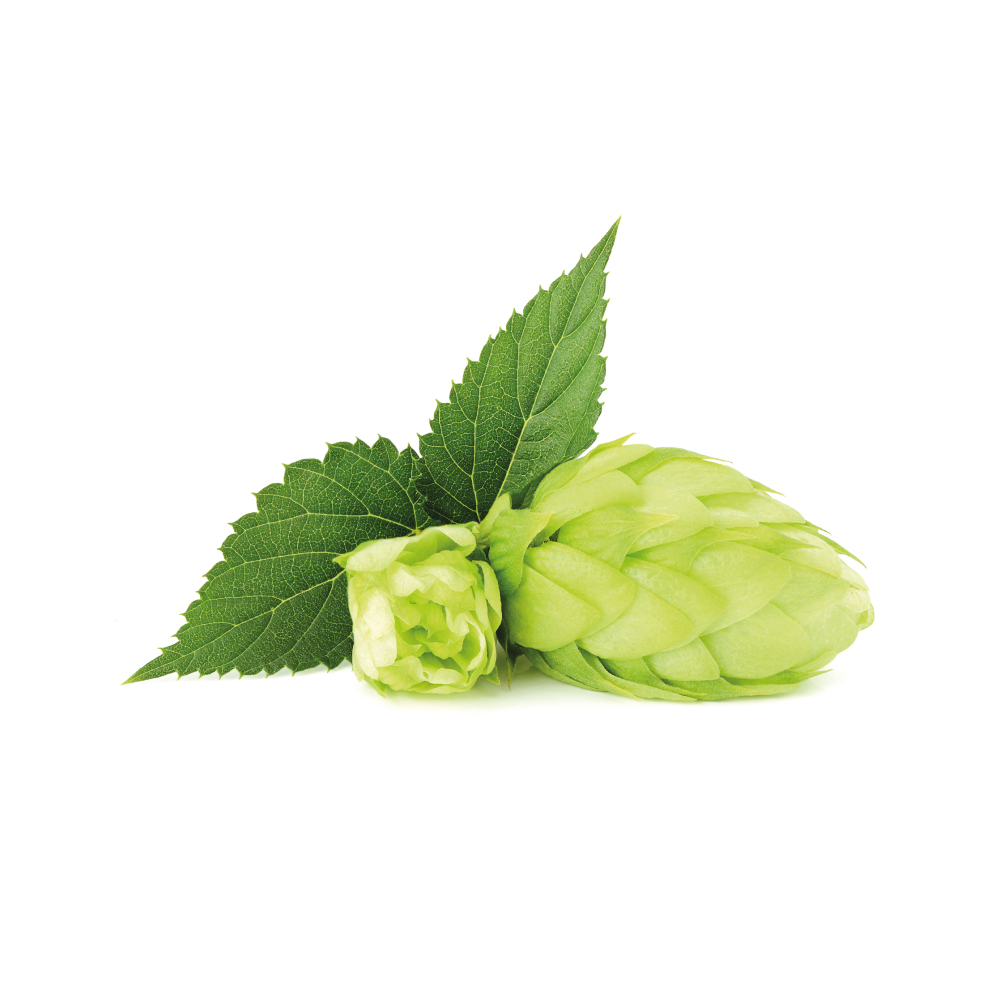
Isoxanthohumol is a prenylated flavanone of hops (Humulus lupulus) and, above all, of beer. It is not really a separate hop product so much as a transformation of another one: it forms when the hop chalcone xanthohumol cyclizes to its flavanone isomer during wort boiling, so brewed beer is comparatively rich in isoxanthohumol while the fresh cone is rich in xanthohumol 12,
Its single most important property is what happens to it after it is swallowed. Gut bacteria — and, to a lesser extent, liver enzymes — O-demethylate isoxanthohumol into 8-prenylnaringenin, the most potent phytoestrogen yet described. This makes isoxanthohumol the main dietary precursor of 8-prenylnaringenin, and it is the reason a nominally weak beer flavanone matters at all for hormone biology 2,
On its own, isoxanthohumol is a modestly active molecule with a broad but almost entirely preclinical profile: antiproliferative and chemopreventive effects in cell culture, enzyme inhibition (aromatase, CYP1, aldo-keto reductases), a metabolic signal in mice, and only weak direct estrogenicity 1,
Isoxanthohumol vs. Xanthohumol: The Cyclization Isomer
Isoxanthohumol and xanthohumol share the same atoms; they differ only in shape. Xanthohumol is an open-chain prenylated chalcone; isoxanthohumol is the cyclized flavanone formed when that chalcone closes a ring. The conversion is a spontaneous, heat- and pH-driven isomerization — and, critically, it is exactly what happens in the brewhouse.
During wort boiling, most of the xanthohumol extracted from hops isomerizes to isoxanthohumol; the fraction converted depends on malt and process, but is often the majority 12Reference 12Fate of xanthohumol and related prenylflavonoids from hops to beerView study →. Isoxanthohumol is also several times more water-soluble than xanthohumol, so it partitions into the finished beer more readily 13Reference 13Quantitative analysis of xanthohumol and related prenylflavonoids in hops and beer by liquid chromatography-tandem mass spectrometryView study →. The net result of these two facts is a role reversal:
- In the hop cone / lupulin gland, xanthohumol is the dominant prenylflavonoid and isoxanthohumol is minor.
- In beer, isoxanthohumol is usually the most abundant prenylflavonoid, while xanthohumol survives only in small amounts (higher in some dark, stout and porter styles) 12,
13Reference 12Fate of xanthohumol and related prenylflavonoids from hops to beerView study →Reference 13Quantitative analysis of xanthohumol and related prenylflavonoids in hops and beer by liquid chromatography-tandem mass spectrometryView study → .
This is the compound-unique angle: to understand isoxanthohumol you have to understand that it is largely a process artefact of brewing, not a compound the plant makes in quantity.
The 8-Prenylnaringenin Connection
Isoxanthohumol’s biological significance is mostly borrowed from what it becomes. A single O-demethylation — removal of one methyl group — converts isoxanthohumol into 8-prenylnaringenin (8-PN), an estrogen-receptor agonist far more potent than genistein or other common phytoestrogens 10Reference 10The endocrine activities of 8-prenylnaringenin and related hop (Humulus lupulus L.) flavonoidsView study →.
Two routes do this:
- Gut microbiota. The intestinal bacterium Eubacterium limosum O-demethylates isoxanthohumol to 8-PN in the distal colon. In human faecal cultures the conversion was found in only about one-third of individuals, dividing people into “high” and “low” 8-PN producers, and microbial activation could raise 8-PN exposure roughly 10-fold over what is ingested directly 2,
3Reference 2Activation of proestrogens from hops (Humulus lupulus L.) by intestinal microbiota; conversion of isoxanthohumol into 8-prenylnaringeninView study →Reference 3In vitroThe prenylflavonoid isoxanthohumol from hops (Humulus lupulus L.) is activated into the potent phytoestrogen 8-prenylnaringenin in vitro and in the human intestineView study → . Giving E. limosum to low-producing rats switched the conversion on 4Reference 4In vitroEubacterium limosum activates isoxanthohumol from hops (Humulus lupulus L.) into the potent phytoestrogen 8-prenylnaringenin in vitro and in rat intestineView study →. - Hepatic CYP enzymes. Human liver preparations can also demethylate isoxanthohumol to 8-PN, so a smaller amount of activation occurs independently of the gut flora 6Reference 6Identification of human hepatic cytochrome P450 enzymes involved in the metabolism of 8-prenylnaringenin and isoxanthohumol from hops (Humulus lupulus L.)View study →.
Because beer delivers far more isoxanthohumol than pre-formed 8-PN, this precursor relationship — not any direct estrogenic action of isoxanthohumol itself — is the practical source of dietary 8-PN. It is also the honest frame for isoxanthohumol’s own “estrogenic” reputation: the parent is only weakly estrogenic; the potency belongs to the metabolite 10Reference 10The endocrine activities of 8-prenylnaringenin and related hop (Humulus lupulus L.) flavonoidsView study →.
What It's Used For
Beyond the precursor story, isoxanthohumol has been tested for anticancer, metabolic and enzyme-inhibitory activity. Almost all of this is in-vitro or rodent work on the isolated molecule; there is no human efficacy trial.
Support is an experimental score — weighted by study type (human > animal > in vitro) and volume. A beta, not a validated metric. Every row here rests on isolate/preclinical data, so scores stay low by design.
The best-characterised thing isoxanthohumol does is get converted. In batch cultures of human faecal microbiota and in the human intestine, isoxanthohumol is O-demethylated to the potent phytoestrogen 8-prenylnaringenin, predominantly in the distal colon; the capacity varies widely between people, with only about a third of individuals being efficient “8-PN producers,” and microbial activation can amplify 8-PN exposure roughly 10-fold relative to direct intake 2,
The gut bacterium Eubacterium limosum was identified as a key activator, and administering it to low-producer rats induced the conversion 4Reference 4In vitroEubacterium limosum activates isoxanthohumol from hops (Humulus lupulus L.) into the potent phytoestrogen 8-prenylnaringenin in vitro and in rat intestineView study →; human liver microsomes provide a secondary, smaller demethylation route 6Reference 6Identification of human hepatic cytochrome P450 enzymes involved in the metabolism of 8-prenylnaringenin and isoxanthohumol from hops (Humulus lupulus L.)View study →.
Gap: this is a metabolic pathway, not a demonstrated therapy — no controlled human trial shows that dietary isoxanthohumol produces a clinical estrogenic benefit, and the wide producer/non-producer split means exposure to the active metabolite is highly individual 2,
Isolated isoxanthohumol is antiproliferative and cytotoxic against human breast (MCF-7), colon (HT-29) and ovarian (A-2780) cancer cell lines, inhibiting growth in the low-micromolar range 1Reference 1Antiproliferative and cytotoxic effects of prenylated flavonoids from hops (Humulus lupulus) in human cancer cell linesView study →.
Mechanistically it is one of the strongest hop inhibitors of CYP1A2, blocking that enzyme’s metabolic activation of the dietary carcinogen IQ (a heterocyclic amine) and the resulting DNA binding — a classic chemoprevention signature 7Reference 7Prenylflavonoids from hops inhibit the metabolic activation of the carcinogenic heterocyclic amine 2-amino-3-methylimidazo[4,5-f]quinoline, mediated by cDNA-expressed human CYP1A2View study →.
It also inhibits aromatase (the estrogen-synthesising enzyme), reducing estrogen formation and breast-cancer-cell survival in vitro 8,
Gap: every result here is isolate in cell culture or cell-free enzyme assay; there is no animal tumour model or human trial for isoxanthohumol specifically, and the CYP1/aromatase inhibition is a double-edged property (see Toxicity — it implies potential drug and hormone interactions) 7,
In a diet-induced-obesity mouse study, oral isoxanthohumol lowered weight gain, reduced steatohepatitis and improved glucose metabolism, apparently by inhibiting pancreatic lipase and intestinal lipid absorption, with an accompanying bloom of Akkermansia muciniphila in the gut 5Reference 5AnimalIsoxanthohumol improves obesity and glucose metabolism via inhibiting intestinal lipid absorption with a bloom of Akkermansia muciniphila in miceView study →. This dovetails with the broader metabolic literature on hop prenylflavonoids.
Gap: a single rodent model, using doses far above any dietary beer exposure; no human metabolic data exist for isoxanthohumol, and the effect has not been replicated independently 5Reference 5AnimalIsoxanthohumol improves obesity and glucose metabolism via inhibiting intestinal lipid absorption with a bloom of Akkermansia muciniphila in miceView study →.
Isoxanthohumol is a tight-binding inhibitor of human aldo-keto reductases AKR1B1 and AKR1B10 — enzymes implicated in diabetic complications and in some cancers — with sub-micromolar to low-micromolar inhibition constants, in this assay more potent than xanthohumol 11Reference 11The hop-derived compounds xanthohumol, isoxanthohumol and 8-prenylnaringenin are tight-binding inhibitors of human aldo-keto reductases 1B1 and 1B10View study →.
Gap: purely biochemical (cell-free) inhibition data; no cellular or in-vivo confirmation that this translates into a functional AKR-mediated effect for isoxanthohumol 11Reference 11The hop-derived compounds xanthohumol, isoxanthohumol and 8-prenylnaringenin are tight-binding inhibitors of human aldo-keto reductases 1B1 and 1B10View study →.
Mechanisms
| Target / pathway | Effect | Relevant to |
|---|---|---|
| Gut O-demethylation (Eubacterium limosum, distal colon) | converts isoxanthohumol → 8-prenylnaringenin (potent ERα/ERβ agonist) | phytoestrogen precursor |
| Hepatic CYP-mediated demethylation | secondary route to 8-prenylnaringenin | phytoestrogen precursor |
| Estrogen receptors (ERα/ERβ) | weak direct agonism (metabolite 8-PN is the potent one) | hormonal activity |
| CYP1A2 (and CYP1 family) | inhibits carcinogen (IQ) bioactivation and DNA adduct formation | chemoprevention; drug-interaction caution |
| Aromatase (CYP19) | inhibits estrogen biosynthesis; lowers breast-cancer-cell survival | anticancer (in vitro) |
| Aldo-keto reductases AKR1B1 / AKR1B10 | tight-binding inhibition | enzyme biochemistry |
| Pancreatic lipase / intestinal lipid uptake | reduced absorption; anti-obesity, improved glycaemia (mouse) | metabolic |
The load-bearing row is the first: isoxanthohumol’s headline biology is that it is a prodrug for 8-prenylnaringenin. The other mechanisms are genuine in-vitro findings for the parent molecule but have no human-outcome data attached.
Pharmacokinetics
Isoxanthohumol is a small prenylated flavanone that is considerably more water-soluble than xanthohumol — the reason it survives into beer — which aids dissolution and absorption from beverages 13Reference 13Quantitative analysis of xanthohumol and related prenylflavonoids in hops and beer by liquid chromatography-tandem mass spectrometryView study →. Its defining PK feature is microbial metabolism: rather than being simply cleared, an appreciable fraction is O-demethylated by colonic bacteria to 8-prenylnaringenin, a conversion that occurs mainly in the distal colon and is highly variable between individuals (efficient in perhaps a third of people) 2,
Clinical Trials
There are no efficacy trials of isolated isoxanthohumol in humans. The human data that exist are mechanistic/pharmacokinetic: studies characterising its microbial conversion to 8-prenylnaringenin in the intestine 3Reference 3In vitroThe prenylflavonoid isoxanthohumol from hops (Humulus lupulus L.) is activated into the potent phytoestrogen 8-prenylnaringenin in vitro and in the human intestineView study →, and a drug-interaction pharmacokinetic trial of a whole hop supplement in which isoxanthohumol is one constituent 14Reference 14Pharmacokinetic interactions of a hop dietary supplement with drug metabolism in perimenopausal and postmenopausal womenView study →. Everything therapeutic is preclinical.
| Completed | Planned | Terminated | Preclinical |
|---|---|---|---|
| Human metabolism / PK only (8-PN conversion; hop-supplement CYP-probe) 3, | — | — | Anticancer, chemopreventive, metabolic, enzyme-inhibition (in vitro / mouse) 1, |
Last checked: July 2026.
Isolate vs. Plant Studies
Isoxanthohumol occupies an unusual middle ground. Its conversion biology has been studied in realistic systems — human faecal microbiota, the human intestine, and rats — which is a genuine strength for the precursor claim 2,
Prevalence in Nature
Isoxanthohumol is essentially a hops-and-beer molecule. In the plant it is a comparatively minor prenylflavonoid of the lupulin glands of the female hop cone (Humulus lupulus), where the chalcone xanthohumol dominates 12Reference 12Fate of xanthohumol and related prenylflavonoids from hops to beerView study →. Its abundance rises dramatically downstream of the plant: because wort boiling isomerizes most extracted xanthohumol to isoxanthohumol, and because isoxanthohumol is far more water-soluble, it becomes the most abundant prenylflavonoid in most finished beers, reported across surveys at roughly 0.04–3.4 mg/L (means well under 1 mg/L) 13Reference 13Quantitative analysis of xanthohumol and related prenylflavonoids in hops and beer by liquid chromatography-tandem mass spectrometryView study →. It is likewise found in spent hops (the brewing by-product) and in hop-derived dietary supplements 14Reference 14Pharmacokinetic interactions of a hop dietary supplement with drug metabolism in perimenopausal and postmenopausal womenView study →. It has not been reported as a significant constituent of plants outside the Humulus/brewing chain.
Discovery & Synthesis
The hop prenylflavonoid chemistry begins with xanthohumol, first isolated and partially characterised from hops by Power, Tutin and Rogerson in 1913. Isoxanthohumol itself was identified as the corresponding flavanone by Verzele and colleagues in the late 1950s (around 1957), initially from material earlier described under other names — reflecting how readily the chalcone cyclizes to the flavanone during handling and heating.
Manufacture today is not really a matter of deliberate isolation: isoxanthohumol is generated in bulk, unintentionally, every time beer is brewed, as xanthohumol isomerizes in the boil. For research and standards it is obtained either by extraction from hops/spent hops or by base- or heat-catalysed cyclization of xanthohumol, the same isomerization that occurs in the brewhouse 12,
Patents: not yet researched.
Toxicity & Safety
Isoxanthohumol carries a low toxicity flag at the levels encountered in beer and food: it has a long history of incidental dietary consumption without evidence of acute harm at those exposures. The meaningful caveats are not about the parent molecule’s own toxicity but about what it turns into and what enzymes it touches.
- Low toxicity at dietary exposure. Consumed in small amounts in beer for centuries with no evidence of acute harm; only weakly estrogenic on its own.
- Estrogenic via conversion. In “8-PN producer” individuals, gut bacteria demethylate isoxanthohumol to 8-prenylnaringenin, a highly potent phytoestrogen — the relevant concern for concentrated hop supplements and hormone-sensitive conditions.
- Enzyme-inhibition / interaction potential. In vitro it inhibits CYP1A2 and aromatase; a whole-hop-supplement human PK study found no clinically significant CYP interaction at the doses tested, but concentrated isolates are less characterised.
- Isolate safety database is thin. No repeat-dose, genotoxicity or reproductive-toxicity package exists for pure isoxanthohumol at supplement-level doses.
Full Safety & Interactions Detail
Estrogenicity is a metabolite property. Isoxanthohumol itself shows only weak direct estrogen-receptor activity and no progestogenic or androgenic activity 10Reference 10The endocrine activities of 8-prenylnaringenin and related hop (Humulus lupulus L.) flavonoidsView study →. The hormonal concern is downstream: in individuals whose colonic microbiota (notably Eubacterium limosum) efficiently O-demethylate it, isoxanthohumol becomes a meaningful source of 8-prenylnaringenin, one of the most potent phytoestrogens known 2,
Enzyme interactions. Isoxanthohumol inhibits carcinogen-activating CYP1A2 7Reference 7Prenylflavonoids from hops inhibit the metabolic activation of the carcinogenic heterocyclic amine 2-amino-3-methylimidazo[4,5-f]quinoline, mediated by cDNA-expressed human CYP1A2View study → and aromatase 8,
What is not known. No comprehensive repeat-dose toxicity, genotoxicity or reproductive-toxicity dataset exists for the isolated compound; safety at supplement-level isolate doses is inferred, not established. Absence of reported harm at dietary levels should not be read as demonstrated safety at concentrated doses.
Dosage
There is no established therapeutic dose for isoxanthohumol, and it is not sold as a stand-alone drug. Human exposure is essentially dietary and indirect:
| Source | Typical isoxanthohumol exposure |
|---|---|
| Beer (most styles) | ~0.04–3.4 mg/L (mean well under 1 mg/L) |
| Hop dietary supplements / extracts | Variable; part of a multi-prenylflavonoid dose |
Any “dose” that matters biologically is really the amount of 8-prenylnaringenin an individual generates from it, which depends on their gut microbiota and cannot be read off the intake figure 2,
References
- Miranda CL, et al. (1999). Antiproliferative and cytotoxic effects of prenylated flavonoids from hops (Humulus lupulus) in human cancer cell lines. Food and Chemical Toxicology. https://pubmed.ncbi.nlm.nih.gov/10418944/
- Possemiers S, et al. (2005). Activation of proestrogens from hops (Humulus lupulus L.) by intestinal microbiota; conversion of isoxanthohumol into 8-prenylnaringenin. Journal of Agricultural and Food Chemistry. https://pubmed.ncbi.nlm.nih.gov/16076107/
- Possemiers S, et al. (2006). The prenylflavonoid isoxanthohumol from hops (Humulus lupulus L.) is activated into the potent phytoestrogen 8-prenylnaringenin in vitro and in the human intestine. The Journal of Nutrition. https://pubmed.ncbi.nlm.nih.gov/16772450/
- Possemiers S, et al. (2008). Eubacterium limosum activates isoxanthohumol from hops (Humulus lupulus L.) into the potent phytoestrogen 8-prenylnaringenin in vitro and in rat intestine. The Journal of Nutrition. https://pubmed.ncbi.nlm.nih.gov/18567753/
- Watanabe Y, et al. (2023). Isoxanthohumol improves obesity and glucose metabolism via inhibiting intestinal lipid absorption with a bloom of Akkermansia muciniphila in mice. Molecular Metabolism. https://pubmed.ncbi.nlm.nih.gov/37709134/
- Guo J, et al. (2006). Identification of human hepatic cytochrome P450 enzymes involved in the metabolism of 8-prenylnaringenin and isoxanthohumol from hops (Humulus lupulus L.). Drug Metabolism and Disposition. https://pubmed.ncbi.nlm.nih.gov/16611861/
- Miranda CL, et al. (2000). Prenylflavonoids from hops inhibit the metabolic activation of the carcinogenic heterocyclic amine 2-amino-3-methylimidazo[4,5-f]quinoline, mediated by cDNA-expressed human CYP1A2. Drug Metabolism and Disposition. https://pubmed.ncbi.nlm.nih.gov/11038156/
- Monteiro R, et al. (2006). Effect of hop (Humulus lupulus L.) flavonoids on aromatase (estrogen synthase) activity. Journal of Agricultural and Food Chemistry. https://pubmed.ncbi.nlm.nih.gov/16608212/
- Monteiro R, et al. (2007). Modulation of breast cancer cell survival by aromatase inhibiting hop (Humulus lupulus L.) flavonoids. The Journal of Steroid Biochemistry and Molecular Biology. https://pubmed.ncbi.nlm.nih.gov/17643984/
- Milligan SR, et al. (2000). The endocrine activities of 8-prenylnaringenin and related hop (Humulus lupulus L.) flavonoids. The Journal of Clinical Endocrinology and Metabolism. https://pubmed.ncbi.nlm.nih.gov/11134162/
- Seliger JM, et al. (2018). The hop-derived compounds xanthohumol, isoxanthohumol and 8-prenylnaringenin are tight-binding inhibitors of human aldo-keto reductases 1B1 and 1B10. Journal of Enzyme Inhibition and Medicinal Chemistry. https://pubmed.ncbi.nlm.nih.gov/29532688/
- Stevens JF, et al. (1999). Fate of xanthohumol and related prenylflavonoids from hops to beer. Journal of Agricultural and Food Chemistry. https://pubmed.ncbi.nlm.nih.gov/10794646/
- Stevens JF, et al. (1999). Quantitative analysis of xanthohumol and related prenylflavonoids in hops and beer by liquid chromatography-tandem mass spectrometry. Journal of Chromatography A. https://pubmed.ncbi.nlm.nih.gov/10070768/
- van Breemen RB, et al. (2020). Pharmacokinetic interactions of a hop dietary supplement with drug metabolism in perimenopausal and postmenopausal women. Journal of Agricultural and Food Chemistry. https://pubmed.ncbi.nlm.nih.gov/32285669/



