
Compound Monograph
8-Prenylnaringenin
8-Prenylnaringenin (8-PN, hopein) is a prenylated flavanone from hops — and the most potent phytoestrogen yet identified, binding the estrogen receptor more strongly than genistein or coumestrol. It is the molecule behind hops' traditional menopausal and estrogenic reputation; most human data are for 8-PN-standardised hop extracts, not the isolate.

Sources · 3
Where Does It Come From?
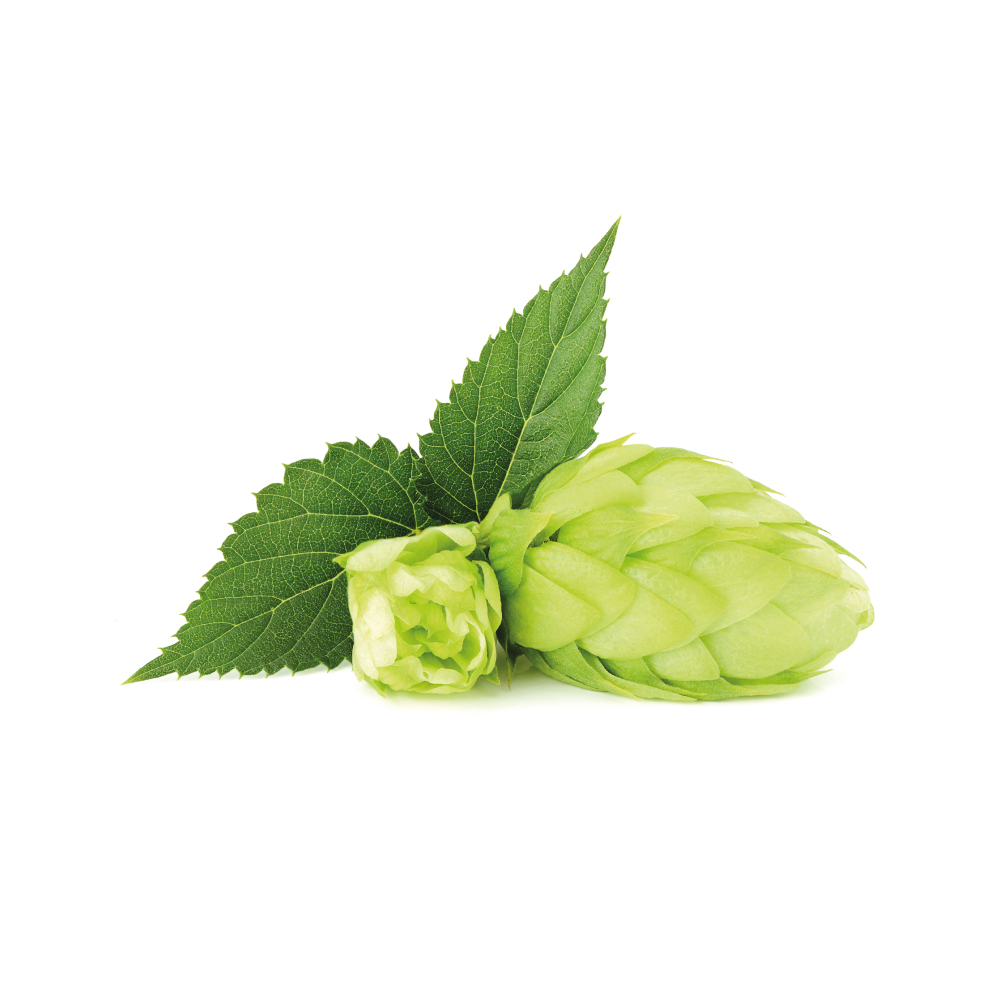
8-Prenylnaringenin is a naturally occurring prenylflavonoid (flavanone), found in Hops, Beer and 1 other source. It is well tolerated orally (low toxicity).
Concentration
Content by Source
Concentrations not reported. No percent-dry-weight or mg/g figures have been published for this compound in its source plants.
8-Prenylnaringenin at a Glance
8-Prenylnaringenin — 8-PN, also called hopein — is a prenylated flavanone found in the lupulin glands of hops (Humulus lupulus). Structurally it is naringenin carrying a prenyl group at the 8-position, and it is biosynthetically tied to the hop chalcone xanthohumol and the flavanone isoxanthohumol.
Its defining property is estrogenic potency: 8-PN is the most potent phytoestrogen yet identified, binding both estrogen receptors more strongly than the soy isoflavone genistein or the classic phytoestrogen coumestrol 1,
The honest evidence posture: the isolated molecule has striking receptor pharmacology and a genuine (if small) human clinical footprint, but almost all of the positive human data come from 8-PN-standardised hop extracts delivering microgram doses, not from the pure compound, and 8-PN content swings widely by cultivar, storage and — crucially — by an individual’s gut flora 4,
The Most Potent Phytoestrogen Known
8-PN is the reference point against which other phytoestrogens’ potency is described, and the comparison is the point of the page. In the study that identified it, 8-PN competed with 17β-estradiol for the estrogen receptor with a potency greater than the established phytoestrogens genistein, daidzein and coumestrol 1Reference 1Identification of a potent phytoestrogen in hops (Humulus lupulus L.) and beerView study →. Follow-up endocrine profiling confirmed it binds both ERα and ERβ — with a preference for ERα — and, tellingly, that the structurally related hop flavonoids (isoxanthohumol, 6-prenylnaringenin, xanthohumol) have less than ~1% of 8-PN’s estrogenic activity 2Reference 2The endocrine activities of 8-prenylnaringenin and related hop (Humulus lupulus L.) flavonoidsView study →. In other words, hops’ estrogenicity is concentrated almost entirely in this one minor molecule.
Two caveats keep the “most potent” claim honest:
- Potent relative to other phytoestrogens, not to estradiol. 8-PN is still orders of magnitude weaker than 17β-estradiol itself — it is the strongest of the plant estrogens, not a match for the human hormone 1,
18Reference 1Identification of a potent phytoestrogen in hops (Humulus lupulus L.) and beerView study →Reference 18The potent phytoestrogen 8-prenylnaringenin: a friend or a foe? International Journal of Molecular Sciences. https://pubmed.ncbi.nlm.nih.gov/35328588/View study → . - The prenyl group and its position are load-bearing. Moving the prenyl to the 6-position (6-prenylnaringenin) or leaving it off (naringenin) largely abolishes the estrogenicity — the 8-prenyl arrangement is what fits the receptor 2Reference 2The endocrine activities of 8-prenylnaringenin and related hop (Humulus lupulus L.) flavonoidsView study →.
From Xanthohumol to 8-PN: The Gut-Activation Story
A distinctive pharmacokinetic feature of this molecule is that most dietary 8-PN is not eaten as 8-PN. Hops and beer are much richer in the chalcone xanthohumol and its isomerised flavanone isoxanthohumol than in 8-PN itself. Human gut bacteria O-demethylate isoxanthohumol into 8-PN, and this conversion — carried out in the distal colon, largely by Eubacterium limosum-type organisms — can raise 8-PN exposure up to ~10-fold after intake 4,
The catch is enormous interindividual variation: only a subset of people harbour an efficient converting flora (“8-PN producers”). In a dietary intervention trial of fifty post-menopausal women, subjects sorted into poor, moderate and strong producers, with the phenotype tied to microbial and dietary factors rather than to dose 6Reference 6Microbial and dietary factors associated with the 8-prenylnaringenin producer phenotype: a dietary intervention trial with fifty healthy post-menopausal Caucasian womenView study →. This is why a fixed intake of hops or beer delivers an unpredictable internal 8-PN dose, and why standardised extracts that deliver pre-formed 8-PN are the only way to control exposure.
What It's Used For
The pharmacology is dominated by estrogen-receptor agonism, with anticancer and anti-angiogenic activities that mostly reflect either that estrogenic axis or high-concentration in-vitro effects. The load-bearing discipline: the human efficacy data are for 8-PN-standardised hop extracts at microgram doses, while the anticancer/anti-angiogenic work is preclinical and often at micromolar concentrations far above what those extracts achieve in blood 15,
Support is an experimental score — weighted by study type (human > animal > in vitro) and volume. A beta, not a validated metric. Human data are the 8-PN-standardised extract, not the pure isolate, so read the per-row basis.
The application with the only real human efficacy data — and it belongs to the extract, not the isolate. In a 12-week randomised, double-blind, placebo-controlled study, a hop extract standardised to deliver 100 µg 8-PN/day was significantly better than placebo on menopausal discomfort at 6 weeks (though the advantage narrowed by 12 weeks) 8Reference 8RCTA first prospective, randomized, double-blind, placebo-controlled study on the use of a standardized hop extract to alleviate menopausal discomfortsView study →.
A later randomised crossover pilot of a standardised hop extract likewise favoured active treatment for hot-flush-related symptoms 9Reference 9RCTA randomized, double-blind, placebo-controlled, cross-over pilot study on the use of a standardized hop extract to alleviate menopausal discomfortsView study →.
Mechanistically this is supported by an ovariectomised-rat model of menopausal hot flushes, in which 8-PN reversed the ovariectomy-induced rise in tail-skin temperature — the rodent read-out of a hot flush 10Reference 10AnimalThe hop phytoestrogen, 8-prenylnaringenin, reverses the ovariectomy-induced rise in skin temperature in an animal model of menopausal hot flushesView study →.
Gap: the human evidence is a couple of small trials of an 8-PN-standardised extract delivering microgram doses, not the pure isolate; whole hops/beer deliver an unpredictable 8-PN dose because of gut-conversion variability 6,
The best-characterised property, studied as the pure isolate. 8-PN competes with 17β-estradiol for both ERα and ERβ and is the most potent phytoestrogen identified, exceeding genistein, daidzein and coumestrol 1Reference 1Identification of a potent phytoestrogen in hops (Humulus lupulus L.) and beerView study →.
The related hop flavonoids carry under ~1% of its activity 2Reference 2The endocrine activities of 8-prenylnaringenin and related hop (Humulus lupulus L.) flavonoidsView study →.
In a single-dose pharmacokinetic study in post-menopausal women, oral 8-PN produced measurable systemic endocrine effects consistent with estrogen-receptor engagement 7Reference 7Pharmacokinetics and systemic endocrine effects of the phyto-oestrogen 8-prenylnaringenin after single oral doses to postmenopausal womenView study →.
This receptor agonism is the engine behind the menopausal, bone and (as a liability) hormone-sensitivity signals.
Gap: potent relative to other phytoestrogens but far weaker than estradiol; and the same agonism that helps menopausal symptoms is the reason for the hormone-sensitive-cancer caution — a mechanism is not by itself a therapeutic verdict 1,
A mechanistically coherent but still-unsettled use. In ovariectomised/osteopenic rats, 8-PN improved bone parameters (alone and with whole-body vibration) 11Reference 11AnimalEffects of 8-prenylnaringenin and whole-body vibration therapy on a rat model of osteopeniaView study →, and in vitro it stimulated osteoblast (MC3T3-E1) differentiation and suppressed osteoclast-like (RAW264.7) formation, the two arms of favourable bone remodelling 12Reference 12Effects and mechanisms of 8-prenylnaringenin on osteoblast MC3T3-E1 and osteoclast-like cells RAW264.7View study →.
The pivotal human test is a one-year randomised, double-blind, placebo-controlled trial of an 8-PN-standardised hop extract in post-menopausal women with osteopenia, which also tracked the gut microbiome — the appropriate place to judge whether the rodent bone signal translates 13Reference 13RCTEffect of a hop extract standardized in 8-prenylnaringenin on bone health and gut microbiome in postmenopausal women with osteopenia: a one-year randomized, double-blind, placebo-controlled trialView study →.
Gap: most direct evidence is rodent/in-vitro; the human osteopenia RCT is the one clinical anchor, and bone endpoints (density vs. fracture) evolve slowly — treat this as promising, not established 11,
Preclinical, and complicated by 8-PN’s own estrogenicity. 8-PN inhibited angiogenesis induced by bFGF and VEGF in cultured endothelial cells and in vivo, with an IC₅₀ around 3–10 µM 14Reference 14In vitroPepper MS, et al. (2004). 8-prenylnaringenin, a novel phytoestrogen, inhibits angiogenesis in vitro and in vivo. Journal of Cellular Physiology. https://pubmed.ncbi.nlm.nih.gov/14978739/View study →.
In ER-positive MCF-7 breast-cancer cells it inhibited ERα-mediated growth and induced apoptosis 15Reference 15Brunelli E, et al. (2007). 8-Prenylnaringenin inhibits estrogen receptor-alpha mediated cell growth and induces apoptosis in MCF-7 breast cancer cells. The Journal of Steroid Biochemistry and Molecular Biology. https://pubmed.ncbi.nlm.nih.gov/17681752/View study →.
Because these effects appear at micromolar concentrations — well above plasma levels from a microgram menopausal dose — and because 8-PN is a potent estrogen agonist, the anticancer framing cannot be read as a green light for hormone-sensitive tumours.
Gap: in-vitro/in-vivo isolate work at concentrations far above achievable human exposure; no anticancer clinical data, and the estrogenicity is a two-edged sword in ER-positive disease 14,
Mechanisms
| Target / pathway | Effect | Relevant to |
|---|---|---|
| Estrogen receptor α (ERα) | potent agonist — higher affinity than genistein/coumestrol; ERα-preferring | menopausal symptomsbonehormone-sensitivity caution |
| Estrogen receptor β (ERβ) | agonist (weaker than at ERα) | estrogenic activity |
| Osteoblasts / osteoclasts (RANKL axis) | ↑ osteoblast differentiation, ↓ osteoclast-like formation | bone / osteoporosis |
| bFGF / VEGF endothelial signalling | inhibits angiogenesis (IC₅₀ ~3–10 µM) | anti-angiogenic / anticancer |
| ERα-mediated proliferation (MCF-7) | growth inhibition + apoptosis at µM concentrations | anticancer (in vitro) |
| Thermoregulatory / hypothalamic estrogen signalling | reverses ovariectomy-induced skin-temperature rise | hot-flush model |
The estrogen-receptor agonism is the hub: the menopausal, bone and hot-flush effects all flow from it, and so does the central safety caveat. The anti-angiogenic action is a partly ER-independent, high-concentration effect and sits off the microgram-dose menopausal axis.
Pharmacokinetics
The PK is unusual and central to the molecule. In post-menopausal women, single oral doses of synthetic 8-PN (50, 250, 750 mg) were rapidly absorbed (peak ~1–1.5 h), circulated mostly as conjugated metabolites (glucuronides/sulfates) with only small amounts of free aglycone, and were well tolerated across the whole dose range 7Reference 7Pharmacokinetics and systemic endocrine effects of the phyto-oestrogen 8-prenylnaringenin after single oral doses to postmenopausal womenView study →. But the dominant real-world route is indirect: much systemic 8-PN is generated in the colon when gut bacteria demethylate isoxanthohumol, a conversion that can boost exposure ~10-fold but only in the subset of people with the right flora 4,
Clinical Trials
Human trials exist but are few and small, and all use 8-PN-standardised hop extracts (or, for PK, synthetic 8-PN) rather than the isolate as a stand-alone drug: two small placebo-controlled menopause trials 8,
| Completed | Planned | Terminated | Preclinical |
|---|---|---|---|
| Small menopause RCTs (standardised extract) + single-dose PK + 1-yr bone RCT 7, | — | — | Anti-angiogenic, breast-cancer apoptosis, osteoblast/osteoclast, hot-flush model 10, |
Last checked: July 2026.
Isolate vs. Plant Studies
This molecule splits cleanly. The receptor pharmacology is pure-isolate — 8-PN’s ranking as the most potent phytoestrogen, its ERα/ERβ binding, its anti-angiogenic and pro-apoptotic effects are all isolated-compound work, a genuine mechanistic strength 1,
Its Role in Plants
In the hop plant, 8-PN is a minor product of the prenylflavonoid pathway in the lupulin glands, downstream of the abundant chalcone xanthohumol: xanthohumol cyclises to the flavanone isoxanthohumol, and demethylation/prenylation chemistry yields the prenylnaringenins, of which the 8-prenyl isomer is the estrogenic one 3Reference 3Xanthohumol and related prenylflavonoids from hops and beer: to your good health! Phytochemistry. https://pubmed.ncbi.nlm.nih.gov/15231405/View study →. The prenylated flavonoids and the co-located bitter acids of the lupulin gland are part of the plant’s chemical defence and, for hops as a cultivated crop, its resin/aroma value — the estrogenic activity that matters to humans is essentially a side-effect of this defensive/secondary chemistry, not a function the plant evolved for us 3Reference 3Xanthohumol and related prenylflavonoids from hops and beer: to your good health! Phytochemistry. https://pubmed.ncbi.nlm.nih.gov/15231405/View study →.
Prevalence in Nature
8-PN is, for practical purposes, a hops-specific molecule: it occurs in the cones (strobiles) of Humulus lupulus and, by extension, in beer and in hop-based supplements. Even within hops it is a minor constituent — usually well under 0.1% of the dried cone and far less abundant than xanthohumol or isoxanthohumol — and its level varies widely with cultivar, growing conditions and storage, degrading over time 3Reference 3Xanthohumol and related prenylflavonoids from hops and beer: to your good health! Phytochemistry. https://pubmed.ncbi.nlm.nih.gov/15231405/View study →. In beer it is present only at trace µg/L concentrations, which is why dietary exposure hinges so heavily on gut conversion of the more plentiful isoxanthohumol rather than on pre-formed 8-PN 4,
Discovery & Synthesis
8-PN’s estrogenic identity was pinned down in 1999, when Milligan, De Keukeleire, Stevens and colleagues identified it as the potent phytoestrogen of hops and beer — the molecular explanation for the long-noted estrogenic effects of hops on female hop-pickers 1Reference 1Identification of a potent phytoestrogen in hops (Humulus lupulus L.) and beerView study →. The following year the same group profiled its ERα/ERβ binding and showed the related hop flavonoids were essentially inactive by comparison 2Reference 2The endocrine activities of 8-prenylnaringenin and related hop (Humulus lupulus L.) flavonoidsView study →. The trivial name hopein reflects the hop origin.
Because 8-PN occurs at low natural abundance, research and supplement material is generally obtained by semi-synthesis from the plentiful hop chalcone xanthohumol rather than by extraction of 8-PN itself: controlled demethylation of xanthohumol yields 8-PN (with 6-prenylnaringenin as a regioisomeric by-product), and modern work has optimised a microwave-assisted, design-of-experiments demethylation to improve the 8-PN:6-PN ratio and yield 19Reference 19Semi-synthetic approach leading to 8-prenylnaringenin and 6-prenylnaringenin: optimization of the microwave-assisted demethylation of xanthohumol using design of experimentsView study →. The pharmacokinetic study of pure 8-PN likewise used chemically synthesised material 7Reference 7Pharmacokinetics and systemic endocrine effects of the phyto-oestrogen 8-prenylnaringenin after single oral doses to postmenopausal womenView study →. Manufacture today therefore leans on xanthohumol-derived semi-synthesis and on hop extracts standardised to a defined 8-PN content.
Patents: not yet researched.
Toxicity & Safety
8-PN carries a low toxicity flag at dietary and supplement exposures — hops and beer have a long consumption history, single oral doses up to 750 mg were well tolerated in a controlled study 7Reference 7Pharmacokinetics and systemic endocrine effects of the phyto-oestrogen 8-prenylnaringenin after single oral doses to postmenopausal womenView study →, and a human probe study found no meaningful CYP-mediated drug-interaction signal 16Reference 16Pharmacokinetic interactions of a hop dietary supplement with drug metabolism in perimenopausal and postmenopausal womenView study →. The real caution is not toxicological but hormonal: this is the most potent phytoestrogen known, so concentrated hop/8-PN products behave like a weak estrogen and should be treated with the caution that implies.
- Low intrinsic toxicity at usual exposures. Long dietary history via hops/beer; single oral doses to 750 mg tolerated; no clinically significant CYP1A2/2C9/2D6/3A4 interaction in a human hop-supplement probe study 7,
16Reference 7Pharmacokinetics and systemic endocrine effects of the phyto-oestrogen 8-prenylnaringenin after single oral doses to postmenopausal womenView study →Reference 16Pharmacokinetic interactions of a hop dietary supplement with drug metabolism in perimenopausal and postmenopausal womenView study → . - Most potent phytoestrogen known — avoid in hormone-sensitive conditions. Concentrated hop/8-PN supplements act as an estrogen agonist; caution in oestrogen-receptor-positive breast cancer, endometriosis and other hormone-sensitive disease, and with hormone therapy or endocrine treatments, without medical advice 1,
2, .18Reference 1Identification of a potent phytoestrogen in hops (Humulus lupulus L.) and beerView study →Reference 2The endocrine activities of 8-prenylnaringenin and related hop (Humulus lupulus L.) flavonoidsView study →Reference 18The potent phytoestrogen 8-prenylnaringenin: a friend or a foe? International Journal of Molecular Sciences. https://pubmed.ncbi.nlm.nih.gov/35328588/View study → - Unpredictable real dose from plants. Because gut bacteria generate much 8-PN from isoxanthohumol, the internal dose from hops, beer or tinctures varies widely between people and is not the label amount 4,
5, .6Reference 4Activation of proestrogens from hops (Humulus lupulus L.) by intestinal microbiota; conversion of isoxanthohumol into 8-prenylnaringeninView study →Reference 5In vitroThe prenylflavonoid isoxanthohumol from hops (Humulus lupulus L.) is activated into the potent phytoestrogen 8-prenylnaringenin in vitro and in the human intestineView study →Reference 6Microbial and dietary factors associated with the 8-prenylnaringenin producer phenotype: a dietary intervention trial with fifty healthy post-menopausal Caucasian womenView study → - Reproductive/endocrine signalling is inherent. As a strong estrogen-receptor agonist, 8-PN engages the same axis as endogenous estrogen; estrogenic and reproductive findings for the isolate are reported here as cautions, with intake decisions belonging to the herb/product page.
Dosage
There is no established dose for isolated 8-PN, and it is not marketed as a stand-alone drug. The figures that exist are research figures at two very different scales:
| Setting | Form | Amount |
|---|---|---|
| Menopause RCTs | Hop extract standardised to 8-PN | ~100–250 µg 8-PN/day 8, |
| Bone RCT (osteopenia) | 8-PN-standardised hop extract | standardised daily 8-PN dose over 1 year 13Reference 13RCTEffect of a hop extract standardized in 8-prenylnaringenin on bone health and gut microbiome in postmenopausal women with osteopenia: a one-year randomized, double-blind, placebo-controlled trialView study → |
| Single-dose PK study | Synthetic 8-PN | 50 / 250 / 750 mg single oral dose 7Reference 7Pharmacokinetics and systemic endocrine effects of the phyto-oestrogen 8-prenylnaringenin after single oral doses to postmenopausal womenView study → |
The gulf between the microgram doses that produced the menopausal/bone signals and the milligram doses used only to characterise pharmacokinetics is itself a caution against extrapolating from high-dose experiments. Ordinary hop tea, tincture or beer delivers an unknown and person-dependent amount because much 8-PN is made by gut bacteria from isoxanthohumol 4,
References
- Milligan SR, et al. (1999). Identification of a potent phytoestrogen in hops (Humulus lupulus L.) and beer. The Journal of Clinical Endocrinology & Metabolism. https://pubmed.ncbi.nlm.nih.gov/10372741/
- Milligan SR, et al. (2000). The endocrine activities of 8-prenylnaringenin and related hop (Humulus lupulus L.) flavonoids. The Journal of Clinical Endocrinology & Metabolism. https://pubmed.ncbi.nlm.nih.gov/11134162/
- Stevens JF, Page JE (2004). Xanthohumol and related prenylflavonoids from hops and beer: to your good health! Phytochemistry. https://pubmed.ncbi.nlm.nih.gov/15231405/
- Possemiers S, et al. (2005). Activation of proestrogens from hops (Humulus lupulus L.) by intestinal microbiota; conversion of isoxanthohumol into 8-prenylnaringenin. Journal of Agricultural and Food Chemistry. https://pubmed.ncbi.nlm.nih.gov/16076107/
- Possemiers S, et al. (2006). The prenylflavonoid isoxanthohumol from hops (Humulus lupulus L.) is activated into the potent phytoestrogen 8-prenylnaringenin in vitro and in the human intestine. The Journal of Nutrition. https://pubmed.ncbi.nlm.nih.gov/16772450/
- Bolca S, et al. (2007). Microbial and dietary factors associated with the 8-prenylnaringenin producer phenotype: a dietary intervention trial with fifty healthy post-menopausal Caucasian women. The British Journal of Nutrition. https://pubmed.ncbi.nlm.nih.gov/17521469/
- Rad M, et al. (2006). Pharmacokinetics and systemic endocrine effects of the phyto-oestrogen 8-prenylnaringenin after single oral doses to postmenopausal women. British Journal of Clinical Pharmacology. https://pubmed.ncbi.nlm.nih.gov/16934044/
- Heyerick A, et al. (2006). A first prospective, randomized, double-blind, placebo-controlled study on the use of a standardized hop extract to alleviate menopausal discomforts. Maturitas. https://pubmed.ncbi.nlm.nih.gov/16321485/
- Erkkola R, et al. (2010). A randomized, double-blind, placebo-controlled, cross-over pilot study on the use of a standardized hop extract to alleviate menopausal discomforts. Phytomedicine. https://pubmed.ncbi.nlm.nih.gov/20167461/
- Bowe J, et al. (2006). The hop phytoestrogen, 8-prenylnaringenin, reverses the ovariectomy-induced rise in skin temperature in an animal model of menopausal hot flushes. The Journal of Endocrinology. https://pubmed.ncbi.nlm.nih.gov/17088409/
- Hoffmann DB, et al. (2016). Effects of 8-prenylnaringenin and whole-body vibration therapy on a rat model of osteopenia. Journal of Nutrition and Metabolism. https://pubmed.ncbi.nlm.nih.gov/26904278/
- Luo D, et al. (2014). Effects and mechanisms of 8-prenylnaringenin on osteoblast MC3T3-E1 and osteoclast-like cells RAW264.7. Food Science & Nutrition. https://pubmed.ncbi.nlm.nih.gov/25473491/
- Lecomte M, et al. (2023). Effect of a hop extract standardized in 8-prenylnaringenin on bone health and gut microbiome in postmenopausal women with osteopenia: a one-year randomized, double-blind, placebo-controlled trial. Nutrients. https://pubmed.ncbi.nlm.nih.gov/37375599/
- Pepper MS, et al. (2004). 8-prenylnaringenin, a novel phytoestrogen, inhibits angiogenesis in vitro and in vivo. Journal of Cellular Physiology. https://pubmed.ncbi.nlm.nih.gov/14978739/
- Brunelli E, et al. (2007). 8-Prenylnaringenin inhibits estrogen receptor-alpha mediated cell growth and induces apoptosis in MCF-7 breast cancer cells. The Journal of Steroid Biochemistry and Molecular Biology. https://pubmed.ncbi.nlm.nih.gov/17681752/
- van Breemen RB, et al. (2020). Pharmacokinetic interactions of a hop dietary supplement with drug metabolism in perimenopausal and postmenopausal women. Journal of Agricultural and Food Chemistry. https://pubmed.ncbi.nlm.nih.gov/32285669/
- Štulíková K, et al. (2018). Therapeutic perspectives of 8-prenylnaringenin, a potent phytoestrogen from hops. Molecules. https://pubmed.ncbi.nlm.nih.gov/29543713/
- Pohjanvirta R, Nasri A (2022). The potent phytoestrogen 8-prenylnaringenin: a friend or a foe? International Journal of Molecular Sciences. https://pubmed.ncbi.nlm.nih.gov/35328588/
- Urmann C, et al. (2020). Semi-synthetic approach leading to 8-prenylnaringenin and 6-prenylnaringenin: optimization of the microwave-assisted demethylation of xanthohumol using design of experiments. Molecules. https://pubmed.ncbi.nlm.nih.gov/32887388/



