
Compound Monograph
Jujuboside B
Jujuboside B is a dammarane-type triterpene saponin from the seed of sour jujube (Ziziphus jujuba var. spinosa, suan zao ren) — a minor sibling of the better-studied jujuboside A. Its thin but coherent preclinical profile spans anti-seizure/neuroprotective (AMPA/glutamate, daf-16/sir-2.1), hepatoprotective (sepsis), anti-inflammatory (HMGB1) and antiplatelet activity, with no human trials of the isolate. The herb's sedative reputation belongs to the whole seed, not this compound.

Sources · 6
Where Does It Come From?
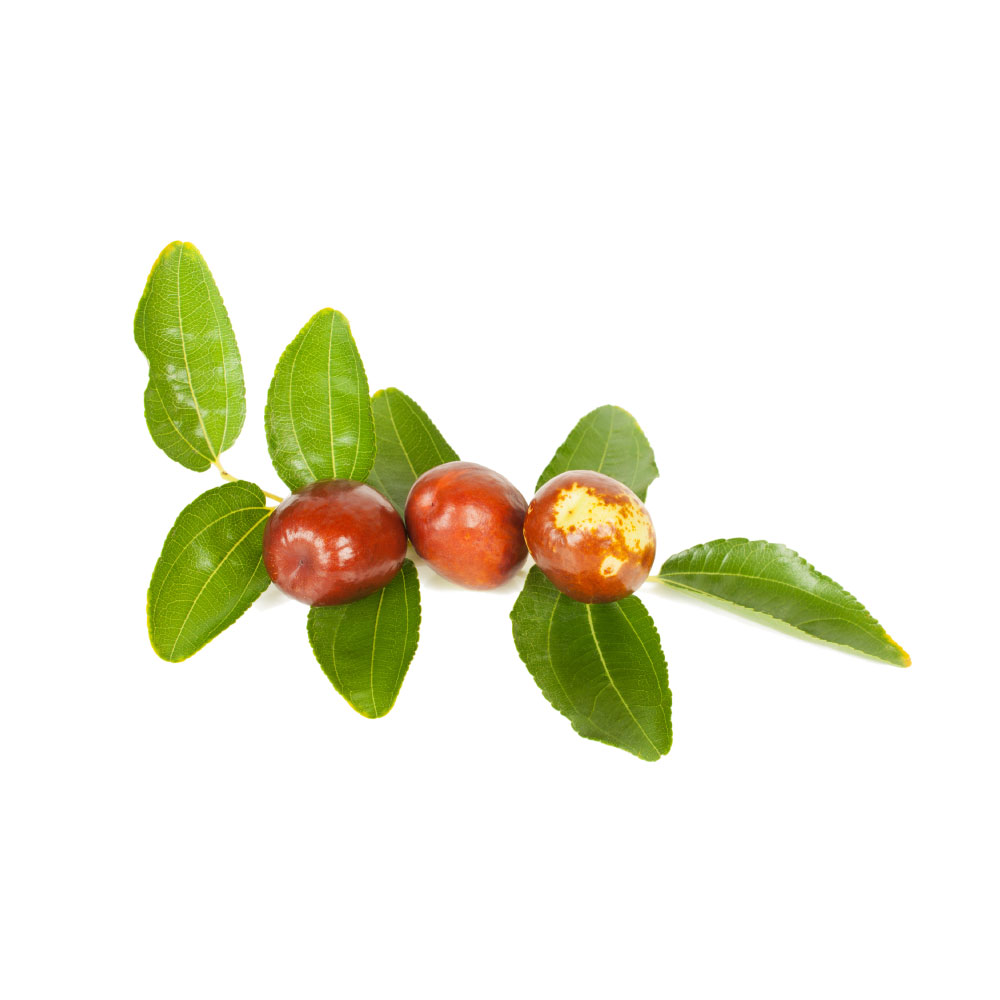
Jujuboside B is a naturally occurring triterpenoid saponin (dammarane-type), found in Sour Jujube seed and 5 other sources. It is flagged as moderately toxic.
Concentration
Content by Source
Concentrations not reported. No percent-dry-weight or mg/g figures have been published for this compound in its source plants.
Jujuboside B at a Glance
Jujuboside B is a dammarane-type triterpene saponin of sour jujube seed and the minor sibling of the better-studied jujuboside A.
Its preclinical profile is thin but coherent, covering sedative and antiplatelet activity.
It is also what jujuboside A turns into, which matters more than its own small share of the seed.
Jujuboside B and A: One Sugar Apart
Calling jujuboside B the minor sibling is accurate about the seed and misleading about the body. The two saponins are glycosides of the same aglycone, jujubogenin, a dammarane triterpene with an unusual tricyclic ketal spanning its D, E and F rings 11Reference 11Synthesis of the hexacyclic triterpene core of the jujuboside saponins via tandem Wolff rearrangement–intramolecular ketene hetero-Diels-Alder reactionView study →. Jujuboside A carries one more sugar on the C-3 chain; remove it and jujuboside A is jujuboside B. Remove the rest and both become jujubogenin.
That is not only a structural relationship. It is what happens to an oral dose of the seed. A 2017 study tracked jujuboside A through the rat gastrointestinal tract and found 10Reference 10In vitroGastrointestinal absorption and metabolic dynamics of jujuboside A, a saponin derived from the seed of Ziziphus jujuba — rat in vivo and in vitroView study →:
- Oral bioavailability of jujuboside A is 1.32% — only a trace of the parent saponin is absorbed intact.
- The loss is hydrolysis rather than malabsorption, and it happens in the stomach — the gastric environment breaks jujuboside A down before it reaches the duodenum and colon where absorption occurs.
- Jujuboside B and jujubogenin — the metabolites — were the species that acted, producing significant effects on the expression and activation of GABA-A receptors, and the authors concluded that the metabolites rather than the parent saponin are responsible for the specific bioactivities.
So the seed delivers more jujuboside B than its ~0.13–0.19 mg/g content suggests: some is eaten, and more is made in the stomach out of the jujuboside A that was eaten. It is also the firmest reason to think jujuboside B contributes to suan zao ren’s sedative effect: not class membership, but a measured action on the GABA-A target the herb’s sedation is attributed to.
| Jujuboside B | Jujuboside A | |
|---|---|---|
| Relationship | One sugar smaller; also jujuboside A’s first metabolite | Parent saponin |
| Seed content | ~0.13–0.19 mg/g | ~0.24–0.96 mg/g |
| Official quality marker | No | Yes (with spinosin) |
| Evidence depth | Thin — roughly one study per signal | Deeper — multi-model sedative, antidepressant, Aβ clearance |
| GABA-A effect after oral jujuboside A | One of the two acting species 10Reference 10In vitroGastrointestinal absorption and metabolic dynamics of jujuboside A, a saponin derived from the seed of Ziziphus jujuba — rat in vivo and in vitroView study → | Not the acting species |
What the finding does not do is give jujuboside B a sedative dataset of its own. There is still no sleep, EEG or anxiolytic study of the isolated molecule. It supplies a mechanism where previously there was only an inference.
What It's Used For
Jujuboside B is a dammarane-type triterpene saponin of sour-jujube seed (Ziziphus jujuba var. spinosa, suan zao ren) — the classic TCM sedative herb — and a minor sibling of the better-studied jujuboside A. The load-bearing honesty point: the seed’s sedative/hypnotic reputation belongs to the whole seed/extract, where jujuboside A and spinosin (not B) are the studied actives and quality markers. Jujuboside B’s own literature is thin but coherent — anti-seizure/neuroprotective, hepatoprotective in sepsis, anti-inflammatory and antiplatelet — and entirely preclinical, with no human trials 9Reference 9Advances in the pharmacological effects of jujuboside BView study →.
The strongest jujuboside-B-specific CNS signal: in mice it suppressed febrile seizures by dampening AMPA-receptor glutamatergic activity 3Reference 3Jujuboside B inhibits febrile seizure by modulating AMPA-receptor activityView study →, and in C. elegans it protected against amyloid-β toxicity via daf-16/sir-2.1 (FOXO/sirtuin) pathways 2Reference 2Metabolomic insights into the neuroprotective actions of Ziziphi Spinosae Semen and jujuboside B against Aβ-induced toxicityView study → — a plausible mechanistic bridge to suan zao ren’s sedative rationale (reduced neuronal excitability).
Gap: two small preclinical studies in different models (mouse seizure, worm), with no sleep/EEG or anxiolytic endpoint for the isolate, no mammalian neurodegeneration model and no human data 2,
In a rodent sepsis model, jujuboside B lowered ALT/AST and reduced TNF-α, IL-1β and NO in septic liver injury 1Reference 1Hepatoprotective functions of jujuboside BView study →.
Gap: a single study in one model, with no dose-ranging and no chronic/fibrosis or human liver data — an anti-inflammatory rather than metabolic-liver effect 1Reference 1Hepatoprotective functions of jujuboside BView study →.
Jujuboside B inhibited HMGB1-mediated severe inflammatory responses in human endothelial cells and mice 4Reference 4AnimalJujuboside B inhibited HMGB1-mediated severe inflammatory responses in human endothelial cells and miceView study → — mechanistically consistent with the sepsis hepatoprotection (shared late-inflammatory axis).
Gap: a single cell+mouse study with surrogate inflammatory endpoints and no clinical translation 4Reference 4AnimalJujuboside B inhibited HMGB1-mediated severe inflammatory responses in human endothelial cells and miceView study →.
Ziziphus jujuba and its component jujuboside B inhibit platelet aggregation 5Reference 5Zizyphus jujuba and its active component jujuboside B inhibit platelet aggregationView study →, and jujuboside B inhibited neointimal hyperplasia and vascular-smooth-muscle-cell dedifferentiation via AMPK/PPAR-γ 6Reference 6Jujuboside B inhibits neointimal hyperplasia and prevents VSMC dedifferentiation, proliferation and migration via AMPK/PPAR-γView study →.
Gap: in-vitro and rodent only; the antiplatelet effect implies a theoretical bleeding/anticoagulant-interaction caution but is unquantified in humans 5,
Suan zao ren whole seed/extract has a genuine traditional and clinical sedative use — but the studied actives and quality markers are jujuboside A and spinosin, not jujuboside B 7,
Gap: there is no jujuboside-B monotherapy sleep, EEG or anxiolytic study, so the clinical hypnotic effect cannot be attributed to this isolate. Its contribution rests on the AMPA finding above, and on its role as the metabolite through which oral jujuboside A reaches GABA-A receptors 7,
Mechanisms
| Target / pathway | Effect | Relevant to |
|---|---|---|
| AMPA glutamate receptors | ↓ excitatory activity (anticonvulsant) | neuroprotective / anti-seizure; sedative rationale |
| daf-16 (FOXO) / sir-2.1 (sirtuin) | upregulated stress-response signaling; ↓ Aβ toxicity | neuroprotective (Aβ) |
| TNF-α / IL-1β / iNOS-NO | suppressed; ↓ ALT/AST | hepatoprotective (sepsis) |
| HMGB1 | inhibited release/signaling in endothelium | anti-inflammatory |
| AMPK / PPAR-γ | activated; maintains VSMC contractile phenotype | vascular / anti-restenosis |
| Platelet aggregation | inhibited | antiplatelet / cardiovascular |
Pharmacokinetics
Jujuboside B is a large, polar dammarane-type saponin and behaves like the class: poor oral bioavailability, limited passive absorption, and progressive hydrolysis to the deglycosylated aglycone jujubogenin, which is the other likely circulating species. Seed content is low (~0.13–0.19 mg/g), so direct dietary exposure to the isolate is modest — but that understates total exposure, because jujuboside B is also generated in the stomach from ingested jujuboside A, and appears in that setting as one of the two metabolites acting on GABA-A receptors 10Reference 10In vitroGastrointestinal absorption and metabolic dynamics of jujuboside A, a saponin derived from the seed of Ziziphus jujuba — rat in vivo and in vitroView study →. No dedicated jujuboside-B ADME or half-life dataset exists; its own pharmacokinetics are characterised only at the whole-seed review level 7,
Clinical Trials
There are no trials of isolated jujuboside B. All clinical evidence in this space is for the whole suan zao ren seed/extract or multi-herb formulas (e.g. Suan Zao Ren Tang) for insomnia/anxiety, where jujuboside B is one minor constituent and not the standardized marker.
| Completed | Planned | Terminated | Preclinical |
|---|---|---|---|
| —(none, isolate) | — | — | Thin(one study per signal) |
Last checked: September 2026.
Isolate vs. Plant Studies
Every jujuboside B result is isolate, preclinical, and single-study. The febrile-seizure and
amyloid-β work 2,
The plant-side evidence, meanwhile, is for the whole seed. Suan zao ren and Suan Zao Ren Tang have a
genuine clinical record in insomnia and anxiety, but the seed is standardised on
jujuboside A and spinosin, and the studied
actives include the cyclopeptide alkaloid sanjoinine A 7,
What connects the two is the metabolic link rather than a shared exposure. Because oral jujuboside A is largely hydrolysed to jujuboside B before absorption 10Reference 10In vitroGastrointestinal absorption and metabolic dynamics of jujuboside A, a saponin derived from the seed of Ziziphus jujuba — rat in vivo and in vitroView study →, the whole-seed evidence is partly evidence about this molecule — but indirectly, and at an exposure nobody has measured in a person. The practical consequence is the same as for its sibling: the isolate studies say what jujuboside B can do to a cell, and the herb studies say what the seed does to a person, and the bridge between them is a stomach.
Its Role in Plants
Jujuboside B is a seed saponin of a small stone fruit, and the ecological logic is the ordinary one: a surfactant, membrane-active glycoside banked in the embryo, deterring the animals that would crack and eat it rather than swallow the fruit whole. The jujubosides as a family are reported to be antibacterial and antifungal, and distinctively antisweet — jujubogenin glycosides suppress the perception of sweetness 11Reference 11Synthesis of the hexacyclic triterpene core of the jujuboside saponins via tandem Wolff rearrangement–intramolecular ketene hetero-Diels-Alder reactionView study →, which in a fruit-bearing shrub reads as a way of making the seed unrewarding without spoiling the fruit.
Within Ziziphi Spinosae Semen the saponins are kernel constituents rather than coat ones: the reddish-brown seed coat is dominated by betulinic acid and oleic acid, while spinosin and jujuboside A sit in the yellow kernel at 18 and 24 times their coat concentrations respectively 12Reference 12Shi YH, Nan Y, Zheng W, et al. (2024). [Qualitative and semiquantitative analyses of the chemical components of the seed coat and kernel of Ziziphi Spinosae Semen]. Se Pu (Chinese Journal of Chromatography). https://pubmed.ncbi.nlm.nih.gov/38503700/View study →. Mass- spectrometry imaging maps the seed’s saponins unevenly across cotyledon, endosperm and radicle, and shows that the traditional dry-frying step significantly expands the distribution area of two of them, along with six flavonoids and three alkaloids 13Reference 13Spatial distribution of metabolites in processing Ziziphi Spinosae Semen as revealed by matrix-assisted laser desorption/ionization mass spectrometry imagingView study → — the roast redistributes the chemistry as well as drying the seed.
Prevalence in Nature
Jujuboside B occurs in Ziziphus (Rhamnaceae) and is not a dietary molecule outside it. Its source is the dried seed of sour jujube, Ziziphus jujuba var. spinosa, at roughly 0.13–0.19 mg/g — about a third to a fifth of the jujuboside A content of the same seed, and the reason it is not a pharmacopoeial marker 7Reference 7ReviewPhytochemical, pharmacological, pharmacokinetic and toxicological characteristics of Ziziphi Spinosae Semen: a reviewView study →.
Two comparisons matter. The cultivated jujube’s seed is a different material: a controlled multi-omics comparison of Ziziphi Spinosae Semen (wild, var. spinosa) with Semen Jujubae (cultivated, var. jujuba) found the wild seed higher in total saponins, total flavonoids, total phenols and antioxidant activity, while the cultivated seed won on protein and soluble sugar 14Reference 14An integrated analysis of metabolomics and transcriptomics offers profound insights into the mechanisms of metabolic differentiation between Semen Ziziphi Spinosae and Semen JujubaeView study →. And the genus reaches further than the seed — the sibling saponin jujuboside A has been isolated from the root bark of Ziziphus lotus, a Mediterranean and North African relative, in the study that also described jujuboside C 15Reference 15Dammarane saponins from Zizyphus lotusView study →.
The distinctive prevalence fact for this molecule, though, is not botanical. Jujuboside B is also formed inside the body, from jujuboside A, in the stomach 10Reference 10In vitroGastrointestinal absorption and metabolic dynamics of jujuboside A, a saponin derived from the seed of Ziziphus jujuba — rat in vivo and in vitroView study → — so the amount a person is exposed to after a decoction is larger than the seed’s own content, and depends on how much of the parent saponin was there to begin with.
Major Natural Sources
| Source | Part | Jujuboside B |
|---|---|---|
| Sour jujube (Ziziphus jujuba var. spinosa) | Dried seed | ~0.13–0.19 mg/g dry wt — a minor constituent, not a quality marker 7Reference 7ReviewPhytochemical, pharmacological, pharmacokinetic and toxicological characteristics of Ziziphi Spinosae Semen: a reviewView study → |
| Sour jujube | Seed kernel vs coat | The seed’s saponins sit in the kernel, not the reddish-brown coat 12Reference 12Shi YH, Nan Y, Zheng W, et al. (2024). [Qualitative and semiquantitative analyses of the chemical components of the seed coat and kernel of Ziziphi Spinosae Semen]. Se Pu (Chinese Journal of Chromatography). https://pubmed.ncbi.nlm.nih.gov/38503700/View study → |
| Cultivated jujube (Z. jujuba var. jujuba) | Seed | Present; the seed is lower in total saponins than the wild variety 14Reference 14An integrated analysis of metabolomics and transcriptomics offers profound insights into the mechanisms of metabolic differentiation between Semen Ziziphi Spinosae and Semen JujubaeView study → |
| Human stomach, after oral jujuboside A | — | Formed by gastric hydrolysis of the parent saponin 10Reference 10In vitroGastrointestinal absorption and metabolic dynamics of jujuboside A, a saponin derived from the seed of Ziziphus jujuba — rat in vivo and in vitroView study → |
Discovery & Synthesis
Jujuboside B was described alongside jujuboside A as one of the saponins of suan zao ren, and the two were distinguished by a single sugar from the outset. The interesting chemistry is the aglycone they share: jujubogenin carries a unique tricyclic ketal forming its D, E and F rings 11Reference 11Synthesis of the hexacyclic triterpene core of the jujuboside saponins via tandem Wolff rearrangement–intramolecular ketene hetero-Diels-Alder reactionView study → — a motif rare enough that synthetic work on the jujubosides has aimed at the triterpene rather than the glycosides. A third member, jujuboside C, came later from Ziziphus lotus 15Reference 15Dammarane saponins from Zizyphus lotusView study →.
There is no total synthesis of jujuboside B. The nearest achievement is the aglycone core: in 2018 Rashad Karimov, Derek Tan and David Gin at Memorial Sloan Kettering built the hexacyclic core of jujubogenin, assembling the C ring by a sterically demanding intermolecular Diels–Alder reaction and the DF ring system by a tandem Wolff rearrangement–intramolecular ketene hetero-Diels–Alder, then closing the E ring by acid-catalysed cyclisation of the resulting bicyclic enol ether 11Reference 11Synthesis of the hexacyclic triterpene core of the jujuboside saponins via tandem Wolff rearrangement–intramolecular ketene hetero-Diels-Alder reactionView study →. Commercial jujuboside B is isolated from sour jujube seed, where it sits at under 0.2 mg/g — which is why most studies of it use small quantities of purified material rather than anything resembling a preparation.
Patents: not yet researched (future patent-loop pass).
Toxicity & Safety
The caution here is about the concentrated isolate, not the seed — jujuboside B is a membrane-active saponin with demonstrated antiplatelet activity and no human safety record, while the parent suan zao ren seed is food-grade and well tolerated.
- Antiplatelet activity. A demonstrated effect on platelet aggregation, implying a theoretical bleeding and anticoagulant-interaction caution.
- Avoid the isolate in pregnancy and lactation. No reproductive or developmental studies.
- Saponin class risks. Hemolytic and mucosal/GI-irritant potential from surfactant action on lipid bilayers.
- No isolate toxicology. No human safety data or formal toxicology exists for purified jujuboside B.
- The parent seed is food-grade. Real-world risk from suan zao ren at culinary or decoction doses is low.
Full Safety & Interactions Detail
The moderate rating applies to the isolated saponin. It is a membrane-active triterpene saponin, and saponins as a class carry hemolytic and mucosal/GI-irritant potential (surfactant action on lipid bilayers); it also has a demonstrated antiplatelet effect 5Reference 5Zizyphus jujuba and its active component jujuboside B inhibit platelet aggregationView study → implying a theoretical bleeding/anticoagulant-interaction caution, and there are no human safety data or formal toxicology for the isolate. Counterbalancing this, the parent seed (suan zao ren) is food-grade and well tolerated at culinary/decoction doses, so real-world risk from the herb is low. The rating describes the purified molecule, not the seed it comes from.
Dosage
There is no established human dose — all figures in the literature are preclinical research doses. Human exposure occurs only via the whole seed (traditionally 9–18 g dry-fried suan zao ren in decoction), within which jujuboside B is a minor (~0.13–0.19 mg/g) constituent, so no isolate dose should be inferred.
References
- Kim SJ, et al. (2023). Hepatoprotective functions of jujuboside B. Journal of Natural Medicines. https://pubmed.ncbi.nlm.nih.gov/36064835/
- Liu Y, et al. (2026). Metabolomic insights into the neuroprotective actions of Ziziphi Spinosae Semen and jujuboside B against Aβ-induced toxicity. Journal of Ethnopharmacology. https://pubmed.ncbi.nlm.nih.gov/41483858/
- Jin B, Bai W, Zhao J, et al. (2023). Jujuboside B inhibits febrile seizure by modulating AMPA-receptor activity. Journal of Ethnopharmacology. https://pubmed.ncbi.nlm.nih.gov/36549370/
- Kim N, Kim C, Ryu SH, et al. (2023). Jujuboside B inhibited HMGB1-mediated severe inflammatory responses in human endothelial cells and mice. Journal of Medicinal Food. https://pubmed.ncbi.nlm.nih.gov/36576404/
- Seo EJ, Lee SY, Kang SS, et al. (2013). Zizyphus jujuba and its active component jujuboside B inhibit platelet aggregation. Phytotherapy Research. https://pubmed.ncbi.nlm.nih.gov/22893618/
- Ji Z, Li J, Wang J (2021). Jujuboside B inhibits neointimal hyperplasia and prevents VSMC dedifferentiation, proliferation and migration via AMPK/PPAR-γ. Frontiers in Pharmacology. https://pubmed.ncbi.nlm.nih.gov/34248626/
- Liu Z, et al. (2024). Phytochemical, pharmacological, pharmacokinetic and toxicological characteristics of Ziziphi Spinosae Semen: a review. Frontiers in Pharmacology. https://pubmed.ncbi.nlm.nih.gov/39679366/
- He SR, Zhao CB, Zhang JX, et al. (2020). Ziziphi Spinosae Semen: a review of botanical uses, phytochemistry, pharmacology, pharmacokinetics and toxicology. Evidence-Based Complementary and Alternative Medicine. https://pubmed.ncbi.nlm.nih.gov/32695210/
- Dong XN, Li MT, Gu HY, et al. (2023). Advances in the pharmacological effects of jujuboside B. China Journal of Chinese Materia Medica. https://pubmed.ncbi.nlm.nih.gov/37802856/
- Song P, Zhang Y, Ma G, et al. (2017). Gastrointestinal absorption and metabolic dynamics of jujuboside A, a saponin derived from the seed of Ziziphus jujuba — rat in vivo and in vitro. Journal of Agricultural and Food Chemistry. https://pubmed.ncbi.nlm.nih.gov/28868886/
- Karimov RR, Tan DS, Gin DY (2018). Synthesis of the hexacyclic triterpene core of the jujuboside saponins via tandem Wolff rearrangement–intramolecular ketene hetero-Diels-Alder reaction. Tetrahedron. https://pubmed.ncbi.nlm.nih.gov/30467444/
- Shi YH, Nan Y, Zheng W, et al. (2024). [Qualitative and semiquantitative analyses of the chemical components of the seed coat and kernel of Ziziphi Spinosae Semen]. Se Pu (Chinese Journal of Chromatography). https://pubmed.ncbi.nlm.nih.gov/38503700/
- Ma D, Zhao M, Guo H, et al. (2024). Spatial distribution of metabolites in processing Ziziphi Spinosae Semen as revealed by matrix-assisted laser desorption/ionization mass spectrometry imaging. Scientific Reports. https://pubmed.ncbi.nlm.nih.gov/38961089/
- Ju J, Xuan J, Song X, et al. (2026). An integrated analysis of metabolomics and transcriptomics offers profound insights into the mechanisms of metabolic differentiation between Semen Ziziphi Spinosae and Semen Jujubae. BMC Plant Biology. https://pubmed.ncbi.nlm.nih.gov/41749084/
- Renault JH, Ghedira K, Thepenier P, et al. (1997). Dammarane saponins from Zizyphus lotus. Phytochemistry. https://pubmed.ncbi.nlm.nih.gov/9115699/



