
Compound Monograph
Madecassic Acid
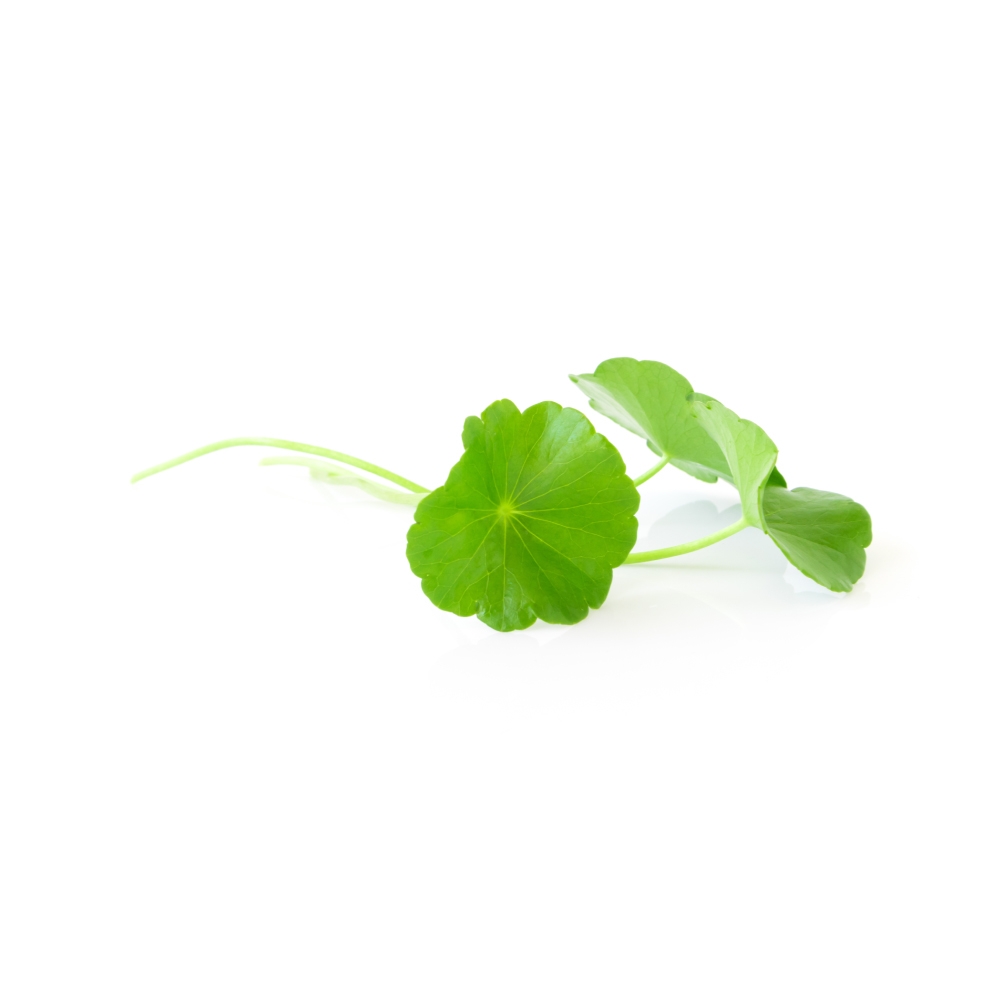
Madecassic acid is the ursane-type pentacyclic triterpene aglycone of madecassoside and a characteristic constituent of gotu kola (Centella asiatica) — a 6-hydroxy analogue of asiatic acid. Preclinically it is the most potent anti-inflammatory of the gotu-kola triterpenes (NF-κB suppression), with mouse-model signals in colitis, diabetes and cancer, but no human trials of the isolate.

Sources · 1
Where Does It Come From?
Madecassic Acid is a naturally occurring triterpenoid (ursane-type pentacyclic acid), found in Gotu kola. It is well tolerated orally (low toxicity).
Concentration
Content by Source
Reported concentrations across the plants that contain madecassic acid — the bar marks the typical level, the line shows the reported range.
Literature figures for varying plant parts and preparations. Read them as a comparative guide, not exact assays.
Madecassic Acid at a Glance
Madecassic acid is a pentacyclic triterpene acid and one of the four characteristic triterpenes of gotu kola (Centella asiatica), alongside asiatic acid, asiaticoside and madecassoside. Structurally it is the aglycone (the sugar-free core) of madecassoside, and a 6-hydroxy analogue of asiatic acid — the two aglycones differ only by an extra hydroxyl group 9Reference 9ReviewTherapeutic potential of Centella asiatica and its triterpenes: a reviewView study →.
Its clearest laboratory signal is anti-inflammatory: in a head-to-head macrophage study it was the more potent of the gotu-kola triterpenes at shutting down NF-κB-driven inflammatory mediators 1Reference 1Anti-inflammatory effects of madecassic acid via the suppression of NF-κB pathway in LPS-induced RAW 264.7 macrophage cellsView study →. That mechanism reappears in mouse models of colitis, diabetes and cancer. All of this evidence is preclinical — cell and rodent work on the isolate, or the whole standardised extract — with no human trials of madecassic acid itself.
Aglycone vs. Glycoside — And vs. Asiatic Acid
Gotu kola’s triterpenes come in glycoside/aglycone pairs, and keeping them straight is central to reading this molecule:
- Madecassoside is the abundant, water-soluble glycoside (a triterpene carrying sugar chains). It is the most plentiful of the four markers in the herb but is poorly absorbed intact.
- Madecassic acid is its aglycone — the same triterpene core after the sugars are cleaved. In people, the gut hydrolyses the glycoside and it is largely this aglycone that actually reaches the bloodstream 8Reference 8RCTPharmacokinetics and pharmacodynamics of key components of a standardized Centella asiatica product in cognitively impaired older adults: a Phase 1, double-blind, randomized clinical trialView study →.
So madecassic acid is best understood as the circulating active form of dietary madecassoside, in the same way asiatic acid is the circulating form of asiaticoside.
Madecassic acid and asiatic acid are near-twins: both are ursane-type pentacyclic acids, and madecassic acid is simply asiatic acid with one extra hydroxyl group at position 6 (hence its other name, 6β-hydroxyasiatic acid) 9Reference 9ReviewTherapeutic potential of Centella asiatica and its triterpenes: a reviewView study →. That difference is why the two are often studied side by side and why claims made for one should not be assumed for the other without direct data.
What It's Used For
The evidence is entirely preclinical and splits between the isolated aglycone (the cell and rodent studies below) and the whole standardised extract that carries gotu kola’s clinical reputation. Read every row as in-vitro or animal data.
Support is an experimental score — weighted by study type (human > animal > in vitro) and volume. A beta, not a validated metric. There is no human isolate data, so every score stays modest by design.
The molecule’s central and best-developed signal. In LPS-stimulated RAW 264.7 macrophages, madecassic acid inhibited NO, PGE₂, TNF-α, IL-1β and IL-6, down-regulated iNOS and COX-2, and suppressed NF-κB activation by preventing IκBα degradation and p65 nuclear translocation — and it was more potent than madecassoside in the same assay 1Reference 1Anti-inflammatory effects of madecassic acid via the suppression of NF-κB pathway in LPS-induced RAW 264.7 macrophage cellsView study →. In vivo, two studies in DSS-induced mouse colitis identified madecassic acid as the active anti-colitis contributor of madecassoside: it lowered IL-17 and shifted the Th17 → Treg balance via the PPARγ/AMPK/ACC1 pathway 2Reference 2Madecassic acid, the contributor to the anti-colitis effect of madecassoside, enhances the shift of Th17 toward Treg cells via the PPARγ/AMPK/ACC1 pathwayView study →, and separately reduced pathogenic γδT17 cells via PPARγ–PTEN/Akt/GSK3β/NFAT signalling 3Reference 3Inhibition of the activation of γδT17 cells through the PPARγ–PTEN/Akt/GSK3β/NFAT pathway contributes to the anti-colitis effect of madecassic acidView study →.
Gap: all isolate data are in-vitro or mouse; the effective concentrations are unlikely to be reached from oral herb intake given the poor bioavailability, and no human IBD trial of the isolate exists 1,
A single but reasonably designed animal study. Fed at 0.05% and 0.1% of the diet for six weeks to streptozotocin-induced diabetic mice, madecassic acid lowered plasma glucose and raised insulin, improved a hemostatic (coagulation) imbalance, reduced lipid accumulation, and attenuated oxidative and inflammatory stress in cardiac and renal tissue — outperforming rotundic acid, which gave only modest lipid effects 4Reference 4Anti-diabetic effects of madecassic acid and rotundic acidView study →.
Gap: one rodent study, dietary dosing, no dose-response beyond two levels and no human metabolic data; the anti-inflammatory/antioxidant mechanism is shared with the colitis work rather than a distinct glucose-lowering pathway 4Reference 4Anti-diabetic effects of madecassic acid and rotundic acidView study →.
A modest, single-model signal with an immune flavour. In mice bearing CT26 colon-cancer tumours, madecassic acid slowed tumour growth, raised the apoptosis rate and lowered mitochondrial membrane potential in the cancer cells (a pro-apoptotic readout), while shifting CD4⁺/CD8⁺ T-lymphocyte populations toward a more active immune profile 6Reference 6AnimalMadecassic acid inhibits the mouse colon cancer growth by inducing apoptosis and immunomodulationView study →.
Medicinal-chemistry groups have since made semi-synthetic madecassic-acid derivatives seeking stronger cytotoxicity, underlining that the parent molecule’s own potency is limited.
Gap: one in-vivo model plus in-vitro apoptosis; no other tumour types confirmed for the isolate, no human oncology data, and the effect is weak enough that derivatives are being pursued instead 6Reference 6AnimalMadecassic acid inhibits the mouse colon cancer growth by inducing apoptosis and immunomodulationView study →.
A connective-tissue signal that fits gotu kola’s traditional reputation. In IL-1β-stimulated rat chondrocytes and an anterior cruciate ligament transection (ACLT) rat osteoarthritis model, madecassic acid protected cartilage from extracellular-matrix degradation — down-regulating MMP-3/MMP-13 and promoting matrix synthesis — by inhibiting NF-κB/IκBα while activating PI3K/AKT signalling 5Reference 5In vitroMadecassic acid ameliorates the progression of osteoarthritis: an in vitro and in vivo studyView study →.
Gap: one study spanning cells and one rat model; the ECM-anabolic/wound-healing reputation of Centella rests mostly on asiaticoside, madecassoside and the whole extract, not on isolated madecassic acid 5Reference 5In vitroMadecassic acid ameliorates the progression of osteoarthritis: an in vitro and in vivo studyView study →.
Mechanisms
| Target / pathway | Effect | Relevant to |
|---|---|---|
| NF-κB / IκBα (→ iNOS, COX-2, TNF-α, IL-1β, IL-6) | suppressed — blocks IκBα degradation & p65 translocation | anti-inflammatory / colitis / osteoarthritis |
| PPARγ → AMPK / ACC1 | activated → Th17 shifts toward Treg | anti-colitis (IBD) |
| PPARγ → PTEN / Akt / GSK3β / NFAT | modulated → fewer pathogenic γδT17 cells | anti-colitis (IBD) |
| PI3K / AKT | activated → extracellular-matrix anabolism, ↓ MMP-3/-13 | chondroprotection |
| Mitochondrial membrane potential | lowered → apoptosis in tumour cells | anticancer |
| ROS-mediated endoplasmic-reticulum stress | attenuated → cytoprotection under hypoxia | antioxidant (retinal endothelialin vitro) |
The unifying thread is NF-κB suppression; the PPARγ activation seen in the colitis work is the most specific molecular target reported for this triterpene.
Pharmacokinetics
Like other triterpene acids, madecassic acid has poor oral bioavailability — the Centella triterpenes are absorbed rapidly but reach less than ~1% systemic availability, and are largely metabolised and excreted via the gut 8Reference 8RCTPharmacokinetics and pharmacodynamics of key components of a standardized Centella asiatica product in cognitively impaired older adults: a Phase 1, double-blind, randomized clinical trialView study →. Its pharmacokinetics are best understood through the glycoside→aglycone conversion: in a Phase 1 human trial of a standardised Centella asiatica product, the parent glycoside madecassoside was essentially undetectable in plasma despite being abundant in the dose, whereas the aglycone madecassic acid was detected in plasma (≈36–68 ng/mL) — consistent with gut hydrolysis of the sugar moiety releasing the absorbable aglycone 8Reference 8RCTPharmacokinetics and pharmacodynamics of key components of a standardized Centella asiatica product in cognitively impaired older adults: a Phase 1, double-blind, randomized clinical trialView study →. In rats the aglycones are barely detectable in plasma, a species difference worth noting when reading rodent efficacy data 8Reference 8RCTPharmacokinetics and pharmacodynamics of key components of a standardized Centella asiatica product in cognitively impaired older adults: a Phase 1, double-blind, randomized clinical trialView study →. No dedicated half-life or absolute-bioavailability figure for the pure isolate is established.
Clinical Trials
There are no clinical trials of isolated madecassic acid. Human evidence for gotu kola comes from standardised whole extracts (TTFCA/TECA, ECa 233), in which madecassic acid is one of several triterpenes and cannot be credited alone.
| Completed | Planned | Terminated | Preclinical |
|---|---|---|---|
| —(none, isolate) | — | — | Substantial(anti-inflammatory / anti-colitis-led) |
Last checked: July 2026.
Isolate vs. Plant Studies
The mechanistic studies above (macrophages, DSS colitis, diabetic mice, CT26 tumours, chondrocytes) use the isolated molecule, which is a genuine strength for attributing the NF-κB/PPARγ pharmacology to madecassic acid specifically 1,
Prevalence in Nature
Madecassic acid is essentially a gotu kola (Centella asiatica) marker. It occurs as one of the four principal centellosides — the two aglycone acids (asiatic acid and madecassic acid) and their glycosides (asiaticoside and madecassoside) 9Reference 9ReviewTherapeutic potential of Centella asiatica and its triterpenes: a reviewView study →. In the raw herb it is a minor constituent, reported at roughly 0.02–0.72% of dry weight across accessions, with one methanolic-extract analysis putting madecassic acid at ~0.54% 9Reference 9ReviewTherapeutic potential of Centella asiatica and its triterpenes: a reviewView study →. Content varies enormously with accession, growing conditions, plant part and season, and commercial extracts are standardised far higher (often 40–100% total triterpenes) than the raw plant. It is generally the second-most-abundant of the aglycones, above asiatic acid but well below the glycoside madecassoside.
Discovery & Synthesis
Gotu kola’s triterpene chemistry was worked out through the mid-twentieth century: asiaticoside was characterised in the 1940s (famous for early anti-leprosy interest) and, on hydrolysis, yielded the aglycone asiatic acid. Madecassic acid and its glycoside madecassoside were isolated somewhat later, by French researchers in the early-to-mid 1960s (Rahandraha and co-workers; Pinhas) 9Reference 9ReviewTherapeutic potential of Centella asiatica and its triterpenes: a reviewView study →. The name reflects madecassoside (from Madecassol, the Centella extract product), and the molecule is also called 6β-hydroxyasiatic acid — a direct nod to its structural relationship to asiatic acid — and brahmic acid in the older literature.
Manufacture today is by extraction from Centella asiatica (often via hydrolysis of the more abundant glycoside madecassoside to the aglycone) rather than by total synthesis; no efficient commercial de-novo synthesis dominates, and medicinal-chemistry work centres on semi-synthetic derivatives of the natural acid rather than the parent itself.
Patents: not yet researched.
Toxicity & Safety
Madecassic acid carries a low flag. It is a natural constituent of gotu kola, a plant with a long record of food and medicinal use; it circulates at low levels even after extract dosing (poor bioavailability), and no isolate-specific toxicity signal has emerged from the preclinical literature. The practical cautions belong to the whole herb, not the isolated triterpene.
- Constituent of a long-used edible/medicinal herb. Present at low levels in gotu kola and its standardised extracts, which have an established tolerability record.
- Low systemic exposure. Poor oral bioavailability keeps circulating levels of the isolate low.
- Whole-herb cautions apply, not isolate-specific ones. Topical Centella preparations can occasionally cause contact dermatitis, and rare hepatotoxicity has been reported with oral gotu-kola products — these are herb-level, not madecassic-acid-specific.
- No dedicated isolate safety dataset. No formal genotoxicity, repeat-dose or reproductive-toxicity package exists for the pure compound; interactions have not been systematically assessed.
Reproductive note (prose only). No dedicated reproductive- or developmental-toxicity dataset exists for isolated madecassic acid. Pregnancy and lactation decisions belong to the gotu-kola herb page and any specific product, where intake is actually decided, not to this molecule page.
Dosage
There is no established human dose for isolated madecassic acid — it has never been dosed as a stand-alone in people. The figures in the literature are research concentrations: micromolar in cell assays, and 0.05–0.1% of the diet in the six-week mouse studies 4Reference 4Anti-diabetic effects of madecassic acid and rotundic acidView study →. Real-world exposure is indirect, as one of several triterpenes in standardised gotu-kola extracts (TTFCA/TECA/ECa 233), which are dosed as the whole fraction rather than by madecassic-acid content. These are research figures, not a personal recommendation.
References
- Won JH, Shin JS, Park HJ, Jung HJ, Koh DJ, Jo BG, Lee JY, Yun K, Lee KT (2010). Anti-inflammatory effects of madecassic acid via the suppression of NF-κB pathway in LPS-induced RAW 264.7 macrophage cells. Planta Medica. https://pubmed.ncbi.nlm.nih.gov/19774506/
- Xu X, Wang Y, Wei Z, Wei W, Zhao P, Tong B, Xia Y, Dai Y (2017). Madecassic acid, the contributor to the anti-colitis effect of madecassoside, enhances the shift of Th17 toward Treg cells via the PPARγ/AMPK/ACC1 pathway. Cell Death & Disease. https://pubmed.ncbi.nlm.nih.gov/28358365/
- Yun X, Fang Y, Lv C, Qiao S, Tao Y, Dai Y, Xia Y (2020). Inhibition of the activation of γδT17 cells through the PPARγ–PTEN/Akt/GSK3β/NFAT pathway contributes to the anti-colitis effect of madecassic acid. Cell Death & Disease. https://pubmed.ncbi.nlm.nih.gov/32929062/
- Hsu YM, Hung YC, Hu L, Lee YJ, Yin MC (2015). Anti-diabetic effects of madecassic acid and rotundic acid. Nutrients. https://pubmed.ncbi.nlm.nih.gov/26633490/
- Fu X, He S, Wang L, Xue Y, Qiao S, An J, Xia T (2022). Madecassic acid ameliorates the progression of osteoarthritis: an in vitro and in vivo study. Drug Design, Development and Therapy. https://pubmed.ncbi.nlm.nih.gov/36345305/
- Zhang H, Zhang M, Tao Y, Wang G, Xia B (2014). Madecassic acid inhibits the mouse colon cancer growth by inducing apoptosis and immunomodulation. Journal of BUON. https://pubmed.ncbi.nlm.nih.gov/24965394/
- Yang B, Xu Y, Hu Y, Luo Y, Lu X, Tsui CK, Lu L, Liang X (2016). Madecassic acid protects against hypoxia-induced oxidative stress in retinal microvascular endothelial cells via ROS-mediated endoplasmic reticulum stress. Biomedicine & Pharmacotherapy. https://pubmed.ncbi.nlm.nih.gov/27728894/
- Wright KM, Bollen M, David J, Speers AB, Brandes MS, Gray NE, Alcázar Magaña A, McClure C, Stevens JF, Maier CS, Quinn JF, Soumyanath A (2022). Pharmacokinetics and pharmacodynamics of key components of a standardized Centella asiatica product in cognitively impaired older adults: a Phase 1, double-blind, randomized clinical trial. Antioxidants (Basel). https://pubmed.ncbi.nlm.nih.gov/35204098/
- Sun B, Wu L, Wu Y, Zhang C, Qin L, Hayashi M, Kudo M, Gao M, Liu T (2020). Therapeutic potential of Centella asiatica and its triterpenes: a review. Frontiers in Pharmacology. https://doi.org/10.3389/fphar.2020.568032



