
Compound Monograph
Magnocurarine
Magnocurarine is a quaternary benzylisoquinoline alkaloid of Magnolia bark, abuta and several Menispermaceae — named for the curare-like neuromuscular block reported when it was first characterised in Japan in the early 1950s. It is not tubocurarine and not curare; and as a permanently charged quaternary ammonium ion it is poorly absorbed from the gut, which is the fact that governs any oral or herbal claim.

Sources · 11
Where Does It Come From?
Magnocurarine is a naturally occurring benzylisoquinoline alkaloid (quaternary ammonium), found in Magnolia, Abuta and 9 other sources. It is flagged as moderately toxic.
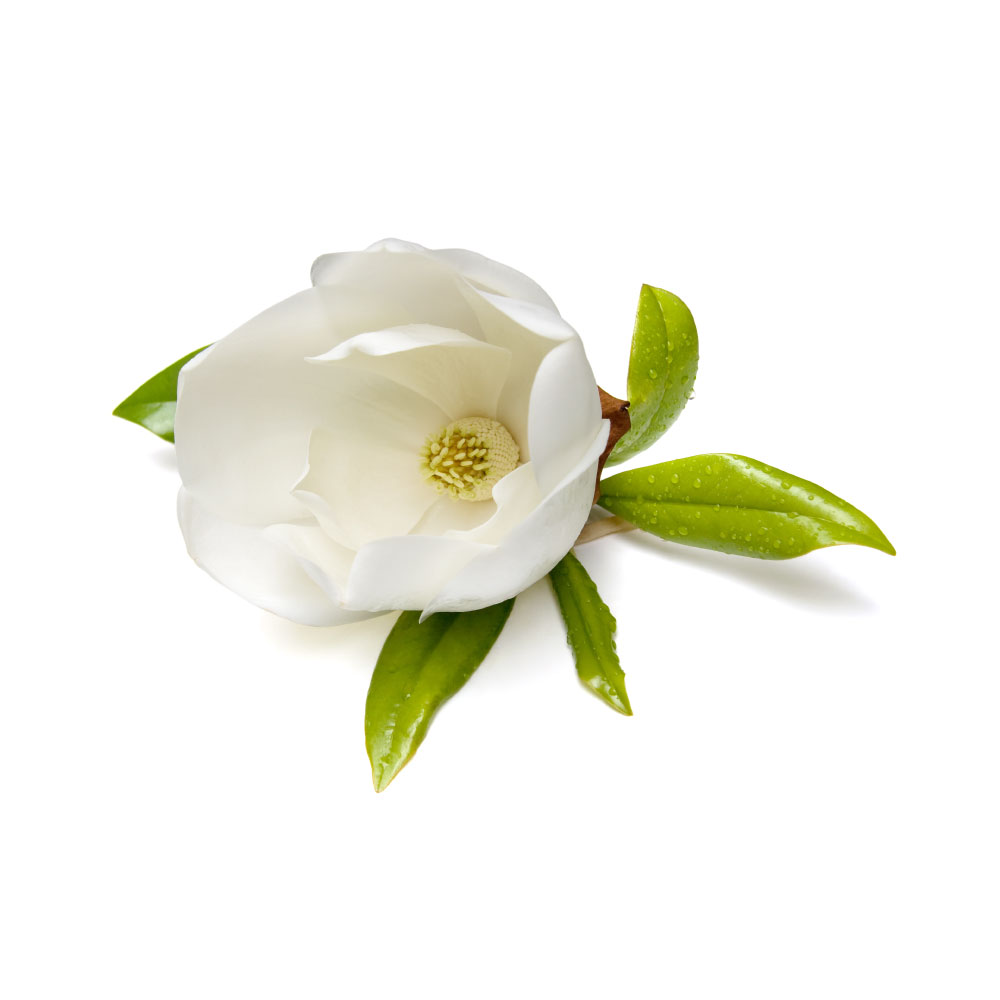 Principal source Magnolia Magnolia officinalis Herb monograph →
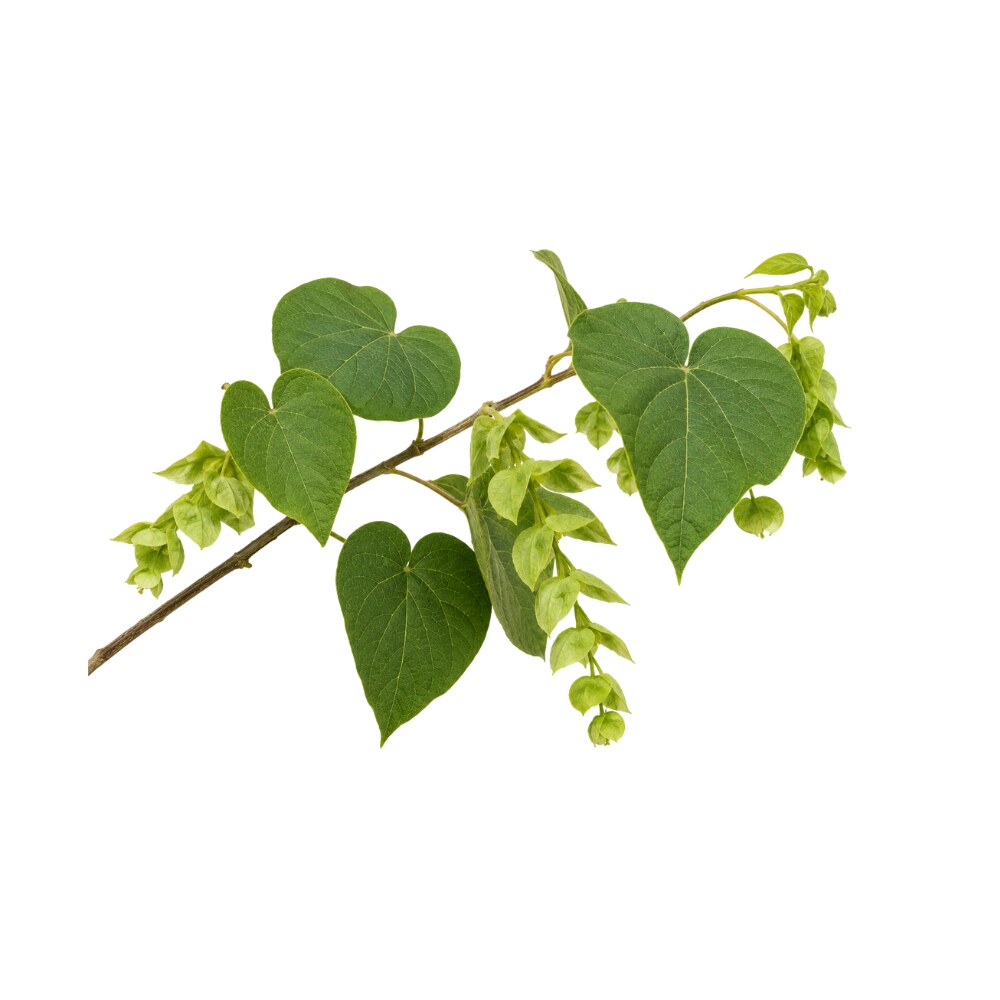 Source Abuta Cissampelos pareira Herb monograph →
Concentration
Content by Source
Reported concentrations across the plants that contain magnocurarine — the bar marks the typical level, the line shows the reported range.
Literature figures for varying plant parts and preparations. Read them as a comparative guide, not exact assays.
Magnocurarine at a Glance
Magnocurarine is a quaternary benzylisoquinoline alkaloid — a single benzylisoquinoline unit whose nitrogen has been methylated one extra time, leaving it permanently positively charged. It was isolated from the bark of Magnolia obovata in Japan in the early 1950s and named for the curare-like neuromuscular block it produced in the pharmacology work that followed 1,
Unusually for a molecule with “curarine” in its name, the neuromuscular pharmacology here is not an artefact of nomenclature — a 1953 study did test the isolated alkaloid against d-tubocurarine and decamethonium and reported a curare-like action 1Reference 1Curare-like action of magnocurarine isolated from Magnolia obovata — animal pharmacologyView study →. But that is very nearly the whole of it. In the seventy years since, the indexed literature has added only a scatter of single in-vitro findings (antiplasmodial, antiplatelet, anti-glycation) and a rodent pain study in which magnocurarine was one of the least active alkaloids of its series 5,
The single most consequential fact about it is physicochemical. A permanently charged quaternary ammonium cation crosses lipid membranes poorly, which is exactly why every clinical neuromuscular blocker is injected rather than swallowed. No absorption study for magnocurarine itself exists, so oral bioavailability stays an open — and load-bearing — question rather than an answered one.
Magnocurarine Is Not Curare, Tubocurarine, or Magnolol
Four names get tangled around this molecule. Keeping them apart is most of the page.
Curare is not a molecule. It is a preparation — South American arrow poisons made from Chondrodendron, Strychnos and related plants, containing many alkaloids. Nothing measured in a curare preparation transfers to magnocurarine.
Tubocurarine is a different molecule. d-Tubocurarine is a bisbenzylisoquinoline — two benzylisoquinoline units coupled together — and it is the compound with the clinical anaesthesia record. Magnocurarine is a monobenzylisoquinoline quaternary salt; the 1953 report described it as resembling one half of the tubocurarine molecule, which is a statement about chemistry, not about equivalent potency 1Reference 1Curare-like action of magnocurarine isolated from Magnolia obovata — animal pharmacologyView study →. On this site, the genuinely dimeric relatives are tetrandrine, berbamine and the abuta bisbenzylisoquinoline alkaloids. Nothing established for those molecules is imported here.
Magnolol and honokiol are not alkaloids at all. Magnolol and honokiol are biphenyl neolignans, and they carry essentially the entire pharmacological reputation of magnolia bark — the GABA-A anxiolytic and sedative action, the anti-inflammatory and antioxidant work, and the human blend trials. Their literature is orders of magnitude larger than magnocurarine’s and belongs on their own pages, not this one. The same holds for obovatol.
Magnoflorine is a different alkaloid. Magnoflorine is a quaternary aporphine, not a benzylisoquinoline. It co-occurs with magnocurarine in magnolia bark, abuta, Sinomenium, Phellodendron and Aristolochia, and the two are routinely quantified side by side 3,
What It's Used For
The evidence is unusually easy to summarise: one old, genuinely on-target animal study, and four modern single-paper in-vitro or rodent findings, three of which are weak or frankly negative. Every one of them tested the isolated molecule; none tested a plant extract and attributed the effect to magnocurarine.
Support is an experimental score — weighted by study type (human > animal > in vitro) and volume. A beta, not a validated metric. Each row below rests on a single paper, so scores stay low by design; the top row scores highest for being on-target and in a whole animal, not for being well-replicated.
The molecule’s namesake finding, and the only one that is on-target for a quaternary ammonium compound. Working with isolated magnocurarine chloride — the alkaloid Tomita and Inubushi had just characterised from Magnolia obovata bark as N-methylcoclaurine methyl hydroxide, structurally half of d-tubocurarine — Ogiu and Morita set out to “study in some detail the properties of magnocurarine chloride” and compared its curare-like action with that of d-tubocurarine chloride and of decamethonium iodide 1Reference 1Curare-like action of magnocurarine isolated from Magnolia obovata — animal pharmacologyView study →.
This is an isolate study in animals, not a plant-extract study. A Japanese history-of-anaesthesiology note later treated the discovery as a genuine episode in the Japanese search for a muscle relaxant 2Reference 2ReviewMatsuki A (1982). [Recent findings in the history of anesthesiology (20): discovery of the muscle relaxant magnocurarine in Japan] — historical review. Masui, 31, 1414–1419. https://pubmed.ncbi.nlm.nih.gov/6220168/View study →.
Gap: the whole claim rests on one 1953 paper in a scanned Japanese journal. We could verify the paper’s existence, framing and design, but not its numbers — the relative potency against d-tubocurarine, the doses, the species, the effect on blood pressure and respiration, and whether neostigmine reversed the block are all unretrieved. No modern study has repeated it. Treat “curare-like” as a directionally supported but quantitatively unknown claim 1,
In a chemical profiling study of Cissampelos pareira (abuta), isolated magnocurarine inhibited Plasmodium falciparum with IC₅₀ values of 12.51 µM against the resistant Pf INDO strain and 12.54 µM against the sensitive Pf 3D7 strain 5Reference 5In vitroChemical profiling and quantification of potential active constituents responsible for the antiplasmodial activity of Cissampelos pareira — in vitroView study → — an isolate, whole-parasite in-vitro result with no target identified.
Gap: magnocurarine was a minor player in its own paper. Hayatinine, a bisbenzylisoquinoline from the same root, was roughly thirty times more potent (IC₅₀ 0.41 µM), and the study’s conclusion pointed there, not here 5Reference 5In vitroChemical profiling and quantification of potential active constituents responsible for the antiplasmodial activity of Cissampelos pareira — in vitroView study →. There is no animal malaria model and no selectivity/cytotoxicity ratio for magnocurarine.
In a 1996 screen of benzylisoquinoline and phenanthrene alkaloids, d-(−)-magnocurarine showed strong inhibition of platelet-activating-factor-induced platelet aggregation in vitro 6Reference 6In vitroAntiplatelet and vasorelaxing actions of some benzylisoquinoline and phenanthrene alkaloids — in vitroView study →. It was not among the compounds that produced vasorelaxation in rat thoracic aorta in the same study — a useful negative, given how often “hypotensive” is attached to this molecule by association with magnolia bark rather than by measurement.
Gap: one in-vitro isolate assay, agonist-specific (PAF, not ADP or collagen), never followed up in a whole animal or in people, and with no bleeding-risk data at any exposure 6Reference 6In vitroAntiplatelet and vasorelaxing actions of some benzylisoquinoline and phenanthrene alkaloids — in vitroView study →.
Eight alkaloids from Lindera angustifolia root were tested in mice at 20 mg/kg. All of them, magnocurarine included, significantly inhibited the phase II response in the formalin test; magnocurarine was one of only two that failed to inhibit phase I, and it was the single alkaloid in the series showing no remarkable DPPH radical-scavenging activity while the others scavenged 36–90% 7Reference 7AnimalAntinociceptive and free radical scavenging activities of alkaloids isolated from Lindera angustifolia Chen — miceView study →.
The authors linked antinociception to radical scavenging across the series — a relationship magnocurarine sits outside of.
Gap: this is an isolate rodent result reported as part of a comparative series where magnocurarine was near the bottom; norisocorydine and boldine carried the paper. No dose–response, no mechanism, no oral-versus-parenteral comparison 7Reference 7AnimalAntinociceptive and free radical scavenging activities of alkaloids isolated from Lindera angustifolia Chen — miceView study →.
Bioassay-guided work on Ocotea paranapiacabensis leaves yielded four benzylisoquinoline alkaloids; compound 3 was identified as magnocurarine, and inhibited advanced glycation end-product formation by 26.1% at 150 µM — against 62.9%, 83.3% and 98.2% for the other three 8Reference 8In vitroAdvanced glycation end product inhibition by alkaloids from Ocotea paranapiacabensis for the prevention of skin aging — in vitroView study →. The paper’s conclusion nominated compounds 1 and 4 for skincare development, not magnocurarine.
Gap: a single, weak in-vitro isolate figure at a concentration far above anything plausible in tissue, in a paper whose own recommendation excludes it 8Reference 8In vitroAdvanced glycation end product inhibition by alkaloids from Ocotea paranapiacabensis for the prevention of skin aging — in vitroView study →.
Two further negatives are worth recording rather than omitting. In the definitive magnolia-bark alkaloid study, (R)-magnocurarine and its 22 companion alkaloids “showed weak activities in all tests” — aldose reductase, lipase, α-glucosidase and DPP-IV inhibition plus cytotoxicity against cancer cell lines 3Reference 3In vitroStudies on the alkaloids of the bark of Magnolia officinalis: isolation and on-line analysis by HPLC-ESI-MSⁿ — in vitroView study →. And in a Lindera glauca root study, (−)-magnocurarine was compound 1 of ten, but the significant antitumour activity against HT-29, SGC-7901, SMMC-7721 and A549 belonged to N-methyl-laurotetanine, laurotetanine and boldine — not to it 16Reference 16In vitroLiu T, Li WY, Liu XW, Qi CM, Yuan ZH (2016). [Chemical constituents from the roots of Lindera glauca and their antitumor activity on four different cancer cell lines] — in vitro. Zhong Yao Cai. https://pubmed.ncbi.nlm.nih.gov/30204386/View study →.
Mechanisms
| Target / pathway | Effect | Relevant to |
|---|---|---|
| Skeletal neuromuscular junction (curare-like; the receptor was not directly assayed in 1953) | blockade — compared against d-tubocurarine and decamethonium | neuromuscular blockade |
| Platelet-activating-factor-induced platelet aggregation | inhibited in vitro | antiplatelet |
| Plasmodium falciparum whole-parasite growth (target unidentified) | inhibited, IC₅₀ ~12.5 µM | antiplasmodial |
| Advanced glycation end-product formation | weakly inhibited (26.1% at 150 µM) | anti-glycation |
| Rat aorta smooth muscle | no vasorelaxation reported | the hypotensive claim (a negative) |
| DPPH radical scavenging | none — the only alkaloid in its Lindera series without it | antioxidant claims (a negative) |
| Aldose reductase · lipase · α-glucosidase · DPP-IV · cancer cell lines | weak or inactive | metabolic/anticancer claims (negatives) |
| Permanent quaternary ammonium cation | low passive membrane permeability | pharmacokinetics — see below |
There is no validated molecular target for magnocurarine. The neuromuscular action is inferred from a functional 1953 comparison rather than from receptor binding, and several of the rows above are deliberately negative results — they are the honest counterweight to a suggestive name.
Pharmacokinetics
This is the load-bearing section, and it is load-bearing because the data are missing.
No pharmacokinetic study of magnocurarine — oral bioavailability, absorption, distribution, metabolism, half-life, tissue levels — appears anywhere in the indexed literature. A search of the complete magnocurarine corpus in PubMed (29 records, July 2026) returns quantification methods, biosynthesis, marker chemistry and the handful of activity papers above, and nothing on disposition. The one paper that touches pharmacokinetics uses magnocurarine only as one of eight marker components for tracking how processing changes magnolia bark, and then measures the pharmacokinetics of honokiol and magnolol, not of magnocurarine 17Reference 17AnimalEffect of chemical profiling change of processed Magnolia officinalis on the pharmacokinetic profiling of honokiol and magnolol in rats — ratsView study →.
What can be said is chemistry, and it should be read as class reasoning rather than as a measurement of this molecule. Magnocurarine’s nitrogen is quaternary: it carries a fixed positive charge at every physiological pH and cannot shed it. Permanently charged cations diffuse across lipid membranes poorly, which is the standard explanation for why quaternary alkaloids are absorbed badly from the gut — the pattern documented for its co-occurring relative magnoflorine — and why quaternary neuromuscular blockers are administered intravenously rather than by mouth.
The practical consequence is a large one. A curare-like action demonstrated in an animal preparation says little about what swallowing magnolia bark does, because the alkaloid most likely never reaches the neuromuscular junction in meaningful quantity. That is a reason for proportion, not for complacency: the absorbed fraction has never been measured, so “poorly absorbed” is an expectation from structure, not a number anyone has published.
Clinical Trials
There are no clinical trials of magnocurarine, and no record of it ever having been administered to a human as an isolate. Human exposure is incidental — as a minor constituent of magnolia bark, Phellodendron, Sinomenium and Cissampelos preparations, and as a detectable residue in cosmetics containing Magnolia officinalis extract 21Reference 21Development and optimization of an LC-MS/MS method for the detection of Magnolia officinalis extracts in cosmetics — analytical studyView study → — at levels where no effect can be attributed to it. Its modern role is as an analytical standard for authenticating and grading herbal material 11,
| Completed | Planned | Terminated | Preclinical |
|---|---|---|---|
| —(none, isolate) | — | — | Minimal(one 1953 animal study + four single in-vitro/rodent papers) |
Last checked: July 2026.
Isolate vs. Plant Studies
This page is an unusual case: every finding on it is an isolate finding, and that is a weakness rather than a strength, because the isolate studies are so few. The 1953 neuromuscular work used purified magnocurarine chloride 1Reference 1Curare-like action of magnocurarine isolated from Magnolia obovata — animal pharmacologyView study →; the antiplasmodial, antiplatelet, antinociceptive and anti-glycation results all used chromatographically isolated compound 5,
There is no plant or extract study that attributes an effect to magnocurarine. Where the alkaloid appears in whole-plant research it is a marker, not an actor — quantified to distinguish geo-authentic Stephania tetrandra from other origins 12Reference 12Exploration of habitat-related chemical markers for Stephania tetrandra applying multiple chromatographic and chemometric analysis — analytical studyView study →, to grade Sinomenium acutum stem 11Reference 11Discovery of chemical markers for improving the quality and safety control of Sinomenium acutum stem by simultaneous determination of multiple alkaloids using UHPLC-QQQ-MS/MS — analytical studyView study →, to track Magnolia officinalis through “sweating” processing 20Reference 20Dynamic changes in chemical components during sweating processing of Magnolia officinalis cortex based on UPLC-Q-TOF-MS metabolomics and MALDI-MSI — analytical studyView study →, to correlate Phellodendron amurense root chemistry with its rhizosphere microbiome 13Reference 13Integrated microbiome and metabolomics analysis reveal the relationship between plant-specialized metabolites and microbial community in Phellodendron amurense — plant studyView study →, or as one of sixteen candidate components thrown up by a network-pharmacology analysis of an anti-colitis formula, with no compound-level validation 22Reference 22In vitroInterpretation of the anti-colitis active ingredients and potential mechanisms of Wumei Wan based on spectrum-effect relationships, network pharmacology, molecular docking and experimental validation — in vitroView study →.
The transferability caveat therefore runs in the direction opposite to most compound pages. Magnolia bark’s human evidence — small trials of a proprietary Magnolia + Phellodendron blend — belongs to magnolol and honokiol, and cannot be read onto this alkaloid. Equally, a curare-like action in an isolated preparation cannot be read onto the bark.
Prevalence in Nature
Magnocurarine is a minor alkaloid with a wide but scattered distribution, turning up across at least six plant families — a pattern typical of an early branch-point metabolite of the benzylisoquinoline pathway rather than of a family-specific end product.
Magnoliaceae. The type source is the bark of Magnolia obovata (Japanese hohnoki), from which it was first isolated 1Reference 1Curare-like action of magnocurarine isolated from Magnolia obovata — animal pharmacologyView study →. It is a constituent of the bark of Magnolia officinalis (houpo), where (R)-magnocurarine was isolated and characterised as compound 10 among 23 alkaloids 3Reference 3In vitroStudies on the alkaloids of the bark of Magnolia officinalis: isolation and on-line analysis by HPLC-ESI-MSⁿ — in vitroView study →, and it is one of the routine quality-control markers for that material 18,
Menispermaceae. Magnoflorine and magnocurarine were isolated from Cissampelos pareira for the first time in 2019 4Reference 4In vitroBioactive isoquinoline alkaloids from Cissampelos pareira — in vitroView study →, and magnocurarine was later quantified in the antiplasmodial profiling of that species 5Reference 5In vitroChemical profiling and quantification of potential active constituents responsible for the antiplasmodial activity of Cissampelos pareira — in vitroView study →. It occurs in Sinomenium acutum stem at a mean of 21.1 µg/g across 35 batches — the only modern quantitative figure could be verified 11Reference 11Discovery of chemical markers for improving the quality and safety control of Sinomenium acutum stem by simultaneous determination of multiple alkaloids using UHPLC-QQQ-MS/MS — analytical studyView study → — and in Stephania tetrandra, where it is one of seven alkaloids used as habitat markers 12Reference 12Exploration of habitat-related chemical markers for Stephania tetrandra applying multiple chromatographic and chemometric analysis — analytical studyView study →. Its biosynthesis was characterised in Stephania intermedia 9Reference 9In vitroIdentification and characterization of methyltransferases involved in benzylisoquinoline alkaloid biosynthesis from Stephania intermedia — in vitroView study →.
Other families. Phellodendron amurense root, Rutaceae, where it is one of seven targeted benzylisoquinoline alkaloids 13Reference 13Integrated microbiome and metabolomics analysis reveal the relationship between plant-specialized metabolites and microbial community in Phellodendron amurense — plant studyView study →; Evodia cf. trichotoma, also Rutaceae, from which (R)-magnocurarine was reported in 1993 23Reference 23In vitroArbain D, et al. (1993). (R)-Magnocurarine from Evodia cf. trichotoma — in vitro. Planta Medica. https://pubmed.ncbi.nlm.nih.gov/17235984/View study →; the roots of Lindera angustifolia and Lindera glauca and the leaves of the Brazilian Ocotea paranapiacabensis, all Lauraceae 7,
On the abundance figure. Magnolia bark is widely described — including the magnolia monograph here — as containing roughly 0.15–0.23% magnocurarine by dry weight. That figure could not be traced to a primary quantitative source: the paper it is usually attributed to reports isolation and structural characterisation, not bark content 3Reference 3In vitroStudies on the alkaloids of the bark of Magnolia officinalis: isolation and on-line analysis by HPLC-ESI-MSⁿ — in vitroView study →. The most plausible primary source is a 1988 Chinese ion-pair HPLC study of quaternary ammonium alkaloids in houpo whose abstract is not retrievable in English 18Reference 18Cui JF, Zhang GD, Song WZ (1988). [Reversed-phase ion-pair HPLC determination of quaternary ammonium alkaloids in the traditional Chinese drug hou-po (Magnolia officinalis)] — analytical study. Yao Xue Xue Bao, 23, 383–387. https://pubmed.ncbi.nlm.nih.gov/3213520/View study →. Treat the 0.15–0.23% range as unverified pending that source, and note the contrast with the one figure that is verified — 21 µg/g (0.002%) in Sinomenium stem 11Reference 11Discovery of chemical markers for improving the quality and safety control of Sinomenium acutum stem by simultaneous determination of multiple alkaloids using UHPLC-QQQ-MS/MS — analytical studyView study →.
Discovery & Synthesis
First isolation. Magnocurarine was isolated from the bark of Magnolia obovata Thunb. and named by Masao Tomita and Yasuo Inubushi, who determined its structure as N-methylcoclaurine methyl hydroxide — a quaternary benzylisoquinoline whose skeleton corresponds to one half of the d-tubocurarine molecule. It was described as almost colourless prismatic crystals melting at about 200 °C with effervescence, freely water-soluble and insoluble in most organic solvents 1Reference 1Curare-like action of magnocurarine isolated from Magnolia obovata — animal pharmacologyView study →. The name is a portmanteau of its genus and its pharmacology: Magnolia + curarine, coined because the curare-like activity was the point of interest from the outset — earlier Japanese work by Sasaki had already obtained crude curariform material from alcoholic extracts of Magnoliaceae 1Reference 1Curare-like action of magnocurarine isolated from Magnolia obovata — animal pharmacologyView study →.
First pharmacology. Ogiu and Morita’s 1953 comparison against d-tubocurarine and decamethonium is the founding — and still the only — dedicated pharmacology paper 1Reference 1Curare-like action of magnocurarine isolated from Magnolia obovata — animal pharmacologyView study →. A 1982 retrospective in Masui places the discovery within the Japanese history of muscle-relaxant research 2Reference 2ReviewMatsuki A (1982). [Recent findings in the history of anesthesiology (20): discovery of the muscle relaxant magnocurarine in Japan] — historical review. Masui, 31, 1414–1419. https://pubmed.ncbi.nlm.nih.gov/6220168/View study →.
Biosynthesis. The final step was pinned down in 2020: the N-methyltransferase SiCNMT2 from Stephania intermedia methylates (R)-N-methylcoclaurine to yield (R)-magnocurarine, one methylation beyond the branch point that feeds the bisbenzylisoquinoline alkaloids 9Reference 9In vitroIdentification and characterization of methyltransferases involved in benzylisoquinoline alkaloid biosynthesis from Stephania intermedia — in vitroView study →. In 2021, engineered yeast strains built for bisbenzylisoquinoline production were extended with SiCNMT2 and NnOMT5 and made magnocurarine de novo — the first heterologous production of the molecule 10Reference 10In vitroComplete biosynthesis of the bisbenzylisoquinoline alkaloids guattegaumerine and berbamunine in yeast — in vitroView study →.
Total synthesis and manufacture. No total synthesis of magnocurarine could be located, which is unsurprising: it is a simple quaternisation product of coclaurine and has no commercial application to drive one. It is not manufactured as a drug. Its only commercial role is as an analytical reference standard, supplied for the LC-MS quality-control methods that grade magnolia, Phellodendron, Sinomenium and Stephania material and that detect Magnolia officinalis extract in cosmetic products 11,
Patents: not yet researched.
Toxicity & Safety
Magnocurarine carries a moderate flag. The justification is asymmetric and worth stating plainly: it is the only compound on this batch’s roster with a demonstrated neuromuscular-blocking action on the isolated molecule 1Reference 1Curare-like action of magnocurarine isolated from Magnolia obovata — animal pharmacologyView study →, which is a serious pharmacology to have and rules out a “low” verdict — but it is also a permanently charged quaternary cation with no established oral absorption, and there is essentially no modern toxicology at all: no LD₅₀, no repeat-dose study, no genotoxicity, no reproductive data, no interaction work. Moderate reflects a real hazard mechanism attached to an almost entirely uncharacterised molecule, not a documented pattern of harm.
- Not aristolochic acid. Magnocurarine occurs in Aristolochia contorta, but that plant’s kidney toxicity and carcinogenicity belong to a chemically unrelated compound.
- Not tubocurarine, and not curare. Nothing established for d-tubocurarine or for curare preparations applies to this molecule.
- Poor oral absorption is expected. As a permanently charged quaternary ammonium ion it should be absorbed badly from the gut — the reason ordinary magnolia-bark preparations are unlikely to deliver a meaningful systemic dose.
- A genuine neuromuscular-blocking action was demonstrated for the isolate. Parenteral or high systemic exposure to purified magnocurarine is not benign 1Reference 1Curare-like action of magnocurarine isolated from Magnolia obovata — animal pharmacologyView study →.
- Magnolia bark carries a monitoring caution partly on this alkaloid’s account. Prolonged or high-dose use of the bark is conventionally flagged for professional oversight, and magnocurarine is one of the stated reasons.
- Toxicology is essentially absent. No acute or repeat-dose toxicity study, no LD₅₀, no genotoxicity or reproductive dataset, and no drug-interaction or CYP work exists for the isolate — safety cannot be inferred from that silence.
Full Safety & Interactions Detail
The neuromuscular hazard, stated at its actual evidence tier. The 1953 study tested purified magnocurarine chloride against d-tubocurarine chloride and decamethonium iodide and reported curare-like activity 1Reference 1Curare-like action of magnocurarine isolated from Magnolia obovata — animal pharmacologyView study →. That establishes a hazard mechanism for the isolate. It does not establish potency, dose, threshold, or route sensitivity — none of those numbers were retrievable — and it says nothing directly about oral exposure. Any theoretical additive risk with clinical neuromuscular blockers, aminoglycoside antibiotics or magnesium (all of which potentiate neuromuscular block) is exactly that: theoretical, inferred from the class, never tested for this compound.
Why oral exposure is likely to be a different question. Magnocurarine’s fixed positive charge predicts poor gut absorption, and the practical corollary is that the alkaloid content of a magnolia-bark decoction or a standardised magnolol/honokiol extract is unlikely to produce systemic neuromuscular effects. This is structural reasoning supported by the behaviour of related quaternary alkaloids, not a measurement — no bioavailability figure for magnocurarine exists (see Pharmacokinetics).
What is not known. There is no LD₅₀ in any species, no subchronic or chronic toxicity study, no genotoxicity or carcinogenicity assessment, no reproductive or developmental dataset, and no CYP450 or transporter interaction work for isolated magnocurarine. The negative in-vitro results that do exist — no DPPH scavenging 7Reference 7AnimalAntinociceptive and free radical scavenging activities of alkaloids isolated from Lindera angustifolia Chen — miceView study →, no vasorelaxation in rat aorta 6Reference 6In vitroAntiplatelet and vasorelaxing actions of some benzylisoquinoline and phenanthrene alkaloids — in vitroView study →, weak activity across metabolic-enzyme and cytotoxicity panels 3Reference 3In vitroStudies on the alkaloids of the bark of Magnolia officinalis: isolation and on-line analysis by HPLC-ESI-MSⁿ — in vitroView study → — are evidence about efficacy, not about safety, and should not be read as reassurance.
Reproductive note (prose only). Magnolia bark is traditionally regarded as contraindicated in pregnancy, and magnocurarine is cited among the reasons on the magnolia monograph. There are no reproductive or developmental data for the isolated molecule. Pregnancy and lactation decisions belong on the herb and product pages where intake is actually decided, not on a molecule page.
What this rests on. The indexed English-language literature and the retrievable abstracts of the Japanese and Chinese work through July 2026. Several relevant older papers — the full 1953 pharmacology results 1Reference 1Curare-like action of magnocurarine isolated from Magnolia obovata — animal pharmacologyView study →, the 1982 Japanese history note 2Reference 2ReviewMatsuki A (1982). [Recent findings in the history of anesthesiology (20): discovery of the muscle relaxant magnocurarine in Japan] — historical review. Masui, 31, 1414–1419. https://pubmed.ncbi.nlm.nih.gov/6220168/View study →, the 1988 quaternary-alkaloid quantification 18Reference 18Cui JF, Zhang GD, Song WZ (1988). [Reversed-phase ion-pair HPLC determination of quaternary ammonium alkaloids in the traditional Chinese drug hou-po (Magnolia officinalis)] — analytical study. Yao Xue Xue Bao, 23, 383–387. https://pubmed.ncbi.nlm.nih.gov/3213520/View study → and the 1989 Manglietia comparison 19Reference 19Song WZ, et al. (1989). [Studies on the medicinal plants of Magnoliaceae: tu-hou-po of Manglietia] — analytical study. Yao Xue Xue Bao. https://pubmed.ncbi.nlm.nih.gov/2530753/View study → — exist only as scanned or non-English records that could not be read in full, so findings may be missing that those papers contain.
Dosage
There is no human dose for magnocurarine, and no basis on which to construct one. It has never been administered to people as an isolate, is not sold as a supplement, and is not a drug in any jurisdiction.
The only quantities in the literature are research figures, listed here so the scale is visible rather than as guidance:
| Setting | Form | Amount used |
|---|---|---|
| Antiplasmodial assay (in vitro) | Isolated alkaloid | IC₅₀ ~12.5 µM against both P. falciparum strains 5Reference 5In vitroChemical profiling and quantification of potential active constituents responsible for the antiplasmodial activity of Cissampelos pareira — in vitroView study → |
| Anti-glycation assay (in vitro) | Isolated alkaloid | 150 µM (gave 26.1% inhibition) 8Reference 8In vitroAdvanced glycation end product inhibition by alkaloids from Ocotea paranapiacabensis for the prevention of skin aging — in vitroView study → |
| Antinociception (mice) | Isolated alkaloid | 20 mg/kg 7Reference 7AnimalAntinociceptive and free radical scavenging activities of alkaloids isolated from Lindera angustifolia Chen — miceView study → |
| Neuromuscular study (1953) | Magnocurarine chloride | Doses not retrievable 1Reference 1Curare-like action of magnocurarine isolated from Magnolia obovata — animal pharmacologyView study → |
Herbal exposure is indirect and unquantified for most sources: magnolia-bark products are standardised to magnolol and honokiol, not to alkaloid content, and the one verified natural figure — 21 µg/g in Sinomenium stem 11Reference 11Discovery of chemical markers for improving the quality and safety control of Sinomenium acutum stem by simultaneous determination of multiple alkaloids using UHPLC-QQQ-MS/MS — analytical studyView study → — implies vanishingly small intakes from ordinary preparations. These are doses and concentrations used in research and are not a personal recommendation.
References
- Ogiu K, Morita M (1953). Curare-like action of magnocurarine isolated from Magnolia obovata — animal pharmacology. Japanese Journal of Pharmacology, 2(2), 89–96. https://pubmed.ncbi.nlm.nih.gov/13084304/
- Matsuki A (1982). [Recent findings in the history of anesthesiology (20): discovery of the muscle relaxant magnocurarine in Japan] — historical review. Masui, 31, 1414–1419. https://pubmed.ncbi.nlm.nih.gov/6220168/
- Yan R, Wang W, Guo J, et al. (2013). Studies on the alkaloids of the bark of Magnolia officinalis: isolation and on-line analysis by HPLC-ESI-MSⁿ — in vitro. Molecules, 18(7), 7739–7750. https://pubmed.ncbi.nlm.nih.gov/23823874/
- Bala M, Kumar S, Pratap K, Verma PK, Padwad Y, Singh B (2019). Bioactive isoquinoline alkaloids from Cissampelos pareira — in vitro. Natural Product Research, 33(5), 622–627. https://pubmed.ncbi.nlm.nih.gov/29126362/
- Bhatt V, Kumari S, Upadhyay P, Agrawal P, Anmol, Sahal D, Sharma U (2020). Chemical profiling and quantification of potential active constituents responsible for the antiplasmodial activity of Cissampelos pareira — in vitro. Journal of Ethnopharmacology, 262, 113185. https://pubmed.ncbi.nlm.nih.gov/32726676/
- Chen KS, Ko FN, Teng CM, Wu YC (1996). Antiplatelet and vasorelaxing actions of some benzylisoquinoline and phenanthrene alkaloids — in vitro. Journal of Natural Products, 59(5), 531–534. https://pubmed.ncbi.nlm.nih.gov/8778245/
- Zhao Q, Zhao Y, Wang K (2006). Antinociceptive and free radical scavenging activities of alkaloids isolated from Lindera angustifolia Chen — mice. Journal of Ethnopharmacology, 106(3), 408–413. https://pubmed.ncbi.nlm.nih.gov/16513307/
- Freitas L, Valli M, Dametto AC, Pennacchi PC, Andricopulo AD, Maria-Engler SS, Bolzani VS (2020). Advanced glycation end product inhibition by alkaloids from Ocotea paranapiacabensis for the prevention of skin aging — in vitro. Journal of Natural Products, 83(3), 649–656. https://pubmed.ncbi.nlm.nih.gov/32134650/
- Zhao W, Shen C, Zhu J, Ou C, Liu M, Dai W, Liu X, Liu J (2020). Identification and characterization of methyltransferases involved in benzylisoquinoline alkaloid biosynthesis from Stephania intermedia — in vitro. Biotechnology Letters, 42(3), 461–469. https://pubmed.ncbi.nlm.nih.gov/31865477/
- Payne JT, Valentic TR, Smolke CD (2021). Complete biosynthesis of the bisbenzylisoquinoline alkaloids guattegaumerine and berbamunine in yeast — in vitro. Proceedings of the National Academy of Sciences, 118(51), e2112520118. https://pubmed.ncbi.nlm.nih.gov/34903659/
- Huang YF, He F, Wang CJ, et al. (2020). Discovery of chemical markers for improving the quality and safety control of Sinomenium acutum stem by simultaneous determination of multiple alkaloids using UHPLC-QQQ-MS/MS — analytical study. Scientific Reports, 10, 14182. https://pubmed.ncbi.nlm.nih.gov/32843671/
- Cao X, Miao X, Ge M, et al. (2022). Exploration of habitat-related chemical markers for Stephania tetrandra applying multiple chromatographic and chemometric analysis — analytical study. Molecules. https://pubmed.ncbi.nlm.nih.gov/36364050/
- Zhang W, Gao R, Tian L, Xu Z (2024). Integrated microbiome and metabolomics analysis reveal the relationship between plant-specialized metabolites and microbial community in Phellodendron amurense — plant study. Frontiers in Plant Science. https://pubmed.ncbi.nlm.nih.gov/38450408/
- Kim S, Park SH, Nam BE, Joo Y, Kim JG (2025). Elevated CO₂ alters age-dependent variation in secondary metabolites, C/N ratio and growth of the perennial herb Aristolochia contorta — plant study. Science of the Total Environment. https://pubmed.ncbi.nlm.nih.gov/40543200/
- Martin F, Grkovic T, Sykes ML, et al. (2011). Alkaloids from the Chinese vine Gnetum montanum — in vitro. Journal of Natural Products. https://pubmed.ncbi.nlm.nih.gov/22040053/
- Liu T, Li WY, Liu XW, Qi CM, Yuan ZH (2016). [Chemical constituents from the roots of Lindera glauca and their antitumor activity on four different cancer cell lines] — in vitro. Zhong Yao Cai. https://pubmed.ncbi.nlm.nih.gov/30204386/
- Hu H, et al. (2016). Effect of chemical profiling change of processed Magnolia officinalis on the pharmacokinetic profiling of honokiol and magnolol in rats — rats. Journal of Chromatographic Science. https://pubmed.ncbi.nlm.nih.gov/27107095/
- Cui JF, Zhang GD, Song WZ (1988). [Reversed-phase ion-pair HPLC determination of quaternary ammonium alkaloids in the traditional Chinese drug hou-po (Magnolia officinalis)] — analytical study. Yao Xue Xue Bao, 23, 383–387. https://pubmed.ncbi.nlm.nih.gov/3213520/
- Song WZ, et al. (1989). [Studies on the medicinal plants of Magnoliaceae: tu-hou-po of Manglietia] — analytical study. Yao Xue Xue Bao. https://pubmed.ncbi.nlm.nih.gov/2530753/
- Zhang R, Li L, Song Y, et al. (2026). Dynamic changes in chemical components during sweating processing of Magnolia officinalis cortex based on UPLC-Q-TOF-MS metabolomics and MALDI-MSI — analytical study. Talanta, 305, 129584. https://pubmed.ncbi.nlm.nih.gov/41780248/
- Yao Y, Zeng G, Wang Z, et al. (2026). Development and optimization of an LC-MS/MS method for the detection of Magnolia officinalis extracts in cosmetics — analytical study. Analytical Methods, 18, 164–171. https://pubmed.ncbi.nlm.nih.gov/41376510/
- Zhang J, et al. (2026). Interpretation of the anti-colitis active ingredients and potential mechanisms of Wumei Wan based on spectrum-effect relationships, network pharmacology, molecular docking and experimental validation — in vitro. Fitoterapia. https://pubmed.ncbi.nlm.nih.gov/41780757/
- Arbain D, et al. (1993). (R)-Magnocurarine from Evodia cf. trichotoma — in vitro. Planta Medica. https://pubmed.ncbi.nlm.nih.gov/17235984/



