
Compound Monograph
Medicarpin
Medicarpin is the archetypal pterocarpan — an isoflavonoid-derived phytoalexin and the signature chemical-defence compound of legumes such as alfalfa, red clover and astragalus. Its most notable preclinical signal is osteogenic: it both builds bone and slows bone loss in rodent models of osteoporosis. All of its therapeutic data are preclinical (rodent and in vitro); there are no human trials.

Sources · 8
Where Does It Come From?
Medicarpin is a naturally occurring pterocarpan (isoflavonoid), found in Alfalfa, Red clover, White clover and 5 other sources. It is well tolerated orally (low toxicity).
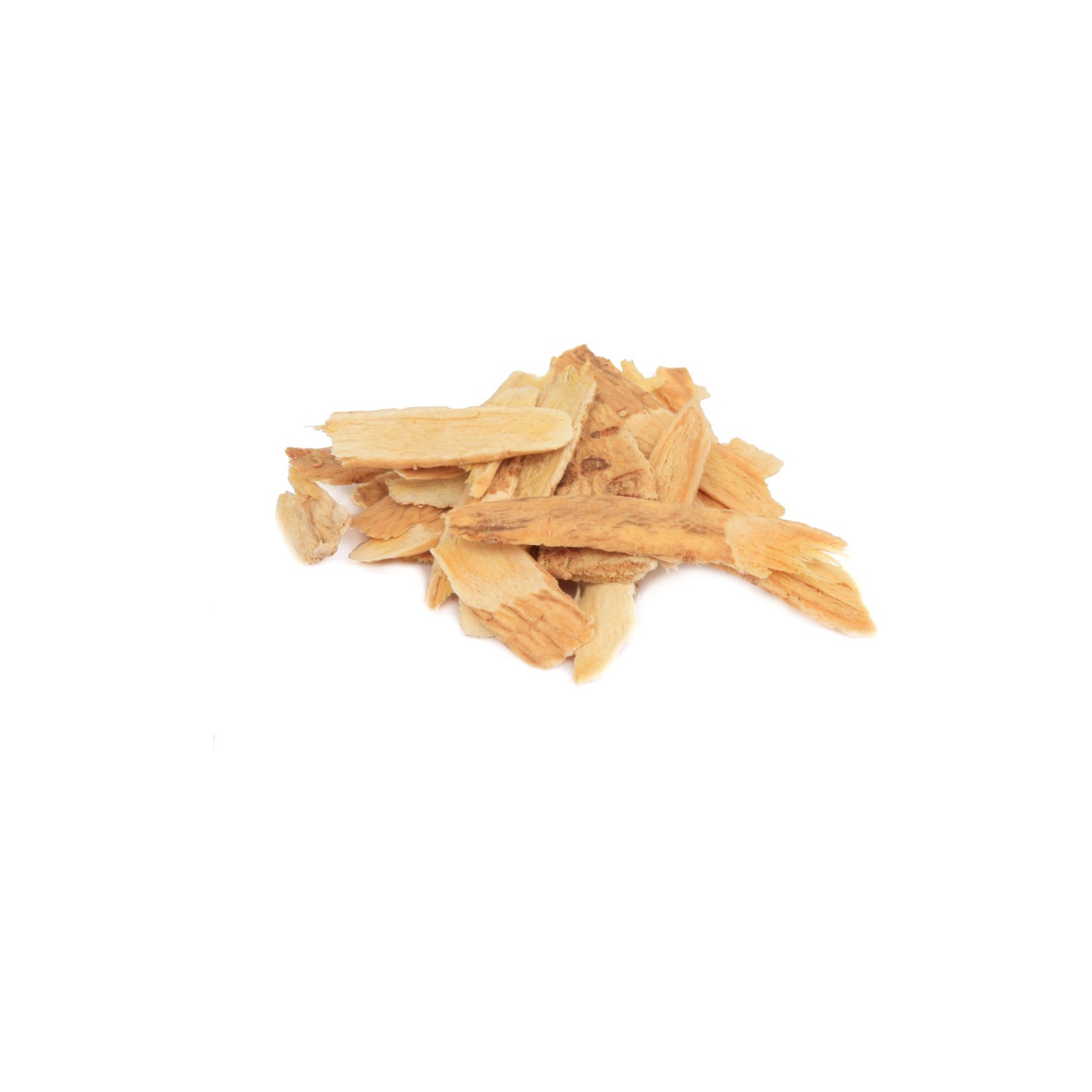 Source Astragalus Astragalus mongholicus Herb monograph →
Photo coming soon
Source Red Clover Trifolium pratense Herb monograph →
Concentration
Content by Source
Concentrations not reported. No percent-dry-weight or mg/g figures have been published for this compound in its source plants.
Medicarpin at a Glance
Medicarpin is the best-known pterocarpan — a small, tricyclic isoflavonoid that legumes make as a phytoalexin, an antimicrobial compound synthesised on demand when the plant is infected or wounded. It is the signature chemical-defence molecule of the pea and bean family (Fabaceae), notably alfalfa, red clover, astragalus, chickpea and peanut, and its native job is antifungal 12,
Biosynthetically it sits at the end of the isoflavonoid → pterocarpan branch, built downstream of the isoflavone formononetin (itself the 4′-O-methyl ether of daidzein) 13,
The reason medicarpin has drawn pharmacological attention is a genuinely interesting osteogenic signal: in rodent models it both stimulates bone-forming osteoblasts and suppresses bone-resorbing osteoclasts, conserving bone in ovariectomised (oestrogen-deficient) animals without the uterine effects of oestrogen 1,
The Isoflavonoid → Pterocarpan Branch
The compound-unique angle of medicarpin is where it comes from. Most isoflavonoids here — genistein, daidzein, formononetin, biochanin A — are isoflavones, flat molecules with a single extra ring. Pterocarpans are the next step: the isoflavone skeleton is reduced and cyclised into a rigid, four-ring cage, and that structural change turns a mild phyto-oestrogen into a dedicated antimicrobial.
The route to medicarpin is well mapped in alfalfa 13,
- Formononetin (a 4′-methoxy isoflavone) is hydroxylated to 2′-hydroxyformononetin by a cytochrome-P450 isoflavone 2′-hydroxylase.
- Isoflavone reductase reduces it to vestitone.
- Vestitone reductase and DMI dehydratase (7,2′-dihydroxy-4′-methoxyisoflavanol dehydratase) then act in sequence — what was once mislabelled a single “pterocarpan synthase” is really these two independent enzymes — closing the ring to give (−)-medicarpin 23Reference 23Conversion of vestitone to medicarpin in alfalfa (Medicago sativa L.) is catalyzed by two independent enzymesView study →.
Because medicarpin is downstream of formononetin, the same legumes that are rich in isoflavones (alfalfa, red clover, astragalus) are the ones that produce medicarpin under stress. This is also why the molecule occurs almost exclusively as the single (6aR,11aR)-(−) enantiomer in plants — the enzymes are stereospecific 25Reference 25ReviewA comprehensive review of medicarpin: a phytoalexin with therapeutic potentialView study →.
What It's Used For
Medicarpin’s therapeutic literature is preclinical and concentrated on bone, with a scattering of oncology, immunology and neuroscience studies layered on top of its native antifungal role. The load-bearing caveat runs through all of it: isolated-molecule data, mostly rodent or in vitro, no human trials.
Support is an experimental score — weighted by study type (human > animal > in vitro) and volume. A beta, not a validated metric. There are no human data for medicarpin, so every score is capped by design — read the per-row basis.
The reason this molecule has a page. In rats, isolated medicarpin stimulated osteoblast differentiation and promoted peak bone-mass achievement, acting through oestrogen receptor β rather than the uterotrophic ER-α — so it built bone with no oestrogenic effect on the uterus 1Reference 1AnimalMedicarpin, a legume phytoalexin, stimulates osteoblast differentiation and promotes peak bone mass achievement in rats: evidence for estrogen receptor beta-mediated osteogenic actionView study →.
In ovariectomised (oestrogen-deficient) mice it inhibited osteoclastogenesis and preserved trabecular architecture, again non-oestrogenically 2Reference 2AnimalMedicarpin inhibits osteoclastogenesis and has nonestrogenic bone conserving effect in ovariectomized miceView study →, and it healed a cortical bone defect by activating Notch and Wnt/β-catenin signalling, with efficacy comparable to parathyroid hormone 4Reference 4Medicarpin, a natural pterocarpan, heals cortical bone defect by activation of Notch and Wnt canonical signaling pathwaysView study →.
Mechanistic follow-up identified the chaperone GRP78 as a molecular target that keeps osteoblasts alive 15Reference 15Identification of GRP78 as a molecular target of medicarpin in osteoblast cells by proteomicsView study →.
A structural analogue, 9-demethoxy-medicarpin, reproduced the bone-sparing effect 21Reference 21AnimalGoel A, et al. (2015). 9-Demethoxy-medicarpin promotes peak bone mass achievement and has bone conserving effect in ovariectomized mice. Molecular and Cellular Endocrinology. https://pubmed.ncbi.nlm.nih.gov/25957087/View study →.
Gap: an unusually coherent preclinical bone story — but entirely rodent, largely from one laboratory, with no human or even large-animal data, and constrained by the molecule’s ~17% oral bioavailability 7Reference 7A validated LC-ESI-MS/MS method for bioanalytical determination of an osteogenic phytoalexin, medicarpin, and its application to pharmacokineticsView study →.
The activity medicarpin actually evolved for. As a phytoalexin, it is synthesised by the legume specifically to poison invading fungi: it accumulates within hours of infection, wounding or elicitor treatment 13Reference 13Molecular cloning and expression of alfalfa (Medicago sativa L.) vestitone reductase, the penultimate enzyme in medicarpin biosynthesisView study →, is inhibitory to plant-pathogenic and wood-rotting fungi in vitro 25Reference 25ReviewA comprehensive review of medicarpin: a phytoalexin with therapeutic potentialView study →, and the plant even sequesters it into the vacuole via a glutathione-conjugate pump to manage its own toxicity 12Reference 12Vacuolar uptake of the phytoalexin medicarpin by the glutathione conjugate pumpView study →.
A related (+)-enantiomer isolated from propolis also showed antibacterial (antigonococcal) activity 17Reference 17Antigonococcal activity of (+)-medicarpinView study →.
Gap: this is plant-defence chemistry demonstrated at the concentrations a plant generates locally; it is not evidence for medicarpin as a systemic human antifungal, and the potency (MICs in the µM–mM range) is modest against human pathogens 25Reference 25ReviewA comprehensive review of medicarpin: a phytoalexin with therapeutic potentialView study →.
A consistent immunomodulatory thread, tied to the bone work. In post-menopausal (ovariectomised) mouse models, medicarpin prevented arthritis by arresting the expansion of pro-inflammatory TH17 cells 3Reference 3Medicarpin prevents arthritis in post-menopausal conditions by arresting the expansion of TH17 cells and pro-inflammatory cytokinesView study → and inhibited the premature senescence of T cells that drives oestrogen-deficiency bone loss, lowering inflammatory cytokine output 9Reference 9AnimalPremature T cell senescence in Ovx mice is inhibited by repletion of estrogen and medicarpin (a plant derived isoflavonoid)View study →.
In a chronic-stress depression model it improved behaviour by up-regulating liver X receptor β in the amygdala, an anti-neuroinflammatory route 6Reference 6AnimalMedicarpin improves depressive-like behaviors in a chronic unpredictable mild stress-induced mouse model of depression by upregulating liver X receptor β expression in the amygdalaView study →, and it protected against scopolamine-induced memory loss in a systems-pharmacology study targeting GSK-3β and MAPK14 19Reference 19A systems pharmacology approach uncovers the therapeutic mechanism of medicarpin against scopolamine-induced memory lossView study →.
Gap: all rodent, mostly in the same oestrogen-deficiency context as the bone studies, so the anti-inflammatory and osteogenic signals are hard to separate; no human data 3,
An in-vitro apoptosis signal across a few cancer types. Medicarpin sensitised myeloid leukemia cells to TRAIL-induced apoptosis by inducing death receptor DR5 and activating the ROS–JNK–CHOP pathway 5Reference 5Medicarpin, a legume phytoalexin sensitizes myeloid leukemia cells to TRAIL-induced apoptosis through the induction of DR5 and activation of the ROS-JNK-CHOP pathwayView study →; it induced apoptosis and overcame multidrug resistance in P388 leukemia cells 10Reference 10Medicarpin and millepurpan, two flavonoids isolated from Medicago sativa, induce apoptosis and overcome multidrug resistance in leukemia P388 cellsView study →; and it caused G1 arrest and mitochondria-mediated intrinsic apoptosis in bladder-cancer cells 11Reference 11Medicarpin induces G1 arrest and mitochondria-mediated intrinsic apoptotic pathway in bladder cancer cellsView study →.
Reported IC50 values sit in the tens-to-low-hundreds of µg/mL.
Gap: entirely cell-line work at concentrations far above achievable plasma levels given the ~17% oral bioavailability; no animal tumour or human oncology data 5,
Mechanisms
| Target / pathway | Effect | Relevant to |
|---|---|---|
| Oestrogen receptor β (ERβ) | selective, non-uterotrophic activation → osteoblast differentiation | osteogenic / anti-osteoporotic |
| Notch + Wnt/β-catenin signalling | activated → cortical bone-defect healing (PTH-comparable) | osteogenic / bone regeneration |
| GRP78 (ER chaperone) | targeted → osteoblast anti-apoptotic survival | osteogenic |
| Osteoclastogenesis (RANKL axis) | suppressed → reduced bone resorption | anti-osteoporotic |
| TH17 expansion / T-cell senescence | arrested → lower inflammatory cytokines, less bone loss | anti-inflammatory / immunomodulatory |
| Death receptor DR5, ROS–JNK–CHOP | induced → sensitises leukemia cells to TRAIL apoptosis | anticancer |
| Mitochondrial (intrinsic) apoptosis, G1 arrest | triggered → antiproliferative in bladder cancer | anticancer |
| Fungal growth (native phytoalexin) | direct inhibition of host-plant pathogens | antifungal (plant defence) |
| Hepatic mixed-function oxidase (P450) | inhibited in vitro | drug-metabolism / interaction signal |
The load-bearing point is the ERβ-selective, non-uterotrophic bone action: it is what makes the osteogenic signal interesting (bone benefit without oestrogenic uterine stimulation), and it is still only shown in rodents 1,
Pharmacokinetics
Medicarpin’s PK is the reality check on its in-vitro potency. A validated LC-MS/MS study in rats found it is rapidly absorbed but has an oral bioavailability of only ~17.4% 7Reference 7A validated LC-ESI-MS/MS method for bioanalytical determination of an osteogenic phytoalexin, medicarpin, and its application to pharmacokineticsView study →. Tissue-distribution and excretion work confirmed modest oral bioavailability with substantial accumulation in liver and bone marrow — convenient for a bone-targeted agent, but a real ceiling on systemic exposure 8Reference 8AnimalBioavailability, tissue distribution and excretion studies of a potential anti-osteoporotic agent, medicarpin, in female ratsView study →. The molecule is a small (MW 270) lipophilic pterocarpan, consistent with its ready absorption and hepatic handling; in vitro it also inhibits hepatic mixed-function oxidase (cytochrome-P450) activity, a signal that at higher exposures it could interfere with drug metabolism 22Reference 22AnimalSpecificity of medicarpin and related isoflavonoids in inhibition of rat hepatic mixed function oxidase activityView study →. No human pharmacokinetic data exist.
Clinical Trials
There are no clinical trials of medicarpin in any indication. The entire therapeutic literature is preclinical: in-vivo rodent studies for bone and inflammation, and cell-line studies for cancer.
| Completed | Planned | Terminated | Preclinical |
|---|---|---|---|
| — | — | — | Osteogenic(rodent), anti-inflammatory (rodent), anticancer (in vitro), antifungal (in vitro) |
Last checked: July 2026.
Isolate vs. Plant Studies
Almost all of medicarpin’s therapeutic evidence is the isolated molecule, not a whole plant — which cuts both ways. On the plus side, the bone studies dosed purified medicarpin (and a synthetic analogue), so the osteogenic effect is attributable to the molecule itself rather than a plant matrix 1,
Its Role in Plants
In the legume, medicarpin is not a passive metabolite but an active defence compound. It is the archetypal phytoalexin — barely present in healthy tissue and synthesised rapidly when the plant detects a fungal pathogen, a wound, or a chemical elicitor 23Reference 23Conversion of vestitone to medicarpin in alfalfa (Medicago sativa L.) is catalyzed by two independent enzymesView study →. Elicitor treatment of alfalfa cells switches on the whole biosynthetic cascade within hours, with vestitone-reductase transcript rising before the enzyme activity and medicarpin accumulation that follow 13Reference 13Molecular cloning and expression of alfalfa (Medicago sativa L.) vestitone reductase, the penultimate enzyme in medicarpin biosynthesisView study →.
Because medicarpin is toxic to the plant that makes it as well as to the fungus, the cell manages it carefully: it is conjugated (glucosylated and malonylated) for storage — in chickpea, medicarpin and maackiain accumulate as 3-O-glucoside-6′-O-malonate conjugates 24Reference 24Medicarpin and maackiain 3-O-glucoside-6′-O-malonate conjugates are constitutive compounds in chickpea (Cicer arietinum L.) cell culturesView study → — and the free aglycone is pumped into the vacuole by a glutathione-conjugate transporter 12Reference 12Vacuolar uptake of the phytoalexin medicarpin by the glutathione conjugate pumpView study →. A dedicated membrane transporter, ABCG10, moves precursors along the pathway in Medicago truncatula 14Reference 14The Medicago truncatula ABCG10 transporter is involved in the transport of 4-coumarate and liquiritigenin, precursors in the medicarpin biosynthetic pathwayView study →. These are plant-biology functions and do not predict human pharmacology.
Prevalence in Nature
Medicarpin occurs across the legume family (Fabaceae), where it is the dominant pterocarpan phytoalexin, and it turns up in a few non-legume sources too. Its defining feature is that concentrations are inducible and highly variable: low in healthy tissue, high after stress.
Reported occurrences and levels:
- Alfalfa (Medicago sativa) — the namesake source; ~1–2 µg/g fresh weight in unstressed leaflets, far higher in elicited cell cultures 8,
25Reference 8AnimalBioavailability, tissue distribution and excretion studies of a potential anti-osteoporotic agent, medicarpin, in female ratsView study →Reference 25ReviewA comprehensive review of medicarpin: a phytoalexin with therapeutic potentialView study → . - White clover (Trifolium repens) — ~1–2 µg/g fresh weight in leaflets 25Reference 25ReviewA comprehensive review of medicarpin: a phytoalexin with therapeutic potentialView study →.
- Red clover (Trifolium pratense) and astragalus (Astragalus membranaceus) — as an isoflavonoid-pathway product of these isoflavone-rich legumes.
- Chickpea (Cicer arietinum) — accumulated (with maackiain) as glucoside-malonate conjugates in elicited cell cultures 24Reference 24Medicarpin and maackiain 3-O-glucoside-6′-O-malonate conjugates are constitutive compounds in chickpea (Cicer arietinum L.) cell culturesView study →.
- Peanut / groundnut (Arachis hypogaea) — from ~15 µg/g up to several mg/g in stressed tissue over time 25Reference 25ReviewA comprehensive review of medicarpin: a phytoalexin with therapeutic potentialView study →.
- Non-legume sources — Dalbergia rosewoods and, notably, Brazilian red propolis, where medicarpin is a major constituent 17,
25Reference 17Antigonococcal activity of (+)-medicarpinView study →Reference 25ReviewA comprehensive review of medicarpin: a phytoalexin with therapeutic potentialView study → .
Because it is a phytoalexin rather than a stored secondary metabolite, no single “abundance” figure is meaningful — the number depends entirely on how stressed the plant is.
Discovery & Synthesis
Medicarpin was characterised as the principal pterocarpan phytoalexin of alfalfa (Medicago sativa), and its name derives directly from that genus, Medicago. Interest in it grew through the 1980s and 1990s as the archetype for studying how legumes build pterocarpan defences, and its biosynthetic pathway from formononetin was worked out in alfalfa — the cloning of vestitone reductase (the penultimate enzyme) and the demonstration that vestitone-to-medicarpin conversion needs two independent enzymes were landmark steps 13,
The molecule occurs naturally as the single (6aR,11aR)-(−) enantiomer. Total syntheses of both enantiomers were later achieved: a unified synthesis of (−)-medicarpin (with related pterocarpans) using quinone-methide chemistry in 2015 16Reference 16Unified total syntheses of (−)-medicarpin, (−)-sophoracarpan A, and (±)-kushecarpin A with some structural revisionsView study →, and an asymmetric total synthesis of (+)-medicarpin in 2017 18Reference 18Total synthesis of (+)-medicarpinView study →. Manufacture today is not industrial — medicarpin is a research compound obtained by extraction from elicited plant material or by total/asymmetric synthesis for laboratory study, not a commercial supplement ingredient.
Patents: not yet researched.
Toxicity & Safety
Medicarpin carries a low toxicity flag, but that rating rests on thin, mostly indirect evidence — there is no dedicated toxicology package for the isolated molecule in humans, and its therapeutic doses are known only from rodents. The rating reflects the absence of red flags rather than a clean safety file.
- No reported human toxicity, and low acute concern. The available zebrafish and rodent work shows no behavioural or physiological toxicity at studied doses; the rodent bone studies used the isolate without reported adverse effects 1,
2Reference 1AnimalMedicarpin, a legume phytoalexin, stimulates osteoblast differentiation and promotes peak bone mass achievement in rats: evidence for estrogen receptor beta-mediated osteogenic actionView study →Reference 2AnimalMedicarpin inhibits osteoclastogenesis and has nonestrogenic bone conserving effect in ovariectomized miceView study → . - Preclinical-only, and largely from one research programme. There are no human safety data at all, and much of the therapeutic record traces to a single laboratory — do not read the rodent doses as human-safe.
- Possible drug-metabolism interference. Medicarpin inhibits hepatic cytochrome-P450 (mixed-function oxidase) activity in vitro, a theoretical interaction signal for co-administered drugs that has not been characterised in humans 22Reference 22AnimalSpecificity of medicarpin and related isoflavonoids in inhibition of rat hepatic mixed function oxidase activityView study →.
- Isoflavonoid-family, oestrogen-receptor-active. It activates oestrogen receptor β (though not the uterotrophic ER-α); ER-modulating activity warrants caution pending human data, even though the rodent studies found no uterine effect 1Reference 1AnimalMedicarpin, a legume phytoalexin, stimulates osteoblast differentiation and promotes peak bone mass achievement in rats: evidence for estrogen receptor beta-mediated osteogenic actionView study →.
Medicarpin is a phytoalexin the plant makes to be toxic to fungi, and it is toxic enough that the plant sequesters it into the vacuole to protect itself 12Reference 12Vacuolar uptake of the phytoalexin medicarpin by the glutathione conjugate pumpView study → — a reminder that “plant defence compound” and “safe in humans” are separate questions. No reproductive or developmental toxicology exists for the isolated molecule; because medicarpin is oestrogen-receptor-active, that gap is worth flagging, but any pregnancy/lactation decision belongs on a herb or product page, not on this molecule page.
Dosage
There is no established or recommended human dose for medicarpin. It is a preclinical research compound, not a marketed supplement, and every dose figure in the literature is a rodent research dose — for example, the osteoporosis studies dosed rats and mice by oral gavage or injection at levels chosen for the experiment, not scaled to humans 1,
Dietary exposure from eating legumes is negligible relative to the studied doses, because medicarpin is a low-abundance, inducible phytoalexin (~1–2 µg/g in unstressed alfalfa/clover) rather than a stored constituent. These are research figures, not a personal recommendation.
References
- Bhargavan B, et al. (2012). Medicarpin, a legume phytoalexin, stimulates osteoblast differentiation and promotes peak bone mass achievement in rats: evidence for estrogen receptor beta-mediated osteogenic action. Journal of Nutritional Biochemistry. https://pubmed.ncbi.nlm.nih.gov/21333515/
- Tyagi AM, et al. (2010). Medicarpin inhibits osteoclastogenesis and has nonestrogenic bone conserving effect in ovariectomized mice. Molecular and Cellular Endocrinology. https://pubmed.ncbi.nlm.nih.gov/20570709/
- Mansoori MN, et al. (2020). Medicarpin prevents arthritis in post-menopausal conditions by arresting the expansion of TH17 cells and pro-inflammatory cytokines. International Immunopharmacology. https://pubmed.ncbi.nlm.nih.gov/32097846/
- Dixit M, et al. (2015). Medicarpin, a natural pterocarpan, heals cortical bone defect by activation of Notch and Wnt canonical signaling pathways. PLoS One. https://pubmed.ncbi.nlm.nih.gov/26657206/
- Trivedi R, et al. (2014). Medicarpin, a legume phytoalexin sensitizes myeloid leukemia cells to TRAIL-induced apoptosis through the induction of DR5 and activation of the ROS-JNK-CHOP pathway. Cell Death & Disease. https://pubmed.ncbi.nlm.nih.gov/25321472/
- Li Y, et al. (2022). Medicarpin improves depressive-like behaviors in a chronic unpredictable mild stress-induced mouse model of depression by upregulating liver X receptor β expression in the amygdala. Neurotoxicity Research. https://pubmed.ncbi.nlm.nih.gov/36445678/
- Taneja I, et al. (2015). A validated LC-ESI-MS/MS method for bioanalytical determination of an osteogenic phytoalexin, medicarpin, and its application to pharmacokinetics. Journal of Chromatography B. https://pubmed.ncbi.nlm.nih.gov/26241182/
- Taneja I, et al. (2020). Bioavailability, tissue distribution and excretion studies of a potential anti-osteoporotic agent, medicarpin, in female rats. Journal of Pharmaceutical and Biomedical Analysis. https://pubmed.ncbi.nlm.nih.gov/31855725/
- Tyagi AM, et al. (2012). Premature T cell senescence in Ovx mice is inhibited by repletion of estrogen and medicarpin (a plant derived isoflavonoid). Osteoporosis International. https://pubmed.ncbi.nlm.nih.gov/21562872/
- Gatouillat G, et al. (2015). Medicarpin and millepurpan, two flavonoids isolated from Medicago sativa, induce apoptosis and overcome multidrug resistance in leukemia P388 cells. Phytomedicine. https://pubmed.ncbi.nlm.nih.gov/26598918/
- Chen Y, et al. (2023). Medicarpin induces G1 arrest and mitochondria-mediated intrinsic apoptotic pathway in bladder cancer cells. Acta Pharmaceutica. https://pubmed.ncbi.nlm.nih.gov/37307373/
- Li ZS, et al. (1997). Vacuolar uptake of the phytoalexin medicarpin by the glutathione conjugate pump. Phytochemistry. https://pubmed.ncbi.nlm.nih.gov/9195760/
- Guo L, Paiva NL (1995). Molecular cloning and expression of alfalfa (Medicago sativa L.) vestitone reductase, the penultimate enzyme in medicarpin biosynthesis. Archives of Biochemistry and Biophysics. https://pubmed.ncbi.nlm.nih.gov/7625843/
- Biala W, et al. (2017). The Medicago truncatula ABCG10 transporter is involved in the transport of 4-coumarate and liquiritigenin, precursors in the medicarpin biosynthetic pathway. Journal of Experimental Botany. https://pubmed.ncbi.nlm.nih.gov/28369642/
- Kureel J, et al. (2016). Identification of GRP78 as a molecular target of medicarpin in osteoblast cells by proteomics. Molecular and Cellular Biochemistry. https://pubmed.ncbi.nlm.nih.gov/27316719/
- Feng J, et al. (2015). Unified total syntheses of (−)-medicarpin, (−)-sophoracarpan A, and (±)-kushecarpin A with some structural revisions. Angewandte Chemie International Edition. https://pubmed.ncbi.nlm.nih.gov/25476784/
- Williams KP, et al. (2021). Antigonococcal activity of (+)-medicarpin. ACS Omega. https://pubmed.ncbi.nlm.nih.gov/34151106/
- Yang X, et al. (2017). Total synthesis of (+)-medicarpin. Journal of Natural Products. https://pubmed.ncbi.nlm.nih.gov/29164880/
- Li W, et al. (2021). A systems pharmacology approach uncovers the therapeutic mechanism of medicarpin against scopolamine-induced memory loss. Phytomedicine. https://pubmed.ncbi.nlm.nih.gov/34333326/
- Imran KM, et al. (2018). Medicarpin induces lipolysis via activation of Protein Kinase A in brown adipocytes. BMB Reports. https://pubmed.ncbi.nlm.nih.gov/29353597/
- Goel A, et al. (2015). 9-Demethoxy-medicarpin promotes peak bone mass achievement and has bone conserving effect in ovariectomized mice. Molecular and Cellular Endocrinology. https://pubmed.ncbi.nlm.nih.gov/25957087/
- Friedman FK, et al. (1985). Specificity of medicarpin and related isoflavonoids in inhibition of rat hepatic mixed function oxidase activity. Pharmacology. https://pubmed.ncbi.nlm.nih.gov/3877941/
- Guo L, et al. (1994). Conversion of vestitone to medicarpin in alfalfa (Medicago sativa L.) is catalyzed by two independent enzymes. Journal of Biological Chemistry. https://pubmed.ncbi.nlm.nih.gov/8071365/
- Weidemann C, et al. (1991). Medicarpin and maackiain 3-O-glucoside-6′-O-malonate conjugates are constitutive compounds in chickpea (Cicer arietinum L.) cell cultures. Plant Cell Reports. https://pubmed.ncbi.nlm.nih.gov/24221677/
- Tanimoto, de Miranda, Aldana-Mejía, et al. (2025). A comprehensive review of medicarpin: a phytoalexin with therapeutic potential. ACS Omega. https://doi.org/10.1021/acsomega.5c08170



