
Compound Monograph
Menthofuran
Menthofuran is the furanoterpene of mint oils that is unusual for being two things at once — a genuine plant constituent of peppermint oil, capped at 1–9% by pharmacopoeial limits, and the liver's bioactivation product of pulegone. Both routes lead to the same reactive intermediates, which is why the hepatotoxicity of pennyroyal runs through it.

Sources · 3
Where Does It Come From?
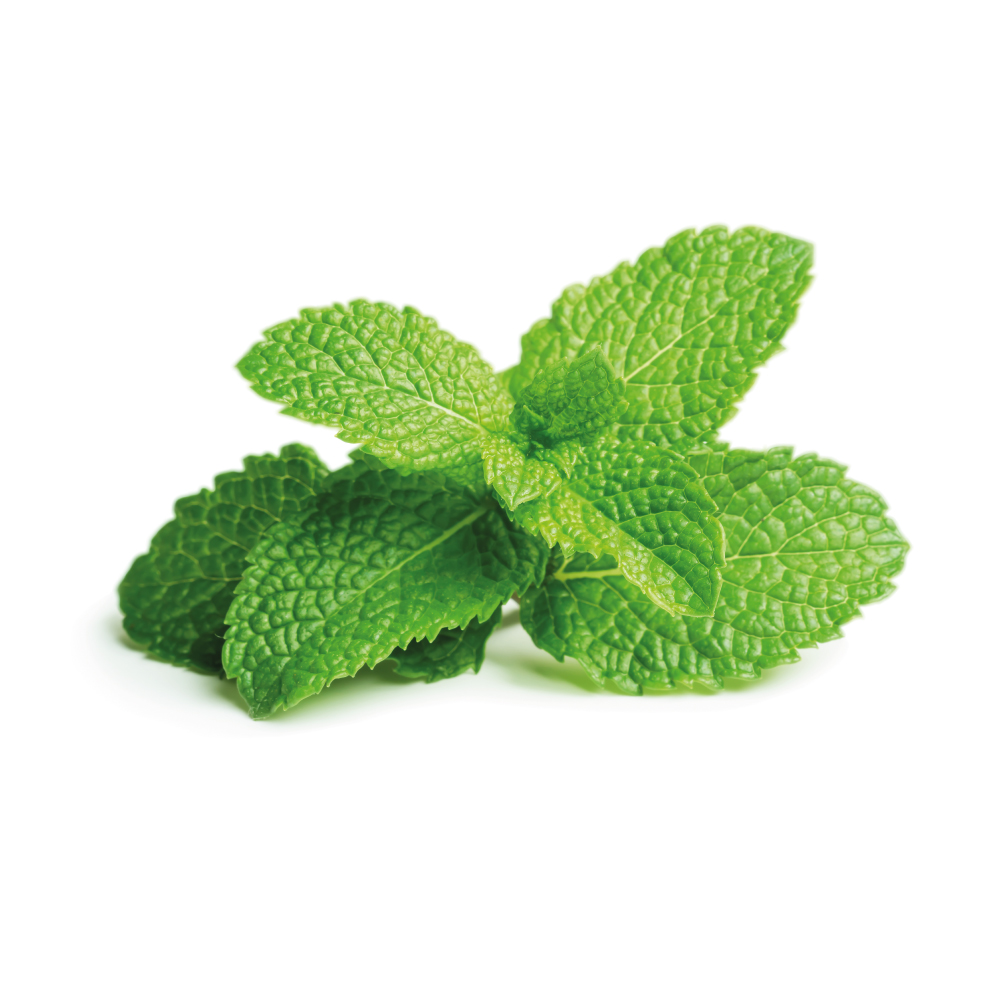
Menthofuran is a naturally occurring monoterpene (furanoterpene, p-menthane derived), found in Peppermint, Field mint / cornmint and Pennyroyal. It is flagged as moderately toxic.
Concentration
Content by Source
Concentrations not reported. No percent-dry-weight or mg/g figures have been published for this compound in its source plants.
Menthofuran at a Glance
Menthofuran is a furan-containing monoterpene and one of the few plant molecules that is genuinely two things at once: a constituent of the plant and a metabolite made inside the person who swallows it. Mint plants build it from pulegone using a dedicated cytochrome-P450 enzyme 10Reference 10Demonstration that menthofuran synthase of mint (Mentha) is a cytochrome P450 monooxygenase: cloning, functional expression, and characterization of the responsible geneView study →; the human liver builds it from pulegone using its own cytochrome P450s 1,
That is why menthofuran appears in every account of pennyroyal poisoning. It is not, however, the whole of the story — careful rodent work matching exposure between the two molecules found that pulegone produces more than twice the liver injury menthofuran does, and that pulegone, not menthofuran, is the glutathione depleter 2,
In peppermint oil it is a minor and unwanted constituent, capped at 1–9% by European pharmacopoeial composition limits 15Reference 15ReviewReview article: the physiological effects and safety of peppermint oil and its efficacy in irritable bowel syndrome and other functional disorders — reviewView study →. Growers and plant scientists have spent two decades trying to breed and engineer it out 12,
A Constituent and a Metabolite at Once
The dual identity is worth stating plainly, because it is the source of most confusion about this molecule.
In the plant, menthofuran is a committed product of a dedicated enzyme. Menthofuran synthase was cloned in 2001 and shown to be a cytochrome P450 monooxygenase that converts (+)-pulegone to (+)-menthofuran 10Reference 10Demonstration that menthofuran synthase of mint (Mentha) is a cytochrome P450 monooxygenase: cloning, functional expression, and characterization of the responsible geneView study →. It is not a degradation artefact and not an oxidation that happens in the bottle — it is a biosynthetic branch point, and how much of it a plant makes depends on growing conditions.
In the body, the same conversion is performed by hepatic cytochrome P450s. Expressed human liver enzymes CYP2E1, CYP1A2 and CYP2C19 oxidise pulegone to menthofuran, with CYP2E1 the most efficient (Km 29 µM, Vmax 8.4 nmol/min/nmol P-450) 4Reference 4In vitroMetabolism of (R)-(+)-pulegone and (R)-(+)-menthofuran by human liver cytochrome P-450s: evidence for formation of a furan epoxide — in vitroView study →. The identification of menthofuran as pulegone’s “proximate toxin” dates to 1987 1Reference 1The metabolism of the abortifacient terpene, (R)-(+)-pulegone, to a proximate toxin, menthofuranView study →.
The consequence is that swallowed menthofuran and swallowed pulegone converge. A person drinking a pennyroyal preparation is exposed to preformed menthofuran from the plant and to menthofuran generated from pulegone in their own liver, and the second source is the larger one — in rats, peak plasma menthofuran formed from pulegone was 4.5 times higher, and arrived much earlier, than after giving menthofuran directly 2Reference 2Contribution of menthofuran to the hepatotoxicity of pulegone: assessment based on matched area under the curve and on matched time course — animalView study →.
How Much Menthofuran a Peppermint Oil Actually Carries
This is the practical question, and the answer is: a small but not negligible amount, which is why it is regulated rather than ignored.
The European Pharmacopoeia composition limits for peppermint oil place menthofuran at 1–9%, alongside menthol at 30–55%, menthone at 14–32% and pulegone capped at ≤4% — and the two lower caps exist specifically because of toxicity 15Reference 15ReviewReview article: the physiological effects and safety of peppermint oil and its efficacy in irritable bowel syndrome and other functional disorders — reviewView study →. Actual samples can sit at or above the top of that band: a GC-MS analysis of cultivated Mentha piperita found menthofuran at 11.18%, the third-largest component of that oil after menthol (53.3%) and menthyl acetate (15.1%) 14Reference 14In vitroChemical composition, antifungal and antibiofilm activities of the essential oil of Mentha piperita L. — in vitroView study →.
Two things follow. First, a peppermint oil is not a menthofuran-free product, and a therapeutic dose of enteric-coated peppermint oil delivers a real, if small, menthofuran dose. Second, the figure is not fixed by the species — it moves with stress, growing conditions and harvest, which is exactly what makes the pharmacopoeial cap a meaningful specification rather than a formality.
Among the mints the ordering is stark. Peppermint carries single-digit percentages under a cap. Pennyroyal oil is a different exposure entirely: its dominant constituent is pulegone at 60–90% of the oil, and reviewed case reports document moderate-to-severe toxicity from 10 mL or more of pennyroyal oil 6Reference 6Case reportPennyroyal toxicity: measurement of toxic metabolite levels in two cases and review of the literature — case reportView study →.
How Much of Pulegone’s Toxicity Is Menthofuran’s?
Less than the standard account implies, and the experiments that settled it are unusually careful.
When rats were given pulegone or menthofuran at doses chosen to match the area under the plasma menthofuran curve, the resulting rise in alanine transferase was comparable — which looks like menthofuran doing all the work. But menthofuran generated inside the animal peaks 4.5 times higher and much earlier than injected menthofuran does, and when the exposures were matched on time course instead, pulegone produced more than twice the ALT rise and more hepatocellular necrosis than menthofuran did 2Reference 2Contribution of menthofuran to the hepatotoxicity of pulegone: assessment based on matched area under the curve and on matched time course — animalView study →.
A second experiment separated them mechanistically. Pulegone extensively depleted glutathione in liver and plasma, and its toxicity worsened sharply in animals whose glutathione had been pre-emptied with buthionine sulfoximine. Menthofuran only marginally affected glutathione, and its toxicity was not augmented by glutathione depletion 3Reference 3Menthofuran-dependent and independent aspects of pulegone hepatotoxicity: roles of glutathione — animalView study →. That points to at least two independent P450-catalysed bioactivation routes out of pulegone: one through menthofuran, and one that does not involve it at all.
Menthofuran’s own toxic chemistry is nonetheless real. Human liver P450s — CYP2E1, CYP1A2, CYP2C19 and additionally CYP2A6 — oxidise menthofuran through a furan epoxide to 2-hydroxymenthofuran and on to mintlactone and isomintlactone 4Reference 4In vitroMetabolism of (R)-(+)-pulegone and (R)-(+)-menthofuran by human liver cytochrome P-450s: evidence for formation of a furan epoxide — in vitroView study →; the epoxide and the ring-opened γ-ketoenal are electrophiles that adduct hepatocellular proteins. In rats given a hepatotoxic dose, adducted proteins were identified as serum albumin, mitochondrial aldehyde dehydrogenase, cytoplasmic malate dehydrogenase and ATP synthase, with ALDH2 activity down 88% and ATP synthase complex V activity down 34% 5Reference 5AnimalCharacterization of rat liver proteins adducted by reactive metabolites of menthofuran — animalView study →. Glutathione conjugates of both pulegone and menthofuran have been characterised and the P450s that generate them identified 16Reference 16In vitroTandem mass spectrometric analysis of S- and N-linked glutathione conjugates of pulegone and menthofuran and identification of P450 enzymes mediating their formation — in vitroView study →.
The honest summary: pulegone is the toxicant, menthofuran is one of the ways it does damage, and the clinical caution belongs to pennyroyal.
What It's Used For
There is no therapeutic application of menthofuran and no clinical trial of it. Its research literature is toxicological and botanical.
The Bioactivation Cascade, Step by Step
Pulegone is oxidised to menthofuran by human CYP2E1 (Km 29 µM), CYP1A2 (Km 94 µM) and CYP2C19 (Km 31 µM). Menthofuran is then oxidised by the same enzymes plus CYP2A6, at comparable affinities but far lower turnover, to 2-hydroxymenthofuran — shown by ¹⁸O labelling to arise predominantly from a dihydrodiol formed via a furan epoxide — which goes on to mintlactone and isomintlactone 4Reference 4In vitroMetabolism of (R)-(+)-pulegone and (R)-(+)-menthofuran by human liver cytochrome P-450s: evidence for formation of a furan epoxide — in vitroView study →.
The epoxide and the ring-opened γ-ketoenal are the electrophiles that matter. In rats given a hepatotoxic dose of menthofuran, Western blot and LC-MS/MS identified adducted serum albumin, mitochondrial ALDH2, cytoplasmic malate dehydrogenase and ATP synthase; enzyme assays showed ALDH2 activity fell by 88% and ATP synthase complex V by 34%, while malate dehydrogenase was unaffected 5Reference 5AnimalCharacterization of rat liver proteins adducted by reactive metabolites of menthofuran — animalView study →.
Gap: the adduct work is rat liver at a deliberately toxic dose. No study has established what fraction of these adducts forms at the exposures a person gets from a therapeutic peppermint-oil capsule.
What the Human Poisoning Data Show
Quantitative human data exist only from overdose. In a case series of four pennyroyal ingestions, the patient who died had 18 ng/mL pulegone and 1 ng/mL menthofuran in serum 72 hours after ingestion; a patient treated with N-acetylcysteine had a menthofuran level of 40 ng/mL at 10 hours; protein-bound adducts of pennyroyal metabolites were detected in human liver by Western blot. A review of 18 earlier case reports found moderate to severe toxicity in people exposed to at least 10 mL of pennyroyal oil 6Reference 6Case reportPennyroyal toxicity: measurement of toxic metabolite levels in two cases and review of the literature — case reportView study →.
Two infants developed multiple organ failure after being given herbal tea containing pennyroyal oil 7Reference 7Case reportMultiple organ failure after ingestion of pennyroyal oil from herbal tea in two infants — case reportView study →.
The decades of work behind this picture have been reviewed as a case study in metabolism-based herbal hepatotoxicity 8,
Gap: these are poisonings, at exposures orders of magnitude above dietary or pharmacopoeial ones, and the measured concentrations are late samples. Nothing here supports extrapolating a dose-response to normal peppermint use.
Mechanisms
| Target / pathway | Effect | Relevant to |
|---|---|---|
| Hepatic CYP2E1 / CYP1A2 / CYP2C19 | oxidise pulegone → menthofuran (the plant’s product, remade in the liver) | bioactivation |
| Hepatic CYP2E1 / 1A2 / 2C19 / 2A6 | oxidise menthofuran → furan epoxide → 2-hydroxymenthofuran → mintlactone, isomintlactone | metabolism |
| Furan epoxide / γ-ketoenal | electrophilic adduction of hepatocellular proteins (albumin, ALDH2, MDH1, ATP synthase) | hepatotoxicity |
| Mitochondrial ALDH2, ATP synthase | activity loss of 88% and 34% respectively at a hepatotoxic rodent dose | hepatotoxicity |
| Glutathione | only marginally depleted by menthofuran — the depletion belongs to pulegone | the limit of menthofuran’s role |
| Menthofuran synthase (CYP71A32, in planta) | converts (+)-pulegone → (+)-menthofuran; stress-responsive | plant biochemistry |
| Pulegone reductase transcript (in planta) | down-regulated by menthofuran — a feedback loop that raises pulegone and menthofuran together | plant biochemistry |
The fifth row is the load-bearing one. Menthofuran forms protein adducts and damages mitochondrial enzymes, but it does not empty the liver’s glutathione — and glutathione status is what governs the severity of pennyroyal poisoning. That is why the toxicological headline stays with pulegone.
Pharmacokinetics
No clean human pharmacokinetic dataset exists for menthofuran given on its own; there is no bioavailability figure and no half-life. What is known comes from two directions. In vitro, human liver P450 kinetics for both its formation and its onward oxidation have been measured, with formation from pulegone roughly twenty-fold faster than its own clearance by the same enzyme (CYP2E1 Vmax 8.4 versus 0.43 nmol/min/nmol P-450) — a kinetic asymmetry that favours accumulation of the furan once pulegone is present 4Reference 4In vitroMetabolism of (R)-(+)-pulegone and (R)-(+)-menthofuran by human liver cytochrome P-450s: evidence for formation of a furan epoxide — in vitroView study →. In vivo, rodent work shows menthofuran generated endogenously from pulegone reaches a plasma peak 4.5 times higher and much earlier than the same molecule given directly 2Reference 2Contribution of menthofuran to the hepatotoxicity of pulegone: assessment based on matched area under the curve and on matched time course — animalView study →. In human poisoning, menthofuran was still measurable at 1–40 ng/mL 10 to 72 hours after ingestion 6Reference 6Case reportPennyroyal toxicity: measurement of toxic metabolite levels in two cases and review of the literature — case reportView study →.
Clinical Trials
| Completed | Planned | Terminated | Preclinical |
|---|---|---|---|
| None — the human data are poisoning case series | — | — | Rodent hepatotoxicity, protein adduct mapping, human liver P450 kinetics, plant metabolic engineering |
Last checked: September 2026.
Isolate vs. Plant Studies
Menthofuran is one of the rare cases where the isolate work is the toxicology and the plant work is the agronomy, with almost nothing in between.
The isolate has been dosed to rats, run against expressed human P450s, and mapped for protein adducts 2,
Its Role in Plants
Menthofuran is a stress-responsive branch of the mint monoterpene pathway rather than an end-product the plant wants. Its synthase is a cytochrome P450 whose transcription rises under adverse growing conditions 10,
It also regulates its own pathway. In transgenic peppermint, overexpressing or co-suppressing menthofuran synthase raised or lowered menthofuran as expected — but in every line, wild type included, menthofuran and pulegone moved together, because menthofuran itself suppresses pulegone reductase transcript in immature leaves 11Reference 11Menthofuran regulates essential oil biosynthesis in peppermint by controlling a downstream monoterpene reductaseView study →. A plant that makes more menthofuran therefore also accumulates more of the precursor, which is precisely the wrong direction for oil quality.
Prevalence in Nature
Menthofuran is confined to the mints and their close relatives, and it is always a minor component.
- Peppermint (Mentha × piperita) — 1–9% of the leaf oil under pharmacopoeial limits 15Reference 15ReviewReview article: the physiological effects and safety of peppermint oil and its efficacy in irritable bowel syndrome and other functional disorders — reviewView study →, with measured samples reaching 11.2% 14Reference 14In vitroChemical composition, antifungal and antibiofilm activities of the essential oil of Mentha piperita L. — in vitroView study →. It rises under plant stress.
- Pennyroyal (Mentha pulegium) — present, but overshadowed by pulegone, which is 60–90% of that oil and is the source of the danger.
- Field mint / cornmint (Mentha canadensis) — a minor volatile of the oil; European regulators name cornmint oil alongside peppermint oil when setting intake limits for the mint ketones.
Because the amount is set by growing conditions as much as by species, an analysis certificate for a specific batch says more than a species name does.
Discovery & Synthesis
Menthofuran was characterised as a peppermint-oil constituent in twentieth-century terpene chemistry — a tetrahydrobenzofuran, structurally the furan formed by closing a ring onto the pulegone skeleton. Its toxicological identity came later: in 1987 it was identified as the proximate hepatotoxic metabolite formed when the abortifacient terpene pulegone is oxidised in the liver 1Reference 1The metabolism of the abortifacient terpene, (R)-(+)-pulegone, to a proximate toxin, menthofuranView study →, and the mechanistic work that followed through the 1980s and 1990s established the reactive-metabolite chemistry described above 2,
Its plant biochemistry was settled between 2001 and 2003, when menthofuran synthase was cloned and shown to be a cytochrome P450 10Reference 10Demonstration that menthofuran synthase of mint (Mentha) is a cytochrome P450 monooxygenase: cloning, functional expression, and characterization of the responsible geneView study → and the feedback loop onto pulegone reductase was demonstrated 11Reference 11Menthofuran regulates essential oil biosynthesis in peppermint by controlling a downstream monoterpene reductaseView study →.
There is no commercial demand for menthofuran; the manufacturing interest runs the other way. Antisense suppression of menthofuran synthase in peppermint produced plants making less than half as much of it under both stressed and unstressed conditions 12Reference 12Metabolic engineering of essential oil yield and composition in mint by altering expression of deoxyxylulose phosphate reductoisomerase and menthofuran synthaseView study →, and elite engineered lines combining that suppression with an upstream yield gene were carried through multi-year field trials, giving oil yield increases of up to 78% with low menthofuran and pulegone 13Reference 13Improving peppermint essential oil yield and composition by metabolic engineeringView study →. Where mint oils carry too much, industrial processes strip both compounds down to permitted levels.
Patents: not yet researched.
Toxicity & Safety
Menthofuran carries a moderate flag. It is a reactive-metabolite-forming hepatotoxicant in animals and a measurable participant in human pennyroyal poisoning — but the exposures that cause harm come from concentrated pennyroyal oil, not from ordinary mint use, and the larger share of the injury belongs to pulegone.
- Never ingest pennyroyal oil. Reviewed case reports document moderate-to-severe toxicity from 10 mL or more, including fatal liver failure and multiple organ failure in infants.
- A reactive-metabolite hepatotoxicant. Oxidised to a furan epoxide and a γ-ketoenal that adduct liver proteins and knock out 88% of mitochondrial ALDH2 activity at a toxic rodent dose.
- Peppermint oil is not menthofuran-free. Pharmacopoeial limits cap it at 1–9% of the oil, and measured samples run to the top of that band and above — which is why the cap exists.
- The liver makes more of it than the plant supplies. Menthofuran formed from swallowed pulegone reaches far higher peak levels than preformed menthofuran does, so pulegone content is the number to watch.
- Not the glutathione depleter. Unlike pulegone, menthofuran only marginally lowers hepatic glutathione and its toxicity is not worsened by glutathione depletion.
Full Safety & Interactions Detail
The clinical picture belongs to pennyroyal. Pennyroyal oil taken as a folk abortifacient has caused fulminant hepatic failure and death. In the best-quantified case series, the fatal case had 18 ng/mL pulegone and 1 ng/mL menthofuran in serum at 72 hours; a survivor given N-acetylcysteine had 40 ng/mL menthofuran at 10 hours; and protein-bound metabolite adducts were demonstrated in human liver. Eighteen reviewed case reports put the threshold for moderate-to-severe toxicity at around 10 mL of the oil 6Reference 6Case reportPennyroyal toxicity: measurement of toxic metabolite levels in two cases and review of the literature — case reportView study →. Two infants given herbal tea containing pennyroyal oil developed multiple organ failure 7Reference 7Case reportMultiple organ failure after ingestion of pennyroyal oil from herbal tea in two infants — case reportView study →.
N-acetylcysteine is the rational antidote, on the same logic as paracetamol: the injury is driven by electrophilic metabolites and by glutathione exhaustion, and NAC replenishes the thiol pool 6,
Enzyme-dependence and interactions. Both the formation of menthofuran and its onward oxidation are CYP2E1-, CYP1A2- and CYP2C19-mediated, with CYP2A6 contributing to the second step 4Reference 4In vitroMetabolism of (R)-(+)-pulegone and (R)-(+)-menthofuran by human liver cytochrome P-450s: evidence for formation of a furan epoxide — in vitroView study →. Anything that raises CYP2E1 activity — chronic alcohol intake is the obvious example — would be expected to increase the rate at which swallowed pulegone becomes menthofuran, and anything that lowers glutathione reserve makes the consequences worse 3Reference 3Menthofuran-dependent and independent aspects of pulegone hepatotoxicity: roles of glutathione — animalView study →. These are mechanistic expectations from the enzymology, not documented clinical interactions.
Reproductive note. Pennyroyal’s historical use was as an abortifacient, and the poisonings that define this literature occurred in that context. The reproductive harm is inseparable from systemic hepatotoxicity at the doses used 6Reference 6Case reportPennyroyal toxicity: measurement of toxic metabolite levels in two cases and review of the literature — case reportView study →. Pregnancy and lactation decisions belong to the herb or product page, not to a molecule page.
Perspective on ordinary mint use. No case of hepatotoxicity has been attributed to culinary mint or to pharmacopoeia-compliant peppermint oil at recommended doses. The regulatory limits exist to keep it that way, and they cap pulegone more tightly than menthofuran because pulegone is the larger contributor.
Dosage
There is no therapeutic dose of menthofuran. It is a minor constituent that specifications cap and breeders remove. The figures below are exposure reference points.
| Context | Figure |
|---|---|
| Peppermint oil, pharmacopoeial composition limit | 1–9% of the oil 15Reference 15ReviewReview article: the physiological effects and safety of peppermint oil and its efficacy in irritable bowel syndrome and other functional disorders — reviewView study → |
| Peppermint oil, measured GC-MS sample | 11.18% of the oil 14Reference 14In vitroChemical composition, antifungal and antibiofilm activities of the essential oil of Mentha piperita L. — in vitroView study → |
| Pennyroyal oil ingestion causing moderate–severe toxicity | ≥ 10 mL of the oil 6Reference 6Case reportPennyroyal toxicity: measurement of toxic metabolite levels in two cases and review of the literature — case reportView study → |
| Serum menthofuran, fatal pennyroyal case at 72 h | 1 ng/mL (with pulegone 18 ng/mL) 6Reference 6Case reportPennyroyal toxicity: measurement of toxic metabolite levels in two cases and review of the literature — case reportView study → |
| Serum menthofuran, survivor at 10 h | 40 ng/mL 6Reference 6Case reportPennyroyal toxicity: measurement of toxic metabolite levels in two cases and review of the literature — case reportView study → |
These are toxicology reference points, not recommendations, and nothing here should be read as a dose anyone should take.
References
- Gordon WP, Huitric AC, Seth CL, et al. (1987). The metabolism of the abortifacient terpene, (R)-(+)-pulegone, to a proximate toxin, menthofuran. Drug Metab Dispos. https://pubmed.ncbi.nlm.nih.gov/2891472/
- Thomassen D, Slattery JT, Nelson SD (1988). Contribution of menthofuran to the hepatotoxicity of pulegone: assessment based on matched area under the curve and on matched time course — animal. J Pharmacol Exp Ther. https://pubmed.ncbi.nlm.nih.gov/3252034/
- Thomassen D, Slattery JT, Nelson SD (1990). Menthofuran-dependent and independent aspects of pulegone hepatotoxicity: roles of glutathione — animal. J Pharmacol Exp Ther. https://pubmed.ncbi.nlm.nih.gov/2338648/
- Khojasteh-Bakht SC, Chen W, Koenigs LL, et al. (1999). Metabolism of (R)-(+)-pulegone and (R)-(+)-menthofuran by human liver cytochrome P-450s: evidence for formation of a furan epoxide — in vitro. Drug Metab Dispos. https://pubmed.ncbi.nlm.nih.gov/10220485/
- Khojasteh SC, Hartley DP, Ford KA, et al. (2012). Characterization of rat liver proteins adducted by reactive metabolites of menthofuran — animal. Chem Res Toxicol. https://pubmed.ncbi.nlm.nih.gov/23106769/
- Anderson IB, Mullen WH, Meeker JE, et al. (1996). Pennyroyal toxicity: measurement of toxic metabolite levels in two cases and review of the literature — case report. Ann Intern Med. https://pubmed.ncbi.nlm.nih.gov/8633832/
- Bakerink JA, Gospe SM Jr, Dimand RJ, et al. (1996). Multiple organ failure after ingestion of pennyroyal oil from herbal tea in two infants — case report. Pediatrics. https://pubmed.ncbi.nlm.nih.gov/8909490/
- Gordon P, Khojasteh SC (2015). A decades-long investigation of acute metabolism-based hepatotoxicity by herbal constituents: a case study of pennyroyal oil — review. Drug Metab Rev. https://pubmed.ncbi.nlm.nih.gov/25512112/
- Zárybnický T, Boušová I, Ambrož M, et al. (2018). Hepatotoxicity of monoterpenes and sesquiterpenes — review. Arch Toxicol. https://pubmed.ncbi.nlm.nih.gov/28905185/
- Bertea CM, Schalk M, Karp F, et al. (2001). Demonstration that menthofuran synthase of mint (Mentha) is a cytochrome P450 monooxygenase: cloning, functional expression, and characterization of the responsible gene. Arch Biochem Biophys. https://pubmed.ncbi.nlm.nih.gov/11396930/
- Mahmoud SS, Croteau RB (2003). Menthofuran regulates essential oil biosynthesis in peppermint by controlling a downstream monoterpene reductase. Proc Natl Acad Sci U S A. https://pubmed.ncbi.nlm.nih.gov/14623962/
- Mahmoud SS, Croteau RB (2001). Metabolic engineering of essential oil yield and composition in mint by altering expression of deoxyxylulose phosphate reductoisomerase and menthofuran synthase. Proc Natl Acad Sci U S A. https://pubmed.ncbi.nlm.nih.gov/11427737/
- Lange BM, Mahmoud SS, Wildung MR, et al. (2011). Improving peppermint essential oil yield and composition by metabolic engineering. Proc Natl Acad Sci U S A. https://pubmed.ncbi.nlm.nih.gov/21963983/
- Saharkhiz MJ, Motamedi M, Zomorodian K, et al. (2012). Chemical composition, antifungal and antibiofilm activities of the essential oil of Mentha piperita L. — in vitro. ISRN Pharm. https://pubmed.ncbi.nlm.nih.gov/23304561/
- Chumpitazi BP, Kearns GL, Shulman RJ (2018). Review article: the physiological effects and safety of peppermint oil and its efficacy in irritable bowel syndrome and other functional disorders — review. Aliment Pharmacol Ther. https://pubmed.ncbi.nlm.nih.gov/29372567/
- Lassila T, Mattila S, Turpeinen M, et al. (2016). Tandem mass spectrometric analysis of S- and N-linked glutathione conjugates of pulegone and menthofuran and identification of P450 enzymes mediating their formation — in vitro. Rapid Commun Mass Spectrom. https://pubmed.ncbi.nlm.nih.gov/26969934/



