N-Acetylcysteine (NAC)
The acetylated form of cysteine and a glutathione precursor. A hospital antidote for paracetamol overdose, also studied for lungs, liver and psychiatric symptoms.

N-Acetylcysteine (NAC) at a Glance
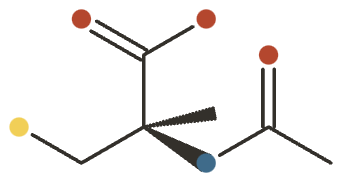
NAC is a supplement with an unusual pedigree: it is a real hospital drug that also ended up on the shelf. In emergency medicine it is the standard antidote for paracetamol (acetaminophen) overdose and a long-established mucolytic for thinning airway secretions. Chemically it is just L-cysteine with an acetyl group attached — a modification that makes it far more stable and better absorbed than cysteine itself.
The reason to care about supplying cysteine is glutathione, the body’s central intracellular antioxidant. Glutathione is a tripeptide of glutamate, cysteine and glycine, and of those three, cysteine is nearly always the one in short supply. Give the body cysteine and it makes more glutathione; that single bottleneck is the whole supplement rationale, and it is a genuinely sound one — which is more than most antioxidant products can say.
Where it gets less clean is the leap from “raises glutathione” to any particular health outcome. NAC has been trialled across an unusually wide spread of conditions — psychiatric, respiratory, hepatic, addiction — with results that range from solid to nothing. Its regulatory position is odd too: because it was approved as a drug first, the US FDA has at times questioned whether it can lawfully be sold as a dietary supplement at all.
What It’s Used For
The two settled uses, neither of which is a supplement decision:
- Paracetamol overdose — standard of care, given in hospital. A suspected overdose is a medical emergency, not something to manage with capsules.
- Chronic bronchitis & COPD — the original mucolytic indication, with fewer exacerbations over three months or more.
The wider spread, mixed to thin:
- PCOS & female fertility · Male fertility — hormone and semen parameters move; live births are not the endpoint.
- Schizophrenia (adjunct) · Depression (adjunct) · OCD (adjunct) — the psychiatric block, where the evidence has genuinely turned against the earlier optimism.
- Substance-use craving · Trichotillomania · Autism (irritability) — small, heterogeneous, surrogate-outcome data.
- Contrast-induced nephropathy · NAFLD / MASLD — both null on the outcomes that define the condition.
Two clean negatives worth naming. NAC does not improve bipolar depression in pooled RCTs, and its once-promising schizophrenia signal did not survive a larger 2024 meta-analysis. Broad “detox,” immune-support and anti-ageing claims have no direct backing at all.
How It Works
Glutathione cannot be usefully supplemented into cells as glutathione; it has to be built inside them from three amino acids. Glutamate and glycine are plentiful. Cysteine is not — it is scarce in the diet, unstable in free form, and rapidly consumed. So the rate of glutathione synthesis is set almost entirely by cysteine availability, and NAC exists to lift that constraint. The acetyl group protects the molecule through digestion and first-pass metabolism; once inside, it is cleaved off and the cysteine goes into the glutathione pool.
This explains the paracetamol antidote precisely. A minor fraction of paracetamol is metabolised to a highly reactive intermediate that glutathione normally neutralises. In overdose the glutathione runs out, the intermediate attacks liver protein, and hepatocytes die. NAC refills the tank fast enough to keep pace.
Two other mechanisms sit outside the glutathione story. As a mucolytic, NAC acts chemically rather than metabolically: its free thiol group breaks the disulfide bridges that make mucus viscous, which is a direct physical effect on the secretion itself. And in the brain, cysteine drives the cystine–glutamate antiporter, altering extracellular glutamate in regions involved in compulsion and reward — the mechanistic basis for the psychiatric and addiction trials, and a genuinely different pathway from antioxidant defence.
The full trial record is in Pharmacology & Research below.
Pharmacology & Research
N-acetylcysteine is the acetylated form of the amino acid L-cysteine, and almost everything it does traces back to one fact: cysteine is the rate-limiting substrate for glutathione, the body’s central intracellular antioxidant. The evidence posture is unusually split. In two settings — the emergency antidote for paracetamol (acetaminophen) poisoning and the mucolytic management of chronic bronchitis — the case is strong and long-established. Across the much wider spread of conditions NAC has been trialled in (psychiatric, metabolic, reproductive, renal), the picture is mixed to thin, and several well-run meta-analyses return null or borderline results. Two caveats run through all of it: oral bioavailability is modest, so form and dosing matter; and many “benefits” are improvements in a biomarker — glutathione, a lab value, a semen parameter — rather than a hard clinical outcome.
Support is an experimental score I’m building — a composite weighted by study type (human > animal > in vitro > review) and study volume. It’s a beta: a fast way to rank strength of evidence at a glance, not a validated metric. Each application links down to its write-up.
The unambiguous, established use — a hospital protocol, not a self-care one. A toxic paracetamol metabolite (NAPQI) depletes hepatic glutathione and attacks liver protein; NAC refills the glutathione pool fast enough to prevent hepatocyte death, and it is standard of care given intravenously or orally, dosed by body weight and timed against ingestion. A Cochrane review identified 11 randomised trials (700 participants) across all overdose interventions but could pool almost none, and rated the evidence low to very low quality — the trials are old and underpowered, because withholding an antidote that clearly works is not ethical 1Reference 1Systematic reviewInterventions for paracetamol (acetaminophen) overdose — Cochrane systematic reviewView study →.
Its status as first-line treatment rests on decades of clinical experience, not on a single decisive RCT.
Gap: the strong recommendation is clinical consensus and mechanism, not high-quality trial data — and none of this transfers to over-the-counter supplement use. Suspected overdose is a medical emergency.
NAC’s original indication. As a mucolytic its free thiol group breaks the disulfide bonds that make mucus viscous — a direct chemical effect, separate from the glutathione story. A meta-analysis of 11 trials (775 on NAC against 789 on placebo) found oral NAC reduced chronic-bronchitis exacerbations (RR 0.81, 95% CI 0.69–0.93) and improved symptoms (RR 1.68, 1.13–2.52), with adverse events no different from placebo; the effective pattern was a lower dose, under 1,200 mg/day, taken for at least three months 2Reference 2Meta-analysisEffect of orally administered N-acetylcysteine on chronic bronchitis — meta-analysisView study →.
A 2024 systematic review of mucolytics as a class reached the same conclusion — fewer exacerbations and hospitalisations in stable COPD — while noting no improvement in lung function, mortality or quality-of-life scores 3Reference 3Meta-analysisEfficacy and safety of mucolytics in patients with stable chronic obstructive pulmonary disease — systematic review and meta-analysisView study →.
The top-tier synthesis agrees but sizes the effect modestly: the Cochrane review of mucolytics versus placebo, pooling 38 trials in over 10,000 participants, found a small reduction in exacerbations and in days of disability, with the caveat that the older, larger-effect trials were at higher risk of bias and that more recent trials show smaller benefit 19Reference 19Systematic reviewMucolytic agents versus placebo for chronic bronchitis or chronic obstructive pulmonary disease — Cochrane systematic reviewView study →.
Gap: the benefit is fewer or shorter exacerbations, not better lung function or survival; it applies to chronic mucus-producing disease rather than to healthy lungs; and the effect size has shrunk as trial quality has improved.
A meta-analysis of 22 trials (n≈2,515) in polycystic ovary syndrome found NAC significantly raised progesterone (SMD 0.95), endometrial thickness (SMD 0.58) and — versus metformin — luteinising hormone (SMD 0.67), while estradiol, SHBG and FSH did not change 4Reference 4Meta-analysisEfficacy of N-acetylcysteine in polycystic ovary syndrome — systematic review and meta-analysisView study →.
A separate head-to-head meta-analysis found NAC broadly comparable to metformin on several PCOS parameters 5Reference 5Meta-analysisComparison of the efficacy between NAC and metformin in treating PCOS patients — meta-analysisView study →.
These are hormonal and ovulation-related surrogate markers; the trials are heterogeneous and often small.
Gap: improvements are in intermediate markers — hormones, ovulation, endometrial thickness — not consistently in live-birth rates, and the underlying trials vary widely in quality.
A 2025 meta-analysis of 5 trials reported that NAC improved semen volume (MD 0.69 mL), sperm concentration (MD 4.43 million/mL), total motility (MD 9.69%) and normal morphology (MD 1.36%) compared with control, with no reported side effects 8Reference 8Meta-analysisN-acetylcysteine to improve seminal parameters — systematic review and meta-analysisView study →. The rationale is antioxidant protection of sperm DNA and membranes against oxidative stress.
Gap: only five small trials, and the outcomes are semen parameters — not pregnancy or live-birth rates, which is what actually matters to couples.
This is where the evidence has genuinely turned. An earlier meta-analysis of 7 RCTs (n=220 on NAC against 220 on placebo) found adjunctive NAC improved PANSS negative and total scores, plus working memory, but only after 24 weeks or more of treatment 6Reference 6Meta-analysisMeta-analysis of randomised controlled trials with N-acetylcysteine in the treatment of schizophrenia — meta-analysisView study → — suggesting a slow-onset effect. However, a more recent systematic review of 8 trials (594 patients) found no difference from placebo on any PANSS subscale at either time point, and concluded NAC should not be recommended as a routine antipsychotic augmentation 7Reference 7Meta-analysisEfficacy and acceptability of adjunctive N-acetylcysteine for psychotic disorders — systematic review and meta-analysisView study →.
Gap: the positive signal was time-dependent and has not survived the larger, more recent pooled analysis; the two meta-analyses disagree, so this is an open question rather than an endorsement.
A 2024 meta-analysis of 12 trials (904 patients, NAC 1,000–3,000 mg/day for 8–24 weeks) found a small but significant reduction in depression scores (SMD −0.24, 95% CI −0.44 to −0.05), with the effect concentrated in bipolar rather than unipolar depression 9Reference 9Meta-analysisEfficacy of N-acetylcysteine for patients with depression — updated systematic review and meta-analysisView study →. The confidence interval is wide and close to zero — and a dedicated meta-analysis of NAC in bipolar depression specifically found no effect 17Reference 17Meta-analysisThe effect of N-acetylcysteine on bipolar depression — systematic review and meta-analysis of randomized controlled trialsView study →.
Gap: the effect size is small and the pooled estimate imprecise; benefit appears limited to certain diagnoses, and larger trials are needed to confirm it.
A 2024 meta-analysis of 6 RCTs (n≈195) found adjunctive NAC improved total Y-BOCS scores, but only in a narrow window of 5–8 weeks of treatment — with no significant effect at shorter or longer durations, and no separate improvement in obsession or compulsion subscores 10Reference 10Systematic reviewSafety and efficacy of N-acetylcysteine as augmentation in obsessive-compulsive disorder — systematic reviewView study →. A broader meta-analysis of glutamatergic augmentation agents including NAC found the class beneficial alongside SSRIs 11Reference 11Meta-analysisGlutamatergic medications as adjunctive therapy for moderate to severe obsessive-compulsive disorder — meta-analysisView study →, consistent with NAC’s action on the cystine–glutamate antiporter.
Gap: the benefit is small, time-window-dependent and rests on very few patients; it has not been replicated in large, long trials.
A 2024 meta-analysis of 11 RCTs found NAC reduced craving ratings across several substances — alcohol, cocaine, nicotine, amphetamine, cannabis — with a moderate pooled effect (SMD −0.61, 95% CI −1.17 to −0.06), but with very high heterogeneity (I² = 85%) and no effect on withdrawal symptoms or abstinence; the authors called the evidence weak 12Reference 12Meta-analysisEffect of N-acetylcysteine on craving in substance use disorders — meta-analysis of randomized controlled trialsView study →. The mechanistic basis is NAC’s effect on glutamate signalling in reward circuitry.
That last point is the one the highest-tier evidence settles. The Cochrane review of pharmacotherapies for cannabis dependence assessed NAC directly and found no clear benefit for abstinence or for retention in treatment, rating the evidence low-quality 20Reference 20Systematic reviewPharmacotherapies for cannabis dependence — Cochrane systematic reviewView study → — so the craving signal has now been tested against the outcome that matters and did not carry over.
Gap: craving is a subjective intermediate outcome; the pooled effect is imprecise, heterogeneity is extreme, and the Cochrane assessment found no effect on actual abstinence or relapse.
An umbrella review of meta-analyses (moderate-quality evidence) found NAC associated with less contrast-induced nephropathy (OR 0.72, 95% CI 0.65–0.79) and slightly lower serum creatinine — but with no effect on the outcomes that matter, namely need for dialysis or mortality 13Reference 13Meta-analysisAssociation of N-acetylcysteine use with contrast-induced nephropathy — umbrella review of meta-analysesView study →. Large individual trials have been negative, and the creatinine signal may partly reflect NAC’s known interference with creatinine assays rather than true kidney protection.
Gap: the benefit is confined to a biomarker that NAC can artefactually lower; it does not reduce dialysis or death, and the largest RCTs are null.
In a meta-analysis of hair-pulling treatments, NAC showed a significant benefit versus placebo in adults (SMD −0.75, 95% CI −1.36 to −0.13), but behavioural therapy with habit-reversal training had by far the largest and best-supported effect (SMD −1.22) 14Reference 14Meta-analysisPharmacological and behavioral treatment for trichotillomania — updated systematic review with meta-analysisView study →. The NAC signal comes from single trials that need replication, and a well-known paediatric trial was negative.
Gap: the effect rests on unreplicated adult trials, does not extend to children, and is smaller than the first-line behavioural treatment.
A meta-analysis of randomised trials concluded NAC is safe and tolerable and reduces hyperactivity and irritability while enhancing social awareness in children with autism spectrum disorder, but cautioned that more evidence is needed before any general recommendation 15Reference 15Meta-analysisEffectiveness of N-acetylcysteine in autism spectrum disorders — meta-analysis of randomized controlled trialsView study →. The trials are few and small, and the effects are on associated behavioural symptoms rather than core features.
Gap: few small trials, targeting irritability and hyperactivity rather than core autism features; the authors themselves stop short of recommending it.
A 2025 meta-analysis in metabolic-dysfunction-associated steatotic liver disease found NAC did not significantly change hepatic steatosis, liver enzymes or lipid profiles — the endpoints that define the disease — but did improve oxidative-stress, glycaemic and inflammatory markers 16Reference 16Meta-analysisEfficacy of N-acetylcysteine on liver function and metabolic profiles in MASLD — meta-analysisView study →. So the antioxidant mechanism registers in the blood without translating into liver improvement.
Gap: null on every clinically defining liver endpoint; only upstream biochemical markers move, which is not evidence of benefit for the condition itself.
Mechanisms
| Target / pathway | Effect | Relevant to |
|---|---|---|
| Cysteine supply → glutathione synthesis | ↑ (lifts the rate-limiting substrate) | Paracetamol overdoseoxidative-stress usesNAFLD markers |
| NAPQI (the toxic paracetamol metabolite) | Detoxified via restored glutathione | Paracetamol overdose |
| Mucus disulfide bonds | Cleaved by the free thiol group — direct chemical mucolysis | Chronic bronchitisCOPD |
| Cystine–glutamate antiporter (system xc−) | Modulates extracellular glutamate in reward and compulsion circuits | SchizophreniaOCDsubstance-use craving |
| Direct free-radical scavenging | Antioxidant | Fertilitymetabolic and psychiatric uses (mechanistic) |
Pharmacokinetics
Oral NAC has modest bioavailability — most of an oral dose is lost to extensive first-pass metabolism in the gut wall and liver, so plasma levels of intact NAC are low and the molecule acts largely by delivering cysteine into the glutathione pool rather than circulating as such. Bioavailability is formulation-dependent, and clearance falls in advanced chronic kidney disease 18Reference 18ReviewN-acetylcysteine in kidney disease: molecular mechanisms, pharmacokinetics, and clinical effectiveness — reviewView study →.
The plasma half-life is roughly 6 hours, which is why trials split the daily dose across two or more administrations. The intravenous route used for paracetamol poisoning bypasses first-pass loss entirely and achieves far higher plasma concentrations — one reason the emergency protocol cannot be reproduced with oral capsules.
Clinical trials
NAC is heavily studied — hundreds of registered and completed trials across psychiatry, pulmonology, nephrology, hepatology and reproductive medicine — because it is cheap, off-patent and mechanistically interesting. That same off-patent status means there is little commercial incentive for the large, definitive confirmatory trials several of its weaker indications need; much of the psychiatric and metabolic literature is small, single-centre and academically funded.
| Completed | Planned | Terminated | Preclinical |
|---|---|---|---|
| Many(100+ across indications) | Ongoing(substance use, psychiatric) | A few | Extensive |
Last checked: August 2026.
Dietary Sources
NAC itself does not occur in food — it is a synthetic derivative. What food supplies is cysteine, the amino acid NAC delivers, and the richest sources are sulphur-containing proteins: eggs, poultry, dairy (particularly whey), garlic and onions, legumes and oats. Cysteine is classed as conditionally essential, meaning the body can make it from methionine when methionine is plentiful, so an adequate protein intake generally keeps the pool topped up. The supplement case rests on lifting cysteine availability above what diet ordinarily provides, not on correcting a deficiency.
Dosage
These are doses studied in research, not a personal recommendation.
- Common oral supplement range: roughly 600–1,800 mg/day, often split across two doses.
- The paracetamol antidote is a different animal — a high-dose intravenous or oral hospital protocol dosed by body weight and timed against the ingestion. It is not a self-care use, and suspected overdose is an emergency.
- Inhaled and intravenous forms are clinical only — they carry risks the oral capsule does not.
- Oral bioavailability is modest and the half-life is a few hours, so split dosing is the norm in trials.
- Regulatory footnote: the US FDA has at times disputed NAC’s status as a lawful dietary-supplement ingredient, since it was approved as a drug first.
Safety
Oral NAC is well tolerated. The important safety points are about route and context rather than the molecule.
- Well tolerated orally at supplement doses. GI upset — nausea, occasional diarrhea — is the usual complaint, and the smell of the sulphur group puts some people off.
- Not a substitute for medical treatment. The paracetamol indication is a hospital protocol; suspected overdose needs emergency care, not a capsule.
- Inhaled and IV forms are clinical only. These routes can cause bronchospasm and anaphylactoid reactions.
- Additive with nitroglycerin. NAC can potentiate nitrate vasodilation, with headache and hypotension.
- Not established in pregnancy or lactation as a supplement — see the box below.
Full Safety & Interactions Detail
Oral NAC at supplement doses is generally well tolerated. The most common complaints are gastrointestinal — nausea, vomiting, diarrhea — and the sulphurous taste and odour, which is intrinsic to the thiol group.
- Interactions: the clearest is with nitroglycerin and other nitrates, where NAC potentiates vasodilation and can produce marked headache and hypotension. Theoretical additive effects with anticoagulants and antiplatelet drugs have been raised. Because NAC is a reducing agent it can interfere with some laboratory assays.
- Route matters more than dose. Inhaled acetylcysteine can trigger bronchospasm, particularly in asthma, and intravenous administration carries a recognised rate of anaphylactoid reactions — which is why those routes stay in clinical hands while the oral capsule does not.
- Who should be cautious: people with asthma (historically flagged for the inhaled form), anyone on nitrates, and people with a bleeding disorder or on anticoagulants. As with any antioxidant, its use alongside cancer treatment is a question for an oncologist.
Not established for supplemental use. NAC is given in pregnancy for paracetamol poisoning, where the maternal benefit is unambiguous and the alternative is liver failure — that clinical use does not translate into evidence that routine supplementation is safe or useful. Supplemental NAC has not been evaluated for fetal or infant safety, and it has not been assessed in lactation. Pregnant or breastfeeding people should not take NAC as a supplement without discussing it with a qualified practitioner.
References
- Chiew AL, Gluud C, Brok J, Buckley NA (2018). Interventions for paracetamol (acetaminophen) overdose — Cochrane systematic review. Cochrane Database of Systematic Reviews. https://pubmed.ncbi.nlm.nih.gov/29473717/
- Wei J, Pang CS, Han J, Yan H (2019). Effect of orally administered N-acetylcysteine on chronic bronchitis — meta-analysis. Advances in Therapy. https://pubmed.ncbi.nlm.nih.gov/31598901/
- Ohnishi H, Tanimoto T, Inaba R, et al. (2024). Efficacy and safety of mucolytics in patients with stable chronic obstructive pulmonary disease — systematic review and meta-analysis. Respiratory Investigation. https://pubmed.ncbi.nlm.nih.gov/39413571/
- Viña I, Viña JR, Carranza M, et al. (2025). Efficacy of N-acetylcysteine in polycystic ovary syndrome — systematic review and meta-analysis. Nutrients. https://pubmed.ncbi.nlm.nih.gov/39861414/
- Song Y, Wang H, Huang H, Zhu Z (2020). Comparison of the efficacy between NAC and metformin in treating PCOS patients — meta-analysis. Gynecological Endocrinology. https://pubmed.ncbi.nlm.nih.gov/31749393/
- Yolland CO, Hanratty D, Neill E, et al. (2020). Meta-analysis of randomised controlled trials with N-acetylcysteine in the treatment of schizophrenia — meta-analysis. Australian & New Zealand Journal of Psychiatry. https://pubmed.ncbi.nlm.nih.gov/31826654/
- Zhang Q, Liu Z, Wang T, et al. (2024). Efficacy and acceptability of adjunctive N-acetylcysteine for psychotic disorders — systematic review and meta-analysis. Human Psychopharmacology. https://pubmed.ncbi.nlm.nih.gov/37712506/
- Syarif S, Makkaraka MAG, Zainal ATF, et al. (2025). N-acetylcysteine to improve seminal parameters — systematic review and meta-analysis. Archivio Italiano di Urologia e Andrologia. https://pubmed.ncbi.nlm.nih.gov/40126496/
- Peng TR, Lin HH, Tseng TL, et al. (2024). Efficacy of N-acetylcysteine for patients with depression — updated systematic review and meta-analysis. General Hospital Psychiatry. https://pubmed.ncbi.nlm.nih.gov/39504621/
- Eghdami S, Eissazade N, Heidari Mokarar M, et al. (2024). Safety and efficacy of N-acetylcysteine as augmentation in obsessive-compulsive disorder — systematic review. Frontiers in Psychiatry. https://pubmed.ncbi.nlm.nih.gov/39376972/
- Hadi F, Kashefinejad S, Kamalzadeh L, et al. (2021). Glutamatergic medications as adjunctive therapy for moderate to severe obsessive-compulsive disorder — meta-analysis. BMC Pharmacology & Toxicology. https://pubmed.ncbi.nlm.nih.gov/34736541/
- Cuocina M, Aiello G, Cutrufelli P, et al. (2024). Effect of N-acetylcysteine on craving in substance use disorders — meta-analysis of randomized controlled trials. Frontiers in Pharmacology. https://pubmed.ncbi.nlm.nih.gov/39309000/
- Zhu R, Zheng R, Deng B, et al. (2023). Association of N-acetylcysteine use with contrast-induced nephropathy — umbrella review of meta-analyses. Frontiers in Medicine. https://pubmed.ncbi.nlm.nih.gov/37790125/
- Farhat LC, Olfson E, Nasir M, et al. (2020). Pharmacological and behavioral treatment for trichotillomania — updated systematic review with meta-analysis. Depression and Anxiety. https://pubmed.ncbi.nlm.nih.gov/32390221/
- Lee TM, Lee KM, Lee CY, et al. (2021). Effectiveness of N-acetylcysteine in autism spectrum disorders — meta-analysis of randomized controlled trials. Australian & New Zealand Journal of Psychiatry. https://pubmed.ncbi.nlm.nih.gov/32900213/
- Sinaeinejad M, Karimi M, Razavizadeh M, et al. (2025). Efficacy of N-acetylcysteine on liver function and metabolic profiles in MASLD — meta-analysis. Addiction & Health. https://pubmed.ncbi.nlm.nih.gov/41431629/
- Pittas S, Theodoridis X, Haidich AB, et al. (2021). The effect of N-acetylcysteine on bipolar depression — systematic review and meta-analysis of randomized controlled trials. Psychopharmacology. https://pubmed.ncbi.nlm.nih.gov/33641060/
- Hernández-Cruz EY, Aparicio-Trejo OE, Hammami FA, et al. (2024). N-acetylcysteine in kidney disease: molecular mechanisms, pharmacokinetics, and clinical effectiveness — review. Kidney International Reports. https://pubmed.ncbi.nlm.nih.gov/39430194/
- Poole P, Sathananthan K, Fortescue R (2019). Mucolytic agents versus placebo for chronic bronchitis or chronic obstructive pulmonary disease — Cochrane systematic review. Cochrane Database of Systematic Reviews. https://pubmed.ncbi.nlm.nih.gov/31107966/
- Nielsen S, Gowing L, Sabioni P, Le Foll B (2019). Pharmacotherapies for cannabis dependence — Cochrane systematic review. Cochrane Database of Systematic Reviews. https://pubmed.ncbi.nlm.nih.gov/30687936/