
Compound Monograph
Nω-Methylserotonin
Nω-methylserotonin (Nω-methyl-5-hydroxytryptamine) is a methylated serotonin derivative — a minor but pharmacologically load-bearing tryptamine of black cohosh (Actaea racemosa). Powell et al. (2008) identified it as the likely active behind the herb's serotonergic activity: an extraordinarily potent 5-HT7 receptor ligand and a serotonin re-uptake inhibitor, and the leading mechanistic hypothesis for how black cohosh eases menopausal hot flushes and mood. The catch is honest — the receptor work is in-vitro on the isolate and extract, the hot-flush trials are on the whole extract, and MAO-A degrades the molecule quickly.

Sources · 3
Where Does It Come From?
Nω-Methylserotonin is a naturally occurring (and made in the body) tryptamine (methylated serotonin derivative), found in Black cohosh and 2 other sources. It is well tolerated orally (low toxicity).
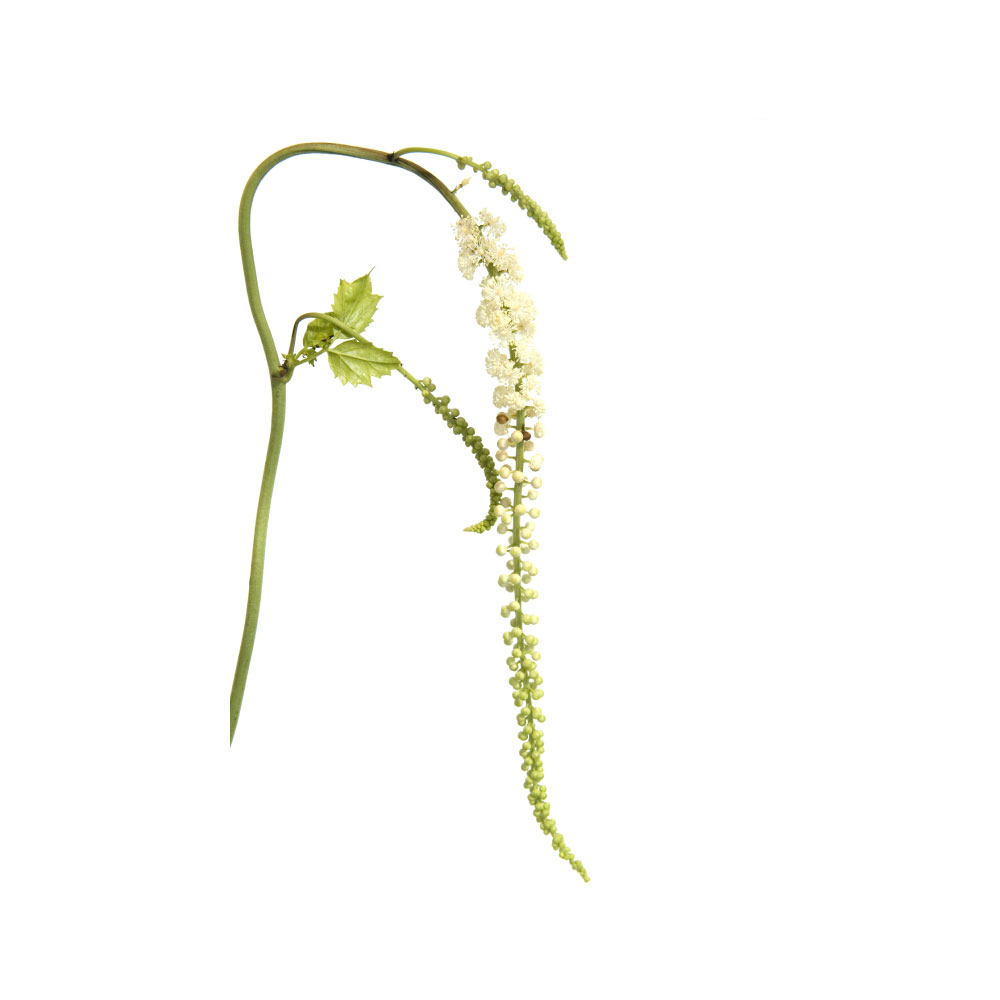 Principal source Black Cohosh Cimicifuga racemosa Herb monograph →
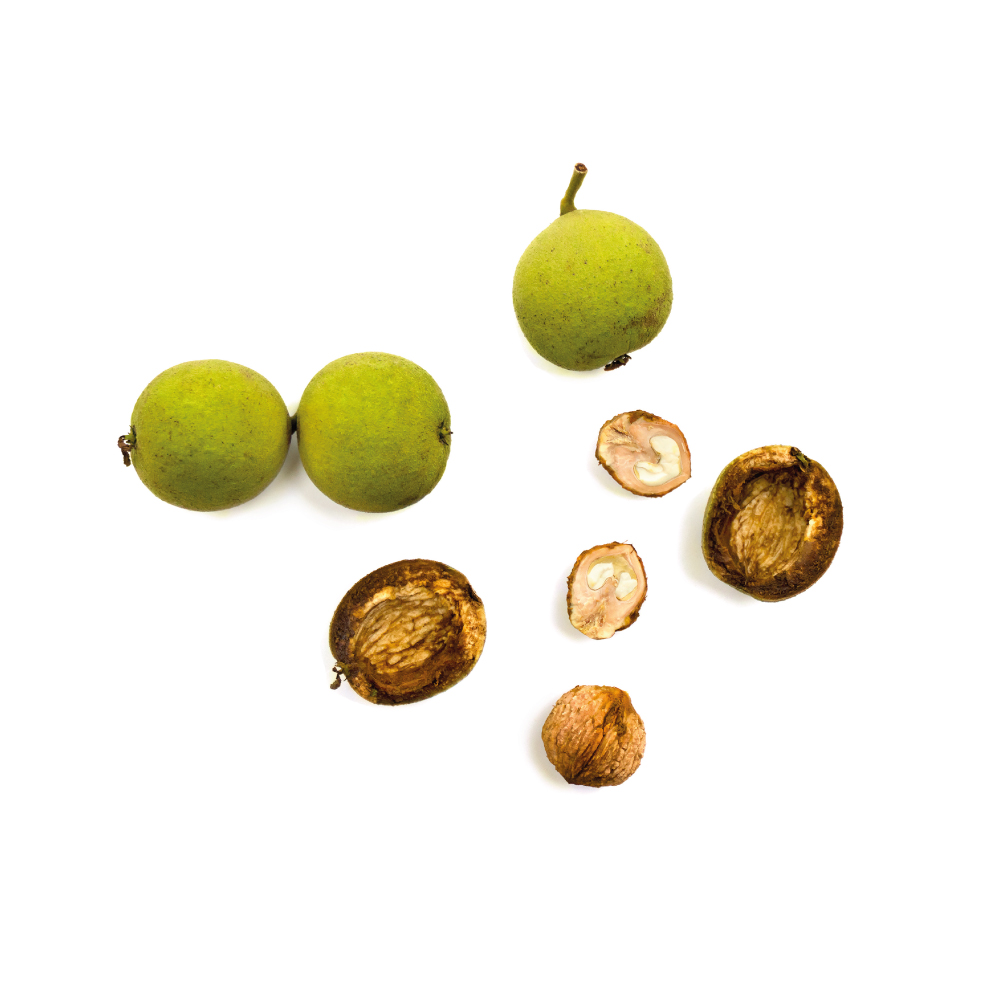 Source Black Walnut Juglans nigra Herb monograph →
Concentration
Content by Source
Concentrations not reported. No percent-dry-weight or mg/g figures have been published for this compound in its source plants.
Nω-Methylserotonin at a Glance
Nω-methylserotonin — Nω-methyl-5-hydroxytryptamine — is exactly what its name says: serotonin (5-hydroxytryptamine) with a single methyl group on the side-chain (ω) nitrogen. That one methyl turns the body’s own indoleamine into a distinct tryptamine with its own receptor pharmacology, and it is the reason this otherwise obscure molecule has a page at all.
It is a minor constituent of the rhizome of black cohosh (Actaea racemosa / Cimicifuga racemosa), the North American herb used for menopausal symptoms. What makes it load-bearing rather than incidental is a single influential study: Powell and colleagues (2008), hunting for the molecule behind black cohosh’s long-suspected serotonergic activity, fractionated the extract and pinned the activity on Nω-methylserotonin — which turned out to be an extraordinarily potent 5-HT7 receptor ligand (binding IC50 ≈ 23 picomolar), a cAMP inducer at that receptor, and a serotonin re-uptake inhibitor 1Reference 1In vitroIn vitro serotonergic activity of black cohosh and identification of Nω-methylserotonin as a potential active constituentView study →. It is the current best mechanistic candidate for how black cohosh eases vasomotor symptoms (hot flushes) and mood, because central thermoregulation is 5-HT7-linked.
The honest headline sits alongside that promise. The serotonergic pharmacology is in-vitro receptor and binding work on the isolate and the crude extract 1Reference 1In vitroIn vitro serotonergic activity of black cohosh and identification of Nω-methylserotonin as a potential active constituentView study →; the clinical hot-flush data are for the whole black cohosh extract, not this isolated molecule; and a follow-up metabolism study found the compound is rapidly broken down by MAO-A, just like serotonin — which raises a real question about how much ever reaches the brain from an oral dose 2Reference 2Metabolism of Nω-methylserotonin, a serotonergic constituent of black cohosh (Cimicifuga racemosa, L. (Nutt.)), by human liver microsomesView study →. So the framing throughout is: the most credible mechanistic candidate for black cohosh’s serotonergic effect, resting on isolate/extract pharmacology, with the human evidence one level up at the whole-herb.
The Serotonergic Hypothesis for Hot Flushes
For years black cohosh was described as “estrogenic,” but the weight of evidence turned against a classical phytoestrogen mechanism — the herb’s effects look serotonergic, neuroendocrine and anti-inflammatory instead (a shift documented on the black cohosh page). Nω-methylserotonin is the molecule that gave the serotonergic limb of that story a concrete actor.
The logic is thermoregulatory. The hot flush is a narrowing of the thermoneutral zone in the hypothalamus, and central serotonin — acting substantially through 5-HT7 and 5-HT2A receptors — helps set that zone; falling oestrogen at menopause is thought to destabilise it. A constituent that engages 5-HT7 and modestly inhibits serotonin re-uptake is therefore a plausible way for a plant extract to nudge thermoregulation and mood without behaving like an oestrogen 1Reference 1In vitroIn vitro serotonergic activity of black cohosh and identification of Nω-methylserotonin as a potential active constituentView study →. That is precisely the profile Powell et al. measured for Nω-methylserotonin, which is why it — rather than the triterpene glycosides or phenolic acids — became the serotonergic candidate.
What It's Used For
The evidence base is narrow but sharp: essentially one landmark receptor-pharmacology study on the isolate and extract 1Reference 1In vitroIn vitro serotonergic activity of black cohosh and identification of Nω-methylserotonin as a potential active constituentView study →, one metabolism study 2Reference 2Metabolism of Nω-methylserotonin, a serotonergic constituent of black cohosh (Cimicifuga racemosa, L. (Nutt.)), by human liver microsomesView study →, and the wider clinical literature that sits at the level of the whole herb, not the molecule.
Support is an experimental score — weighted by study type (human > animal > in vitro) and volume. A beta, not a validated metric. The isolate rows rest on in-vitro receptor work (mostly a single study); the vasomotor/mood row scores higher only because it borrows the whole-herb clinical base, which is not evidence for the isolated molecule — read the per-row basis.
The molecule’s defining property, and the reason it has a page. Screening black cohosh for serotonergic activity across 5-HT7 receptor binding, cAMP-induction and serotonin re-uptake (SSRI) assays, Powell et al. found the crude extract itself was active, then fractionated the methanol extract and identified Nω-methylserotonin by LC-MS/MS as the constituent carrying that activity. The isolate’s numbers are striking: 5-HT7 binding IC50 ≈ 23 pM, cAMP induction EC50 ≈ 22 nM, and serotonin re-uptake block IC50 ≈ 490 nM — a high-affinity 5-HT7 ligand that is also a moderate re-uptake inhibitor 1Reference 1In vitroIn vitro serotonergic activity of black cohosh and identification of Nω-methylserotonin as a potential active constituentView study →.
The conclusion — that it “may be responsible for the serotonergic activity of black cohosh” — is appropriately hedged.
Gap: a single in-vitro receptor-pharmacology study; potent binding is not the same as a demonstrated physiological or therapeutic effect, and no functional (in-vivo) serotonergic outcome is shown for the isolate 1Reference 1In vitroIn vitro serotonergic activity of black cohosh and identification of Nω-methylserotonin as a potential active constituentView study →.
This is a mechanism, not an isolate outcome. The clinical case that black cohosh modestly relieves hot flushes rests on trials and meta-analyses of the whole standardised extract — a genuinely mixed literature, with positive meta-analyses on one side and a negative Cochrane review and negative breast-cancer-population trials on the other (all set out on the black cohosh page). Nω-methylserotonin supplies a plausible 5-HT7-based thermoregulatory route for whatever benefit is real 1Reference 1In vitroIn vitro serotonergic activity of black cohosh and identification of Nω-methylserotonin as a potential active constituentView study →, but it has never been trialled on its own, and the herb contains many other constituents. So the correct reading is “candidate mechanism for a whole-herb effect,” not “an efficacious isolated compound.”
Gap: no clinical or even in-vivo animal study of the isolated molecule for hot flushes; the human evidence is one level up, at the extract, and is itself unsettled 1Reference 1In vitroIn vitro serotonergic activity of black cohosh and identification of Nω-methylserotonin as a potential active constituentView study →.
The same logic, weaker still. Black cohosh is credited with easing menopausal low mood and anxiety, with a plausible serotonergic rationale — and Nω-methylserotonin’s serotonin-re-uptake inhibition (IC50 ≈ 490 nM) is exactly the kind of activity that rationale needs 1Reference 1In vitroIn vitro serotonergic activity of black cohosh and identification of Nω-methylserotonin as a potential active constituentView study →.
But the whole-herb mood data are inconsistent (a 2023 meta-analysis found no significant effect on anxiety or depression), and again nothing has been tested at the isolate level black cohosh.
Gap: re-uptake inhibition in a cell assay only; no behavioural, in-vivo or clinical mood evidence for the isolated compound 1Reference 1In vitroIn vitro serotonergic activity of black cohosh and identification of Nω-methylserotonin as a potential active constituentView study →.
Mechanisms
| Target / pathway | Effect | Relevant to |
|---|---|---|
| 5-HT7 receptor (binding) | high-affinity ligand, IC50 ≈ 23 pM 1Reference 1In vitroIn vitro serotonergic activity of black cohosh and identification of Nω-methylserotonin as a potential active constituentView study → | serotonergic activityvasomotor/thermoregulation |
| 5-HT7 receptor (function) | induces cAMP, EC50 ≈ 22 nM 1Reference 1In vitroIn vitro serotonergic activity of black cohosh and identification of Nω-methylserotonin as a potential active constituentView study → | serotonergic activity |
| Serotonin transporter (SERT) | re-uptake inhibition, IC50 ≈ 490 nM 1Reference 1In vitroIn vitro serotonergic activity of black cohosh and identification of Nω-methylserotonin as a potential active constituentView study → | moodserotonergic activity |
| Hypothalamic thermoregulation | proposed stabilisation of the thermoneutral zone via central 5-HT7 1Reference 1In vitroIn vitro serotonergic activity of black cohosh and identification of Nω-methylserotonin as a potential active constituentView study → | vasomotor symptoms (hot flushes) |
| MAO-A (metabolism) | rapid oxidative degradation — limits systemic/central exposure 2Reference 2Metabolism of Nω-methylserotonin, a serotonergic constituent of black cohosh (Cimicifuga racemosa, L. (Nutt.)), by human liver microsomesView study → | pharmacokinetics (a constraintnot a benefit) |
The load-bearing thread is 5-HT7 engagement plus serotonin re-uptake inhibition — the one property measured robustly, and the mechanism the herb’s serotonergic reputation leans on. Everything downstream (hot flushes, mood) is a hypothesis built on that in-vitro pharmacology, and the MAO-A row is the standing brake on it.
Pharmacokinetics
The one thing directly measured is a liability, not a strength. In human liver microsomes, Nω-methylserotonin is metabolised exactly like serotonin: its major route is MAO-A-catalysed oxidative deamination to 5-hydroxyindole-acetaldehyde, which is then oxidised to 5-hydroxyindole-acetic acid or reduced to 5-hydroxytryptophol; cytochrome-P450 enzymes contribute only minor, methylhydroxylation-type pathways unless MAO-A is blocked 2Reference 2Metabolism of Nω-methylserotonin, a serotonergic constituent of black cohosh (Cimicifuga racemosa, L. (Nutt.)), by human liver microsomesView study →. The authors’ own inference is the important one for readers: because this MAO-A clearance is rapid, the molecule’s pattern “resembles that of serotonin itself,” and significant central nervous system exposure from an oral dose is unlikely 2Reference 2Metabolism of Nω-methylserotonin, a serotonergic constituent of black cohosh (Cimicifuga racemosa, L. (Nutt.)), by human liver microsomesView study →.
That is a genuine tension with the potency story. A 23-pM 5-HT7 ligand 1Reference 1In vitroIn vitro serotonergic activity of black cohosh and identification of Nω-methylserotonin as a potential active constituentView study → that is swept up by MAO-A before it can accumulate centrally 2Reference 2Metabolism of Nω-methylserotonin, a serotonergic constituent of black cohosh (Cimicifuga racemosa, L. (Nutt.)), by human liver microsomesView study → may well exert most of its effect peripherally, presystemically, or not at all at the trace levels present in a herbal extract. No human plasma pharmacokinetics (Cmax, half-life, oral bioavailability) of the isolate have been characterised — an obvious hole, and one that matters for the whole hot-flush hypothesis.
Clinical Trials
There are no clinical trials of isolated Nω-methylserotonin. Every human study attributed to it is really a study of whole black cohosh extract; the isolate’s evidence is in-vitro pharmacology and metabolism only.
| Completed | Planned | Terminated | Preclinical |
|---|---|---|---|
| —(none of the isolate) | — | — | 5-HT7 binding / cAMP / re-uptake 1Reference 1In vitroIn vitro serotonergic activity of black cohosh and identification of Nω-methylserotonin as a potential active constituentView study →; MAO-A metabolism 2Reference 2Metabolism of Nω-methylserotonin, a serotonergic constituent of black cohosh (Cimicifuga racemosa, L. (Nutt.)), by human liver microsomesView study → |
Last checked: July 2026.
Isolate vs. Plant Studies
The split is unusually clean here, and it is the single most important thing to hold onto. Everything that speaks to the isolated molecule is in-vitro: receptor binding, cAMP and re-uptake in the Powell study 1Reference 1In vitroIn vitro serotonergic activity of black cohosh and identification of Nω-methylserotonin as a potential active constituentView study →, and microsomal metabolism in the Nikolić study 2Reference 2Metabolism of Nω-methylserotonin, a serotonergic constituent of black cohosh (Cimicifuga racemosa, L. (Nutt.)), by human liver microsomesView study →. Everything at the level of a living patient is the whole black cohosh extract — the RCTs, meta-analyses and the Cochrane review of menopausal symptoms.
Bridging the two is a hypothesis, not a demonstration. Powell et al. showed the crude extract carried 5-HT7 activity and that Nω-methylserotonin accounted for it in the assay 1Reference 1In vitroIn vitro serotonergic activity of black cohosh and identification of Nω-methylserotonin as a potential active constituentView study → — a strong reason to name it the serotonergic candidate, but not proof that the clinical benefit (where it exists) runs through this molecule rather than through triterpene glycosides, phenolic acids like ferulic acid, or a combination. The MAO-A finding 2Reference 2Metabolism of Nω-methylserotonin, a serotonergic constituent of black cohosh (Cimicifuga racemosa, L. (Nutt.)), by human liver microsomesView study → actively complicates the bridge. The correct framing: potent isolate pharmacology + a coherent mechanism + no isolate-level human data + a metabolic caveat, sitting under a whole-herb clinical literature that is itself mixed.
Its Role in Plants
Nω-methylserotonin is a plant serotonin derivative — one product of the tryptophan → tryptamine → serotonin pathway, methylated on the side-chain nitrogen. In plants, serotonin and its N-methylated relatives are typically defence and stress metabolites rather than signalling molecules for the animals that eat them: in citrus, for instance, serotonin and its mono-, di- and tri-methylated forms (the last two being bufotenine and bufotenidine) accumulate together as glucosides, read as part of a chemical-defence response to biotic stress 3Reference 3Serotonin 5-O-β-glucoside and its N-methylated forms in citrus genus plantsView study →. In black cohosh the compound is a trace rhizome constituent; its outsized pharmacological interest comes entirely from human-receptor assays, not from any special abundance in the plant.
Prevalence in Nature
Nω-methylserotonin is narrowly distributed and always minor. Its headline occurrence is the rhizome of black cohosh (Actaea racemosa), where — despite being present only at low levels — it carries much of the herb’s measured serotonergic activity 1Reference 1In vitroIn vitro serotonergic activity of black cohosh and identification of Nω-methylserotonin as a potential active constituentView study →. N-methylated serotonins more generally turn up across scattered plants: walnuts (Juglans) and other serotonin-rich nuts, and citrus seeds and tissues, where the mono-methyl form appears alongside serotonin and the di-/tri-methyl derivatives as glucosides 3Reference 3Serotonin 5-O-β-glucoside and its N-methylated forms in citrus genus plantsView study →. These are qualitative occurrences; no reliable quantitative content figure for Nω-methylserotonin in black cohosh (or walnut) is established in the sources reviewed here, so no source-level chart is shown.
Major Natural Sources
| Source | Plant part | Reported content |
|---|---|---|
| Black cohosh (Actaea racemosa) | rhizome / root | trace, but the serotonergically active constituent 1Reference 1In vitroIn vitro serotonergic activity of black cohosh and identification of Nω-methylserotonin as a potential active constituentView study → |
| Walnut (Juglans spp.) | nut | present as a serotonin derivative; not individually quantified here |
| Citrus (Citrus spp.) | seed / fruit tissue | N-methylserotonin (and glucosides) present 3Reference 3Serotonin 5-O-β-glucoside and its N-methylated forms in citrus genus plantsView study → |
Discovery & Synthesis
The molecule itself is old chemistry — a simply N-methylated serotonin, obtainable by monomethylation of serotonin’s side-chain amine, and long known as a naturally occurring tryptamine. Its pharmacological “discovery,” in the sense that matters here, is 2008, when Powell et al. isolated it from a black cohosh methanol extract by activity-guided fractionation and identified it by LC-MS/MS as the extract’s serotonergic principle 1Reference 1In vitroIn vitro serotonergic activity of black cohosh and identification of Nω-methylserotonin as a potential active constituentView study →. There is no commercial extraction of the isolate from the herb; where the pure compound is needed it is a synthetic reference standard, made and sold for research use.
Patents: not researched here.
Toxicity & Safety
Nω-methylserotonin as a molecule carries a low flag on the evidence available: it is a close relative of endogenous serotonin, is cleared by the same MAO-A pathway 2Reference 2Metabolism of Nω-methylserotonin, a serotonergic constituent of black cohosh (Cimicifuga racemosa, L. (Nutt.)), by human liver microsomesView study →, and appears in the diet within serotonin-containing plants at trace levels. There is no dedicated toxicology for the pure isolate — no repeat-dose, genotoxicity or reproductive package — because it has never been developed or dosed as an isolate, so “low” reflects its serotonin-like handling and dietary context, not a completed safety file.
Two cautions belong on the page, both honestly attributed. First, the rare hepatotoxicity associated with black cohosh is a caution for the herb, not clearly for this molecule — there is no evidence tying liver injury to Nω-methylserotonin specifically, and it should not be read across to the isolate. Second, its pharmacology is serotonergic: a 5-HT7 ligand and serotonin-re-uptake inhibitor in vitro 1Reference 1In vitroIn vitro serotonergic activity of black cohosh and identification of Nω-methylserotonin as a potential active constituentView study →. At the trace amounts in a herbal extract, and given rapid MAO-A clearance 2Reference 2Metabolism of Nω-methylserotonin, a serotonergic constituent of black cohosh (Cimicifuga racemosa, L. (Nutt.)), by human liver microsomesView study →, a serotonergic drug interaction is theoretical rather than demonstrated — but it is the sensible mechanism to keep in mind for anyone combining black cohosh with SSRIs, MAO inhibitors or other serotonergic agents, and it is one more reason the isolate is not something to self-dose.
- Serotonin-like handling. A methylated serotonin cleared by MAO-A, like serotonin itself; dietary exposure is at trace, plant-bound levels.
- Evidence is preclinical. No human trials and no toxicology package for the pure isolate; its pharmacology is known only from in-vitro receptor and metabolism assays.
- Serotonergic in vitro. A 5-HT7 ligand and re-uptake inhibitor — a theoretical (not demonstrated) interaction with SSRIs, MAOIs and other serotonergic agents.
- Hepatotoxicity caution is the herb’s, not clearly the molecule’s. The rare liver-injury signal attaches to black cohosh; it should not be assumed for isolated Nω-methylserotonin.
Dosage
There is no established or recommended human dose for isolated Nω-methylserotonin, and none is possible from the current evidence — the compound has only ever been studied in vitro 1,
Where dosing exists, it is for the standardised herb, not the molecule: menopausal black cohosh trials generally use extract doses standardised to triterpene glycosides (see the black cohosh page), which is the appropriate place to look for anything actionable. Because effective concentrations in the isolate assays were reached by direct receptor/cell exposure 1Reference 1In vitroIn vitro serotonergic activity of black cohosh and identification of Nω-methylserotonin as a potential active constituentView study → and the molecule is rapidly metabolised by MAO-A 2Reference 2Metabolism of Nω-methylserotonin, a serotonergic constituent of black cohosh (Cimicifuga racemosa, L. (Nutt.)), by human liver microsomesView study →, there is no meaningful way to back-calculate an oral isolate dose. Nothing here is a personal recommendation.
References
- Powell SL, Gödecke T, Nikolic D, et al. (2008). In vitro serotonergic activity of black cohosh and identification of Nω-methylserotonin as a potential active constituent. Journal of Agricultural and Food Chemistry. https://pubmed.ncbi.nlm.nih.gov/19049296/
- Nikolić D, Li J, van Breemen RB (2014). Metabolism of Nω-methylserotonin, a serotonergic constituent of black cohosh (Cimicifuga racemosa, L. (Nutt.)), by human liver microsomes. Biomedical Chromatography. https://pubmed.ncbi.nlm.nih.gov/24817649/
- Servillo L, Giovane A, Casale R, et al. (2015). Serotonin 5-O-β-glucoside and its N-methylated forms in citrus genus plants. Journal of Agricultural and Food Chemistry. https://pubmed.ncbi.nlm.nih.gov/25893818/



