
Compound Monograph
Neoandrographolide
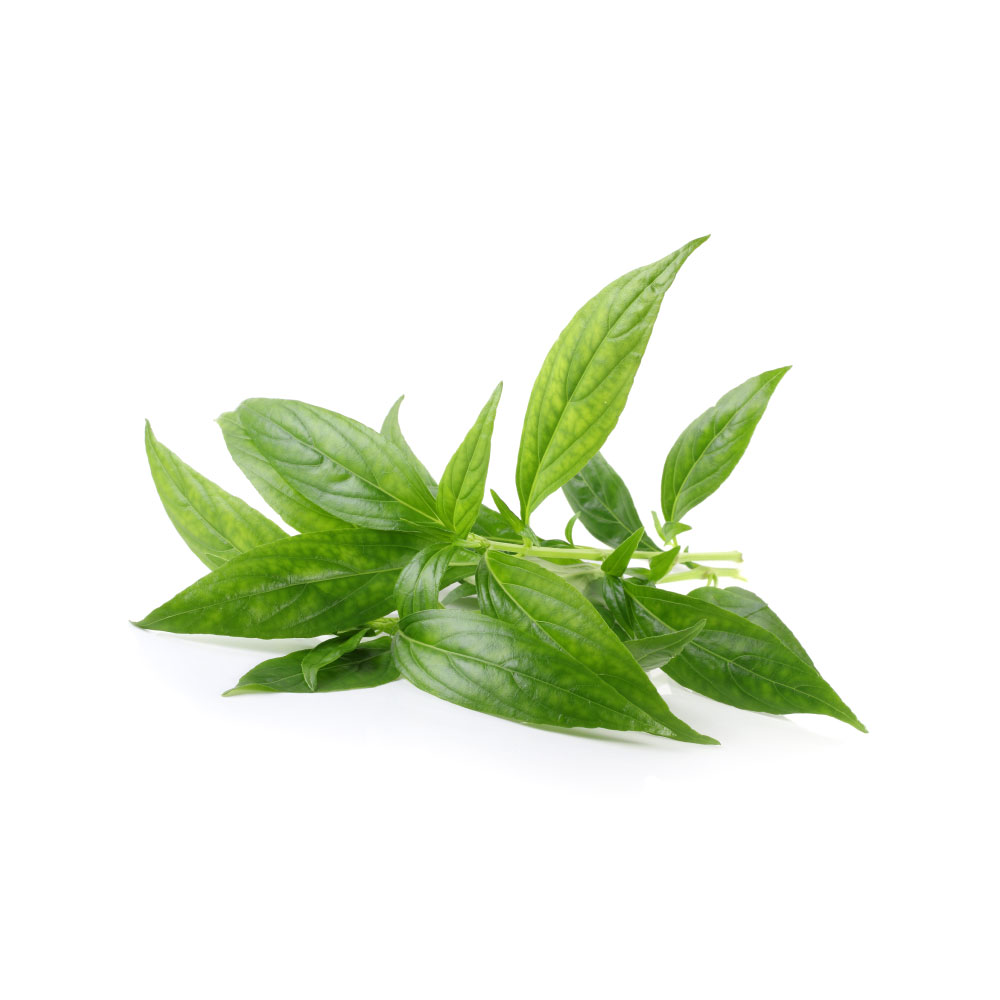
Neoandrographolide is a labdane diterpenoid glucoside from andrographis (Andrographis paniculata) — one of the plant's three principal diterpenoids alongside andrographolide and 14-deoxy-11,12-didehydroandrographolide. Its distinctive isolate signals are anti-inflammatory (macrophage / nitric-oxide suppression) and hepatoprotective, but the human evidence belongs to the standardised whole-herb extract, not the pure molecule.

Sources · 2
Where Does It Come From?
Neoandrographolide is a naturally occurring labdane (ent-labdane) diterpenoid glucoside, found in Andrographis and 1 other source. It is well tolerated orally (low toxicity).
Concentration
Content by Source
Concentrations not reported. No percent-dry-weight or mg/g figures have been published for this compound in its source plants.
Neoandrographolide at a Glance
Neoandrographolide is a labdane diterpenoid glucoside from andrographis (Andrographis paniculata), the intensely bitter “king of bitters” of Ayurvedic and Chinese herbal medicine. It is one of the plant’s three principal diterpenoids, sitting alongside the marker compound andrographolide and 14-deoxy-11,12-didehydroandrographolide. Chemically it stands apart from those two: it carries a sugar (glucose) group, which makes it a glycoside rather than a free diterpene lactone.
Its clearest isolate signals are anti-inflammatory — it suppresses nitric-oxide and prostaglandin output in activated macrophages — and hepatoprotective, where in one classic comparison the glucoside actually outperformed the parent andrographolide. Both of these are real, cited findings for the pure molecule, and both are almost entirely in-vitro and rodent work.
The honest headline is the same one that governs the whole andrographis family: the substantial human evidence is for the standardised whole-herb extract (titrated to andrographolide, often in combination products), not for isolated neoandrographolide. As a large, poorly-absorbed glucoside, its oral bioavailability is low, which further separates its in-vitro potency from what a person swallowing andrographis actually receives.
A Major Andrographis Diterpenoid Glycoside
Andrographis owes most of its reputation to a small family of ent-labdane diterpenoids. Comprehensive phytochemical reviews count more than fifty such diterpenoids in the plant, but three dominate the pharmacology and the commercial standardisation conversation 11Reference 11ReviewAndrographis paniculata (Burm. f.) Wall. ex Nees: a review of ethnobotany, phytochemistry, and pharmacologyView study →:
- Andrographolide — the marker diterpene lactone, the compound extracts are standardised to and the one carrying most of the mechanistic and clinical attention.
- 14-Deoxy-11,12-didehydroandrographolide — a co-occurring diterpene lactone of the same series.
- Neoandrographolide — this one, and the odd one out structurally.
What makes neoandrographolide distinctive is the glucose. Where andrographolide and its dehydro relative are free diterpene lactones, neoandrographolide is the C-19 glucoside — biosynthetically it is formed when a glucosyltransferase (ApUGT) attaches a glucose to the C-19 hydroxyl of the aglycone andrograpanin 7Reference 7A glucosyltransferase capable of catalyzing the last step in neoandrographolide biosynthesisView study →. That sugar changes its behaviour on two fronts that recur throughout: it appears to give the molecule antioxidant strength the free aglycone lacks (relevant to the liver findings below), and it makes the molecule larger and more polar, which works against oral absorption.
Practically, all three diterpenoids are used together as standardisation co-markers — analytical methods routinely quantify neoandrographolide as one of the “major active diterpenoids” of a batch of andrographis 10,
Anti-Inflammatory & Hepatoprotective Research
Neoandrographolide’s own literature is narrow but coherent: a cluster of anti-inflammatory studies centred on the activated macrophage, and a smaller set of hepatoprotective studies where — unusually — the glucoside beat the more famous andrographolide. Everything here is isolate work in cells or rodents; where a human trial exists, it tested the whole plant.
Support is an experimental score — weighted by study type (human > animal > in vitro) and volume. A beta, not a validated metric. Every row here rests on isolated-molecule cell/rodent data; there is no human trial of neoandrographolide itself, so read each row as preclinical.
The best-developed signal, and the reason neoandrographolide is studied at all. In LPS-stimulated murine macrophages the isolated glucoside inhibits nitric-oxide and prostaglandin E2 production, an effect attributed to reduced iNOS and COX-2 expression via suppression of p38 MAPK activation 2Reference 2AnimalInhibitory effects of neoandrographolide on nitric oxide and prostaglandin E2 production in LPS-stimulated murine macrophageView study →.
An earlier study showed it suppresses NO production in activated macrophages both in vitro and ex vivo (macrophages taken from treated animals), i.e. the effect survives passage through a living animal 1Reference 1In vitroSuppression of NO production in activated macrophages in vitro and ex vivo by neoandrographolide isolated from Andrographis paniculataView study →.
A follow-up combined the two levels: oral neoandrographolide (100–150 mg/kg) reduced dimethylbenzene-induced ear oedema and acetic-acid vascular permeability in mice, while in RAW264.7 macrophages it dose-dependently (30–150 µM) damped the respiratory burst and cut NO and TNF-α 3Reference 3In vitroIn vivo and in vitro anti-inflammatory activities of neoandrographolideView study →.
Gap: all of this is the isolated molecule in mouse models and mouse/murine cell lines — there is no human anti-inflammatory trial of neoandrographolide, and the effective rodent doses (100–150 mg/kg) are high relative to what a standardised human extract delivers of this particular diterpenoid.
The most interesting isolate finding, because here the glucoside beat its famous sibling. In a controlled mouse study of the three major diterpenoids against carbon-tetrachloride and tert-butylhydroperoxide hepatotoxicity, neoandrographolide and andrographiside were as effective as silymarin (a benchmark hepatoprotectant) and more protective than andrographolide itself; neoandrographolide reduced malondialdehyde (a lipid-peroxidation marker) and liver-enzyme leakage, and was the only compound that returned glutathione (GSH) to normal 4Reference 4Antihepatotoxic effects of major diterpenoid constituents of Andrographis paniculataView study →.
The authors credited the glucoside groups with acting as strong antioxidants — a direct link between this molecule’s defining sugar and its distinctive activity. A later network-of-mechanisms strand adds a hepatobiliary angle: a dealkenylated derivative of neoandrographolide activated the farnesoid X receptor (FXR) and enhanced gallstone dissolution in silico/in vitro 9Reference 9Dealkenylation of neoandrographolide, a phytochemical from Andrographis paniculata, stimulates FXR (farnesoid X receptor) and enhances gallstone dissolutionView study →.
Gap: the core result is a single classic rodent study on the isolate 4Reference 4Antihepatotoxic effects of major diterpenoid constituents of Andrographis paniculataView study →; the FXR/gallstone work is on a chemically modified derivative, not native neoandrographolide, and neither has human confirmation. Andrographis’s traditional liver reputation has supportive animal data but no human hepatoprotection trials.
A scatter of newer single studies extends the molecule into other tissues, each preclinical and each so far unreplicated: cardioprotection — neoandrographolide reduced myocardial ischaemia-reperfusion injury in rodents through the same anti-inflammatory/anti-apoptotic actions 5Reference 5Amelioratory effect of neoandrographolide on myocardial ischemic-reperfusion injury by its anti-inflammatory and anti-apoptotic activitiesView study →; bone — it inhibited mature osteoclast differentiation and alleviated bone loss in an osteoporosis model 6Reference 6Neoandrographolide inhibits mature osteoclast differentiation to alleviate bone loss and treat osteoporosisView study →; anticancer — structure-based work identified it as a Rab5 GTPase inhibitor that suppressed cancer-cell growth 8Reference 8Structure-based discovery of neoandrographolide as a novel inhibitor of Rab5 to suppress cancer growthView study →, and carbohydrate-modified analogues improved ROS-mediated apoptosis in colon-cancer cells 14Reference 14Carbohydrate modifications of neoandrographolide for improved reactive-oxygen-species-mediated apoptosis through the mitochondrial pathway in colon cancerView study →; and it has been flagged as a natural chemosensitiser in tumour cells 16Reference 16Neoandrographolide from Andrographis paniculata as a potential natural chemosensitizerView study →.
Gap: these are individual in-vitro / rodent reports, several of them on derivatives rather than the native molecule; none approaches clinical evidence, and they are included for completeness, not as established uses.
Mechanisms
| Target / pathway | Effect | Relevant to |
|---|---|---|
| p38 MAPK signalling | down-regulation upstream of inflammatory gene induction | anti-inflammatory (the load-bearing mechanism) |
| iNOS / nitric oxide (NO) | reduced iNOS expression → lower NO in activated macrophages | anti-inflammatory |
| COX-2 / prostaglandin E2 (PGE2) | reduced COX-2 expression → lower PGE2 | anti-inflammatory |
| TNF-α | suppressed release from stimulated macrophages | anti-inflammatory |
| Glutathione (GSH) & lipid peroxidation (MDA) | GSH restored, MDA lowered in injured hepatocytes | hepatoprotective (sugar-driven antioxidant effect) |
| Farnesoid X receptor (FXR) | activated by a dealkenylated derivative; bile-acid/gallstone signalling | hepatobiliary (derivativenot native molecule) |
| Rab5 GTPase | inhibition → suppressed cancer-cell growth | anticancer (preclinical) |
| Osteoclast differentiation | inhibited mature-osteoclast formation | bone / osteoporosis (preclinical) |
The macrophage axis (p38 MAPK → iNOS/COX-2/TNF-α) is the consistent thread; the hepatoprotective GSH effect is the one place the molecule’s defining glucoside is explicitly credited for activity 4Reference 4Antihepatotoxic effects of major diterpenoid constituents of Andrographis paniculataView study →. The FXR and anticancer entries rest on modified derivatives or single studies and should be read as leads, not established pharmacology.
Pharmacokinetics
The dominant PK fact is poor oral bioavailability, and it follows directly from the chemistry: neoandrographolide is a large, polar glucoside, so gut absorption of the intact molecule is limited. In human studies it is measured only as one of several diterpenoids in a whole-herb extract, never dosed as a pure compound — after oral Andrographis paniculata it appears in plasma at low concentrations with a Tmax around 1–1.5 h, and it is extensively conjugated to glucuronide and sulfate metabolites that reach higher concentrations and persist longer than the parent 10,
Clinical Trials
There are no clinical trials of isolated neoandrographolide. All human evidence sits at the whole-herb level — standardised Andrographis paniculata extracts (titrated to andrographolide, frequently as combination products such as the andrographis–Eleutherococcus product used for upper-respiratory symptoms), within which neoandrographolide is a minor constituent and a standardisation co-marker rather than the tested agent 11Reference 11ReviewAndrographis paniculata (Burm. f.) Wall. ex Nees: a review of ethnobotany, phytochemistry, and pharmacologyView study →.
| Completed | Planned | Terminated | Preclinical |
|---|---|---|---|
| None for the isolate (human data are whole-extract only) | — | — | Anti-inflammatory (macrophage/rodent), hepatoprotective (rodent), plus scattered cardio/bone/anticancer reports |
Last checked: July 2026.
Isolate vs. Plant Studies
Neoandrographolide is a clean example of the isolate-vs-plant gap. Its own pharmacology is entirely isolate work — purified molecule in murine macrophages and mouse injury models 1,
Prevalence in Nature
Neoandrographolide is essentially an andrographis molecule. It occurs in the aerial parts (stem and leaf) of Andrographis paniculata, where — with andrographolide and 14-deoxy-11,12-didehydroandrographolide — it is one of the three principal diterpenoids of a plant that carries more than fifty ent-labdane diterpenoids in total 11Reference 11ReviewAndrographis paniculata (Burm. f.) Wall. ex Nees: a review of ethnobotany, phytochemistry, and pharmacologyView study →. Diterpenoid content in andrographis peaks in the leaves and at flowering, which is when medicinal aerial-part material is traditionally harvested; the flavonoids of the plant, by contrast, concentrate in the root, which is largely not the part used 11Reference 11ReviewAndrographis paniculata (Burm. f.) Wall. ex Nees: a review of ethnobotany, phytochemistry, and pharmacologyView study →.
Beyond A. paniculata itself, neoandrographolide has been reported in the related species Andrographis alata, proposed as an alternative botanical source, with the full-length biosynthetic genes identified by transcriptome analysis 15Reference 15Whole transcriptome analysis identifies full-length genes for neoandrographolide biosynthesis from Andrographis alata, an alternate source for antiviral compoundsView study →. A firm percent-dry-weight figure for neoandrographolide specifically is not well established in the sources reviewed here — it is quantified analytically batch-by-batch rather than reported as a fixed abundance, and closing that number is tracked in this molecule’s gaps note.
Discovery & Synthesis
The andrographis diterpenoid story opens with R.A. Gorter, who in 1911 isolated the crystalline parent lactone andrographolide from the plant and characterised it as a diterpene lactone — the anchor from which the rest of the series, including neoandrographolide, was later distinguished 11Reference 11ReviewAndrographis paniculata (Burm. f.) Wall. ex Nees: a review of ethnobotany, phytochemistry, and pharmacologyView study →. Neoandrographolide was subsequently identified as the glucoside member of the group: structurally it is the C-19 β-glucoside of the aglycone andrograpanin.
Its biosynthesis was pinned down more recently. In 2018, Li and colleagues characterised ApUGT, a diterpene glucosyltransferase from Andrographis paniculata that catalyses the final step — transferring a glucose onto the C-19 hydroxyl of andrograpanin to form neoandrographolide 7Reference 7A glucosyltransferase capable of catalyzing the last step in neoandrographolide biosynthesisView study →; the same broadly-active enzyme could glycosylate a range of substrates, illuminating how the plant decorates its ent-labdane diterpenes with sugars. Manufacture today is by extraction from andrographis aerial parts (it is isolated during the same diterpenoid work-up that yields andrographolide); there is no commercial total synthesis, though medicinal-chemistry groups have prepared carbohydrate-modified semi-synthetic analogues of neoandrographolide to probe and improve its activity 14Reference 14Carbohydrate modifications of neoandrographolide for improved reactive-oxygen-species-mediated apoptosis through the mitochondrial pathway in colon cancerView study →.
Patents: not yet researched.
Toxicity & Safety
Neoandrographolide carries a low flag. No notable toxicity signal has surfaced for the isolated molecule: it was non-cytotoxic to macrophages across the 30–150 µM range used in the anti-inflammatory assays 3Reference 3In vitroIn vivo and in vitro anti-inflammatory activities of neoandrographolideView study →, and oral doses of 100–150 mg/kg in mice were tolerated in the efficacy studies above 3,
Two scope points matter. First, interactions and organ toxicity have not been formally characterised for isolated neoandrographolide; what safety information exists for “andrographis” belongs to the whole herb, where the cautions cluster around andrographolide and, notably, around injectable andrographolide derivatives (which account for most reported adverse reactions) rather than the oral herb. Second, reproductive and pregnancy questions are handled at the herb level, not here (prose only): andrographis has a traditional reputation for antifertility/abortifacient activity — attributed to the plant and to andrographolide, and studied mostly in animals — so pregnancy and lactation decisions belong on the andrographis herb page, where intake is actually decided, not on this single-molecule page. No dedicated reproductive-toxicity dataset exists for isolated neoandrographolide.
- No specific toxicity signal for the isolate. Non-cytotoxic in the macrophage assays and tolerated at rodent efficacy doses; as a poorly-absorbed glucoside, systemic exposure to the free molecule is low.
- Safety data are thin, not reassuring by evidence. There is no repeat-dose, genotoxicity, interaction or human safety package for isolated neoandrographolide — the low badge partly reflects a data gap.
- Pregnancy/fertility is a whole-herb question. Andrographis carries a traditional antifertility/abortifacient caution (linked to the plant and andrographolide); those decisions belong on the herb page, not this molecule page.
Dosage
There is no established human dose for isolated neoandrographolide, and it is not sold or used as a stand-alone agent. The only figures available are preclinical:
| Context | Model | Dose |
|---|---|---|
| Anti-inflammatory (ear oedema, vascular permeability) | Mouse, oral | 100–150 mg/kg 3Reference 3In vitroIn vivo and in vitro anti-inflammatory activities of neoandrographolideView study → |
| Hepatoprotection (CCl4 / tBHP injury) | Mouse, oral | isolate dosing, silymarin-comparable 4Reference 4Antihepatotoxic effects of major diterpenoid constituents of Andrographis paniculataView study → |
| Anti-inflammatory (macrophage assays) | RAW264.7 cells, in vitro | 30–150 µM 3Reference 3In vitroIn vivo and in vitro anti-inflammatory activities of neoandrographolideView study → |
Real human exposure is indirect: neoandrographolide is one of several diterpenoids in standardised Andrographis paniculata extracts, which are titrated to andrographolide (research products commonly deliver ~60 mg andrographolide/day, up to ~360 mg/day short-term), not to neoandrographolide 11Reference 11ReviewAndrographis paniculata (Burm. f.) Wall. ex Nees: a review of ethnobotany, phytochemistry, and pharmacologyView study →. These are doses studied in research and are not a personal recommendation.
References
- Batkhuu J, Hattori K, Takano F, Fushiya S, Oshiman K, Fujimiya Y (2002). Suppression of NO production in activated macrophages in vitro and ex vivo by neoandrographolide isolated from Andrographis paniculata. Biological & Pharmaceutical Bulletin. https://pubmed.ncbi.nlm.nih.gov/12230111/
- Liu J, Wang ZT, Ji LL, Ge BX (2007). Inhibitory effects of neoandrographolide on nitric oxide and prostaglandin E2 production in LPS-stimulated murine macrophage. Molecular and Cellular Biochemistry. https://pubmed.ncbi.nlm.nih.gov/17109078/
- Liu J, Wang ZT, Ji LL (2007). In vivo and in vitro anti-inflammatory activities of neoandrographolide. The American Journal of Chinese Medicine. https://pubmed.ncbi.nlm.nih.gov/17436371/
- Kapil A, Koul IB, Banerjee SK, Gupta BD (1993). Antihepatotoxic effects of major diterpenoid constituents of Andrographis paniculata. Biochemical Pharmacology. https://pubmed.ncbi.nlm.nih.gov/8347130/
- Liu Y, Liu Y, Zhang HL, et al. (2021). Amelioratory effect of neoandrographolide on myocardial ischemic-reperfusion injury by its anti-inflammatory and anti-apoptotic activities. Environmental Toxicology. https://pubmed.ncbi.nlm.nih.gov/34397165/
- Tang K, Deng W, Huang Z, et al. (2025). Neoandrographolide inhibits mature osteoclast differentiation to alleviate bone loss and treat osteoporosis. Frontiers in Pharmacology. https://pubmed.ncbi.nlm.nih.gov/40008134/
- Li Y, Lin HX, Wang J, et al. (2018). A glucosyltransferase capable of catalyzing the last step in neoandrographolide biosynthesis. Organic Letters. https://pubmed.ncbi.nlm.nih.gov/30234309/
- Zhang J, Sun Y, Zhong LY, et al. (2020). Structure-based discovery of neoandrographolide as a novel inhibitor of Rab5 to suppress cancer growth. Computational and Structural Biotechnology Journal. https://pubmed.ncbi.nlm.nih.gov/33335690/
- Sharma R, Kumar K, Tanvi K, et al. (2023). Dealkenylation of neoandrographolide, a phytochemical from Andrographis paniculata, stimulates FXR (farnesoid X receptor) and enhances gallstone dissolution. Journal of Biomolecular Structure & Dynamics. https://pubmed.ncbi.nlm.nih.gov/35253613/
- Pholphana N, Panomvana D, Rangkadilok N, et al. (2016). Andrographis paniculata: dissolution investigation and pharmacokinetic studies of four major active diterpenoids after multiple oral dose administration in healthy Thai volunteers. Journal of Ethnopharmacology. https://pubmed.ncbi.nlm.nih.gov/27702690/
- Hossain MS, Urbi Z, Sule A, Rahman KMH (2014). Andrographis paniculata (Burm. f.) Wall. ex Nees: a review of ethnobotany, phytochemistry, and pharmacology. The Scientific World Journal. https://pubmed.ncbi.nlm.nih.gov/25950015/
- Songvut P, Rangkadilok N, Pholphana N, et al. (2023). Comparative pharmacokinetics and safety evaluation of high dosage regimens of Andrographis paniculata aqueous extract after single and multiple oral administration in healthy participants. Frontiers in Pharmacology. https://pubmed.ncbi.nlm.nih.gov/37663270/
- Tee KB, Mohamad Haron DE, Jamil IN, et al. (2026). Clinical pharmacokinetics and pharmacometabolomics of Andrographis paniculata capsules: bridging drug disposition and metabolic response to precision medicine. Naunyn-Schmiedeberg’s Archives of Pharmacology. https://pubmed.ncbi.nlm.nih.gov/41039060/
- Sharma V, Qayum A, Kaul S, et al. (2019). Carbohydrate modifications of neoandrographolide for improved reactive-oxygen-species-mediated apoptosis through the mitochondrial pathway in colon cancer. ACS Omega. https://pubmed.ncbi.nlm.nih.gov/31858026/
- Tanuja, Parani M (2023). Whole transcriptome analysis identifies full-length genes for neoandrographolide biosynthesis from Andrographis alata, an alternate source for antiviral compounds. Gene. https://pubmed.ncbi.nlm.nih.gov/36270458/
- Pfisterer PH, Rollinger JM, Schyschka L, et al. (2010). Neoandrographolide from Andrographis paniculata as a potential natural chemosensitizer. Planta Medica. https://pubmed.ncbi.nlm.nih.gov/20446243/



