
Compound Monograph
Nigrin b
Nigrin b is a type-2 ribosome-inactivating protein — a two-chain galactose/GalNAc-binding lectin from the bark and seeds of common elder (Sambucus nigra) and the direct cousin of ebulin from dwarf elder. Its A chain depurinates the 28S rRNA to halt protein synthesis exactly as ricin does, yet nigrin b is a 'non-toxic' type-2 RIP — thousands of times less toxic than ricin because its lectin enters cells poorly and it is degraded in the gut. That low, steerable toxicity is why it is one of the most-studied natural scaffolds for antibody-targeted immunotoxins.

Sources · 1
Where Does It Come From?
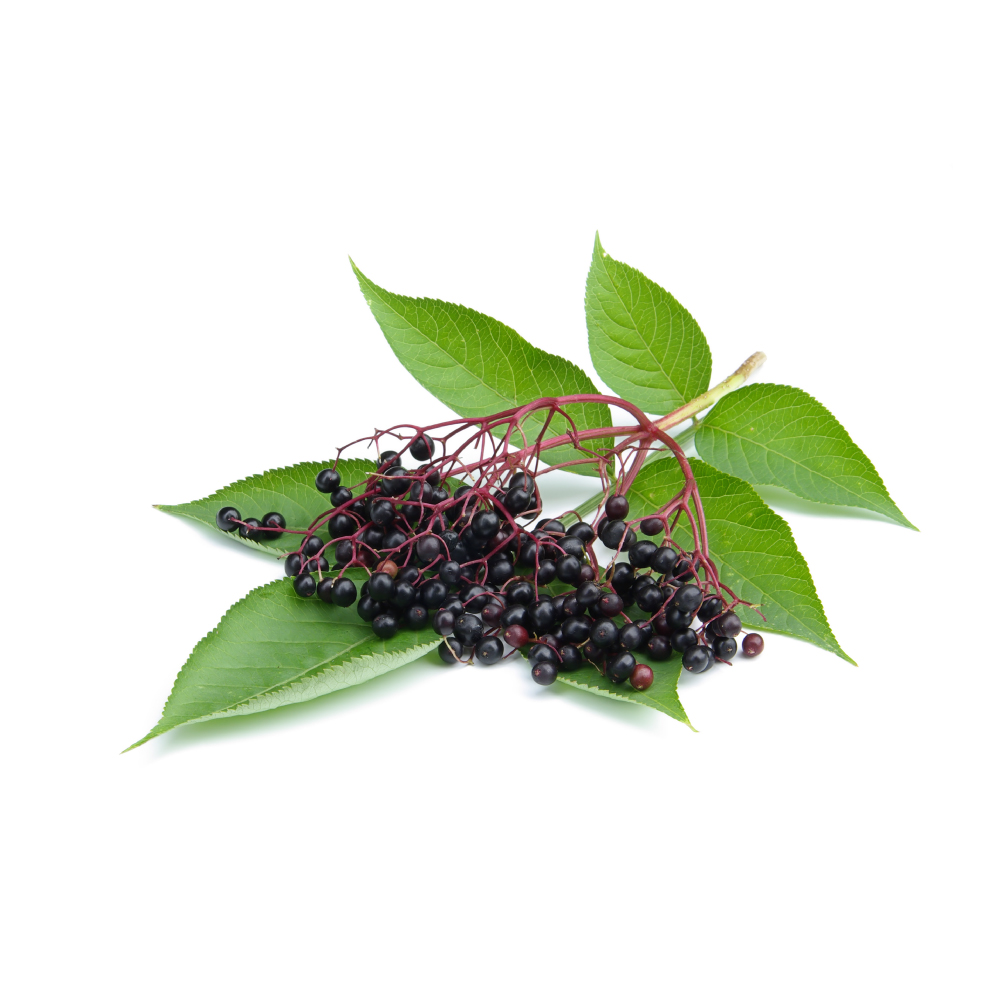
Nigrin b is a naturally occurring ribosome-inactivating protein (type-2 lectin), found in Elder. It is flagged as toxic.
Concentration
Content by Source
Concentrations not reported. No percent-dry-weight or mg/g figures have been published for this compound in its source plants.
Nigrin b at a Glance
Nigrin b is a type-2 ribosome-inactivating protein (RIP) — a two-chain plant toxin from the bark and seeds of common elder (Sambucus nigra), and the direct structural cousin of ebulin, the type-2 RIP of dwarf elder. Both belong to the same small family of Sambucus toxins built on the same architecture as the notorious castor-bean toxin ricin 1,
Like every type-2 RIP, nigrin b is two disulphide-linked chains (whole protein ~58 kDa) 1,
- an A chain (~26 kDa) — the toxic enzyme, an rRNA N-glycosidase that snips a single adenine out of the sarcin-ricin loop of the 28S ribosomal RNA, permanently crippling the ribosome and halting protein synthesis;
- a B chain (~32 kDa) — a galactose / N-acetylgalactosamine-binding lectin that docks onto sugars on the cell surface and is meant to ferry the A chain inside 1,
3Reference 1Isolation and partial characterization of nigrin b, a non-toxic novel type 2 ribosome-inactivating protein from the bark of Sambucus nigra LView study →Reference 3Characterization and molecular cloning of Sambucus nigra agglutinin V (nigrin b), a GalNAc-specific type-2 ribosome-inactivating protein from the bark of elderberry (Sambucus nigra)View study → .
That is exactly ricin’s design. What makes nigrin b not ricin is the B chain and its handling: nigrin b’s lectin binds and enters cells poorly, more of it is degraded by the cell than gets in, and it reaches the ribosome by a different, less efficient intracellular route — so the potent enzyme rarely arrives on target 2Reference 2Toxicity and cytotoxicity of nigrin b, a two-chain ribosome-inactivating protein from Sambucus nigra: comparison with ricinView study →. The result is a genuine toxin that is thousands of times less dangerous than its cousin. Girbés and colleagues named it, in the paper that first isolated it, a “non-toxic novel type 2 ribosome-inactivating protein” 1Reference 1Isolation and partial characterization of nigrin b, a non-toxic novel type 2 ribosome-inactivating protein from the bark of Sambucus nigra LView study →.
For anyone using elder, nigrin b is one reason raw elder bark and seed are gut irritants and not food: the bark and seed are where this and related lectins concentrate, and raw, unheated material can provoke nausea, cramping and GI upset. As with ebulin, the practical defences are that nigrin b is heat-labile (cooking denatures it) and degraded in the gut, so ordinary cooked-elderberry preparations carry little of this hazard 1,
Nigrin b vs. Ricin — Same Weapon, Weaker Delivery
The clearest way to read nigrin b is by the contrast that defines it. Both are type-2 RIPs with an equally lethal enzymatic A chain; the entire difference is in cell entry and intracellular routing, dictated by the lectin B chain 1,
| Ricin (reference toxin) | Nigrin b (this one) | |
|---|---|---|
| Structure | Type-2 RIP (A + B chains) | Type-2 RIP (A + B chains) 1Reference 1Isolation and partial characterization of nigrin b, a non-toxic novel type 2 ribosome-inactivating protein from the bark of Sambucus nigra LView study → |
| A-chain enzyme | 28S rRNA N-glycosidase | 28S rRNA N-glycosidase (equally active in vitro) 1Reference 1Isolation and partial characterization of nigrin b, a non-toxic novel type 2 ribosome-inactivating protein from the bark of Sambucus nigra LView study → |
| B-chain lectin | Binds cells strongly → efficient entry | Binds cells weakly; more is degraded than internalised 2Reference 2Toxicity and cytotoxicity of nigrin b, a two-chain ribosome-inactivating protein from Sambucus nigra: comparison with ricinView study → |
| Intracellular route | Golgi-dependent (brefeldin-A–sensitive) | A different, brefeldin-A–insensitive route — reaches ribosomes inefficiently 4Reference 4Use of ribosome-inactivating proteins from Sambucus for the construction of immunotoxins and conjugates for cancer therapyView study → |
| Mouse toxicity (i.p. LD50) | ~3 µg/kg | ~12,000 µg/kg (≈12 mg/kg) — roughly thousands of times higher dose needed 4Reference 4Use of ribosome-inactivating proteins from Sambucus for the construction of immunotoxins and conjugates for cancer therapyView study → |
| Classed as | Highly poisonous | Low-toxicity (“non-toxic”) RIP 1Reference 1Isolation and partial characterization of nigrin b, a non-toxic novel type 2 ribosome-inactivating protein from the bark of Sambucus nigra LView study → |
So the enzyme is just as deadly; nigrin b simply struggles to get it into a cell and to the ribosome. This is the same story as ebulin — and it is exactly why these Sambucus proteins are studied not as poisons to fear but as re-targetable warheads (see below).
What It's Used For
Nigrin b has no therapeutic use of its own. It is studied as a toxin, as a research reagent, and — most actively — as a building block for targeted anticancer conjugates. The evidence base is a coherent body of biochemical, rodent and cell work from the Girbés, Ferreras, Citores, Iglesias and Battelli groups.
Support is an experimental score — weighted by study type (human > animal > in vitro) and volume. A beta, not a validated metric. This is a toxicology / research-reagent page, so “support” reads as strength of evidence that the effect is real, not endorsement — every row is biochemical, rodent or cell work, with no human trials.
The core biochemistry, and the best-characterised thing nigrin b does. The A chain is an rRNA N-glycosidase: it hydrolyses a specific adenine in the sarcin-ricin loop of the 28S rRNA, the ribosomal site where elongation factors dock. One depurination event irreversibly inactivates that ribosome, so the enzyme is catalytic and extremely potent. In cell-free systems nigrin b strongly inhibits mammalian protein synthesis — about as effectively as ricin — but does not affect plant or bacterial translation 1Reference 1Isolation and partial characterization of nigrin b, a non-toxic novel type 2 ribosome-inactivating protein from the bark of Sambucus nigra LView study →.
The gap between this ferocious enzymology and nigrin b’s mild whole-animal toxicity is the whole story of the molecule: the enzyme is lethal, but the weak, poorly-routing B-chain lectin rarely delivers it into a cell 1,
Basis: direct enzymology and cell-free translation assays from the isolating group — strong, reproducible mechanistic evidence 1Reference 1Isolation and partial characterization of nigrin b, a non-toxic novel type 2 ribosome-inactivating protein from the bark of Sambucus nigra LView study →.
The practical face of nigrin b for anyone handling elder. Nigrin b is a bark and seed lectin — it concentrates in exactly the parts of Sambucus nigra that are treated as inedible — and as a functional type-2 RIP it is a plausible contributor to the nausea, cramping and GI upset long reported from chewing raw bark, stems or seeds. Its toxicity is real but self-limiting by exposure: on parenteral dosing in mice, sub-lethal nigrin b produces a specific, reversible injury to the intestinal lining — apoptosis of the crypt (Lieberkühn) cells that then recover — showing the gut epithelium is a target tissue when the toxin reaches it 4Reference 4Use of ribosome-inactivating proteins from Sambucus for the construction of immunotoxins and conjugates for cancer therapyView study →.
From food, though, the weak lectin and gut degradation keep systemic poisoning rare; the dominant real-world effect of raw bark/seed is local GI irritation, not the multi-organ failure of ricin.
Basis: localisation of nigrin b to bark/seed plus a rodent study of reversible intestinal-crypt toxicity; no controlled human dosing (and none would be ethical) 1,
The most useful finding for anyone actually using elder. Nigrin b is a protein, and like most protein toxins it is heat-labile — denatured by cooking — and it is a poor survivor of the gut: it binds cells weakly and is largely degraded rather than absorbed intact 2Reference 2Toxicity and cytotoxicity of nigrin b, a two-chain ribosome-inactivating protein from Sambucus nigra: comparison with ricinView study →.
The combination is why the Sambucus type-2 RIPs, for all their intrinsic enzymatic punch, translate into such mild dietary hazard, and why cooked elderberry preparations are considered safe where raw bark, seed and unripe material are not. This mirrors the heat/pepsin story documented in detail for its sibling ebulin and underpins the universal advice to cook elder and never eat the raw bark, stems or seeds 2,
Basis: the heat-lability of the protein and direct cell-handling data (weak binding, high degradation, poor internalisation); consistent with the neutralising effect of cooking 2,
The most developed — and most constructive — research thread, and where nigrin b outshines many RIPs. Because its A chain is a potent ribosome-killer while its native lectin targets cells poorly, nigrin b is close to an ideal immunotoxin warhead: a powerful but non-selective toxin whose delivery you can hand over to an antibody. Researchers have conjugated nigrin b to transferrin, producing a conjugate that killed transferrin-receptor–bearing HeLa cells at low concentrations, and to an anti-CD105 (endoglin) monoclonal antibody, producing an immunotoxin potent in the picomolar range against endoglin-expressing cells — with the antibody, not the weak lectin, supplying tumour selectivity 4Reference 4Use of ribosome-inactivating proteins from Sambucus for the construction of immunotoxins and conjugates for cancer therapyView study →.
This positions nigrin b (and its Sambucus relatives) as a leading natural scaffold for targeted anticancer conjugates, though the work is preclinical and no nigrin-b agent is approved.
Basis: built and tested transferrin and anti-CD105 conjugates with quantified cell-kill potency — solid preclinical proof-of-concept, no clinical data 4Reference 4Use of ribosome-inactivating proteins from Sambucus for the construction of immunotoxins and conjugates for cancer therapyView study →.
Mechanisms
| Target / pathway | Effect | Relevant to |
|---|---|---|
| 28S rRNA sarcin-ricin loop (A chain, N-glycosidase) | Depurination of a single adenine → irreversible ribosome inactivation → protein-synthesis arrest | protein-synthesis inhibitioncytotoxicity |
| Cell-surface galactose / GalNAc (B chain lectin) | Weak binding + high degradation → inefficient cell entry → low whole-animal toxicity | nigrin-b-vs-ricin toxicity gap |
| Intracellular routing (brefeldin-A–insensitive) | A different, less efficient path to the ribosome than ricin’s Golgi route | low cytotoxicity |
| Intestinal crypt epithelium (parenteral, sub-lethal) | Reversible apoptosis of Lieberkühn crypt cells | raw-plant / gut toxicity |
| Antibody- or transferrin-directed delivery | Re-targeted, potent killing of receptor-bearing cells | immunotoxin / conjugate research |
The load-bearing pair is the A-chain enzyme (why nigrin b is dangerous at all) and the weak, mis-routed B-chain lectin (why it mostly isn’t). Everything else — raw bark/seed irritation, the safety of cooking, and the immunotoxin promise — follows from the tension between those two facts.
Pharmacokinetics
Conventional ADME does not really apply to a large, orally-labile protein toxin. Ingested nigrin b is largely confined to the gut: its weak lectin gives it poor cellular uptake and it is degraded rather than absorbed intact, so systemic exposure to active toxin from food is minimal — the reason raw bark/seed produces local GI irritation rather than the systemic poisoning seen with ricin. Even where nigrin b does enter cells, it follows a brefeldin-A–insensitive intracellular route that reaches the ribosome inefficiently, part of why so little enzymatic activity is realised inside intact cells 2,
Clinical Trials
There are no human clinical trials of nigrin b — it is a toxin and a research reagent, not a therapeutic. Human data are limited to the general record of raw-elder GI upset, not controlled studies; the anticancer conjugate work is entirely preclinical.
| Completed | Planned | Terminated | Preclinical |
|---|---|---|---|
| —(none) | — | — | Toxin characterisation, rodent toxicity, intestinal-crypt effects, transferrin & anti-CD105 immunotoxin research |
Last checked: July 2026.
Where It Comes From
Nigrin b is a signature type-2 RIP of common elder (Sambucus nigra), concentrated in the bark and seeds — which is a large part of why those tissues are treated as inedible while the cooked fruit is not 1,
| Source | Plant part | RIP / lectin form |
|---|---|---|
| Elder (Sambucus nigra) | bark | nigrin b / basic nigrin b (SNA-V) 1, |
| Elder (Sambucus nigra) | seeds | nigrin b–reactive type-2 RIP lectins 1Reference 1Isolation and partial characterization of nigrin b, a non-toxic novel type 2 ribosome-inactivating protein from the bark of Sambucus nigra LView study → |
| Elder (Sambucus nigra) | fruit | nigrin f (related isoform) |
| Dwarf elder (Sambucus ebulus) | leaves / fruit | ebulin (sibling toxin) 2, |
Discovery
Nigrin b entered the literature in 1993, when Girbés, Citores, Ferreras and colleagues isolated it from the bark of Sambucus nigra and reported it, strikingly, as a “non-toxic novel type 2 ribosome-inactivating protein” — a ~58 kDa two-subunit protein (A chain ~26 kDa, galactose-binding B chain ~32 kDa) that strongly inhibited mammalian cell-free translation as an rRNA N-glycosidase, yet was far less toxic to cells and mice than ricin 1Reference 1Isolation and partial characterization of nigrin b, a non-toxic novel type 2 ribosome-inactivating protein from the bark of Sambucus nigra LView study →. In 1996 Van Damme and colleagues cloned it and showed the elderberry agglutinin SNA-V is nigrin b, a GalNAc-specific type-2 RIP, tying it into the broader SNA lectin family 3Reference 3Characterization and molecular cloning of Sambucus nigra agglutinin V (nigrin b), a GalNAc-specific type-2 ribosome-inactivating protein from the bark of elderberry (Sambucus nigra)View study →. The 1997 toxicity study by Battelli, Stirpe and the Girbés group then quantified the paradox — an i.p. LD50 near 12 mg/kg in mice, weak cell binding with heavy degradation, a distinct intracellular route, and a reversible injury to intestinal crypt cells — and later work turned that low, steerable toxicity into immunotoxin and conjugate research 2,
Toxicity & Safety
Nigrin b is a genuine toxin — a ribosome-inactivating protein with the same enzymatic mechanism as ricin — and it is flagged toxic. The saving graces are the ones that keep elder in the kitchen: nigrin b is poorly cell-permeant and largely degraded (thousands of times less toxic to mice than ricin) 2,
- Do not eat raw elder bark, stems, seeds or unripe material. These are where nigrin b and its relatives concentrate, and raw bark/seed can cause nausea, cramping and GI upset.
- Cook the fruit. Heat denatures nigrin b and the gut degrades it, so properly cooked elderberry syrups and jams carry little of this hazard — the key safety fact.
- This is the common-elder counterpart of ebulin in dwarf elder; treat all raw Sambucus bark, seed and leaf material as suspect.
- Isolated nigrin b is a research toxin handled under laboratory precautions; it is not a supplement and has no ingestion use.
- danger: A real ribosome-inactivating toxin. Nigrin b’s A chain halts protein synthesis by depurinating the 28S rRNA — the same mechanism as ricin. Do not treat raw elder bark or seed as harmless.
- Raw bark & seed are irritants. Nigrin b concentrates in elder bark and seeds; raw, unheated material can cause nausea, cramping and GI upset.
- Cooking and digestion neutralise it. Nigrin b is heat-labile and largely degraded in the gut, so cooked elderberry preparations carry little of this hazard. This is the key safety point.
- Far milder than ricin. A weakly cell-binding, poorly-routed lectin makes nigrin b thousands of times less toxic to mice than ricin — a low-toxicity (“non-toxic”) type-2 RIP.
- Sibling of ebulin, and studied as an immunotoxin warhead — a laboratory toxin, never a supplement.
Dosage
Not applicable — nigrin b is a toxin, not a supplement, and has no therapeutic dose. There is no intake at which isolated nigrin b is taken deliberately. The only “dose” figures in the literature are experimental toxicity endpoints (e.g. an intraperitoneal LD50 near 12 mg/kg in mice) used to quantify how weak a toxin it is relative to ricin, and research concentrations for the immunotoxin conjugates — none of these is consumption guidance 1,
References
- Girbés T, Citores L, Ferreras JM, Rojo MA, Iglesias R, Muñoz R, Arias FJ, Calonge M, García JR, Méndez E (1993). Isolation and partial characterization of nigrin b, a non-toxic novel type 2 ribosome-inactivating protein from the bark of Sambucus nigra L. Plant Molecular Biology. https://pubmed.ncbi.nlm.nih.gov/8400135/
- Battelli MG, Citores L, Buonamici L, Ferreras JM, de Benito FM, Stirpe F, Girbés T (1997). Toxicity and cytotoxicity of nigrin b, a two-chain ribosome-inactivating protein from Sambucus nigra: comparison with ricin. Archives of Toxicology. https://pubmed.ncbi.nlm.nih.gov/9195017/
- Van Damme EJ, Barre A, Rougé P, Van Leuven F, Peumans WJ (1996). Characterization and molecular cloning of Sambucus nigra agglutinin V (nigrin b), a GalNAc-specific type-2 ribosome-inactivating protein from the bark of elderberry (Sambucus nigra). European Journal of Biochemistry. https://pubmed.ncbi.nlm.nih.gov/8647092/
- Ferreras JM, Citores L, Iglesias R, Jiménez P, Girbés T (2011). Use of ribosome-inactivating proteins from Sambucus for the construction of immunotoxins and conjugates for cancer therapy. Toxins (Basel). https://pubmed.ncbi.nlm.nih.gov/22069717/
- Girbés T, Ferreras JM, Arias FJ, Stirpe F (2004). Description, distribution, activity and phylogenetic relationship of ribosome-inactivating proteins in plants, fungi and bacteria. Mini Reviews in Medicinal Chemistry. https://pubmed.ncbi.nlm.nih.gov/15180503/
- Jiménez P, Tejero J, Cordoba-Diaz D, Quinto EJ, Garrosa M, Gayoso MJ, Girbés T (2015). Ebulin from dwarf elder (Sambucus ebulus L.): a mini-review. Toxins (Basel). https://pubmed.ncbi.nlm.nih.gov/25723322/



