
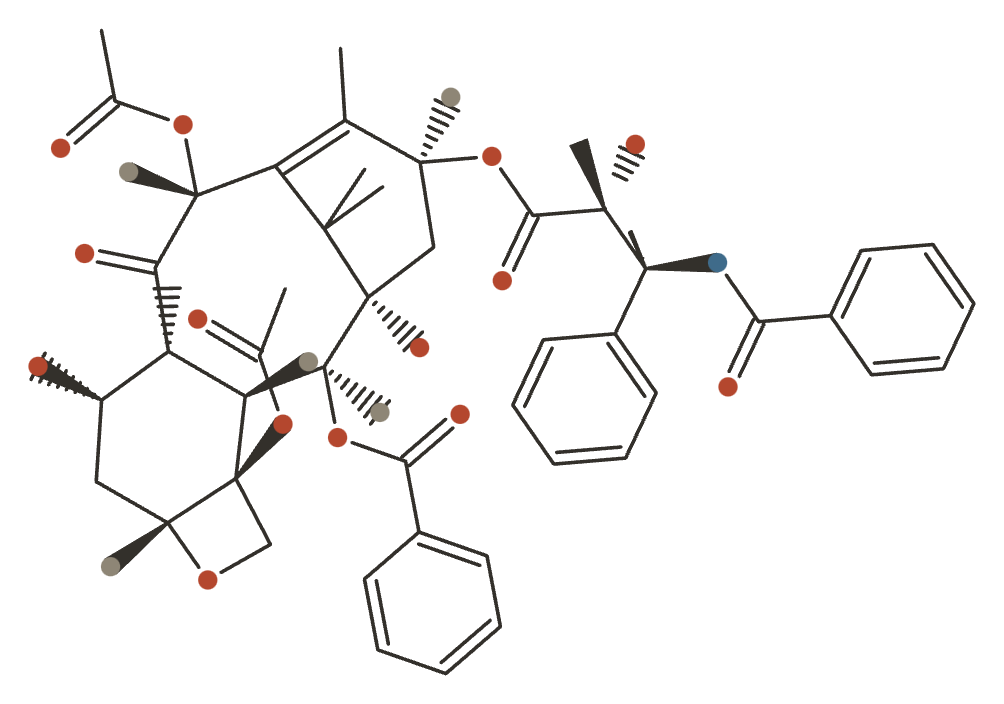
Compound Monograph
Paclitaxel
Paclitaxel is a taxane diterpenoid from yew bark and an intravenous chemotherapy drug on the WHO Model List of Essential Medicines. Its novelty was the mechanism: earlier antimitotics block microtubule assembly, paclitaxel stabilises microtubules and freezes the spindle.

Sources · 5
Where Does It Come From?
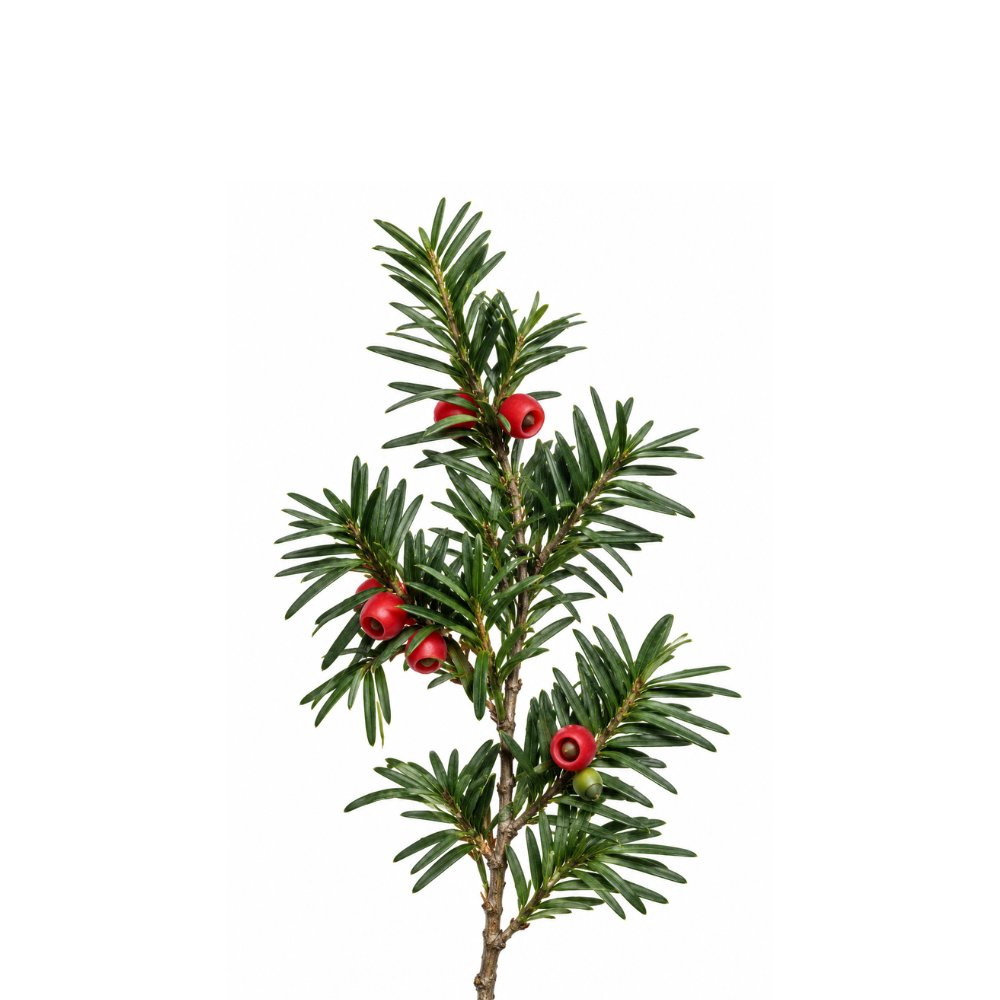
Paclitaxel is a semi-synthetic taxane diterpenoid, found in Pacific yew and 4 other sources. It is flagged as poisonous.
Concentration
Content by Source
Concentrations not reported. No percent-dry-weight or mg/g figures have been published for this compound in its source plants.
Paclitaxel at a Glance
Paclitaxel is intravenous cytotoxic chemotherapy. It is a taxane diterpenoid first isolated from the bark of the Pacific yew in 1971 1Reference 1Plant antitumor agentsView study →, and it sits on the WHO Model List of Essential Medicines, given for ovarian, breast and non-small-cell lung cancer.
Its importance is not that it kills dividing cells — many drugs do — but how. Every earlier antimitotic, from the vinca alkaloids to colchicine, works by preventing microtubules from assembling. Paclitaxel binds β-tubulin and does the opposite: it stabilises microtubules against depolymerisation, so the mitotic spindle becomes too rigid to function. That was shown first in a cell-free assembly assay in 1979 2Reference 2In vitroPromotion of microtubule assembly in vitro by taxol — in vitroView study → and then in intact mouse fibroblasts in 1980 3Reference 3In vitroTaxol stabilizes microtubules in mouse fibroblast cells — in vitroView study →. Arresting cell division by making the spindle too stable had not been described before.
A second mechanism was found later and has nothing to do with mitosis. Paclitaxel acts as an LPS mimetic at TLR4/MyD88, reprogramming macrophages toward an inflammatory phenotype 6Reference 6In vitroThe role of MyD88 and TLR4 in the LPS-mimetic activity of Taxol — in vitro and mouse macrophageView study → — an off-target immune action sitting inside a drug that had been fully characterised for two decades.
None of this is a use for yew. The tree also makes the taxine alkaloids, which are cardiotoxic and act on entirely different targets 15Reference 15ReviewTaxines: a review of the mechanism and toxicity of yew (Taxus spp.) alkaloids — reviewView study →, and no preparation of yew delivers one without the other. Paclitaxel is not orally active in any usable sense, is given by infusion under supervision, and its supply has not come from wild bark in decades.
The Mechanism Was the Novelty
The taxol programme began as a routine natural-product screen: bark collected in 1962 under the US National Cancer Institute’s antitumour survey, with the isolation and structure reported in 1971 1Reference 1Plant antitumor agentsView study →. For most of that decade it was one cytotoxic natural product among many.
What changed its status was a mechanistic question answered in 1979. Schiff, Fant and Horwitz found that in a cell-free system, taxol did not inhibit tubulin polymerisation — it promoted it, driving assembly at low temperature and in the absence of GTP, conditions under which microtubules do not normally form 2Reference 2In vitroPromotion of microtubule assembly in vitro by taxol — in vitroView study →. The following year the same group showed the effect held in intact mouse fibroblasts, where taxol induced stable microtubule bundles that resisted the depolymerising agents that dismantle normal microtubules 3Reference 3In vitroTaxol stabilizes microtubules in mouse fibroblast cells — in vitroView study →.
The contrast with everything before it is the point:
| Drug class | Action on microtubules | Result |
|---|---|---|
| Vinca alkaloids | Prevent tubulin polymerisation | Spindle cannot form |
| Colchicine | Binds tubulin, blocks polymerisation | Spindle cannot form |
| Paclitaxel | Stabilises polymerised microtubules against depolymerisation | Spindle forms and cannot be dismantled |
Both routes arrest mitosis; they arrive from opposite directions. Microtubules must not only assemble but also disassemble for chromosomes to separate, and paclitaxel exploits the second half of that requirement. The finding also established the “colchicine site” and the “taxane site” as distinct pharmacological targets on tubulin, which is why a colchicine-resistant cell is not necessarily a paclitaxel-resistant one.
What It's Used For
The clinical record belongs unambiguously to the isolated molecule given intravenously. It is also more mixed than the drug’s reputation suggests, and the two ovarian-cancer anchors do not agree with each other.
GOG-111 randomised 410 women with stage III–IV ovarian cancer and residual masses over 1 cm to cisplatin 75 mg/m² with either cyclophosphamide 750 mg/m² or paclitaxel 135 mg/m² over 24 hours. Among 216 women with measurable disease, 73% responded on the paclitaxel arm against 60% on cyclophosphamide (P=0.01). Median progression-free survival was 18 versus 13 months and median overall survival 38 versus 24 months, both P<0.001. Alopecia, neutropenia, fever and allergic reactions were all more frequent on paclitaxel 4Reference 4RCTCyclophosphamide and cisplatin compared with paclitaxel and cisplatin in patients with stage III and stage IV ovarian cancer — randomised controlled trialView study →. That result moved paclitaxel into first-line ovarian therapy.
ICON3 is the honest complication. It enrolled 2,074 patients across 130 centres and compared paclitaxel plus carboplatin against a control of either CAP (cyclophosphamide, doxorubicin, cisplatin) or single-agent carboplatin, chosen before randomisation. At a median 51 months’ follow-up there was no evidence of a difference in overall survival: HR 0.98 (95% CI 0.87–1.10, P=0.74), median 36.1 versus 35.4 months, with progression-free survival likewise not significantly different (HR 0.93, 0.84–1.03) 5Reference 5RCTPaclitaxel plus carboplatin versus standard chemotherapy with either single-agent carboplatin or cyclophosphamide, doxorubicin, and cisplatin in women with ovarian cancer: the ICON3 randomised trial — randomised controlled trialView study →.
Gap: the two trials answer different questions, and the difference is the comparator. GOG-111 tested paclitaxel against a weaker alkylating regimen; ICON3 tested it against carboplatin-based control arms that were already effective. The reasonable reading is that a platinum–taxane doublet is a good regimen rather than that paclitaxel adds survival to any platinum backbone — and the second claim, which is the one usually made, is not what ICON3 found. A summary that lists both trials as confirming anchors misreports the second one.
Paclitaxel is standard-of-care in breast and non-small-cell lung carcinoma alongside its semisynthetic analogue docetaxel, and appears on the WHO Model List of Essential Medicines 10Reference 10ReviewRecent Developments and Anticancer Therapeutics of Paclitaxel: An Update — reviewView study →. Formulation has been a live part of that story: the original Cremophor EL vehicle causes hypersensitivity reactions requiring steroid and antihistamine premedication, and albumin-bound (nab-)paclitaxel was developed to avoid it 7,
Gap: the breast and lung evidence is large, spread across decades of combination regimens, and rests on the drug’s position within multi-agent protocols rather than on a single decisive trial of paclitaxel against a control. Its standard-of-care status is not in doubt; a clean attribution of survival benefit to paclitaxel specifically, in the way GOG-111 provided for ovarian cancer, is harder to point to.
An entirely separate mechanism from the mitotic one. Paclitaxel behaves as a lipopolysaccharide mimetic in mouse macrophages, and knockout work established that this activity requires TLR4 and MyD88 rather than tubulin — the same innate-immune receptor pathway bacterial endotoxin uses 6Reference 6In vitroThe role of MyD88 and TLR4 in the LPS-mimetic activity of Taxol — in vitro and mouse macrophageView study →.
The practical interest is that this action reprograms tumour-associated macrophages toward an inflammatory, anti-tumour phenotype, which would make paclitaxel an immunomodulator as well as a cytotoxic.
Gap: the LPS-mimetic activity is mouse-specific in an important respect — human TLR4 responds to paclitaxel far less readily than murine TLR4 — and no clinical result rests on it. It is a genuine second mechanism, not yet a genuine second use.
Mechanisms
| Target / pathway | Effect | Relevant to |
|---|---|---|
| β-tubulin, taxane binding site | Stabilises microtubules against depolymerisation; promotes assembly even without GTP or at low temperature 2Reference 2In vitroPromotion of microtubule assembly in vitro by taxol — in vitroView study → | the antimitotic action — and the novelty |
| Mitotic spindle | Forms but cannot be dismantled → metaphase arrest → apoptosis 3Reference 3In vitroTaxol stabilizes microtubules in mouse fibroblast cells — in vitroView study → | cytotoxicity in dividing cells |
| Peripheral sensory axons and their microtubule transport | Length-dependent axonal degeneration | the dose-limiting neuropathy |
| TLR4 / MyD88 | LPS-mimetic innate-immune activation; macrophage reprogramming 6Reference 6In vitroThe role of MyD88 and TLR4 in the LPS-mimetic activity of Taxol — in vitro and mouse macrophageView study → | the secondnon-mitotic mechanism |
| Bone marrow, hair follicle, gut epithelium | The same mitotic arrest in fast-dividing normal tissue | neutropeniaalopeciamucositis |
The taxane site and the colchicine site are distinct binding pockets on tubulin, which is why the two drugs produce opposite effects on the same protein and why resistance to one does not imply resistance to the other.
Pharmacokinetics
Paclitaxel is given intravenously; there is no oral formulation, and oral bioavailability is negligible.
The pharmacokinetics are non-linear, and the vehicle is the reason. Conventional paclitaxel is formulated in Cremophor EL (polyoxyethylated castor oil) with ethanol, because the molecule is almost insoluble in water. Cremophor EL forms micelles that entrap paclitaxel in plasma, which distorts its disposition — the non-linearity is a property of the formulation, not of the drug 8Reference 8Clinical trialCremophor EL causes (pseudo-) non-linear pharmacokinetics of paclitaxel in patients — clinical studyView study →. A systematic review of 53 studies found that at the most widely used regimen, 175 mg/m² over a 3-hour infusion, the interstudy median Cmax was 5.1 µmol/L, clearance 12.0 L/h/m², and time above 0.05 µmol/L 23.8 hours; non-linearity appears with short infusions (under 6 hours) but not with long ones (over 24 hours) 7Reference 7ReviewClinical Pharmacokinetics of Paclitaxel Monotherapy: An Updated Literature Review — reviewView study →.
Metabolism is hepatic, through CYP2C8 and CYP3A4, with biliary excretion — so hepatic impairment and CYP-inhibiting co-medication both raise exposure, and renal impairment matters much less. Albumin-bound (nab-)paclitaxel removes the Cremophor vehicle entirely, which eliminates the need for hypersensitivity premedication; its own pharmacokinetics show a similar non-linear pattern but are less thoroughly characterised 7Reference 7ReviewClinical Pharmacokinetics of Paclitaxel Monotherapy: An Updated Literature Review — reviewView study →.
Clinical Trials
| Completed | Planned | Terminated | Preclinical |
|---|---|---|---|
| Very many (ovarian, breast, lung, and combination regimens) | Ongoing across most solid tumours | — | Extensive; TLR4/MyD88 immune mechanism still preclinical |
Last checked: September 2026.
Isolate vs. Plant Studies
There is no plant side to this molecule’s evidence, and no possibility of one.
Paclitaxel is administered intravenously, in a solubilising vehicle, at doses calculated per square metre of body surface, with premedication against hypersensitivity and monitoring for neutropenia. Oral bioavailability is negligible. Nothing about that can be approximated by a preparation of bark or needles.
The tree makes something else as well. The taxine alkaloids — taxine B principally — are cardiac sodium- and calcium-channel blockers with no antimitotic action and no relationship to paclitaxel’s mechanism 15Reference 15ReviewTaxines: a review of the mechanism and toxicity of yew (Taxus spp.) alkaloids — reviewView study →. Any yew preparation delivers both, and the taxines are the reason yew is a poisoning agent rather than a medicine. The drug and the poison are different molecules from the same tree, and the only useful thing that can be said about a yew extract is which one is likely to kill you first.
Prevalence in Nature
The genus Taxus is paclitaxel’s exclusive plant source 11Reference 11The Taxus genome provides insights into paclitaxel biosynthesisView study →. It occurs across the genus — T. brevifolia (Pacific yew, the original source), T. baccata (European yew), T. cuspidata (Japanese yew) and T. chinensis var. mairei, among others — chiefly in bark, with lower concentrations in needles.
Bark yield is the number that matters historically. It was low enough that producing 8 kg of drug required bark from roughly 13,000 trees, and bark stripping kills a slow-growing understorey conifer. That arithmetic, applied to a species scattered through Pacific Northwest old-growth forest, was a genuine conservation crisis and not a rhetorical one.
The biosynthesis is now partly mapped. A chromosome-level genome of Taxus chinensis var. mairei — 10.23 gigabases — revealed a distinctive physical and functional grouping of CYP725A cytochrome P450 genes dedicated to paclitaxel biosynthesis, plus a gene cluster for taxadiene biosynthesis formed largely by gene duplication 11Reference 11The Taxus genome provides insights into paclitaxel biosynthesisView study →. Roughly twenty enzymatic steps separate the diterpene precursor from the finished molecule, and not all are characterised.
The fungal question remains genuinely open. In 1993 an endophytic fungus isolated from Pacific yew, Taxomyces andreanae, was reported to produce taxol and related taxanes in culture 13Reference 13In vitroTaxol and taxane production by Taxomyces andreanae, an endophytic fungus of Pacific yew — in vitroView study →, and a large literature on taxol-producing endophytes has followed 12Reference 12ReviewInsights into Taxol® biosynthesis by endophytic fungi — reviewView study →. None of it became a production route — yields in culture are orders of magnitude too low and often decline on subculture — but it raises a real question about where the chemistry originates, and it has never been fully settled.
Discovery & Synthesis
1962 — bark of Taxus brevifolia collected under the National Cancer Institute’s natural-product antitumour screening programme.
1971 — Wani, Taylor, Wall, Coggon and McPhail report the isolation and structure of taxol from that bark 1Reference 1Plant antitumor agentsView study →.
1979–80 — Schiff, Fant and Horwitz establish the mechanism: microtubule stabilisation rather than inhibition, first in a cell-free assay 2Reference 2In vitroPromotion of microtubule assembly in vitro by taxol — in vitroView study →, then in intact fibroblasts 3Reference 3In vitroTaxol stabilizes microtubules in mouse fibroblast cells — in vitroView study →. This is what turned a screening hit into a drug programme.
1994 — the first total syntheses are completed, by two groups working independently. They are landmark achievements in synthetic chemistry and commercially irrelevant: the molecule’s stereochemical complexity on a strained tricyclic skeleton makes total chemical synthesis non-viable at scale, and no synthetic route has ever displaced the plant 10Reference 10ReviewRecent Developments and Anticancer Therapeutics of Paclitaxel: An Update — reviewView study →.
Manufacture today does not touch wild bark. The industry runs on two routes. Semi-synthesis starts from 10-deacetylbaccatin III, extracted from yew needles — a renewable harvest that does not kill the tree — and converts it to paclitaxel; the same precursor supports whole-cell biotransformation to baccatin III 14Reference 14An Integrated Strategy Based on 10-DAB Extraction and In Situ Whole-Cell Biotransformation of Renewable Taxus Needles to Produce Baccatin IIIView study →. Plant cell fermentation, culturing Taxus cells in bioreactors, supplies the rest 10Reference 10ReviewRecent Developments and Anticancer Therapeutics of Paclitaxel: An Update — reviewView study →. That transition is the reason the conservation crisis of the late 1980s resolved rather than escalated.
Patents: not yet researched.
Toxicity & Safety
Paclitaxel is flagged poisonous because it is a cytotoxic drug: it arrests division in every fast-dividing tissue, not only in tumour cells. Its adverse-effect profile is predictable from the mechanism and is managed rather than avoided.
- Peripheral neuropathy is the dose-limiting toxicity. Often painful, cumulative with dose, and sometimes irreversible 9Reference 9ReviewTaxane-Induced Peripheral Neurotoxicity — reviewView study →.
- Myelosuppression — neutropenia is expected and is the reason for dose delays and growth-factor support.
- Hypersensitivity reactions to the Cremophor EL vehicle require routine corticosteroid and antihistamine premedication with conventional paclitaxel; nab-paclitaxel avoids this 7,
10Reference 7ReviewClinical Pharmacokinetics of Paclitaxel Monotherapy: An Updated Literature Review — reviewView study →Reference 10ReviewRecent Developments and Anticancer Therapeutics of Paclitaxel: An Update — reviewView study → . - Hepatic metabolism via CYP2C8 and CYP3A4 — inhibitors of either raise exposure; hepatic impairment matters far more than renal 7Reference 7ReviewClinical Pharmacokinetics of Paclitaxel Monotherapy: An Updated Literature Review — reviewView study →.
- Alopecia, mucositis, arthralgia and myalgia follow from the same antimitotic action.
- A cytotoxic and a teratogen in principle. Use in pregnancy is a specialist oncology decision made against the disease, not a general safety question.
- The source plant is separately poisonous, by an unrelated mechanism — the taxine alkaloids block cardiac sodium and calcium channels 15Reference 15ReviewTaxines: a review of the mechanism and toxicity of yew (Taxus spp.) alkaloids — reviewView study →.
Full Safety & Interactions Detail
Peripheral neurotoxicity is the adverse effect that most often limits treatment. It presents as a length-dependent sensory neuropathy — numbness, tingling and often pain, beginning in the feet and hands — and reflects disruption of microtubule-dependent axonal transport in long sensory axons. Incidence rises with cumulative dose, with the per-cycle dose, and with the infusion schedule; it is sometimes painful during treatment and sometimes does not fully resolve after it stops. There is no reliable way to predict who will develop it before treatment begins, and no established preventive 9Reference 9ReviewTaxane-Induced Peripheral Neurotoxicity — reviewView study →.
Myelosuppression is expected and dose-defining: neutropenia is the commonest grade 3–4 event, with anaemia and thrombocytopenia less prominent. GOG-111 recorded neutropenia, fever, alopecia and allergic reactions all more frequently on the paclitaxel arm than on the cyclophosphamide comparator 4Reference 4RCTCyclophosphamide and cisplatin compared with paclitaxel and cisplatin in patients with stage III and stage IV ovarian cancer — randomised controlled trialView study →.
Hypersensitivity is a formulation problem, not a molecule problem. Cremophor EL is itself responsible for most acute infusion reactions, and standard practice is corticosteroid plus H1 and H2 antihistamine premedication before every conventional paclitaxel infusion. Albumin-bound paclitaxel removes the vehicle and with it the premedication requirement 7,
Interactions. Metabolism runs through CYP2C8 and CYP3A4, with biliary excretion. Inhibitors of either isoform raise exposure and the risk of neutropenia and neuropathy; inducers reduce it. Hepatic impairment requires dose reduction; renal impairment largely does not.
Reproductive and developmental. Paclitaxel is an antimitotic cytotoxic drug and is expected to be harmful to a developing fetus on mechanism alone; its use in pregnancy is an oncology decision weighed against the cancer being treated. No isolated-molecule reproductive dataset relevant to any non-oncological exposure exists, because no such exposure occurs.
And the separate hazard from the plant. Yew’s cardiotoxicity is the taxine alkaloids’ doing — dose-dependent blockade of cardiac sodium and calcium currents — and has nothing in common with paclitaxel’s pharmacology 15Reference 15ReviewTaxines: a review of the mechanism and toxicity of yew (Taxus spp.) alkaloids — reviewView study →. The two molecules share a source and nothing else.
Dosage
Intravenous cytotoxic chemotherapy, given by an oncology service. The figures below are the regimens used in the trials cited here, recorded for reference.
| Application | Regimen | Source |
|---|---|---|
| Advanced ovarian cancer (GOG-111) | Paclitaxel 135 mg/m² over 24 h, with cisplatin 75 mg/m² | 4Reference 4RCTCyclophosphamide and cisplatin compared with paclitaxel and cisplatin in patients with stage III and stage IV ovarian cancer — randomised controlled trialView study → |
| Advanced ovarian cancer (ICON3) | Paclitaxel plus carboplatin, standard schedule | 5Reference 5RCTPaclitaxel plus carboplatin versus standard chemotherapy with either single-agent carboplatin or cyclophosphamide, doxorubicin, and cisplatin in women with ovarian cancer: the ICON3 randomised trial — randomised controlled trialView study → |
| The most widely studied monotherapy schedule | 175 mg/m² over a 3-hour infusion | 7Reference 7ReviewClinical Pharmacokinetics of Paclitaxel Monotherapy: An Updated Literature Review — reviewView study → |
Conventional paclitaxel requires corticosteroid and antihistamine premedication against vehicle-related hypersensitivity; albumin-bound paclitaxel does not 7,
There is no oral dose, no herbal dose, and no plant-material equivalent — the drug is not absorbed orally, and the only yew preparation anyone could make would deliver the cardiotoxic taxines alongside it 15Reference 15ReviewTaxines: a review of the mechanism and toxicity of yew (Taxus spp.) alkaloids — reviewView study →.
References
- Wani, M. C., Taylor, H. L., Wall, M. E., et al. (1971). Plant antitumor agents. VI. The isolation and structure of taxol, a novel antileukemic and antitumor agent from Taxus brevifolia. J Am Chem Soc. https://pubmed.ncbi.nlm.nih.gov/5553076/
- Schiff, P. B., Fant, J., Horwitz, S. B. (1979). Promotion of microtubule assembly in vitro by taxol — in vitro. Nature. https://pubmed.ncbi.nlm.nih.gov/423966/
- Schiff, P. B., Horwitz, S. B. (1980). Taxol stabilizes microtubules in mouse fibroblast cells — in vitro. Proceedings of the National Academy of Sciences. https://doi.org/10.1073/pnas.77.3.1561
- McGuire, W. P., Hoskins, W. J., Brady, M. F., et al. (1996). Cyclophosphamide and cisplatin compared with paclitaxel and cisplatin in patients with stage III and stage IV ovarian cancer — randomised controlled trial. N Engl J Med. https://pubmed.ncbi.nlm.nih.gov/7494563/
- International Collaborative Ovarian Neoplasm Group (2002). Paclitaxel plus carboplatin versus standard chemotherapy with either single-agent carboplatin or cyclophosphamide, doxorubicin, and cisplatin in women with ovarian cancer: the ICON3 randomised trial — randomised controlled trial. Lancet. https://pubmed.ncbi.nlm.nih.gov/12241653/
- Byrd-Leifer, C. A., Block, E. F., Takeda, K., et al. (2001). The role of MyD88 and TLR4 in the LPS-mimetic activity of Taxol — in vitro and mouse macrophage. Eur J Immunol. https://pubmed.ncbi.nlm.nih.gov/11500829/
- Stage, T. B., Bergmann, T. K., Kroetz, D. L. (2018). Clinical Pharmacokinetics of Paclitaxel Monotherapy: An Updated Literature Review — review. Clin Pharmacokinet. https://pubmed.ncbi.nlm.nih.gov/28612269/
- van Tellingen, O., Huizing, M. T., Panday, V. R., et al. (1999). Cremophor EL causes (pseudo-) non-linear pharmacokinetics of paclitaxel in patients — clinical study. Br J Cancer. https://pubmed.ncbi.nlm.nih.gov/10496361/
- Velasco, R., Bruna, J. (2015). Taxane-Induced Peripheral Neurotoxicity — review. Toxics. https://pubmed.ncbi.nlm.nih.gov/29056655/
- Ahmed Khalil, A., Rauf, A., Alhumaydhi, F. A., et al. (2022). Recent Developments and Anticancer Therapeutics of Paclitaxel: An Update — review. Curr Pharm Des. https://pubmed.ncbi.nlm.nih.gov/36330627/
- Xiong, X., Gou, J., Liao, Q., et al. (2021). The Taxus genome provides insights into paclitaxel biosynthesis. Nat Plants. https://pubmed.ncbi.nlm.nih.gov/34267359/
- Subban, K., Kempken, F. (2023). Insights into Taxol® biosynthesis by endophytic fungi — review. Appl Microbiol Biotechnol. https://pubmed.ncbi.nlm.nih.gov/37606790/
- Stierle, A., Strobel, G., Stierle, D. (1993). Taxol and taxane production by Taxomyces andreanae, an endophytic fungus of Pacific yew — in vitro. Science. https://pubmed.ncbi.nlm.nih.gov/8097061/
- Kou, P., Yu, Y., Wang, H., et al. (2024). An Integrated Strategy Based on 10-DAB Extraction and In Situ Whole-Cell Biotransformation of Renewable Taxus Needles to Produce Baccatin III. Molecules. https://doi.org/10.3390/molecules29112586
- Wilson, C. R., Sauer, J., Hooser, S. B. (2001). Taxines: a review of the mechanism and toxicity of yew (Taxus spp.) alkaloids — review. Toxicon. https://pubmed.ncbi.nlm.nih.gov/10978734/



