
Compound Monograph
Quindoline
Quindoline (10H-indolo[3,2-b]quinoline) is a minor indoloquinoline alkaloid of the West African antimalarial root Cryptolepis sanguinolenta — the neutral, des-N-methyl relative of cryptolepine that is far weaker in its own right but a valued synthetic scaffold for G-quadruplex / telomerase-targeting drug leads.

Sources · 3
Where Does It Come From?
Quindoline is a naturally occurring indoloquinoline alkaloid (10h-indolo[3,2-b]quinoline), found in Yellow-dye root and 2 other sources. It is flagged as moderately toxic.
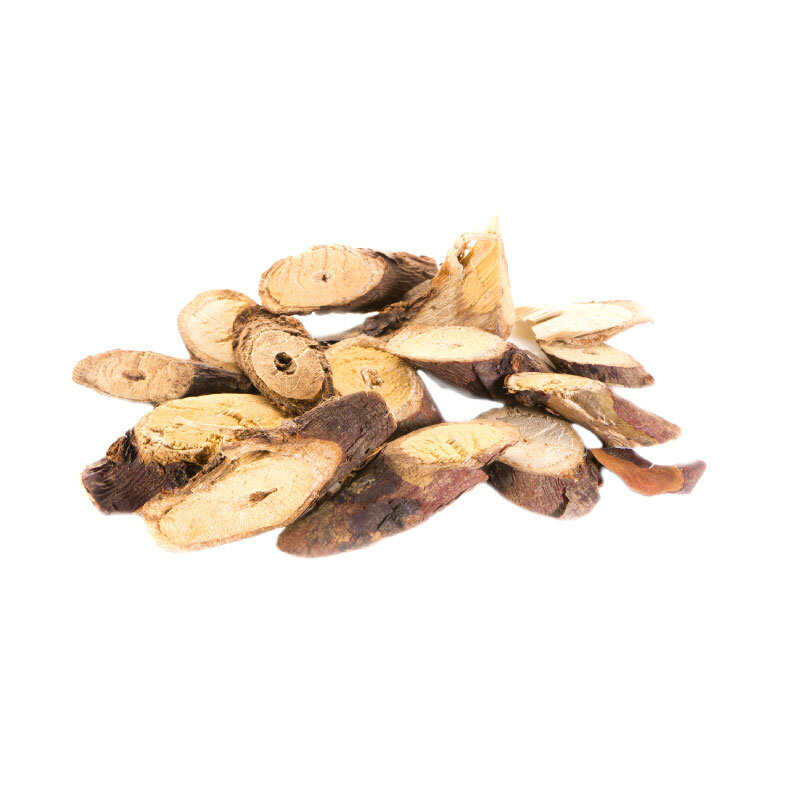 Principal source Cryptolepis Cryptolepis sanguinolenta Herb monograph →
 Source Wireweed Sida acuta Herb monograph →
Concentration
Content by Source
Concentrations not reported. No percent-dry-weight or mg/g figures have been published for this compound in its source plants.
Quindoline at a Glance
Quindoline, or 10H-indolo[3,2-b]quinoline, is a minor alkaloid of the West African root Cryptolepis sanguinolenta — the plant traditionally decocted against malaria and fever. Structurally it is the simplest member of the indolo[3,2-b]quinolines: a flat, tetracyclic aromatic system of an indole fused to a quinoline.
Its defining relationship is to cryptolepine, the plant’s major and much more studied alkaloid. Quindoline is essentially cryptolepine without the 5-N-methyl group — the neutral, des-methyl congener, and a biosynthetic relative of it. Losing that methyl (and the positive charge cryptolepine carries) makes quindoline a far weaker molecule across the activities its famous cousin is known for: weaker antiplasmodial, weaker cytotoxic, only a feeble DNA/G-quadruplex binder 3,
Because of that, quindoline’s real importance is not as a drug but as a synthetic scaffold. Its planar core is an excellent starting point for building G-quadruplex-stabilising, telomerase-inhibiting anticancer leads — and most of the modern literature under the “quindoline” heading is about its derivatives, not the parent alkaloid 4,
Quindoline as a Synthetic Scaffold (G-Quadruplex Ligands)
The compound-defining story of quindoline is medicinal-chemistry, not phytotherapy. Its flat, electron-rich tetracyclic core stacks well on the terminal quartets of G-quadruplex DNA — the four-stranded structures that form in telomeres and in oncogene promoters and that, when stabilised, can shut down telomerase and switch off oncogene transcription.
The catch is that unmodified quindoline is a poor ligand: as a neutral, water-insoluble planar molecule it inhibits telomerase only at very high concentrations (reported >138 µM) 5Reference 5Synthesis and evaluation of quindoline derivatives as G-quadruplex inducing and stabilizing ligands and potential inhibitors of telomeraseView study →. The scaffold becomes potent once it is decorated:
- Basic side chains at C-11. Adding substituted-amino side chains at the C-11 position of quindoline improved telomerase inhibition into the low-micromolar range (~0.44–12.3 µM) while also inducing G-quadruplex formation in G-rich telomeric DNA 5Reference 5Synthesis and evaluation of quindoline derivatives as G-quadruplex inducing and stabilizing ligands and potential inhibitors of telomeraseView study →.
- A positive charge at 5-N. Re-installing a charge — the very feature that distinguishes cryptolepine from quindoline — by 5-N-methylation sharply raised quadruplex-binding affinity and shifted selectivity toward the antiparallel quadruplex, with one compound driving cellular senescence and telomere shortening on prolonged exposure 6Reference 6Lu YJ, Ou TM, Tan JH, Hou JQ, Shao WY, Peng D, Sun N, Wang XD, Wu WB, Bu XZ, Huang ZS, Ma DL, Wong KY, Gu LQ (2008). 5-N-methylated quindoline derivatives as telomeric G-quadruplex stabilizing ligands: effects of 5-N positive charge on quadruplex binding affinity and cell proliferation. Journal of Medicinal Chemistry. https://pubmed.ncbi.nlm.nih.gov/18821749/View study →.
- Early bis-substituted leads. One of the first telomerase inhibitors built on this alkaloid was a bis-(dimethylaminoethyl) quindoline derivative, which showed modest cytotoxicity and telomerase inhibition attributed to stabilising an intermediate guanine-quadruplex complex 4Reference 4A novel inhibitor of human telomerase derived from 10H-indolo[3,2-b]quinolineView study →.
This work — much of it the SYUIQ series of quindoline-derived quadruplex ligands — is the reason the molecule matters. It is a template for drugs, not a drug itself.
What It's Used For
Quindoline’s own pharmacology is thin and consistently weaker than cryptolepine’s. The honest reading is that almost every activity attributed to the wider indoloquinoline class lives in cryptolepine or in engineered quindoline derivatives, with the bare alkaloid a modest also-ran.
Support is an experimental score — weighted by study type (human > animal > in vitro) and volume. A beta, not a validated metric. Every row here rests on isolated-molecule in-vitro/preclinical data; there is no human evidence for quindoline.
Isolated from Cryptolepis sanguinolenta, quindoline strongly inhibited the growth of Gram-positive bacteria and produced a dose-dependent inhibition of the classical complement pathway in vitro 2Reference 2In vitroIn vitro biological activities of alkaloids from Cryptolepis sanguinolentaView study →.
The same study, however, found quindoline (like cryptolepine base) had no antiviral effect but was frankly cytotoxic in the antiviral test system — so the antibacterial signal cannot be cleanly separated from general cell toxicity 2Reference 2In vitroIn vitro biological activities of alkaloids from Cryptolepis sanguinolentaView study →.
This is isolated-molecule work; no whole-plant or animal confirmation followed.
Gap: the antibacterial activity was measured against the backdrop of cytotoxicity in the same assays, and there is no MIC panel, no in-vivo confirmation, and no quantified selectivity index for quindoline specifically 2Reference 2In vitroIn vitro biological activities of alkaloids from Cryptolepis sanguinolentaView study →.
Quindoline is the template, not the active. The bare alkaloid inhibits telomerase only at very high concentrations (>138 µM) 5Reference 5Synthesis and evaluation of quindoline derivatives as G-quadruplex inducing and stabilizing ligands and potential inhibitors of telomeraseView study →, but derivatised versions become genuinely potent: C-11 amino side chains dropped telomerase-inhibition into the ~0.44–12.3 µM range and induced quadruplex formation 5Reference 5Synthesis and evaluation of quindoline derivatives as G-quadruplex inducing and stabilizing ligands and potential inhibitors of telomeraseView study →; a 5-N-methyl positive charge raised quadruplex-binding affinity and produced telomere shortening and senescence in cells 6Reference 6Lu YJ, Ou TM, Tan JH, Hou JQ, Shao WY, Peng D, Sun N, Wang XD, Wu WB, Bu XZ, Huang ZS, Ma DL, Wong KY, Gu LQ (2008). 5-N-methylated quindoline derivatives as telomeric G-quadruplex stabilizing ligands: effects of 5-N positive charge on quadruplex binding affinity and cell proliferation. Journal of Medicinal Chemistry. https://pubmed.ncbi.nlm.nih.gov/18821749/View study →; and an early bis-substituted quindoline showed telomerase inhibition via stabilisation of a guanine-quadruplex intermediate 4Reference 4A novel inhibitor of human telomerase derived from 10H-indolo[3,2-b]quinolineView study →.
All isolated-molecule / cell-line chemistry.
Gap: the anticancer credit belongs to engineered analogues, not to natural quindoline; there is no in-vivo efficacy or clinical work on the parent alkaloid, and its poor aqueous solubility limits it as a molecule in its own right 5,
In the foundational comparison of C. sanguinolenta alkaloids, quindoline inhibited chloroquine-resistant Plasmodium falciparum in vitro but was less active than cryptolepine and the other charged indoloquinolines, and — importantly — it was inactive in vivo in the P. berghei mouse system where cryptolepine was chemosuppressive 3Reference 3In vitroIn vitro and in vivo antiplasmodial activity of cryptolepine and related alkaloids from Cryptolepis sanguinolentaView study →. This isolated-molecule result is the clearest single demonstration that the plant’s antimalarial reputation belongs to cryptolepine, not to its des-methyl relative.
Gap: no IC₅₀ refinement, no combination or resistance work, and no in-vivo activity to build on — the antimalarial thread effectively ends at “weaker than cryptolepine” 3Reference 3In vitroIn vitro and in vivo antiplasmodial activity of cryptolepine and related alkaloids from Cryptolepis sanguinolentaView study →.
Mechanisms
| Target / pathway | Effect | Relevant to |
|---|---|---|
| G-quadruplex DNA (telomeric / promoter) | weak stacking/stabilisation as the neutral parent (telomerase inhibition >138 µM); C-11 side chains or a 5-N charge convert it into a potent quadruplex ligand | anticancer / telomerase scaffold |
| Plasmodium falciparum growth | modest in-vitro inhibition, far weaker than cryptolepine; no in-vivo effect | antiplasmodial |
| Gram-positive bacterial growth | in-vitro growth inhibition (alongside general cytotoxicity) | antibacterial |
| Complement (classical pathway) | dose-dependent inhibition in vitro | immunomodulatory |
The through-line is charge and decoration: quindoline is what cryptolepine would be without its 5-N-methyl cation, and the med-chem programmes that make quindoline useful essentially re-add that charge or an equivalent basic side chain 5,
Pharmacokinetics
Quindoline’s pharmacokinetics are essentially uncharacterised. It is a neutral, highly planar, poorly water-soluble tetracyclic alkaloid — a property repeatedly cited as the reason the scaffold has to be derivatised (adding basic, protonatable side chains improves both solubility and target binding) 5,
Clinical Trials
There are no clinical trials of quindoline. The entire evidence base is preclinical — isolated-alkaloid in-vitro assays and synthetic-derivative chemistry.
| Completed | Planned | Terminated | Preclinical |
|---|---|---|---|
| — | — | — | Antiplasmodial, antibacterial, and G-quadruplex/telomerase (parent + derivatives) |
Last checked: July 2026.
Isolate vs. Plant Studies
Every quindoline finding is on the isolated molecule or on synthetic derivatives of it — there is no study in which whole Cryptolepis sanguinolenta extract is used to demonstrate a quindoline-specific effect. That matters because the plant’s traditional antimalarial and antibacterial reputation is carried by cryptolepine, the dominant alkaloid; the head-to-head comparison that isolated quindoline showed it to be the weaker congener and inactive in vivo 3Reference 3In vitroIn vitro and in vivo antiplasmodial activity of cryptolepine and related alkaloids from Cryptolepis sanguinolentaView study →. So for quindoline the usual “isolate vs. plant” caveat runs the other way: there is no meaningful whole-plant case to transfer from, and the isolate data that exist are modest.
Prevalence in Nature
Quindoline occurs as a minor alkaloid of Cryptolepis sanguinolenta (yellow-dye root), the scrambling shrub of West and Central Africa whose bright-yellow root decoction is a traditional antimalarial. It was first obtained from the plant’s ethanol root extract in 1978, alongside cryptolepine and related bases 1Reference 1Constituents of West African medicinal plants XX: quindoline from Cryptolepis sanguinolentaView study →. Chemically it sits at the head of the indolo[3,2-b]quinoline family and is regarded as a biosynthetic relative — effectively the des-N-methyl form — of cryptolepine 3Reference 3In vitroIn vitro and in vivo antiplasmodial activity of cryptolepine and related alkaloids from Cryptolepis sanguinolentaView study →. Its concentration in the root is not quantified in the verified literature: it is consistently described as a minor constituent against the far larger cryptolepine load, but no reliable percentage figure was found. That quantitative hole is logged in the compound’s gaps tracker.
Discovery & Synthesis
Quindoline has an unusual history in that it was made before it was found in nature. The indolo[3,2-b]quinoline ring system was first synthesised in 1906 by Fichter and Boehringer (a result that predates modern literature indexing, so it is not carried here as a citable PubMed record). The molecule was then isolated as a natural product in 1978 by Dwuma-Badu and colleagues, who obtained it from an ethanol extract of Cryptolepis sanguinolenta root in their “Constituents of West African Medicinal Plants” series 1Reference 1Constituents of West African medicinal plants XX: quindoline from Cryptolepis sanguinolentaView study →. The name reflects the structure — a quinoline fused to an indole — and in the older literature the compound also appears as quinindoline.
Manufacture today is entirely synthetic and serves research, not commerce: quindoline is prepared as the parent scaffold for medicinal-chemistry programmes (Friedländer-type condensations and modern transition-metal-free annulations of indole precursors both give the indolo[3,2-b]quinoline core), then elaborated into the C-11- and 5-N-substituted derivatives that carry the useful activity 5,
Patents: not yet researched.
Toxicity & Safety
Quindoline carries a moderate flag — lower than its cytotoxic, genotoxic cousin cryptolepine, but not established as safe. The reasoning is honest and evidence-limited: in the one screen that tested it directly, the isolated alkaloid was cytotoxic in vitro (down to ~1 µg/mL in the antiviral test system) even as it showed antibacterial and complement-inhibitory activity 2Reference 2In vitroIn vitro biological activities of alkaloids from Cryptolepis sanguinolentaView study →, and it belongs to a DNA/G-quadruplex-interactive alkaloid class. Against that, its DNA and telomerase binding as the neutral parent are weak 5Reference 5Synthesis and evaluation of quindoline derivatives as G-quadruplex inducing and stabilizing ligands and potential inhibitors of telomeraseView study →, and there is no whole-animal or human safety data at all. The badge is therefore a conservative call on an in-vitro cytotoxicity signal plus class membership, not a documented in-vivo hazard.
- Cytotoxic in vitro. The isolated alkaloid was frankly cytotoxic in cell-based screens down to ~1 µg/mL, so its antibacterial/immunomodulatory activity is not cleanly separable from general toxicity 2Reference 2In vitroIn vitro biological activities of alkaloids from Cryptolepis sanguinolentaView study →.
- DNA-interactive class, weak parent. Quindoline stacks on G-quadruplex DNA; as the neutral parent this binding is weak, but the scaffold’s whole purpose is to be built into potent DNA-targeting ligands 4,
5, .6Reference 4A novel inhibitor of human telomerase derived from 10H-indolo[3,2-b]quinolineView study →Reference 5Synthesis and evaluation of quindoline derivatives as G-quadruplex inducing and stabilizing ligands and potential inhibitors of telomeraseView study →Reference 6Lu YJ, Ou TM, Tan JH, Hou JQ, Shao WY, Peng D, Sun N, Wang XD, Wu WB, Bu XZ, Huang ZS, Ma DL, Wong KY, Gu LQ (2008). 5-N-methylated quindoline derivatives as telomeric G-quadruplex stabilizing ligands: effects of 5-N positive charge on quadruplex binding affinity and cell proliferation. Journal of Medicinal Chemistry. https://pubmed.ncbi.nlm.nih.gov/18821749/View study → - No in-vivo or human safety data. No animal toxicology, no reproductive/developmental data, and no interaction profile exist for isolated quindoline — safety is uncharacterised, not demonstrated.
Dosage
There is no established human dose for quindoline, and none is implied here. It is a preclinical molecule whose own activity is weak and whose therapeutic interest lies in synthetic derivatives. The only meaningful figures are in-vitro research concentrations:
| Setting | Figure (in vitro) |
|---|---|
| Telomerase inhibition, parent quindoline | >138 µM (essentially inactive) 5Reference 5Synthesis and evaluation of quindoline derivatives as G-quadruplex inducing and stabilizing ligands and potential inhibitors of telomeraseView study → |
| Telomerase inhibition, C-11 amino derivatives | ~0.44–12.3 µM 5Reference 5Synthesis and evaluation of quindoline derivatives as G-quadruplex inducing and stabilizing ligands and potential inhibitors of telomeraseView study → |
| Cytotoxicity threshold (antiviral test system) | down to ~1 µg/mL 2Reference 2In vitroIn vitro biological activities of alkaloids from Cryptolepis sanguinolentaView study → |
These are laboratory concentrations from isolated-molecule and derivative studies, not doses studied in people, and are not a personal recommendation.
References
- Dwuma-Badu D, Ayim JS, Fiagbe NI, Knapp JE, Schiff PL Jr, Slatkin DJ (1978). Constituents of West African medicinal plants XX: quindoline from Cryptolepis sanguinolenta. Journal of Pharmaceutical Sciences. https://pubmed.ncbi.nlm.nih.gov/641744/
- Cimanga K, De Bruyne T, Lasure A, Van Poel B, Pieters L, Claeys M, Vanden Berghe D, Kambu K, Tona L, Vlietinck AJ (1996). In vitro biological activities of alkaloids from Cryptolepis sanguinolenta. Planta Medica. https://pubmed.ncbi.nlm.nih.gov/8720383/
- Cimanga K, De Bruyne T, Pieters L, Vlietinck AJ, Turger CA (1997). In vitro and in vivo antiplasmodial activity of cryptolepine and related alkaloids from Cryptolepis sanguinolenta. Journal of Natural Products. https://pubmed.ncbi.nlm.nih.gov/9249972/
- Caprio V, Guyen B, Opoku-Boahen Y, Mann J, Gowan SM, Kelland LM, Read MA, Neidle S (2000). A novel inhibitor of human telomerase derived from 10H-indolo[3,2-b]quinoline. Bioorganic & Medicinal Chemistry Letters. https://pubmed.ncbi.nlm.nih.gov/10999471/
- Zhou JL, Lu YJ, Ou TM, Zhou JM, Huang ZS, Zhu XF, Du CJ, Bu XZ, Ma L, Gu LQ, Li YM, Chan AS (2005). Synthesis and evaluation of quindoline derivatives as G-quadruplex inducing and stabilizing ligands and potential inhibitors of telomerase. Journal of Medicinal Chemistry. https://pubmed.ncbi.nlm.nih.gov/16279791/
- Lu YJ, Ou TM, Tan JH, Hou JQ, Shao WY, Peng D, Sun N, Wang XD, Wu WB, Bu XZ, Huang ZS, Ma DL, Wong KY, Gu LQ (2008). 5-N-methylated quindoline derivatives as telomeric G-quadruplex stabilizing ligands: effects of 5-N positive charge on quadruplex binding affinity and cell proliferation. Journal of Medicinal Chemistry. https://pubmed.ncbi.nlm.nih.gov/18821749/



