
Compound Monograph
Cryptolepine
Cryptolepine (5-methyl-5H-indolo[3,2-b]quinoline) is the principal indoloquinoline alkaloid of the Ghanaian antimalarial root Cryptolepis sanguinolenta — a DNA-intercalating topoisomerase II poison and beta-haematin inhibitor with broad antiplasmodial, anticancer, antibacterial and anti-inflammatory activity in the lab. The same DNA-binding that drives that activity also makes it potently cytotoxic and genotoxic in vitro, so it sits well short of a finished medicine.

Sources · 3
Where Does It Come From?
Cryptolepine is a naturally occurring indoloquinoline alkaloid, found in Cryptolepis and 2 other sources. It is flagged as moderately toxic.
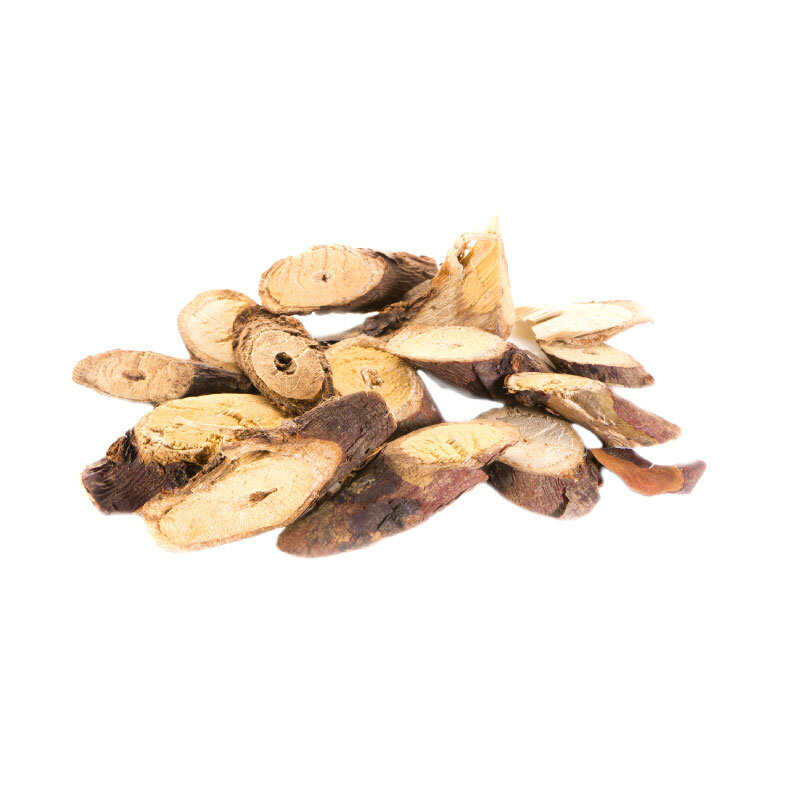 Principal source Cryptolepis Cryptolepis sanguinolenta Herb monograph →
 Source Wireweed Sida acuta Herb monograph →
Concentration
Content by Source
Reported concentrations across the plants that contain cryptolepine — the bar marks the typical level, the line shows the reported range.
Literature figures for varying plant parts and preparations. Read them as a comparative guide, not exact assays.
Cryptolepine at a Glance
Cryptolepine is the principal indoloquinoline alkaloid of Cryptolepis sanguinolenta — the Ghanaian root variously called Ghana quinine, yellow-dye root or nibima and brewed as a traditional water decoction for fever and malaria. It is a flat, aromatic, DNA-binding molecule (5-methyl-5H-indolo[3,2-b]quinoline) and the compound that gives the root much of its deep colour and most of its measured activity 1,
Its best-studied action is antiplasmodial: cryptolepine kills the malaria parasite in vitro, including chloroquine-resistant strains, and suppresses parasitaemia in infected mice 1Reference 1In vitroIn vitro and in vivo antiplasmodial activity of cryptolepine and related alkaloids from Cryptolepis sanguinolentaView study →. It does this through a striking double mechanism — it both intercalates into DNA and poisons topoisomerase II (a broadly cytotoxic property) and inhibits beta-haematin/haemozoin formation the way chloroquine does (a malaria-selective property) 2,
The catch is written into the mechanism. The DNA intercalation that makes cryptolepine active also makes the isolated molecule potently cytotoxic and genotoxic in vitro, and teratogenic in zebrafish embryos 6,
Traditional & Ethnomedical Use
The one context in which Cryptolepis has real human history is the traditional Ghanaian and West African treatment of malaria and febrile illness: the dried root is decocted in water and drunk, and a standardised tea-bag/aqueous root preparation has been used clinically in Ghana for uncomplicated malaria. That established use, however, belongs to the whole-root decoction, not to isolated cryptolepine — and the traditional preparation is an aqueous one, whereas most of the potency (and most of the toxicity) data below come from ethanol extracts or the purified alkaloid 1,
Cryptolepine vs. Chloroquine
Cryptolepine is often described as a natural, chloroquine-like antimalarial, and the comparison is genuinely informative — but only half-right.
Where it resembles chloroquine. Like chloroquine, cryptolepine accumulates in the parasite’s acidic digestive vacuole and inhibits the formation of beta-haematin (haemozoin, “malaria pigment”) — the crystalline detoxification product the parasite makes from the toxic free haem released as it digests haemoglobin. Blocking that detoxification lets free haem poison the parasite. This beta-haematin inhibition, not DNA binding, is thought to carry the bulk of cryptolepine’s antiplasmodial selectivity, and it is retained against chloroquine-resistant strains 1,
Where it does not. Chloroquine is (at therapeutic doses) a fairly clean haem-detoxification blocker. Cryptolepine adds a second, non-selective mechanism on top — it intercalates host and parasite DNA and poisons topoisomerase II 2Reference 2The DNA intercalating alkaloid cryptolepine interferes with topoisomerase II and inhibits primarily DNA synthesis in B16 melanoma cellsView study →. That extra mechanism widens its activity to cancer cells and bacteria, but it is also why cryptolepine is cytotoxic to mammalian cells at concentrations not far above its antiplasmodial ones, giving it a much narrower therapeutic window than chloroquine 4,
Cryptolepine vs. Quindoline
Quindoline is cryptolepine’s des-N-methyl congener — the same indoloquinoline skeleton without the 5-methyl group, and its biosynthetic precursor in the plant. The comparison is a clean natural structure–activity lesson: quindoline is a markedly weaker antiplasmodial than cryptolepine, so the quaternisable 5-methyl indoloquinolinium system of cryptolepine is important for both DNA binding and antiplasmodial potency 1Reference 1In vitroIn vitro and in vivo antiplasmodial activity of cryptolepine and related alkaloids from Cryptolepis sanguinolentaView study →. Several sibling alkaloids of the same root — neocryptolepine (an indolo[2,3-b] isomer), isocryptolepine and hydroxycryptolepine — repeat the theme: small changes to the ring system or substitution shift the balance between antiplasmodial potency and general cytotoxicity 1Reference 1In vitroIn vitro and in vivo antiplasmodial activity of cryptolepine and related alkaloids from Cryptolepis sanguinolentaView study →.
What It's Used For
Cryptolepine has an unusually broad preclinical activity profile for a single alkaloid, but the load-bearing discipline is blunt: almost all of it is in-vitro or rodent work on the isolated molecule (or ethanol extracts), the human evidence belongs to the whole-root decoction, and the same DNA intercalation that produces the activity is also the toxicity 1,
Support is an experimental score — weighted by study type (human > animal > in vitro) and volume. A beta, not a validated metric. Human efficacy data are the whole-root preparation, not the isolate, so isolate scores stay preclinical by design.
Cryptolepine’s flagship activity and the reason the root is used. The purified alkaloid and related indoloquinolines from Cryptolepis sanguinolenta are active against P. falciparum in vitro including chloroquine-resistant strains, and cryptolepine is chemosuppressive against P. berghei in mice 1Reference 1In vitroIn vitro and in vivo antiplasmodial activity of cryptolepine and related alkaloids from Cryptolepis sanguinolentaView study →.
The same molecule is the antiplasmodial active constituent of wireweed (Sida acuta) — the S. acuta decoction is active against both CQ-sensitive and CQ-resistant P. falciparum (IC50 ≈ 3.9–5.4 µg/mL), and cryptolepine isolated from S. acuta is active in the sub-µg to low-µg/mL range 7,
Mechanistically it is dual: DNA intercalation/topoisomerase II plus a chloroquine-like beta-haematin inhibition that appears to carry the antiplasmodial selectivity 2,
Gap: the controlled evidence is in-vitro and rodent on the isolated alkaloid or ethanol extract; the human use is the aqueous whole-root preparation, and there is no modern controlled efficacy trial of purified cryptolepine. Its cytotoxicity narrows the therapeutic window 4,
The largest body of modern cryptolepine research. As a DNA intercalator and topoisomerase II poison, cryptolepine blocks the cell cycle at G2/M and triggers mitochondrial (cytochrome-c / caspase) apoptosis in cultured tumour cells 2,
Beyond that core action, mouse-xenograft and cell studies report distinct pathway effects in different tumours: suppression of WNT/β-catenin signalling, stemness and metastasis in colorectal cancer 20Reference 20Cryptolepine suppresses colorectal cancer cell proliferation, stemness, and metastatic processes by inhibiting WNT/β-catenin signalingView study →; inhibition of IL-6/STAT3 signalling in hepatocellular carcinoma 17Reference 17Cryptolepine inhibits hepatocellular carcinoma growth through inhibiting interleukin-6/STAT3 signallingView study →; blockade of HIF-1-mediated glycolysis in breast adenocarcinoma 19Reference 19Cryptolepine suppresses breast adenocarcinoma via inhibition of HIF-1 mediated glycolysisView study →; and coordinated AMPKα-LKB1 / mitochondrial-biogenesis changes in melanoma 14Reference 14Cryptolepine inhibits melanoma cell growth through coordinated changes in mitochondrial biogenesis, dynamics and metabolic tumor suppressor AMPKα1/2-LKB1View study →.
It also sensitises gastric adenocarcinoma cells to TRAIL-induced apoptosis at low-µM concentrations 12Reference 12Cryptolepine, isolated from Sida acuta, sensitizes human gastric adenocarcinoma cells to TRAIL-induced apoptosisView study →.
Gap: entirely preclinical (cell lines + mouse models, isolated alkaloid); the very cytotoxicity that reads as “anticancer” here is the same non-selective DNA damage that flags the molecule’s safety — no human oncology data exist 4,
Cryptolepine is bactericidal against Staphylococcus aureus in vitro, killing the organism through combined membrane-disrupting and DNA-binding effects 5Reference 5Synthesis and evaluation of cryptolepine analogues for their potential as new antimalarial agentsView study →. This fits the broader profile of Cryptolepis indoloquinolines, several of which show antibacterial and antifungal activity, and is consistent with the root’s traditional use for wound and skin infection.
Gap: in-vitro only; the bactericidal concentrations are not demonstrably separable from cytotoxic ones, so this is antimicrobial chemistry, not a validated antibiotic use 5,
A coherent, mechanistically specific signal. Cryptolepine has documented anti-inflammatory properties, reducing pro-inflammatory mediators 11Reference 11Anti-inflammatory properties of cryptolepineView study →, and in LPS-activated microglia it suppresses neuroinflammation by inhibiting NF-κB, COX-2, iNOS and p38 MAPK signalling 13Reference 13Inhibition of neuroinflammation in LPS-activated microglia by cryptolepineView study →. This NF-κB-centred action overlaps with its anticancer mechanisms (several tumour pathways it hits are NF-κB/STAT-linked).
Gap: rodent and in-vitro (isolate); no human anti-inflammatory data, and the effective concentrations sit near its cytotoxic range 11,
Historically important: cryptolepine was re-isolated in the 1990s in an ethnobotanical-directed search for antidiabetic compounds, and the isolate showed antihyperglycaemic activity in rodent models alongside a confirmed structure and synthesis 3Reference 3In vitroEthnobotanical-directed discovery of the antihyperglycemic properties of cryptolepine: its isolation from Cryptolepis sanguinolenta, synthesis, and in vitro and in vivo activitiesView study →. This dovetails with the plant’s traditional use for conditions beyond malaria.
Gap: rodent-model data on the isolate; mechanism of the glucose-lowering effect is not fully resolved and no human antidiabetic trials of cryptolepine exist 3Reference 3In vitroEthnobotanical-directed discovery of the antihyperglycemic properties of cryptolepine: its isolation from Cryptolepis sanguinolenta, synthesis, and in vitro and in vivo activitiesView study →.
Extending the antiparasitic theme beyond malaria, both whole Cryptolepis sanguinolenta extract and its context show inhibitory activity against Babesia duncani in vitro (a tick-borne apicomplexan related to Plasmodium), with a low-µM potency 16Reference 16Botanical medicines Cryptolepis sanguinolenta, Artemisia annua, Scutellaria baicalensis, Polygonum cuspidatum, and Alchornea cordifolia demonstrate inhibitory activity against Babesia duncaniView study →. The shared haem-handling biology of apicomplexan parasites is a plausible reason cryptolepine’s antimalarial chemistry carries over.
Gap: in-vitro screening (extract-level as reported); isolated-cryptolepine potency and any in-vivo antibabesial efficacy remain to be defined 16Reference 16Botanical medicines Cryptolepis sanguinolenta, Artemisia annua, Scutellaria baicalensis, Polygonum cuspidatum, and Alchornea cordifolia demonstrate inhibitory activity against Babesia duncaniView study →.
Mechanisms
| Target / pathway | Effect | Relevant to |
|---|---|---|
| DNA (intercalation) | flat indoloquinolinium slots between base pairs; the primary molecular interaction | antiplasmodialanticancergenotoxicity |
| Topoisomerase II | poisoned — stabilises the cleavable complex, causing DNA strand breaks; G2/M arrest | anticancercytotoxicity |
| Beta-haematin / haemozoin | inhibits haem detoxification in the parasite vacuole (chloroquine-like) | antiplasmodial selectivity |
| Mitochondria | cytochrome-c release → caspase activation (intrinsic apoptosis) | anticancercytotoxicity |
| NF-κB / COX-2 / iNOS / p38 MAPK | suppressed → lower inflammatory-mediator output | anti-inflammatory |
| WNT/β-catenin · IL-6/STAT3 · HIF-1α glycolysis · AMPKα-LKB1 | tumour-type-specific pathway inhibition | anticancer |
| Bacterial membrane + DNA | permeabilisation plus DNA binding → bactericidal | antibacterial |
The load-bearing point is that DNA intercalation is one property doing several jobs: it underlies the antiplasmodial, anticancer and antibacterial activity and, simultaneously, the genotoxicity. The beta-haematin mechanism is the one action that is malaria-selective rather than generically cytotoxic 2,
Clinical Trials
There are no controlled clinical trials of isolated cryptolepine. Human experience is with the whole Cryptolepis sanguinolenta root preparation (traditional decoction and a Ghanaian aqueous/tea-bag antimalarial product), not the purified alkaloid; the isolate’s entire evidence base is in-vitro and animal.
| Completed | Planned | Terminated | Preclinical |
|---|---|---|---|
| Whole-root preparation used traditionally/clinically for malaria (not the isolate) | — | — | Antiplasmodial, anticancer, antibacterial, anti-inflammatory, antihyperglycaemic (all isolate/extract) |
Last checked: July 2026.
How Cryptolepine Works
Cryptolepine’s many reported activities collapse onto a small number of physical facts about the molecule: it is flat, aromatic, positively chargeable and DNA-avid, and it concentrates in acidic compartments.
DNA Intercalation
The defining interaction. Cryptolepine’s planar indoloquinoline ring intercalates between DNA base pairs, the property from which nearly everything else follows 2Reference 2The DNA intercalating alkaloid cryptolepine interferes with topoisomerase II and inhibits primarily DNA synthesis in B16 melanoma cellsView study →. Intercalation preferentially interferes with DNA synthesis and, in tumour cells, arrests the cycle at G2/M 2,
Topoisomerase II Poisoning
On top of simple intercalation, cryptolepine interferes with topoisomerase II — it stabilises the enzyme–DNA “cleavable complex” so that the transient double-strand breaks the enzyme makes are not resealed, converting a housekeeping enzyme into a source of DNA damage 2Reference 2The DNA intercalating alkaloid cryptolepine interferes with topoisomerase II and inhibits primarily DNA synthesis in B16 melanoma cellsView study →. This is the classic mechanism of several cytotoxic anticancer drugs, and it is also the basis of cryptolepine’s genotoxicity.
Beta-Haematin / Haemozoin Inhibition
The malaria-selective mechanism. In the Plasmodium digestive vacuole cryptolepine inhibits the crystallisation of toxic free haem into inert haemozoin (beta-haematin) — the same detoxification-blocking strategy as chloroquine — which is thought to carry most of its antiplasmodial selectivity and its activity against chloroquine-resistant parasites 5Reference 5Synthesis and evaluation of cryptolepine analogues for their potential as new antimalarial agentsView study →.
Mitochondrial Apoptosis
Downstream of DNA damage, cryptolepine drives intrinsic (mitochondrial) apoptosis: cytochrome-c release and caspase activation, partly independent of the topoisomerase-II effect 4Reference 4Cytotoxicity and cell cycle effects of the plant alkaloids cryptolepine and neocryptolepine: relation to drug-induced apoptosisView study →.
Inflammatory Signalling
Separately from its DNA chemistry, cryptolepine suppresses NF-κB-driven transcription and downstream COX-2, iNOS and p38 MAPK signalling, the basis of its anti-inflammatory and anti-neuroinflammatory activity 11,
Tumour-Specific Pathways
In particular tumour types cryptolepine additionally hits WNT/β-catenin (colorectal) 20Reference 20Cryptolepine suppresses colorectal cancer cell proliferation, stemness, and metastatic processes by inhibiting WNT/β-catenin signalingView study →, IL-6/STAT3 (hepatocellular) 17Reference 17Cryptolepine inhibits hepatocellular carcinoma growth through inhibiting interleukin-6/STAT3 signallingView study →, HIF-1α-driven glycolysis (breast) 19Reference 19Cryptolepine suppresses breast adenocarcinoma via inhibition of HIF-1 mediated glycolysisView study → and AMPKα-LKB1 / mitochondrial biogenesis (melanoma) 14Reference 14Cryptolepine inhibits melanoma cell growth through coordinated changes in mitochondrial biogenesis, dynamics and metabolic tumor suppressor AMPKα1/2-LKB1View study →. Whether these are primary actions or downstream consequences of DNA-damage/cell-stress is not always resolved.
A Unifying Interpretation
Almost all of cryptolepine reduces to one sentence: it is a DNA-intercalating, topoisomerase-II-poisoning alkaloid that also happens to block haem detoxification. That single physical description explains the antiplasmodial, anticancer and antibacterial activity, the cell-cycle arrest and apoptosis, and the genotoxicity — they are not separate discoveries but the same molecular property seen against different cells. The one genuinely selective trick is the beta-haematin inhibition, which acts on a target parasites have and human cells do not, and it is therefore the mechanism medicinal chemists have tried to keep while breeding the DNA intercalation (and its toxicity) out of cryptolepine-derived leads 2,
Pharmacokinetics
Human pharmacokinetics for isolated cryptolepine are not established — there are no clinical ADME data, only the animal and in-vitro pharmacology above 1,
Isolate vs. Plant Studies
This distinction is unusually consequential for cryptolepine. The efficacy and mechanism literature is overwhelmingly the isolated alkaloid (or ethanol extracts enriched in it): the Cimanga antiplasmodial series 1Reference 1In vitroIn vitro and in vivo antiplasmodial activity of cryptolepine and related alkaloids from Cryptolepis sanguinolentaView study →, the Bonjean/Dassonneville DNA-intercalation and topoisomerase work 2,
Its Role in the Plant
In Cryptolepis sanguinolenta, cryptolepine is the dominant member of a family of indoloquinoline alkaloids and the pigment responsible for much of the root’s colour. Biosynthetically it is an indole-derived alkaloid; quindoline, its des-N-methyl relative, is regarded as a precursor, with N-methylation giving the more DNA-avid, more potent cryptolepine 1Reference 1In vitroIn vitro and in vivo antiplasmodial activity of cryptolepine and related alkaloids from Cryptolepis sanguinolentaView study →. Ecologically these alkaloids fit the classic profile of antimicrobial/antifeedant chemical defences — the same DNA- and membrane-directed activity that makes the root antibacterial and antiplasmodial in the lab is a plausible deterrent to microbial and herbivore attack in the soil. The alkaloids partition to the root far more than the aerial parts, and their content is strongly cultivation-dependent (accession, planting density and growth duration), so “how much cryptolepine” is as much an agronomy question as a botany one 21Reference 21Increasing the planting density of Cryptolepis sanguinolenta (Lindl.) Schlt increased root biomass and cryptolepine yieldView study →.
Prevalence in Nature
Cryptolepine is taxonomically narrow compared with a ubiquitous terpene. Its principal source by far is Cryptolepis sanguinolenta (Apocynaceae), the West African root where it is the major alkaloid, reaching up to roughly 2% of dry root weight under favourable, high-density cultivation (a cultivation-dependent maximum, not a typical assay) 21Reference 21Increasing the planting density of Cryptolepis sanguinolenta (Lindl.) Schlt increased root biomass and cryptolepine yieldView study →. Its only other well-documented plant source is common wireweed (Sida acuta, Malvaceae), where cryptolepine is the differentiating antiplasmodial alkaloid of the aerial parts but occurs only in trace amounts 8,
A discipline note the source material insists on: keep Cryptolepis sanguinolenta (West African) distinct from Cryptolepis buchanani (the Asian species used in Thailand and India), which has a different alkaloid profile — findings should not be merged across the two species.
Major Natural Sources
| Source | Family | Plant part | Reported cryptolepine content |
|---|---|---|---|
| Cryptolepis (Cryptolepis sanguinolenta) | Apocynaceae | dried root | up to ~2.08% dry wt (cultivation-dependent) 21Reference 21Increasing the planting density of Cryptolepis sanguinolenta (Lindl.) Schlt increased root biomass and cryptolepine yieldView study → |
| Common wireweed (Sida acuta) | Malvaceae | aerial parts | trace (differentiating antiplasmodial alkaloid) 8, |
The root figure is an upper bound recorded at the highest planting density in a controlled agronomy trial, not a typical wild-root value; provenance, cultivation density and growth duration are the main drivers 21Reference 21Increasing the planting density of Cryptolepis sanguinolenta (Lindl.) Schlt increased root biomass and cryptolepine yieldView study →.
Discovery & Synthesis
Cryptolepine has an unusual place in natural-product history: the compound was known to synthetic chemistry before it was recognised as a natural product, having been prepared in the laboratory in the early 1900s and only subsequently identified as the alkaloid pigment of Cryptolepis root. Its modern re-isolation and characterisation were ethnobotanically driven: working from the plant’s traditional use, Bierer and colleagues isolated cryptolepine from Cryptolepis sanguinolenta, confirmed its structure, synthesised it, and documented its antihyperglycaemic activity in a single 1998 programme 3Reference 3In vitroEthnobotanical-directed discovery of the antihyperglycemic properties of cryptolepine: its isolation from Cryptolepis sanguinolenta, synthesis, and in vitro and in vivo activitiesView study →. That study is also the anchor for its confirmed chemical synthesis. Manufacture today is by chemical synthesis rather than plant extraction for research supply — the indoloquinoline core is synthetically accessible, and a large medicinal-chemistry literature has produced cryptolepine analogues aimed at separating antiplasmodial potency from cytotoxicity 1,
Patents: not yet researched.
Toxicity & Safety
Cryptolepine carries a moderate flag — heavier than a typical dietary plant constituent — because the isolated alkaloid’s core mechanism is a toxicity mechanism. This is not a molecule with a reassuring safety margin waiting to be quantified; its potency and its hazard are the same property.
Cytotoxicity
The West African antimalarial extract of Cryptolepis sanguinolenta, and cryptolepine as its major alkaloid, are potently cytotoxic to mammalian cells in vitro 6Reference 6The popular herbal antimalarial, extract of Cryptolepis sanguinolenta, is potently cytotoxicView study →. Because the antiplasmodial and cytotoxic concentrations are not widely separated, cryptolepine has a narrow therapeutic window — the central problem every cryptolepine-based drug-discovery effort has tried to solve 4,
Genotoxicity
As a DNA intercalator and topoisomerase-II poison, cryptolepine is genotoxic in vitro: the alkaloid and the parent herbal extract induce DNA damage (including micronucleus formation) in cultured cells 10Reference 10In vitroIn vitro genotoxicity of the West African anti-malarial herbal Cryptolepis sanguinolenta and its major alkaloid cryptolepineView study →. This is the expected, mechanism-based consequence of stabilising topoisomerase-II cleavable complexes 2Reference 2The DNA intercalating alkaloid cryptolepine interferes with topoisomerase II and inhibits primarily DNA synthesis in B16 melanoma cellsView study →.
Developmental Toxicity
Cryptolepine — explicitly identified as the main alkaloid of Cryptolepis sanguinolenta — induces malformations in zebrafish embryos, a signal of developmental/teratogenic toxicity for the isolated molecule 15Reference 15Cryptolepine, the main alkaloid of the antimalarial Cryptolepis sanguinolenta (Lindl.) Schlechter, induces malformations in zebrafish embryosView study →. Reproductive and developmental safety in mammals is not established.
Whole Root vs. Isolate
The traditional aqueous whole-root decoction has a long ethnomedical history, whereas most of the toxicity data are for the isolated alkaloid or ethanol extracts — so the hazard figures, like the efficacy figures, are isolate/ethanol values and may not map directly onto the traditional water preparation 6Reference 6The popular herbal antimalarial, extract of Cryptolepis sanguinolenta, is potently cytotoxicView study →. “Traditional” does not mean “non-toxic”: the concentrated or purified forms are a different, more hazardous exposure than the brewed root.
Pregnancy/lactation is a per-herb / per-supplement decision and is not adjudicated on this molecule page; note only that isolated cryptolepine is teratogenic in a zebrafish model 15Reference 15Cryptolepine, the main alkaloid of the antimalarial Cryptolepis sanguinolenta (Lindl.) Schlechter, induces malformations in zebrafish embryosView study → and that mammalian reproductive data are lacking — any intake decision belongs on the Cryptolepis herb page.
- Long ethnomedical history as the whole root. Cryptolepis sanguinolenta root decoction has traditional and clinical use for malaria in Ghana 1Reference 1In vitroIn vitro and in vivo antiplasmodial activity of cryptolepine and related alkaloids from Cryptolepis sanguinolentaView study →.
- The isolated alkaloid is potently cytotoxic and genotoxic. Cryptolepine intercalates DNA and poisons topoisomerase II, damaging DNA — a lead-compound liability, not a supplement safety margin 2,
6, .10Reference 2The DNA intercalating alkaloid cryptolepine interferes with topoisomerase II and inhibits primarily DNA synthesis in B16 melanoma cellsView study →Reference 6The popular herbal antimalarial, extract of Cryptolepis sanguinolenta, is potently cytotoxicView study →Reference 10In vitroIn vitro genotoxicity of the West African anti-malarial herbal Cryptolepis sanguinolenta and its major alkaloid cryptolepineView study → - Developmental toxicity signal. Cryptolepine induces malformations in zebrafish embryos; mammalian reproductive safety is not established 15Reference 15Cryptolepine, the main alkaloid of the antimalarial Cryptolepis sanguinolenta (Lindl.) Schlechter, induces malformations in zebrafish embryosView study →.
- Narrow therapeutic window. Antiplasmodial/anticancer and cytotoxic concentrations are close, so in-vitro potency does not imply a safe achievable dose 4,
6Reference 4Cytotoxicity and cell cycle effects of the plant alkaloids cryptolepine and neocryptolepine: relation to drug-induced apoptosisView study →Reference 6The popular herbal antimalarial, extract of Cryptolepis sanguinolenta, is potently cytotoxicView study → . - Isolate/ethanol data ≠ the traditional water decoction. Most potency and toxicity figures come from the purified alkaloid or ethanol extracts, not the aqueous preparation people actually drink 6Reference 6The popular herbal antimalarial, extract of Cryptolepis sanguinolenta, is potently cytotoxicView study →.
Dosage
There is no established or recommended human dose for isolated cryptolepine, and — given its cytotoxicity and genotoxicity — it is not an appropriate self-dosed supplement. The figures in the research literature are in-vitro concentrations (antiplasmodial and cytotoxic assays in the low-µg/mL to low-µM range) and rodent doses, neither of which converts to human self-dosing 1,
References
- Cimanga K, et al. (1997). In vitro and in vivo antiplasmodial activity of cryptolepine and related alkaloids from Cryptolepis sanguinolenta. Journal of Natural Products. https://pubmed.ncbi.nlm.nih.gov/9249972/
- Bonjean K, et al. (1998). The DNA intercalating alkaloid cryptolepine interferes with topoisomerase II and inhibits primarily DNA synthesis in B16 melanoma cells. Biochemistry. https://pubmed.ncbi.nlm.nih.gov/9548744/
- Bierer DE, et al. (1998). Ethnobotanical-directed discovery of the antihyperglycemic properties of cryptolepine: its isolation from Cryptolepis sanguinolenta, synthesis, and in vitro and in vivo activities. Journal of Medicinal Chemistry. https://pubmed.ncbi.nlm.nih.gov/9526563/
- Dassonneville L, et al. (2000). Cytotoxicity and cell cycle effects of the plant alkaloids cryptolepine and neocryptolepine: relation to drug-induced apoptosis. European Journal of Pharmacology. https://pubmed.ncbi.nlm.nih.gov/11099695/
- Wright CW, et al. (2001). Synthesis and evaluation of cryptolepine analogues for their potential as new antimalarial agents. Journal of Medicinal Chemistry. https://pubmed.ncbi.nlm.nih.gov/11543688/
- Ansah C, Gooderham NJ (2002). The popular herbal antimalarial, extract of Cryptolepis sanguinolenta, is potently cytotoxic. Toxicological Sciences. https://pubmed.ncbi.nlm.nih.gov/12441369/
- Karou D, et al. (2003). Antimalarial activity of Sida acuta Burm. f. (Malvaceae) and Pterocarpus erinaceus Poir. (Fabaceae). Journal of Ethnopharmacology. https://pubmed.ncbi.nlm.nih.gov/14611894/
- Banzouzi JT, et al. (2004). Studies on medicinal plants of Ivory Coast: investigation of Sida acuta for in vitro antiplasmodial activities and identification of an active constituent. Phytomedicine. https://pubmed.ncbi.nlm.nih.gov/15185848/
- Sawer IK, et al. (2005). The killing effect of cryptolepine on Staphylococcus aureus. Letters in Applied Microbiology. https://pubmed.ncbi.nlm.nih.gov/15612998/
- Ansah C, et al. (2005). In vitro genotoxicity of the West African anti-malarial herbal Cryptolepis sanguinolenta and its major alkaloid cryptolepine. Toxicology. https://pubmed.ncbi.nlm.nih.gov/15664441/
- Olajide OA, et al. (2009). Anti-inflammatory properties of cryptolepine. Phytotherapy Research. https://pubmed.ncbi.nlm.nih.gov/19288476/
- Ahmed F, et al. (2011). Cryptolepine, isolated from Sida acuta, sensitizes human gastric adenocarcinoma cells to TRAIL-induced apoptosis. Phytotherapy Research. https://pubmed.ncbi.nlm.nih.gov/20623717/
- Olajide OA, et al. (2013). Inhibition of neuroinflammation in LPS-activated microglia by cryptolepine. Evidence-Based Complementary and Alternative Medicine. https://pubmed.ncbi.nlm.nih.gov/23737832/
- Pal HC, et al. (2017). Cryptolepine inhibits melanoma cell growth through coordinated changes in mitochondrial biogenesis, dynamics and metabolic tumor suppressor AMPKα1/2-LKB1. Scientific Reports. https://pubmed.ncbi.nlm.nih.gov/28473727/
- Mensah KB, et al. (2019). Cryptolepine, the main alkaloid of the antimalarial Cryptolepis sanguinolenta (Lindl.) Schlechter, induces malformations in zebrafish embryos. Biochemistry Research International. https://pubmed.ncbi.nlm.nih.gov/31360547/
- Zhang Y, et al. (2021). Botanical medicines Cryptolepis sanguinolenta, Artemisia annua, Scutellaria baicalensis, Polygonum cuspidatum, and Alchornea cordifolia demonstrate inhibitory activity against Babesia duncani. Frontiers in Cellular and Infection Microbiology. https://pubmed.ncbi.nlm.nih.gov/33763384/
- Domfeh SA, et al. (2021). Cryptolepine inhibits hepatocellular carcinoma growth through inhibiting interleukin-6/STAT3 signalling. BMC Complementary Medicine and Therapies. https://pubmed.ncbi.nlm.nih.gov/34078370/
- Kamdoum BC, et al. (2022). Chemical constituents of two Cameroonian medicinal plants: Sida rhombifolia L. and Sida acuta Burm. f. (Malvaceae) and their antiplasmodial activity. Natural Product Research. https://pubmed.ncbi.nlm.nih.gov/34121522/
- Zheng Z, et al. (2022). Cryptolepine suppresses breast adenocarcinoma via inhibition of HIF-1 mediated glycolysis. Biomedicine & Pharmacotherapy. https://pubmed.ncbi.nlm.nih.gov/35753261/
- Quarshie JT, et al. (2023). Cryptolepine suppresses colorectal cancer cell proliferation, stemness, and metastatic processes by inhibiting WNT/β-catenin signaling. Pharmaceuticals (Basel). https://pubmed.ncbi.nlm.nih.gov/37513937/
- Amissah JN, et al. (2024). Increasing the planting density of Cryptolepis sanguinolenta (Lindl.) Schlt increased root biomass and cryptolepine yield. Heliyon. https://pubmed.ncbi.nlm.nih.gov/38770341/



