
Compound Monograph
Rhamnetin
Rhamnetin is the 7-O-methyl ether of quercetin — a minor methylated dietary flavonol found in clove buds and Rhamnus (buckthorn) berries. The single methyl group on quercetin's A-ring is what separates it from its parent and from its B-ring isomer isorhamnetin. Its documented activity — antioxidant, anti-inflammatory, cardioprotective and anticancer — is entirely preclinical, and there is no human trial of the isolated molecule.

Sources · 4
Where Does It Come From?
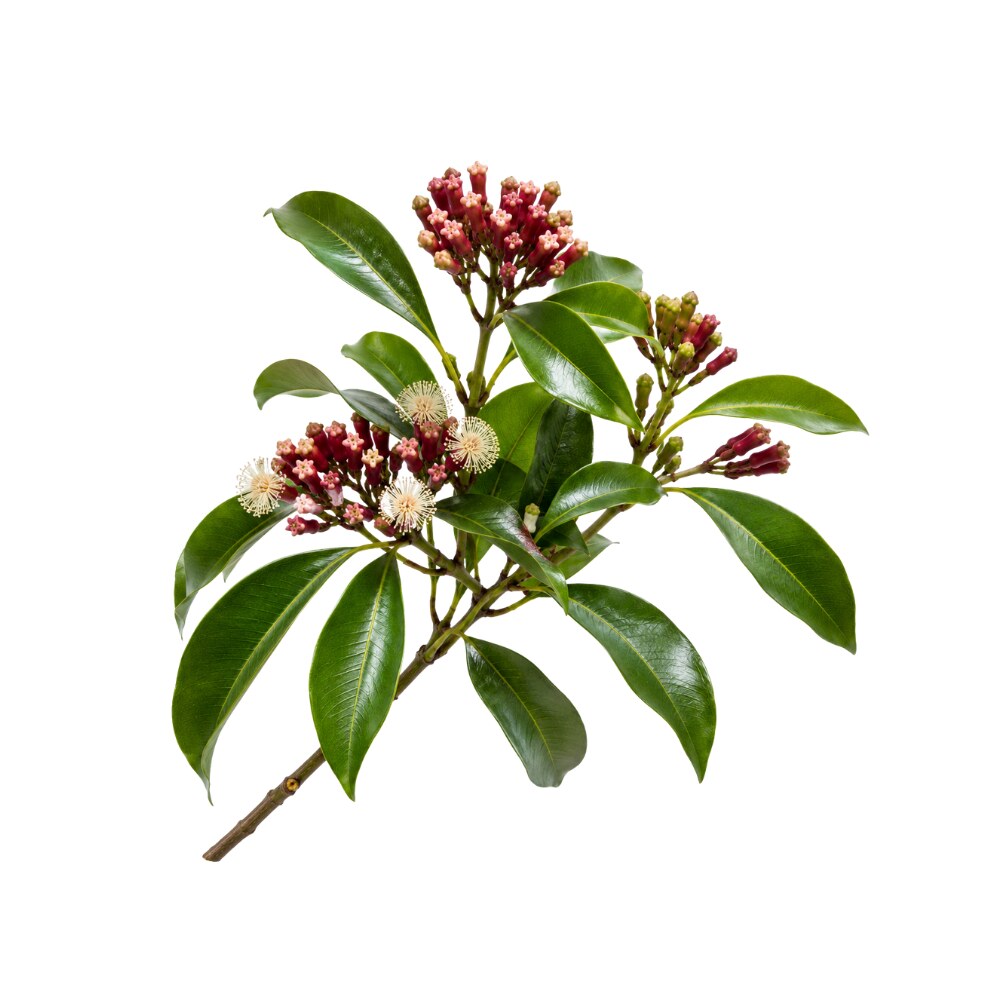
Rhamnetin is a naturally occurring flavonol (methylated), found in Clove, Buckthorn and 2 other sources. It is well tolerated orally (low toxicity).
Concentration
Content by Source
Concentrations not reported. No percent-dry-weight or mg/g figures have been published for this compound in its source plants.
Rhamnetin at a Glance
Rhamnetin is a naturally occurring methylated flavonol — quercetin carrying a single methyl group on the 7-position of its A-ring, hence its systematic name 7-O-methylquercetin. It occurs as a minor constituent, usually stored as glycosides, in clove buds and in the berries of Rhamnus (buckthorn), the genus that gives the molecule its name 1Reference 1ReviewRhamnetin: a review of its pharmacology and toxicity — reviewView study →.
It sits between two better-known relatives. Its parent is quercetin; its structural isomer is isorhamnetin, which carries the same lone methyl group but on the 3′-position of the B-ring rather than the 7-position of the A-ring. Where that methyl group sits changes the molecule’s antioxidant chemistry and metabolism, so rhamnetin is not interchangeable with either — a distinction worth holding onto, because flavonol data are routinely mixed up.
Like most minor flavonols, rhamnetin’s applied literature is entirely preclinical. A 2022 review catalogues antioxidant, anti-inflammatory, anticancer, antiviral and antibacterial activity, all from cell and animal models, and notes that its toxicology is only lightly characterised 1Reference 1ReviewRhamnetin: a review of its pharmacology and toxicity — reviewView study →. There is no trial of the isolated molecule in humans.
Rhamnetin vs. Quercetin & Isorhamnetin
The point is one methyl group. Rhamnetin, quercetin and isorhamnetin share the same flavonol skeleton and differ only in whether — and where — a hydroxyl has been methylated:
- Quercetin — the fully hydroxylated parent, with free hydroxyls at the 3, 5, 7, 3′ and 4′ positions. Its catechol B-ring (the 3′,4′-dihydroxy pair) is the main engine of its radical-scavenging chemistry.
- Rhamnetin — 7-O-methylquercetin. The methyl caps the A-ring 7-hydroxyl, leaving the catechol B-ring intact. The 3-hydroxyl on the C-ring is retained, which reviewers link to its anti-inflammatory and enzyme-inhibitory behaviour 1,
3Reference 1ReviewRhamnetin: a review of its pharmacology and toxicity — reviewView study →Reference 3In vitroCardioprotective effects of rhamnetin in H9c2 cardiomyoblast cells under H₂O₂-induced apoptosis — in vitroView study → . - Isorhamnetin — 3′-O-methylquercetin. Here the methyl caps one hydroxyl of the B-ring catechol, changing antioxidant potency and blocking a site otherwise used for metabolic conjugation.
Methylation generally trades some raw antioxidant potency for greater metabolic stability and membrane permeability. Because rhamnetin methylates the A-ring rather than the B-ring, it keeps the catechol that drives quercetin-type scavenging, distinguishing its profile from isorhamnetin’s. In practice, though, the three are frequently studied side by side, and much of rhamnetin’s reputation is inferred from the flavonol class rather than demonstrated for the molecule itself 1Reference 1ReviewRhamnetin: a review of its pharmacology and toxicity — reviewView study →.
What It's Used For
Rhamnetin’s evidence is preclinical and mechanism-led. The most developed signal is anticancer radiosensitization, which has the only in-vivo (xenograft) data; the rest are cell-culture studies, and antioxidant activity underpins most of them.
Support is an experimental score — weighted by study type (human > animal > in vitro) and volume. A beta, not a validated metric. Scores are held low because there is no isolated-rhamnetin human trial; each row is preclinical. Each application links to its write-up.
The most developed application, and the only one with in-vivo data. In non-small-cell lung cancer lines (NCI-H1299, NCI-H460), isolated rhamnetin increased the tumour-suppressive microRNA miR-34a in a p53-dependent manner, which suppressed Notch-1 expression, downregulated NF-κB signalling, promoted apoptosis and attenuated the epithelial–mesenchymal transition tied to radioresistance; in a mouse xenograft, rhamnetin plus irradiation reduced tumour volume beyond radiation alone 2Reference 2In vitroRhamnetin and cirsiliol induce radiosensitization and inhibition of epithelial-mesenchymal transition (EMT) by miR-34a-mediated suppression of Notch-1 expression in non-small cell lung cancer cell lines — in vitro + xenograftView study →.
The 2022 review collates further in-vitro antiproliferative reports across other tumour types 1Reference 1ReviewRhamnetin: a review of its pharmacology and toxicity — reviewView study →.
Gap: the strongest data are cell-based with a single xenograft; there is no human oncology data, and rhamnetin was studied as a radiosensitiser (adjunct to radiation), not a stand-alone therapy 2Reference 2In vitroRhamnetin and cirsiliol induce radiosensitization and inhibition of epithelial-mesenchymal transition (EMT) by miR-34a-mediated suppression of Notch-1 expression in non-small cell lung cancer cell lines — in vitro + xenograftView study →.
The recurring through-line. In H9c2 cardiomyoblasts subjected to hydrogen-peroxide stress, isolated rhamnetin reduced cell death — it lowered reactive-oxygen production by inducing the antioxidant enzymes catalase and Mn-SOD, restored phosphorylation of Akt/GSK-3β and MAPK survival signalling, and acted through induction of the sirtuins SIRT3 and SIRT4, prompting the authors to suggest a role in protecting heart tissue from ischaemia-related injury 3Reference 3In vitroCardioprotective effects of rhamnetin in H9c2 cardiomyoblast cells under H₂O₂-induced apoptosis — in vitroView study →. Its antioxidant character is the property most consistently attributed to the molecule across the review 1Reference 1ReviewRhamnetin: a review of its pharmacology and toxicity — reviewView study →.
Gap: a single-model in-vitro cardiomyoblast study; there is no whole-animal cardiac or human data, and the concentrations used were not bioavailability-matched to oral intake 3Reference 3In vitroCardioprotective effects of rhamnetin in H9c2 cardiomyoblast cells under H₂O₂-induced apoptosis — in vitroView study →.
A defined enzymatic action. Isolated rhamnetin inhibited secretory phospholipase A2 (sPLA2) — an enzyme that releases arachidonic acid to feed the inflammatory eicosanoid cascade — without cellular toxicity, and reduced associated creatine-kinase release; reviewers attribute part of this activity to the retained 3-hydroxyl on the C-ring 5Reference 5In vitroEvaluation of Rhamnetin as an Inhibitor of the Pharmacological Effect of Secretory Phospholipase A2 — in vitroView study →.
The pharmacology review frames rhamnetin as a candidate scaffold for new anti-inflammatory agents on this basis 1Reference 1ReviewRhamnetin: a review of its pharmacology and toxicity — reviewView study →.
Gap: enzyme-assay and cell-level work only; no in-vivo inflammation model or human data for the isolate is established here 1,
Isolated rhamnetin improved the molecular profile of stressed liver cells. In a palmitic-acid model of non-alcoholic steatohepatitis and in HepG2 hepatocellular-carcinoma cells, it restored dysregulated lipid-synthesis, inflammatory, oxidative and cell-death gene programmes, which the authors read as combined anti-steatotic and anti-tumour potential in the liver 4Reference 4In vitroRhamnetin ameliorates non-alcoholic steatosis and hepatocellular carcinoma in vitro — in vitroView study →.
Gap: entirely in-vitro (HepG2 cultures) with no in-vivo confirmation; the finding awaits animal and independent replication 4Reference 4In vitroRhamnetin ameliorates non-alcoholic steatosis and hepatocellular carcinoma in vitro — in vitroView study →.
The thinnest signal. The 2022 review lists antiviral and antibacterial activity among rhamnetin’s reported effects, consistent with the broader flavonol class (e.g. neuraminidase/sialidase inhibition relevant to influenza) 1Reference 1ReviewRhamnetin: a review of its pharmacology and toxicity — reviewView study →. No primary isolated-rhamnetin antiviral study is verified here.
Gap: review-level attribution only; the class-level antiviral reputation is not something demonstrated for isolated rhamnetin in a source verified here 1Reference 1ReviewRhamnetin: a review of its pharmacology and toxicity — reviewView study →.
Mechanisms
| Target / pathway | Effect | Relevant to |
|---|---|---|
| miR-34a (p53-dependent) → Notch-1 | Raises miR-34a, suppresses Notch-1 → radiosensitisation, ↓EMT | Anticancer |
| NF-κB signalling | Downregulates → ↓proliferation, pro-apoptotic | Anticanceranti-inflammatory |
| Catalase, Mn-SOD | Induces → ↓reactive-oxygen species | Antioxidantcardioprotective |
| SIRT3 / SIRT4 | Induces → mitochondrial/metabolic protection | Cardioprotective |
| Akt / GSK-3β, MAPK | Restores survival-signalling phosphorylation | Cardioprotective |
| Secretory phospholipase A2 (sPLA2) | Inhibits → ↓arachidonic-acid release | Anti-inflammatory |
| Flavonol radical scavenging (intact B-ring catechol) | Peroxyl/hydroxyl scavenging | General antioxidant |
The A-ring (7-position) methylation is the structural signature: it caps one hydroxyl while leaving the B-ring catechol intact, so rhamnetin keeps quercetin-type scavenging chemistry that its B-ring-methylated isomer isorhamnetin partly loses 1Reference 1ReviewRhamnetin: a review of its pharmacology and toxicity — reviewView study →.
Pharmacokinetics
Dedicated human pharmacokinetic data for rhamnetin are sparse. As a methylated flavonol it is expected to behave broadly like its class: in plants it occurs largely as glycosides that must be hydrolysed before absorption, and the free aglycone is subject to extensive phase-II conjugation (glucuronidation and sulfation) that keeps circulating levels of the parent low. Methylation of the 7-hydroxyl removes one conjugation site and raises lipophilicity, which — as for isorhamnetin relative to quercetin — is generally associated with somewhat improved membrane permeability and metabolic stability, but not with high oral bioavailability 1Reference 1ReviewRhamnetin: a review of its pharmacology and toxicity — reviewView study →. The practical consequence mirrors the other flavonols: the low-micromolar concentrations effective in cell studies are not trivially reached in plasma from dietary or supplemental intake, which tempers every downstream claim. Quantitative absorption, bioavailability and half-life figures for the isolated molecule are not well characterised.
Clinical Trials
There are no registered trials of isolated rhamnetin. Its only human relevance is indirect — as one of many minor flavonols in clove and buckthorn preparations, which are plant exposures that cannot be read as rhamnetin results. Everything here is preclinical.
| Completed | Planned | Terminated | Preclinical |
|---|---|---|---|
| None(isolated rhamnetin) | None known | None | Antioxidant, anti-inflammatory, anticancer, cardioprotective |
Last checked: July 2026.
Isolate vs. Plant Studies
Unusually for this database, rhamnetin’s applied evidence is almost all isolated-molecule work — the radiosensitization, cardiomyoblast, sPLA2 and hepatic studies all tested the pure compound in defined systems 2,
Prevalence in Nature
Rhamnetin is a minor, sporadically distributed flavonol rather than a bulk dietary compound. Its classic sources are the berries of Rhamnus (buckthorn), from which its name derives, and the dried flower buds of clove (Syzygium aromaticum), where it is one of the flavonoids of the non-volatile fraction 1Reference 1ReviewRhamnetin: a review of its pharmacology and toxicity — reviewView study →. It is reported at low levels in a scatter of other fruits and vegetables, generally stored as glycosides (for example rhamnetin-3-glycosides) that release the aglycone on hydrolysis. Quantitative concentrations are not well documented, so a comparative content chart is not yet possible — the missing figures are tracked in this compound’s gaps note.
Discovery & Synthesis
Rhamnetin has long been recognised as the 7-O-methyl ether of quercetin, and it takes its name from the genus Rhamnus (buckthorn), a classic botanical source. First-isolation specifics and a first total synthesis are not well documented in sources verified here. The molecule is readily prepared semi-synthetically from quercetin by regioselective methylation: a 2010 method built quercetin tetraesters as intermediates to introduce the 7-position methyl selectively and obtained rhamnetin in high yield 6Reference 6Regioselective O-derivatization of quercetin via ester intermediatesView study →. Because quercetin is cheap and abundant, partial methylation is a practical route to research-grade rhamnetin, alongside extraction from plant material.
Patents: not yet researched.
Toxicity & Safety
Rhamnetin carries a low toxicity flag. It is a minor dietary flavonol consumed at trace levels in foods such as cloves, and the studies that have tested it describe it as well tolerated in their models — notably, the sPLA2 study reported enzyme inhibition without cellular toxicity 5Reference 5In vitroEvaluation of Rhamnetin as an Inhibitor of the Pharmacological Effect of Secretory Phospholipase A2 — in vitroView study →. The 2022 pharmacology review, however, explicitly notes that comprehensive toxicology data remain limited and calls for further investigation, so the low flag reflects the absence of alarming findings and food-level exposure rather than a completed safety dossier 1Reference 1ReviewRhamnetin: a review of its pharmacology and toxicity — reviewView study →.
- Trace dietary flavonol. Consumed at low levels in cloves and other plant foods with no signal of harm at those amounts.
- No toxicity in tested models. The isolated molecule inhibited sPLA2 without cellular toxicity in vitro 5Reference 5In vitroEvaluation of Rhamnetin as an Inhibitor of the Pharmacological Effect of Secretory Phospholipase A2 — in vitroView study →.
- Toxicology is under-characterised. No formal repeat-dose, genotoxicity or human-safety database exists for isolated rhamnetin 1Reference 1ReviewRhamnetin: a review of its pharmacology and toxicity — reviewView study →.
- Flavonol-class interaction caveat. Like other flavonols it may inhibit drug-metabolising cytochrome-P450 enzymes and transporters in lab systems; interactions with narrow-margin medications are plausible but not clinically quantified.
No isolated-molecule reproductive or developmental-toxicity finding was identified in this pass. Any pregnancy or lactation decision belongs to the herb or product a person actually takes, not to this molecule-level page.
Dosage
There is no established human dose for isolated rhamnetin. Preclinical work spans low-micromolar cell-culture concentrations (the radiosensitization, cardiomyoblast, sPLA2 and hepatic studies) and rodent doses in the range of roughly 100–200 µg/kg up to a few mg/kg in the tumour-bearing-mouse antioxidant work 1,
References
- Medeiros DL, Lima ETG, Silva JC, Medeiros MA, Pinheiro EBF. (2022). Rhamnetin: a review of its pharmacology and toxicity — review. Journal of Pharmacy and Pharmacology, 74(6), 793–799. https://pubmed.ncbi.nlm.nih.gov/34931654/
- Kang J, Kim E, Kim W, Seong KM, Youn H, Kim JW, Kim J, Youn B. (2013). Rhamnetin and cirsiliol induce radiosensitization and inhibition of epithelial-mesenchymal transition (EMT) by miR-34a-mediated suppression of Notch-1 expression in non-small cell lung cancer cell lines — in vitro + xenograft. Journal of Biological Chemistry, 288(38), 27343–27357. https://pubmed.ncbi.nlm.nih.gov/23902763/
- Park ES, Kang JC, Jang YC, Park JS, Jang SY, Kim DE, Kim B, Shin HS. (2014). Cardioprotective effects of rhamnetin in H9c2 cardiomyoblast cells under H₂O₂-induced apoptosis — in vitro. Journal of Ethnopharmacology, 153(3), 552–560. https://pubmed.ncbi.nlm.nih.gov/24607510/
- Shatta MA, El-Derany MO, Gibriel AA, El-Mesallamy HO. (2023). Rhamnetin ameliorates non-alcoholic steatosis and hepatocellular carcinoma in vitro — in vitro. Molecular and Cellular Biochemistry, 478(11), 2439–2452. https://pubmed.ncbi.nlm.nih.gov/36495373/
- Novo Belchor M, Hessel Gaeta H, Fabri Bittencourt Rodrigues C, Ramos da Cruz Costa C, de Oliveira Toyama D, Domingues Passero LF, Dalastra Laurenti M, et al. (2017). Evaluation of Rhamnetin as an Inhibitor of the Pharmacological Effect of Secretory Phospholipase A2 — in vitro. Molecules, 22(9), 1441. https://pubmed.ncbi.nlm.nih.gov/28858248/
- Mattarei A, Biasutto L, Rastrelli F, Garbisa S, Marotta E, Zoratti M, Paradisi C. (2010). Regioselective O-derivatization of quercetin via ester intermediates. An improved synthesis of rhamnetin and development of a new mitochondriotropic derivative — synthesis. Molecules, 15(7), 4722–4736. https://pubmed.ncbi.nlm.nih.gov/20657388/



