
Compound Monograph
Schisandrin B
Schisandrin B (γ-schisandrin / wuweizisu B) is the most-studied dibenzocyclooctadiene lignan of schisandra berry — a preclinical hepatoprotective, anti-inflammatory and neuroprotective molecule whose most clinically consequential trait is its two-way effect on drug-metabolising CYP3A and the P-glycoprotein transporter.

Sources · 3
Where Does It Come From?
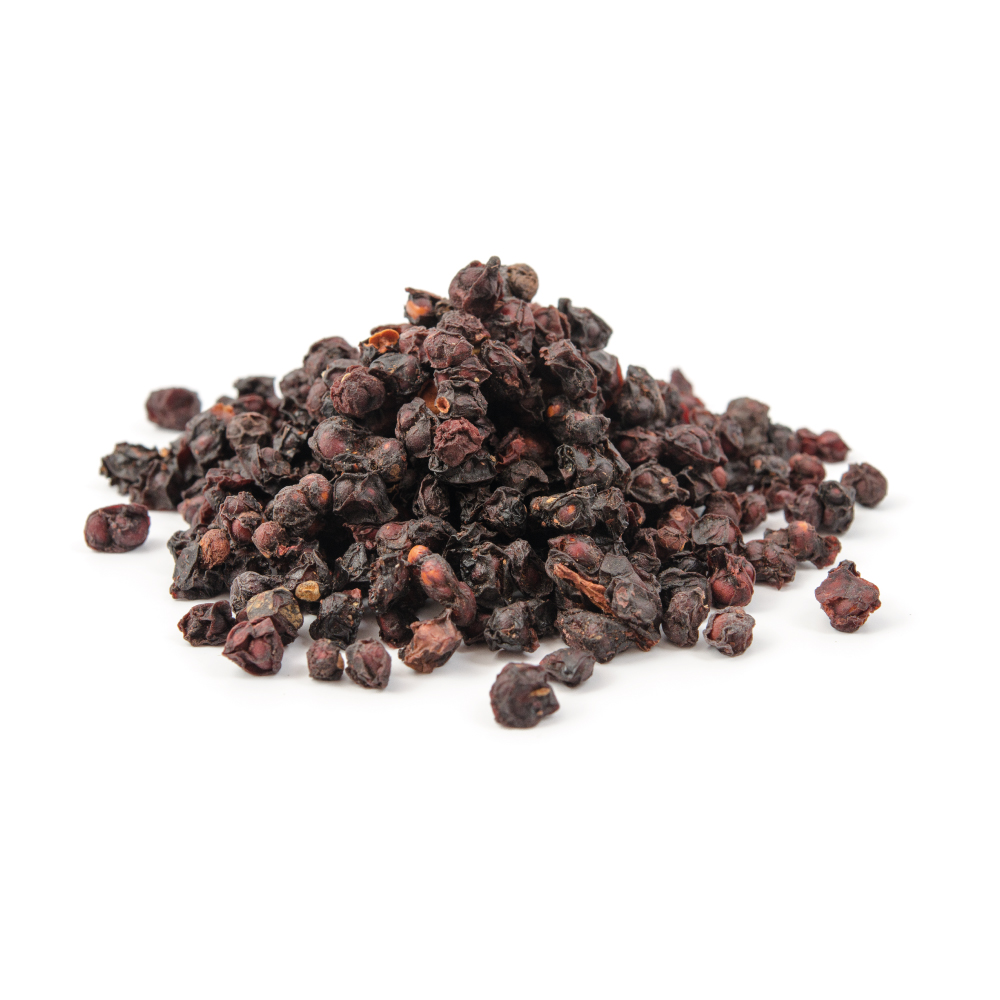
Schisandrin B is a naturally occurring lignan (dibenzocyclooctadiene), found in Schisandra / five-flavour berry and 2 other sources. It is well tolerated orally (low toxicity).
Concentration
Content by Source
Concentrations not reported. No percent-dry-weight or mg/g figures have been published for this compound in its source plants.
Schisandrin B at a Glance
Schisandrin B is a dibenzocyclooctadiene lignan and the most extensively studied bioactive of schisandra berry (Schisandra chinensis), the “five-flavour fruit” of traditional Chinese medicine. It is the workhorse of the schisandra lignan family: where schisandrin (schisandrol A) is the most abundant single lignan, schisandrin B carries the largest research literature — decades of rodent and cell work on liver protection, anti-inflammatory and neuroprotective activity, cardioprotection, and reversal of cancer drug-resistance.
The molecule is chemically the same across its several names — γ-schisandrin, wuweizisu B and gomisin N are all synonyms for schisandrin B — a naming tangle inherited from parallel Chinese (wuweizisu) and Japanese (gomisin/schizandrin) phytochemistry.
Two honest caveats frame everything below. First, essentially all of the therapeutic evidence is preclinical — isolated-molecule studies in rodents and cell lines, with no controlled human efficacy trials of the isolate. Second, and most consequential for real-world safety, schisandrin B is a potent modulator of drug metabolism: it both inhibits and (with repeated dosing) induces the CYP3A enzymes that clear a large share of prescription drugs, and it inhibits the P-glycoprotein efflux transporter. That pharmacokinetic reach — not toxicity of the molecule itself — is the reason this lignan matters clinically 7,
The CYP3A & P-Glycoprotein Interaction Story
This is the single most clinically important thing about schisandrin B, and it cuts both ways — which is exactly why it is easy to get wrong.
Acute inhibition. Given as a single or short-course dose, schisandrin B is a potent inhibitor of CYP3A — the enzyme subfamily that metabolises a large fraction of oral drugs. In a rodent study, schisandrin B dose-dependently inhibited hepatic CYP3A activity and markedly raised the oral bioavailability of the CYP3A probe midazolam 5Reference 5AnimalIn vivo effect of schisandrin B on cytochrome P450 enzyme activityView study →. In human liver microsomes and hepatocyte models, schisandra lignans (schisandrin B among them, with the related gomisin C acting as a mechanism-based inactivator) are strong CYP3A4 inhibitors, and sandwich-cultured human-hepatocyte modelling predicts a clinically relevant reduction in midazolam clearance from schisandra exposure 6,
Repeated-dose induction. With ongoing exposure the picture inverts. Schisandrin B is a pregnane-X-receptor (PXR) agonist: it binds PXR and up-regulates CYP3A4/CYP3A11, UGT1A1 and MRP efflux transporters, enhancing bile-acid clearance and detoxification 4Reference 4Schisandrin B targets PXR to enhance bile acid metabolism and alleviate ANIT-induced cholestatic liver injury via dual pathwaysView study →. Sustained PXR-driven induction increases CYP3A capacity, which over time can lower the levels of CYP3A-cleared drugs — the opposite of the acute effect.
P-glycoprotein. Independently of CYP, schisandrin B is a direct P-glycoprotein (P-gp) inhibitor — one of the first dibenzocyclooctadiene lignans shown to block this efflux pump 10,
The practical takeaway: schisandrin B (and any schisandra product) should be treated as a genuine perpetrator of pharmacokinetic drug interactions with CYP3A and P-gp substrates — narrow-therapeutic-index drugs such as tacrolimus, ciclosporin, and many others — with the direction of the effect depending on timing and duration of exposure 4,
What It's Used For
Schisandrin B’s preclinical profile is broad and mechanistically coherent — a recurring theme of antioxidant, mitochondrial-protective and anti-inflammatory action across organs 1Reference 1ReviewA comprehensive review on schisandrin B and its biological propertiesView study →. The load-bearing caveat is the compound-page discipline: this is isolated-molecule evidence in rodents and cells, and the human data belong to whole schisandra berry/extract, not the isolate.
Support is an experimental score — weighted by study type (human > animal > in vitro) and volume. A beta, not a validated metric. All rows here are isolate preclinical evidence (rodent/cell); no human isolate trials exist, so scores stay modest by design.
The oldest and best-developed strand, and where schisandrin B earned its reputation. In mice, schisandrin B pretreatment protects against carbon-tetrachloride hepatotoxicity by enhancing the mitochondrial glutathione redox status of the liver 2Reference 2AnimalSchisandrin B protects against carbon tetrachloride toxicity by enhancing the mitochondrial glutathione redox status in mouse liverView study →, an effect the same group tied to combined enhancement of mitochondrial glutathione and induction of heat-shock proteins (HSP 25/70) 3Reference 3Hepatoprotective mechanism of schisandrin B: role of mitochondrial glutathione antioxidant status and heat shock proteinsView study →.
A 2026 study reframed part of the mechanism at the receptor level: schisandrin B activates PXR to up-regulate UGT1A1, CYP3A and MRP transporters and enhance TFEB-driven autophagy, alleviating ANIT-induced cholestatic liver injury 4Reference 4Schisandrin B targets PXR to enhance bile acid metabolism and alleviate ANIT-induced cholestatic liver injury via dual pathwaysView study →.
The throughline is antioxidant + detoxification support of hepatocytes, all on the isolated molecule.
Gap: entirely rodent/cell, all on the isolate; there is no controlled human trial of isolated schisandrin B for any liver endpoint, and the schisandra-berry human liver-enzyme data cannot be attributed to this one lignan 1,
A mechanistically clean signal. In LPS-induced inflammatory lung injury, schisandrin B protects by targeting MyD88, dampening downstream NF-κB inflammatory transcription 8Reference 8Schisandrin B protects against LPS-induced inflammatory lung injury by targeting MyD88View study →. This NF-κB/innate-immune suppression recurs across schisandrin B’s organ-protection literature and plausibly underlies part of the hepato-, neuro- and cardio-protective effects rather than being a separate activity 1Reference 1ReviewA comprehensive review on schisandrin B and its biological propertiesView study →.
Gap: rodent isolate models of acute inflammation; no human anti-inflammatory data for the isolate, and the effective doses are research doses, not dietary exposure 8Reference 8Schisandrin B protects against LPS-induced inflammatory lung injury by targeting MyD88View study →.
A fast-growing strand built on a specific cell-death mechanism. In Alzheimer’s-disease models, schisandrin B ameliorates pathology by suppressing neuronal ferroptosis — acting through the GSK3β/Nrf2/GPX4 axis to preserve the glutathione-dependent lipid-peroxidation defence — and by restraining the ensuing microglial M1 polarisation 9Reference 9Schisandrin B ameliorates Alzheimer’s disease by suppressing neuronal ferroptosis and ensuing microglia M1 polarizationView study →.
The Nrf2/glutathione theme ties this directly to the antioxidant mechanism seen in the liver and heart.
Gap: preclinical AD models on the isolate only; no human neurodegeneration data, and CNS exposure of orally-dosed schisandrin B is not well characterised 9Reference 9Schisandrin B ameliorates Alzheimer’s disease by suppressing neuronal ferroptosis and ensuing microglia M1 polarizationView study →.
The most translationally interesting oncology angle is not direct cytotoxicity but reversing drug resistance. Schisandrin B is a P-glycoprotein inhibitor that restores intracellular drug accumulation in multidrug-resistant cell lines 10Reference 10Schisandrin B — a novel inhibitor of P-glycoproteinView study → and, in a 2017 study, reversed doxorubicin resistance by inhibiting P-gp and promoting proteasomal degradation of the anti-apoptotic protein survivin 11Reference 11Schisandrin B reverses doxorubicin resistance through inhibiting P-glycoprotein and promoting proteasome-mediated degradation of survivinView study →; a comparison of dibenzocyclooctadiene lignans ranked schisandrin A, schisandrin B and schisantherin A as the strongest resistance-reversers of the group 12Reference 12Dibenzocyclooctadiene lignans: a class of novel inhibitors of P-glycoproteinView study →.
Separately, schisandrin B attenuated invasion and metastasis by inhibiting TGF-β-induced epithelial–mesenchymal transition in a breast-cancer model, cutting spontaneous lung/bone metastasis without much effect on primary-tumour size 13Reference 13Schisandrin B attenuates cancer invasion and metastasis via inhibiting epithelial-mesenchymal transitionView study →.
Gap: in-vitro and mouse-xenograft isolate work; the chemosensitising benefit is inseparable from the P-gp-inhibition interaction liability, and there are no human oncology trials of the isolate 10,
A focused, well-motivated application: protecting the heart from doxorubicin (anthracycline) cardiotoxicity. Schisandrin B prevents doxorubicin-induced cardiotoxicity by enhancing cardiomyocyte glutathione redox cycling — sustaining glutathione and the enzymes (glutathione peroxidase/reductase/transferase, SOD) that neutralise anthracycline-driven oxidative stress 14Reference 14Schisandrin B prevents doxorubicin-induced cardiotoxicity via enhancing glutathione redox cyclingView study → — and in vivo it prevented chronic doxorubicin cardiotoxicity while enhancing, not blunting, the drug’s anticancer activity 15Reference 15AnimalSchisandrin B prevents doxorubicin-induced chronic cardiotoxicity and enhances its anticancer activity in vivoView study →.
The dual outcome (protect heart + preserve or improve tumour kill) is the appeal, and it dovetails with the P-gp/chemosensitisation work above.
Gap: rodent isolate models; the “enhanced anticancer activity” is a preclinical co-treatment finding, not a clinical result, and the same P-gp/CYP3A interaction that helps here complicates real co-administration 14,
Mechanisms
| Target / pathway | Effect | Relevant to |
|---|---|---|
| Mitochondrial glutathione redox status | ↑ reduced/oxidised GSH ratio; sustains hepatic mitochondrial GSH under chemical stress | hepatoprotectioncardioprotection |
| Heat-shock proteins (HSP 25/70) | induction; cytoprotective/adaptogenic contribution 3, | hepatoprotectionstress adaptation |
| Nrf2 / GPX4 (± GSK3β) | activates antioxidant/lipid-peroxidation defence; suppresses ferroptosis | neuroprotection |
| MyD88 → NF-κB | inhibition of innate-immune inflammatory transcription | anti-inflammatory / organ protection |
| Pregnane X receptor (PXR) | agonism → ↑ CYP3A4/3A11, UGT1A1, MRPs (repeated-dose induction) | drug interactionsbile-acid metabolism |
| CYP3A (acute) | inhibition (competitive; gomisin C mechanism-based) → ↑ substrate exposure | drug interactions (opposite direction to induction) |
| P-glycoprotein (ABCB1) | direct efflux inhibition → ↑ intracellular drug accumulation | chemosensitisationdrug interactions |
The two CYP3A rows are the crux: schisandrin B inhibits CYP3A acutely but induces it (via PXR) with repeated dosing — so the net effect on a co-administered drug depends on dose and duration.
Pharmacokinetics
Schisandrin B is a highly lipophilic lignan, which shapes both its absorption and its long tissue residence. A rat HPLC-MS/MS study reported marked sex-dependent oral bioavailability — roughly 55% in females versus ~19% in males — with a double-peak plasma profile suggesting enterohepatic recirculation, and extensive distribution into fatty and reproductive tissue 16Reference 16AnimalInvestigation of pharmacokinetics, tissue distribution and excretion of schisandrin B in rats by HPLC-MS/MSView study →. Metabolism is hepatic and CYP3A-mediated, which is precisely why the molecule is entangled with the enzyme it is metabolised by — it is simultaneously a CYP3A substrate, an acute inhibitor, and a repeated-dose inducer of that pathway 5,
Clinical Trials
There are no controlled efficacy trials of isolated schisandrin B. Human clinical experience is with whole schisandra berry and multi-lignan schisandra extracts (and, pharmacokinetically, with Wuzhi-type preparations used to modulate tacrolimus levels), within which schisandrin B is only one constituent.
| Completed | Planned | Terminated | Preclinical |
|---|---|---|---|
| None for the isolate (human data are whole-berry/extract) | — | — | Extensive: hepato-, neuro-, cardio-protection; anti-inflammatory; anticancer/chemosensitisation; CYP/PXR/P-gp pharmacology |
Last checked: July 2026.
Isolate vs. Plant Studies
The evidence base here is unusually isolate-heavy on mechanism but plant-only on humans. Almost every therapeutic claim above was generated with purified schisandrin B in rodents or cell lines — the Ip/Chiu hepatoprotection series 2,
The human side is the mirror image. Schisandra’s clinical use — as an adaptogen 17Reference 17ReviewSystem-level, molecular and cellular mechanisms of selected plant adaptogens — a reviewView study →, hepatoprotective tonic, and (via Wuzhi) a deliberate CYP3A modulator — rests on whole berry and standardised multi-lignan extracts, where schisandrin B co-occurs with schisandrin (schisandrol A), schisantherin A and others 1Reference 1ReviewA comprehensive review on schisandrin B and its biological propertiesView study →. Two consequences follow: the whole-plant clinical effects cannot be assigned to schisandrin B alone, and — because these lignans share and compete for the same CYP3A/P-gp machinery — the interaction behaviour of the extract is not simply the sum of the isolate’s. A further species caveat: some schisandra pharmacokinetic and antiviral findings come from southern schisandra (S. sphenanthera), not S. chinensis, and the two should not be silently merged.
Its Role in Plants
Schisandrin B is a dibenzocyclooctadiene lignan — two phenylpropanoid units oxidatively coupled and bridged into the characteristic eight-membered carbocyclic ring that defines this schisandra-specific lignan class. Biosynthetically these lignans derive from the general phenylpropanoid pathway, arising from oxidative dimerisation of monolignol precursors followed by extensive methylenedioxy/methoxy substitution.
In the plant, lignans of this type act largely as defensive and antioxidant metabolites, concentrated in the fruit (and seed) where the plant’s investment in reproduction is protected. The dense oxygenation that makes schisandrin B a good radical scavenger in animal tissue is the same chemistry the berry uses to guard its lipids against oxidation. This is plant biology, not human pharmacology, and should not be read as evidence of a medicinal effect.
Prevalence in Nature
Schisandrin B is one of the principal lignans of schisandra berry (Schisandra chinensis), the dried “five-flavour fruit” (wu wei zi). It is less abundant than the signature lignan schisandrin (schisandrol A), which typically runs around 0.4–0.8% of the dried fruit; total schisandra lignans are generally only a few percent of the dried berry, and schisandrin B is one fraction within that pool 18Reference 18The growth characteristics and lignan contents of Schisandra chinensis fruits from different cultivation regionsView study →. Reported content varies substantially with variety (the northern bei-wuweizi chemotype is generally richer than the southern) and cultivation region, so a single “typical” figure is misleading 18Reference 18The growth characteristics and lignan contents of Schisandra chinensis fruits from different cultivation regionsView study →. Pharmacopoeial standards reflect this by specifying a minimum total for several named lignans together (schisandrin, schisandrol B, deoxyschisandrin and γ-schisandrin) rather than for schisandrin B alone.
Beyond S. chinensis, schisandrin B and its relatives occur in southern schisandra (S. sphenanthera) and other Schisandra/Kadsura species; the fruit is the richest and the pharmacopoeially recognised source.
Discovery & Synthesis
Schisandrin B belongs to the family of dibenzocyclooctadiene lignans isolated from schisandra fruit and structurally characterised during the 1960s–70s, when Chinese and Japanese phytochemists worked out the constituents of wu wei zi. The parallel effort left the molecule with several synonymous names — wuweizisu B (Chinese naming, wu-wei-zi-su = “schisandra element”), γ-schisandrin and gomisin N (Japanese naming) — all denoting the same compound, CAS 61281-37-6, molecular formula C23H28O6 (MW 400.5). Deduplicating these names is essential when reading the literature, since the same molecule appears under different labels across papers.
Manufacture today is by extraction and chromatographic purification from schisandra fruit, the practical source of research- and reference-grade material; total synthesis of the dibenzocyclooctadiene skeleton has been achieved in methodological work but is not the commercial route.
Patents: not yet researched.
Toxicity & Safety
Schisandrin B carries a low toxicity flag. Schisandra berry has a long history of dietary and medicinal use, and the isolated lignan shows low acute toxicity in the animal studies that dose it at pharmacological levels 1Reference 1ReviewA comprehensive review on schisandrin B and its biological propertiesView study →. The real caution is not the molecule’s own toxicity — it is what it does to the metabolism of other drugs.
- Low intrinsic toxicity. Derived from a long-used food/medicinal berry; low acute toxicity in animal studies at research doses 1,
2Reference 1ReviewA comprehensive review on schisandrin B and its biological propertiesView study →Reference 2AnimalSchisandrin B protects against carbon tetrachloride toxicity by enhancing the mitochondrial glutathione redox status in mouse liverView study → . - Two-way CYP3A drug interactions. Schisandrin B acutely inhibits CYP3A (raising levels of co-administered CYP3A substrates) but induces it via PXR with repeated dosing (lowering them) — a real, direction-dependent interaction risk with drugs like tacrolimus and ciclosporin 4,
5, .6, 7Reference 4Schisandrin B targets PXR to enhance bile acid metabolism and alleviate ANIT-induced cholestatic liver injury via dual pathwaysView study →Reference 5AnimalIn vivo effect of schisandrin B on cytochrome P450 enzyme activityView study →Reference 6Identification and characterization of potent CYP3A4 inhibitors in Schisandra fruit extractView study →Reference 7Prediction of clinically relevant herb-drug clearance interactions using sandwich-cultured human hepatocytes: Schisandra spp. case studyView study → - P-glycoprotein inhibition. By blocking P-gp efflux it can raise the absorption/accumulation of P-gp-substrate drugs — a second, independent interaction route 10,
12Reference 10Schisandrin B — a novel inhibitor of P-glycoproteinView study →Reference 12Dibenzocyclooctadiene lignans: a class of novel inhibitors of P-glycoproteinView study → . - Species and product variability. Effects and lignan content differ between S. chinensis and S. sphenanthera and between varieties; extract behaviour is not the isolate’s behaviour 1,
18Reference 1ReviewA comprehensive review on schisandrin B and its biological propertiesView study →Reference 18The growth characteristics and lignan contents of Schisandra chinensis fruits from different cultivation regionsView study → .
Human reproductive/developmental data for isolated schisandrin B are not established; the isolate distributes into reproductive/adipose tissue in animals 16Reference 16AnimalInvestigation of pharmacokinetics, tissue distribution and excretion of schisandrin B in rats by HPLC-MS/MSView study →. Pregnancy and lactation are decided at the herb or product level, where intake is chosen, and are not adjudicated on this molecule page.
Dosage
There is no established or recommended human dose for isolated schisandrin B. The figures in the literature are preclinical rodent research doses (for example the hepatoprotective and cardioprotective mouse studies dosed in the mmol/kg or tens-of-mg/kg range) and are not convertible to human self-dosing 2,
Human exposure comes from schisandra berry and standardised schisandra extracts, in which schisandrin B is one of several lignans and is not dosed in isolation. Because the same lignans drive the CYP3A/P-gp interactions above, any schisandra product taken alongside prescription medication should be treated as a potential interactant, not a neutral supplement. These are doses studied in research and are not a personal recommendation.
References
- Nasser MI, et al. (2020). A comprehensive review on schisandrin B and its biological properties. Oxidative Medicine and Cellular Longevity. https://pubmed.ncbi.nlm.nih.gov/32256947/
- Ip SP, et al. (1996). Schisandrin B protects against carbon tetrachloride toxicity by enhancing the mitochondrial glutathione redox status in mouse liver. Free Radical Biology & Medicine. https://pubmed.ncbi.nlm.nih.gov/8891674/
- Chiu PY, et al. (2003). Hepatoprotective mechanism of schisandrin B: role of mitochondrial glutathione antioxidant status and heat shock proteins. Free Radical Biology & Medicine. https://pubmed.ncbi.nlm.nih.gov/12899939/
- Zhang Y, et al. (2026). Schisandrin B targets PXR to enhance bile acid metabolism and alleviate ANIT-induced cholestatic liver injury via dual pathways. International Journal of Biological Sciences. https://pubmed.ncbi.nlm.nih.gov/41362731/
- Li WL, et al. (2013). In vivo effect of schisandrin B on cytochrome P450 enzyme activity. Phytomedicine. https://pubmed.ncbi.nlm.nih.gov/23523258/
- Iwata H, et al. (2004). Identification and characterization of potent CYP3A4 inhibitors in Schisandra fruit extract. Drug Metabolism and Disposition. https://pubmed.ncbi.nlm.nih.gov/15342469/
- Jackson JP, et al. (2017). Prediction of clinically relevant herb-drug clearance interactions using sandwich-cultured human hepatocytes: Schisandra spp. case study. Drug Metabolism and Disposition. https://pubmed.ncbi.nlm.nih.gov/28698304/
- Zhu W, et al. (2023). Schisandrin B protects against LPS-induced inflammatory lung injury by targeting MyD88. Phytomedicine. https://pubmed.ncbi.nlm.nih.gov/36270224/
- Ding T, et al. (2025). Schisandrin B ameliorates Alzheimer’s disease by suppressing neuronal ferroptosis and ensuing microglia M1 polarization. Phytomedicine. https://pubmed.ncbi.nlm.nih.gov/40382817/
- Pan Q, et al. (2005). Schisandrin B — a novel inhibitor of P-glycoprotein. Biochemical and Biophysical Research Communications. https://pubmed.ncbi.nlm.nih.gov/16084496/
- Wang S, et al. (2017). Schisandrin B reverses doxorubicin resistance through inhibiting P-glycoprotein and promoting proteasome-mediated degradation of survivin. Scientific Reports. https://pubmed.ncbi.nlm.nih.gov/28827665/
- Pan Q, et al. (2006). Dibenzocyclooctadiene lignans: a class of novel inhibitors of P-glycoprotein. Cancer Chemotherapy and Pharmacology. https://pubmed.ncbi.nlm.nih.gov/16231181/
- Liu Z, et al. (2012). Schisandrin B attenuates cancer invasion and metastasis via inhibiting epithelial-mesenchymal transition. PLoS One. https://pubmed.ncbi.nlm.nih.gov/22848381/
- Li L, et al. (2007). Schisandrin B prevents doxorubicin-induced cardiotoxicity via enhancing glutathione redox cycling. Clinical Cancer Research. https://pubmed.ncbi.nlm.nih.gov/18006777/
- Xu Y, et al. (2011). Schisandrin B prevents doxorubicin-induced chronic cardiotoxicity and enhances its anticancer activity in vivo. PLoS One. https://pubmed.ncbi.nlm.nih.gov/22164272/
- Wang Z, et al. (2018). Investigation of pharmacokinetics, tissue distribution and excretion of schisandrin B in rats by HPLC-MS/MS. Biomedical Chromatography. https://pubmed.ncbi.nlm.nih.gov/28833320/
- Such S, et al. (2026). System-level, molecular and cellular mechanisms of selected plant adaptogens — a review. Nutrients. https://pubmed.ncbi.nlm.nih.gov/41901106/
- Kim YG, et al. (2022). The growth characteristics and lignan contents of Schisandra chinensis fruits from different cultivation regions. Applied Biological Chemistry. https://doi.org/10.1186/s13765-022-00746-2



