
Compound Monograph
Schizandronic Acid
Schizandronic acid is a cycloartane-type triterpene acid from Schisandra and Kadsura species — a minor phytochemical whose only notable, still-preclinical signal is as a hepatitis C virus entry inhibitor in cell culture.

Sources · 5
Where Does It Come From?
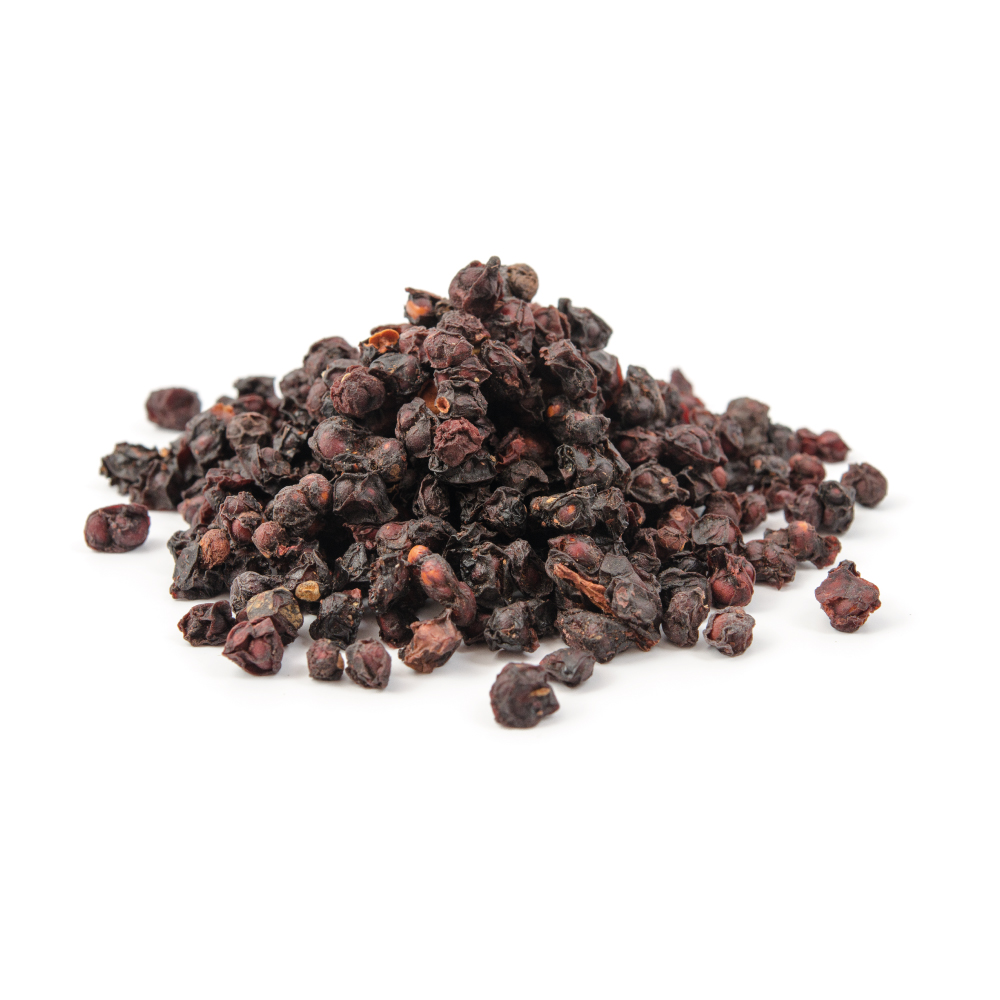
Schizandronic Acid is a naturally occurring triterpenoid (cycloartane-type tetracyclic triterpene acid), found in Schisandra, Schisandra propinqua, Schisandra henryi and 2 other sources. It is well tolerated orally (low toxicity).
Concentration
Content by Source
Concentrations not reported. No percent-dry-weight or mg/g figures have been published for this compound in its source plants.
Schizandronic Acid at a Glance
Schizandronic acid (also spelled schisandronic acid) is a cycloartane-type tetracyclic triterpene acid (C30H46O3) found in Schisandra berries, stems and leaves and in the related magnolia-vine Kadsura heteroclita. It is a distinct chemical class from the dibenzocyclooctadiene lignans — schisandrin, schisantherin A and their relatives — that carry most of schisandra’s better-known pharmacology; those are lignans, this is a triterpene, and the two should not be conflated.
The literature on this molecule is thin and entirely preclinical. Its one distinctive finding is as a hepatitis C virus (HCV) entry inhibitor in cell culture, with a mechanism unlike conventional antivirals 1Reference 1A Schisandra-derived compound schizandronic acid inhibits entry of pan-HCV genotypes into human hepatocytesView study →. Beyond that it appears mostly as an isolated triterpene in phytochemical surveys, sometimes with weak-to-moderate cytotoxicity against tumour cell lines 4,
What It's Used For
Almost everything known about schizandronic acid comes from in-vitro isolate work. Two signals recur: an unusual antiviral mechanism and generic cytotoxicity against cancer cell lines.
Support is an experimental score — weighted by study type (human > animal > in vitro) and volume. A beta, not a validated metric. Both rows are preclinical only; read them as “which lab signal is better characterised,” not as evidence of human benefit.
The molecule’s marquee result, and the reason it has a page at all. Screening a schisandra-extract library, Qian and colleagues (2016) identified schizandronic acid (isolated from Schisandra sphenanthera) as a novel HCV entry inhibitor: it potently blocked entry of pan-genotype HCV into hepatoma cells and primary human hepatocytes without interfering with virus binding or internalisation, instead impairing the virion–cell fusion step while increasing host-membrane fluidity 1Reference 1A Schisandra-derived compound schizandronic acid inhibits entry of pan-HCV genotypes into human hepatocytesView study →.
It blocked cell-to-cell spread, was additive/synergistic with interferon or telaprevir, and reduced establishment of HCV infection in a mouse model 1Reference 1A Schisandra-derived compound schizandronic acid inhibits entry of pan-HCV genotypes into human hepatocytesView study →.
Because its target differs from direct-acting antivirals, it was proposed as a lead for preventing HCV re-infection (e.g. around liver transplantation). A follow-up synthesised 24 derivatives, several more potent against HCV than the parent acid 2Reference 2In vitroSynthesis and in vitro anti-HCV and antitumor evaluation of schisandronic acid derivativesView study →.
All of this is isolate work in cell culture and mice — the whole-plant relevance is untested.
Gap: one originating lab, no human or clinical-pharmacology data, and the more promising anti-HCV activity belongs to synthetic derivatives rather than the natural compound 1,
Across phytochemical surveys of Schisandra and Kadsura species, schizandronic acid is repeatedly co-isolated with other triterpene acids and tested for cytotoxicity. It showed moderate cytotoxicity against leukaemia and HeLa cells among lanostane/cycloartane triterpenoids from S. henryi 6Reference 6In vitroTriterpenoids from Schisandra henryi with cytotoxic effect on leukemia and HeLa cells in vitroView study →, appeared among moderately cytotoxic triterpenoids from Kadsura heteroclita against Bel-7402, BGC-823, MCF-7 and HL-60 lines 4Reference 4New triterpenoids from Kadsura heteroclita and their cytotoxic activityView study →, and gave moderate HIV-1 protease inhibition (weaker than co-occurring nigranoic and kadsuranic acids) in an enzyme screen 3Reference 3Bioactive triterpenoids from Kadsura heteroclitaView study →.
In a S. propinqua study of triterpenoid acids cytotoxic to luteal/decidual cells, the active compounds were nigranoic and manwuweizic acid — not schizandronic acid 7Reference 7In vitroTriterpenoid acids from Schisandra propinqua with cytotoxic effect on rat luteal cells and human decidual cells in vitroView study →.
Gap: these are scattered in-vitro screens where the compound is one triterpene among many; potencies are modest, no selectivity for cancer over normal cells is established, and nothing has advanced to animal antitumour models 3,
Mechanisms
| Target / pathway | Effect | Relevant to |
|---|---|---|
| HCV virion–cell membrane fusion | inhibits the fusion step of viral entry; increases host-membrane fluidity; does not block binding or internalisation | antiviral (HCV) |
| HCV cell-to-cell spread | reduces spread to neighbouring cells; additive with interferon / telaprevir | antiviral (HCV) |
| HIV-1 protease | moderate enzyme inhibition in vitro (weaker than co-occurring nigranoic acid) | antiviral (screen) |
| Tumour cell viability (Bel-7402, BGC-823, MCF-7, HL-60, HeLa, leukaemia lines) | weak-to-moderate cytotoxicity by MTT/growth assays | cytotoxic / antitumour |
The membrane-fusion mechanism is the load-bearing, molecule-specific point: it is a host-membrane-targeting antiviral action distinct from direct-acting antivirals 1Reference 1A Schisandra-derived compound schizandronic acid inhibits entry of pan-HCV genotypes into human hepatocytesView study →. The cytotoxic and HIV-protease signals are generic triterpene-acid activity.
Pharmacokinetics
No pharmacokinetic data exist for schizandronic acid. Absorption, oral bioavailability, distribution, metabolism and half-life have not been characterised in the indexed literature. As a lipophilic, high-molecular-weight triterpene acid, low oral bioavailability would be expected on general grounds, but this is inference, not measurement — and it directly undercuts extrapolating the in-vitro antiviral potency to any oral/whole-herb use.
Clinical Trials
There are no clinical trials of schizandronic acid. All evidence is cell-culture or (for the HCV entry work) mouse-model preclinical.
| Completed | Planned | Terminated | Preclinical |
|---|---|---|---|
| — | — | — | HCV entry inhibition (cell culture + mouse); in-vitro cytotoxicity / HIV-1 protease screens |
Last checked: July 2026.
Isolate vs. Plant Studies
Every finding here is on the isolated triterpene acid — none on schisandra berry or a whole extract as a delivery vehicle for this molecule. The HCV entry work purified schizandronic acid from a Schisandra sphenanthera extract library and tested the pure compound (and later its synthetic derivatives) in cell and mouse systems 1,
Prevalence in Nature
Schizandronic acid is a minor triterpene-acid constituent distributed across the family Schisandraceae. It has been isolated from the fruit of Schisandra sphenanthera 9Reference 9Liu H, Li X, Zhang J, et al. (2012). [Chemical constituents of petroleum ether extract of fruits of Schisandra sphenanthera]. Zhongguo Zhong Yao Za Zhi. https://pubmed.ncbi.nlm.nih.gov/22993989/View study →, the stems of Schisandra propinqua 5,
Discovery & Synthesis
Schizandronic acid was first described in the phytochemical study of Schisandra and Kadsura species; among the earliest PubMed-indexed reports is a 2001 isolation from Schisandra propinqua stems 7Reference 7In vitroTriterpenoid acids from Schisandra propinqua with cytotoxic effect on rat luteal cells and human decidual cells in vitroView study →, with subsequent structural characterisation from S. micrantha (2003) 8Reference 8Micranoic acids A and B: two new octanortriterpenoids from Schisandra micranthaView study →, S. sphenanthera fruit 9Reference 9Liu H, Li X, Zhang J, et al. (2012). [Chemical constituents of petroleum ether extract of fruits of Schisandra sphenanthera]. Zhongguo Zhong Yao Za Zhi. https://pubmed.ncbi.nlm.nih.gov/22993989/View study → and multiple Kadsura heteroclita studies 4,
Patents: not yet researched.
Toxicity & Safety
Schizandronic acid carries a low flag, applied conservatively. Schisandra berries have a long history of food and medicinal use, and schizandronic acid is only a minor triterpene within them; there is no dedicated toxicology — no repeat-dose, genotoxicity, or reproductive-toxicity data — for the isolated compound. Its documented cytotoxicity is against tumour cell lines in vitro at modest potency, and in one screen of triterpenoid acids cytotoxic to normal luteal/decidual cells it was not among the active compounds 7Reference 7In vitroTriterpenoid acids from Schisandra propinqua with cytotoxic effect on rat luteal cells and human decidual cells in vitroView study →. The low badge therefore reflects the benign whole-food context plus an absence of red flags — not a positive demonstration of safety for the concentrated isolate.
- Benign dietary context. Occurs as a minor triterpene in schisandra berry, a long-used food/medicinal fruit; no toxicity signal at customary whole-berry intakes.
- No isolate toxicology. Repeat-dose, genotoxicity, reproductive and interaction data are absent for the pure compound; low is a conservative default, not a clearance.
- In-vitro cytotoxicity. Moderate cytotoxicity against tumour cell lines means the concentrated isolate is not assumed to be inert; relevance to intact-organism exposure is unknown.
Dosage
There is no established or studied human dose for schizandronic acid. It is a research compound, not a supplement or drug; the antiviral and cytotoxicity work used in-vitro concentrations and a mouse model, not human dosing 1,
References
- Qian XJ, Zhang XL, Zhao P, et al. (2016). A Schisandra-derived compound schizandronic acid inhibits entry of pan-HCV genotypes into human hepatocytes. Scientific Reports. https://pubmed.ncbi.nlm.nih.gov/27252043/
- Zhang KX, Qian XJ, Zheng W, et al. (2021). Synthesis and in vitro anti-HCV and antitumor evaluation of schisandronic acid derivatives. Medicinal Chemistry. https://pubmed.ncbi.nlm.nih.gov/32819233/
- Xu LJ, Peng ZG, Chen HS, Wang J, Xiao PG (2010). Bioactive triterpenoids from Kadsura heteroclita. Chemistry & Biodiversity. https://pubmed.ncbi.nlm.nih.gov/20860030/
- Wang W, Liu J, Han J, et al. (2006). New triterpenoids from Kadsura heteroclita and their cytotoxic activity. Planta Medica. https://pubmed.ncbi.nlm.nih.gov/16557460/
- Xu LJ, Huang F, Chen SB, et al. (2006). New lignans and cytotoxic constituents from Schisandra propinqua. Planta Medica. https://pubmed.ncbi.nlm.nih.gov/16491454/
- Chen YG, Wu ZC, Lv YP, et al. (2003). Triterpenoids from Schisandra henryi with cytotoxic effect on leukemia and HeLa cells in vitro. Archives of Pharmacal Research. https://pubmed.ncbi.nlm.nih.gov/14661856/
- Chen YG, Qin GW, Cao L, Leng Y, Xie YY (2001). Triterpenoid acids from Schisandra propinqua with cytotoxic effect on rat luteal cells and human decidual cells in vitro. Fitoterapia. https://pubmed.ncbi.nlm.nih.gov/11395273/
- Li RT, Han QB, Zhao AH, Sun HD (2003). Micranoic acids A and B: two new octanortriterpenoids from Schisandra micrantha. Chemical & Pharmaceutical Bulletin. https://pubmed.ncbi.nlm.nih.gov/14519924/
- Liu H, Li X, Zhang J, et al. (2012). [Chemical constituents of petroleum ether extract of fruits of Schisandra sphenanthera]. Zhongguo Zhong Yao Za Zhi. https://pubmed.ncbi.nlm.nih.gov/22993989/
- Zeng N, Su W, Zhang QD, et al. (2024). [Chemical constituents from roots of Kadsura heteroclita]. Zhongguo Zhong Yao Za Zhi. https://pubmed.ncbi.nlm.nih.gov/38621938/



