
Compound Monograph
Sennoside B
Sennoside B is a rhein dianthrone diglucoside from senna and rhubarb — the meso stereoisomer of sennoside A and, together with it, the standardized laxative active of senna. Like its twin it is an inert, poorly-absorbed prodrug: colonic bacteria strip its sugars and reduce it to rhein-anthrone, the molecule that actually drives the purge. Pharmacopoeias express total senna hydroxyanthracene content as sennoside B.

Sources · 5
Where Does It Come From?
Sennoside B is a naturally occurring dianthrone diglucoside (rhein anthranoid glycoside), found in Senna — leaf and pod, Rhubarb — rhizome and 3 other sources. It is flagged as moderately toxic.
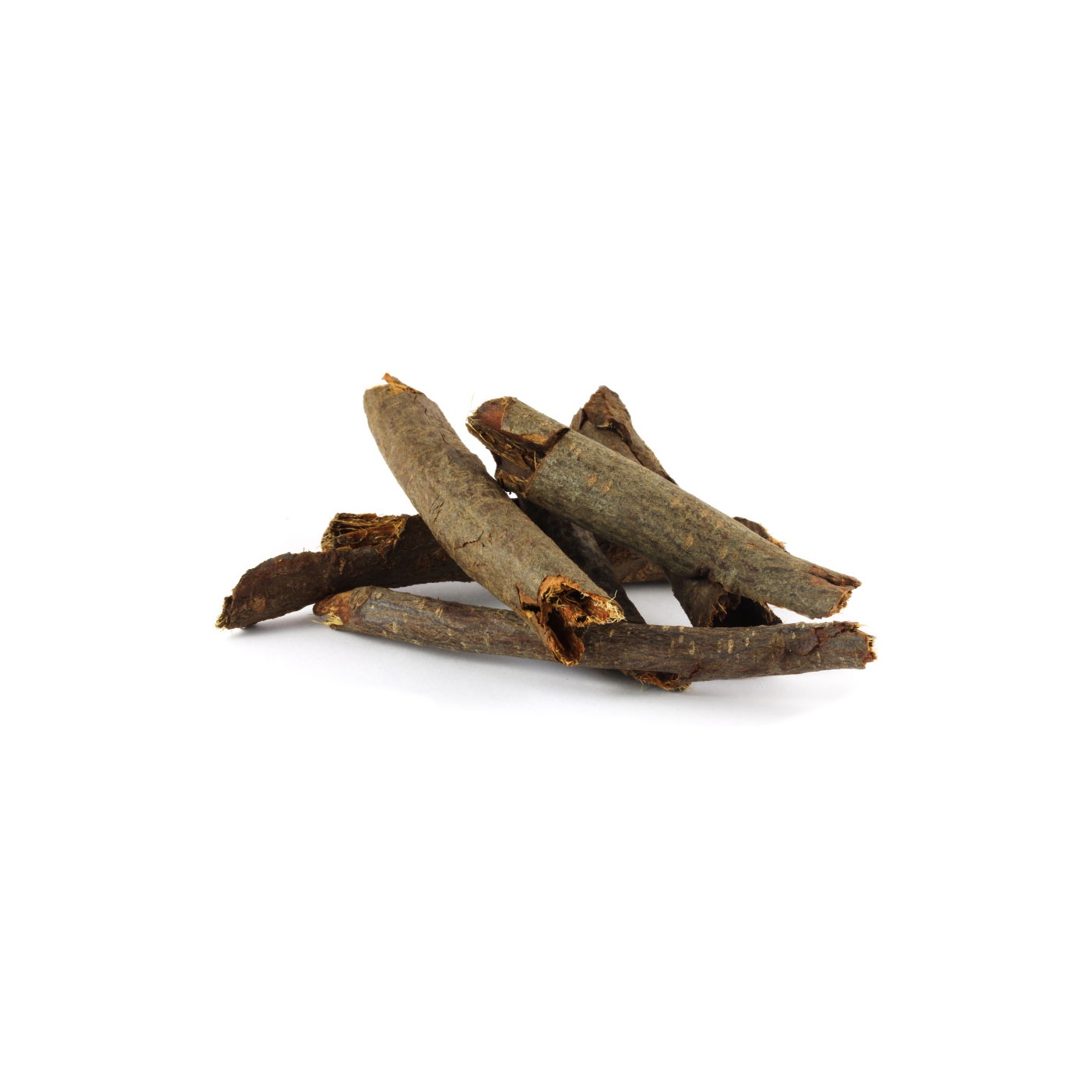 Source Cascara Sagrada Frangula purshiana Herb monograph →
 Source Rhubarb Rheum palmatum Herb monograph →
 Source Senna Cassia angustifolia Herb monograph →
Concentration
Content by Source
Reported concentrations across the plants that contain sennoside B — the bar marks the typical level, the line shows the reported range.
Literature figures for varying plant parts and preparations. Read them as a comparative guide, not exact assays.
Sennoside B at a Glance
Sennoside B is one of the two dianthrone diglucosides that make senna a laxative. Chemically it is a rhein dianthrone diglucoside — two rhein-anthrone units joined at their central carbons and capped with glucose — and it is the meso stereoisomer of sennoside A, the molecule it co-occurs with, interconverts with, and is quantified alongside 1,
Like its twin, sennoside B is a prodrug that does nothing as swallowed. It is large, polar and poorly absorbed, so it survives the stomach and small intestine and reaches the colon intact; there, gut bacteria cleave the sugars and reduce the liberated dianthrone to rhein-anthrone, the reactive metabolite that actually stimulates colonic motility and reverses water absorption into secretion 1,
Two honesties frame the page. First, almost no pharmacology is done on sennoside B alone — it is nearly always studied as the sennoside A + B pair or as standardised whole senna, and its mechanism is shared with sennoside A (see below) 1,
Sennoside B vs. Sennoside A
This is the point of the page, so it is worth stating precisely. Sennoside A and sennoside B are stereoisomers with the same atoms and the same laxative job — they differ only in the three-dimensional arrangement at the two central carbons that join the dianthrone.
- The stereochemistry. Each molecule is built from two rhein-anthrone halves linked at C-10 and C-10′, and each of those carbons is a chiral centre. In sennoside A the two centres share the same handedness, so the molecule is chiral and optically active (dextrorotatory). In sennoside B one centre is left-handed and the other right-handed, so the molecule is meso — internally symmetric and therefore optically inactive 5Reference 5AnimalProstaglandin E2-mediated stimulation of mucus synthesis and secretion by rhein anthrone, the active metabolite of sennosides A and B, in the mouse colonView study →. B is, in effect, the “achiral twin” of the optically active A.
- They co-occur and interconvert. The two are not isolated products of different plants; they appear together in the same senna leaf and pod, and sennoside A can epimerise to sennoside B in aqueous alkaline conditions 1Reference 1Pharmacology, toxicology, and metabolism of sennoside A, a medicinal plant-derived natural compoundView study →. Because they are so readily quantified together and interconvert, pharmacopoeias abandon any attempt to dose them separately and instead standardise the total as sennoside B 1,
12Reference 1Pharmacology, toxicology, and metabolism of sennoside A, a medicinal plant-derived natural compoundView study →Reference 12Safety of hydroxyanthracene derivatives for use in foodView study → . - The pharmacology is shared. Both are inert diglucoside prodrugs; both are converted by colonic flora to rhein-anthrone, and the literature repeatedly names rhein-anthrone “the active metabolite of sennosides A and B,” treating the pair as one functional unit 4,
5, . In the one head-to-head preclinical setting where B was tested on its own — a rat gastroprotection model — sennoside B behaved comparably to (and on one endpoint better than) sennoside A 3Reference 3Gastroprotective activities of sennoside A and sennoside B via the up-regulation of prostaglandin E2 and the inhibition of H+/K+-ATPaseView study →, but no clean human trial isolates B’s laxative potency from A’s.6Reference 4Rheinanthrone, a metabolite of sennoside A, triggers macrophage activation to decrease aquaporin-3 expression in the colon, causing the laxative effect of rhubarb extractView study →Reference 5AnimalProstaglandin E2-mediated stimulation of mucus synthesis and secretion by rhein anthrone, the active metabolite of sennosides A and B, in the mouse colonView study →Reference 6AnimalSuppression of the purgative action of rhein anthrone, the active metabolite of sennosides A and B, by indomethacin in ratsView study →
The honest headline: there is very little pharmacology that belongs to sennoside B specifically rather than to the A + B pair or to whole senna. Where the text describes mechanism, it is describing the shared sennoside → rhein-anthrone route, told once.
What It's Used For
Sennoside B’s pharmacology is narrow and derivative: it is a delivery vehicle for rhein-anthrone, and its evidence sits one layer up in the trials and pharmacopoeial use of standardised senna. The isolated-molecule work is almost entirely the A + B pair or preclinical.
Support is an experimental score — weighted by study type (human > animal > in vitro) and volume. A beta, not a validated metric. Sennoside B is nearly always studied as the sennoside A + B pair or as standardised whole senna, so these scores reflect shared/mechanistic strength, not standalone-B human data. Each application links to its write-up.
The core role, and the reason the molecule matters. Sennoside B is one of the two dianthrone diglucosides that define senna’s purgative activity; swallowed, it is pharmacologically inert and poorly absorbed, passing to the colon where bacterial β-glucosidases and reductases convert it to rhein-anthrone — the active species shared with sennoside A 1,
The anthrone then accelerates colonic transit and drives net secretion, in part through prostaglandin-E2 release (indomethacin blunts but does not abolish the effect) and macrophage-driven aquaporin-3 downregulation 4,
Human efficacy is the pharmacopoeially-standardised laxative use of senna, whose strength is expressed as sennoside B 12Reference 12Safety of hydroxyanthracene derivatives for use in foodView study →.
This is an isolate-as-prodrug / plant-as-evidence picture: the molecule is well defined, but the trials belong to the whole standardised herb.
Gap: no human trial isolates sennoside B’s laxative potency from sennoside A’s — they are dosed and standardised together, and the amount of rhein-anthrone actually produced depends on the individual’s colonic microbiota 1,
The one application where sennoside B specifically — not just the pair — was the tested article. In a rat model of gastric injury, sennoside A and sennoside B each raised gastric prostaglandin E2 and inhibited H⁺/K⁺-ATPase (the proton pump), reducing acid secretion and lesion formation; sennoside B reached ~63% inhibition of lesion development, exceeding the cimetidine comparator on that endpoint 3Reference 3Gastroprotective activities of sennoside A and sennoside B via the up-regulation of prostaglandin E2 and the inhibition of H+/K+-ATPaseView study →.
Mechanistically this is the same PGE2 axis that underlies the laxative action, redirected to the stomach.
Gap: a single preclinical study in rats, with no human data and no development as a gastroprotective agent — it is a mechanistic curiosity, not an established use, and sits far below the laxative role in weight of evidence 3Reference 3Gastroprotective activities of sennoside A and sennoside B via the up-regulation of prostaglandin E2 and the inhibition of H+/K+-ATPaseView study →.
Mechanisms
| Target / pathway | Effect | Relevant to |
|---|---|---|
| Bacterial β-glucosidase + reduction (colonic activation) | converts inert sennoside B → active rhein-anthrone in the colon | the obligatory prodrug-activation step |
| Colonic smooth muscle / peristaltic reflex (via rhein-anthrone) | prokinetic — faster transit, less time for water reabsorption | stimulant laxative (motility) |
| Prostaglandin E2 release (via rhein-anthrone) | drives secretion + mucus; indomethacin partially blocks laxation | laxation + gastroprotection |
| Macrophage activation → ↓ aquaporin-3 | less water reabsorption from lumen → looser stool | colonic secretion |
| Gastric H⁺/K⁺-ATPase (proton pump) | inhibition → ↓ gastric acid secretion (rat model) | gastroprotection (preclinical) |
| A ⇌ B epimerisation at C-10/C-10′ | optically active A interconverts with meso B in alkaline solution | why the pair is standardised together |
The load-bearing point: sennoside B is not itself the actor — its pharmacology is the pharmacology of the rhein-anthrone it releases, which is why it and its stereoisomer sennoside A are treated as one functional unit.
Pharmacokinetics
Sennoside B behaves like its twin: as a large, polar diglucoside it is minimally absorbed intact from the upper gastrointestinal tract, which is exactly what lets it reach the colon as a functioning prodrug 1,
Clinical Trials
There are no clinical trials of isolated sennoside B. It is not developed or dosed as a standalone drug; the human clinical record belongs to standardised senna (and to the sennoside A + B pair), an established over-the-counter stimulant laxative whose strength is expressed as sennoside B 1,
| Completed | Planned | Terminated | Preclinical |
|---|---|---|---|
| None(isolated B); parent senna/sennoside laxatives established | — | — | Gastroprotection (rat); rhein-anthrone mechanism |
Last checked: July 2026.
Isolate vs. Plant Studies
Sennoside B is a textbook case of the isolate-vs-plant gap. The isolate is well characterised chemically — a defined meso dianthrone diglucoside, a reference standard for senna assays — yet it is almost never studied pharmacologically on its own 1,
Prevalence in Nature
Sennoside B occurs wherever sennoside A does, and in comparable company:
- Senna (Senna alexandrina / Cassia angustifolia) — the principal source, in leaf and pod, as one of the two co-principal sennosides (A and B) alongside minor sennosides C and D (the rhein–aloe-emodin heterodianthrones) 1Reference 1Pharmacology, toxicology, and metabolism of sennoside A, a medicinal plant-derived natural compoundView study →. Senna also carries trace aloe-emodin dianthrone diglucosides that are non-purgative alone but potentiate sennoside purgation (~1.3× in mice) — a reminder that the whole-herb effect is more than any single sennoside 13Reference 13AnimalIsolation of a new aloe-emodin dianthrone diglucoside from senna and its potentiating effect on the purgative activity of sennoside A in miceView study →. Pharmacopoeial material is standardised to total hydroxyanthracene glycosides expressed as sennoside B: leaf typically ~2–3%, pod ~3–4%, with a common minimum around 2.5% 1,
12Reference 1Pharmacology, toxicology, and metabolism of sennoside A, a medicinal plant-derived natural compoundView study →Reference 12Safety of hydroxyanthracene derivatives for use in foodView study → . Leaf is more potent but more griping than pod. - Rhubarb (Rheum spp.) — rhizome, where sennoside-type dianthrone glycosides accompany the free anthraquinones rhein, emodin, aloe-emodin and chrysophanol; sennoside content is a minor share of the anthranoid fraction and swings widely with species and processing (raw vs steamed vs charred) 2Reference 2Pharmacokinetics of anthraquinones from medicinal plantsView study →.
Because sennoside A and B interconvert and are quantified together, published “sennoside” figures usually report the A + B total, not a separate value for B — a real analytical limitation noted in the gaps tracker rather than a gap in the plant itself.
Discovery & Synthesis
The sennosides were isolated and structurally characterised in the mid-twentieth century by Stoll, Becker and co-workers, who resolved senna’s purgative principle into a pair of dianthrone diglucosides — sennoside A (optically active) and sennoside B (its meso diastereomer) — and established that each is built from two rhein-anthrone units linked at C-10/C-10′ and capped with glucose 1Reference 1Pharmacology, toxicology, and metabolism of sennoside A, a medicinal plant-derived natural compoundView study →. From the outset sennoside B was defined relative to sennoside A: the achiral, internally-compensated twin of the dextrorotatory molecule. Chemically the two are interconvertible — sennoside A epimerises to sennoside B under aqueous alkaline conditions 1Reference 1Pharmacology, toxicology, and metabolism of sennoside A, a medicinal plant-derived natural compoundView study → — which is one reason analytical and pharmacopoeial practice standardises the total as sennoside B rather than isolating a single stereoisomer. Manufacture today is by extraction from senna (leaf and pod) rather than total synthesis: sennoside B is obtained as a purified reference standard and as part of the standardised sennoside laxative fraction, and the article of commerce is the standardised senna extract, not the pure meso compound.
Patents: not yet researched.
Toxicity & Safety
Sennoside B carries a moderate flag, identical to its stereoisomer sennoside A and to the anthranoid siblings rhein, rhein-anthrone, emodin and aloe-emodin. The cautions are the stimulant-laxative / anthranoid class cautions, applied to a prodrug that generates the reactive anthrone in the colon.
- Direct genotoxicity/carcinogenicity testing is reassuring. Senna, the sennosides and rhein were negative in standard genotoxicity batteries, and a 2-year oral carcinogenicity study of senna in rats found no carcinogenic effect at doses up to 300 mg/kg/day 8,
10Reference 8The genotoxicity status of sennaView study →Reference 10AnimalAn oral carcinogenicity and toxicity study of senna (Tinnevelly senna fruits) in the ratView study → . - Poorly absorbed as swallowed. The intact diglucoside acts locally in the colon; systemic exposure is largely to the downstream oxidation product rhein, not to sennoside B itself 1,
2Reference 1Pharmacology, toxicology, and metabolism of sennoside A, a medicinal plant-derived natural compoundView study →Reference 2Pharmacokinetics of anthraquinones from medicinal plantsView study → . - Stimulant-laxative class risks. Electrolyte loss (especially potassium) with overuse, cramping/griping, and — with habitual daily use — laxative dependence and reduced spontaneous bowel tone.
- Melanosis coli with chronic use. Long-term anthranoid-laxative use pigments the colonic mucosa (lipofuscin in macrophages) from laxative-induced epithelial apoptosis — benign and reversible on stopping, and not linked to increased colon-cancer risk, but a marker of sustained use 11Reference 11ReviewReview on melanosis coli and anthraquinone-containing traditional Chinese herbs that cause melanosis coliView study →.
- Regulatory context for the class. EU/EFSA scrutiny of hydroxyanthracene derivatives rests on the reactive free anthrone as the structural basis for a genotoxicity concern, even though whole-senna and sennoside genotoxicity tests came back negative 9,
12Reference 9Assessment of the genotoxic risk from laxative senna productsView study →Reference 12Safety of hydroxyanthracene derivatives for use in foodView study → .
Full Safety & Interactions Detail
Genotoxicity — the class concern vs the negative herb data. Sennoside B is a prodrug of rhein-anthrone, the reactive anthrone at the heart of the anthraquinone genotoxicity question, and regulators treat the whole hydroxyanthracene-derivative class cautiously on that structural basis, unable to set a safe intake 12Reference 12Safety of hydroxyanthracene derivatives for use in foodView study →. Against that, direct testing has been reassuring: senna, the sennosides and rhein did not increase mutation frequencies across bacterial and mammalian assays (aloe-emodin was the class member showing in-vitro mutagenicity, without an in-vivo effect) 8Reference 8The genotoxicity status of sennaView study →, and a formal assessment concluded the genotoxic risk to patients using senna laxatives under prescribed conditions is not established 9Reference 9Assessment of the genotoxic risk from laxative senna productsView study →.
Carcinogenicity — negative in the pivotal animal study. A 2-year oral carcinogenicity and toxicity study of Tinnevelly senna fruits in Sprague-Dawley rats found no treatment-related neoplastic changes at daily doses up to 300 mg/kg/day 10Reference 10AnimalAn oral carcinogenicity and toxicity study of senna (Tinnevelly senna fruits) in the ratView study →. Chronic use produces melanosis coli — dark colonic pigmentation from laxative-induced epithelial apoptosis and lipofuscin-laden macrophages — which is benign, reversible on stopping, and not associated with increased colorectal-cancer risk 11Reference 11ReviewReview on melanosis coli and anthraquinone-containing traditional Chinese herbs that cause melanosis coliView study →.
Class laxative cautions. As a sennoside, sennoside B underlies the familiar anthranoid concerns: potassium and fluid loss with excessive use (which can compound digoxin, diuretic and antiarrhythmic effects), abdominal cramping, and — with habitual daily use — laxative dependence and diminished spontaneous bowel function. These are dose- and duration-driven, and stimulant laxatives are intended for short-term use.
Reproductive note (prose only). Senna is generally regarded as one of the more acceptable stimulant laxatives for short-term use in pregnancy, reflecting its poor systemic absorption and local colonic action; even so, systemic anthranoid metabolites — chiefly rhein, the circulating oxidation product — are excreted into breast milk 1,
Dosage
There is no dose for isolated sennoside B — it is not taken as a standalone molecule but as part of the standardised sennoside pair. Human dosing is entirely at the senna / total-sennoside level, and pharmacopoeias express that total as sennoside B 1,
References
- Le J, et al. (2021). Pharmacology, toxicology, and metabolism of sennoside A, a medicinal plant-derived natural compound. Frontiers in Pharmacology. https://pubmed.ncbi.nlm.nih.gov/34764866/
- Wang D, et al. (2021). Pharmacokinetics of anthraquinones from medicinal plants. Frontiers in Pharmacology. https://pubmed.ncbi.nlm.nih.gov/33935728/
- Hwang IY, Jeong CS (2015). Gastroprotective activities of sennoside A and sennoside B via the up-regulation of prostaglandin E2 and the inhibition of H+/K+-ATPase. Biomolecules & Therapeutics. https://pubmed.ncbi.nlm.nih.gov/26336586/
- Kon R, et al. (2014). Rheinanthrone, a metabolite of sennoside A, triggers macrophage activation to decrease aquaporin-3 expression in the colon, causing the laxative effect of rhubarb extract. Journal of Ethnopharmacology. https://pubmed.ncbi.nlm.nih.gov/24412547/
- Yagi T, et al. (1990). Prostaglandin E2-mediated stimulation of mucus synthesis and secretion by rhein anthrone, the active metabolite of sennosides A and B, in the mouse colon. Journal of Pharmacy and Pharmacology. https://pubmed.ncbi.nlm.nih.gov/1981580/
- Yagi T, et al. (1991). Suppression of the purgative action of rhein anthrone, the active metabolite of sennosides A and B, by indomethacin in rats. Journal of Pharmacy and Pharmacology. https://pubmed.ncbi.nlm.nih.gov/1680171/
- Van Hoestenberghe A, et al. (1992). The effect of rhein and rhein anthrone on intestinal fluid transport and on large intestine transit in germ-free rats. European Journal of Pharmacology. https://pubmed.ncbi.nlm.nih.gov/1555634/
- Heidemann A, Miltenburger HG, Mengs U (1993). The genotoxicity status of senna. Pharmacology. https://pubmed.ncbi.nlm.nih.gov/8234427/
- Brusick D, Mengs U (1997). Assessment of the genotoxic risk from laxative senna products. Environmental and Molecular Mutagenesis. https://pubmed.ncbi.nlm.nih.gov/9020301/
- Mitchell JM, et al. (2006). An oral carcinogenicity and toxicity study of senna (Tinnevelly senna fruits) in the rat. Archives of Toxicology. https://pubmed.ncbi.nlm.nih.gov/16205914/
- Zhang R, et al. (2023). Review on melanosis coli and anthraquinone-containing traditional Chinese herbs that cause melanosis coli. Frontiers in Pharmacology. https://pubmed.ncbi.nlm.nih.gov/37214441/
- EFSA ANS Panel (2018). Safety of hydroxyanthracene derivatives for use in food. EFSA Journal. https://pubmed.ncbi.nlm.nih.gov/32625659/
- Nakajima K, Yamauchi K, Kuwano S (1985). Isolation of a new aloe-emodin dianthrone diglucoside from senna and its potentiating effect on the purgative activity of sennoside A in mice. Journal of Pharmacy and Pharmacology. https://pubmed.ncbi.nlm.nih.gov/2867138/



