
Compound Monograph
Sitoindoside X
Sitoindoside X is a minor glycowithanolide from ashwagandha (Withania somnifera) root — the fatty-acylated sibling of sitoindoside IX. It is almost always studied together with sitoindoside IX or as part of the whole anti-stress glycowithanolide fraction, where it contributes to adaptogenic, antioxidant, immunomodulatory and cognition-supporting effects in animals.

Sources · 2
Where Does It Come From?
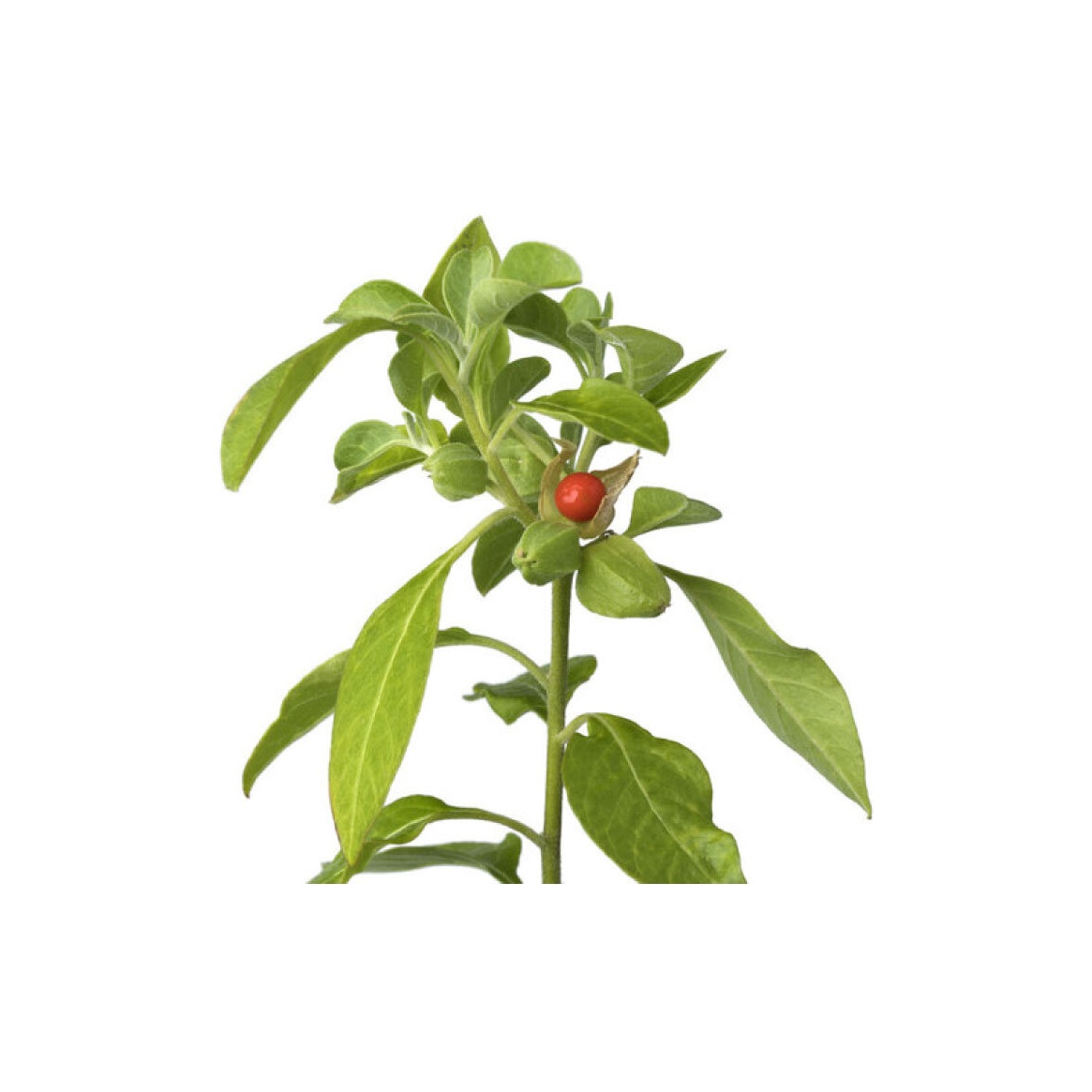
Sitoindoside X is a naturally occurring glycowithanolide (acylsteryl glucoside / withanolide glycoside), found in Ashwagandha — root and 1 other source. It is well tolerated orally (low toxicity).
Concentration
Content by Source
Concentrations not reported. No percent-dry-weight or mg/g figures have been published for this compound in its source plants.
Sitoindoside X at a Glance
Sitoindoside X is a glycowithanolide — a withanolide steroidal lactone carrying a sugar — found in the root of ashwagandha (Withania somnifera). It was isolated and named in 1989 together with its close sibling sitoindoside IX, and the two have been treated as a pair ever since 1Reference 1Immunomodulatory and CNS effects of sitoindosides IX and X, two new glycowithanolides from Withania somniferaView study →.
What makes sitoindoside X its own molecule is a structural detail: on top of the glucose that defines the glycowithanolides, it carries a long-chain fatty-acyl (palmitoyl) ester, making it an acylsteryl glucoside (molecular formula C₅₀H₇₈O₁₂) 7Reference 7PubChem Compound Summary for Sitoindoside X (CID 189702) and Sitoindoside IX (CID 189586)View study →. Sitoindoside IX, by contrast, is the plain, non-acylated glucoside — 27-O-β-D-glucopyranosylwithaferin A (C₃₄H₄₈O₁₁) 7Reference 7PubChem Compound Summary for Sitoindoside X (CID 189702) and Sitoindoside IX (CID 189586)View study →. In that respect sitoindoside X is chemically closer to the earlier acylsterylglucoside sitoindosides VII and VIII than IX is 6Reference 6Anti-stress activity of sitoindosides VII and VIII, new acylsterylglucosides from Withania somniferaView study →.
Honesty first: almost no evidence exists for sitoindoside X as an individual molecule. Nearly everything below comes from studies of the sitoindoside IX + X pair or of the whole Withania somnifera glycowithanolide (WSG) fraction — an equimolar mix of sitoindosides VII–X plus withaferin A. Read every claim as fraction-level, animal-model data, not proof of what the pure compound does in people. For the shared pharmacology in full, see the companion page on sitoindoside IX; the focus here stays on sitoindoside X specifically.
What Distinguishes Sitoindoside X
The sitoindosides are a numbered series of glycosylated withanolides from Withania somnifera. Sitoindosides VII and VIII (reported in 1987) are acylsterylglucosides; sitoindosides IX and X (reported in 1989) were introduced as “two new glycowithanolides” 1,
Within that pairing, the practical difference between the siblings is the acyl group:
- Sitoindoside IX — a straightforward glucoside of the withanolide aglycone (27-O-β-D-glucopyranosylwithaferin A), C₃₄H₄₈O₁₁, MW ≈ 633 7Reference 7PubChem Compound Summary for Sitoindoside X (CID 189702) and Sitoindoside IX (CID 189586)View study →.
- Sitoindoside X — the same glycowithanolide skeleton bearing an additional palmitoyl (hexadecanoate) ester on the sugar, C₅₀H₇₈O₁₂, MW ≈ 871 7Reference 7PubChem Compound Summary for Sitoindoside X (CID 189702) and Sitoindoside IX (CID 189586)View study →. That extra ~238-mass-unit fatty-acid chain is the entire structural gap between the two, and it makes sitoindoside X markedly more lipophilic than IX.
This is the only property for which sitoindoside X is clearly individuated in the literature. Its biology has never been separated from sitoindoside IX or from the wider fraction — so the sections below describe shared, pair-or-fraction pharmacology, flagged as such.
What It's Used For
The evidence is entirely preclinical (rodent) and, for the parts that name sitoindoside X at all, comes from a single 1989 report on the IX + X pair; the rest is the WSG fraction 1,
Support is an experimental score — weighted by study type (human > animal > in vitro) and volume. A beta, not a validated metric. Every score here is capped low: the data are rodent-only and almost always the IX + X pair or the whole glycowithanolide fraction, not sitoindoside X isolated.
The one application where sitoindoside X is named and tested rather than folded into a fraction. The 1989 isolation study reported that sitoindosides IX and X produced significant anti-stress activity in animal models, framing them as mediators of ashwagandha’s traditional adaptogenic use 1Reference 1Immunomodulatory and CNS effects of sitoindosides IX and X, two new glycowithanolides from Withania somniferaView study →.
This sits within a well-populated body of rodent work on the glycowithanolide fraction, whose anxiolytic-antidepressant profile was later characterized in an equimolar sitoindoside VII–X + withaferin A mixture 4Reference 4Anxiolytic-antidepressant activity of Withania somnifera glycowithanolides: an experimental studyView study →.
Earlier, the acylsterylglucoside siblings sitoindosides VII and VIII were themselves the first Withania compounds shown to have anti-stress activity — relevant because sitoindoside X shares their acylated structure 6Reference 6Anti-stress activity of sitoindosides VII and VIII, new acylsterylglucosides from Withania somniferaView study →.
Gap: all rodent, and even the IX/X result does not separate sitoindoside X from sitoindoside IX; no human adaptogenic trial has ever used the isolated molecule 1,
The best-replicated fraction effect. Oral dosing of the Withania somnifera glycowithanolide fraction (sitoindosides VII–X + withaferin A) produced a dose-related rise in superoxide dismutase, catalase and glutathione peroxidase in rat frontal cortex and striatum, significant by days 14–21 and comparable to the reference antioxidant deprenyl 2Reference 2Antioxidant activity of glycowithanolides from Withania somniferaView study →.
A separate study showed the same fraction restored these free-radical-scavenging enzymes and curbed lipid peroxidation under chronic footshock stress, tying the antioxidant and anti-stress stories together 5Reference 5AnimalAnti-oxidant effect of Withania somnifera glycowithanolides in chronic footshock stress-induced perturbations of oxidative free radical scavenging enzymes and lipid peroxidation in rat frontal cortex and striatumView study →.
Related fraction work reports antioxidant/protective effects against iron-induced hepatotoxicity and in a tardive-dyskinesia model, all consistent with a free-radical-scavenging mechanism 2,
Gap: sitoindoside X is only ever one component of the tested fraction — never isolated or quantified for its own antioxidant contribution — and the data are rodent brain/tissue assays, not human outcomes 2,
Reported in the same 1989 study that named the molecule. Sitoindosides IX and X produced statistically significant mobilization and activation of peritoneal macrophages, with increased phagocytosis and raised activity of lysosomal enzymes 1Reference 1Immunomodulatory and CNS effects of sitoindosides IX and X, two new glycowithanolides from Withania somniferaView study →. This is the immunomodulatory half of the paper’s “immunomodulatory and CNS effects” framing and, like the anti-stress result, is one of the few findings that actually names sitoindoside X.
Gap: a single rodent report, with sitoindoside X not distinguished from sitoindoside IX; there is no follow-up, no dose-response for the isolate, and no human immune data 1Reference 1Immunomodulatory and CNS effects of sitoindosides IX and X, two new glycowithanolides from Withania somniferaView study →.
The founding study also reported that sitoindosides IX and X enhanced learning acquisition and memory in rodents, including in aged animals 1Reference 1Immunomodulatory and CNS effects of sitoindosides IX and X, two new glycowithanolides from Withania somniferaView study →.
This dovetails with work on the broader glycowithanolide fraction in an NBM-lesioned rat model of Alzheimer’s disease, where the fraction attenuated cognitive deficits and the perturbation of central cholinergic markers (acetylcholine-related measures) 3Reference 3AnimalEffects of glycowithanolides from Withania somnifera on an animal model of Alzheimer’s disease and perturbed central cholinergic markers of cognition in ratsView study →.
The antioxidant enzyme induction above is a plausible shared mechanism for the neuroprotective/cognitive signal.
Gap: rodent-only, fraction-or-pair level, and the cognition work uses the whole WSG mixture rather than sitoindoside X; no human cognitive endpoint rests on this molecule 1,
Mechanisms
| Target / pathway | Effect | Relevant to |
|---|---|---|
| Antioxidant enzymes (SOD, catalase, glutathione peroxidase) | dose-related induction in rat frontal cortex & striatum (fraction) | antioxidant; neuroprotection |
| Lipid peroxidation / free-radical load | reduced under chronic stress (fraction) | antioxidant; anti-stress |
| Stress-response axis (behavioural anti-stress models) | normalization of stress-induced changes (IX + X pair; fraction) | anti-stress / adaptogenic |
| Peritoneal macrophages / phagocytosis / lysosomal enzymes | mobilization and activation (IX + X pair) | immunomodulatory |
| Central cholinergic markers (acetylcholine-related) | attenuation of lesion-induced cognitive deficits (fraction) | anti-amnesic / cognition |
Every row is rodent data on the sitoindoside IX + X pair or the whole glycowithanolide fraction. No mechanism has been demonstrated for sitoindoside X in isolation.
Pharmacokinetics
Essentially uncharacterized. No absorption, bioavailability, metabolism or half-life data exist for sitoindoside X specifically — or, in practice, for the isolated glycowithanolides at all. Two structural features would be expected to matter: it is a glucoside (dietary glycosides are commonly hydrolyzed by gut and microbial enzymes, so the circulating species after oral intake may be a deglycosylated aglycone rather than the intact molecule), and it carries a palmitoyl fatty-acid ester that makes it considerably more lipophilic than sitoindoside IX. How those competing properties net out for oral absorption has not been measured. This unknown pharmacokinetics is a real limit on reading anything into the rodent tissue results.
Clinical Trials
There are no clinical trials of sitoindoside X — neither as an isolated compound nor as a defined IX + X preparation. Human evidence for ashwagandha uses standardized whole-root extracts standardized to total withanolide content, within which sitoindoside X is at most a trace constituent.
| Completed | Planned | Terminated | Preclinical |
|---|---|---|---|
| None(isolate) | None known | — | Anti-stress, antioxidant, immunomodulatory & cognition — rodent, IX + X pair or WSG fraction 1, |
Last checked: July 2026.
Isolate vs. Plant Studies
This molecule sits at the far plant/fraction end of the spectrum. There is no study of purified sitoindoside X on its own. The closest thing to isolate data is the 1989 report, which tested sitoindosides IX and X as a named pair 1Reference 1Immunomodulatory and CNS effects of sitoindosides IX and X, two new glycowithanolides from Withania somniferaView study →; everything else — antioxidant, anxiolytic-antidepressant, anti-Alzheimer’s — used the equimolar Withania somnifera glycowithanolide fraction (sitoindosides VII–X + withaferin A) 2,
Its Role in Plants
In Withania somnifera, the glycowithanolides are glycosylated (and, for sitoindoside X, fatty-acylated) derivatives of the withanolide steroidal lactones. Glycosylation and acylation of steroidal defence metabolites is a common plant strategy — it changes solubility, storage and mobility relative to the free aglycone (here, a withaferin-A-type withanolide). The withanolides themselves are part of the Solanaceae chemical-defence repertoire; the sitoindosides are best understood as modified, sugar-bearing members of that class rather than as separately characterized ecological signals. Detailed biosynthesis of the individual sitoindosides has not been worked out.
Prevalence in Nature
Sitoindoside X is a minor constituent of ashwagandha (Withania somnifera) root and, like the other sitoindosides, is a signature of this plant rather than a widely distributed phytochemical. Its abundance has not been quantified in the literature — it is described qualitatively as part of the small anti-stress glycowithanolide fraction, not as a bulk component. Commercial ashwagandha extracts are standardized to total withanolides, so any sitoindoside X present travels as a trace member of that pool rather than being measured on its own.
Discovery & Synthesis
Sitoindoside X was first isolated and named in 1989 by Shibnath Ghosal and co-workers, reported together with sitoindoside IX as “two new glycowithanolides from Withania somnifera” in Phytotherapy Research; the same paper described their immunomodulatory (macrophage-activating), anti-stress and CNS/cognitive effects 1Reference 1Immunomodulatory and CNS effects of sitoindosides IX and X, two new glycowithanolides from Withania somniferaView study →. The name follows the “sitoindoside” series Ghosal’s group had been building for Withania’s acylsteryl glucosides and glycowithanolides, of which the anti-stress sitoindosides VII and VIII (1987) were earlier members 6Reference 6Anti-stress activity of sitoindosides VII and VIII, new acylsterylglucosides from Withania somniferaView study →.
Total synthesis of sitoindoside X is not documented — as with most withanolide glycosides, the molecule is obtained by extraction from ashwagandha root, not by synthesis, and it has no standalone commercial production separate from whole-extract manufacture.
Patents: not yet researched.
Toxicity & Safety
Sitoindoside X carries a low flag. It is a glycowithanolide from the anti-stress fraction of ashwagandha root — the gentle, adaptogenic end of Withania’s chemistry — and, unlike the aglycone-type withanolide withaferin A (which is flagged moderate for its cytotoxicity), the sitoindosides have only ever been reported in benign anti-stress, antioxidant and immunomodulatory contexts, with no toxicity signal in the rodent work 1,
- Belongs to ashwagandha’s benign anti-stress fraction. The rodent glycowithanolide studies report adaptogenic, antioxidant and immune effects with no toxicity signal 1,
2Reference 1Immunomodulatory and CNS effects of sitoindosides IX and X, two new glycowithanolides from Withania somniferaView study →Reference 2Antioxidant activity of glycowithanolides from Withania somniferaView study → . - Not the cytotoxic withanolide. Unlike the withaferin-A aglycone, sitoindoside X is a glycoside from the well-tolerated adaptogenic fraction.
- No dedicated safety data. No isolate toxicology, genotoxicity, reproductive or human safety studies exist — “low” means no red flags found, not a clean bill proven.
- Pregnancy/lactation is decided at the herb level. Ashwagandha itself carries pregnancy cautions; those belong on the herb and product pages, not to this trace molecule.
Dosage
There is no established human dose for sitoindoside X, and it has never been administered to people as an isolated compound. The rodent studies dosed either the sitoindoside IX + X pair or the whole glycowithanolide fraction, not the pure molecule, so even the animal dosing does not isolate its contribution 1,
References
- Ghosal S, Lal J, Srivastava R, Bhattacharya SK, Upadhyay SN, Jaiswal AK, Chattopadhyay U (1989). Immunomodulatory and CNS effects of sitoindosides IX and X, two new glycowithanolides from Withania somnifera. Phytotherapy Research, 3(5), 201–206. https://doi.org/10.1002/ptr.2650030510
- Bhattacharya SK, Satyan KS, Ghosal S (1997). Antioxidant activity of glycowithanolides from Withania somnifera. Indian Journal of Experimental Biology, 35(3), 236–239. https://pubmed.ncbi.nlm.nih.gov/9332168/
- Bhattacharya SK, Kumar A, Ghosal S (1995). Effects of glycowithanolides from Withania somnifera on an animal model of Alzheimer’s disease and perturbed central cholinergic markers of cognition in rats. Phytotherapy Research, 9(2), 110–113. https://doi.org/10.1002/ptr.2650090206
- Bhattacharya SK, Bhattacharya A, Sairam K, Ghosal S (2000). Anxiolytic-antidepressant activity of Withania somnifera glycowithanolides: an experimental study. Phytomedicine, 7(6), 463–469. https://pubmed.ncbi.nlm.nih.gov/11194174/
- Bhattacharya A, Ghosal S, Bhattacharya SK (2001). Anti-oxidant effect of Withania somnifera glycowithanolides in chronic footshock stress-induced perturbations of oxidative free radical scavenging enzymes and lipid peroxidation in rat frontal cortex and striatum. Journal of Ethnopharmacology, 74(1), 1–6. https://pubmed.ncbi.nlm.nih.gov/11137343/
- Bhattacharya SK, Goel RK, Kaur R, Ghosal S (1987). Anti-stress activity of sitoindosides VII and VIII, new acylsterylglucosides from Withania somnifera. Phytotherapy Research, 1(1), 32–37. https://doi.org/10.1002/ptr.2650010108
- National Center for Biotechnology Information (2026). PubChem Compound Summary for Sitoindoside X (CID 189702) and Sitoindoside IX (CID 189586). PubChem. https://pubchem.ncbi.nlm.nih.gov/compound/189702



