
Compound Monograph
Taraxinic Acid Glucoside
Taraxinic acid β-D-glucopyranosyl ester (TA-G) is the dominant sesquiterpene lactone of common dandelion's latex — the structurally defined molecule behind the plant's bitterness and, far better documented, its chemical defence against root-feeding insects. Its human pharmacology is thin, and the bitter-receptor step has never actually been assayed.

Sources · 8
Where Does It Come From?
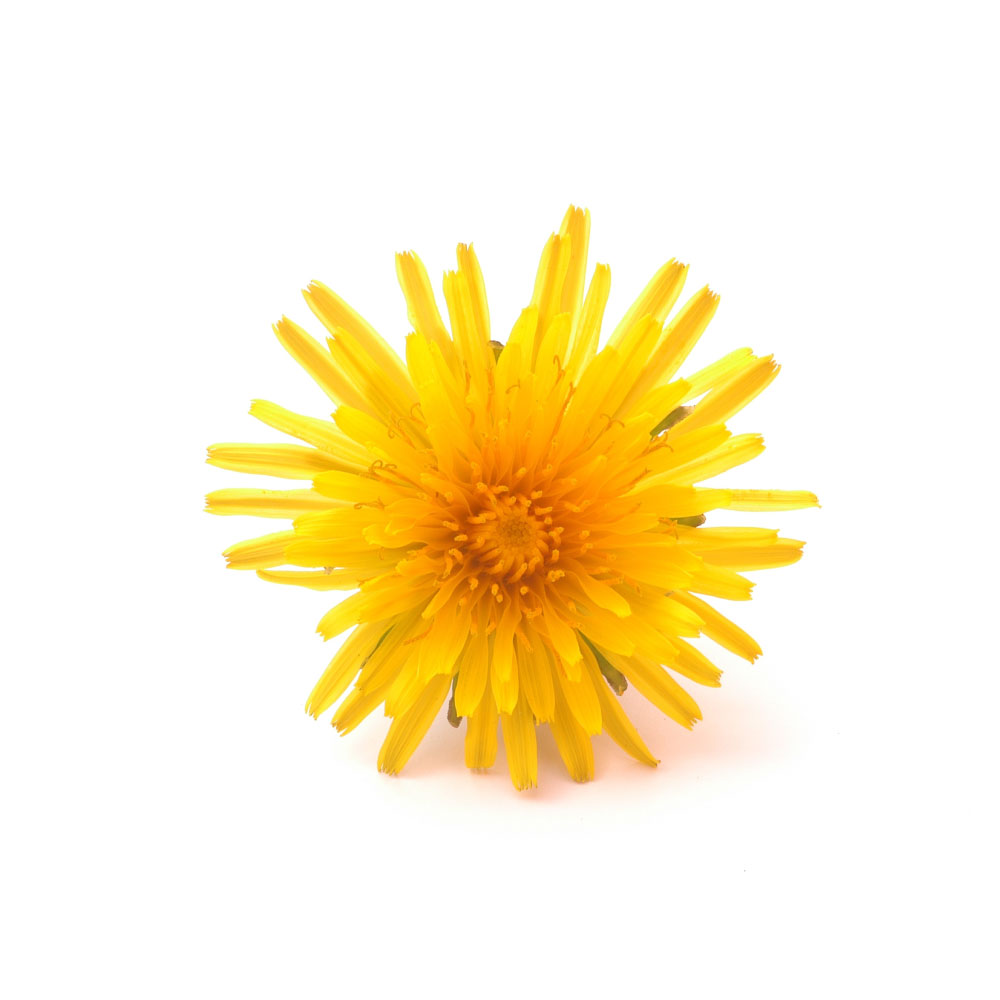
Taraxinic Acid Glucoside is a naturally occurring sesquiterpene lactone (germacranolide; β-d-glucopyranosyl ester of taraxinic acid), found in Dandelion and 7 other sources. It is flagged as moderately toxic.
Concentration
Content by Source
Reported concentrations across the plants that contain taraxinic acid glucoside — the bar marks the typical level, the line shows the reported range.
Literature figures for varying plant parts and preparations. Read them as a comparative guide, not exact assays.
Taraxinic Acid Glucoside at a Glance
Taraxinic acid β-D-glucopyranosyl ester — TA-G for short — is the principal sesquiterpene lactone of common dandelion (Taraxacum officinale). It is a germacranolide: a ten-membered-ring terpenoid capped by a lactone, with a molecule of glucose esterified onto its carboxylic acid 2,
It matters for one reason above all others. Old herbal writing attributes dandelion’s bitterness to “taraxacin”, a nineteenth-century name for a bitter fraction rather than a defined substance. No primary isolation of taraxacin from T. officinale exists; the one properly characterised molecule bearing the name is a guaianolide from the Himalayan T. wallichii, solved by X-ray in 2000 — a different compound from a different species 28Reference 28Taraxacin, a new guaianolide from Taraxacum wallichiiView study →. TA-G is the molecule that name was reaching for: it is the compound modern phytochemistry actually recovers from T. officinale root and latex, quantifies, and assigns the plant’s bitterness to 2,
The awkward part is that the bitterness — the property the molecule is famous for — is the least studied thing about it. What TA-G has instead is an unusually complete body of work as a plant defence chemical: purified compound in artificial diet, transgenic knockdown of its biosynthetic enzyme, field populations, and a herbivore’s own gut enzyme mapped 1,
The Bitter Principle Of Dandelion
Dandelion’s traditional role — the bitter tonic taken before food to prompt appetite, gastric secretion and bile flow — is one of the better-attested uses in Western herbal medicine, and reviews of the genus consistently attribute the bitterness to the sesquiterpene lactone fraction, with taraxinic acid derivatives named as its principal members 22,
So far, so reasonable. Here is where it stops.
Nobody has ever assayed TA-G at a bitter taste receptor. A PubMed search for taraxinic acid AND bitter returns zero records, and taraxinic acid AND taste returns a single paper — and that one is about insect deterrence, not human taste (checked 31 July 2026). There is no EC₅₀, no receptor assignment, no sensory panel, and no bitterness-threshold figure for this molecule anywhere in the indexed literature.
What exists is class-level inference, and it is worth stating exactly how far it reaches:
- hTAS2R46 was deorphanised in 2007 as a bitter receptor broadly tuned to sesquiterpene lactones, along with clerodane and labdane diterpenoids — the probe compound was herbolide D, not TA-G 9Reference 9Broad tuning of the human bitter taste receptor hTAS2R46 to various sesquiterpene lactones, clerodane and labdane diterpenoids, strychnine, and denatoniumView study →.
- A 2026 survey extended this, showing that the lactone ring itself is a bitter chemotype and that terpenoid lactones are promiscuous agonists across several TAS2Rs rather than TAS2R46 alone 10Reference 10Dietary terpenoid lactones are promiscuous agonists of bitter taste receptors (TAS2Rs)View study →.
That is a defensible reason to expect TA-G to be a TAS2R agonist. It is not the same as having measured it. Everywhere below, the receptor step is labelled class inference, not deorphanisation — the honest position for a molecule whose defining sensory property has never been put in front of a receptor.
One consequence deserves flagging. In dandelion, the bitterness and the reactivity come from the same structural feature: the α-methylene-γ-lactone (see the next section) is both the recognised sesquiterpene-lactone bitter pharmacophore and the Michael acceptor behind the class’s protein-alkylating chemistry. You cannot select for one without the other.
The Glucoside & Its Aglycone
TA-G is a glucosyl ester, not an ether glycoside: the glucose is attached through its anomeric carbon to taraxinic acid’s C-15 carboxylic acid, which is why the same molecule appears in the literature both as taraxinic acid 1’-O-β-D-glucopyranoside and as taraxinic acid β-D-glucopyranosyl ester 5,
| Property | TA-G (glucosyl ester) | Taraxinic acid (aglycone) |
|---|---|---|
| Molecular formula | C₂₁H₂₈O₉ | C₁₅H₁₈O₄ |
| Molecular weight | 424.4 | 262.3 |
| XLogP (calculated) | 0.4 | 1.4 |
| α-methylene-γ-lactone | present | present |
| PubChem CID | 131751687 | 9921439 |
Both carry the warhead. The exocyclic methylene conjugated to the lactone carbonyl is present in TA-G — this is not a case like leucodin, where the reactive group is simply absent. (Its 11β,13-dihydro relative, which co-occurs in every Taraxacum isolation, is the one that lacks it 14,
That prediction has an experimental echo. In a structure–activity study of eleven sesquiterpene lactones against LPS-induced nitric-oxide synthesis in macrophages, TA-G was the single compound in the set that did nothing — every other lactone inhibited with IC₅₀ values of 0.5–36.8 µM 6Reference 6Structural requirements of sesquiterpene lactones to inhibit LPS-induced nitric oxide synthesis in RAW 264.7 macrophagesView study →. The authors read the result structurally, noting that high activity depended on the α-methylene-γ-lactone. But TA-G has an α-methylene-γ-lactone. The more economical explanation is that a highly polar glucosyl ester does not get into the cell to reach intracellular thiols in the first place. A warhead you cannot deliver is not a warhead.
The same split shows up wherever the two forms have been compared directly:
- Anticancer screening. Testing TA-G against a panel of cancer lines, then enzymatically hydrolysing it, the authors concluded that “the active moiety should be attributed to the aglycone taraxinic acid rather than the glycoside” — the free acid, not TA-G, drove the antiproliferative and differentiation-inducing effects on HL-60 leukaemia cells 4Reference 4Taraxinic acid, a hydrolysate of sesquiterpene lactone glycoside from the Taraxacum coreanum NAKAI, induces the differentiation of human acute promyelocytic leukemia HL-60 cellsView study →.
- Insect gut. A dandelion root herbivore deglucosylates TA-G with its own β-glucosidase. Doing so made the compound less toxic to the larva but more deterrent — the sugar and the aglycone are behaviourally and toxicologically different molecules, and which one you are dealing with depends on the gut you put it in 3Reference 3A beta-glucosidase of an insect herbivore determines both toxicity and deterrence of a dandelion defense metabolite. eLife. https://pubmed.ncbi.nlm.nih.gov/34632981/View study →.
Where does hydrolysis happen in a person? Unknown. There is no mammalian study of TA-G deglucosylation — not in gut lumen, not by intestinal or hepatic β-glucosidase, not by colonic microbiota. Since almost every interesting result belongs to the aglycone, this is the single most consequential gap on the page.
What It's Used For
The evidence base is small and lopsided: a well-built ecological literature, a handful of unreplicated single-study pharmacology papers, and nothing human.
Support is an experimental score — weighted by study type (human > animal > in vitro) and volume. A beta, not a validated metric. Note the top row is an ecological, not a therapeutic, application — it scores highest because the experimental work is genuinely good, not because it is medically useful. No row contains human data.
The marquee application, and the only one built on multiple converging lines of evidence with the purified isolate. Across 17 T. officinale genotypes, latex TA-G concentration was negatively associated with growth of the common cockchafer larva (Melolontha melolontha), dandelion’s major native root herbivore; adding purified TA-G to artificial diet at ecologically relevant concentrations reduced larval feeding; silencing the germacrene A synthase ToGAS1 — the enzyme catalysing the first committed step of TA-G biosynthesis — cut TA-G by 90% and left those plants preferred by the larvae and suffering three times the root biomass loss; and in a common-garden experiment with over 2,000 plants, high TA-G was associated with maintained vegetative and reproductive fitness under attack 1Reference 1A Latex Metabolite Benefits Plant Fitness under Root Herbivore AttackView study →.
Field populations across 21 central European sites showed that historically high infestation pressure tracks high latex metabolite concentrations, with both heritable variation and plasticity contributing, and TA-G production costly without the herbivore and beneficial with it — divergent selection on a single metabolite 12Reference 12A below-ground herbivore shapes root defensive chemistry in natural plant populationsView study →.
Behaviourally, the deterrent effect requires physical root contact and disappears when plants are 15 cm apart rather than 5 cm 13Reference 13A herbivore tag-and-trace system reveals contact- and density-dependent repellence of a root toxinView study →.
Latex metabolite extracts also repelled a second, generalist root herbivore 2Reference 2Identification, quantification, spatiotemporal distribution and genetic variation of major latex secondary metabolites in the common dandelion (Taraxacum officinale agg.)View study →.
Gap: this is plant–insect ecology. It establishes that the molecule is biologically potent in its native context, and nothing at all about activity in mammals. Note also the twist in 3Reference 3A beta-glucosidase of an insect herbivore determines both toxicity and deterrence of a dandelion defense metabolite. eLife. https://pubmed.ncbi.nlm.nih.gov/34632981/View study →: the larva’s own β-glucosidase strips the glucose, which reduces toxicity while increasing deterrence — so “TA-G is toxic to the herbivore” is itself an oversimplification.
The only in-vivo mammalian result for the isolated molecule. Taraxinic acid-1’-O-β-D-glucopyranoside was isolated from the roots of Crepis napifera (Asteraceae) during a search for that plant’s anti-gastric-ulcer principle. At 80 mg/kg orally it significantly inhibited the development of aspirin-induced gastric lesions in rats; at 70 mg/kg intravenously it did not affect histamine-stimulated gastric acid secretion in the lumen-perfused rat stomach. The authors concluded it was the plant’s gastric-mucosa-protecting active component 5Reference 5Wu SH, et al. (2002). [Anti-gastric ulcer sesquiterpene lactone glycosides from Crepis napifera]. Yao Xue Xue Bao. https://pubmed.ncbi.nlm.nih.gov/12579896/View study →.
Gap: one study, one model, one dose, no dose–response, never replicated, and the source plant was Crepis, not dandelion — the compound is the same, the botanical context is not. The negative acid-secretion result is worth holding onto: it is evidence that this molecule protects the mucosa rather than acting as a classical secretagogue, which sits awkwardly with the “bitters stimulate gastric secretion” story it is usually enlisted to support.
Dandelion leaf and root were profiled by HPLC-MS for sesquiterpene lactone composition; TA-G was the main compound of the leaf extract, and was isolated and structurally confirmed by NMR. Both the leaf extract and purified TA-G activated the transcription factor Nrf2 in human hepatocytes significantly more than the root extract did, and the leaf extract induced the Nrf2 target gene heme oxygenase-1. The authors proposed TA-G as one of the active principles of T. officinale 7Reference 7Sesquiterpene lactone composition and cellular Nrf2 induction of Taraxacum officinale leaves and roots and taraxinic acid β-D-glucopyranosyl esterView study →.
Gap: a single in-vitro study in a cell line, with the HO-1 induction demonstrated for the extract rather than for the isolate. No concentration is tied to any achievable plasma level, because none is known. Nrf2 activation by an electrophilic natural product is also a very common in-vitro finding and is mechanistically expected of any α-methylene-γ-lactone that gets into a cell — it is not distinctive to this molecule.
Included because it is routinely cited as TA-G’s anticancer credential, and because the paper says the opposite. TA-G from Taraxacum coreanum was tested against a panel of cancer cells; on the basis of enzymatic hydrolysis plus MTT assay, the authors concluded that the active moiety is “the aglycone taraxinic acid rather than the glycoside”. Taraxinic acid — the free acid — showed potent antiproliferative activity against HL-60 human acute promyelocytic leukaemia cells and induced their differentiation toward the monocyte/macrophage lineage (nitroblue-tetrazolium reduction, esterase and phagocytic activity, morphology, CD14 and CD66b expression), with c-myc down and p21^CIP1^ and p27^KIP1^ up 4Reference 4Taraxinic acid, a hydrolysate of sesquiterpene lactone glycoside from the Taraxacum coreanum NAKAI, induces the differentiation of human acute promyelocytic leukemia HL-60 cellsView study →.
Gap: the differentiation data are the aglycone’s, not TA-G’s — this is the clearest published statement of the glycoside/aglycone split here, and it cuts against the glucoside. Beyond it, a 2025 review lists taraxinic acid among dandelion’s promising anticancer constituents but adds no new isolate data 29Reference 29New prospects in oncotherapy: bioactive compounds from Taraxacum officinaleView study →. There is no in-vivo tumour model and no replication for either form.
The application that motivates the whole page, and the thinnest row in the table. Genus reviews assign dandelion’s bitterness — and by extension its traditional dyspepsia, appetite and choleretic uses — to the sesquiterpene lactone fraction, with taraxinic acid derivatives named as its principal members 22,
TA-G is quantitatively the dominant member of that fraction in both latex and leaf 2,
The mechanistic step usually asserted next is activation of bitter taste receptors, which are expressed in the gut as well as the mouth; the supporting evidence is class-level — hTAS2R46 is broadly tuned to sesquiterpene lactones 9Reference 9Broad tuning of the human bitter taste receptor hTAS2R46 to various sesquiterpene lactones, clerodane and labdane diterpenoids, strychnine, and denatoniumView study →, and the lactone ring functions as a general bitter chemotype across several TAS2Rs 10Reference 10Dietary terpenoid lactones are promiscuous agonists of bitter taste receptors (TAS2Rs)View study →.
Gap: the direct evidence does not exist. taraxinic acid AND bitter returns zero PubMed records and taraxinic acid AND taste returns one, about insect deterrence (checked 31 July 2026). No TAS2R assay, no EC₅₀, no bitterness threshold, no sensory panel, no human digestive outcome. The receptor step here is class inference, not deorphanisation — and the one mammalian secretory measurement that does exist found no effect on gastric acid secretion 5Reference 5Wu SH, et al. (2002). [Anti-gastric ulcer sesquiterpene lactone glycosides from Crepis napifera]. Yao Xue Xue Bao. https://pubmed.ncbi.nlm.nih.gov/12579896/View study →.
A negative result, reported here because negatives about this molecule are more informative than the positives. Eleven sesquiterpene lactones were screened for inhibition of LPS-induced nitric-oxide synthesis in RAW 264.7 macrophages. Every compound except TA-G inhibited nitrite accumulation dose-dependently, with IC₅₀ values from 0.5 to 36.8 µM; TA-G (compound 8) did not. The same study found that inhibition of NO synthesis, cytotoxicity and NF-κB inhibition have different structural requirements — most of the lactones suppressed nitrite at concentrations where NF-κB inhibition was not significant 6Reference 6Structural requirements of sesquiterpene lactones to inhibit LPS-induced nitric oxide synthesis in RAW 264.7 macrophagesView study →.
Gap: a single study, and it is a null for TA-G rather than a characterised inactivity — no membrane-permeability or uptake measurement was made, so the polarity explanation offered above remains an inference. Separately, a T. officinale root fraction with anti-leukotriene-B₄ activity yielded 14-O-glucosyl-taraxinic acid and its dihydro relative 21Reference 21Sesquiterpene glucosides from anti-leukotriene B4 release fraction of Taraxacum officinaleView study → — positional isomers, not this compound, and the activity was assigned to the fraction rather than to either isolate.
Mechanisms
| Target / pathway | Effect | Relevant to |
|---|---|---|
| α-methylene-γ-lactone (Michael acceptor) | present in TA-G; alkylates cysteine thiols in principle — but see the delivery problem below | class chemistry; contact sensitisation |
| Membrane permeability (XLogP 0.4) | the glucosyl ester is far more polar than its aglycone, predicting poor cellular uptake — consistent with TA-G being the one inactive lactone of eleven in a cell-based NO assay 6Reference 6Structural requirements of sesquiterpene lactones to inhibit LPS-induced nitric oxide synthesis in RAW 264.7 macrophagesView study → | why in-vitro class claims may not transfer |
| β-glucosidase hydrolysis → taraxinic acid | demonstrated in an insect gut 3Reference 3A beta-glucosidase of an insect herbivore determines both toxicity and deterrence of a dandelion defense metabolite. eLife. https://pubmed.ncbi.nlm.nih.gov/34632981/View study →; unmeasured in any mammal — converts a polar ester into a more lipophilic, more active aglycone 4Reference 4Taraxinic acid, a hydrolysate of sesquiterpene lactone glycoside from the Taraxacum coreanum NAKAI, induces the differentiation of human acute promyelocytic leukemia HL-60 cellsView study → | the central unknown of this molecule |
| Nrf2 / heme oxygenase-1 | activated in human hepatocytes by the isolate; HO-1 induction shown for the leaf extract 7Reference 7Sesquiterpene lactone composition and cellular Nrf2 induction of Taraxacum officinale leaves and roots and taraxinic acid β-D-glucopyranosyl esterView study → | cytoprotective signalling |
| TAS2R bitter receptors (unassigned) | class inference only — hTAS2R46 is broadly tuned to sesquiterpene lactones 9Reference 9Broad tuning of the human bitter taste receptor hTAS2R46 to various sesquiterpene lactones, clerodane and labdane diterpenoids, strychnine, and denatoniumView study → and the lactone ring is a general bitter chemotype 10Reference 10Dietary terpenoid lactones are promiscuous agonists of bitter taste receptors (TAS2Rs)View study →; TA-G itself has never been assayed | bitter / digestive |
| Gastric mucosal protection | reduced aspirin-induced lesions at 80 mg/kg p.o. in rats without altering histamine-stimulated acid secretion 5Reference 5Wu SH, et al. (2002). [Anti-gastric ulcer sesquiterpene lactone glycosides from Crepis napifera]. Yao Xue Xue Bao. https://pubmed.ncbi.nlm.nih.gov/12579896/View study → | gastroprotection |
| c-myc ↓, p21^CIP1^ ↑, p27^KIP1^ ↑ | monocytic differentiation of HL-60 cells — effect of the aglycone, not of TA-G 4Reference 4Taraxinic acid, a hydrolysate of sesquiterpene lactone glycoside from the Taraxacum coreanum NAKAI, induces the differentiation of human acute promyelocytic leukemia HL-60 cellsView study → | anticancer (aglycone only) |
| Germacrene A synthase (ToGAS1) | first committed biosynthetic step; silencing it removes 90% of TA-G 1Reference 1A Latex Metabolite Benefits Plant Fitness under Root Herbivore AttackView study → | plant biosynthesis / defence |
The load-bearing line is the second one. Almost every “sesquiterpene lactones inhibit NF-κB / iNOS by alkylating thiols” statement is true of the class and untested for TA-G — and the one time TA-G was placed in exactly that kind of assay alongside ten relatives, it was the only failure 6Reference 6Structural requirements of sesquiterpene lactones to inhibit LPS-induced nitric oxide synthesis in RAW 264.7 macrophagesView study →.
Pharmacokinetics
There is none. No absorption, oral bioavailability, distribution, metabolism, half-life, protein binding or plasma-concentration data exists for TA-G in humans or in any laboratory mammal. A PubMed search for taraxinic acid AND pharmacokinetics returns a single record, and it is the insect gut-enzyme study (checked 31 July 2026) 3Reference 3A beta-glucosidase of an insect herbivore determines both toxicity and deterrence of a dandelion defense metabolite. eLife. https://pubmed.ncbi.nlm.nih.gov/34632981/View study →.
What can be said is structural and comparative. TA-G is a polar glucosyl ester (MW 424.4, XLogP 0.4) — the profile of a compound with limited passive absorption, which for glycosides usually means the sugar is cleaved before or during absorption and the aglycone is what actually enters circulation. That pathway has been demonstrated in an insect, where a broad-spectrum gut β-glucosidase deglucosylates TA-G and thereby changes both its toxicity and its deterrence 3Reference 3A beta-glucosidase of an insect herbivore determines both toxicity and deterrence of a dandelion defense metabolite. eLife. https://pubmed.ncbi.nlm.nih.gov/34632981/View study →; whether mammalian intestinal or microbial β-glucosidases do the same has never been tested. The only in-vivo mammalian datum of any kind is that 80 mg/kg given orally produced a measurable gastric effect in rats 5Reference 5Wu SH, et al. (2002). [Anti-gastric ulcer sesquiterpene lactone glycosides from Crepis napifera]. Yao Xue Xue Bao. https://pubmed.ncbi.nlm.nih.gov/12579896/View study →, which establishes that something reaches the target tissue by mouth at that dose and nothing more.
This absence is what caps every claim on the page. The in-vitro concentrations have no known in-vivo counterpart, and the aglycone-versus-glucoside question 4Reference 4Taraxinic acid, a hydrolysate of sesquiterpene lactone glycoside from the Taraxacum coreanum NAKAI, induces the differentiation of human acute promyelocytic leukemia HL-60 cellsView study → cannot be resolved for humans until someone measures which of the two is actually present in blood after a dandelion preparation.
Clinical Trials
No clinical trial of isolated taraxinic acid glucoside has ever been conducted or registered. A PubMed search for taraxinic acid AND clinical trial returns zero records (checked 31 July 2026), and the total indexed literature for taraxinic across all contexts is 22 papers. Human data for dandelion itself is separately minimal and belongs to whole-plant preparations, not to this molecule.
| Completed | Planned | Terminated | Preclinical |
|---|---|---|---|
| 0 | 0 | 0 | ~10isolate studies (mostly ecological) |
Last checked: July 2026.
Isolate vs. Plant Studies
This molecule presents an unusual version of the isolate-versus-plant problem. Ecologically, the isolate work is excellent — purified TA-G in artificial diet, a transgenic line with 90% less of it, and field genotypes measured by LC-MS constitute about as clean a causal chain as plant chemistry offers 1,
The transfer risk runs mostly in the other direction from usual. Dandelion has a large extract literature — antioxidant, anti-inflammatory, hepatoprotective, antidiabetic, diuretic — almost none of it isolate-level, and effectively none of it attributable to TA-G. Where dandelion extracts show anti-inflammatory or antioxidant activity, the better-characterised candidates are the triterpene taraxasterol and the phenolics chicoric acid, chlorogenic acid and luteolin 22,
Two further conflation traps are worth naming. First, positional isomers: several Taraxacum and Asteraceae papers report taraxinic acid 14-O-β-D-glucopyranoside 20,
Its Role In Plants
TA-G is a latex metabolite, stored in the specialised laticifer cells that give dandelion its milky sap. Common dandelion latex is dominated by three classes of secondary metabolite: phenolic inositol esters, triterpene acetates, and TA-G — quantified at up to 6% PIEs, 5% triterpene acetates and 7% TA-G per gram of latex fresh weight. Contrary to the typical secondary-metabolite pattern, all three classes increase with plant age, and the highest concentrations sit in the main root. Concentrations are positively correlated within and between the classes, indicating tightly co-regulated biosynthesis 2Reference 2Identification, quantification, spatiotemporal distribution and genetic variation of major latex secondary metabolites in the common dandelion (Taraxacum officinale agg.)View study →.
Biosynthesis proceeds through the germacranolide route: germacrene A synthase (ToGAS1) catalyses the first committed step, and silencing it removes about 90% of the plant’s TA-G 1Reference 1A Latex Metabolite Benefits Plant Fitness under Root Herbivore AttackView study →.
Production varies markedly through the year. In field T. officinale, TA-G concentration was most strongly correlated with mean monthly temperature; plants grown warm under controlled conditions produced more TA-G and were less attractive to cockchafer larvae — although temperature-dependent feeding preference was not abolished in TA-G-deficient transgenic lines, so other phenotypic changes contribute as well 11Reference 11Impact of seasonal and temperature-dependent variation in root defense metabolites on herbivore preference in Taraxacum officinaleView study →. Both temperature and TA-G levels tracked annual fluctuation in potential herbivore damage. Practically, this means the compound’s content in harvested dandelion is a moving target set by organ, plant age, season and genotype — which is one reason no herbal preparation is standardised to it.
The defence function is not merely correlative: TA-G production is costly in the absence of the herbivore and beneficial in its presence, producing divergent selection across 21 central European populations 12Reference 12A below-ground herbivore shapes root defensive chemistry in natural plant populationsView study →.
Prevalence in Nature
TA-G is a tribe Cichorieae / Asteraceae metabolite, most abundant and best characterised in Taraxacum.
In common dandelion (T. officinale) it reaches up to ~7% of latex fresh weight, highest in the main root 2Reference 2Identification, quantification, spatiotemporal distribution and genetic variation of major latex secondary metabolites in the common dandelion (Taraxacum officinale agg.)View study →, and is simultaneously the main sesquiterpene lactone of the leaf extract by HPLC-MS 7Reference 7Sesquiterpene lactone composition and cellular Nrf2 induction of Taraxacum officinale leaves and roots and taraxinic acid β-D-glucopyranosyl esterView study → — the root/leaf question is therefore not either/or: the root latex is the richest tissue, while within the leaf’s lactone fraction TA-G still dominates. Older phytochemical work on T. officinale roots recovered taraxinic acid derivatives alongside 11β,13-dihydrolactucin, ixerin D and ainslioside 14Reference 14Further sesquiterpenoids and phenolics from Taraxacum officinaleView study →.
Across the genus it is essentially ubiquitous: T. udum roots are described as “a good source of taraxinic acid derivatives” and also yield the 6-O-acetyl glucopyranosyl ester 16Reference 16Sesquiterpenoids and phenolics from roots of Taraxacum udumView study →; T. obovatum roots carry TA-G with its 11β,13-dihydro derivative 15Reference 15Sesquiterpene lactones from Taraxacum obovatumView study →; the endangered T. portentosum yields taraxinic acid, its dihydro form, TA-G and the dihydro glucoside together 17Reference 17A new sesquiterpenoid and further natural products from Taraxacum portentosum Kirschner & Štěpánek, an endangered speciesView study →; T. mongolicum yields TA-G with 11β,13-dihydrotaraxinic acid 18Reference 18A new inositol triester from Taraxacum mongolicumView study →; and T. coreanum was the source for the differentiation work 4Reference 4Taraxinic acid, a hydrolysate of sesquiterpene lactone glycoside from the Taraxacum coreanum NAKAI, induces the differentiation of human acute promyelocytic leukemia HL-60 cellsView study →.
Outside Taraxacum it has been isolated from Crepis napifera roots 5Reference 5Wu SH, et al. (2002). [Anti-gastric ulcer sesquiterpene lactone glycosides from Crepis napifera]. Yao Xue Xue Bao. https://pubmed.ncbi.nlm.nih.gov/12579896/View study → and from the aerial parts of Vernonia bockiana 19Reference 19Cytotoxic sesquiterpenoids from Vernonia bockianaView study →. The 14-O-glucopyranoside positional isomer — a different compound — has been reported from Myripnois dioica 20Reference 20Liu B, et al. (2016). [Chemical constituents of Myripnois dioica]. Zhongguo Zhong Yao Za Zhi. https://pubmed.ncbi.nlm.nih.gov/28920380/View study → and T. officinale root 21Reference 21Sesquiterpene glucosides from anti-leukotriene B4 release fraction of Taraxacum officinaleView study →. A taraxinic acid glucosyl ester has also been detected by LC-MS in the cell-free supernatant of vaginal lactic-acid bacteria 30Reference 30Cervicovaginal microbiota isolated from healthy women exhibit probiotic properties and antimicrobial activity against pathogens isolated from cervical cancer patientsView study →, which is best read as an analytical annotation rather than evidence of microbial biosynthesis.
Discovery & Synthesis
No original isolation report for taraxinic acid or its glucoside is locatable in the indexed literature, and the compound predates PubMed’s coverage of this niche. The earliest verified record is Bernhard Hausen’s 1982 paper in Derm Beruf Umwelt, which identified taraxinic acid 1’-O-β-D-glucopyranoside as the contact sensitiser of dandelion — a pharmacological, not a phytochemical, first 8Reference 8Hausen BM (1982). [Taraxinic acid 1’-O-beta-D-glucopyranoside, the contact sensitizer of dandelion (Taraxacum officinale Wiggers)]. Dermatosen in Beruf und Umwelt. https://pubmed.ncbi.nlm.nih.gov/6211344/View study →. The molecule was therefore introduced to the literature as an allergen before it was established as a defence metabolite. Its name derives simply from the genus Taraxacum.
The modern characterisation is recent and belongs largely to one line of work: quantification, spatiotemporal mapping and NMR/LC-MS confirmation in dandelion latex from 2015 2Reference 2Identification, quantification, spatiotemporal distribution and genetic variation of major latex secondary metabolites in the common dandelion (Taraxacum officinale agg.)View study →, and the biosynthetic assignment to ToGAS1 in 2016 1Reference 1A Latex Metabolite Benefits Plant Fitness under Root Herbivore AttackView study →. An independent NMR structure determination of the leaf isolate was published in 2017 7Reference 7Sesquiterpene lactone composition and cellular Nrf2 induction of Taraxacum officinale leaves and roots and taraxinic acid β-D-glucopyranosyl esterView study →.
No total synthesis of taraxinic acid or TA-G has been reported in the searchable literature, and there is no commercial production — the compound is obtained by extraction from Taraxacum or Crepis material for research use only, and is not sold as a supplement in any form.
Patents: not yet researched.
Toxicity & Safety
The moderate flag rests on one well-documented property and one structural one. TA-G is a named contact sensitiser — the molecule identified as dandelion’s allergen 8Reference 8Hausen BM (1982). [Taraxinic acid 1’-O-beta-D-glucopyranoside, the contact sensitizer of dandelion (Taraxacum officinale Wiggers)]. Dermatosen in Beruf und Umwelt. https://pubmed.ncbi.nlm.nih.gov/6211344/View study → — and it carries an intact α-methylene-γ-lactone, the Michael acceptor responsible for the sesquiterpene-lactone class’s reputation as skin haptens. There is no systemic toxicology package of any kind: no acute or repeat-dose study, no genotoxicity assay, no reproductive or developmental data for the isolated molecule.
- No systemic toxicity signal reported — but this reflects an absent toxicology dataset, not a clean one. Nothing has been tested.
- Documented contact sensitiser. Identified in 1982 as the contact allergen of dandelion; allergic contact dermatitis to T. officinale is reported in florists, gardeners and children, and one case produced recurrent erythema multiforme on patch testing.
- Reactive α-methylene-γ-lactone. The class warhead is present. Its systemic significance is unclear given the molecule’s high polarity, but the group is the recognised basis of Asteraceae skin sensitisation.
- Standard sesquiterpene-lactone patch testing does not rule this out. The SL mix reagent contains alantolactone, costunolide and dehydrocostus lactone only — TA-G is not in it and has never been patch-tested as a standardised isolated hapten.
Full Safety & Interactions Detail
Contact sensitisation — the one real safety finding. Hausen’s 1982 study identified taraxinic acid 1’-O-β-D-glucopyranoside as the contact sensitiser of dandelion 8Reference 8Hausen BM (1982). [Taraxinic acid 1’-O-beta-D-glucopyranoside, the contact sensitizer of dandelion (Taraxacum officinale Wiggers)]. Dermatosen in Beruf und Umwelt. https://pubmed.ncbi.nlm.nih.gov/6211344/View study →. Clinical reports bear out that dandelion sensitises: seasonal allergic contact dermatitis in a florist 25Reference 25Seasonal allergic contact dermatitis from Taraxacum officinale (dandelion) in an Israeli floristView study →; a 2+ patch-test reaction to dandelion in a 9-year-old boy with Compositae dermatitis, alongside ragweed, sagebrush, yarrow and tansy 26Reference 26Compositae dermatitis in childhoodView study →; and eczematous patch-test reactions to fresh dandelion leaf in a woman with a 13-year history of erythema multiforme after weeding, in whom patch testing reproduced the erythema multiforme 27Reference 27Erythema multiforme due to contact with weeds: a recurrence after patch testingView study →. That last case is the most severe reaction on record and is a reason to treat repeated bare-handed contact with dandelion latex as non-trivial.
How much dandelion contributes is genuinely unsettled. A series of 190 Danish Compositae-allergic patients found dehydrocostus lactone, alantolactone and costunolide the most frequent elicitors within the SL mix, and cultivated ornamentals (chrysanthemum, marguerite, feverfew, tansy) the dominant sensitisers; the authors concluded that the significance of dandelion and other weeds “is not clarified, but they are probably less important than cultivated plants” 24Reference 24Sensitization and cross-reaction patterns in Danish Compositae-allergic patientsView study →. Two points follow. First, the SL mix is a three-compound reagent — alantolactone, costunolide, dehydrocostus lactone — so a negative SL mix excludes nothing about TA-G. Second, 19% of the occupationally sensitised patients in that series reacted to neither SL mix nor Compositae mix 24Reference 24Sensitization and cross-reaction patterns in Danish Compositae-allergic patientsView study →, which is a general caution about relying on screening reagents for this class.
Everything else is absent, not reassuring. No oral LD₅₀, no repeat-dose study, no genotoxicity or carcinogenicity assay, no reproductive or developmental toxicology, and no drug-interaction work — no CYP or transporter study of any kind has been performed on this molecule, so nothing can be said about interactions in either direction. Reproductive and pregnancy decisions belong to the dandelion monograph, where intake is actually decided, not to a molecule page.
One indirect reassurance, weakly held. Dandelion is eaten as a leaf vegetable and drunk as a root beverage across Europe and Asia, and hydroalcoholic extracts of both organs were non-lethal in brine-shrimp screening (LC₅₀ > 1000 µg/mL); the root extracts produced a non-lethal developmental delay in the larvae, which the authors linked to the root’s bitter principles 31Reference 31Phytochemical dynamics and antimicrobial efficacy of dandelion (Taraxacum officinale L.) from Central Plateau of Moldova, RomaniaView study →. That is a food-safety-adjacent observation about extracts, not a toxicology finding for the isolate.
Dosage
There is no human dose, and no product to dose. Taraxinic acid glucoside is not sold as a supplement, no dandelion preparation is standardised to it, and no clinical study has ever administered it.
The only dosing figures in existence are these:
| Context | Route | Dose |
|---|---|---|
| Aspirin-induced gastric lesions, rat 5Reference 5Wu SH, et al. (2002). [Anti-gastric ulcer sesquiterpene lactone glycosides from Crepis napifera]. Yao Xue Xue Bao. https://pubmed.ncbi.nlm.nih.gov/12579896/View study → | oral | 80 mg/kg |
| Histamine-stimulated acid secretion, rat 5Reference 5Wu SH, et al. (2002). [Anti-gastric ulcer sesquiterpene lactone glycosides from Crepis napifera]. Yao Xue Xue Bao. https://pubmed.ncbi.nlm.nih.gov/12579896/View study → | intravenous | 70 mg/kg (no effect) |
| Insect antifeedant assays 1Reference 1A Latex Metabolite Benefits Plant Fitness under Root Herbivore AttackView study → | artificial diet | ecologically realistic latex concentrations |
Human exposure is entirely indirect — via dandelion root, leaf, latex or roasted-root beverages, where content varies with organ, plant age, season, temperature and genotype 2,
These are research figures in animals and are not a personal recommendation.
References
- Huber M, et al. (2016). A Latex Metabolite Benefits Plant Fitness under Root Herbivore Attack. PLoS Biology. https://pubmed.ncbi.nlm.nih.gov/26731567/
- Huber M, et al. (2015). Identification, quantification, spatiotemporal distribution and genetic variation of major latex secondary metabolites in the common dandelion (Taraxacum officinale agg.). Phytochemistry. https://pubmed.ncbi.nlm.nih.gov/25682510/
- Huber M, et al. (2021). A beta-glucosidase of an insect herbivore determines both toxicity and deterrence of a dandelion defense metabolite. eLife. https://pubmed.ncbi.nlm.nih.gov/34632981/
- Choi JH, et al. (2002). Taraxinic acid, a hydrolysate of sesquiterpene lactone glycoside from the Taraxacum coreanum NAKAI, induces the differentiation of human acute promyelocytic leukemia HL-60 cells. Biological & Pharmaceutical Bulletin. https://pubmed.ncbi.nlm.nih.gov/12419957/
- Wu SH, et al. (2002). [Anti-gastric ulcer sesquiterpene lactone glycosides from Crepis napifera]. Yao Xue Xue Bao. https://pubmed.ncbi.nlm.nih.gov/12579896/
- Dirsch VM, et al. (2000). Structural requirements of sesquiterpene lactones to inhibit LPS-induced nitric oxide synthesis in RAW 264.7 macrophages. Bioorganic & Medicinal Chemistry. https://pubmed.ncbi.nlm.nih.gov/11131166/
- Esatbeyoglu T, et al. (2017). Sesquiterpene lactone composition and cellular Nrf2 induction of Taraxacum officinale leaves and roots and taraxinic acid β-D-glucopyranosyl ester. Journal of Medicinal Food. https://pubmed.ncbi.nlm.nih.gov/28026992/
- Hausen BM (1982). [Taraxinic acid 1’-O-beta-D-glucopyranoside, the contact sensitizer of dandelion (Taraxacum officinale Wiggers)]. Dermatosen in Beruf und Umwelt. https://pubmed.ncbi.nlm.nih.gov/6211344/
- Brockhoff A, et al. (2007). Broad tuning of the human bitter taste receptor hTAS2R46 to various sesquiterpene lactones, clerodane and labdane diterpenoids, strychnine, and denatonium. Journal of Agricultural and Food Chemistry. https://pubmed.ncbi.nlm.nih.gov/17595105/
- Salamone S, et al. (2026). Dietary terpenoid lactones are promiscuous agonists of bitter taste receptors (TAS2Rs). Journal of Natural Products. https://pubmed.ncbi.nlm.nih.gov/41609242/
- Huang W, et al. (2020). Impact of seasonal and temperature-dependent variation in root defense metabolites on herbivore preference in Taraxacum officinale. Journal of Chemical Ecology. https://pubmed.ncbi.nlm.nih.gov/31832894/
- Huber M, et al. (2016). A below-ground herbivore shapes root defensive chemistry in natural plant populations. Proceedings of the Royal Society B. https://pubmed.ncbi.nlm.nih.gov/27009228/
- Bont Z, et al. (2017). A herbivore tag-and-trace system reveals contact- and density-dependent repellence of a root toxin. Journal of Chemical Ecology. https://pubmed.ncbi.nlm.nih.gov/28303526/
- Kisiel W, Barszcz B (2000). Further sesquiterpenoids and phenolics from Taraxacum officinale. Fitoterapia. https://pubmed.ncbi.nlm.nih.gov/10844166/
- Michalska K, Kisiel W (2003). Sesquiterpene lactones from Taraxacum obovatum. Planta Medica. https://pubmed.ncbi.nlm.nih.gov/12624831/
- Michalska K, Marciniuk J, Kisiel W (2010). Sesquiterpenoids and phenolics from roots of Taraxacum udum. Fitoterapia. https://pubmed.ncbi.nlm.nih.gov/20006977/
- Michalska K, Marciniuk J, Stojakowska A (2021). A new sesquiterpenoid and further natural products from Taraxacum portentosum Kirschner & Štěpánek, an endangered species. Natural Product Research. https://pubmed.ncbi.nlm.nih.gov/31928353/
- Liu J, Zhang N, Liu M (2014). A new inositol triester from Taraxacum mongolicum. Natural Product Research. https://pubmed.ncbi.nlm.nih.gov/24432736/
- Huo J, et al. (2008). Cytotoxic sesquiterpenoids from Vernonia bockiana. Journal of Asian Natural Products Research. https://pubmed.ncbi.nlm.nih.gov/18470811/
- Liu B, et al. (2016). [Chemical constituents of Myripnois dioica]. Zhongguo Zhong Yao Za Zhi. https://pubmed.ncbi.nlm.nih.gov/28920380/
- Kashiwada Y, et al. (2001). Sesquiterpene glucosides from anti-leukotriene B4 release fraction of Taraxacum officinale. Journal of Asian Natural Products Research. https://pubmed.ncbi.nlm.nih.gov/11491394/
- Schütz K, Carle R, Schieber A (2006). Taraxacum — a review on its phytochemical and pharmacological profile. Journal of Ethnopharmacology. https://pubmed.ncbi.nlm.nih.gov/16950583/
- Sharifi-Rad M, et al. (2018). Ethnobotany of the genus Taraxacum — phytochemicals and antimicrobial activity. Phytotherapy Research. https://pubmed.ncbi.nlm.nih.gov/30039597/
- Paulsen E, Andersen KE, Hausen BM (2001). Sensitization and cross-reaction patterns in Danish Compositae-allergic patients. Contact Dermatitis. https://pubmed.ncbi.nlm.nih.gov/11683829/
- Ingber A (2000). Seasonal allergic contact dermatitis from Taraxacum officinale (dandelion) in an Israeli florist. Contact Dermatitis. https://pubmed.ncbi.nlm.nih.gov/10902595/
- Guin JD, Skidmore G (1987). Compositae dermatitis in childhood. Archives of Dermatology. https://pubmed.ncbi.nlm.nih.gov/3827282/
- Jovanović M, et al. (2003). Erythema multiforme due to contact with weeds: a recurrence after patch testing. Contact Dermatitis. https://pubmed.ncbi.nlm.nih.gov/12641574/
- Ahmad VU, et al. (2000). Taraxacin, a new guaianolide from Taraxacum wallichii. Journal of Natural Products. https://pubmed.ncbi.nlm.nih.gov/10924189/
- Cord D, Rîmbu MC, Popescu L (2025). New prospects in oncotherapy: bioactive compounds from Taraxacum officinale. Medicine and Pharmacy Reports. https://pubmed.ncbi.nlm.nih.gov/40786212/
- Kamble A, et al. (2022). Cervicovaginal microbiota isolated from healthy women exhibit probiotic properties and antimicrobial activity against pathogens isolated from cervical cancer patients. Archives of Microbiology. https://pubmed.ncbi.nlm.nih.gov/35840844/
- Tanasa Acretei MV, et al. (2026). Phytochemical dynamics and antimicrobial efficacy of dandelion (Taraxacum officinale L.) from Central Plateau of Moldova, Romania. Molecules. https://pubmed.ncbi.nlm.nih.gov/42513226/



