
Compound Monograph
Valtrate
Valtrate is the marker valepotriate of valerian — an unstable, epoxide-bearing iridoid triester that is antispasmodic and, in recent isolate work, anxiolytic and cytotoxic to tumour cells. Its epoxide also makes it a DNA/protein alkylator with in-vitro genotoxicity, but valerian's actual sedative reputation belongs to the whole extract (valerenic acid at GABA-A), not to valtrate.

Sources · 5
Where Does It Come From?
Valtrate is a naturally occurring valepotriate (epoxide-bearing iridoid triester), found in Valerian, Indian valerian, Mexican valerian and 2 other sources. It is flagged as moderately toxic.
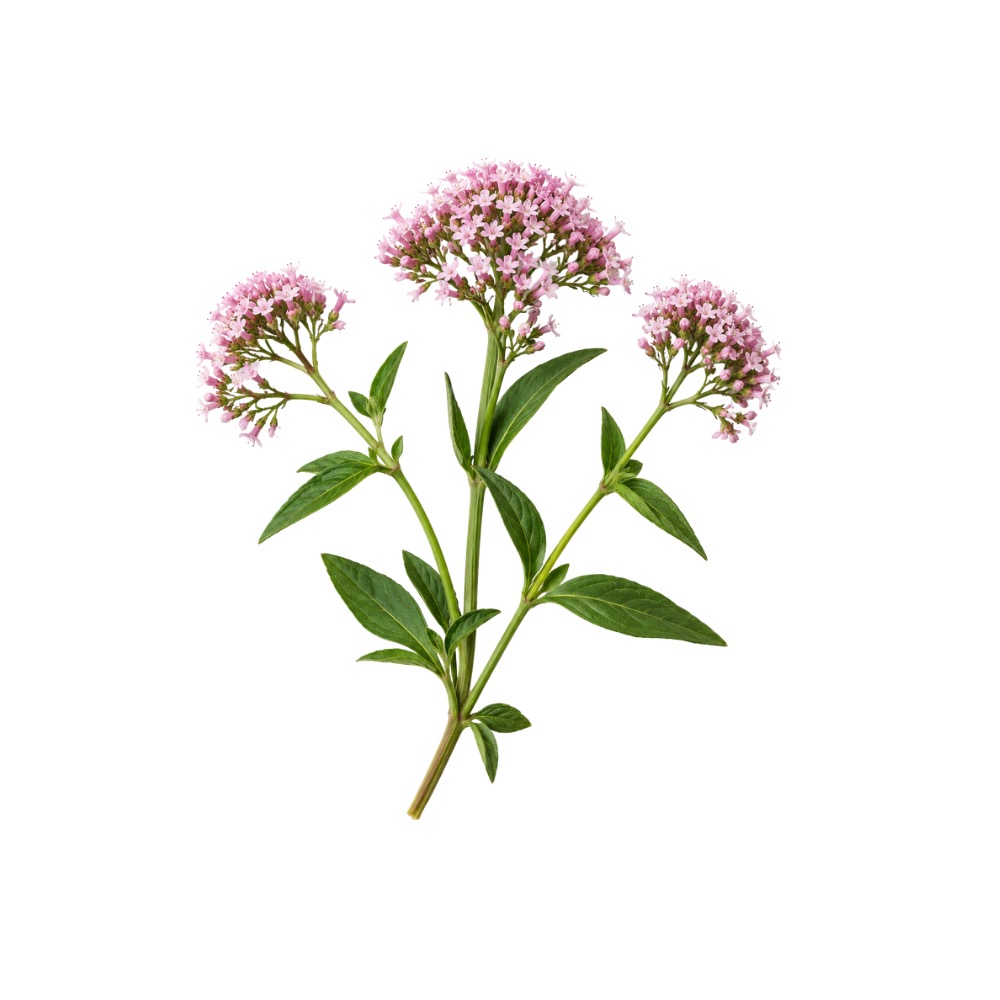
Concentration
Content by Source
Concentrations not reported. No percent-dry-weight or mg/g figures have been published for this compound in its source plants.
Valtrate at a Glance
Valtrate is the best-known valepotriate — the valerian epoxy-triester iridoid class that gives the group its name (valeriana-epoxy-triesters). Chemically it is an iridoid diene ester carrying a reactive epoxide, and that epoxide is the whole story of this molecule: it drives both its biological activity and its safety concern.
Two things make valtrate unusual among plant constituents. First, it is chemically unstable — it degrades under heat, moisture, light and acidic conditions, so aqueous and aged valerian products contain very little intact valtrate, while fresh alcoholic extracts retain more 10Reference 10Effect of storage time and conditions on the diene valepotriates content of the extract of Valeriana glechomifolia obtained by supercritical carbon dioxideView study →. Second, its epoxide gives it alkylating activity: in the laboratory valtrate is cytotoxic to tumour cells and genotoxic in several test systems 1,
The important framing point is that valerian’s calming reputation is not built on valtrate. The whole-herb sedative and anxiolytic signal tracks a different molecule, valerenic acid, acting at GABA-A receptors 15Reference 15AnimalGABA A receptors as in vivo substrate for the anxiolytic action of valerenic acid, a major constituent of valerian root extractsView study →; valtrate’s own documented actions are antispasmodic on smooth muscle 8Reference 8Antispasmodic effects of valeriana compounds: an in-vivo and in-vitro study on the guinea-pig ileumView study → and, in recent isolate research, anxiolytic and anticancer 11,
The Valepotriate Instability & Safety Question
This is the section the molecule exists for. Valtrate’s epoxide is simultaneously the source of its lab activity, the reason it falls apart in a bottle, and the reason it carries a genotoxicity flag — and those three facts have to be read together to judge the real risk.
The Reactive Epoxide
Valtrate belongs to the diene valepotriates, iridoid triesters that carry a strained, electrophilic epoxide ring. Electrophilic epoxides react with nucleophiles — including the nucleophilic sites on DNA and proteins — which is what “alkylating agent” means. In direct chemical assays valtrate and its relatives alkylate the model nucleophile 4-(p-nitrobenzyl)pyridine, and valtrate does so at lower concentrations than the reference alkylator epichlorohydrin 1,
Instability: Why Modern Valerian Products Are Low in Valtrate
Valepotriates are notoriously unstable. They decompose under heat, light, moisture and acid, losing a substantial fraction over months of storage; extraction of Valeriana glechomifolia followed over time showed diene-valepotriate loss and the appearance of decomposition products 10Reference 10Effect of storage time and conditions on the diene valepotriates content of the extract of Valeriana glechomifolia obtained by supercritical carbon dioxideView study →. The practical consequences matter for anyone reading a label:
- Aqueous preparations (teas, water-based tinctures) contain little intact valtrate, because the molecule is both barely water-soluble and degraded by aqueous, acidic conditions.
- Fresh alcoholic extracts of the root retain the most valtrate; aged or heat-processed products retain the least.
- On breakdown, valtrate does not simply vanish — it converts to baldrinal and related aldehydes, which carry their own toxicological baggage (below).
So the exposure a person actually gets from a typical valerian product is usually far lower than the valepotriate content of the fresh root would suggest.
The Cytotoxicity & Genotoxicity Data
The isolated valepotriates have a genuine in-vitro toxicology signal:
- Cytotoxic / antitumour: valtrate and didrovaltrate were described as “a new class of cytotoxic and antitumor agents,” killing cultured tumour cells through their alkylating epoxide 1Reference 1Valepotriates, a new class of cytotoxic and antitumor agentsView study →.
- Mutagenic with metabolic activation: in the Salmonella/microsome (Ames) and related bacterial tests, valtrate/isovaltrate and dihydrovaltrate were mutagenic only in the presence of an S9 metabolic-activation system 3,
4Reference 3In vitroIn vitro mutagenicity of valepotriatesView study →Reference 4Bacterial mutagenicity of the tranquilizing constituents of Valerianaceae rootsView study → . - The breakdown products are worse in one respect: baldrinal and homobaldrinal — the aldehydes formed as valtrate decomposes — are directly mutagenic, without needing metabolic activation 4Reference 4Bacterial mutagenicity of the tranquilizing constituents of Valerianaceae rootsView study →.
- In human cells: a dichloromethane extract of valerian (which concentrates the lipophilic valepotriates) produced measurable DNA damage in human ECV304 endothelial cells at higher concentrations, partly through reactive-oxygen-mediated oxidative damage 5Reference 5In vitroIn vitro study on the genotoxicity of dichloromethane extracts of valerian (DEV) in human endothelial ECV304 cells and the effect of vitamins E and C in attenuating the DEV-induced DNA damagesView study →.
Why the Real-World Risk Is Debated
The counterweight is exposure. The alkylating and mutagenic findings are in vitro on the isolate or a concentrated extract, and valtrate’s instability and poor absorption mean little intact molecule reaches the body from ordinary preparations. Whole-organism data are reassuring: a valerian extract showed no adverse effect on fertility or fetal development in a rat developmental-toxicity screen 6Reference 6A developmental toxicity-screening test of valerianView study →, and a 2024 safety evaluation of an aqueous Valeriana officinalis root extract found no genotoxicity and a high no-observed-adverse-effect level 7Reference 7Safety evaluation of aqueous extract from Valeriana officinalis L. roots: genotoxicity, acute, subchronic and teratology toxicityView study → — consistent with aqueous products carrying almost no valtrate. Regulatory reviews of valerian root generally do not class the herb as genotoxic in use, precisely because intact valepotriate exposure is low. The honest read: the isolated molecule’s chemistry warrants respect, but the whole-herb risk is limited by instability and bioavailability — which is why the badge here is moderate, not higher.
Valtrate in Valerian’s Activity
A common misconception is that valtrate is “the active sedative in valerian.” It is not the load-bearing sedative, and untangling that is the point of this section.
Valerian’s sedation and anxiolysis track valerenic acid. The whole-herb calming effect is best explained by valerenic acid, a sesquiterpene that positively modulates GABA-A receptors — its anxiolytic action is abolished in mice carrying a point mutation in the GABA-A β3 subunit, pinning the effect to that receptor 15Reference 15AnimalGABA A receptors as in vivo substrate for the anxiolytic action of valerenic acid, a major constituent of valerian root extractsView study →. Valtrate is not required for that mechanism, and the aqueous products with the least valtrate are still used for sleep.
What valtrate itself does is a narrower list:
- Antispasmodic / smooth-muscle relaxant. In the classic guinea-pig ileum study, valtrate (with isovaltrate and valeranone) suppressed rhythmic contractions by a direct action on smooth muscle, not via the nervous system 8Reference 8Antispasmodic effects of valeriana compounds: an in-vivo and in-vitro study on the guinea-pig ileumView study →. This is the mechanistic rationale for valerian’s traditional use in dysmenorrhoea, where a whole-valerian trial reduced menstrual pain and its systemic symptoms 9Reference 9Effects of valerian on the severity and systemic manifestations of dysmenorrheaView study →.
- Anxiolytic (recent isolate work). Isolated valtrate from Valeriana jatamansi was anxiolytic in rats and lowered serum corticosterone, implicating the HPA (stress-hormone) axis 13Reference 13AnimalThe anxiolytic effects of valtrate in rats involves changes of corticosterone levelsView study →.
- Anticancer (recent isolate work). Valtrate shows preclinical antitumour activity — anti-glioblastoma through PDGFRA/MEK/ERK inhibition 11Reference 11Valtrate, an iridoid compound in Valeriana, elicits anti-glioblastoma activity through inhibition of the PDGFRA/MEK/ERK signaling pathwayView study → and anti-pancreatic-cancer through covalent STAT3 inhibition 12Reference 12Valtrate as a novel therapeutic agent exhibits potent anti-pancreatic cancer activity by inhibiting Stat3 signalingView study → — the modern, targeted face of the same cytotoxicity first noted in 1981 1Reference 1Valepotriates, a new class of cytotoxic and antitumor agentsView study →.
The throughline: valerian is a whole-extract medicine whose reputation rests on valerenic acid; valtrate is a distinct constituent with its own antispasmodic and (preclinically) anxiolytic/anticancer profile, hemmed in by instability.
What It's Used For
Valtrate’s evidence base is almost entirely preclinical, and it splits sharply between older whole-valepotriate toxicology and newer isolated-valtrate pharmacology. No controlled human trial has tested the isolate.
Support is an experimental score — weighted by study type (human > animal > in vitro) and volume. A beta, not a validated metric. Most rows are preclinical isolate work; the one human data point (dysmenorrhoea) is for whole valerian, so read the per-row basis.
Valtrate’s most mechanistically solid action. In the guinea-pig ileum, valtrate and isovaltrate suppressed rhythmic contractions by acting directly on smooth muscle, independent of neural input 8Reference 8Antispasmodic effects of valeriana compounds: an in-vivo and in-vitro study on the guinea-pig ileumView study → — the classic pharmacological basis for valerian’s traditional use as an antispasmodic. Clinically, a double-blind randomised trial of whole valerian (255 mg three times daily) reduced the severity and systemic manifestations of primary dysmenorrhoea more than placebo, an effect the authors attributed to its antispasmodic constituents 9Reference 9Effects of valerian on the severity and systemic manifestations of dysmenorrheaView study →.
Gap: the in-vitro spasmolysis is the isolate, but the human dysmenorrhoea evidence is whole valerian, where valtrate is one of several relaxant constituents — the trial cannot isolate valtrate’s contribution, and aqueous/aged products carry little of it 10Reference 10Effect of storage time and conditions on the diene valepotriates content of the extract of Valeriana glechomifolia obtained by supercritical carbon dioxideView study →.
The newer face of the molecule. Isolated valtrate from Valeriana jatamansi given orally to rats (best at 10 mg/kg) increased open-arm and central-area exploration in anxiety tests and significantly lowered serum corticosterone, pointing to modulation of the hypothalamic–pituitary–adrenal stress axis rather than a direct sedative knock-down 13Reference 13AnimalThe anxiolytic effects of valtrate in rats involves changes of corticosterone levelsView study →.
This is consistent with reports of antidepressant-type activity for V. jatamansi valepotriate fractions.
Gap: rodent, isolate, small dose-range; no human anxiety/depression trial of valtrate exists, and valerian’s clinical calming evidence is attributed to valerenic acid / the whole extract, not valtrate 13,
The oldest and newest thread at once. Valtrate’s alkylating epoxide made it, with didrovaltrate, “a new class of cytotoxic and antitumor agents” as far back as 1981 1Reference 1Valepotriates, a new class of cytotoxic and antitumor agentsView study →.
Modern target-based work has revived the theme. Valtrate (from V. jatamansi) shows anti-glioblastoma activity by downregulating PDGFRA and its downstream MEK/ERK cascade, triggering mitochondrial apoptosis and shrinking xenograft tumours 11Reference 11Valtrate, an iridoid compound in Valeriana, elicits anti-glioblastoma activity through inhibition of the PDGFRA/MEK/ERK signaling pathwayView study →, anti-pancreatic-cancer activity by covalently binding STAT3 (near Cys712), causing apoptosis, G2/M arrest, ROS rise and glutathione depletion 12Reference 12Valtrate as a novel therapeutic agent exhibits potent anti-pancreatic cancer activity by inhibiting Stat3 signalingView study →.
anti-lung-cancer activity by lowering SLC7A11/GPX4 to promote ferroptosis 2Reference 2Valtrate antagonizes malignant phenotypes of lung cancer cells by reducing SLC7A11View study →.
Gap: entirely in-vitro and mouse-xenograft; the very mechanism (alkylation, ROS, covalent protein binding) that kills tumour cells is the mechanism behind the genotoxicity concern — selectivity and a safe therapeutic window are unproven, and there are no human cancer data 1,
Included to correct a common attribution error. Valerian is used for sleep, but the sedative/anxiolytic pharmacology of the extract is best explained by valerenic acid positively modulating GABA-A receptors (β3-subunit-dependent) 15Reference 15AnimalGABA A receptors as in vivo substrate for the anxiolytic action of valerenic acid, a major constituent of valerian root extractsView study →, not by valtrate. Aqueous valerian products — low in valtrate — are still the ones most used for sleep, and a systematic review of valerian for sleep and anxiety linked inconsistent results to variable extract quality rather than to valepotriate content 14Reference 14Meta-analysisValerian root in treating sleep problems and associated disorders — a systematic review and meta-analysisView study →.
Gap: there is no evidence that isolated valtrate is a hypnotic; assigning valerian’s sleep effect to valtrate is a misattribution, and this row scores low by design 14,
Mechanisms
| Target / pathway | Effect | Relevant to |
|---|---|---|
| Smooth muscle (guinea-pig ileum) | direct spasmolytic — suppresses rhythmic contractions, neural-independent | antispasmodic / dysmenorrhoea |
| HPA axis / serum corticosterone | lowers corticosterone; anxiolytic in elevated-plus-maze and open field | anxiolytic (isolate) |
| PDGFRA → MEK/ERK | receptor and cascade inhibition → ↓ proliferation, mitochondrial apoptosis, ↓ EMT | anticancer — glioblastoma |
| STAT3 (covalent, near Cys712) | covalent inhibition → apoptosis, G2/M arrest, ROS↑, glutathione depletion | anticancer — pancreatic |
| Reactive epoxide → DNA / protein alkylation | irreversible alkylation; cytotoxic to tumour cells and (in vitro) genotoxic | cytotoxicity and the safety concern |
| GABA-A (β3 subunit) — via valerenic acid, not valtrate | positive allosteric modulation drives valerian’s sedation/anxiolysis | why the sedative reputation is not valtrate’s |
The load-bearing point: valtrate’s antispasmodic and anticancer actions are its own, but valerian’s calming effect runs through a different molecule at GABA-A. The alkylating epoxide row is the hinge — the same chemistry appears under “anticancer” and under “toxicity.”
Pharmacokinetics
Valtrate’s pharmacokinetics are poorly characterised, and the reason is intrinsic to the molecule: it is chemically unstable and lipophilic, degrading under acidic, aqueous and thermal conditions to baldrinal-type aldehydes rather than surviving intact 4,
Clinical Trials
There are no controlled human trials of isolated valtrate. The human evidence is for whole valerian: a randomised placebo-controlled dysmenorrhoea trial 9Reference 9Effects of valerian on the severity and systemic manifestations of dysmenorrheaView study →, and the broader valerian sleep/anxiety literature summarised in a systematic review that flags extract-quality variability 14Reference 14Meta-analysisValerian root in treating sleep problems and associated disorders — a systematic review and meta-analysisView study →. All valtrate-specific pharmacology is preclinical.
| Completed | Planned | Terminated | Preclinical |
|---|---|---|---|
| Whole-valerian RCTs (dysmenorrhoea 9Reference 9Effects of valerian on the severity and systemic manifestations of dysmenorrheaView study →; sleep/anxiety review 14Reference 14Meta-analysisValerian root in treating sleep problems and associated disorders — a systematic review and meta-analysisView study →) — none of the isolate | — | — | Antispasmodic, anxiolytic (rat), anticancer (cell/xenograft), genotoxicity/alkylation |
Last checked: July 2026.
Isolate vs. Plant Studies
Valtrate sits at an unusually wide gap between isolate and plant. The mechanistic and toxicological work is overwhelmingly the isolated molecule (or a valepotriate-enriched dichloromethane fraction): the alkylation and cytotoxicity assays 1,
Its Role in Plants
Valepotriates are iridoid-derived defence esters of the Valerianaceae, biosynthesised through the iridoid pathway (from the monoterpene precursor route that yields the iridoid skeleton, then esterified and epoxidised). Like other reactive iridoids — the bitter harpagide of devil’s claw and wood betony, or the secoiridoid oleuropein of olive — they are thought to function in chemical defence against herbivores and pathogens, the reactive epoxide plausibly contributing to deterrence. Their concentration in the root/rhizome and their higher levels in V. jatamansi and V. edulis than in European V. officinalis fit a defence role that varies by species and provenance. This is plant biology and should not be read as human pharmacology.
Prevalence in Nature
Valtrate occurs essentially only in the Valerianaceae, concentrated in the roots and rhizomes of Valeriana species. It is a modest component of European valerian (Valeriana officinalis), where it is part of a valepotriate fraction reported up to roughly 0.9% of the dried root, and a much larger one of Indian valerian (V. jatamansi, syn. V. wallichii) and Mexican valerian (V. edulis), the species used as sources for most isolated-valtrate research 10,
Discovery & Synthesis
The valepotriates were defined as a compound class in the 1960s, when P. Thies and co-workers isolated and characterised the valeriana-epoxy-triester iridoids of valerian root — the work that gave the group its portmanteau name and identified valtrate as its archetype. Interest in the class surged in the 1970s–80s, first as putative sedative principles and then, after the 1981 report of their cytotoxic/antitumour alkylating activity 1Reference 1Valepotriates, a new class of cytotoxic and antitumor agentsView study → and the mid-1980s mutagenicity studies 3,
Patents: not yet researched.
Toxicity & Safety
Valtrate carries a moderate flag — above a typical plant iridoid — because of its alkylating epoxide and in-vitro genotoxicity 1,
- Whole valerian and aqueous extracts look safe in use. A rat developmental screen found no fertility/fetal harm 6Reference 6A developmental toxicity-screening test of valerianView study →, and an aqueous V. officinalis root extract showed no genotoxicity with a high no-effect level 7Reference 7Safety evaluation of aqueous extract from Valeriana officinalis L. roots: genotoxicity, acute, subchronic and teratology toxicityView study → — consistent with these products carrying little intact valtrate.
- The isolated valepotriate is an in-vitro genotoxin. Its reactive epoxide alkylates DNA and proteins; valtrate is cytotoxic to cells and mutagenic in bacterial tests with metabolic activation 1,
3Reference 1Valepotriates, a new class of cytotoxic and antitumor agentsView study →Reference 3In vitroIn vitro mutagenicity of valepotriatesView study → . - Breakdown products can be directly genotoxic. As valtrate decomposes it forms baldrinal/homobaldrinal, which are mutagenic even without metabolic activation 4Reference 4Bacterial mutagenicity of the tranquilizing constituents of Valerianaceae rootsView study →; concentrated (dichloromethane) valerian fractions damaged DNA in human cells at higher doses 5Reference 5In vitroIn vitro study on the genotoxicity of dichloromethane extracts of valerian (DEV) in human endothelial ECV304 cells and the effect of vitamins E and C in attenuating the DEV-induced DNA damagesView study →.
- Prefer fresh, alcohol-based over high-valepotriate isolates; instability is protective here. Exposure is highest from fresh alcoholic extracts of valepotriate-rich species (V. jatamansi, V. edulis); aqueous and aged products carry little valtrate 10Reference 10Effect of storage time and conditions on the diene valepotriates content of the extract of Valeriana glechomifolia obtained by supercritical carbon dioxideView study →.
- Reproductive caution is prudent for the isolate. No reproductive-toxicity dataset exists for isolated valtrate; an alkylating agent warrants caution in pregnancy even though whole-valerian rat data were reassuring 6Reference 6A developmental toxicity-screening test of valerianView study →. Pregnancy/lactation decisions belong to the herb or product page where intake is decided, not to this molecule page.
No systematic human drug-interaction data (CYP isoforms, transporters) exist for isolated valtrate; interactions have not been characterised, and silence here should not be read as safety.
Dosage
There is no established or recommended dose of isolated valtrate. It is not marketed or used as a stand-alone medicine, and its instability plus poor absorption make an oral isolate dose impractical — the molecule largely degrades before it can act. Human exposure is indirect, through valerian preparations, and even these deliver little intact valtrate unless made fresh from alcohol rather than water 10Reference 10Effect of storage time and conditions on the diene valepotriates content of the extract of Valeriana glechomifolia obtained by supercritical carbon dioxideView study →. Where valerian is dosed for its traditional uses, it is dosed as the whole herb — for example 255 mg three times daily in the dysmenorrhoea trial 9Reference 9Effects of valerian on the severity and systemic manifestations of dysmenorrheaView study → — standardised (when at all) to valerenic acid, not to valtrate. The preclinical figures cited above (e.g. 10 mg/kg valtrate in rats 13Reference 13AnimalThe anxiolytic effects of valtrate in rats involves changes of corticosterone levelsView study →) are research doses in animals and are not convertible to human use. These are doses studied in research and are not a personal recommendation.
References
- Bounthanh C, Bergmann C, Beck JP, Haag-Berrurier M, Anton R (1981). Valepotriates, a new class of cytotoxic and antitumor agents. Planta Medica. https://pubmed.ncbi.nlm.nih.gov/7232547/
- Xu W, Yu H (2022). Valtrate antagonizes malignant phenotypes of lung cancer cells by reducing SLC7A11. Human & Experimental Toxicology. https://pubmed.ncbi.nlm.nih.gov/36048842/
- von der Hude W, Scheutwinkel-Reich M, Braun R, Dittmar W (1985). In vitro mutagenicity of valepotriates. Archives of Toxicology. https://pubmed.ncbi.nlm.nih.gov/3994511/
- von der Hude W, Scheutwinkel-Reich M, Braun R (1986). Bacterial mutagenicity of the tranquilizing constituents of Valerianaceae roots. Mutation Research. https://pubmed.ncbi.nlm.nih.gov/3511364/
- Wang HL, Zhang DF, Luo ZF, Lou Y, Li QR, Wang YZ (2003). In vitro study on the genotoxicity of dichloromethane extracts of valerian (DEV) in human endothelial ECV304 cells and the effect of vitamins E and C in attenuating the DEV-induced DNA damages. Toxicology and Applied Pharmacology. https://pubmed.ncbi.nlm.nih.gov/12668120/
- Yao M, Ritchie HE, Brown-Woodman PD (2007). A developmental toxicity-screening test of valerian. Journal of Ethnopharmacology. https://pubmed.ncbi.nlm.nih.gov/17611059/
- Bao H, Pan X, Tao Q, Zhang G, Ding W, Li G, Peng D, Du B, Li P (2024). Safety evaluation of aqueous extract from Valeriana officinalis L. roots: genotoxicity, acute, subchronic and teratology toxicity. Journal of Ethnopharmacology. https://pubmed.ncbi.nlm.nih.gov/39128798/
- Hazelhoff B, Malingré TM, Meijer DK (1982). Antispasmodic effects of valeriana compounds: an in-vivo and in-vitro study on the guinea-pig ileum. Archives Internationales de Pharmacodynamie et de Thérapie. https://pubmed.ncbi.nlm.nih.gov/7114974/
- Mirabi P, Dolatian M, Mojab F, Alavi Majd H (2011). Effects of valerian on the severity and systemic manifestations of dysmenorrhea. International Journal of Gynecology & Obstetrics. https://pubmed.ncbi.nlm.nih.gov/21959068/
- Müller LG, Salles LA, Sakamoto S, Stein AC, Cargnin ST, Cassel E, Vargas RF, Rates SMK, von Poser GL (2012). Effect of storage time and conditions on the diene valepotriates content of the extract of Valeriana glechomifolia obtained by supercritical carbon dioxide. Phytochemical Analysis. https://pubmed.ncbi.nlm.nih.gov/21953720/
- Liu X, Hu Y, Xue Z, Zhang X, Liu X, Liu G, Wen M, Chen A, Huang B, Li X, Yang N, Wang J (2023). Valtrate, an iridoid compound in Valeriana, elicits anti-glioblastoma activity through inhibition of the PDGFRA/MEK/ERK signaling pathway. Journal of Translational Medicine. https://pubmed.ncbi.nlm.nih.gov/36829235/
- Chen L, Feng D, Qian Y, Cheng X, Song H, Qian Y, Zhang X, Wu Y, Lv H, Liu Q, Cheng G, Yang B, Gu M (2021). Valtrate as a novel therapeutic agent exhibits potent anti-pancreatic cancer activity by inhibiting Stat3 signaling. Phytomedicine. https://pubmed.ncbi.nlm.nih.gov/33744595/
- Shi SN, Shi JL, Liu Y, Wang YL, Wang CG, Hou WH, Guo JY (2014). The anxiolytic effects of valtrate in rats involves changes of corticosterone levels. Evidence-Based Complementary and Alternative Medicine. https://pubmed.ncbi.nlm.nih.gov/24782906/
- Shinjyo N, Waddell G, Green J (2020). Valerian root in treating sleep problems and associated disorders — a systematic review and meta-analysis. Journal of Evidence-Based Integrative Medicine. https://pubmed.ncbi.nlm.nih.gov/33086877/
- Benke D, Barberis A, Kopp S, Altmann KH, Schubiger M, Vogt KE, Rudolph U, Möhler H (2009). GABA A receptors as in vivo substrate for the anxiolytic action of valerenic acid, a major constituent of valerian root extracts. Neuropharmacology. https://pubmed.ncbi.nlm.nih.gov/18602406/



