
Compound Monograph
Vescalagin
Vescalagin is a C-glucosidic ellagitannin from oak and chestnut heartwood, camu-camu seed and several Myrtaceae fruits. It is the C-1 epimer of castalagin — same formula, opposite stereochemistry — and the difference matters: only vescalagin's C-1 centre is reactive enough to condense with flavanols, alcohols and thiols, which is how barrel-aged wine acquires the acutissimins.

Sources · 10
Where Does It Come From?
Vescalagin is a naturally occurring c-glucosidic ellagitannin (hydrolysable tannin), found in Pedunculate and sessile oak, Sweet chestnut, Camu-camu — seed and seed coat and 7 other sources. It is well tolerated orally (low toxicity).
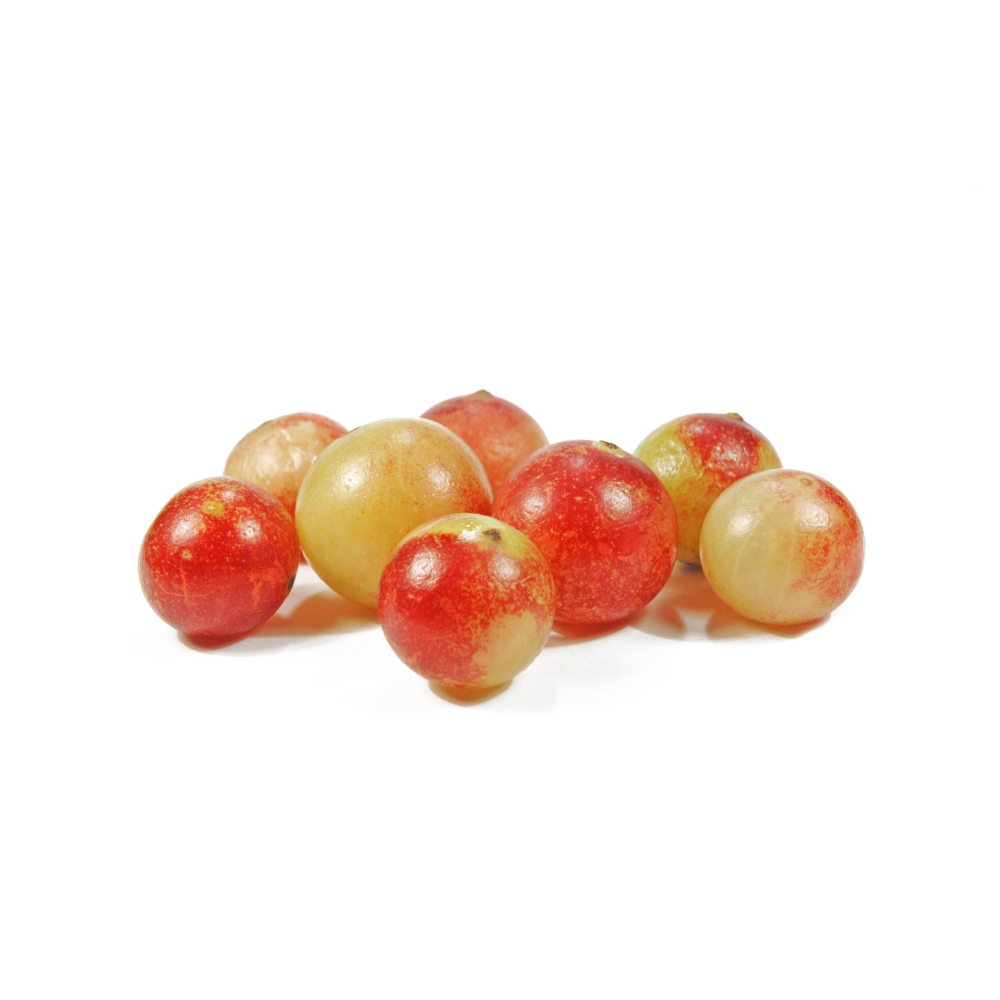
Concentration
Content by Source
Concentrations not reported. No percent-dry-weight or mg/g figures have been published for this compound in its source plants.
Vescalagin at a Glance
Vescalagin is a C-glucosidic ellagitannin — a large hydrolysable tannin (C₄₁H₂₆O₂₆, 934.6 Da) built from an open-chain glucose core triply acylated by a nonahydroxytriphenoyl unit, with the sugar additionally welded to that aromatic cage through a carbon–carbon bond at C-1. It is one of the two dominant tannins of oak and sweet-chestnut heartwood, which makes barrel-aged wine and whiskey the way most people actually encounter it. It is also one of the two main phenolics of camu-camu seed, and it turns up in pink wax apple, henna leaf and jabuticaba seed.
The point is the epimer pair. Vescalagin and its hydrolysable-tannin twin castalagin share a molecular formula and differ only in the orientation of the free hydroxyl at C-1 — and that single stereocentre is the whole story. Only vescalagin’s C-1 ionises readily to a benzylic-type carbocation, which is then captured, diastereoselectively, by whatever nucleophiles are around: ethanol, the flavanols catechin and epicatechin, anthocyanins, and thiols such as glutathione 1Reference 1In vitroThe chemistry of wine polyphenolic C-glycosidic ellagitannins targeting human topoisomerase II — in vitroView study →. Castalagin, with the opposite configuration, does none of this. That reactivity — not generic antioxidant capacity — is what distinguishes the molecule.
The honest ceiling is the one every hydrolysable tannin runs into. At 935 Da vescalagin is not meaningfully absorbed intact; incubated with human gut microbiota it is converted to urolithins A, B and C, and it is those small metabolites, not the parent tannin, that circulate 4Reference 4In vitroRole of human gut microbiota metabolism in the anti-inflammatory effect of traditionally used ellagitannin-rich plant materials — ex vivo human faecal incubation and in vitro macrophage assayView study →. There are no human trials of isolated vescalagin. What exists is a coherent in-vitro mechanism set, one genuinely useful rat series, and a much larger body of whole-extract work in which vescalagin is simply one of the two biggest peaks.
Vescalagin vs. Castalagin
Vescalagin and castalagin are routinely reported together, quantified together, and — wrongly — treated as interchangeable. They are not.
They are identical everywhere except C-1. Conformational analysis found vescalagin to be measurably more hydrophilic, more readily oxidised in solution and more thermally labile than castalagin, and traced all of it to the C-1 centre: the truncated pair vescalin and castalin, which lack the extra hexahydroxydiphenoyl unit, show the same split 2Reference 2Conformational interpretation of vescalagin and castalagin physicochemical propertiesView study →.
Only vescalagin condenses. In mildly acidic solution (wine, pH ~3–4) vescalagin — but not its C-1 epimer castalagin — captures nucleophilic partners to give condensation products with a single, defined configuration at C-1 1Reference 1In vitroThe chemistry of wine polyphenolic C-glycosidic ellagitannins targeting human topoisomerase II — in vitroView study →. The products are named after the parent: β-1-O-ethylvescalagin from ethanol, the acutissimins and epiacutissimins from catechin and epicatechin, an anthocyano-ellagitannin from oenin, and a glutathione adduct from the thiol 1Reference 1In vitroThe chemistry of wine polyphenolic C-glycosidic ellagitannins targeting human topoisomerase II — in vitroView study →. Several of these hybrids inhibit topoisomerase II more potently than etoposide in vitro, and vescalin and the hydrolysis product vescalene fully inhibited the enzyme at 10 µM 1Reference 1In vitroThe chemistry of wine polyphenolic C-glycosidic ellagitannins targeting human topoisomerase II — in vitroView study →.
Even the heat chemistry splits. When purified oak ellagitannins are toasted, castalagin is oxidised to dehydrocastalagin while vescalagin — differing only at C-1 — is instead reduced to deoxyvescalagin. The same divergence carries through to their dimers, roburin D (castalagin configuration) and roburin A (vescalagin configuration) 9Reference 9Identification and sensory evaluation of dehydro- and deoxy-ellagitannins formed upon toasting of oak wood (Quercus alba L.) — human sensory panelView study →.
But the reactivity does not predict every assay. Against PARP1, castalagin is the more potent of the pair (IC50 0.86 µM vs. vescalagin’s 2.67 µM) 22Reference 22In vitroCastalagin and vescalagin purified from leaves of Syzygium samarangense: dual inhibitory activity against PARP1 and DNA topoisomerase II — in vitroView study →. Against topoisomerase IIα it is vescalagin that has the dedicated mechanistic paper 3Reference 3In vitroThe polyphenolic ellagitannin vescalagin acts as a preferential catalytic inhibitor of the α isoform of human DNA topoisomerase II — in vitroView study →. Treat “vescalagin and castalagin” in a plant-extract paper as two molecules that happened to co-elute, not one activity.
Barrel Chemistry
Vescalagin’s practical significance outside the lab is that it is a reagent inside a wine barrel. Oak heartwood carries the C-glucosidic ellagitannins — vescalagin, castalagin, grandinin and the roburins A–E — and cooperage moves them into the drink 8,
Extraction and conversion have both been tracked. In red wine aged in oak barrels or in stainless steel with oak chips, the eight major oak-derived C-glucosidic ellagitannins were monitored alongside the rate of formation of the vescalagin-derived hybrids — β-1-O-ethylvescalagin and the acutissimins — with chips extracting faster but barrels producing higher final concentrations 6Reference 6Identification, amounts, and kinetics of extraction of C-glucosidic ellagitannins during wine aging in oak barrels or in stainless steel tanks with oak chipsView study →. Acutissimin A, first characterised in red wine as a DNA-topoisomerase inhibitor, is the flagship of that family 5Reference 5In vitroDNA topoisomerase inhibitor acutissimin A and other flavano-ellagitannins in red wine — in vitroView study →.
The quantities are small and worth stating plainly. Across 185 commercial red wines, total C-glucosidic ellagitannins averaged about 5.6 mg/L in Bordeaux and 2.8 mg/L in Rioja, with castalagin — not vescalagin — making up 57–64% of the total, and levels falling roughly by half between 12 and 24 months in barrel 7Reference 7Ellagitannins and flavano-ellagitannins: red wines tendency in different areas, barrel origin and ageing time in barrel and bottleView study →. Oak seasoning and toasting both degrade these tannins before the barrel is ever filled 10Reference 10Evolution of ellagitannins in Spanish, French, and American oak woods during natural seasoning and toastingView study →. So the barrel story is chemically rich and nutritionally trivial: a glass of oaked red wine delivers roughly one milligram of the whole class.
Sensorially they matter more than pharmacologically. Taste-dilution work identified vescalagin, castalagin, grandinin, the roburins and 33-deoxy-33-carboxyvescalagin as the key astringent molecules migrating from oak into bourbon whiskey and oak-matured red wine, and put human threshold concentrations on them for the first time 8,
What It's Used For
The isolated molecule has been tested properly in three places — a DNA-enzyme mechanism, a rat metabolic series, and gut-microbial conversion — and rides along inside whole extracts everywhere else.
Support is an experimental score — weighted by study type (human > animal > in vitro) and volume. A beta, not a validated metric. Nothing here is human, so every score is capped low by design; read the per-row basis.
The strongest applied evidence, and it comes from an unexpected direction. Vescalagin isolated from pink wax apple (Syzygium samarangense) fruit reproduced the whole extract’s glucose-uptake effect in insulin-resistant mouse hepatocytes at 6.25 µg/mL — a dose 16× lower than the extract needed 18Reference 18In vitroEffect of water extracts from edible Myrtaceae plants on uptake of 2-NBDG in TNF-α-treated FL83B mouse hepatocytes — in vitroView study →.
Given orally to high-fructose-fed rats at 30 mg/kg/day for four weeks, the isolate cut fasting glucose by ~45%, C-peptide by ~46% and triglycerides by ~43% while raising HDL 17Reference 17AnimalHypotriglyceridemic and hypoglycemic effects of vescalagin from pink wax apple [Syzygium samarangense] in high-fructose diet-induced diabetic ratsView study →.
Follow-ups showed reduced HOMA-IR and oral-glucose-tolerance AUC with upregulated hepatic insulin signalling, glycogen synthase and glycolytic proteins and downregulated gluconeogenic ones 20Reference 20AnimalVescalagin from pink wax apple alleviates hepatic insulin resistance and ameliorates glycemic metabolism abnormality in rats fed a high-fructose dietView study →, and protection of pancreatic β-cells against methylglyoxal-driven inflammation via Nrf2 and glyoxalase I 19,
Gap: one laboratory, one rat model, one plant source, no dose–response across species and no human data. Because oral vescalagin is largely converted before absorption 4Reference 4In vitroRole of human gut microbiota metabolism in the anti-inflammatory effect of traditionally used ellagitannin-rich plant materials — ex vivo human faecal incubation and in vitro macrophage assayView study →, it is not established that the parent molecule — rather than its microbial metabolites — is what acted.
Mechanistically the most interesting result on this molecule. Vescalagin preferentially inhibits the decatenation activity of topoisomerase IIα in vitro by a redox-independent mechanism; siRNA knockdown of Top2α (but not Top2β) conferred resistance in CEM leukaemia cells, and vescalagin did not induce DNA double-strand breaks — it blocked the formation of etoposide-driven Top2α–DNA covalent complexes instead. The authors describe it as the first catalytic Top2 inhibitor whose cytotoxicity is attributable, at least partly, to preferential Top2α inhibition 3Reference 3In vitroThe polyphenolic ellagitannin vescalagin acts as a preferential catalytic inhibitor of the α isoform of human DNA topoisomerase II — in vitroView study →.
Vescalagin purified from S. samarangense leaves is separately a PARP1 inhibitor (IC50 2.67 µM; castalagin 0.86 µM), with cellular poly(ADP-ribosyl)ation attenuated below 5 µM 22Reference 22In vitroCastalagin and vescalagin purified from leaves of Syzygium samarangense: dual inhibitory activity against PARP1 and DNA topoisomerase II — in vitroView study →.
Vescalagin isolated from henna (Lawsonia inermis) leaves was among the ellagitannins cytotoxic to oral squamous-carcinoma lines with lower toxicity to normal oral cells 23Reference 23In vitroTwo new C-glycosidic ellagitannins and accompanying tannins from Lawsonia inermis leaves and their cytotoxic effects — in vitroView study →.
Gap: all in vitro, in the low-micromolar range that intact vescalagin will never reach in plasma. The camu-camu and jabuticaba seed extracts in which vescalagin is a dominant peak show cytotoxicity only at hundreds of µg/mL of extract 30,
Two separate routes, and they should not be conflated. Directly, castalagin and vescalagin purified from Castanea sativa leaf extract inhibited IL-8 release from H. pylori-infected human gastric epithelial cells at an IC50 of about 11 µM, partly through attenuation of NF-κB signalling 12Reference 12In vitroEllagitannins from Castanea sativa Mill. leaf extracts impair H. pylori viability and infection-induced inflammation in human gastric epithelial cells — in vitroView study →. Indirectly — and more relevantly to swallowing anything — pure vescalagin incubated with human faecal microbiota yielded urolithins A, B and C, and those metabolites inhibited TNF-α release from human THP-1-derived macrophages, urolithin A at nanomolar concentrations 4Reference 4In vitroRole of human gut microbiota metabolism in the anti-inflammatory effect of traditionally used ellagitannin-rich plant materials — ex vivo human faecal incubation and in vitro macrophage assayView study →.
Gap: the direct effect is a mucosal, luminal one (gastric epithelium, high local concentration); the systemic anti-inflammatory action belongs to urolithins, which vary enormously between people by metabotype and which are shared with every other ellagitannin, including ellagic acid, corilagin and pentagalloylglucose.
Vescalagin and castalagin were isolated from camu-camu seed and peel specifically as the C-glycosidic ellagitannins responsible for the material’s antioxidant activity 13Reference 13In vitroAntioxidant activity of C-glycosidic ellagitannins from the seeds and peel of camu-camu (Myrciaria dubia) — in vitroView study →, and vescalagin is repeatedly named as one of the two main compounds in the antioxidant camu-camu seed and seed-coat extracts 14,
Gap: antioxidant assays here are chemical (DPPH, FRAP, Folin) run on extracts, where vescalagin’s contribution is inferred from co-occurrence rather than isolated and dose-ranged. “Tannins are antioxidant” is a class statement; it is not a finding about this molecule.
The cleanest pure-compound result is against Helicobacter pylori: alongside the leaf extract, purified castalagin and vescalagin reduced bacterial growth and adhesion to gastric epithelial cells, with a simulated gastric digestion suggesting the activity would survive oral administration 12Reference 12In vitroEllagitannins from Castanea sativa Mill. leaf extracts impair H. pylori viability and infection-induced inflammation in human gastric epithelial cells — in vitroView study →.
Camu-camu seed and seed-coat extracts in which vescalagin is a dominant phenolic inhibited Listeria monocytogenes, Pseudomonas aeruginosa, Salmonella spp., Bacillus cereus and Staphylococcus aureus 15,
Vescalagin derivatives were also among the ellagitannins with anti-HSV-1 activity in a screen of 22 tannins, though the most active members were the acutissimin condensation products rather than vescalagin itself 24Reference 24In vitroAnti-herpes simplex virus type 1 activity of specially selected groups of tannins — in vitroView study →.
Gap: only the H. pylori work used the pure molecule; the broad-spectrum results are extract results. A gastric-lumen antibacterial effect is plausible precisely because absorption is poor — but that is a local claim, not a systemic one.
This is the claim most often mis-stated, so it is worth being exact. Five solvent extracts of camu-camu seed showed in-vitro antimalarial activity (IC50 24.2–240.8 µg/mL against P. falciparum W2 and 3D7) and antischistosomal activity (ED50 418.4 to >1000 µg/mL). Statistical correlation attributed the effect chiefly to methylvescalagin (r = −0.548 to −0.951) and 2,4-dihydroxybenzoic acid 16Reference 16In vitroCamu-camu (Myrciaria dubia) seeds as a novel source of bioactive compounds with promising antimalarial and antischistosomicidal properties — in vitroView study →.
Methylvescalagin is a distinct molecule — the C-1 methyl ether of vescalagin, i.e. a product of exactly the C-1 substitution chemistry described above, and reported in its own right as 1-O-methylvescalagin from henna leaves 23Reference 23In vitroTwo new C-glycosidic ellagitannins and accompanying tannins from Lawsonia inermis leaves and their cytotoxic effects — in vitroView study →.
Gap: neither vescalagin nor methylvescalagin was isolated and tested here. This is a correlation between a marker’s abundance in crude extracts and those extracts’ activity — the weakest inferential form in this literature, with no in-vivo and no human follow-up.
Mechanisms
| Target / pathway | Effect | Relevant to |
|---|---|---|
| DNA topoisomerase IIα | catalytic (non-poisoning) inhibition of decatenation; redox-independent; isoform-preferential over Top2β; no double-strand breaks | antiproliferative |
| PARP1 | inhibition (IC50 2.67 µM); cellular poly(ADP-ribosyl)ation attenuated <5 µM | antiproliferative |
| NF-κB → IL-8 | reduced IL-8 release from H. pylori-infected gastric epithelium (IC50 ~11 µM) | anti-inflammatoryantibacterial |
| Hepatic insulin signalling; glycogen synthase; gluconeogenic enzymes | upregulated insulin signalling and glycolysis, downregulated gluconeogenesis in high-fructose rats | glycaemic / metabolic |
| Nrf2, glyoxalase I, RAGE, JNK/p38 | β-cell protection against methylglyoxal-driven inflammation and AGE formation (rat) | glycaemic / metabolic |
| Benzylic C-1 carbocation → nucleophile capture | condensation with ethanol, flavanols, anthocyanins and thiols; generates acutissimins and ethylvescalagin | barrel chemistry; the epimer distinction |
| Protein binding / precipitation (tannin class) | astringency; mucosal tightening; mineral and protein binding in the gut | astringent |
| Gut microbiota (ellagitannin → urolithin conversion) | hydrolysis to ellagic acid and bacterial conversion to urolithins A/B/C | everything systemic |
The load-bearing row is the last one. Every micromolar in-vitro number above is reached in the gut lumen or a culture dish, not in plasma.
Pharmacokinetics
Vescalagin is a 935-Da polyphenol with sixteen phenolic hydroxyls — water-soluble, but far outside the size range for passive absorption, and there is no dedicated human pharmacokinetic study of it. What has been shown directly is its fate rather than its concentration: pure vescalagin incubated with human faecal samples yields urolithins A, B and C, the same metabolites produced from ellagitannin-rich plant materials such as Quercus robur bark, meadowsweet, raspberry leaf and Potentilla 4Reference 4In vitroRole of human gut microbiota metabolism in the anti-inflammatory effect of traditionally used ellagitannin-rich plant materials — ex vivo human faecal incubation and in vitro macrophage assayView study →. Urolithin output varies sharply between individuals (the urolithin metabotype A / B / 0 split), so the systemic exposure that follows a dose of vescalagin is a personal variable, not a fixed one.
Two consequences follow, and both should be applied to every result here. First, an in-vitro IC50 of 2–11 µM for the intact molecule 3,
Clinical Trials
None. There are no completed, ongoing or registered human trials of isolated vescalagin, and no human study of a vescalagin-standardised extract. The nearest human data are sensory: threshold concentrations for its astringency in oak-matured beverages 8,
| Completed | Planned | Terminated | Preclinical |
|---|---|---|---|
| —(human sensory threshold work only) | — | — | Rat metabolic series; Top2α/PARP1 mechanism; antibacterial and antiproliferative in vitro |
Last checked: August 2026.
Isolate vs. Plant Studies
This molecule sits in an unusual middle position. The isolate genuinely has been studied — purified vescalagin was used for the Top2α mechanism work 3Reference 3In vitroThe polyphenolic ellagitannin vescalagin acts as a preferential catalytic inhibitor of the α isoform of human DNA topoisomerase II — in vitroView study →, the PARP1 assay 22Reference 22In vitroCastalagin and vescalagin purified from leaves of Syzygium samarangense: dual inhibitory activity against PARP1 and DNA topoisomerase II — in vitroView study →, the H. pylori gastric-epithelium experiments 12Reference 12In vitroEllagitannins from Castanea sativa Mill. leaf extracts impair H. pylori viability and infection-induced inflammation in human gastric epithelial cells — in vitroView study →, the urolithin-production study 4Reference 4In vitroRole of human gut microbiota metabolism in the anti-inflammatory effect of traditionally used ellagitannin-rich plant materials — ex vivo human faecal incubation and in vitro macrophage assayView study →, and the entire pink wax apple rat series 17,
The source literature is the opposite. Almost every paper that names vescalagin in camu-camu, jabuticaba, seed coats or Combretum is characterising a whole extract in which vescalagin and castalagin are simply the two largest chromatographic peaks 13,
The practical rule: read a “vescalagin and castalagin were the main compounds” sentence as a composition statement, not an attribution.
Its Role in Plants
Vescalagin is a structural defence tannin of woody tissue. In the Fagaceae it accumulates in heartwood, where hydrolysable tannins deter herbivores and wood-degrading fungi and contribute to natural durability; in Myrtaceae it concentrates in seed, seed coat and peel — the tissues that protect the embryo — rather than in the edible pulp 13,
Its content is not fixed. Ellagitannin concentrations in oak heartwood fall during natural seasoning and fall further during toasting at the cooperage, with the same proportional losses across Spanish, French and American oaks 10Reference 10Evolution of ellagitannins in Spanish, French, and American oak woods during natural seasoning and toastingView study →; chestnut heartwood behaves similarly, and toasting shifts the balance from tannins toward low-molecular-weight lignin-derived phenolics 11Reference 11Phenolic compounds in chestnut (Castanea sativa Mill.) heartwoodView study →. Part of that loss is not destruction but transformation — the stereochemistry-dependent conversion of vescalagin to deoxyvescalagin and of castalagin to dehydrocastalagin 9Reference 9Identification and sensory evaluation of dehydro- and deoxy-ellagitannins formed upon toasting of oak wood (Quercus alba L.) — human sensory panelView study →.
Prevalence in Nature
Vescalagin’s distribution is narrower than “tannins are everywhere” would suggest, because the C-glucosidic subclass is not universal. Its stronghold is the Fagaceae: it is a major heartwood ellagitannin of Quercus robur, Q. petraea, Q. pyrenaica, Q. faginea and American white oak Q. alba, alongside castalagin, grandinin and roburins A–E 8,
Its second home is the Myrtaceae, where it moves into fruit tissue. It was isolated from camu-camu (Myrciaria dubia) seed and peel as the compound class carrying that material’s antioxidant activity 13Reference 13In vitroAntioxidant activity of C-glycosidic ellagitannins from the seeds and peel of camu-camu (Myrciaria dubia) — in vitroView study →, and is repeatedly reported as one of the two dominant phenolics of camu-camu seed and seed-coat extracts 14,
Finally, it occurs in things people drink, by migration rather than biosynthesis: oak-aged red wine and bourbon whiskey both carry it, at low mg/L, along with its condensation products 6,
Major Natural Sources
| Source | Part | What is reported |
|---|---|---|
| Pedunculate / sessile oak (Quercus robur, Q. petraea) | heartwood | Major ellagitannin with castalagin, grandinin, roburins A–E; falls with seasoning and toasting 8, |
| American white oak (Quercus alba) | heartwood | Key astringent ellagitannin migrating into bourbon whiskey and oaked wine 8, |
| Sweet chestnut (Castanea sativa) | heartwood, leaf | One of the two main ellagitannins; castalagin + vescalagin ≈ 1% w/w of a leaf extract 11, |
| Camu-camu (Myrciaria dubia) | seed, seed coat, peel | Isolated as an antioxidant C-glycosidic ellagitannin; one of the two dominant phenolics of seed extracts 13, |
| Pink wax apple (Syzygium samarangense) | fruit, leaf | Purified as the active glucose-uptake principle; also the PARP1/Top2 source material 18, |
| Henna (Lawsonia inermis) | leaf | Isolated with 1-O-methylvescalagin and castalagin; cytotoxic to oral carcinoma lines 23Reference 23In vitroTwo new C-glycosidic ellagitannins and accompanying tannins from Lawsonia inermis leaves and their cytotoxic effects — in vitroView study → |
| Jabuticaba (Myrciaria jaboticaba) | seed | Named among the main phenolics of the seed extract 25Reference 25AnimalPolyphenols of jabuticaba [Myrciaria jaboticaba] seeds incorporated in a yogurt model exert antioxidant activity and modulate gut microbiota of 1,2-dimethylhydrazine-induced colon cancer in ratsView study → |
| Combretum racemosum | root, leaf | Predominant phenolic of the root extract 26Reference 26In vitroPharmacological property and cytotoxic effect showing antiproliferative potency in human melanoma cell lines (A375) of Combretum racemosum leaf and root extracts used in Benin — in vitroView study → |
| Oak-aged red wine | beverage | Whole C-glucosidic ellagitannin class ≈ 2.8–5.6 mg/L; castalagin is 57–64% of it 7Reference 7Ellagitannins and flavano-ellagitannins: red wines tendency in different areas, barrel origin and ageing time in barrel and bottleView study → |
Discovery & Synthesis
Vescalagin was first isolated in 1967 by Walter Mayer’s group at Heidelberg, in the second paper of their series on the tannins of chestnut and oak wood, which reported castalagin, vescalagin, castalin and vescalin together 27Reference 27Mayer W, Gabler W, Riester A, Korger H (1967). Über die Gerbstoffe aus dem Holz der Edelkastanie und der Eiche, II. Die Isolierung von Castalagin, Vescalagin, Castalin und Vescalin. Justus Liebigs Annalen der Chemie, 707:177–181. https://doi.org/10.1002/jlac.19677070125View study →. The names trace to the wood they came from — Castanea sativa, long known under the synonym C. vesca.
Its structure has been unusually stubborn. The core architecture — a nonahydroxytriphenoyl unit acylating the 2-, 3- and 5-O positions of an open-chain glucose and bonded to C-1 through a C-aryl glucosidic linkage, with a hexahydroxydiphenoyl unit at 4,6-O — was settled decades ago, but the stereochemistry of the triphenoyl moiety was revised as recently as 2015, on the basis of DFT calculations of ¹H/¹³C NMR spectra and TDDFT modelling of ECD spectra 28Reference 28Reinvestigation of the stereochemistry of the C-glycosidic ellagitannins, vescalagin and castalaginView study →.
Total synthesis arrived only in 2025. Quideau’s group completed (−)-vescalagin by a bioinspired route: intramolecular atroposelective copper–diamine-mediated phenolic couplings of gallates to build the hexahydroxydiphenoyl and nonahydroxytriphenoyl units, then a methoxyamine-driven opening of a glucopyranose intermediate followed by a phenolic aldol-type reaction to forge the C-aryl glucosidic bond; the minor epimer from that step delivered the first total synthesis of castalagin as well 29Reference 29Total synthesis of (−)-vescalagin, the iconic member of the C-glucosidic ellagitannin familyView study →.
Supply today is entirely extractive. Research-grade vescalagin is purified from oak or chestnut wood, or from the plant under study — the wax apple, henna and camu-camu papers each isolated their own 13,
Patents: not yet researched.
Toxicity & Safety
Vescalagin carries a low flag. It is a food- and beverage-borne tannin with centuries of incidental human exposure through oak-aged wine and spirits and through chestnut and camu-camu products, no reported human toxicity, and negligible systemic absorption. The flag is low rather than absent because the cautions below are real, and because no formal toxicology package exists for the isolate.
- Long-standing dietary exposure at trivial doses. Oak-aged wine and whiskey deliver the whole C-glucosidic ellagitannin class at a few mg/L 7Reference 7Ellagitannins and flavano-ellagitannins: red wines tendency in different areas, barrel origin and ageing time in barrel and bottleView study →.
- Not a topoisomerase poison. Unlike etoposide, vescalagin inhibits Top2α catalytically and did not induce DNA double-strand breaks in treated cells 3Reference 3In vitroThe polyphenolic ellagitannin vescalagin acts as a preferential catalytic inhibitor of the α isoform of human DNA topoisomerase II — in vitroView study →.
- Tannin-class gut effects. Large hydrolysable tannins are astringent, bind dietary protein and minerals (notably iron), and can irritate the stomach at high intakes — a real consideration for concentrated seed or wood extracts, not for a glass of wine.
- No isolate toxicology. No repeat-dose, genotoxicity or reproductive dataset exists for pure vescalagin; the only in-vivo exposure is 30 mg/kg/day for four weeks in rats, with no adverse effects reported 17Reference 17AnimalHypotriglyceridemic and hypoglycemic effects of vescalagin from pink wax apple [Syzygium samarangense] in high-fructose diet-induced diabetic ratsView study →.
- Interactions are uncharacterised. No CYP, P-gp or transporter data exist for this molecule; tannin-class mineral binding is the only interaction that can be stated with confidence.
Full Safety & Interactions Detail
What the class implies. Vescalagin’s safety profile is dominated by what hydrolysable tannins do in the gut rather than in tissue. Its size and polyphenol count mean it is largely retained in the lumen, where astringency, protein precipitation and mineral chelation are the expected effects; the same properties that make it a useful gastric-mucosal antibacterial 12Reference 12In vitroEllagitannins from Castanea sativa Mill. leaf extracts impair H. pylori viability and infection-induced inflammation in human gastric epithelial cells — in vitroView study → make concentrated tannin extracts hard on an irritated stomach and capable of reducing non-haem iron absorption. Camu-camu seed and seed-coat extracts, in which vescalagin is a dominant peak, are food-industry byproduct streams — not the fruit pulp people eat — and should be treated as concentrated tannin preparations 14,
Mechanistic flags worth naming. This molecule interferes with two DNA-maintenance enzymes in vitro: topoisomerase IIα 3Reference 3In vitroThe polyphenolic ellagitannin vescalagin acts as a preferential catalytic inhibitor of the α isoform of human DNA topoisomerase II — in vitroView study → and PARP1 22Reference 22In vitroCastalagin and vescalagin purified from leaves of Syzygium samarangense: dual inhibitory activity against PARP1 and DNA topoisomerase II — in vitroView study →. That is the basis of the antiproliferative interest, and it is also the reason not to hand-wave the safety question. The reassuring detail is the mode: catalytic Top2α inhibition prevented, rather than stabilised, Top2–DNA covalent complexes and produced no double-strand breaks in CEM cells 3Reference 3In vitroThe polyphenolic ellagitannin vescalagin acts as a preferential catalytic inhibitor of the α isoform of human DNA topoisomerase II — in vitroView study → — the opposite of the mechanism that makes topoisomerase poisons genotoxic. Selectivity has also been observed at the cell level, with the seed extracts more toxic to carcinoma lines than to IMR90 normal fibroblasts 14,
Reproductive and developmental note (prose only). No reproductive or developmental toxicity data exist for isolated vescalagin. Pregnancy and lactation decisions belong to the herb or product page where intake is decided, not to a molecule-level phytochemistry page.
What is not known. No drug-interaction, hepatic-enzyme or transporter assessment has been performed on this compound. Silence here is absence of data, not evidence of safety.
Dosage
There is no human dose for vescalagin and no vescalagin-standardised product. The figures below are the doses and concentrations used in research, recorded for orientation only.
| Setting | Form | Dose / concentration |
|---|---|---|
| High-fructose-fed rats, 4 weeks | isolated vescalagin, oral | 30 mg/kg/day 17, |
| Insulin-resistant mouse hepatocytes | isolated vescalagin | 6.25 µg/mL 18Reference 18In vitroEffect of water extracts from edible Myrtaceae plants on uptake of 2-NBDG in TNF-α-treated FL83B mouse hepatocytes — in vitroView study → |
| Topoisomerase IIα / PARP1 assays | isolated vescalagin | low micromolar (PARP1 IC50 2.67 µM) 3, |
| H. pylori-infected gastric epithelium | purified vescalagin / castalagin | IL-8 IC50 ≈ 11 µM 12Reference 12In vitroEllagitannins from Castanea sativa Mill. leaf extracts impair H. pylori viability and infection-induced inflammation in human gastric epithelial cells — in vitroView study → |
| Camu-camu seed extract, cell assays | whole extract | IC50 608–1,116 µg/mL 30Reference 30In vitroFrom byproduct to a functional ingredient: camu-camu (Myrciaria dubia) seed extract as an antioxidant agent in a yogurt model — in vitroView study → |
| Oak-aged red wine | dietary | ≈ 2.8–5.6 mg/L for the whole C-glucosidic ellagitannin class 7Reference 7Ellagitannins and flavano-ellagitannins: red wines tendency in different areas, barrel origin and ageing time in barrel and bottleView study → |
The gap between the last two rows and the first four is the entire point. Concentrations that inhibit enzymes in a dish are three orders of magnitude above anything a beverage supplies, and even the effective rat dose was given orally into a gut that converts most of it to ellagic acid and urolithins before absorption 4Reference 4In vitroRole of human gut microbiota metabolism in the anti-inflammatory effect of traditionally used ellagitannin-rich plant materials — ex vivo human faecal incubation and in vitro macrophage assayView study →. These are research figures, not a personal recommendation.
References
- Quideau S, Jourdes M, Lefeuvre D, Montaudon D, Saucier C, Glories Y, Pardon P, Pourquier P (2005). The chemistry of wine polyphenolic C-glycosidic ellagitannins targeting human topoisomerase II — in vitro. Chemistry – A European Journal. https://pubmed.ncbi.nlm.nih.gov/16110520/
- Vivas N, Laguerre M, Pianet de Boissel I, Vivas de Gaulejac N, Nonier MF (2004). Conformational interpretation of vescalagin and castalagin physicochemical properties. Journal of Agricultural and Food Chemistry. https://pubmed.ncbi.nlm.nih.gov/15053554/
- Auzanneau C, Montaudon D, Jacquet R, Puyo S, Pouységu L, Deffieux D, Elkaoukabi-Chaibi A, De Giorgi F, Ichas F, Quideau S, Pourquier P (2012). The polyphenolic ellagitannin vescalagin acts as a preferential catalytic inhibitor of the α isoform of human DNA topoisomerase II — in vitro. Molecular Pharmacology. https://pubmed.ncbi.nlm.nih.gov/22528119/
- Piwowarski JP, Granica S, Zwierzyńska M, Stefańska J, Schopohl P, Melzig MF, Kiss AK (2014). Role of human gut microbiota metabolism in the anti-inflammatory effect of traditionally used ellagitannin-rich plant materials — ex vivo human faecal incubation and in vitro macrophage assay. Journal of Ethnopharmacology. https://pubmed.ncbi.nlm.nih.gov/24969824/
- Quideau S, Jourdes M, Saucier C, Glories Y, Pardon P, Baudry C (2003). DNA topoisomerase inhibitor acutissimin A and other flavano-ellagitannins in red wine — in vitro. Angewandte Chemie International Edition. https://pubmed.ncbi.nlm.nih.gov/14679557/
- Jourdes M, Michel J, Saucier C, Quideau S, Teissedre PL (2011). Identification, amounts, and kinetics of extraction of C-glucosidic ellagitannins during wine aging in oak barrels or in stainless steel tanks with oak chips. Analytical and Bioanalytical Chemistry. https://pubmed.ncbi.nlm.nih.gov/21479542/
- Rasines-Perea Z, Jacquet R, Jourdes M, Quideau S, Teissedre PL (2019). Ellagitannins and flavano-ellagitannins: red wines tendency in different areas, barrel origin and ageing time in barrel and bottle. Biomolecules. https://pubmed.ncbi.nlm.nih.gov/31362436/
- Glabasnia A, Hofmann T (2006). Sensory-directed identification of taste-active ellagitannins in American (Quercus alba L.) and European oak wood (Quercus robur L.) and quantitative analysis in bourbon whiskey and oak-matured red wines — human sensory panel. Journal of Agricultural and Food Chemistry. https://pubmed.ncbi.nlm.nih.gov/16637699/
- Glabasnia A, Hofmann T (2007). Identification and sensory evaluation of dehydro- and deoxy-ellagitannins formed upon toasting of oak wood (Quercus alba L.) — human sensory panel. Journal of Agricultural and Food Chemistry. https://pubmed.ncbi.nlm.nih.gov/17444655/
- Cadahía E, Varea S, Muñoz L, Fernández de Simón B, García-Vallejo MC (2001). Evolution of ellagitannins in Spanish, French, and American oak woods during natural seasoning and toasting. Journal of Agricultural and Food Chemistry. https://pubmed.ncbi.nlm.nih.gov/11513647/
- Sanz M, Cadahía E, Esteruelas E, Muñoz AM, Fernández de Simón B, Hernández T, Estrella I (2010). Phenolic compounds in chestnut (Castanea sativa Mill.) heartwood. Effect of toasting at cooperage. Journal of Agricultural and Food Chemistry. https://pubmed.ncbi.nlm.nih.gov/20687564/
- Piazza S, Martinelli G, Fumagalli M, Pozzoli C, Maranta N, Giavarini F, Colombo L, Nicotra G, Vicentini SF, Genova F, De Fabiani E, Sangiovanni E, Dell’Agli M (2023). Ellagitannins from Castanea sativa Mill. leaf extracts impair H. pylori viability and infection-induced inflammation in human gastric epithelial cells — in vitro. Nutrients. https://pubmed.ncbi.nlm.nih.gov/36986236/
- Kaneshima T, Myoda T, Nakata M, Fujimori T, Toeda K, Nishizawa M (2016). Antioxidant activity of C-glycosidic ellagitannins from the seeds and peel of camu-camu (Myrciaria dubia) — in vitro. LWT – Food Science and Technology, 69:76–81. https://doi.org/10.1016/j.lwt.2016.01.024
- Fidelis M, do Carmo MAV, da Cruz TM, Azevedo L, Myoda T, Miranda Furtado M, et al. (2020). Camu-camu seed (Myrciaria dubia) — from side stream to an antioxidant, antihyperglycemic, antiproliferative, antimicrobial, antihemolytic, anti-inflammatory, and antihypertensive ingredient — in vitro. Food Chemistry. https://pubmed.ncbi.nlm.nih.gov/31816536/
- Willemann JR, Escher GB, Kaneshima T, Furtado MM, Sant’Ana AS, Vieira do Carmo MA, Azevedo L, Granato D (2020). Response surface optimization of phenolic compounds extraction from camu-camu (Myrciaria dubia) seed coat based on chemical properties and bioactivity — in vitro. Journal of Food Science. https://pubmed.ncbi.nlm.nih.gov/32645216/
- do Carmo MAV, Fidelis M, Sanchez CA, Castro AP, Camps I, Colombo FA, Marques MJ, Myoda T, Granato D, Azevedo L (2020). Camu-camu (Myrciaria dubia) seeds as a novel source of bioactive compounds with promising antimalarial and antischistosomicidal properties — in vitro. Food Research International. https://pubmed.ncbi.nlm.nih.gov/32846532/
- Shen SC, Chang WC (2013). Hypotriglyceridemic and hypoglycemic effects of vescalagin from pink wax apple [Syzygium samarangense] in high-fructose diet-induced diabetic rats. Food Chemistry. https://pubmed.ncbi.nlm.nih.gov/23122137/
- Chang WC, Shen SC (2013). Effect of water extracts from edible Myrtaceae plants on uptake of 2-NBDG in TNF-α-treated FL83B mouse hepatocytes — in vitro. Phytotherapy Research. https://pubmed.ncbi.nlm.nih.gov/22532499/
- Chang WC, Shen SC, Wu JS (2013). Protective effects of vescalagin from pink wax apple [Syzygium samarangense] fruit against methylglyoxal-induced inflammation and carbohydrate metabolic disorder in rats. Journal of Agricultural and Food Chemistry. https://pubmed.ncbi.nlm.nih.gov/23819528/
- Huang DW, Chang WC, Wu JS, Shih RW, Shen SC (2016). Vescalagin from pink wax apple alleviates hepatic insulin resistance and ameliorates glycemic metabolism abnormality in rats fed a high-fructose diet. Journal of Agricultural and Food Chemistry. https://pubmed.ncbi.nlm.nih.gov/26800576/
- Chang WC, Wu JS, Shen SC (2021). Vescalagin from pink wax apple (Syzygium samarangense) protects pancreatic β-cells against methylglyoxal-induced inflammation in rats. Plants (Basel). https://pubmed.ncbi.nlm.nih.gov/34371651/
- Kamada Y, Yakabu H, Ichiba T, Tamanaha A, Shimoji M, Kato M, Norimoto C, Yamashiro R, Miyagi I, Sakudo A, Tanaka Y (2018). Castalagin and vescalagin purified from leaves of Syzygium samarangense: dual inhibitory activity against PARP1 and DNA topoisomerase II — in vitro. Fitoterapia. https://pubmed.ncbi.nlm.nih.gov/29928967/
- Orabi MAA, Sakagami H, Umemura N, Alyami HS, Hatano T (2021). Two new C-glycosidic ellagitannins and accompanying tannins from Lawsonia inermis leaves and their cytotoxic effects — in vitro. Fitoterapia. https://pubmed.ncbi.nlm.nih.gov/33984438/
- Vilhelmova-Ilieva N, Jacquet R, Deffieux D, Pouységu L, Sylla T, Chassaing S, Nikolova I, Quideau S, Galabov AS (2019). Anti-herpes simplex virus type 1 activity of specially selected groups of tannins — in vitro. Drug Research. https://pubmed.ncbi.nlm.nih.gov/30134445/
- Fidelis M, Santos JS, Escher GB, Rocha RS, Cruz AG, Cruz TM, et al. (2021). Polyphenols of jabuticaba [Myrciaria jaboticaba] seeds incorporated in a yogurt model exert antioxidant activity and modulate gut microbiota of 1,2-dimethylhydrazine-induced colon cancer in rats. Food Chemistry. https://pubmed.ncbi.nlm.nih.gov/32717686/
- Dah-Nouvlessounon D, Chokki M, Hoteyi IMS, Fassinou F, Ranga F, Fetea F, et al. (2023). Pharmacological property and cytotoxic effect showing antiproliferative potency in human melanoma cell lines (A375) of Combretum racemosum leaf and root extracts used in Benin — in vitro. Antioxidants (Basel). https://pubmed.ncbi.nlm.nih.gov/38247456/
- Mayer W, Gabler W, Riester A, Korger H (1967). Über die Gerbstoffe aus dem Holz der Edelkastanie und der Eiche, II. Die Isolierung von Castalagin, Vescalagin, Castalin und Vescalin. Justus Liebigs Annalen der Chemie, 707:177–181. https://doi.org/10.1002/jlac.19677070125
- Matsuo Y, Wakamatsu H, Omar M, Tanaka T (2015). Reinvestigation of the stereochemistry of the C-glycosidic ellagitannins, vescalagin and castalagin. Organic Letters. https://pubmed.ncbi.nlm.nih.gov/25496565/
- Larrieu R, Cornu A, Pouységu L, Deffieux D, Quideau S (2025). Total synthesis of (−)-vescalagin, the iconic member of the C-glucosidic ellagitannin family. Chemistry – A European Journal, 31(34):e202501159. https://doi.org/10.1002/chem.202501159
- Fidelis M, de Oliveira SM, Sousa Santos J, Bragueto Escher G, Silva Rocha R, Gomes Cruz A, Araújo Vieira do Carmo M, Azevedo L, Kaneshima T, Oh WY, Shahidi F, Granato D (2020). From byproduct to a functional ingredient: camu-camu (Myrciaria dubia) seed extract as an antioxidant agent in a yogurt model — in vitro. Journal of Dairy Science. https://pubmed.ncbi.nlm.nih.gov/31759605/



