
Compound Monograph
Vincamine
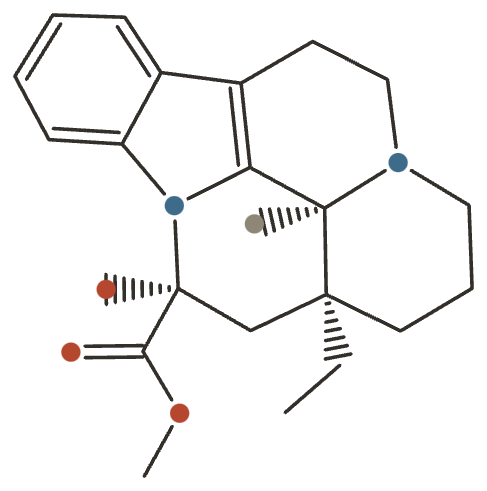
Vincamine is the principal indole alkaloid of lesser periwinkle (Vinca minor) — a prescription cerebral vasodilator in parts of Europe, an unapproved supplement elsewhere, and the plant starting material from which vinpocetine is semi-synthesised. It is not one of the Catharanthus chemotherapy vinca alkaloids.

Sources · 3
Where Does It Come From?
Vincamine is a naturally occurring monoterpenoid indole alkaloid (eburnamine-vincamine group), found in Lesser periwinkle, Greater periwinkle and 1 other source. It is flagged as moderately toxic.
 Principal source Lesser Periwinkle Vinca minor Herb monograph →
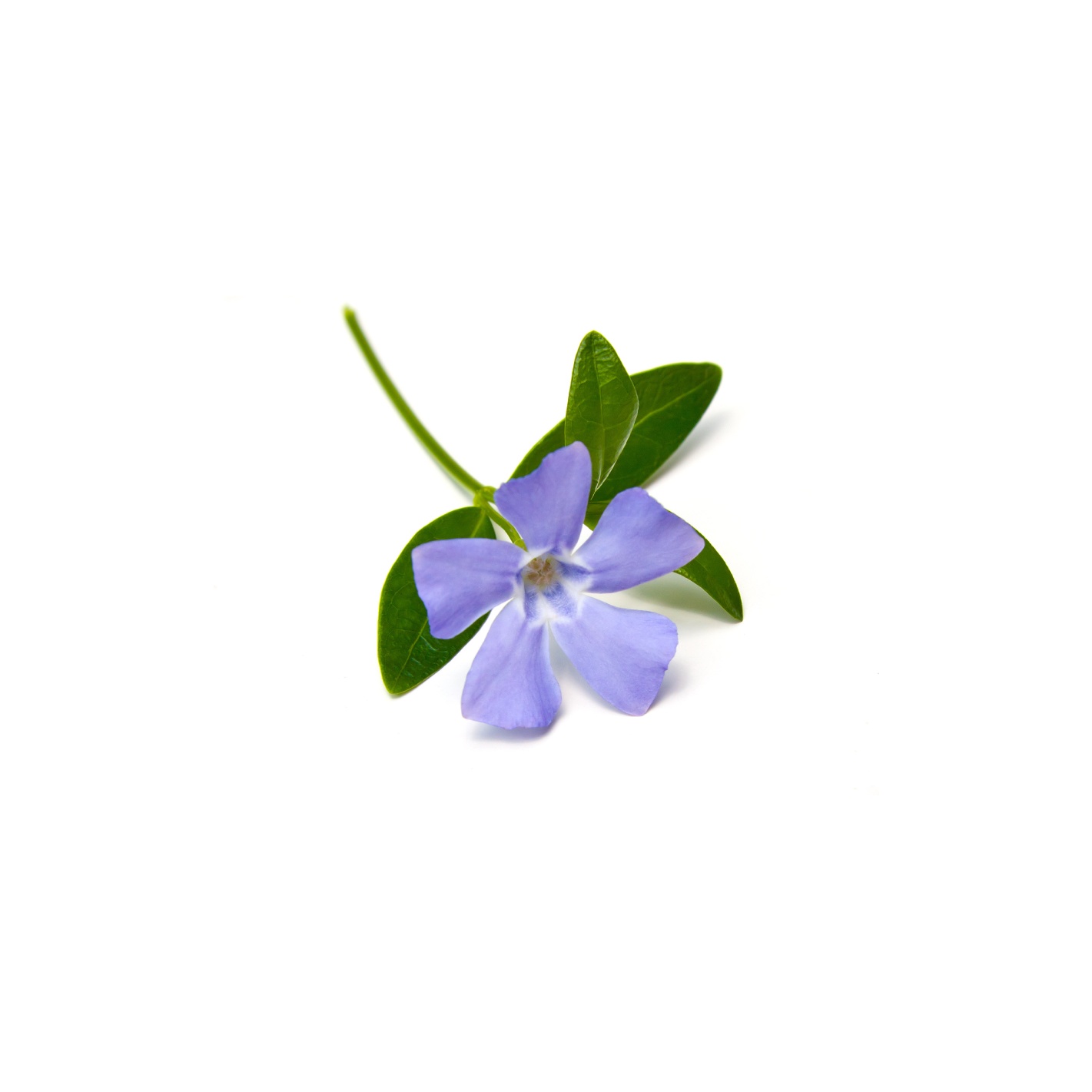 Source Periwinkle Vinca major Herb monograph →
Concentration
Content by Source
Concentrations not reported. No percent-dry-weight or mg/g figures have been published for this compound in its source plants.
Vincamine at a Glance
Vincamine is the defining alkaloid of lesser periwinkle (Vinca minor) — a monoterpenoid indole alkaloid of the eburnamine–vincamine group, first isolated in 1953 and developed within a decade into a European “cerebroactive” medicine 1,
It occupies an unusual regulatory position. In parts of Europe vincamine is a prescription drug with a marketing authorisation for age-related cognitive and neurosensory decline 12Reference 12Résumé des Caractéristiques du Produit — VINCARUTINE, gélule (vincamine 20 mg / rutoside 40 mg) — drug labelView study →; elsewhere it is sold as an unapproved nootropic ingredient. The human evidence behind that authorisation is real but thin by modern standards — small, mostly 1978–1996 trials, several of them in patient populations and with outcome measures that no regulator would accept for a new approval today 5,
Vincamine also matters for what was made from it. Dehydrating vincamine gives apovincamine, and esterifying that gives vinpocetine — the far better-known nootropic, which occurs in no living plant 3,
Vinca vs. Catharanthus — Why Vincamine Is Not a Chemotherapy Drug
Three different plants are called “periwinkle”, and their alkaloid claims are not interchangeable.
- Vinca minor (lesser periwinkle) — the commercial source of vincamine and its eburnamine relatives 23,
25Reference 23The Vinca minor genome highlights conserved evolutionary traits in monoterpene indole alkaloid synthesis — genomicsView study →Reference 25In vitroThe phytochemical analysis of Vinca L. species leaf extracts is correlated with the antioxidant, antibacterial, and antitumor effects — in vitroView study → . - Vinca major (greater periwinkle) — the same genus, but vincamine is a minor and variable component here; its characteristic alkaloids are vincamajine, reserpinine, majdine and relatives 25,
29Reference 25In vitroThe phytochemical analysis of Vinca L. species leaf extracts is correlated with the antioxidant, antibacterial, and antitumor effects — in vitroView study →Reference 29In vitroIndole alkaloids from Vinca major and V. minor growing in Turkey — in vitroView study → . - Catharanthus roseus (Madagascar periwinkle) — a different genus entirely, and the source of the bisindole alkaloids vinblastine and vincristine 4Reference 4ReviewVincamine, from an antioxidant and a cerebral vasodilator to its anticancer potential — reviewView study →.
Those Catharanthus bisindoles are cytotoxic antimitotic chemotherapy agents that bind tubulin, are given intravenously in oncology, and cause myelosuppression, neuropathy and the hazards that come with cancer drugs. Vincamine shares none of that. It is a single indole alkaloid roughly half their molecular size, with no tubulin mechanism and no chemotherapy indication; the two groups happen to sit in the same plant family (Apocynaceae) and share a marketing nickname 4Reference 4ReviewVincamine, from an antioxidant and a cerebral vasodilator to its anticancer potential — reviewView study →.
This is not a pedantic distinction — it contaminates the primary literature. A striking number of recent vincamine papers name Catharanthus roseus as the botanical source, which is simply wrong: the species that accumulates vincamine is Vinca minor 23,
A Prescription Drug in Some Countries, a Supplement in Others
Vincamine is one of four eburnamine–vincamine alkaloids that reached approved clinical use, alongside vinburnine (eburnamonine), brovincamine (its brominated analogue) and the semi-synthetic vinpocetine 13Reference 13ReviewThe golden decade of eburnamine-vincamine alkaloid synthesis: 2015 to present — reviewView study →.
In France, vincamine remains on the market under a marketing authorisation for the “adjunctive symptomatic treatment of chronic pathological cognitive and neurosensory deficit in the elderly (excluding Alzheimer’s disease and other dementias)”, classified as a peripheral vasodilator and dosed at one 20 mg capsule three times daily with meals 12Reference 12Résumé des Caractéristiques du Produit — VINCARUTINE, gélule (vincamine 20 mg / rutoside 40 mg) — drug labelView study →. It has also been marketed as vincamine tartrate and as salts such as vincamine teprosilate and vincamine cromesilate, and as sustained-release capsules under brand names including Oxybral and Vincafor.
The regulatory dossier is worth reading as a document about its era. In the French summary of product characteristics, the sections for pharmacokinetics, drug interactions and undesirable effects are all marked “sans objet” — not applicable 12Reference 12Résumé des Caractéristiques du Produit — VINCARUTINE, gélule (vincamine 20 mg / rutoside 40 mg) — drug labelView study →. That is what a legacy authorisation from before modern documentation standards looks like: the product is licensed, but the label carries none of the quantitative safety and PK data a contemporary approval would require. The indication itself explicitly excludes Alzheimer’s disease.
Outside those markets vincamine has no drug approval — including in the United States, where it is sold as a nootropic supplement ingredient with no FDA evaluation of efficacy. Its derivative vinpocetine has been the subject of specific US regulatory action and a fetal-harm warning; see the vinpocetine page rather than assuming that verdict transfers to the parent molecule.
From Vincamine to Apovincamine to Vinpocetine
The best-known thing derived from Vinca minor is not vincamine but vinpocetine, and the relationship is a two-step semi-synthesis from the plant alkaloid.
- Vincamine — extracted from V. minor leaf. Chemically it is the methyl ester of a hydroxy-acid: it carries both a tertiary hydroxyl at C-14 and a methyl ester at C-16.
- Apovincamine — formed by dehydration of vincamine, eliminating that C-14 hydroxyl to create a ring double bond. Apovincamine occurs in Vinca in its own right and shares the class’s flow-modulating, antihypoxic profile 3Reference 3ReviewEburnamine derivatives and the brain — reviewView study →.
- Vinpocetine — the ethyl ester of apovincaminic acid (cis-ethyl apovincaminate), made by transesterification. Its synthesis was reported by Lörincz and colleagues at Gedeon Richter in 1976, and it does not occur in any plant 14,
3Reference 14The synthesis of ethyl apovincaminate — synthetic chemistryView study →Reference 3ReviewEburnamine derivatives and the brain — reviewView study → .
The point of the exercise was pharmacological, not chemical elegance. Vincamine’s methyl ester is its metabolic soft spot — ester cleavage is the main route by which the body disposes of it, and elimination is rapid across every species studied 15Reference 15ReviewPharmacokinetics and metabolism of vincamine and related compounds — reviewView study →. Removing the hydroxyl and swapping the ester changed the molecule’s stability, brain penetration and receptor profile: vinpocetine acquired phosphodiesterase-1 inhibition and sodium-channel blockade that vincamine does not have, and became the compound with the imaging and PET data behind it 3Reference 3ReviewEburnamine derivatives and the brain — reviewView study →.
It is worth being clear about what that did and did not achieve. Vinpocetine is a better-characterised molecule; it is not a better-evidenced treatment. A Cochrane review of vinpocetine in cognitive impairment and dementia concluded the evidence was inconclusive and did not support clinical use 30Reference 30Meta-analysisVinpocetine for cognitive impairment and dementia — Cochrane systematic review / meta-analysisView study → — a harsher verdict than the one the older vincamine trials attracted, largely because vinpocetine was examined more rigorously.
What It's Used For
Vincamine’s evidence has an unusual shape: a small, old, human clinical literature that once supported a real drug approval, sitting on top of a large, recent and internally consistent rodent literature about antioxidant and anti-inflammatory organ protection that has never been tested in people.
Support is an experimental score — weighted by study type (human > animal > in vitro) and volume. A beta, not a validated metric. The top two rows carry old human data; everything below them is animal or cell work on the isolated alkaloid, so read the per-row basis rather than the number.
The application vincamine was licensed for, and the only one with controlled human data. Isolated vincamine, not the plant: a 12-week double-blind placebo-controlled trial in 142 patients aged 50–85 with degenerative or vascular dementia found 30 mg twice daily statistically superior to placebo on all four pre-specified endpoints, including the SCAG geriatric rating scale 5Reference 5RCTTherapeutic efficacy of vincamine in dementia — randomised, double-blind, placebo-controlled trialView study →.
A double-blind crossover trial in multi-infarct dementia reported improved verbal memory alongside a measured rise in cerebral blood flow 6Reference 6RCTThe effects of bromvincamine and vincamine on regional cerebral blood flow and mental functions in patients with multi-infarct dementia — double-blind crossover clinical trialView study →, a double-blind study of vincamine cromesilate reported clinical, psychological and neurophysiological improvement in cerebrovascular insufficiency 9Reference 9RCTMikus, P., et al. (1978). [Clinical, psychological and neurophysiological results of a double-blind study on vincamine-cromesilate in patients with cerebrovascular insufficiency] — double-blind clinical trial. Arzneimittel-Forschung. https://pubmed.ncbi.nlm.nih.gov/582924/View study →, and two trials of the teprosilate salt at 120 mg/day reported better behavioural and mnemonic performance in chronic cerebrovascular disease 7,
France’s marketing authorisation still carries this indication — pointedly excluding Alzheimer’s disease 12Reference 12Résumé des Caractéristiques du Produit — VINCARUTINE, gélule (vincamine 20 mg / rutoside 40 mg) — drug labelView study →.
Gap: every trial is small, 1978–1996, and pre-dates modern dementia-trial standards (no adequately powered long-duration RCT, heterogeneous scales, little published data on attrition). The Cochrane verdict on the closely related vinpocetine — inconclusive, insufficient to support clinical use 30Reference 30Meta-analysisVinpocetine for cognitive impairment and dementia — Cochrane systematic review / meta-analysisView study → — is a fair guide to how this literature would fare under contemporary review.
The mechanism the cognitive claim rests on, and the better-established half of the story. Vincamine is a selective cerebral vasodilator: it raises blood flow and oxygen/glucose availability in ageing or ischaemic brain tissue without the systemic effects of a general vasodilator 4Reference 4ReviewVincamine, from an antioxidant and a cerebral vasodilator to its anticancer potential — reviewView study →.
In a double-blind crossover study in ten patients with multi-infarct dementia, oral vincamine significantly increased global cerebral blood flow measured by ¹³³Xe inhalation, reduced left–right hemispheric asymmetry, and improved verbal memory in the same subjects 6Reference 6RCTThe effects of bromvincamine and vincamine on regional cerebral blood flow and mental functions in patients with multi-infarct dementia — double-blind crossover clinical trialView study →.
The antihypoxic property — improved tolerance of low oxygen — is shared across the eburnamine–vincamine alkaloids as a class 3Reference 3ReviewEburnamine derivatives and the brain — reviewView study →.
Early Hungarian pharmacology established the cardiovascular profile: vincamine lowered arterial blood pressure in rats 53Reference 53AnimalThe effect of vincamine on the blood pressure of the rat — animal pharmacologyView study → and altered cerebral and coronary blood supply in the first clinical work on the drug Devincan 54Reference 54Clinical trialSolti, F., et al. (1962). [The effect of Devincan on the blood supply of the brain and on the coronary vessels] — clinical study. Orvosi Hetilap. https://pubmed.ncbi.nlm.nih.gov/13915068/View study →.
Gap: raised perfusion is a surrogate endpoint, not a clinical outcome, and the human measurements are on a purified drug at pharmaceutical doses. The same vasoactivity is implicated in the cardiac arrhythmias seen with injected vincamine — the benefit and the hazard come from the same property 31,
The most active current research line, and entirely animal work on the isolated alkaloid. Vincamine has protected rodent liver across five independently modelled injuries: hepatic fibrosis via inhibition of S100A4-mediated farnesoid-X-receptor activation, published in the British Journal of Pharmacology 44Reference 44AnimalVincamine ameliorates hepatic fibrosis via inhibiting S100A4-mediated farnesoid X receptor activation — animal modelView study →; alcoholic liver injury through a CDK1–glycolysis–NLRP3 immunometabolic axis 40Reference 40AnimalVincamine attenuates alcoholic liver injury through modulation of a CDK1-glycolysis-NLRP3 immunometabolic axis — animal modelView study →; sepsis-associated liver injury via TNF-α/Nrf-2/Keap-1 41Reference 41AnimalVincamine exerts hepato-protective activity during colon-ligation-puncture-induced sepsis by modulating oxidative stress, apoptosis and TNFα/Nrf-2/Keap-1 — animal modelView study →; intrahepatic cholestasis through NF-κB/PDGF/KLF6/PPARγ and PI3K/Akt 42Reference 42AnimalVincamine alleviates intrahepatic cholestasis in rats through modulation of NF-κB/PDGF/KLF6/PPARγ and PI3K/Akt pathways — animal modelView study →; and methotrexate-induced fibrosis 43Reference 43AnimalVincamine mitigates a methotrexate-induced liver fibrosis model — animal modelView study →.
In gentamicin toxicity it reduced combined liver and kidney damage by inducing cytoprotective autophagy through AMPK/mTOR 45Reference 45AnimalVincamine induces cytoprotective autophagy via regulation of AMPK/mTOR signalling in gentamicin-induced hepatotoxicity and nephrotoxicity in rats — animal modelView study →.
The consistency across unrelated labs, injury models and readouts is genuinely the strongest feature of the modern vincamine literature.
Gap: all of it is rodent or cell work; there is no human liver-disease trial, no dose-ranging in people, and no whole-plant preparation anywhere in the set. Consistency across preclinical models is not the same as clinical effect.
The mechanistic thread running under every protective result above, and the frame a 2023 review uses for the whole molecule 4Reference 4ReviewVincamine, from an antioxidant and a cerebral vasodilator to its anticancer potential — reviewView study →.
Across hepatic, renal, cardiac, gastric and neural models, isolated vincamine raises superoxide dismutase and glutathione, lowers malondialdehyde, and does so through Nrf2/HO-1 activation, while suppressing NF-κB and the downstream cytokines TNF-α, IL-6 and IL-1β 4,
It reduced renal ischaemia/reperfusion damage by attenuating MAPK and apoptosis signalling 47Reference 47AnimalVincamine modulates the effect of pantoprazole in renal ischemia/reperfusion injury by attenuating MAPK and apoptosis signalling — animal modelView study →, cut gastric-mucosal IL-6/IL-1β/TNF-α mRNA in an ethanol ulcer model 48Reference 48AnimalProtective effects of vincamine against ethanol-induced gastric ulcer by attenuation of IL-6, IL-1β and TNF-α mRNA expression in gastric mucosa of BALB/c mice — animal modelView study →, and modulated Nrf2/HO-1, Klotho and pERK/NF-κB crosstalk in gentamicin cardiotoxicity 46Reference 46AnimalMechanistic insights into vincamine’s cardio-protection against gentamicin toxicity: crosstalk between Nrf2/HO-1 and related pathways — animal modelView study →.
In neuronal PC12 cells it reduced amyloid-β-induced reactive-oxygen-species production and apoptosis 38Reference 38In vitroVincamine alleviates amyloid-β 25-35 peptide-induced cytotoxicity in PC12 cells — in vitroView study →.
Gap: no human antioxidant-biomarker study of any kind. Nrf2/NF-κB modulation is also the single most commonly reported activity in natural-product pharmacology, so on its own it discriminates poorly between molecules.
Direct neuronal protection in disease models, over and above raw perfusion — again all isolate, all preclinical. In a mouse model of Parkinson’s disease, vincamine reduced dopaminergic-neuron loss, neuroinflammation and oxidative damage via NF-κB and Nrf2/HO-1 36Reference 36AnimalVincamine alleviates brain injury by attenuating neuroinflammation and oxidative damage in a mouse model of Parkinson’s disease through NF-κB and Nrf2/HO-1 signalling — animal modelView study →.
It protected retinal ganglion cells in a rat model of anterior ischaemic optic neuropathy 39Reference 39AnimalEfficacy of vincamine treatment in a rat model of anterior ischaemic optic neuropathy — animal modelView study →, and reduced amyloid-β-induced reactive-oxygen-species production and apoptosis in neuronal PC12 cells 38Reference 38In vitroVincamine alleviates amyloid-β 25-35 peptide-induced cytotoxicity in PC12 cells — in vitroView study →.
In female 3×Tg-AD mice it ameliorated Alzheimer-like pathology as a GPR40 agonist, suppressing neuroinflammation and tau hyperphosphorylation while improving synaptic plasticity 37Reference 37AnimalVincamine as a GPR40 agonist shows potential in treating female Alzheimer’s disease — animal modelView study →.
Blood–brain-barrier access is not the constraint: vincamine equilibrates rapidly between blood and hippocampus in rats 16Reference 16AnimalMeasurement and pharmacokinetics of vincamine in rat blood and brain using microdialysis — animal pharmacokineticsView study → and shows minimal interaction with the P-gp and BCRP efflux transporters 17Reference 17In vitroIn vitro characterization of transport and metabolism of the alkaloids: vincamine, vinpocetine and eburnamonine — in vitroView study →.
Gap: no human neuroprotection data. The GPR40/tau result is a single recent study in a genetically engineered mouse line, awaiting independent replication.
A historic application, not a current one. Two small comparative trials from the late 1970s tested injected vincamine in the acute phase of stroke: one against papaverine given parenterally 11Reference 11Clinical trialComparative study of the clinical effect of vincamine versus papaverine given parenterally in the acute phase of stroke — clinical trialView study →, the other as vincamine plus glycerol versus glycerol plus placebo 10Reference 10RCTComparative study of the clinical effects of vincamine + glycerol versus glycerol + placebo in the acute phase of stroke — randomised controlled trialView study →. Both are of their era — small, open to bias by modern standards, and conducted before thrombolysis, thrombectomy and stroke-unit care redefined the field.
Gap: the comparators and standard of care are obsolete, and this is the route with vincamine’s documented cardiac hazard 31,
The newest and most interesting mechanistic claim: that vincamine acts as an agonist at GPR40 (FFAR1), a free-fatty-acid receptor previously pursued as a diabetes target. On that basis, isolated vincamine ameliorated diabetic peripheral neuropathy in mice 49Reference 49AnimalVincamine as an agonist of G-protein-coupled receptor 40 effectively ameliorates diabetic peripheral neuropathy in mice — animal modelView study →, reduced pulmonary fibrosis in mice 50Reference 50AnimalVincamine as an agonist of G protein-coupled receptor 40 effectively ameliorates pulmonary fibrosis in mice — animal modelView study →, and produced the Alzheimer’s-model benefit described above 37Reference 37AnimalVincamine as a GPR40 agonist shows potential in treating female Alzheimer’s disease — animal modelView study →.
If it holds, GPR40 would supply a single upstream receptor explaining several of the scattered protective effects.
Gap: three mouse studies from an overlapping research cluster, no human data, and no independent confirmation of the receptor binding itself. Treat this as a promising hypothesis about mechanism, not an established property.
Thin, and the application most vulnerable to the Catharanthus confusion. A 2023 review documents cancer-cell cytotoxicity for vincamine and modulation of tumour-relevant proteins — acetylcholinesterase, MAPK, NF-κB, Nrf2 and TBX3 — and frames vincamine chiefly as an antioxidant whose anticancer potential is downstream of that 4Reference 4ReviewVincamine, from an antioxidant and a cerebral vasodilator to its anticancer potential — reviewView study →.
In mice bearing Ehrlich solid carcinoma, vincamine loaded into silver nanoparticles reduced tumour size and weight and improved survival 51Reference 51AnimalEvaluation of vincamine loaded with silver nanoparticles as a new potential therapeutic agent against Ehrlich’s solid carcinoma in mice — animal modelView study →.
Gap: cell-line data plus a single mouse study whose effect depended heavily on the nanoparticle delivery system rather than free vincamine. It must not be read as support for the Catharanthus vinca alkaloids’ oncology record, which belongs to different molecules with a different mechanism 4Reference 4ReviewVincamine, from an antioxidant and a cerebral vasodilator to its anticancer potential — reviewView study →.
Mechanisms
| Target / pathway | Effect | Relevant to |
|---|---|---|
| Cerebral arterial smooth muscle | selective vasodilation → ↑ regional cerebral blood flow, ↑ O₂/glucose availability | cognitive & cerebrovascular; stroke |
| Tissue hypoxia tolerance (class property of eburnamine–vincamine alkaloids) | antihypoxic — improved neuronal survival under low oxygen | cerebrovascular insufficiency |
| Nrf2 / HO-1 | activation → ↑ SOD & glutathione, ↓ malondialdehyde | antioxidant; hepato-nephro-cardio-neuroprotection |
| NF-κB (and TNF-α / IL-6 / IL-1β output) | suppression → reduced inflammatory transcription | anti-inflammatory; organ protection |
| GPR40 (FFAR1) | agonism → PKA/CREB/BDNF ↑, GSK3β/tau phosphorylation ↓ (mouse) | Alzheimer’sdiabetic neuropathypulmonary fibrosis models |
| AMPK / mTOR | induction of cytoprotective autophagy | gentamicin hepato-/nephrotoxicity |
| S100A4 / farnesoid-X-receptor; NLRP3; MAPK | fibrosis and injury signalling attenuated | hepatoprotection; renal ischaemia/reperfusion |
| P-glycoprotein & BCRP efflux transporters | minimal interaction — consistent with ready CNS access | brain penetration |
| Cardiac repolarisation (inferred from case series) | QT prolongation and ventricular arrhythmia with rapid parenteral dosing | toxicity |
Vincamine is notably not a phosphodiesterase-1 inhibitor or sodium-channel blocker — those are vinpocetine’s mechanisms, acquired in the semi-synthesis, and should not be attributed back to the parent alkaloid 3Reference 3ReviewEburnamine derivatives and the brain — reviewView study →.
Pharmacokinetics
Pharmacokinetics is the compound’s central practical problem, and the reason the derivative exists.
Vincamine is a poorly water-soluble alkaloid 18Reference 18AnimalRationale of using Vinca minor Linne dry extract phytocomplex as a vincamine’s oral bioavailability enhancer — animal modelView study →. Its structure carries a methyl ester, and ester cleavage is the principal route of elimination; a dedicated review of vincamine and its relatives found elimination to be rapid in every species studied, with vincamine, vinpocetine and the eburnamine derivatives differing markedly in metabolic pathway 15Reference 15ReviewPharmacokinetics and metabolism of vincamine and related compounds — reviewView study →. In vitro, vincamine’s intrinsic clearance in liver microsomes is substantially higher than eburnamonine’s, and all three alkaloids caused only minimal stimulation of P-gp and BCRP ATPase activity — consistent with unimpeded blood–brain-barrier crossing 17Reference 17In vitroIn vitro characterization of transport and metabolism of the alkaloids: vincamine, vinpocetine and eburnamonine — in vitroView study →. Rat microdialysis confirms that: unbound vincamine equilibrates rapidly between blood and hippocampus, and co-administered cyclosporine significantly raised unbound vincamine in both blood and brain — a transporter-mediated interaction signal worth noting even though the efflux-ATPase data are negative 16Reference 16AnimalMeasurement and pharmacokinetics of vincamine in rat blood and brain using microdialysis — animal pharmacokineticsView study →.
The practical consequence is that vincamine is heavily formulation-dependent:
- Prolonged-release oral products were developed and marketed precisely to smooth its short exposure; comparative bioavailability work on three marketed prolonged-release formulations found in-vitro release behaviour that varied with pH and required a flow-through-cell method to correlate with in-vivo data at all 20Reference 20In vitroIn vitro-in vivo correlation and comparative bioavailability of vincamine in prolonged-release preparations — pharmaceuticsView study →.
- Polyalkyl cyanoacrylate nanoparticles roughly doubled half-life and distribution volume after IV dosing in rabbits and considerably increased oral bioavailability versus an aqueous solution 19Reference 19AnimalDisposition kinetics and oral bioavailability of vincamine-loaded polyalkyl cyanoacrylate nanoparticles — animal modelView study →.
- Most interestingly, a standardised Vinca minor leaf dry extract raised vincamine’s oral bioavailability sevenfold over the pure alkaloid in rats — attributed to protonation of the alkaloid by other extract constituents, improving dissolution in physiological fluid 18Reference 18AnimalRationale of using Vinca minor Linne dry extract phytocomplex as a vincamine’s oral bioavailability enhancer — animal modelView study →.
No verified human half-life, oral bioavailability percentage or plasma-concentration figure for vincamine could be sourced. The French label’s pharmacokinetics section is literally blank 12Reference 12Résumé des Caractéristiques du Produit — VINCARUTINE, gélule (vincamine 20 mg / rutoside 40 mg) — drug labelView study →. That absence is itself informative: this is a molecule licensed before such data were required, and the gap has never been retrospectively filled.
Clinical Trials
Controlled human trials of vincamine belong almost entirely to 1978–1996 and to European clinical practice; there is no active modern trial programme for the parent alkaloid, and the newer registered work in this alkaloid family is on vinpocetine.
| Completed | Planned | Terminated | Preclinical |
|---|---|---|---|
| ~6–8(isolated alkaloid & salts, historic) | 0 | 0 | ~30+ |
Last checked: July 2026.
Isolate vs. Plant Studies
Vincamine sits firmly on the isolate side of this divide, with one striking exception that runs the other way.
Every human trial used the purified drug — vincamine free base, vincamine tartrate, or the teprosilate and cromesilate salts, at 60–120 mg/day 5,
The exception is a pharmacokinetic one, and it cuts against the usual assumption that the isolate is the more potent thing. A standardised, alkaloid-enriched V. minor leaf dry extract delivered sevenfold higher oral bioavailability of vincamine than the pure alkaloid in rats — the surrounding phytocomplex protonated the alkaloid and improved its dissolution 18Reference 18AnimalRationale of using Vinca minor Linne dry extract phytocomplex as a vincamine’s oral bioavailability enhancer — animal modelView study →. The plant matrix, in other words, is a better delivery vehicle for this molecule than the isolate is.
That is not a licence to take periwinkle. Whole-herb preparations are unstandardised, their alkaloid content varies with cultivar, plant part and provenance, and both source species carry a moderate-toxicity flag 25,
Its Role in Plants
Vinca minor produces roughly fifty monoterpenoid indole alkaloids, and vincamine is the one it mainly accumulates — the genome assembly published in 2022 makes that explicit, alongside a metabolic survey across four tissue types and the functional validation of a vincadifformine-16-hydroxylase 23Reference 23The Vinca minor genome highlights conserved evolutionary traits in monoterpene indole alkaloid synthesis — genomicsView study →. Like all monoterpenoid indole alkaloids, vincamine originates in the condensation of tryptamine (from tryptophan) with secologanin (from the iridoid/terpenoid pathway) to give strictosidine, the universal precursor from which the aspidosperma and eburnane skeletons diverge.
The plant does not make a single product and stop. Two promiscuous, regiospecific CYP450 hydroxylases (VmV10H and VmPs10H) diversify the alkaloid pool, accepting several substrates and feeding the akuammiline and akuammine branches — which is how V. minor ends up carrying vincaminoreine, akuammidine, pericyclivine and apparicine alongside vincamine 24Reference 24In vitroPromiscuous and regiospecific Vinca minor hydroxylases for opioid akuammine biosynthesis and monoterpenoid indole alkaloid diversification — in vitroView study →. This kind of enzymatic promiscuity is characteristic of Apocynaceae alkaloid biosynthesis and is why the genus produces chemically related but pharmacologically distinct molecules from one another.
No specific ecological function — herbivore deterrence, antimicrobial defence — has been demonstrated for vincamine itself in the verified literature, though monoterpenoid indole alkaloids as a class are generally understood as chemical defence.
Prevalence in Nature
Vincamine is essentially a Vinca molecule, and within the genus its distribution is uneven enough to matter clinically.
A direct comparison of four Vinca leaf extracts found vincamine present in V. minor, V. major and V. major var. variegata — and not detected in V. herbacea, with V. minor carrying the richest alkaloid content overall 25Reference 25In vitroThe phytochemical analysis of Vinca L. species leaf extracts is correlated with the antioxidant, antibacterial, and antitumor effects — in vitroView study →. That ranking matches the commercial reality: V. minor is the species farmed and extracted for vincamine, while V. major contains it only as a minor and variable component 23,
Quantification is the weak point. The one verified figure comes from hydroalcoholic macerates of Romanian-grown V. minor, where vincamine was the most abundant of four detected indole alkaloids at 2.459 ± 0.035 mg per 100 g dry weight of leaf 26Reference 26Determination of active ingredients, mineral composition and antioxidant properties of hydroalcoholic macerates of Vinca minor L. plant from the Dobrogea area — analyticalView study →. That is an extraction-recovered figure from a specific solvent series, not a whole-plant content assay, and it should not be read as the plant’s total vincamine load. No reliable percentage-of-dry-weight figure for vincamine in V. minor has been verified, and published alkaloid levels vary strongly with cultivar, plant part and growing environment 29Reference 29In vitroIndole alkaloids from Vinca major and V. minor growing in Turkey — in vitroView study →.
The one non-plant source on record is genuinely interesting: an endophytic fungus isolated from V. minor — strain Vm-J2, one of ten endophytes screened — produced a component matching authentic vincamine by both TLC retardation factor and HPLC retention time, raising the prospect of fermentation-based production 27Reference 27In vitroVincamine-producing endophytic fungus isolated from Vinca minor — in vitroView study →. The identification was chromatographic rather than spectroscopic, so treat it as a promising lead rather than a settled second natural source.
Discovery & Synthesis
Vincamine was first isolated in 1953 by Emil Schlittler and Alfred Furlenmeier at CIBA in Basel, who reported it as “Vincamin, ein Alkaloid aus Vinca minor L.” — the name simply marks the genus 1Reference 1Vincamin, ein Alkaloid aus Vinca minor L. (Apocynaceae) — phytochemical isolationView study →. Its pharmacology followed almost immediately: the French pharmacologist Raymond-Hamet published on the physiological properties of “vincamine, a crystallised alkaloid of lesser periwinkle” in 1954 2Reference 2Raymond-Hamet (1954). [Various physiological properties of vincamine, a crystallized alkaloid of lesser periwinkle (Vinca minor L.)] — animal pharmacology. Comptes Rendus des Séances de la Société de Biologie. https://pubmed.ncbi.nlm.nih.gov/13219901/View study →. Development into a medicine was largely Hungarian: the effect of vincamine on rat blood pressure was characterised in 1962 53Reference 53AnimalThe effect of vincamine on the blood pressure of the rat — animal pharmacologyView study →, and the same year brought the first clinical reports on cerebral and coronary blood supply under the trade name Devincan 54Reference 54Clinical trialSolti, F., et al. (1962). [The effect of Devincan on the blood supply of the brain and on the coronary vessels] — clinical study. Orvosi Hetilap. https://pubmed.ncbi.nlm.nih.gov/13915068/View study →.
Total synthesis arrived two decades after isolation. A high-yield stereospecific total synthesis of vincamine was published in JACS in 1974 21Reference 21A high yield stereospecific total synthesis of vincamine — synthetic chemistryView study →, and in 1977 Oppolzer and colleagues reported a new enantioselective total synthesis of natural vincamine via an intramolecular Mannich reaction of a silyl enol ether 22Reference 22A new enantioselective total synthesis of natural vincamine via an intramolecular Mannich reaction of a silyl enol ether — synthetic chemistryView study → — the harder problem, since the natural product is the (+)-enantiomer and the skeleton carries contiguous stereocentres at C20/C21. Synthetic interest never went away: a 2026 Natural Product Reports review surveys a “golden decade” of eburnamine–vincamine synthesis from 2015 onward, driven largely by asymmetric catalysis, and identifies the rigid polycyclic skeleton plus those contiguous stereocentres as the enduring challenge 13Reference 13ReviewThe golden decade of eburnamine-vincamine alkaloid synthesis: 2015 to present — reviewView study →.
Manufacture today remains extraction, not synthesis. Vincamine is obtained commercially from Vinca minor leaf; the plant is cultivated for the purpose, and the genome work describes vincamine explicitly as the commercially used product of the species 23,
Patents: not yet researched.
Toxicity & Safety
Vincamine carries a moderate flag. It was tolerated well enough in oral trials to hold a marketing authorisation for decades, but it has a specific, repeatedly documented human hazard by the parenteral route, and its label carries essentially no formal safety documentation.
- Oral use at trial doses was reasonably tolerated. Multiple 1978–96 double-blind trials at 60–120 mg/day ran to completion without a prominent adverse-effect signal 5,
7, .9Reference 5RCTTherapeutic efficacy of vincamine in dementia — randomised, double-blind, placebo-controlled trialView study →Reference 7RCTEvaluation of the effect of vincamine teprosilate on behavioural performances of patients affected with chronic cerebrovascular disease — randomised controlled trialView study →Reference 9RCTMikus, P., et al. (1978). [Clinical, psychological and neurophysiological results of a double-blind study on vincamine-cromesilate in patients with cerebrovascular insufficiency] — double-blind clinical trial. Arzneimittel-Forschung. https://pubmed.ncbi.nlm.nih.gov/582924/View study → - Ventricular arrhythmia with injected vincamine. Case series document severe ventricular arrhythmias, QT prolongation and torsades de pointes after parenteral dosing — worst with rapid IV administration, hypokalaemia or existing heart disease 31,
32, .33Reference 31Case reportDany, F., et al. (1980). [Severe ventricular arrhythmia following parenteral administration of vincamine: predisposing factors in 6 cases] — case series. Archives des Maladies du Cœur et des Vaisseaux. https://pubmed.ncbi.nlm.nih.gov/6779745/View study →Reference 32Case reportDany, F., et al. (1981). [Cardiac toxicity of vincamine: seven cases of ventricular arrhythmias by parenteral administration] — case reports. Thérapie. https://pubmed.ncbi.nlm.nih.gov/7233373/View study →Reference 33Case reportRichichi, I., et al. (1978). [A case of torsade de pointes during vincamine therapy] — case report. Minerva Cardioangiologica. https://pubmed.ncbi.nlm.nih.gov/652156/View study → - Theoretical additive QT risk. Combining with other QT-prolonging drugs or potassium-depleting diuretics is a plausible but formally untested caution inferred from those case series 31,
32, .34Reference 31Case reportDany, F., et al. (1980). [Severe ventricular arrhythmia following parenteral administration of vincamine: predisposing factors in 6 cases] — case series. Archives des Maladies du Cœur et des Vaisseaux. https://pubmed.ncbi.nlm.nih.gov/6779745/View study →Reference 32Case reportDany, F., et al. (1981). [Cardiac toxicity of vincamine: seven cases of ventricular arrhythmias by parenteral administration] — case reports. Thérapie. https://pubmed.ncbi.nlm.nih.gov/7233373/View study →Reference 34ReviewFauchier, J. P., et al. (1993). [Drug-induced ventricular tachycardia] — review. Archives des Maladies du Cœur et des Vaisseaux. https://pubmed.ncbi.nlm.nih.gov/8267504/View study → - The regulatory dossier is empty where it matters. The French label marks interactions, pharmacokinetics and undesirable effects “not applicable” — absence of listed adverse effects is a documentation artefact, not evidence of safety 12Reference 12Résumé des Caractéristiques du Produit — VINCARUTINE, gélule (vincamine 20 mg / rutoside 40 mg) — drug labelView study →.
- Contact sensitisation reported. Vincamine tartrate has caused contact sensitivity in an occupational/handling context 35Reference 35Case reportContact sensitivity to vincamine tartrate — case reportView study →.
Full Safety & Interactions Detail
Cardiac arrhythmia — the documented human harm. The clearest hazard is cardiac and route-specific. Two French case series from 1980–81 reported severe ventricular arrhythmias following parenteral vincamine, together covering thirteen cases and identifying rapid intravenous administration, hypokalaemia and pre-existing heart disease as predisposing factors 31,
On the reported blood-dyscrasia signal — it does not verify. Vincamine is sometimes described as carrying a haematological risk (thrombocytopenia, agranulocytosis, blood dyscrasia). A dedicated search of PubMed and Europe PMC for vincamine alongside thrombocytopenia, thrombopenia, agranulocytosis, purpura, leukopenia and pancytopenia returned no vincamine-specific case reports or series. The myelosuppression genuinely associated with the name “vinca alkaloid” belongs to vinblastine and vincristine — the Catharanthus bisindoles 4Reference 4ReviewVincamine, from an antioxidant and a cerebral vasodilator to its anticancer potential — reviewView study → — and this looks like one more instance of the confusion described above. Reported as a negative finding rather than a clearance: the French label lists no adverse effects at all 12Reference 12Résumé des Caractéristiques du Produit — VINCARUTINE, gélule (vincamine 20 mg / rutoside 40 mg) — drug labelView study →, so a rare haematological effect could simply be undocumented rather than absent.
Contact sensitisation. Contact sensitivity to vincamine tartrate has been reported in the dermatological literature — relevant mainly to handling of the raw material rather than to patients taking it 35Reference 35Case reportContact sensitivity to vincamine tartrate — case reportView study →.
Interactions — assessed only indirectly. No human drug-interaction study of vincamine exists. Two mechanistic signals are on record: cyclosporine co-administration significantly raised unbound vincamine in rat blood and brain 16Reference 16AnimalMeasurement and pharmacokinetics of vincamine in rat blood and brain using microdialysis — animal pharmacokineticsView study →, while vincamine itself showed only minimal interaction with the P-gp and BCRP efflux transporters in vitro 17Reference 17In vitroIn vitro characterization of transport and metabolism of the alkaloids: vincamine, vinpocetine and eburnamonine — in vitroView study →. Additive risk with QT-prolonging drugs and potassium-lowering diuretics follows logically from the arrhythmia series 31,
Reproductive findings (prose, not a verdict). There is no dedicated reproductive-toxicity dataset for vincamine itself. Its semi-synthetic derivative vinpocetine impaired embryo-fetal development in rats and rabbits 52Reference 52AnimalEmbryo-fetal development studies with the dietary supplement vinpocetine in the rat and rabbit — animal modelView study →, which is the basis of the warning carried on the vinpocetine page; whether that transfers to the structurally distinct parent alkaloid has not been studied. The French label declines to recommend use in pregnancy or lactation on the grounds of absent data, noting the product is used almost exclusively in elderly patients 12Reference 12Résumé des Caractéristiques du Produit — VINCARUTINE, gélule (vincamine 20 mg / rutoside 40 mg) — drug labelView study →. Pregnancy and lactation decisions belong on the herb or product page where intake is actually decided.
What is not known. No modern repeat-dose toxicology, genotoxicity package or carcinogenicity study for isolated vincamine was located in this pass. The whole-herb source plants — lesser periwinkle and greater periwinkle — carry moderate-toxicity flags of their own and have no established safe dose.
Dosage
No dose here is a recommendation. Vincamine is a prescription medicine in some countries and an unapproved supplement ingredient in others; the figures below are the doses actually studied or authorised, recorded so the research can be read accurately.
| Application | Form | Dose studied / authorised | Source |
|---|---|---|---|
| Degenerative & vascular dementia | Vincamine, oral | 30 mg twice daily (60 mg/day), 12 weeks | 5Reference 5RCTTherapeutic efficacy of vincamine in dementia — randomised, double-blind, placebo-controlled trialView study → |
| Multi-infarct dementia (rCBF + memory) | Vincamine, oral | 20 mg four times daily (80 mg/day) | 6Reference 6RCTThe effects of bromvincamine and vincamine on regional cerebral blood flow and mental functions in patients with multi-infarct dementia — double-blind crossover clinical trialView study → |
| Chronic cerebrovascular disease | Vincamine teprosilate (salt), oral | 120 mg/day, 90 days | 7, |
| Cerebrovascular insufficiency | Vincamine cromesilate (salt), oral | double-blind trial dosing | 9Reference 9RCTMikus, P., et al. (1978). [Clinical, psychological and neurophysiological results of a double-blind study on vincamine-cromesilate in patients with cerebrovascular insufficiency] — double-blind clinical trial. Arzneimittel-Forschung. https://pubmed.ncbi.nlm.nih.gov/582924/View study → |
| French marketing authorisation (with rutoside) | Vincamine 20 mg + rutoside 40 mg capsule | one capsule three times daily (60 mg/day) with meals | 12Reference 12Résumé des Caractéristiques du Produit — VINCARUTINE, gélule (vincamine 20 mg / rutoside 40 mg) — drug labelView study → |
| Acute ischaemic stroke (historic) | Vincamine, parenteral | hospital administration only | 10, |
Three practical notes. Dosing is divided in every study — a consequence of rapid elimination rather than a preference 15Reference 15ReviewPharmacokinetics and metabolism of vincamine and related compounds — reviewView study →. Prolonged-release products exist precisely because of that, and marketed prolonged-release formulations are not interchangeable: their in-vitro release behaviour differs markedly with pH 20Reference 20In vitroIn vitro-in vivo correlation and comparative bioavailability of vincamine in prolonged-release preparations — pharmaceuticsView study →. And salt form matters to the numbers: 120 mg/day of vincamine teprosilate is not 120 mg of vincamine base.
There is no whole-plant equivalent for any of these figures. Whole-herb vincamine content varies with cultivar, plant part and provenance and has not been reliably quantified 26,
References
- Schlittler, E., & Furlenmeier, A. (1953). Vincamin, ein Alkaloid aus Vinca minor L. (Apocynaceae) — phytochemical isolation. Helvetica Chimica Acta. https://doi.org/10.1002/hlca.19530360742
- Raymond-Hamet (1954). [Various physiological properties of vincamine, a crystallized alkaloid of lesser periwinkle (Vinca minor L.)] — animal pharmacology. Comptes Rendus des Séances de la Société de Biologie. https://pubmed.ncbi.nlm.nih.gov/13219901/
- Vas, A., & Gulyás, B. (2005). Eburnamine derivatives and the brain — review. Medicinal Research Reviews. https://pubmed.ncbi.nlm.nih.gov/16158388/
- Ren, Y., DeRose, K., Li, L., et al. (2023). Vincamine, from an antioxidant and a cerebral vasodilator to its anticancer potential — review. Bioorganic & Medicinal Chemistry. https://pubmed.ncbi.nlm.nih.gov/37579526/
- Fischhof, P. K., et al. (1996). Therapeutic efficacy of vincamine in dementia — randomised, double-blind, placebo-controlled trial. Neuropsychobiology. https://pubmed.ncbi.nlm.nih.gov/8884757/
- Hagstadius, S., et al. (1984). The effects of bromvincamine and vincamine on regional cerebral blood flow and mental functions in patients with multi-infarct dementia — double-blind crossover clinical trial. Psychopharmacology. https://pubmed.ncbi.nlm.nih.gov/6436861/
- Casale, R., et al. (1984). Evaluation of the effect of vincamine teprosilate on behavioural performances of patients affected with chronic cerebrovascular disease — randomised controlled trial. International Journal of Clinical Pharmacology Research. https://pubmed.ncbi.nlm.nih.gov/6500778/
- Lanfranchi, M., et al. (1984). Effects induced by vincamine teprosilate on chronic cerebrovascular disease: preliminary results — clinical trial. International Journal of Clinical Pharmacology Research. https://pubmed.ncbi.nlm.nih.gov/6389380/
- Mikus, P., et al. (1978). [Clinical, psychological and neurophysiological results of a double-blind study on vincamine-cromesilate in patients with cerebrovascular insufficiency] — double-blind clinical trial. Arzneimittel-Forschung. https://pubmed.ncbi.nlm.nih.gov/582924/
- Dekoninck, W. J., et al. (1978). Comparative study of the clinical effects of vincamine + glycerol versus glycerol + placebo in the acute phase of stroke — randomised controlled trial. Arzneimittel-Forschung. https://pubmed.ncbi.nlm.nih.gov/383107/
- Thiery, E., et al. (1979). Comparative study of the clinical effect of vincamine versus papaverine given parenterally in the acute phase of stroke — clinical trial. Arzneimittel-Forschung. https://pubmed.ncbi.nlm.nih.gov/582751/
- Agence Nationale de Sécurité du Médicament et des Produits de Santé (ANSM). Résumé des Caractéristiques du Produit — VINCARUTINE, gélule (vincamine 20 mg / rutoside 40 mg) — drug label. https://agence-prd.ansm.sante.fr/php/ecodex/rcp/R0304772.htm
- Wang, H., Mu, J., Zhong, Y., Tang, P., & Chen, F. (2026). The golden decade of eburnamine-vincamine alkaloid synthesis: 2015 to present — review. Natural Product Reports. https://pubmed.ncbi.nlm.nih.gov/42429312/
- Lörincz, C., et al. (1976). The synthesis of ethyl apovincaminate — synthetic chemistry. Arzneimittel-Forschung. https://pubmed.ncbi.nlm.nih.gov/1037211/
- Vereczkey, L. (1985). Pharmacokinetics and metabolism of vincamine and related compounds — review. European Journal of Drug Metabolism and Pharmacokinetics. https://pubmed.ncbi.nlm.nih.gov/3899662/
- Juan, Y. P., & Tsai, T. H. (2005). Measurement and pharmacokinetics of vincamine in rat blood and brain using microdialysis — animal pharmacokinetics. Journal of Chromatography A. https://pubmed.ncbi.nlm.nih.gov/16130744/
- Fandy, T. E., et al. (2016). In vitro characterization of transport and metabolism of the alkaloids: vincamine, vinpocetine and eburnamonine — in vitro. Cancer Chemotherapy and Pharmacology. https://pubmed.ncbi.nlm.nih.gov/26666648/
- Hasa, D., et al. (2013). Rationale of using Vinca minor Linne dry extract phytocomplex as a vincamine’s oral bioavailability enhancer — animal model. European Journal of Pharmaceutics and Biopharmaceutics. https://pubmed.ncbi.nlm.nih.gov/23238273/
- Maincent, P., et al. (1986). Disposition kinetics and oral bioavailability of vincamine-loaded polyalkyl cyanoacrylate nanoparticles — animal model. Journal of Pharmaceutical Sciences. https://pubmed.ncbi.nlm.nih.gov/3795026/
- Emara, L. H., et al. (2000). In vitro-in vivo correlation and comparative bioavailability of vincamine in prolonged-release preparations — pharmaceutics. Drug Development and Industrial Pharmacy. https://pubmed.ncbi.nlm.nih.gov/10738641/
- Herrmann, J. L., et al. (1974). A high yield stereospecific total synthesis of vincamine — synthetic chemistry. Journal of the American Chemical Society. https://pubmed.ncbi.nlm.nih.gov/4833725/
- Oppolzer, W., et al. (1977). A new enantioselective total synthesis of natural vincamine via an intramolecular Mannich reaction of a silyl enol ether — synthetic chemistry. Helvetica Chimica Acta. https://pubmed.ncbi.nlm.nih.gov/893125/
- Stander, E. A., et al. (2022). The Vinca minor genome highlights conserved evolutionary traits in monoterpene indole alkaloid synthesis — genomics. G3 (Bethesda). https://pubmed.ncbi.nlm.nih.gov/36200869/
- Mai, Z., et al. (2025). Promiscuous and regiospecific Vinca minor hydroxylases for opioid akuammine biosynthesis and monoterpenoid indole alkaloid diversification — in vitro. Plant Physiology and Biochemistry. https://pubmed.ncbi.nlm.nih.gov/40168857/
- Ciorîță, A., et al. (2021). The phytochemical analysis of Vinca L. species leaf extracts is correlated with the antioxidant, antibacterial, and antitumor effects — in vitro. Molecules. https://pubmed.ncbi.nlm.nih.gov/34069720/
- Neculai, A. M., Stanciu, G., & Mititelu, M. (2023). Determination of active ingredients, mineral composition and antioxidant properties of hydroalcoholic macerates of Vinca minor L. plant from the Dobrogea area — analytical. Molecules. https://pubmed.ncbi.nlm.nih.gov/37570636/
- Yin, H., & Sun, Y. H. (2011). Vincamine-producing endophytic fungus isolated from Vinca minor — in vitro. Phytomedicine. https://pubmed.ncbi.nlm.nih.gov/21315568/
- Janot, M. M., Le Men, J., & Fan, C. (1957). [Alkaloids of Vinca difformis Pourr. (Apocynaceae). II. Presence of an isomer of vincamine] — phytochemical study. Annales Pharmaceutiques Françaises. https://pubmed.ncbi.nlm.nih.gov/13521502/
- Bahadori, F., et al. (2012). Indole alkaloids from Vinca major and V. minor growing in Turkey — in vitro. Natural Product Communications. https://pubmed.ncbi.nlm.nih.gov/22816294/
- Szatmári, S. Z., & Whitehouse, P. J. (2003). Vinpocetine for cognitive impairment and dementia — Cochrane systematic review / meta-analysis. Cochrane Database of Systematic Reviews. https://pubmed.ncbi.nlm.nih.gov/12535455/
- Dany, F., et al. (1980). [Severe ventricular arrhythmia following parenteral administration of vincamine: predisposing factors in 6 cases] — case series. Archives des Maladies du Cœur et des Vaisseaux. https://pubmed.ncbi.nlm.nih.gov/6779745/
- Dany, F., et al. (1981). [Cardiac toxicity of vincamine: seven cases of ventricular arrhythmias by parenteral administration] — case reports. Thérapie. https://pubmed.ncbi.nlm.nih.gov/7233373/
- Richichi, I., et al. (1978). [A case of torsade de pointes during vincamine therapy] — case report. Minerva Cardioangiologica. https://pubmed.ncbi.nlm.nih.gov/652156/
- Fauchier, J. P., et al. (1993). [Drug-induced ventricular tachycardia] — review. Archives des Maladies du Cœur et des Vaisseaux. https://pubmed.ncbi.nlm.nih.gov/8267504/
- van Hecke, E. (1981). Contact sensitivity to vincamine tartrate — case report. Contact Dermatitis. https://pubmed.ncbi.nlm.nih.gov/6454536/
- Wang, P., et al. (2024). Vincamine alleviates brain injury by attenuating neuroinflammation and oxidative damage in a mouse model of Parkinson’s disease through NF-κB and Nrf2/HO-1 signalling — animal model. Journal of Biochemical and Molecular Toxicology. https://pubmed.ncbi.nlm.nih.gov/38629493/
- Lyu, J., et al. (2026). Vincamine as a GPR40 agonist shows potential in treating female Alzheimer’s disease — animal model. Phytomedicine. https://pubmed.ncbi.nlm.nih.gov/41619554/
- Han, J., et al. (2017). Vincamine alleviates amyloid-β 25-35 peptide-induced cytotoxicity in PC12 cells — in vitro. Pharmacognosy Magazine. https://pubmed.ncbi.nlm.nih.gov/28216895/
- Li, L., et al. (2021). Efficacy of vincamine treatment in a rat model of anterior ischaemic optic neuropathy — animal model. European Journal of Ophthalmology. https://pubmed.ncbi.nlm.nih.gov/33222520/
- Xin, X., et al. (2026). Vincamine attenuates alcoholic liver injury through modulation of a CDK1-glycolysis-NLRP3 immunometabolic axis — animal model. International Immunopharmacology. https://pubmed.ncbi.nlm.nih.gov/42048736/
- Alaaeldin, R., et al. (2024). Vincamine exerts hepato-protective activity during colon-ligation-puncture-induced sepsis by modulating oxidative stress, apoptosis and TNFα/Nrf-2/Keap-1 — animal model. Scientific Reports. https://pubmed.ncbi.nlm.nih.gov/39174578/
- Alaaeldin, R., et al. (2024). Vincamine alleviates intrahepatic cholestasis in rats through modulation of NF-κB/PDGF/KLF6/PPARγ and PI3K/Akt pathways — animal model. Naunyn-Schmiedeberg’s Archives of Pharmacology. https://pubmed.ncbi.nlm.nih.gov/38761209/
- Ürün, Y. Y., et al. (2025). Vincamine mitigates a methotrexate-induced liver fibrosis model — animal model. Turkish Journal of Gastroenterology. https://pubmed.ncbi.nlm.nih.gov/41084779/
- Jiang, Y. C., et al. (2025). Vincamine ameliorates hepatic fibrosis via inhibiting S100A4-mediated farnesoid X receptor activation — animal model. British Journal of Pharmacology. https://pubmed.ncbi.nlm.nih.gov/39940076/
- Abouelhamd, A., et al. (2025). Vincamine induces cytoprotective autophagy via regulation of AMPK/mTOR signalling in gentamicin-induced hepatotoxicity and nephrotoxicity in rats — animal model. Scientific Reports. https://pubmed.ncbi.nlm.nih.gov/40542078/
- Abouelhamd, A., et al. (2026). Mechanistic insights into vincamine’s cardio-protection against gentamicin toxicity: crosstalk between Nrf2/HO-1 and related pathways — animal model. Journal of Applied Toxicology. https://pubmed.ncbi.nlm.nih.gov/41387276/
- Fawzy, M. A., et al. (2022). Vincamine modulates the effect of pantoprazole in renal ischemia/reperfusion injury by attenuating MAPK and apoptosis signalling — animal model. Molecules. https://pubmed.ncbi.nlm.nih.gov/35209172/
- Imam, H., et al. (2025). Protective effects of vincamine against ethanol-induced gastric ulcer by attenuation of IL-6, IL-1β and TNF-α mRNA expression in gastric mucosa of BALB/c mice — animal model. Journal of Molecular Histology. https://pubmed.ncbi.nlm.nih.gov/40038147/
- Xu, J. W., et al. (2023). Vincamine as an agonist of G-protein-coupled receptor 40 effectively ameliorates diabetic peripheral neuropathy in mice — animal model. Acta Pharmacologica Sinica. https://pubmed.ncbi.nlm.nih.gov/37580494/
- Zhao, T., et al. (2023). Vincamine as an agonist of G protein-coupled receptor 40 effectively ameliorates pulmonary fibrosis in mice — animal model. Phytomedicine. https://pubmed.ncbi.nlm.nih.gov/37392673/
- Dahran, N., et al. (2024). Evaluation of vincamine loaded with silver nanoparticles as a new potential therapeutic agent against Ehrlich’s solid carcinoma in mice — animal model. Cells. https://pubmed.ncbi.nlm.nih.gov/39513869/
- Catlin, N., et al. (2018). Embryo-fetal development studies with the dietary supplement vinpocetine in the rat and rabbit — animal model. Birth Defects Research. https://pubmed.ncbi.nlm.nih.gov/29460393/
- Szporny, L., et al. (1962). The effect of vincamine on the blood pressure of the rat — animal pharmacology. Archives Internationales de Pharmacodynamie et de Thérapie. https://pubmed.ncbi.nlm.nih.gov/13980016/
- Solti, F., et al. (1962). [The effect of Devincan on the blood supply of the brain and on the coronary vessels] — clinical study. Orvosi Hetilap. https://pubmed.ncbi.nlm.nih.gov/13915068/



