
Compound Monograph
Vincaminoreine
Vincaminoreine is a minor monoterpenoid indole alkaloid of lesser periwinkle (Vinca minor) — structurally the Nα-methyl derivative of vincadine, built on the quebrachamine skeleton. Its place in the modern literature is as a substrate of the plant's promiscuous C10 hydroxylase VmV10H; its own pharmacology amounts to a single in-vitro cytotoxicity screen from 1986.

Sources · 1
Where Does It Come From?
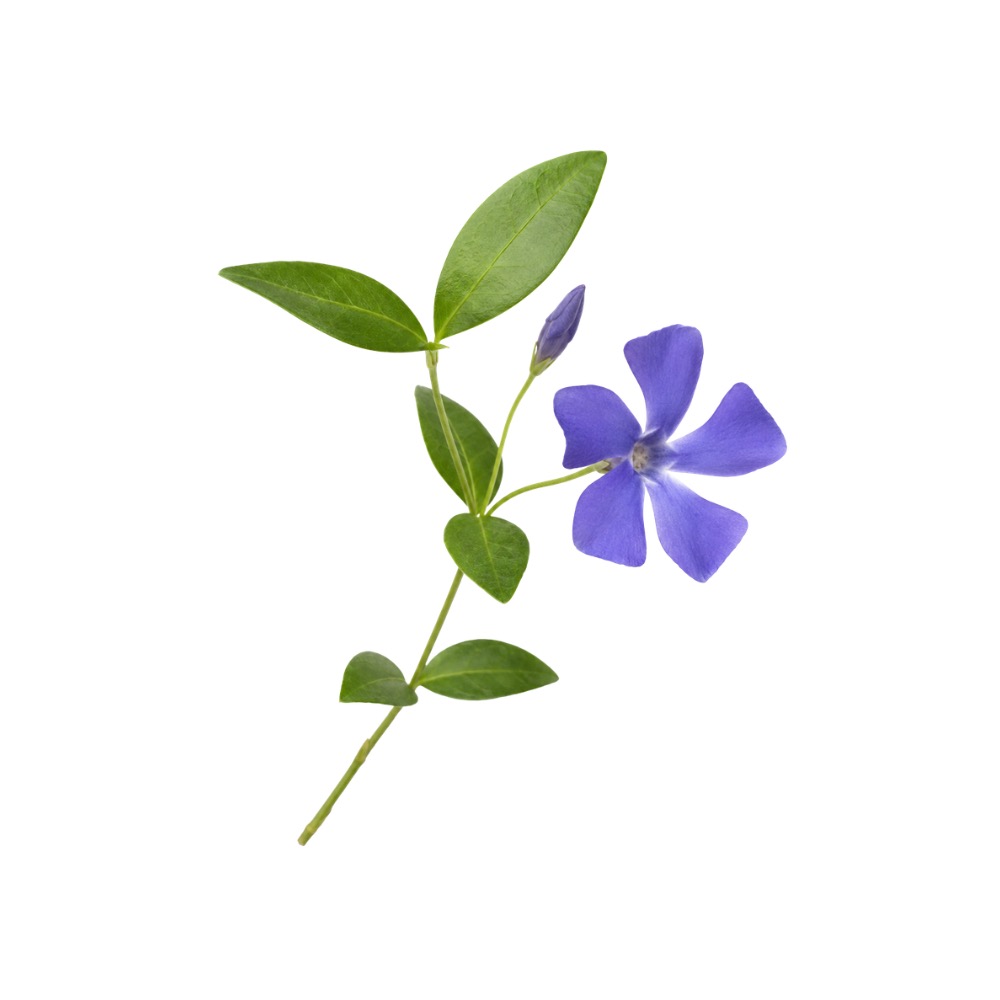
Vincaminoreine is a naturally occurring monoterpenoid indole alkaloid (quebrachamine / vincadine type), found in Lesser periwinkle. Its toxicity is not yet characterized.
Concentration
Content by Source
Reported concentrations across the plants that contain vincaminoreine — the bar marks the typical level, the line shows the reported range.
Literature figures for varying plant parts and preparations. Read them as a comparative guide, not exact assays.
Vincaminoreine at a Glance
Vincaminoreine is one of the minor monoterpenoid indole alkaloids of lesser periwinkle (Vinca minor), the dogbane-family groundcover farmed commercially for its alkaloids. It was named and structurally assigned in 1962, in the same Slovak paper that settled the structure of vincadine 1Reference 1Alkaloids of Vinca minor LView study →.
It is not a drug and has never been proposed as one. What has kept it in print is biosynthetic: in 2025 it was identified as a preferred substrate of VmV10H, one of two promiscuous cytochrome-P450 hydroxylases that V. minor uses to diversify its alkaloid pool 4Reference 4In vitroPromiscuous and regiospecific Vinca minor hydroxylases for opioid akuammine biosynthesis and monoterpenoid indole alkaloid diversification — in vitroView study →. That paper is why it matters, and the enzymology is the page’s real content.
Its own pharmacology consists of one experiment, published in 1986 — an in-vitro screen against a murine leukaemia line, never replicated and never followed up 5Reference 5In vitroNew compounds with cytotoxic and antitumor effectsView study →. Everything else attributed to Vinca minor belongs to a different molecule: the cerebral-circulation and cognition story is vincamine’s, and it should not be lent to this one.
What Vincaminoreine Is Not
Three name collisions cause real confusion here, and all three are worth stating before anything else.
- It is not vincamine. Vincamine is the eburnamine-type alkaloid that carries the entire clinical and preclinical record for this plant — the dementia trials, the rodent organ-protection literature, the “cerebroactive” drug marketed in Europe 10Reference 10ReviewVincamine, from an antioxidant and a cerebral vasodilator to its anticancer potential — reviewView study →. Vincaminoreine shares a plant and a first syllable with it, nothing more. It has a different skeleton and no clinical record at all.
- It is not a Catharanthus alkaloid. The anticancer bisindoles vinblastine and vincristine come from Madagascar periwinkle (Catharanthus roseus) — a different genus, a different structural class, and a different pharmacology (cytotoxic chemotherapy). They do not occur in Vinca minor, and none of their properties belong here. The one cytotoxicity datum reported below is a 1986 cell-line screen, not chemotherapy.
- It is not vinpocetine. Vinpocetine is semi-synthetic, made from apovincamine, and occurs in no living plant.
A fourth, subtler one: vincaminorine is a genuinely distinct compound — the C-16 epimer, isolated from the same plant and named alongside vincaminoreine in both the Iranian phytochemical survey and the 1986 cytotoxicity screen 2,
Identity & Structure
Vincaminoreine is C22H30N2O2, MW 354.5, CAS 2411-51-0 9Reference 9Vincaminoreine, CID 12444831 (C22H30N2O2, MW 354.5, CAS 2411-51-0) and Vincadine, CID 12444819 (C21H28N2O2, MW 340.5) — compound records, National Library of Medicine. https://pubchem.ncbi.nlm.nih.gov/compound/12444831View study →. It is built on the quebrachamine skeleton — the nine-membered-ring, “seco-aspidosperma” arrangement that arises when the aspidospermidine C–C bond is not formed — carrying a methyl ester (carbomethoxy) group on the piperidine ring and a methyl group on the indole nitrogen 1,
That last substituent is what separates it from its parent: the structures deposited for vincadine (C21H28N2O2, MW 340.5) and vincaminoreine are identical except for the N-methyl, making vincaminoreine effectively Nα-methylvincadine 9Reference 9Vincaminoreine, CID 12444831 (C22H30N2O2, MW 354.5, CAS 2411-51-0) and Vincadine, CID 12444819 (C21H28N2O2, MW 340.5) — compound records, National Library of Medicine. https://pubchem.ncbi.nlm.nih.gov/compound/12444831View study →. The two compounds were assigned together in 1962 for exactly that reason 1Reference 1Alkaloids of Vinca minor LView study →, and they have travelled together ever since — through Kutney’s total syntheses 6,
Within the wider genus, the 2025 census of Vinca alkaloids sorts 202 compounds into 20 structural groups, spanning aspidosperma, corynanthe, iboga, yohimbe and strychnos types 8Reference 8ReviewAlkaloids from the genus Vinca L. (Apocynaceae): a comprehensive biological and structural reviewView study →. Vincaminoreine sits in the quebrachamine/vincadine corner of that map — a long way, structurally, from the eburnamine-type vincamine that dominates the plant’s reputation.
Substrate of the Vinca minor C10 Hydroxylases
This is the only current research programme that vincaminoreine is actually part of, and it is a plant-enzymology programme, not a pharmacological one.
Vinca minor makes vincamine alongside a wider pool of monoterpenoid indole alkaloids (MIAs) in the aspidosperma and akuammiline subclasses. In 2025, Mai and colleagues characterised two cytochrome-P450 monooxygenases from the plant — VmV10H and VmPs10H — that hydroxylate MIAs at C10 4Reference 4In vitroPromiscuous and regiospecific Vinca minor hydroxylases for opioid akuammine biosynthesis and monoterpenoid indole alkaloid diversification — in vitroView study →. The finding that matters here is the substrate promiscuity of the first enzyme:
- VmV10H hydroxylates structurally diverse MIAs, including vincaminoreine, pericyclivine, apparicine and akuammidine — molecules that do not share a single skeleton between them 4Reference 4In vitroPromiscuous and regiospecific Vinca minor hydroxylases for opioid akuammine biosynthesis and monoterpenoid indole alkaloid diversification — in vitroView study →.
- VmPs10H is the narrower of the two, favouring akuammiline-type substrates 4Reference 4In vitroPromiscuous and regiospecific Vinca minor hydroxylases for opioid akuammine biosynthesis and monoterpenoid indole alkaloid diversification — in vitroView study →.
- Homology modelling and substrate docking led the authors to propose a single consistent mechanism for C10 hydroxylation across all of those substrates — which is how one enzyme can accept such structurally unlike molecules 4Reference 4In vitroPromiscuous and regiospecific Vinca minor hydroxylases for opioid akuammine biosynthesis and monoterpenoid indole alkaloid diversification — in vitroView study →.
Two things follow. First, vincaminoreine is best understood not as an endpoint but as a node in a diversification network: a C10 hydroxyl is the branch point that turns one alkaloid into a family, and a promiscuous hydroxylase is how a plant gets chemical breadth cheaply. Second, the practical driver of the work is not vincaminoreine at all — it is akuammine, a µ-opioid receptor agonist with analgesic properties, and the prospect of building it enzymatically 4Reference 4In vitroPromiscuous and regiospecific Vinca minor hydroxylases for opioid akuammine biosynthesis and monoterpenoid indole alkaloid diversification — in vitroView study →. Vincaminoreine’s role in that story is as a test substrate that demonstrated the enzyme’s versatility.
It is worth being precise about what this does and does not establish. It establishes that the molecule is a real, enzymatically-handled metabolite of V. minor rather than an artefact or a dead end. It establishes nothing whatsoever about what it does in an animal.
The Size of the Literature
Because the honest answer to “what does vincaminoreine do?” is “almost nothing is known”, it is worth showing the search rather than asserting the conclusion.
Searches run, 31 July 2026:
| Search | Database | Result |
|---|---|---|
vincaminoreine (all fields) | PubMed | 6 records total |
vincaminoreine (full text) | Europe PMC | 9 records total (the extra three: an in-silico docking screen and two book-series subject indexes) |
vincaminorine OR vincaminoreine OR vincadine | PubMed | 11 records |
What the six PubMed records are: two total-synthesis papers from the same group 6,
What is absent: no receptor-binding study, no enzyme-inhibition assay, no animal experiment of any kind, no pharmacokinetic measurement, no toxicology, no genotoxicity, no clinical trial, no reference-standard availability, and no review devoted to the compound. The nearest thing to a modern pharmacological mention is an in-silico phosphodiesterase-5 docking screen in which the name appears in the compound set and not among the reported hits — computation, not evidence.
That is the finding. It is not a gap in this search.
What It's Used For
There is essentially one pharmacological datum for this molecule, it is forty years old, it is in vitro, and nobody has repeated it.
Support is an experimental score — weighted by study type (human > animal > in vitro) and volume. A beta, not a validated metric. One row, scored low deliberately: a single unreplicated in-vitro screen is the entire application literature for this compound.
Isolate, in vitro, single study. Sturdíková and colleagues screened 15 alkaloid bases isolated from Vinca minor against P388 murine leukaemia cells and reported that three of them — vincaminorine, vincaminoreine and vincadifformine — produced considerable inhibition, with the mechanism attributed to suppression of nucleic-acid and protein synthesis 5Reference 5In vitroNew compounds with cytotoxic and antitumor effectsView study →. The paper’s headline compound was vincadifformine, which arrested proliferation at 50 µg/mL within 12 hours and was described as more effective than vinblastine tested in the same system; vincaminoreine is named as active but is not the molecule the authors characterise in detail, and no potency figure specific to it is reported 5Reference 5In vitroNew compounds with cytotoxic and antitumor effectsView study →.
Two caveats do most of the work here. First, a µg/mL effect in a leukaemia line is a screening signal, not an anticancer finding — this is exactly the tier at which most plant alkaloids show something. Second, this result has sat unreplicated since 1986: no follow-up cell panel, no mechanism study, no xenograft, no in-vivo work of any kind.
Gap: no replication, no dose-response for this specific alkaloid, no selectivity data against non-malignant cells, no animal model, and no pharmacokinetics — so there is no basis for reading this as anticancer activity rather than generic in-vitro cytotoxicity.
Mechanisms
| Target / pathway | Effect | Relevant to |
|---|---|---|
| Nucleic-acid and protein synthesis (P388 cells) | inhibition — the mechanism proposed for the 1986 cytotoxicity signal; not resolved to a molecular target 5Reference 5In vitroNew compounds with cytotoxic and antitumor effectsView study → | cytotoxicity (in vitro) |
| VmV10H (plant CYP450, C10 hydroxylase) | vincaminoreine is a substrate, hydroxylated at C10 4Reference 4In vitroPromiscuous and regiospecific Vinca minor hydroxylases for opioid akuammine biosynthesis and monoterpenoid indole alkaloid diversification — in vitroView study → | plant biosynthesis — not a pharmacological target |
No receptor, transporter or mammalian enzyme has been shown to interact with this molecule. The second row is included because it is the only well-characterised molecular interaction vincaminoreine has, and it belongs to plant metabolism rather than to pharmacology — the compound is the substrate there, not the agent.
Pharmacokinetics
No data. Absorption, oral bioavailability, plasma protein binding, distribution, metabolism, metabolites, half-life and elimination are all entirely unstudied for vincaminoreine — in humans and in animals. Nothing has been administered, so nothing has been measured. This is the ordinary state of affairs for a minor alkaloid that no one has taken forward, and it means the 1986 in-vitro concentration cannot be related to any achievable exposure.
Clinical Trials
None, in any phase, and no preclinical programme behind it. Vincaminoreine has never been administered to a human being or to a laboratory animal in a published study.
| Completed | Planned | Terminated | Preclinical |
|---|---|---|---|
| — | — | — | In-vitro cytotoxicity screen only (1986) |
Last checked: July 2026.
Isolate vs. Plant Studies
Unusually, the little that exists here is isolate work — and that is the problem rather than the strength.
The 1986 cytotoxicity screen used purified alkaloid bases separated from V. minor, so its finding is genuinely attributable to the molecule rather than to an extract 5Reference 5In vitroNew compounds with cytotoxic and antitumor effectsView study →. The 2025 hydroxylase work is further along the same axis: it is enzyme-plus-purified-substrate biochemistry, in vitro, with docking and homology modelling on top 4Reference 4In vitroPromiscuous and regiospecific Vinca minor hydroxylases for opioid akuammine biosynthesis and monoterpenoid indole alkaloid diversification — in vitroView study →. Neither study involved a plant extract, an animal, or a person.
What does not exist is the other half. There is no whole-plant or whole-extract study in which vincaminoreine has been shown to contribute anything — not to Vinca minor’s traditional astringent use, not to its modern cognitive billing, not to anything. And the reverse inference is unavailable too: Vinca minor’s human evidence is evidence about vincamine given as a purified drug at 60–80 mg/day, not about the herb, so there is no whole-plant effect sitting there waiting to be apportioned among its minor alkaloids 10Reference 10ReviewVincamine, from an antioxidant and a cerebral vasodilator to its anticancer potential — reviewView study →.
The practical consequence: at 1.064 mg/100 g of dry leaf 3Reference 3Determination of active ingredients, mineral composition and antioxidant properties of hydroalcoholic macerates of Vinca minor L. plant from the Dobrogea areaView study →, a realistic herbal preparation delivers a fraction of a milligram of this compound. Nothing in the literature suggests that quantity does anything, and nothing has tested whether it does.
Prevalence in Nature
Vincaminoreine is reported from one plant: Vinca minor, the lesser periwinkle.
Where it sits in the plant. The Iranian phytochemical survey isolated five indole alkaloids from the aerial parts — vincaminorine, vincaminoreine, minovine, minovincine and vincamine — and found vincamine dominant at 0.057% of dried plant mass 2Reference 2Phytochemical investigation of Vinca minor cultivated in IranView study →. A 2023 Romanian study of hydroalcoholic macerates from Dobrogea material quantified four alkaloids by HPLC-DAD in leaves and stems separately, and is the only source giving a figure for vincaminoreine specifically 3Reference 3Determination of active ingredients, mineral composition and antioxidant properties of hydroalcoholic macerates of Vinca minor L. plant from the Dobrogea areaView study →:
| Alkaloid | Leaf (mg/100 g d.w.) | Stem (mg/100 g d.w.) |
|---|---|---|
| Vincamine | 2.459 ± 0.035 | 0.794 ± 0.030 |
| Vincaminoreine | 1.064 ± 0.040 | 0.285 ± 0.010 |
| 1,2-Dehydroaspidospermidine | 0.898 ± 0.010 | 1.625 ± 0.034 |
| Eburnamonine | 0.803 ± 0.010 | not detected |
Two readings are worth taking from that table. Vincaminoreine is the second-most-abundant of the four in leaf, at roughly 40% of the vincamine level — minor, but not trace. And the leaf/stem gradient is steep (about 3.7-fold), which matches the general pattern for V. minor alkaloids and is a reason alkaloid work on this plant specifies leaf or aerial parts rather than whole plant.
Elsewhere in the genus. No report places vincaminoreine in Vinca major (greater periwinkle) or in any other genus. The 2025 review of the whole genus catalogues 202 alkaloids across the five phytochemically investigated Vinca species 8Reference 8ReviewAlkaloids from the genus Vinca L. (Apocynaceae): a comprehensive biological and structural reviewView study →, and the compound’s own literature — six PubMed records — names only V. minor. Absence of a report is not proof of absence, but there is no basis for extending its occurrence.
A distinction worth repeating: Catharanthus roseus, Madagascar periwinkle, is a different genus. Its alkaloid pool (vinblastine, vincristine, catharanthine, vindoline) does not overlap with this compound, and Vinca constituent lists should not be merged with Catharanthus ones.
Discovery & Synthesis
First reported (1962). Vincaminoreine’s structure was established by J. Mokrý, I. Kompiš, L. Dúbravková and P. Šefčovič, working in Czechoslovakia, in a Tetrahedron Letters communication titled for the structures of vincadine and vincaminoreine together 1Reference 1Alkaloids of Vinca minor LView study →. The pairing is the point: the two molecules differ only by the indole N-methyl, so solving one largely solved the other. The name follows the plant (Vinca) with the era’s habit of stringing minor alkaloids off a shared stem — which is also why it is so easily confused with vincamine and vincaminorine.
First total synthesis (1968). J. P. Kutney and co-workers at the University of British Columbia reported the total synthesis of dl-vincadine, dl-vincaminoreine, dl-vincaminorine, dl-vincadifformine, dl-minovine and dl-vincaminoridine in a JACS communication 6Reference 6The total synthesis of some monomeric Vinca alkaloids: dl-vincadine, dl-vincaminoreine, dl-vincaminorine, dl-vincadifformine, dl-minovine, and dl-vincaminoridineView study →, expanded seven years later into the full paper as part VI of their Total Synthesis of Indole and Dihydroindole Alkaloids series 7Reference 7Total synthesis of indole and dihydroindole alkaloidsView study →. All six targets were made racemic from a common route — a demonstration of the shared quebrachamine/aspidosperma biogenetic logic as much as a synthesis of any one compound. No asymmetric synthesis dedicated to vincaminoreine has been reported since.
Manufacture today. None. Vincaminoreine is not produced commercially, not sold, and not offered as an analytical reference standard. Commercial alkaloid extraction from V. minor targets vincamine — the input to semi-synthetic vinpocetine — and the minor alkaloids are not separated out. The practical route to material remains isolation from leaf or total synthesis, both for research only.
Patents: not yet researched.
Toxicity & Safety
The unknown grading here is literal. There is no toxicology of any kind for vincaminoreine: no acute or repeat-dose study, no genotoxicity assay, no reproductive or developmental data, no organ-specific toxicity work, no interaction study, and no human exposure report. Nothing has ever been administered to a living animal.
The one biological datum that exists — inhibition of P388 leukaemia-cell growth in vitro, by suppression of nucleic-acid and protein synthesis 5Reference 5In vitroNew compounds with cytotoxic and antitumor effectsView study → — is a cytotoxicity signal, and it should be read as a reason for caution rather than as reassurance: a compound that stops cells dividing in a dish is not thereby demonstrated to be selective for malignant ones. No selectivity data were reported.
Two cautions, pointing in opposite directions:
Do not infer safety from silence. An untested compound is unassessed, not benign. Monoterpenoid indole alkaloids as a class include molecules with serious pharmacology, and structural family membership predicts nothing on its own.
Do not inherit Vinca minor’s safety story either. The plant’s best-documented human harm is vincamine’s cardiac toxicity — ventricular arrhythmias, QT prolongation and torsades de pointes reported after parenteral vincamine — and that belongs to a different molecule given as a drug at pharmaceutical doses. It is set out on the lesser periwinkle monograph, where intake is actually decided. Attributing it to a sub-milligram minor alkaloid would be as unfounded as attributing benefits to one.
Reproductive and developmental toxicity has not been assessed for this compound; the pregnancy question belongs to the herb and product pages, not to a molecule with no exposure data.
- Toxicity genuinely unknown. No acute, repeat-dose, genotoxicity, reproductive or human-exposure data exist. Absence of reported harm is not evidence of safety.
- The only biological signal is in-vitro cytotoxicity. Growth inhibition of a leukaemia cell line with no selectivity data — a caution, not a benefit.
- Do not import vincamine’s or Catharanthus’ safety profiles. Vincamine’s arrhythmia risk belongs to a purified drug at clinical doses; vinblastine/vincristine are a different genus and a different class entirely.
- No reference standard, no product, no standardisation. Any commercial claim naming this compound is unverifiable.
Dosage
There is no dose, and no basis for one. Vincaminoreine has never been administered to an animal or a person in a published study, has no pharmacokinetic data, and is not sold in any form. No study reports a quantity taken by anything.
The only figures that exist for it are plant-content figures, not doses: 1.064 mg/100 g of dry leaf and 0.285 mg/100 g of dry stem 3Reference 3Determination of active ingredients, mineral composition and antioxidant properties of hydroalcoholic macerates of Vinca minor L. plant from the Dobrogea areaView study →. Even a generous herbal preparation of Vinca minor therefore supplies a fraction of a milligram, and no evidence relates that quantity to any effect.
Lesser periwinkle’s dosing literature — the 60 mg/day and 80 mg/day trial regimens, and the vincamine teprosilate figures — belongs to isolated vincamine given as a pharmaceutical, not to this molecule and not to the whole herb 10Reference 10ReviewVincamine, from an antioxidant and a cerebral vasodilator to its anticancer potential — reviewView study →. It is reproduced on the herb page with its own caveats and is not transferable here. Nothing here is dosing guidance.
References
- Mokrý J, Kompiš I, Dúbravková L, Šefčovič P (1962). Alkaloids of Vinca minor L. The structure of vincadine and vincaminoreine. Tetrahedron Letters 3(26):1185–1188. https://doi.org/10.1016/S0040-4039(00)70582-X
- Farahanikia B, Akbarzadeh T, Jahangirzadeh A, Yassa N, Shams Ardekani MR, Mirnezami T, Hadjiakhoondi A, Khanavi M (2011). Phytochemical investigation of Vinca minor cultivated in Iran. Iranian Journal of Pharmaceutical Research. https://pubmed.ncbi.nlm.nih.gov/24250413/
- Neculai AM, Stanciu G, Mititelu M (2023). Determination of active ingredients, mineral composition and antioxidant properties of hydroalcoholic macerates of Vinca minor L. plant from the Dobrogea area. Molecules 28(15):5667. https://pubmed.ncbi.nlm.nih.gov/37570636/
- Mai Z, Richardson MB, Mann SGA, Greene J, Paul AA, Perley JO, Deslongchamps G, Qu Y (2025). Promiscuous and regiospecific Vinca minor hydroxylases for opioid akuammine biosynthesis and monoterpenoid indole alkaloid diversification — in vitro. Plant Physiology and Biochemistry 223:109841. https://pubmed.ncbi.nlm.nih.gov/40168857/
- Sturdíková M, Fuska J, Grossmann E, Votický Z (1986). New compounds with cytotoxic and antitumor effects. Part 6: Monomeric indole alkaloids of Vinca minor L. and their effect on P388 cells — in vitro. Pharmazie 41(4):270–272. https://pubmed.ncbi.nlm.nih.gov/3725874/
- Kutney JP, Chan KK, Failli A, Fromson JM, Gletsos C, Nelson VR (1968). The total synthesis of some monomeric Vinca alkaloids: dl-vincadine, dl-vincaminoreine, dl-vincaminorine, dl-vincadifformine, dl-minovine, and dl-vincaminoridine. Journal of the American Chemical Society 90(14):3891–3893. https://pubmed.ncbi.nlm.nih.gov/5653833/
- Kutney JP, Chan KK, Failli A, Fromson JM, Gletsos C, Leutwiler A, Nelson VR, de Souza JP (1975). Total synthesis of indole and dihydroindole alkaloids. VI. The total synthesis of some monomeric Vinca alkaloids. Helvetica Chimica Acta 58(6):1648–1671. https://pubmed.ncbi.nlm.nih.gov/1176298/
- Vrabec R, Drašar P, Opletal L, Kosturko Š, Blunden G, Cahlíková L (2025). Alkaloids from the genus Vinca L. (Apocynaceae): a comprehensive biological and structural review. Phytochemistry Reviews 24(5):3665–3735. https://doi.org/10.1007/s11101-025-10102-z
- PubChem (2026). Vincaminoreine, CID 12444831 (C22H30N2O2, MW 354.5, CAS 2411-51-0) and Vincadine, CID 12444819 (C21H28N2O2, MW 340.5) — compound records, National Library of Medicine. https://pubchem.ncbi.nlm.nih.gov/compound/12444831
- Ren Y, DeRose K, Li L, Gallucci JC, Yu J, Kinghorn AD (2023). Vincamine, from an antioxidant and a cerebral vasodilator to its anticancer potential — review. Bioorganic & Medicinal Chemistry 92:117439. https://pubmed.ncbi.nlm.nih.gov/37579526/



