
Compound Monograph
Vulgarin
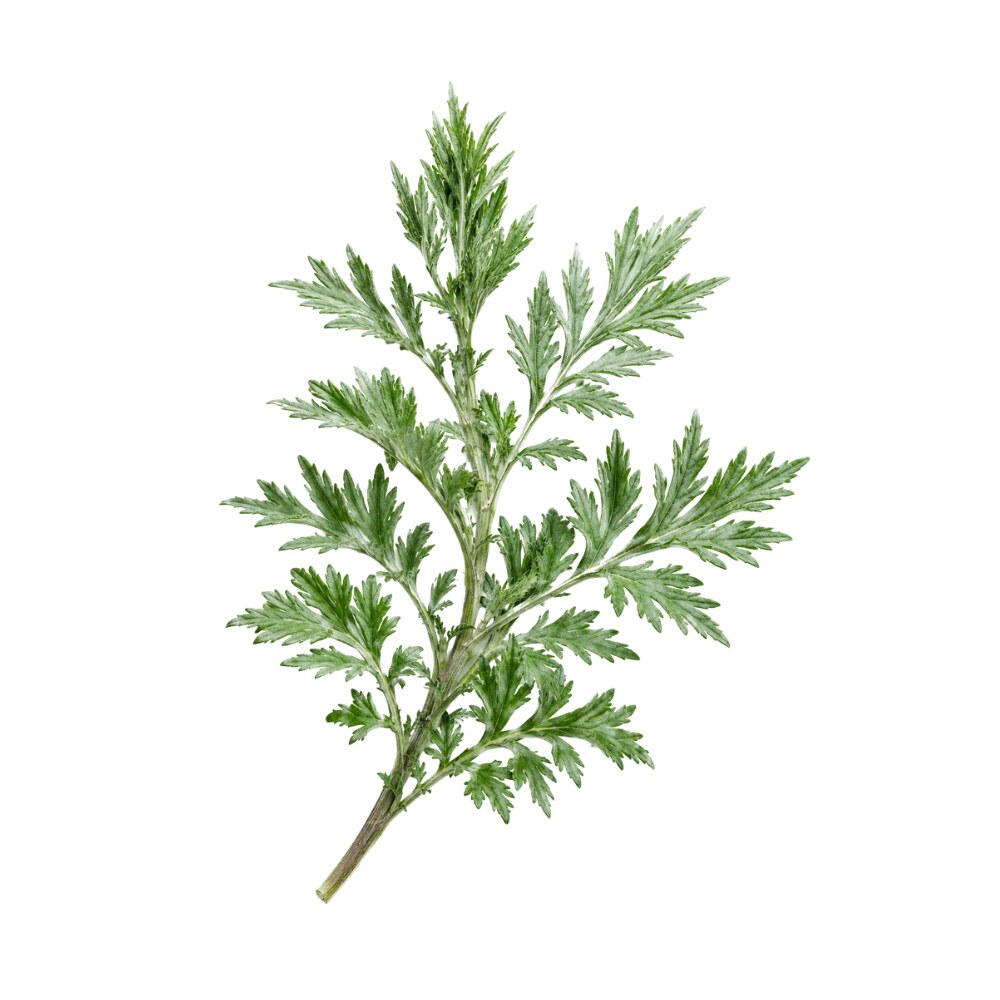
Vulgarin is a eudesmanolide sesquiterpene lactone named for mugwort (Artemisia vulgaris) and long treated as a bitter principle of the genus. It is the same molecule as tauremisin, judaicin and barrelin, and — unusually for a sesquiterpene lactone — it has no alpha-methylene-gamma-lactone warhead.

Sources · 5
Where Does It Come From?
Vulgarin is a naturally occurring sesquiterpene lactone (eudesmanolide; santonin-type skeleton), found in Mugwort and 4 other sources. It is flagged as moderately toxic.
Concentration
Content by Source
Concentrations not reported. No percent-dry-weight or mg/g figures have been published for this compound in its source plants.
Vulgarin at a Glance
Vulgarin is a eudesmanolide — a sesquiterpene lactone built on the two-fused-six-ring eudesmane skeleton, the same family as santonin. It was isolated from mugwort (Artemisia vulgaris) in 1962 and named for it 1Reference 1Vulgarin, a sesquiterpene lactone from Artemisia vulgaris LView study →, and across the older pharmacognosy literature it is repeatedly described as a bitter principle of Artemisia — the kind of compound that underwrites a herb’s digestive-bitter reputation 4,
Two things about it are worth knowing before anything else. First, the same molecule was independently discovered and named four times — vulgarin, tauremisin, judaicin and barrelin — so its literature is scattered across four keywords and three languages 2Reference 2The structures of vulgarin and its isomers — a reinvestigationView study →. Second, and unusually for a sesquiterpene lactone, vulgarin has no α-methylene-γ-lactone. The reactive exocyclic methylene that defines most of this class — and drives most of its shared cysteine-alkylating pharmacology and its contact-allergy risk — is simply absent. Its lactone ring carries a plain methyl group instead.
The research record is small but real: roughly ten primary studies on the isolated molecule, almost all of them using material from Artemisia judaica rather than mugwort, and almost all of them rodent or enzyme-level. There are no human data of any kind.
Vulgarin, Tauremisin, Judaicin & Barrelin — One Molecule, Four Names
This is the single most important thing to get right about vulgarin’s literature, and it resolves cleanly rather than ambiguously.
Between the 1950s and the 1970s the same eudesmanolide was isolated from four different Artemisia species by four different groups, each of whom named it after their plant:
| Name | Named from | Where the literature sits |
|---|---|---|
| Vulgarin | Artemisia vulgaris | Anglophone phytochemistry, 1962 onward 1Reference 1Vulgarin, a sesquiterpene lactone from Artemisia vulgaris LView study → |
| Tauremisin (tauremizin) | Artemisia taurica | Soviet cardiology/pharmacology, 1950s–60s 7Reference 7Milimovka ME, Konovalov MN, Dovgalenko VF, Dimant MI, Kats SP, Kamenetskiĭ VS (1966). [Stimulating the central nervous system with the cardiotonic tauremisin]. Vrachebnoe Delo. https://pubmed.ncbi.nlm.nih.gov/4383576/View study → |
| Judaicin | Artemisia judaica | Egyptian pharmacognosy, 1968–1976 4, |
| Barrelin | Artemisia barrelieri | Spanish phytochemistry / anti-inflammatory work 17Reference 17AnimalAntiinflammatory activity of sesquiterpene lactones from Artemisia barrelieri in rats — animal studyView study → |
A 1986 structural reinvestigation using COSY, ¹H–¹³C correlation NMR and X-ray crystallography settled the matter: barrelin, judaicin and tauremisin are all identical with vulgarin 2Reference 2The structures of vulgarin and its isomers — a reinvestigationView study →. The chemical databases agree — PubChem lists all four as synonyms of a single entry, CAS 3162-56-9, C₁₅H₂₀O₄, MW 264.3 3Reference 3National Center for Biotechnology InformationView study →.
Practically, this means a search on “vulgarin” alone misses the Soviet cardiotonic work and the Egyptian bitter-principle work entirely. It also means claims transfer across the names: the “cardiotonic tauremisin” of 1966 7Reference 7Milimovka ME, Konovalov MN, Dovgalenko VF, Dimant MI, Kats SP, Kamenetskiĭ VS (1966). [Stimulating the central nervous system with the cardiotonic tauremisin]. Vrachebnoe Delo. https://pubmed.ncbi.nlm.nih.gov/4383576/View study → and the “bitter principle judaicin” of 1968 4Reference 4Crystallographic, optical and chromatographic studies of judaicin, bitter principle of Artemisia judaica LView study → are claims about this molecule.
One caution on the name “judaicin.” It is not unique. An unrelated isoflavonoid called judaicin occurs in wild Cicer (chickpea relatives) and is studied as an insect antifeedant — a completely different compound with no relationship to the sesquiterpene lactone. Chemical databases disambiguate it as “judaicin (eudesmane naphthofuran)” 3Reference 3National Center for Biotechnology InformationView study →. Do not merge the two literatures.
The Eudesmanolide Skeleton — And the Missing Michael Acceptor
Most sesquiterpene lactones — parthenolide, costunolide, helenalin, and the guaianolides that dominate modern Artemisia vulgaris isolations — carry an α-methylene-γ-lactone: an exocyclic C=CH₂ conjugated to the lactone carbonyl. That group is a Michael acceptor. It alkylates cysteine thiols on whatever protein it meets, which is why so many sesquiterpene lactones inhibit NF-κB, and equally why their selectivity is usually poor and why they are the main allergens of the Compositae family 23Reference 23ReviewThe sesquiterpene lactone mix: a review of past, present and future aspects — reviewView study →.
Vulgarin does not have it. Its molecular formula is C₁₅H₂₀O₄ 3Reference 3National Center for Biotechnology InformationView study → — two hydrogens more saturated than the α-methylene analogue would be — and its systematic name specifies three methyl groups, one of them at C-11 on the lactone ring itself 3Reference 3National Center for Biotechnology InformationView study →. The lactone is a plain α-methyl-γ-lactone.
What vulgarin does carry is a different electrophile: a cross-conjugated enone in ring A (a 1-oxo group with a Δ² double bond), plus a tertiary 4-hydroxyl 1,
Three consequences follow, and they are the reason this section exists:
- The generic “sesquiterpene lactones inhibit NF-κB by alkylating cysteine” story does not automatically apply to vulgarin. Where vulgarin does suppress NF-κB — as in the rat pancreatic ischaemia–reperfusion study 11Reference 11AnimalEffect of vulgarin and epivulgarin on ischemia-reperfusion-induced pancreatic injury in rats: a biochemical, molecular, and histopathological evaluation — animal studyView study → — that has to be earned by data rather than assumed from the class.
- Class SAR data can point the other way. A 2024 study of ten eudesmanolide and guaianolide lactones concluded explicitly that “the α-methylene γ-lactone moiety does not always guarantee an anti-inflammatory effect,” with a proline substituent mattering more for myeloperoxidase binding 16Reference 16Anti-inflammatory potential of some eudesmanolide and guaianolide sesquiterpenes — animal studyView study →. The warhead is neither necessary nor sufficient.
- Vulgarin is a poor candidate contact sensitiser. The standard sesquiterpene-lactone patch-test mix is built from three α-methylene lactones — alantolactone, costunolide and dehydrocostus lactone — precisely because that group is the sensitising motif 23Reference 23ReviewThe sesquiterpene lactone mix: a review of past, present and future aspects — reviewView study →. Vulgarin has never been tested for skin sensitisation, but on structure it is not the molecule driving Compositae dermatitis.
The 4-Epimer & the Autoxidation Question
There is a genuine open question about whether vulgarin is a native plant metabolite or partly a product of oxidation during isolation, and it is worth stating rather than glossing.
Vulgarin has a well-characterised C-4 epimer, epivulgarin (4-epivulgarin), which differs only in the orientation of the tertiary 4-hydroxyl. The two were assigned unambiguously in the 1986 X-ray/NMR reinvestigation 2Reference 2The structures of vulgarin and its isomers — a reinvestigationView study → and are now used side by side as a matched pair in pharmacology 11Reference 11AnimalEffect of vulgarin and epivulgarin on ischemia-reperfusion-induced pancreatic injury in rats: a biochemical, molecular, and histopathological evaluation — animal studyView study →.
The awkward part is how they can be made. A biogenetic-type synthesis published in 1989 showed that treating a Δ³-eudesmanolide with air or oxygen gives the 4α- and 4β-hydroperoxides, which convert to vulgarin and C-4-epivulgarin respectively 9Reference 9Biogenetic-type synthesis of vulgarin and peroxyvulgarinView study →. In other words, the 4-hydroxy-Δ²-enone pattern that defines vulgarin is exactly what you get by autoxidising a simpler, more reduced lactone that plants certainly make.
That does not prove vulgarin is an artefact — plants run oxidative chemistry too, and the 1989 route is a deliberate laboratory synthesis, not a demonstration of what happens in an extraction flask. But it does mean:
- The vulgarin : epivulgarin ratio reported from any given extract may reflect handling and oxygen exposure as much as biosynthesis.
- A related peroxide, peroxyvulgarin, is a real compound in this series and reduces to vulgarin 9Reference 9Biogenetic-type synthesis of vulgarin and peroxyvulgarinView study → — so peroxide-to-alcohol conversion during workup is a live possibility.
- No study has settled the question by, for example, comparing rapid low-oxygen extraction against conventional extraction.
The honest position: vulgarin’s identity is settled (one molecule, four names). Its provenance is not. Where you read a vulgarin content figure for a plant, treat it as a figure for “vulgarin as recovered by that method,” not necessarily as a figure for what was in the living tissue.
Not Artemisinin, and Not Thujone
Three Artemisia molecules get confused with one another, and vulgarin gets the least attention of the three despite being the one described here.
- Artemisinin is not vulgarin. Artemisinin is a sesquiterpene lactone endoperoxide from Artemisia annua (sweet wormwood), and its antimalarial pharmacology depends entirely on that endoperoxide bridge — a structural feature vulgarin does not possess. Nothing about artemisinin’s antimalarial record transfers to vulgarin, and A. annua is a different species from mugwort. The frequent framing of the whole genus as “the artemisinin plants” is the source of most of this confusion 20Reference 20ReviewTowards a better understanding of Artemisia vulgaris: botany, phytochemistry, pharmacological and biotechnological potential — reviewView study →.
- α-Thujone is not vulgarin. Thujone is a monoterpene ketone in mugwort’s volatile oil and is the herb’s principal neurotoxicity concern — a GABA-A antagonist and convulsant. It is chemically unrelated to the sesquiterpene lactones and belongs to a different safety discussion entirely. (Confusingly, vulgarin has its own old convulsant characterisation — see Toxicity & Safety — but the two are separate findings about separate molecules.)
- Santonin is vulgarin’s nearest structural relative here: another Artemisia eudesmanolide, formerly used as an anthelmintic and abandoned for toxicity. Tauremisin was in fact described in the Soviet literature as a lactone “of santonin type” 7Reference 7Milimovka ME, Konovalov MN, Dovgalenko VF, Dimant MI, Kats SP, Kamenetskiĭ VS (1966). [Stimulating the central nervous system with the cardiotonic tauremisin]. Vrachebnoe Delo. https://pubmed.ncbi.nlm.nih.gov/4383576/View study →. The shared skeleton is real; the pharmacology is not shared.
What It's Used For
The isolate literature is genuinely thin but not empty: about ten primary studies, of which four are rodent in-vivo work and the rest are enzyme assays, biotransformation chemistry or in-silico modelling. There is no human study of vulgarin under any of its four names.
Support is an experimental score — weighted by study type (human > animal > in vitro) and volume. A beta, not a validated metric. Every score below is capped low because no human data exist for this molecule, and because the isolate almost always came from A. judaica rather than from mugwort.
This is the isolate’s strongest strand, and it is old and new at once. A 1976 Spanish study described vulgarin as “a new oral hypoglycaemic agent of natural origin” and examined its effects on the lipid fraction of rat organs 8Reference 8AnimalRodriguez de Vera C, Peran Mesa S, de Diego AM, Villar del Fresno A (1976). [Preliminary study on the effects produced in the lipid fraction of various rat organs after administration of vulgarin, a new oral hypoglycaemic agent of natural origin] — animal study. Bollettino Chimico Farmaceutico. https://pubmed.ncbi.nlm.nih.gov/1008950/View study →.
The modern replication is a 2022 study in streptozotocin-diabetic rats: vulgarin at 20 mg/kg orally, combined with glibenclamide, gave greater improvement in fasting glucose, insulin, HbA1c and lipid profile than glibenclamide alone, restored β-cell insulin content, reduced pancreatic lipid peroxidation, and normalised hepatic PEPCK and G6Pase mRNA expression 10Reference 10AnimalVulgarin, a sesquiterpene lactone from Artemisia judaica, improves the antidiabetic effectiveness of glibenclamide in streptozotocin-induced diabetic rats via modulation of PEPCK and G6Pase gene expression — animal studyView study →.
The isolate came from Artemisia judaica, not mugwort.
Gap: vulgarin was tested as an adjunct, and the paper’s headline result is the combination — its stand-alone effect at 10–20 mg/kg was weaker than the combination throughout. No dose-response beyond two doses, no second laboratory, no human data, and no pharmacokinetics to say what plasma level those doses produce.
A 2026 rat study is the most substantial in-vivo work on the molecule. Vulgarin and its C-4 epimer epivulgarin, given orally at 10 or 20 mg/kg around a 60-minute pancreatic ischaemia followed by reperfusion, dose-dependently attenuated the injury — the high epivulgarin dose cut serum amylase by 72% and malondialdehyde by 76% versus untreated injured rats — with immunohistochemical downregulation of HMGB1 and NF-κB 11Reference 11AnimalEffect of vulgarin and epivulgarin on ischemia-reperfusion-induced pancreatic injury in rats: a biochemical, molecular, and histopathological evaluation — animal studyView study →.
At the enzyme level, vulgarin preferentially inhibits COX-2 over COX-1 (IC50 7.21 vs 11.32 in the paper’s stated units; celecoxib scored 0.08 on COX-2 in the same run, so vulgarin is roughly 90-fold weaker), and reducing its C-1 carbonyl abolishes the COX-2 preference — the α,β-unsaturated ketone is the pharmacophore 12Reference 12In vitroMicrobial transformation of the sesquiterpene lactone, vulgarin, by Aspergillus niger — in vitroView study →.
Supporting, but a species away: sesquiterpene lactones from Artemisia barrelieri — the plant that gave the synonym barrelin — showed anti-inflammatory activity in rats 17Reference 17AnimalAntiinflammatory activity of sesquiterpene lactones from Artemisia barrelieri in rats — animal studyView study →, and epi-vulgarin was among ten lactones active in rodent paw oedema and a myeloperoxidase assay 16Reference 16Anti-inflammatory potential of some eudesmanolide and guaianolide sesquiterpenes — animal studyView study →.
Gap: one in-vivo model, one laboratory group (the same Prince Sattam / National Research Centre collaboration published both rodent studies), and a COX potency that is unremarkable next to a real NSAID. The NF-κB result is a class-typical readout — see the eudesmanolide section for why that is less automatic here than for a methylene lactone, but also why one immunohistochemistry panel is not a mechanism.
Under the name tauremisin, this molecule was investigated in the Soviet Union as a cardiotonic, with a 1966 report on central-nervous-system stimulation by the preparation 7Reference 7Milimovka ME, Konovalov MN, Dovgalenko VF, Dimant MI, Kats SP, Kamenetskiĭ VS (1966). [Stimulating the central nervous system with the cardiotonic tauremisin]. Vrachebnoe Delo. https://pubmed.ncbi.nlm.nih.gov/4383576/View study →.
Under the name judaicin, a 1974 Egyptian paper reported cardiac pharmaco-toxicological studies of the isolate 6Reference 6Cardiac pharmaco-toxicological studies of judaicin, isolated from Artemisia judaica — animal studyView study →.
Contemporary authors summarising the compound restate both, describing vulgarin as having cardiotonic properties as well as being “a strong central nervous system stimulant, and convulsant poison” 11Reference 11AnimalEffect of vulgarin and epivulgarin on ischemia-reperfusion-induced pancreatic injury in rats: a biochemical, molecular, and histopathological evaluation — animal studyView study →.
Gap: these are the weakest-documented and most consequential claims about vulgarin. Both primary reports predate 1975, neither is abstracted in PubMed, one is in Russian, and neither has been replicated with modern methods. No dose, no receptor and no mechanism has ever been published for either effect. They are strong enough to justify the safety posture here and far too thin to support any use.
Vulgarin’s traditional relevance is organoleptic. Egyptian pharmacognosy of the late 1960s and 1970s repeatedly identifies this molecule as “the bitter principle of Artemisia judaica” — first in crystallographic and chromatographic characterisation 4Reference 4Crystallographic, optical and chromatographic studies of judaicin, bitter principle of Artemisia judaica LView study →, then in a dedicated colorimetric assay developed to quantify it in plant material 5Reference 5A colorimetric method for the estimation of judaicin, bitter principle of Artemisia judaicaView study →.
That is the strongest available link between vulgarin and mugwort’s traditional role as a bitter digestive: a bitter sesquiterpene lactone in a bitter herb used before meals.
Gap: identification as a bitter principle is an analytical and sensory statement, not a pharmacological one. No bitter-taste receptor (TAS2R) has been assigned to vulgarin, and no study has measured gastric secretion, bile flow, appetite or digestive outcomes with the isolate. Nor is it established that vulgarin, rather than other lactones, is the dominant bitter in mugwort specifically.
Vulgarin appears in cancer-cell work almost entirely as the negative control for its own derivatives. Refluxing it with iodine opens the lactone and yields two naproxen-methyl-ester analogues; derivative 1 showed promising cytotoxicity against HepG-2, HCT-116, MCF-7 and A-549 cell lines “compared to those of vulgarin and naproxen” — i.e. the parent molecule was the less active comparator 13Reference 13In vitroNovel vulgarin derivatives: chemical transformation, in silico and in vitro studiesView study →.
The classic 1971 survey establishing sesquiterpene-lactone cytotoxicity as a class property tested a panel of lactones and tied activity to the α-methylene-γ-lactone group 22Reference 22In vitroCytotoxicity of sesquiterpene lactones — in vitroView study → — the group vulgarin lacks.
Gap: no dedicated IC50 dataset for vulgarin itself has been published in any cell line. Its cytotoxic reputation is inherited from the class and contradicted by the one head-to-head comparison available.
The only antimicrobial evidence is computational. A GC-MS study of Artemisia pallens ethanol extract detected vulgarin among five major compounds and then docked it against a homology model of the efflux protein of multidrug-resistant Acinetobacter baumannii, reporting the best glide score of the set (−4.775 kcal/mol) with stable molecular-dynamics behaviour 21Reference 21In silico evaluation of bioactive compounds of Artemisia pallens targeting the efflux protein of multidrug-resistant Acinetobacter baumannii (LAC-4 strain)View study →. Vulgarin also turns up as a predicted “active component” node in network-pharmacology models of unrelated plants, but those models select compounds from database annotations rather than from measured activity.
Gap: no MIC, no zone of inhibition, no time-kill curve, no assay of any kind on a living organism. A docking score is a hypothesis. −4.8 kcal/mol is also a weak score by docking conventions. This row exists to record that the antimicrobial claim has not been tested, not that it has been supported.
Mechanisms
| Target / pathway | Effect | Relevant to |
|---|---|---|
| COX-2 (preferential over COX-1) | Inhibition, ~90× weaker than celecoxib; requires the intact ring-A α,β-unsaturated ketone 12Reference 12In vitroMicrobial transformation of the sesquiterpene lactone, vulgarin, by Aspergillus niger — in vitroView study → | Anti-inflammatory |
| HMGB1 / NF-κB signalling | Downregulated on immunohistochemistry in injured rat pancreas 11Reference 11AnimalEffect of vulgarin and epivulgarin on ischemia-reperfusion-induced pancreatic injury in rats: a biochemical, molecular, and histopathological evaluation — animal studyView study → | Tissue protection |
| Hepatic PEPCK and G6Pase expression | mRNA normalised in diabetic rats (as glibenclamide adjunct) 10Reference 10AnimalVulgarin, a sesquiterpene lactone from Artemisia judaica, improves the antidiabetic effectiveness of glibenclamide in streptozotocin-induced diabetic rats via modulation of PEPCK and G6Pase gene expression — animal studyView study → | Gluconeogenesis / glycaemic control |
| Pancreatic oxidative-stress markers (MDA, GPx) | MDA reduced, GPx restored 10, | Antioxidantsecondary |
| Cysteine thiol alkylation (class mechanism) | Not expected — vulgarin lacks the α-methylene-γ-lactone 3, | Explains why class SAR does not transfer |
| TAS2R bitter-taste receptors | Not measured despite the “bitter principle” designation 4, | Bitter/digestive claim |
Pharmacokinetics
Nothing is known. No absorption, distribution, metabolism, excretion, plasma-concentration, oral-bioavailability or half-life data have been published for vulgarin under any of its four names.
What exists instead is xenobiotic metabolism modelled in microbes, which is suggestive of mammalian routes but is not a substitute for them. Aspergillus niger converts vulgarin to three more polar metabolites, principally 1-epi-tetrahydrovulgarin, by reducing the C-1 carbonyl and the Δ² double bond 12Reference 12In vitroMicrobial transformation of the sesquiterpene lactone, vulgarin, by Aspergillus niger — in vitroView study →. Beauveria bassiana and the yeast Hansenula anomala produce a related set of reduced and hydroxylated eudesmanolides 14Reference 14In vitroBiotransformation of vulgarin — in vitroView study →. In both cases the transformation attacks the ring-A enone — the same group the COX data identify as the pharmacophore — which implies that if mammalian carbonyl reductases do the same thing, first-pass metabolism would deactivate it. That is an inference, not a finding.
The practical consequence: the rodent studies dose 10–20 mg/kg orally and observe effects 10,
Clinical Trials
There are no clinical trials of vulgarin, completed, ongoing, planned or terminated, under any of its four names. The entire evidence base is preclinical.
| Completed | Planned | Terminated | Preclinical |
|---|---|---|---|
| 0 | 0 | 0 | ~10primary studies |
Last checked: July 2026.
Isolate vs. Plant Studies
This section carries an unusual and important mismatch, and it is the main reason to read mugwort’s page separately from this one.
Every pharmacology study of vulgarin used the isolated molecule — which is normally a strength. But the isolate was obtained from Artemisia judaica, a desert species of the Middle East and North Africa, in essentially all modern work: both rodent studies 10,
Running the other way, the isolated sesquiterpene lactones studied from Artemisia vulgaris itself are not vulgarin. A 2022 study isolated twenty-two guaianolides from mugwort aerial parts and measured nitric-oxide inhibition at IC50 1.0–3.6 µM — all of them α-methylene-γ-lactones, none of them vulgarin 18Reference 18In vitroSesquiterpene lactones from Artemisia vulgaris L. as potential NO inhibitors in LPS-induced RAW264.7 macrophage cells — in vitroView study →. A 2011 pharmacological study of A. vulgaris extracts isolated yomogin and a diepoxy-eudesmanolide as the active histamine H₁ antagonists, again not vulgarin 19Reference 19In vitroActions of Artemisia vulgaris extracts and isolated sesquiterpene lactones against receptors mediating contraction of guinea pig ileum and trachea — in vitroView study →.
So the transferability caveat runs in both directions:
- Do not read mugwort’s pharmacology onto vulgarin. Mugwort’s measured anti-inflammatory activity belongs to guaianolides and flavonoids that have been isolated and tested; vulgarin has not been shown to contribute to it.
- Do not read vulgarin’s rodent findings onto mugwort. The doses (10–20 mg/kg of pure compound) bear no established relationship to the quantity of vulgarin in a cup of mugwort tea — which no one has measured.
The one claim that does bridge the two is the bitter-principle identification 4,
Prevalence in Nature
Vulgarin is an Asteraceae compound and, on current evidence, an Artemisia compound specifically. Confirmed occurrences, each tied to a named plant by isolation rather than by database annotation:
| Species | Common name / note | Name used in the original report |
|---|---|---|
| Artemisia vulgaris | Mugwort — the naming species 1Reference 1Vulgarin, a sesquiterpene lactone from Artemisia vulgaris LView study → | Vulgarin |
| Artemisia judaica | Desert wormwood; the source of all modern isolate studies 4, | Judaicin |
| Artemisia barrelieri | Iberian scrub Artemisia 17Reference 17AnimalAntiinflammatory activity of sesquiterpene lactones from Artemisia barrelieri in rats — animal studyView study → | Barrelin |
| Artemisia taurica | Crimean wormwood 7Reference 7Milimovka ME, Konovalov MN, Dovgalenko VF, Dimant MI, Kats SP, Kamenetskiĭ VS (1966). [Stimulating the central nervous system with the cardiotonic tauremisin]. Vrachebnoe Delo. https://pubmed.ncbi.nlm.nih.gov/4383576/View study → | Tauremisin |
| Artemisia pallens | Davana; detected by GC-MS in ethanol extract 21Reference 21In silico evaluation of bioactive compounds of Artemisia pallens targeting the efflux protein of multidrug-resistant Acinetobacter baumannii (LAC-4 strain)View study → | Vulgarin |
Quantities are not established. No published percent-dry-weight or mg/g figure for vulgarin in any plant was located. A colorimetric assay for it was developed as far back as 1976 5Reference 5A colorimetric method for the estimation of judaicin, bitter principle of Artemisia judaicaView study →, so the measurement is technically possible — it simply has not been applied and reported in a form that supports a comparative figure.
Variability is real and unresolved. Artemisia vulgaris is a strongly chemotype-driven species: its essential-oil composition swings enormously with provenance and season 20Reference 20ReviewTowards a better understanding of Artemisia vulgaris: botany, phytochemistry, pharmacological and biotechnological potential — reviewView study →, and the same intraspecific split has been demonstrated at the lactone level in a related alpine Artemisia, where one population produced eudesmanolides and another produced the germacranolide costunolide 24Reference 24Chemical and biomolecular characterization of Artemisia umbelliformis Lam., an important ingredient of the alpine liqueur “Genepi”View study →. Combined with the autoxidation question above, this means a report of “no vulgarin” in a given mugwort sample is not evidence against its occurrence, and a report of a specific amount should be read as method-dependent.
Treat non-Asteraceae reports with suspicion. Vulgarin has been tentatively annotated by untargeted LC-MS in Polygonatum sibiricum rhizome 25Reference 25UHPLC-Q-Orbitrap-MS-based metabolomics reveals chemical variations of two types of rhizomes of Polygonatum sibiricumView study → and reported as a discriminating serum metabolite in human kidney-transplant recipients 26Reference 26ObservationalIntegrative analyses of 16S rDNA sequencing and serum metabolomics demonstrate significant roles for the oral microbiota and serum metabolites in post-kidney transplant diabetes mellitus — observational studyView study →. Neither is an isolation. Untargeted metabolomics assigns names by spectral-library match, and a eudesmanolide appearing in human serum with no dietary Artemisia exposure is far more likely to be a mis-annotated isobar than a genuine finding. These are noted here so readers who encounter them know why they are not treated as occurrences.
Discovery & Synthesis
First isolation. T. A. Geissman and G. A. Ellestad isolated vulgarin from Artemisia vulgaris and reported its structure in the Journal of Organic Chemistry in 1962, naming it for the plant 1Reference 1Vulgarin, a sesquiterpene lactone from Artemisia vulgaris LView study →. The competing names arrived from other directions: tauremisin from Soviet work on A. taurica, judaicin from Egyptian work on A. judaica — where it was first characterised crystallographically and chromatographically in 1968 4Reference 4Crystallographic, optical and chromatographic studies of judaicin, bitter principle of Artemisia judaica LView study → — and barrelin from A. barrelieri. The 1986 reinvestigation by Abegaz, Camps, Coll and colleagues used COSY, ¹H–¹³C correlation NMR and X-ray crystallography to assign vulgarin and 4-epivulgarin unambiguously and to collapse the four names into one 2Reference 2The structures of vulgarin and its isomers — a reinvestigationView study →.
Synthesis. There is no reported total synthesis of vulgarin from simple precursors. What exists is a biogenetic-type semisynthesis: Al-Said, Khalifa, El-Feraly and Hufford showed in 1989 that oxygenation of a Δ³-eudesmanolide gives the 4α- and 4β-hydroperoxides, which give vulgarin and 4-epivulgarin respectively, with peroxyvulgarin reducible to vulgarin 9Reference 9Biogenetic-type synthesis of vulgarin and peroxyvulgarinView study →. This is the same chemistry that raises the artefact question discussed above.
Derivatisation and biocatalysis are where the recent chemistry is. Vulgarin is a convenient chiral eudesmane synthon: lipase-mediated regioselective acylation of the eudesmane tetrol derived from it gives defined mono- and diacetates and cyclic sulfites 15Reference 15In vitroRegioselective enzymatic acylations of polyhydroxylated eudesmanes: semisynthesis, theoretical calculations, and biotransformation of cyclic sulfites — in vitroView study →; fungal and yeast biotransformation reliably generates reduced and hydroxylated analogues 12,
Manufacture today. There is none at scale. Vulgarin is a research chemical obtained by extraction from Artemisia judaica by the groups that study it, and is available commercially only as a reference standard.
Patents: not yet researched.
Toxicity & Safety
Vulgarin’s safety record is a small amount of reassuring modern data sitting on top of an old and unresolved warning.
The old warning. Under the names tauremisin and judaicin, this molecule was characterised as a cardiotonic and, in summaries of that literature, as “a strong central nervous system stimulant, and convulsant poison” 6,
The modern tolerability data. Against that, the two recent rodent studies dosed vulgarin orally at 10 and 20 mg/kg — the 2022 study for an extended treatment period — and report no changes in behaviour or body weight 10,
What has never been assessed. No acute LD50, no repeat-dose toxicity study, no genotoxicity or carcinogenicity testing, and no reproductive or developmental toxicity study has been published for isolated vulgarin. Interaction data are equally absent: no CYP450 isoform, P-glycoprotein or other transporter has been tested against it. The one interaction-flavoured finding is pharmacodynamic — vulgarin added to glibenclamide’s glucose-lowering effect in diabetic rats 10Reference 10AnimalVulgarin, a sesquiterpene lactone from Artemisia judaica, improves the antidiabetic effectiveness of glibenclamide in streptozotocin-induced diabetic rats via modulation of PEPCK and G6Pase gene expression — animal studyView study →, a signal that in principle points toward additive hypoglycaemia with sulfonylureas, but one that has never been examined in a human or in a dedicated interaction study. Reproductive toxicity for the isolate is simply unstudied; note separately that mugwort the herb carries a well-established emmenagogue and pregnancy caution which belongs on the mugwort page, not to this molecule.
Contact Allergy — A Class Risk Vulgarin Probably Does Not Carry
Artemisia species are a significant source of Compositae contact dermatitis, and sesquiterpene lactones are the responsible allergens. The standard screening agent, the sesquiterpene lactone mix, is made of equimolar alantolactone, costunolide and dehydrocostus lactone — all α-methylene-γ-lactones — and produces positive patch tests in roughly 1% of tested populations in Europe and 0.8% in North America 23Reference 23ReviewThe sesquiterpene lactone mix: a review of past, present and future aspects — reviewView study →.
Vulgarin lacks that group 3Reference 3National Center for Biotechnology InformationView study →. On structure, it is a poor candidate sensitiser and is not among the lactones used in patch-test mixes. It has, however, never been tested for skin sensitisation, so this is a structural inference and not a clearance. Anyone with confirmed Compositae allergy should treat Artemisia material as a whole-plant exposure regardless of what any single constituent does.
A Note on What This Is Not
Mugwort is also a major pollen aeroallergen, with the mugwort–celery–spice cross-reactivity syndrome and Art v 1 / Art v 3 as the named allergens. That is an IgE-mediated protein allergy to pollen and has nothing to do with vulgarin, sesquiterpene lactones, or ingesting the herb. It is described on the mugwort monograph and is deliberately not repeated as a molecule-level risk here.
- Tolerated in the only in-vivo doses tested. Rats given 10–20 mg/kg orally, including over an extended period, showed no behavioural or body-weight changes 10,
11Reference 10AnimalVulgarin, a sesquiterpene lactone from Artemisia judaica, improves the antidiabetic effectiveness of glibenclamide in streptozotocin-induced diabetic rats via modulation of PEPCK and G6Pase gene expression — animal studyView study →Reference 11AnimalEffect of vulgarin and epivulgarin on ischemia-reperfusion-induced pancreatic injury in rats: a biochemical, molecular, and histopathological evaluation — animal studyView study → . - Unlikely to be a contact sensitiser. It lacks the α-methylene-γ-lactone that makes other Artemisia lactones the main Compositae allergens 3,
23Reference 3National Center for Biotechnology InformationView study →Reference 23ReviewThe sesquiterpene lactone mix: a review of past, present and future aspects — reviewView study → — though it has never been patch-tested. - An old, unreplicated characterisation as a cardiotonic and a convulsant CNS stimulant 6,
7, . No dose or threshold was ever published, and the finding has not been revisited since the 1970s.11Reference 6Cardiac pharmaco-toxicological studies of judaicin, isolated from Artemisia judaica — animal studyView study →Reference 7Milimovka ME, Konovalov MN, Dovgalenko VF, Dimant MI, Kats SP, Kamenetskiĭ VS (1966). [Stimulating the central nervous system with the cardiotonic tauremisin]. Vrachebnoe Delo. https://pubmed.ncbi.nlm.nih.gov/4383576/View study →Reference 11AnimalEffect of vulgarin and epivulgarin on ischemia-reperfusion-induced pancreatic injury in rats: a biochemical, molecular, and histopathological evaluation — animal studyView study → - Possible additive hypoglycaemia with sulfonylureas. Vulgarin increased glibenclamide’s glucose-lowering effect in diabetic rats 10Reference 10AnimalVulgarin, a sesquiterpene lactone from Artemisia judaica, improves the antidiabetic effectiveness of glibenclamide in streptozotocin-induced diabetic rats via modulation of PEPCK and G6Pase gene expression — animal studyView study →; never studied in humans.
- No human data at all — no clinical trial, no pharmacokinetics, no plasma level, no oral bioavailability figure, under any of its four names.
- No toxicology package. No LD50, repeat-dose, genotoxicity, carcinogenicity or reproductive-toxicity study exists for the isolate; no CYP or transporter interaction has been tested.
Dosage
There is no human dose for vulgarin, and no basis on which to construct one. It is not sold as a supplement and has never been given to a person in a published study.
The figures below are the doses used in animal research, recorded for reference only:
| Application | Model | Dose | Route |
|---|---|---|---|
| Glycaemic control (as glibenclamide adjunct) | Streptozotocin-diabetic rat 10Reference 10AnimalVulgarin, a sesquiterpene lactone from Artemisia judaica, improves the antidiabetic effectiveness of glibenclamide in streptozotocin-induced diabetic rats via modulation of PEPCK and G6Pase gene expression — animal studyView study → | 10 and 20 mg/kg | Oral |
| Pancreatic ischaemia–reperfusion protection | Rat 11Reference 11AnimalEffect of vulgarin and epivulgarin on ischemia-reperfusion-induced pancreatic injury in rats: a biochemical, molecular, and histopathological evaluation — animal studyView study → | 10 and 20 mg/kg | Oral |
No human-equivalent dose is offered, because the conversion would be meaningless without pharmacokinetic data, and none exists (see Pharmacokinetics).
Herbal exposure is indirect and unquantified. Vulgarin reaches people, if at all, as a minor bitter constituent of mugwort and related Artemisia preparations. Since no study has measured how much vulgarin is in mugwort leaf, and mugwort’s own dosing is governed by its thujone content rather than its lactones, there is no way to relate any herbal dose to the figures above. Mugwort dosing belongs on the mugwort monograph.
These are doses studied in research and are not a personal recommendation.
References
- Geissman TA, Ellestad GA (1962). Vulgarin, a sesquiterpene lactone from Artemisia vulgaris L. The Journal of Organic Chemistry. https://doi.org/10.1021/jo01052a092
- Abegaz B, Camps F, Coll J, Feliz M, Jacobsson U, Miravitlles C, Molins E, Torramilans J (1986). The structures of vulgarin and its isomers — a reinvestigation. Tetrahedron. https://doi.org/10.1016/S0040-4020(01)96084-3
- PubChem Compound Summary CID 94253 — Vulgarin (synonyms tauremisin, judaicin, barrelin; C15H20O4; CAS 3162-56-9). National Center for Biotechnology Information. https://pubchem.ncbi.nlm.nih.gov/compound/94253
- Khafagy SM, Tosson S (1968). Crystallographic, optical and chromatographic studies of judaicin, bitter principle of Artemisia judaica L. Planta Medica. https://pubmed.ncbi.nlm.nih.gov/5734384/
- Khafagy SM, Abdel Salam MA, El Ghazooly MG (1976). A colorimetric method for the estimation of judaicin, bitter principle of Artemisia judaica. Planta Medica. https://pubmed.ncbi.nlm.nih.gov/959386/
- Galal EE, Kandil A, Abdel-Latif M, Khedr T, Khafagy SM (1974). Cardiac pharmaco-toxicological studies of judaicin, isolated from Artemisia judaica — animal study. Planta Medica. https://pubmed.ncbi.nlm.nih.gov/4818017/
- Milimovka ME, Konovalov MN, Dovgalenko VF, Dimant MI, Kats SP, Kamenetskiĭ VS (1966). [Stimulating the central nervous system with the cardiotonic tauremisin]. Vrachebnoe Delo. https://pubmed.ncbi.nlm.nih.gov/4383576/
- Rodriguez de Vera C, Peran Mesa S, de Diego AM, Villar del Fresno A (1976). [Preliminary study on the effects produced in the lipid fraction of various rat organs after administration of vulgarin, a new oral hypoglycaemic agent of natural origin] — animal study. Bollettino Chimico Farmaceutico. https://pubmed.ncbi.nlm.nih.gov/1008950/
- Al-Said MS, Khalifa SI, El-Feraly FS, Hufford CD (1989). Biogenetic-type synthesis of vulgarin and peroxyvulgarin. Phytochemistry. https://doi.org/10.1016/0031-9422(89)85018-6
- Althurwi HN, Soliman GA, Abdel-Rahman RF, Abd-Elsalam RM, Ogaly HA, Alqarni MH, Albaqami FF, Abdel-Kader MS (2022). Vulgarin, a sesquiterpene lactone from Artemisia judaica, improves the antidiabetic effectiveness of glibenclamide in streptozotocin-induced diabetic rats via modulation of PEPCK and G6Pase gene expression — animal study. International Journal of Molecular Sciences. https://pubmed.ncbi.nlm.nih.gov/36555498/
- Althurwi HN, Abdel-Rahman RF, Aljarba TM, Ogaly HA, Alqasoumi SI, Foudah AI, Abdel-Kader MS, Soliman GA (2026). Effect of vulgarin and epivulgarin on ischemia-reperfusion-induced pancreatic injury in rats: a biochemical, molecular, and histopathological evaluation — animal study. Journal of Experimental Pharmacology. https://pubmed.ncbi.nlm.nih.gov/41878226/
- ElGamal RA, Galala AA, Abdel-Kader MS, Badria FA, Soliman AF (2023). Microbial transformation of the sesquiterpene lactone, vulgarin, by Aspergillus niger — in vitro. Molecules. https://pubmed.ncbi.nlm.nih.gov/37175138/
- Sary HG, Khedr MA, Orabi KY (2023). Novel vulgarin derivatives: chemical transformation, in silico and in vitro studies. Molecules. https://pubmed.ncbi.nlm.nih.gov/37110654/
- Orabi KY, El-Feraly FS, Al-Sulmy WA, Al-Yahya MA (2013). Biotransformation of vulgarin — in vitro. Mini Reviews in Medicinal Chemistry. https://pubmed.ncbi.nlm.nih.gov/23373652/
- García-Granados A, Melguizo E, Parra A, Simeó Y, Viseras B, Dobado JA, Molina J, Arias JM (2000). Regioselective enzymatic acylations of polyhydroxylated eudesmanes: semisynthesis, theoretical calculations, and biotransformation of cyclic sulfites — in vitro. The Journal of Organic Chemistry. https://pubmed.ncbi.nlm.nih.gov/11101376/
- Perveen S, Hamedi A, Pasdaran A, Heidari R, Azam MSU, Tabassum S, Mehmood R, Peng J (2024). Anti-inflammatory potential of some eudesmanolide and guaianolide sesquiterpenes — animal study. Inflammopharmacology. https://pubmed.ncbi.nlm.nih.gov/37962696/
- Zafra-Polo MC, Blázquez MA (1991). Antiinflammatory activity of sesquiterpene lactones from Artemisia barrelieri in rats — animal study. Phytotherapy Research. https://doi.org/10.1002/ptr.2650050212
- Chen XY, Liu T, Hu YZ, Qiao TT, Wu XJ, Sun PH, Qian CW, Ren Z, Zheng JX, Wang YF (2022). Sesquiterpene lactones from Artemisia vulgaris L. as potential NO inhibitors in LPS-induced RAW264.7 macrophage cells — in vitro. Frontiers in Chemistry. https://pubmed.ncbi.nlm.nih.gov/36118318/
- Natividad GM, Broadley KJ, Kariuki B, Kidd EJ, Ford WR, Simons C (2011). Actions of Artemisia vulgaris extracts and isolated sesquiterpene lactones against receptors mediating contraction of guinea pig ileum and trachea — in vitro. Journal of Ethnopharmacology. https://pubmed.ncbi.nlm.nih.gov/21762766/
- Abiri R, Silva ALM, de Mesquita LSS, de Mesquita JWC, Atabaki N, de Almeida EB Jr, Shaharuddin NA, Malik S (2018). Towards a better understanding of Artemisia vulgaris: botany, phytochemistry, pharmacological and biotechnological potential — review. Food Research International. https://pubmed.ncbi.nlm.nih.gov/29803465/
- Suvaithenamudhan S, Ananth S, Mariappan V, Dhayabaran VV, Parthasarathy S, Ganesh PS, Shankar EM (2022). In silico evaluation of bioactive compounds of Artemisia pallens targeting the efflux protein of multidrug-resistant Acinetobacter baumannii (LAC-4 strain). Molecules. https://pubmed.ncbi.nlm.nih.gov/36014428/
- Lee KH, Huang ES, Piantadosi C, Pagano JS, Geissman TA (1971). Cytotoxicity of sesquiterpene lactones — in vitro. Cancer Research. https://pubmed.ncbi.nlm.nih.gov/4330633/
- Paulsen E (2023). The sesquiterpene lactone mix: a review of past, present and future aspects — review. Contact Dermatitis. https://pubmed.ncbi.nlm.nih.gov/37820718/
- Rubiolo P, Matteodo M, Bicchi C, Appendino G, Gnavi G, Bertea C, Maffei M (2009). Chemical and biomolecular characterization of Artemisia umbelliformis Lam., an important ingredient of the alpine liqueur “Genepi”. Journal of Agricultural and Food Chemistry. https://pubmed.ncbi.nlm.nih.gov/19326948/
- Luo G, Lin J, Cheng W, Liu Z, Yu T, Yang B (2022). UHPLC-Q-Orbitrap-MS-based metabolomics reveals chemical variations of two types of rhizomes of Polygonatum sibiricum. Molecules. https://pubmed.ncbi.nlm.nih.gov/35897876/
- Liu C, Chao S, Jia L, Yang Q, Chen Q, Niu Y (2025). Integrative analyses of 16S rDNA sequencing and serum metabolomics demonstrate significant roles for the oral microbiota and serum metabolites in post-kidney transplant diabetes mellitus — observational study. Microbiology Spectrum. https://pubmed.ncbi.nlm.nih.gov/40492760/



