
Materia Medica
Mugwort
Artemisia vulgaris
Mugwort is a tall, aromatic perennial of the daisy family, known in medieval Europe as the mother of herbs. It is used as a digestive bitter, a menstrual herb and a dream herb, and its dried leaves are the moxa burned in moxibustion.
What Is Mugwort?
Mugwort is a tall, aromatic perennial of the daisy family, called the “mother of herbs” in medieval Europe. It is valued as a bitter for appetite and digestion, as a herb for delayed or painful menstruation, and as a dream herb. Its dried, woolly leaves are the moxa burned in moxibustion 1Reference 1ReviewSignificance of Artemisia vulgaris L. (Common Mugwort) in the History of Medicine and Its Possible Contemporary Applications — reviewView study →.
Artemisia vulgaris is native to Europe and Asia and is now a common weed of roadsides and waste ground across much of the temperate world, including North America 1,
The herb carries an aromatic essential oil of 1,8-cineole, camphor and thujone, whose make-up varies widely from one population to the next, along with bitter sesquiterpene lactones and flavonoids 1,
In English mugwort is sometimes called common wormwood, but wormwood proper is the related Artemisia absinthium 1Reference 1ReviewSignificance of Artemisia vulgaris L. (Common Mugwort) in the History of Medicine and Its Possible Contemporary Applications — reviewView study →. In Chinese, A. vulgaris is bei ai (北艾), while plain ai (艾) is the related A. argyi 33,
How Is Mugwort Used?
- Dried herb: the leafy tops, cut as flowering begins and dried, taken as a tea or tincture 1Reference 1ReviewSignificance of Artemisia vulgaris L. (Common Mugwort) in the History of Medicine and Its Possible Contemporary Applications — reviewView study →.
- Moxa: the dried leaves, rubbed to a soft wool and burned on or near the skin over acupuncture points 1Reference 1ReviewSignificance of Artemisia vulgaris L. (Common Mugwort) in the History of Medicine and Its Possible Contemporary Applications — reviewView study →.
- Dream herb: drunk as a bedtime tea or stuffed into a dream pillow in folk practice. The herb is also smoked for its mildly relaxing effect 1Reference 1ReviewSignificance of Artemisia vulgaris L. (Common Mugwort) in the History of Medicine and Its Possible Contemporary Applications — reviewView study →.
- Spice: a culinary bitter and seasoning 1Reference 1ReviewSignificance of Artemisia vulgaris L. (Common Mugwort) in the History of Medicine and Its Possible Contemporary Applications — reviewView study →.
Traditional Uses
European Herbal Medicine
In medieval Europe mugwort was mater herbarum, the mother of herbs. It was applied to wounds, used against gout and to relieve tired legs, and taken for fever 1Reference 1ReviewSignificance of Artemisia vulgaris L. (Common Mugwort) in the History of Medicine and Its Possible Contemporary Applications — reviewView study →.
Its main role is as a bitter. The dried aerial parts are taken as a tea or tincture to stimulate gastric juices and bile, for poor appetite, flatulence and colic 1Reference 1ReviewSignificance of Artemisia vulgaris L. (Common Mugwort) in the History of Medicine and Its Possible Contemporary Applications — reviewView study →. Its second classical use is as an emmenagogue, a herb to bring on delayed or scanty periods. European folk medicine also used it to induce labour or miscarriage 1Reference 1ReviewSignificance of Artemisia vulgaris L. (Common Mugwort) in the History of Medicine and Its Possible Contemporary Applications — reviewView study →.
Infusions were used externally for rheumatic and leg pains and in sitz baths for haemorrhoids. It was taken for nervous complaints such as insomnia 1Reference 1ReviewSignificance of Artemisia vulgaris L. (Common Mugwort) in the History of Medicine and Its Possible Contemporary Applications — reviewView study →.
Folk practice also made it a protective and dream herb. It was hung over doorways, carried against fatigue on a journey, and drunk as a bedtime tea or put into a dream pillow to encourage vivid dreams. It was grown in North America as a medicinal plant, most often as a remedy for worms 32Reference 32Artemisia vulgaris Linnaeus — species description, habitat and distribution — floraView study →.
Traditional Chinese Medicine
Mugwort’s pale, felted leaves are dried and rubbed to a soft wool, then burned directly on or just above the skin in moxibustion, to warm acupuncture points 1Reference 1ReviewSignificance of Artemisia vulgaris L. (Common Mugwort) in the History of Medicine and Its Possible Contemporary Applications — reviewView study →.
The herb itself is also a Chinese medicine, prescribed for ulcers and diarrhoea 1Reference 1ReviewSignificance of Artemisia vulgaris L. (Common Mugwort) in the History of Medicine and Its Possible Contemporary Applications — reviewView study →.
Unani Medicine
Unani medicine uses several preparations of mugwort for liver complaints, and decoctions of the plant are taken for painful periods 1Reference 1ReviewSignificance of Artemisia vulgaris L. (Common Mugwort) in the History of Medicine and Its Possible Contemporary Applications — reviewView study →.
Vietnamese Folk Medicine
In Vietnam mugwort is used to treat arthritis and gout 4Reference 4AnimalAntioxidant, anti-inflammatory and xanthine-oxidase inhibitory activity of Artemisia vulgaris extract and fractions — mouse, in vivoView study →.
Indications
- Poor appetite and sluggish digestion [aerial parts; European herbal medicine]
- Flatulence and colic [aerial parts; European herbal medicine]
- Delayed or scanty periods [aerial parts; European herbal medicine]
- Painful periods [decoction; Unani medicine]
- Insomnia [aerial parts; European folk use]
- Vivid dreaming [tea, dream pillow; folk use]
- Gout and arthritis [aerial parts; Vietnamese folk use]
- Intestinal worms [aerial parts; folk use]
- Rheumatic and leg pain [infusion, used externally; European folk use]
- Ulcers and diarrhoea [herb; TCM]
- Warming acupuncture points [dried leaf as moxa; TCM]
Botany
Mugwort is a perennial herb of the daisy family (Asteraceae) that grows 60–190 cm tall from coarse rhizomes 32Reference 32Artemisia vulgaris Linnaeus — species description, habitat and distribution — floraView study →. Its stems are numerous, erect and angularly ribbed. They are brownish to reddish brown, and branch in their upper part 32Reference 32Artemisia vulgaris Linnaeus — species description, habitat and distribution — floraView study →.
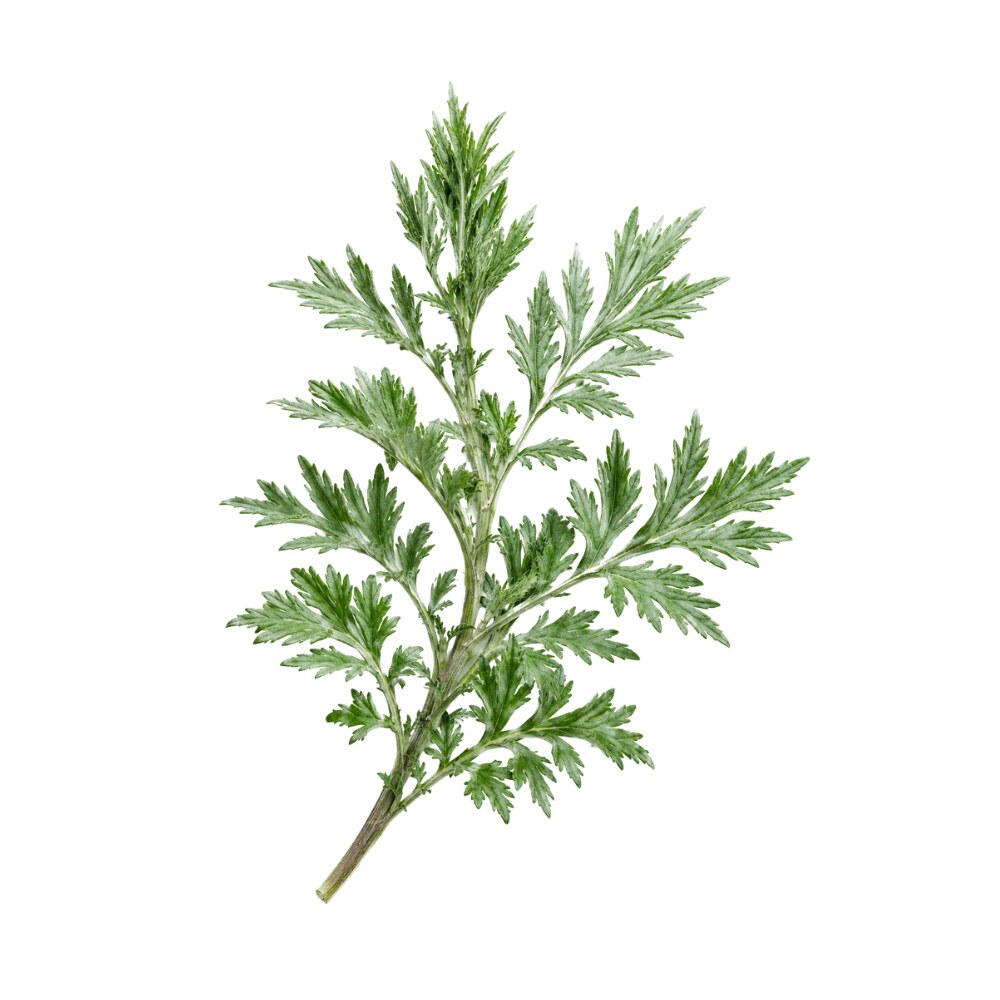
The leaves are 3–10 cm long and pinnately cut into lobes. Their upper surface is green and nearly smooth, and their underside is densely covered in grey, cobweb-like hairs 32,
The small flower heads are 2–3 mm long and crowded into long, narrow sprays. Their florets are yellowish to reddish brown, and they bloom from midsummer to late autumn 32Reference 32Artemisia vulgaris Linnaeus — species description, habitat and distribution — floraView study →. The plant is wind-pollinated 27Reference 27Developmental and quantitative expression profile of the six pollen allergens of mugwort (Artemisia vulgaris)View study →.
Mugwort varies a great deal between populations in leaf division, head size and colour, and botanists have not settled on how to divide it 32Reference 32Artemisia vulgaris Linnaeus — species description, habitat and distribution — floraView study →.
Distribution
Mugwort is native to Europe and Asia 1,
It was probably brought to North America in the early 16th century 1Reference 1ReviewSignificance of Artemisia vulgaris L. (Common Mugwort) in the History of Medicine and Its Possible Contemporary Applications — reviewView study →. It is now widely established in eastern North America, on sandy or loamy soils, in forests, along coasts and on roadsides, and it is often weedy on disturbed ground 32Reference 32Artemisia vulgaris Linnaeus — species description, habitat and distribution — floraView study →.
It spreads mainly from its roots, which survive the winter underground and can be carried long distances by floods 1Reference 1ReviewSignificance of Artemisia vulgaris L. (Common Mugwort) in the History of Medicine and Its Possible Contemporary Applications — reviewView study →.
Growing Conditions
Cultivation snapshot for Mugwort
- Thrives in full sun and ordinary to poor, well-drained soil; tolerates drought and neglect once established.
- Hardy roughly across USDA zones 3–8; dies back in winter and returns vigorously each spring.
- Spreads aggressively by underground rhizome and can become invasive — plant only where you can contain it, or grow in a sunken bottomless pot.
- Cut back or harvest the aerial parts in mid- to late summer as flowering begins, when the leaves are most aromatic.
Grow it yourself
Farm Wiki is our cultivation-focused sister site, also run by Justin Cooke.
Pharmacology & Research
Research on mugwort is almost entirely preclinical: chemical surveys, cell-line assays, and a few rodent and zebrafish studies 1Reference 1ReviewSignificance of Artemisia vulgaris L. (Common Mugwort) in the History of Medicine and Its Possible Contemporary Applications — reviewView study →.
The most developed finding is anti-inflammatory. Sesquiterpene lactones isolated from the leaf suppress nitric oxide, iNOS and COX-2 in macrophages 5,
Antioxidant, anticancer, blood-sugar and antimicrobial activity have also been reported, mostly in the laboratory 11,
-
Best-supported: anti-inflammatory activity, with two rodent studies and a repeatedly confirmed sesquiterpene-lactone mechanism 3,
4, ; laboratory antioxidant activity from its phenolics 4,5, 6, 7Reference 3AnimalAnti-inflammatory effect of Artemisia vulgaris methanolic extract and β-caryophyllene oxide on carrageenan-induced paw edema — rat, in vivoView study →Reference 4AnimalAntioxidant, anti-inflammatory and xanthine-oxidase inhibitory activity of Artemisia vulgaris extract and fractions — mouse, in vivoView study →Reference 5In vitroGuaianolide sesquiterpene lactones from Artemisia vulgaris as NO inhibitors in LPS-induced RAW264.7 macrophages — in vitroView study →Reference 6In vitroSesquiterpenoids and triterpenoids with anti-inflammatory effects from Artemisia vulgaris — in vitroView study →Reference 7In vitroArtemvulactone E from Artemisia vulgaris ameliorates LPS-induced inflammation in macrophages and zebrafish — in vitro, animal modelView study → 11, .12Reference 4AnimalAntioxidant, anti-inflammatory and xanthine-oxidase inhibitory activity of Artemisia vulgaris extract and fractions — mouse, in vivoView study →Reference 11In vitroAntioxidant activity of wild-growing phenolic-rich plants in Latvia — in vitroView study →Reference 12In vitroCarotenoid profile and antioxidant/cytotoxic activity of Artemisia vulgaris aqueous extract in oral carcinoma cells — in vitroView study → - Emerging, worth watching: anti-neuroinflammatory and anti-herpes terpenoids isolated from the leaf 8Reference 8In vitroActivity-guided isolation of antiherpesvirus and antineuroinflammatory terpenoids from Artemisia vulgaris — in vitroView study →; a single rat study of diabetic heart damage 13Reference 13AnimalArtemisia vulgaris extract reverses diabetic cardiomyopathy remodelling — rat, in vivoView study →.
-
Mechanistically thin: anticancer and antiparasitic effects rest on cell-line and tissue assays only 15,
16, ; the digestive-bitter, menstrual and dream uses have no pharmacological study.17, 18, 19, 20, 23, 24Reference 15In vitroArtemisia vulgaris induces tumour-selective ferroptosis and necroptosis via lysosomal Ca²⁺ signalling — in vitroView study →Reference 16In vitroArtemisia vulgaris inhibits BCR/ABL and promotes apoptosis in chronic myeloid leukaemia cells — in vitroView study →Reference 17In vitroEthanolic extract of Artemisia vulgaris promotes apoptosis in non-small-cell lung carcinoma A549 cells via Wnt/β-catenin — in vitroView study →Reference 18In vitroPsilostachyin C reduces malignant properties of hepatocellular carcinoma cells — in vitroView study →Reference 19In vitroInhibition of Bhas 42 cell transformation by Artemisia vulgaris — in vitroView study →Reference 20In vitroTwo new eudesmane sesquiterpene glucosides from the aerial parts of Artemisia vulgaris (cytotoxicity assay) — in vitroView study →Reference 23In vitroAntiprotozoal activity of Artemisia vulgaris and Berberis vulgaris against Leishmania major and Trichomonas vaginalis — in vitroView study →Reference 24In vitroAnthelmintic activity of Artemisia vulgaris against ova and adult Fasciola gigantica — in vitroView study → -
The caveat: no human efficacy data for the herb, no standardised preparation, and an essential oil whose thujone and camphor content varies widely between populations 1,
2Reference 1ReviewSignificance of Artemisia vulgaris L. (Common Mugwort) in the History of Medicine and Its Possible Contemporary Applications — reviewView study →Reference 2In vitroCompositional Variability and Toxic Activity of Mugwort (Artemisia vulgaris) Essential Oils — in vitroView study → .
Mugwort’s essential oil differs from one population to the next. Oils have been dominated by thujone, camphor, 1,8-cineole, germacrene D or davanone depending on where the plant grew, so a result for one oil does not transfer to another 1,
1. Anti-Inflammatory
A methanolic extract, and β-caryophyllene oxide isolated from it, reduced carrageenan-induced paw swelling in rats. Treatment lowered C-reactive protein and lipid peroxidation and restored antioxidant enzymes in a dose-dependent way 3Reference 3AnimalAnti-inflammatory effect of Artemisia vulgaris methanolic extract and β-caryophyllene oxide on carrageenan-induced paw edema — rat, in vivoView study →.
In mice, 96% and 50% ethanol extracts both reduced carrageenan paw swelling. Luteolin, apigenin and quercetin were isolated from the most active fraction 4Reference 4AnimalAntioxidant, anti-inflammatory and xanthine-oxidase inhibitory activity of Artemisia vulgaris extract and fractions — mouse, in vivoView study →.
Two studies have isolated guaiane-type sesquiterpene lactones from the leaf and aerial parts that suppress nitric oxide in stimulated macrophages by lowering iNOS and COX-2. Their IC50 values were 0.9–3.6 µM, and most were more potent than dexamethasone 5,
The newly described lactone artemvulactone E blocked TNF-α, IL-6, iNOS and COX-2 through MAPK/JAK/STAT3–NF-κB inhibition and binding to TLR4, and reduced inflammation in zebrafish larvae 7Reference 7In vitroArtemvulactone E from Artemisia vulgaris ameliorates LPS-induced inflammation in macrophages and zebrafish — in vitro, animal modelView study →.
The essential oil eased chemically induced gut inflammation in zebrafish through the MyD88/TRAF6/NF-κB pathway 10Reference 10AnimalEssential oil from Artemisia vulgaris alleviates enteritis in zebrafish via oxidative stress and inflammatory modulation — animal modelView study →. A flavonoid-rich extract inhibited lipoxygenase 9Reference 9In vitroLipoxygenase inhibition by flavonoid-rich extract from Artemisia vulgaris — in vitroView study →, and leaf terpenoids reduced inflammation in brain immune cells 8Reference 8In vitroActivity-guided isolation of antiherpesvirus and antineuroinflammatory terpenoids from Artemisia vulgaris — in vitroView study →.
All of this is preclinical, and the most potent lactones are isolated compounds rather than the tea or tincture people take.
2. Antioxidant
Mugwort’s phenolics scavenge free radicals in DPPH, ABTS, reducing-power and hydrogen-peroxide assays. The ethyl-acetate flavonoid fraction was the most active, and chlorogenic acid, luteolin, rutin and myricetin have been identified in the active extracts 4,
Aqueous extracts rich in all-trans-lutein also show antioxidant activity 12Reference 12In vitroCarotenoid profile and antioxidant/cytotoxic activity of Artemisia vulgaris aqueous extract in oral carcinoma cells — in vitroView study →. In diabetic rats, extract treatment raised total antioxidant capacity and lowered malondialdehyde and total oxidant status 13Reference 13AnimalArtemisia vulgaris extract reverses diabetic cardiomyopathy remodelling — rat, in vivoView study →.
In a Latvian survey of wild plants, A. vulgaris had among the lowest polyphenol contents of the species tested 11Reference 11In vitroAntioxidant activity of wild-growing phenolic-rich plants in Latvia — in vitroView study →. At higher concentrations, aqueous extracts caused oxidative stress and DNA damage in oral cancer cells 12Reference 12In vitroCarotenoid profile and antioxidant/cytotoxic activity of Artemisia vulgaris aqueous extract in oral carcinoma cells — in vitroView study →.
The only whole-animal data come from diabetic rats. No measurement has been made in humans.
3. Anticancer
A hydroalcoholic extract killed breast cancer (MCF-7, SKBR-3) and chronic myeloid leukaemia (K562) cells through lysosomal calcium release, ferroptosis and necroptosis. It was more toxic to the leukaemia cells than to normal fibroblasts. The main compounds identified in the extract were artemisinin and caffeoylquinic acids 15Reference 15In vitroArtemisia vulgaris induces tumour-selective ferroptosis and necroptosis via lysosomal Ca²⁺ signalling — in vitroView study →.
In leukaemia cells a methanol extract inhibited BCR/ABL activation and downstream AKT/MAPK signalling, and was more active against imatinib-resistant mutants than against the normal form 16Reference 16In vitroArtemisia vulgaris inhibits BCR/ABL and promotes apoptosis in chronic myeloid leukaemia cells — in vitroView study →.
An ethanolic leaf extract suppressed A549 lung-cancer cells through the Wnt3/β-catenin pathway 17Reference 17In vitroEthanolic extract of Artemisia vulgaris promotes apoptosis in non-small-cell lung carcinoma A549 cells via Wnt/β-catenin — in vitroView study →. The isolated lactone psilostachyin C reduced the growth and spread of liver-cancer cells by blocking CREBBP-driven transcription 18Reference 18In vitroPsilostachyin C reduces malignant properties of hepatocellular carcinoma cells — in vitroView study →. An extract also inhibited chemically induced transformation of Bhas 42 cells 19Reference 19In vitroInhibition of Bhas 42 cell transformation by Artemisia vulgaris — in vitroView study →.
Two new eudesmane sesquiterpene glucosides from the aerial parts showed no meaningful cytotoxicity (IC50 >100 µM) 20Reference 20In vitroTwo new eudesmane sesquiterpene glucosides from the aerial parts of Artemisia vulgaris (cytotoxicity assay) — in vitroView study →. In normal human lymphocytes, extracts protected against chemically induced genetic damage 31Reference 31In vitroArtemisia vulgaris and Artemisia alba extracts reduce mitomycin-C-induced genomic instability in human lymphocytes — in vitroView study →.
There is no animal tumour model and no human data, and the concentrations used may not be reachable by mouth.
4. Antidiabetic & Metabolic
In rats with diabetic heart disease, a methanolic extract given for 45 days lowered fasting glucose, HbA1c, insulin, total cholesterol, triglycerides and LDL, and raised HDL and total antioxidant capacity. ECG and tissue examination showed reversal of damage to the heart and pancreas 13Reference 13AnimalArtemisia vulgaris extract reverses diabetic cardiomyopathy remodelling — rat, in vivoView study →.
A concentrated A. vulgaris extract inhibited the starch-digesting enzyme α-amylase in the laboratory (IC50 8.6 µg/mL, against 3.5 µg/mL for acarbose). Chlorogenic acid, luteolin and rutin were identified in it 14Reference 14In vitroAntidiabetic and anti-inflammatory potential of Artemisia absinthium, Artemisia vulgaris and Trigonella foenum-graecum — in vitroView study →.
This rests on a single animal study and an enzyme assay. There are no human blood-sugar data.
5. Antimicrobial
Hydro-distilled leaf oil from Manipur, rich in eucalyptol (1,8-cineole), sabinene and borneol, inhibited the fungi Sclerotium oryzae and Fusarium oxysporum and the bacteria Bacillus cereus and Staphylococcus aureus. Its MIC was 0.3% against B. cereus and 0.63% against S. aureus 21Reference 21In vitroPhytochemical composition and antimicrobial activity of essential oil from Artemisia vulgaris leaves — in vitroView study →.
A methanolic extract showed strong antibacterial and antibiofilm activity against toxin-producing B. cereus (MICs 62.5–250 µg/mL) and lowered its toxin genes. Chlorogenic acid, luteolin and quercitrin were among its main constituents 22Reference 22In vitroAntibacterial, antibiofilm and gene-suppressing activity of Artemisia vulgaris extract against Bacillus cereus — in vitroView study →.
All of this is laboratory work. The oil, with its variable make-up, is not how the herb is taken, and no infection model has been tested.
6. Antiparasitic
Ethanolic extracts showed selective, dose-dependent activity against the protozoa Leishmania major (IC50 about 180 µg/mL against the intracellular form) and Trichomonas vaginalis (IC50 about 104 µg/mL). At non-toxic concentrations they cleared the parasites from infected cells 23Reference 23In vitroAntiprotozoal activity of Artemisia vulgaris and Berberis vulgaris against Leishmania major and Trichomonas vaginalis — in vitroView study →.
Against the liver fluke Fasciola gigantica, the extract reduced egg hatching and broke down the outer surface of adult worms 24Reference 24In vitroAnthelmintic activity of Artemisia vulgaris against ova and adult Fasciola gigantica — in vitroView study →.
The essential oil also killed and repelled a plant-pest gall mite. Camphor made up about 29% of that oil 25Reference 25In vitroChemical composition, acaricidal and repellent activities of Artemisia vulgaris essential oil — in vitroView study →.
All of this is laboratory and tissue work, with no animal infection model.
Mechanisms
Mugwort’s sesquiterpene lactones, many of them guaiane-type, carry a reactive α-methylene-γ-lactone group. They have been studied for suppressing the NF-κB, iNOS and COX-2 pathway in immune cells 5,
The flavonoids luteolin, apigenin and quercetin have been studied separately as antioxidants and as inhibitors of xanthine oxidase, the enzyme that makes uric acid. The essential oil has its own antimicrobial chemistry 4,
| Mechanism | Drives | Key compounds |
|---|---|---|
| NO ↓, iNOS ↓, COX-2 ↓ | anti-inflammatoryanti-neuroinflammatory | sesquiterpene lactones, artemvulactone E, quercetin |
| MAPK/JAK/STAT3 ↓, TLR4 antagonism | anti-inflammatory | artemvulactone E |
| Radical scavenging (DPPH/ABTS), ↑ SOD/CAT/GPx | antioxidant | chlorogenic acid, quercetin, luteolin, rutin |
| Xanthine oxidase ↓ | gout | luteolin, apigenin, quercetin |
| α-amylase ↓ | antidiabetic | chlorogenic acid, luteolin |
| Lysosomal Ca²⁺ release → ferroptosis/necroptosis; BCR/ABL ↓; Wnt/β-catenin ↓ | anticancer | psilostachyin C, artemisinin, caffeoylquinic acids |
| Membrane and biofilm disruption (essential oil) | antimicrobial | 1,8-cineole, camphor, sabinene |
Clinical Trials
The registered and published human trials concern pollen-allergen immunotherapy with recombinant Art v 1, and moxibustion or acupuncture. None tests mugwort taken by mouth 28Reference 28RCTUltra-short recombinant Art v 1 immunotherapy in mugwort allergy — randomised, double-blind, placebo-controlled Phase I trial (NCT07317960)View study →.
| Completed | Planned | Terminated | Preclinical |
|---|---|---|---|
| 2(allergen immunotherapy) | 1(rArt v 1 SCIT) | 0 | ~30 |
Last checked: July 2026.
Phytochemistry
Mugwort’s essential oil is about 72% monoterpenoids and 26% sesquiterpenoids. The compounds most often found are 1,8-cineole, sabinene, camphor, camphene, caryophyllene oxide, and α- and β-thujone 1Reference 1ReviewSignificance of Artemisia vulgaris L. (Common Mugwort) in the History of Medicine and Its Possible Contemporary Applications — reviewView study →.
The proportions vary widely with origin. Across published analyses, 1,8-cineole runs from 2.6% to 17.6% of the oil and camphor from none to 47.7% 1Reference 1ReviewSignificance of Artemisia vulgaris L. (Common Mugwort) in the History of Medicine and Its Possible Contemporary Applications — reviewView study →. In fifteen wild Lithuanian populations, different oils were dominated by davanones (13.8–45.5%), germacrene D (9.1–30.5%), 1,8-cineole, camphor or trans-thujone (8.9% and 10.9% in two oils) 2Reference 2In vitroCompositional Variability and Toxic Activity of Mugwort (Artemisia vulgaris) Essential Oils — in vitroView study →. In northern Lithuania, cis- and trans-thujone reached 12.9% and 20.2% of the oil in some populations 1Reference 1ReviewSignificance of Artemisia vulgaris L. (Common Mugwort) in the History of Medicine and Its Possible Contemporary Applications — reviewView study →.
The bitter sesquiterpene lactones psilostachyin, psilostachyin C and vulgarin are characteristic of the species, and artemisinin has also been found 1Reference 1ReviewSignificance of Artemisia vulgaris L. (Common Mugwort) in the History of Medicine and Its Possible Contemporary Applications — reviewView study →. Guaianolide lactones such as artemvulactone E have been isolated from the leaf 5,
The flavonoids include luteolin, apigenin, quercetin, rutin, jaceosidin and glycosides of kaempferol and quercetin. The coumarins scopoletin, umbelliferone and esculin, caffeoylquinic acids such as chlorogenic acid, and tannins are also present 1,
Oil studies from different countries should be read as describing different chemotypes rather than one fixed oil 1,
Constituent Summary
Oil figures are share of the essential oil and vary widely between populations; other figures are per dry weight of herb.
Monoterpene6 compounds6 with data
Sesquiterpene1 compound1 with data
Sesquiterpene Lactone5 compounds1 with data
Flavonoid6 compounds6 with data
Phenolic Acid1 compoundno data
Tannin1 compoundno data
Dosage
Mugwort is taken as a tea or tincture of the dried herb, used occasionally rather than daily.
Traditional Dosage
| System | Preparation | Dose |
|---|---|---|
| European herbal medicine | Infusion of dried herb | About 1 teaspoon (~1.2 g) in boiling water, covered and steeped for 5 minutes 1Reference 1ReviewSignificance of Artemisia vulgaris L. (Common Mugwort) in the History of Medicine and Its Possible Contemporary Applications — reviewView study → |
| Western herbal | Liquid extract (1:2) | 15–30 mL/week |
| Ayurveda | Liquid extract or dried herb | 0.5–2 g as a single dose 1Reference 1ReviewSignificance of Artemisia vulgaris L. (Common Mugwort) in the History of Medicine and Its Possible Contemporary Applications — reviewView study → |
Safety & Pregnancy
Mugwort is well tolerated at ordinary tea doses. Its cautions are pregnancy, the thujone and camphor in its essential oil, and allergy to its pollen.
- Avoid in pregnancy. Large doses may cause miscarriage, and European folk medicine used the herb to bring on labour 1Reference 1ReviewSignificance of Artemisia vulgaris L. (Common Mugwort) in the History of Medicine and Its Possible Contemporary Applications — reviewView study →.
- Thujone and camphor in the oil. Large doses may cause nausea, vomiting and nervous-system effects, so concentrated or prolonged use of the oil is best avoided 1Reference 1ReviewSignificance of Artemisia vulgaris L. (Common Mugwort) in the History of Medicine and Its Possible Contemporary Applications — reviewView study →.
- Pollen allergy. Mugwort pollen is a major cause of late-summer hay fever and asthma, and sensitised people can react to foods such as celery, carrot and snail 1,
27, .30Reference 1ReviewSignificance of Artemisia vulgaris L. (Common Mugwort) in the History of Medicine and Its Possible Contemporary Applications — reviewView study →Reference 27Developmental and quantitative expression profile of the six pollen allergens of mugwort (Artemisia vulgaris)View study →Reference 30Clinical trialSnail-induced anaphylaxis in patients with underlying Artemisia vulgaris pollinosis — case reportView study → - Low toxicity in normal use. Tea doses are not likely to cause side effects, and an isolated lactone caused no organ damage or deaths in mice at up to 1,600 mg/kg 1,
26Reference 1ReviewSignificance of Artemisia vulgaris L. (Common Mugwort) in the History of Medicine and Its Possible Contemporary Applications — reviewView study →Reference 26AnimalToxicological evaluation of isosecotanapartholide from Artemisia vulgaris: acute and sub-acute oral toxicity — mouse, in vivoView study → .
Full Safety & Interactions Detail
Pregnancy. Taken in large doses, mugwort may cause miscarriage 1Reference 1ReviewSignificance of Artemisia vulgaris L. (Common Mugwort) in the History of Medicine and Its Possible Contemporary Applications — reviewView study →.
Essential oil. Large doses may cause nausea, vomiting and damage to the nervous system, and raised blood pressure has been reported. The European Food Safety Authority lists α- and β-thujone, camphor and 1,8-cineole in the oil as potentially harmful in food or supplements, while noting that most of the research concerns concentrated oil rather than weaker extracts 1Reference 1ReviewSignificance of Artemisia vulgaris L. (Common Mugwort) in the History of Medicine and Its Possible Contemporary Applications — reviewView study →. The oil’s make-up varies widely between populations 1,
Allergy. Mugwort pollen is a main cause of hay fever and allergic asthma in northern Europe, North America and parts of Asia. The allergens Art v 1 and Art v 3 are the most important 1,
Cross-reactions. Sensitised people can react to birch, grass and olive pollen, and to foods including celery, carrot, sunflower, hazelnut, kiwi, peach, mango and apple 1Reference 1ReviewSignificance of Artemisia vulgaris L. (Common Mugwort) in the History of Medicine and Its Possible Contemporary Applications — reviewView study →. Anaphylaxis to snail has been described in people with mugwort pollen allergy 30Reference 30Clinical trialSnail-induced anaphylaxis in patients with underlying Artemisia vulgaris pollinosis — case reportView study →.
Diabetes. A review of the herb advises caution in diabetes, reporting that it can raise blood glucose 1Reference 1ReviewSignificance of Artemisia vulgaris L. (Common Mugwort) in the History of Medicine and Its Possible Contemporary Applications — reviewView study →.
Toxicity. Tea doses are not likely to cause side effects 1Reference 1ReviewSignificance of Artemisia vulgaris L. (Common Mugwort) in the History of Medicine and Its Possible Contemporary Applications — reviewView study →. The isolated lactone isosecotanapartholide caused no organ damage or deaths in mice at oral doses up to 1,600 mg/kg 26Reference 26AnimalToxicological evaluation of isosecotanapartholide from Artemisia vulgaris: acute and sub-acute oral toxicity — mouse, in vivoView study →.
Drug interactions have not been studied.
Avoid in pregnancy. Mugwort is a traditional menstruation-promoting herb, European folk medicine used it to bring on labour or miscarriage, and large doses may cause miscarriage 1Reference 1ReviewSignificance of Artemisia vulgaris L. (Common Mugwort) in the History of Medicine and Its Possible Contemporary Applications — reviewView study →.
There are no data on use while breastfeeding, so it is best avoided.
References
- Ekiert, H., Pajor, J., Klin, P., Rzepiela, A., Ślesak, H., & Szopa, A. (2020). Significance of Artemisia vulgaris L. (Common Mugwort) in the History of Medicine and Its Possible Contemporary Applications — review. Molecules. https://pubmed.ncbi.nlm.nih.gov/32992959/
- Judžentienė, A., & Garjonytė, R. (2016). Compositional Variability and Toxic Activity of Mugwort (Artemisia vulgaris) Essential Oils — in vitro. Natural Product Communications. https://pubmed.ncbi.nlm.nih.gov/30807041/
- Kumar GS, Sholapuri P, K D, et al. (2025). Anti-inflammatory effect of Artemisia vulgaris methanolic extract and β-caryophyllene oxide on carrageenan-induced paw edema — rat, in vivo. Drug and Chemical Toxicology. https://pubmed.ncbi.nlm.nih.gov/39411871/
- Trinh PTN, Truc NC, Danh TT, et al. (2024). Antioxidant, anti-inflammatory and xanthine-oxidase inhibitory activity of Artemisia vulgaris extract and fractions — mouse, in vivo. Journal of Ethnopharmacology. https://pubmed.ncbi.nlm.nih.gov/38971340/
- Chen XY, Liu T, Hu YZ, et al. (2022). Guaianolide sesquiterpene lactones from Artemisia vulgaris as NO inhibitors in LPS-induced RAW264.7 macrophages — in vitro. Frontiers in Chemistry. https://pubmed.ncbi.nlm.nih.gov/36118318/
- Liu T, Chen X, Hu Y, et al. (2022). Sesquiterpenoids and triterpenoids with anti-inflammatory effects from Artemisia vulgaris — in vitro. Phytochemistry. https://pubmed.ncbi.nlm.nih.gov/36108986/
- Zhao Z, Lin S, Liu T, et al. (2024). Artemvulactone E from Artemisia vulgaris ameliorates LPS-induced inflammation in macrophages and zebrafish — in vitro, animal model. Frontiers in Pharmacology. https://pubmed.ncbi.nlm.nih.gov/39092222/
- Liu T, Dai M, Zhu H, et al. (2023). Activity-guided isolation of antiherpesvirus and antineuroinflammatory terpenoids from Artemisia vulgaris — in vitro. Phytochemistry. https://pubmed.ncbi.nlm.nih.gov/37751824/
- Lim JR, Chua LS, Mustaffa AA (2024). Lipoxygenase inhibition by flavonoid-rich extract from Artemisia vulgaris — in vitro. Journal of Chromatography B. https://pubmed.ncbi.nlm.nih.gov/38484676/
- Meng R, Wu S, Chen J, et al. (2022). Essential oil from Artemisia vulgaris alleviates enteritis in zebrafish via oxidative stress and inflammatory modulation — animal model. Fish & Shellfish Immunology. https://pubmed.ncbi.nlm.nih.gov/36228879/
- Teterovska R, Sile I, Paulausks A, et al. (2023). Antioxidant activity of wild-growing phenolic-rich plants in Latvia — in vitro. Plants. https://pubmed.ncbi.nlm.nih.gov/38140435/
- Rossato Viana A, Eduardo Lago Londero J, Pinheiro PN, et al. (2024). Carotenoid profile and antioxidant/cytotoxic activity of Artemisia vulgaris aqueous extract in oral carcinoma cells — in vitro. Journal of Toxicology and Environmental Health, Part A. https://pubmed.ncbi.nlm.nih.gov/38073506/
- Liza, Hussain G, Malik A, et al. (2024). Artemisia vulgaris extract reverses diabetic cardiomyopathy remodelling — rat, in vivo. Pharmaceuticals. https://pubmed.ncbi.nlm.nih.gov/39204151/
- Neagu E, Paun G, Albu C, et al. (2023). Antidiabetic and anti-inflammatory potential of Artemisia absinthium, Artemisia vulgaris and Trigonella foenum-graecum — in vitro. Molecules. https://pubmed.ncbi.nlm.nih.gov/37894635/
- Zamarioli LDS, Santos MRM, Erustes AG, et al. (2024). Artemisia vulgaris induces tumour-selective ferroptosis and necroptosis via lysosomal Ca²⁺ signalling — in vitro. Chinese Journal of Integrative Medicine. https://pubmed.ncbi.nlm.nih.gov/38040876/
- Chi HT, Ly BTK (2022). Artemisia vulgaris inhibits BCR/ABL and promotes apoptosis in chronic myeloid leukaemia cells — in vitro. Biomedical Reports. https://pubmed.ncbi.nlm.nih.gov/36382259/
- Tiwari RK, Ahmad A, Khan AF, et al. (2023). Ethanolic extract of Artemisia vulgaris promotes apoptosis in non-small-cell lung carcinoma A549 cells via Wnt/β-catenin — in vitro. Metabolites. https://pubmed.ncbi.nlm.nih.gov/37110139/
- Jiang K, Ning N, Huang J, et al. (2024). Psilostachyin C reduces malignant properties of hepatocellular carcinoma cells — in vitro. Functional & Integrative Genomics. https://pubmed.ncbi.nlm.nih.gov/38600341/
- Pitimontol P, Kongkiatpaiboon S, Worakhunpiset S, et al. (2025). Inhibition of Bhas 42 cell transformation by Artemisia vulgaris — in vitro. Scientific Reports. https://pubmed.ncbi.nlm.nih.gov/40410249/
- Hanh TTH, Vinh LB, Cuong NX, et al. (2023). Two new eudesmane sesquiterpene glucosides from the aerial parts of Artemisia vulgaris (cytotoxicity assay) — in vitro. Natural Product Research. https://pubmed.ncbi.nlm.nih.gov/35001767/
- Singh NB, Devi ML, Biona T, et al. (2023). Phytochemical composition and antimicrobial activity of essential oil from Artemisia vulgaris leaves — in vitro. Molecules. https://pubmed.ncbi.nlm.nih.gov/36903525/
- Fareid MA, El-Sherbiny GM, Elafandy NM, et al. (2025). Antibacterial, antibiofilm and gene-suppressing activity of Artemisia vulgaris extract against Bacillus cereus — in vitro. Frontiers in Microbiology. https://pubmed.ncbi.nlm.nih.gov/41229678/
- Aksoy T, Girginkardeşler N, Balcıoğlu İC, et al. (2026). Antiprotozoal activity of Artemisia vulgaris and Berberis vulgaris against Leishmania major and Trichomonas vaginalis — in vitro. Acta Parasitologica. https://pubmed.ncbi.nlm.nih.gov/41697430/
- Nurlaelasari A, Wulandari AR, Caro TM, et al. (2023). Anthelmintic activity of Artemisia vulgaris against ova and adult Fasciola gigantica — in vitro. Veterinary World. https://pubmed.ncbi.nlm.nih.gov/37576776/
- Kunnathattil M, Visakh NU, Pathrose B, et al. (2025). Chemical composition, acaricidal and repellent activities of Artemisia vulgaris essential oil — in vitro. Molecules. https://pubmed.ncbi.nlm.nih.gov/40871480/
- Singh NB, Singh KD, Koijam AS, et al. (2025). Toxicological evaluation of isosecotanapartholide from Artemisia vulgaris: acute and sub-acute oral toxicity — mouse, in vivo. Naunyn-Schmiedeberg’s Archives of Pharmacology. https://pubmed.ncbi.nlm.nih.gov/40208317/
- Frątczak A, Stein EM, Kasprowicz-Maluśki A, et al. (2025). Developmental and quantitative expression profile of the six pollen allergens of mugwort (Artemisia vulgaris). BMC Plant Biology. https://pubmed.ncbi.nlm.nih.gov/40604475/
- Nurpeissov T, Tabynov K, Zhubanturliyeva A, et al. (2026). Ultra-short recombinant Art v 1 immunotherapy in mugwort allergy — randomised, double-blind, placebo-controlled Phase I trial (NCT07317960). Allergology International. https://pubmed.ncbi.nlm.nih.gov/42336691/
- Babayeva M, Tabynov K, Nurpeisov T, et al. (2022). Recombinant Art v 1 pollen protein vaccine for allergic rhinitis and asthma — animal model. Frontiers in Immunology. https://pubmed.ncbi.nlm.nih.gov/36439113/
- Prados-Castaño M, Cimbollek S, Bartolomé B, et al. (2024). Snail-induced anaphylaxis in patients with underlying Artemisia vulgaris pollinosis — case report. Allergologia et Immunopathologia. https://pubmed.ncbi.nlm.nih.gov/38186194/
- Radović Jakovljević M, Grujičić D, Stanković M, et al. (2024). Artemisia vulgaris and Artemisia alba extracts reduce mitomycin-C-induced genomic instability in human lymphocytes — in vitro. Drug and Chemical Toxicology. https://pubmed.ncbi.nlm.nih.gov/36476306/
- Shultz, L. M. (2006). Artemisia vulgaris Linnaeus — species description, habitat and distribution — flora. In Flora of North America Editorial Committee (eds.), Flora of North America North of Mexico, Vol. 19. http://www.efloras.org/florataxon.aspx?flora_id=1&taxon_id=200023371
- Lin, Y. (Ling Y.-R.), Humphries, C. J., & Gilbert, M. G. (2011). Artemisia vulgaris Linnaeus (北艾 bei ai) — species description and distribution — flora. In Wu, Z. Y., Raven, P. H., & Hong, D. Y. (eds.), Flora of China, Vol. 20–21. http://www.efloras.org/florataxon.aspx?flora_id=2&taxon_id=200023371
- Lin, Y. (Ling Y.-R.), Humphries, C. J., & Gilbert, M. G. (2011). Artemisia argyi H. Léveillé & Vaniot (艾 ai) — species description and distribution — flora. In Wu, Z. Y., Raven, P. H., & Hong, D. Y. (eds.), Flora of China, Vol. 20–21. http://www.efloras.org/florataxon.aspx?flora_id=2&taxon_id=200023167



