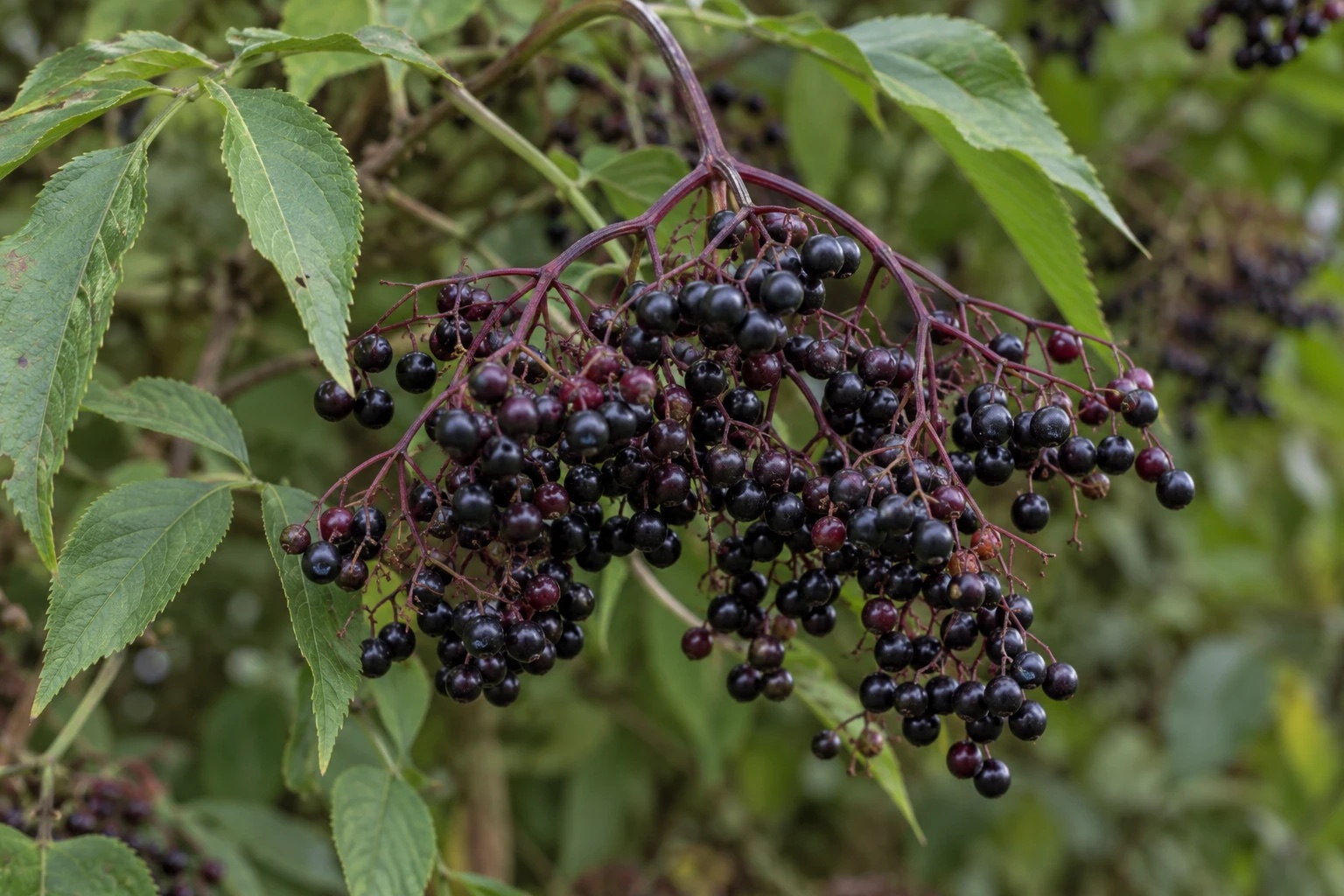
Elder (Sambucus nigra) is one of the oldest and best-loved respiratory herbs in the Western tradition — a plant reached for at the first sniffle of a cold for as long as we have records of people using plants at all. What sets it apart from most traditional cold remedies is that modern science has actually started to explain why it works: its berries and flowers are packed with flavonoids that, in the laboratory, lock directly onto the influenza virus’s surface machinery and jam the very tools it needs to infect your cells and spread.
That combination — a deep tradition of use, a genuinely elegant mechanism, and a run of clinical trials showing people recovering faster — makes elder the best-studied herbal antiviral we have for the early days of a cold or flu. This guide walks through the research behind it, the striking way it targets the virus, how herbalists have used it for centuries, and how to get the most out of it.
Bottom line — Elderberry is the best-evidenced Western herb for the early stage of a cold or flu. Taken as a standardised, heat-processed berry extract at the first sign of illness, controlled trials show it can shorten and soften the illness — and its flavonoids target the flu virus through a genuinely clever, multi-point mechanism.
A Lung Tonic Long Before “Influenza” Had a Name
To understand elder’s place, it helps to remember that the old herbalists weren’t treating “influenza” — the virus wasn’t identified until the twentieth century. They were treating what they could see: fevers, chills, coughs, congested chests, streaming colds, the whole familiar picture of a winter respiratory illness. And for that picture, across the Western tradition, elder was a first-choice herb.
Its two parts did slightly different jobs. Elderflower was the classic diaphoretic — a herb taken as a hot infusion to bring on a gentle sweat and help “break” a fever, the traditional way of working with the body’s response rather than suppressing it. The famous domestic remedy for the onset of a cold was a hot tea of elderflower, yarrow, and peppermint, a combination still taught in Western herbal medicine today. Elderberry — cooked into syrups, robs, and cordials — was the winter tonic, kept in the pantry and reached for at the first sign of a cold or a rattly chest. Herbalists also folded elder into cold-and-flu formulas alongside herbs like yarrow or boneset.
Its pedigree runs deep. Elder seeds and dried fruits turn up at a Bronze Age site in Tuscany and Neolithic settlements in the French Alps, so people have been gathering and using this plant for thousands of years. Beyond Europe, elder appears in Ayurveda (the berries as a mild diuretic and laxative) and, rarely, in traditional Chinese medicine (as a warm bitter for dispelling blood stasis). But it’s in Western herbalism that elder earned its enduring reputation as a lung and fever herb — the reputation that, centuries later, sent researchers into the lab to find out what was actually going on.
What the Research Shows
Elder is unusual among traditional herbs in having a genuine body of human trial evidence — most folk remedies never get tested at all. Here’s what that research supports.
- Proven
- Promising
- Shaky
- Unsupported
The clinical story starts in the 1990s and builds from there:
- During a 1995 influenza-B outbreak, a placebo-controlled study found that around 90% of people taking elderberry extract felt substantially better within 2–3 days, versus about six days for placebo — and the same extract inhibited several influenza A and B strains in the test tube [2].
- A 2004 double-blind randomised trial put numbers on it: adults with influenza who took 15 mL of standardised berry syrup four times a day recovered, on average, four days sooner than those on placebo [1].
- A 2016 trial in air travellers (a nicely real-world test, since flying is a reliable way to catch a cold) found that people taking a standardised elderberry extract had shorter, milder colds than those on placebo [3].
- Pulling the controlled trials together, a 2019 meta-analysis reported a substantial overall reduction in upper-respiratory symptoms with elderberry [4].
Not every study has been positive — one hospital-based flu trial found no benefit [5] — and reviewers rightly point out that the trials are on the small side and deserve larger confirmation [6]. That’s a fair ask for any herb. But the weight of the controlled research points the same way tradition does: caught early, elder makes a cold or flu shorter and easier. Two practical lessons come straight out of the trials — the benefit is real when you use a standardised, heat-processed extract, and elder is an early-window herb, most effective in the first day or two before the virus has taken hold.
How Elder Targets the Flu Virus
This is the part that turned a folk remedy into a research subject — and it’s genuinely elegant. To see it, you need to know the two tools influenza carries on its surface.
The virus is studded with two key proteins. Hemagglutinin is the grappling hook: the virus uses it to latch onto one of your cells and let itself in. Neuraminidase is the pair of molecular scissors: once the cell has been turned into a virus factory, neuraminidase snips the new virus particles free so they can drift off and infect the next cell. Between them, these two proteins run the whole infection — getting in, and getting back out to spread.
Here’s the striking part: neuraminidase is exactly what modern flu drugs target. Oseltamivir (Tamiflu), zanamivir, and peramivir are all neuraminidase inhibitors — they jam the scissors so new virus can’t escape the cell. And when researchers looked at what elder does, they found its flavonoids going after the same surface machinery. In the key study, elderberry flavonoids bound directly to H1N1 flu virions and stopped them from infecting cells in the lab, apparently by sticking to the hemagglutinin “hook” so it couldn’t grab hold in the first place [7]. A standardised extract likewise inhibited both influenza A and B — and, as a bonus, several of the respiratory bacteria that like to pile on during a flu [8].
The clever bit is that elder doesn’t rely on a single point of attack. A flu drug hits one target; change that one lock through mutation and the virus slips the drug — which is why resistance to flu antivirals keeps cropping up. Elder’s flavonoids appear to gum up several surface points at once, a much harder combination for a fast-mutating virus to evade. On top of that, elder seems to give the immune system a nudge: a classic study found the standardised extract Sambucol ramped up the body’s own antiviral cytokine signalling, marshalling a faster response to the infection [9].
One honest note keeps this in proportion: this is mostly laboratory evidence — binding assays and cell cultures rather than proof of exactly what happens inside you — and other flavonoid-rich plants do broadly similar things in a test tube. What sets elder apart isn’t a one-of-a-kind chemistry; it’s that this mechanism is backed up by the clinical trials above. The theory and the human results tell the same story.
How to Take Elder for Influenza
Two things decide whether elder delivers: start early, and use a properly prepared form. The trials began dosing at the very first sign of illness and used standardised, heat-treated berry preparations.
Liquid Extracts & Syrups
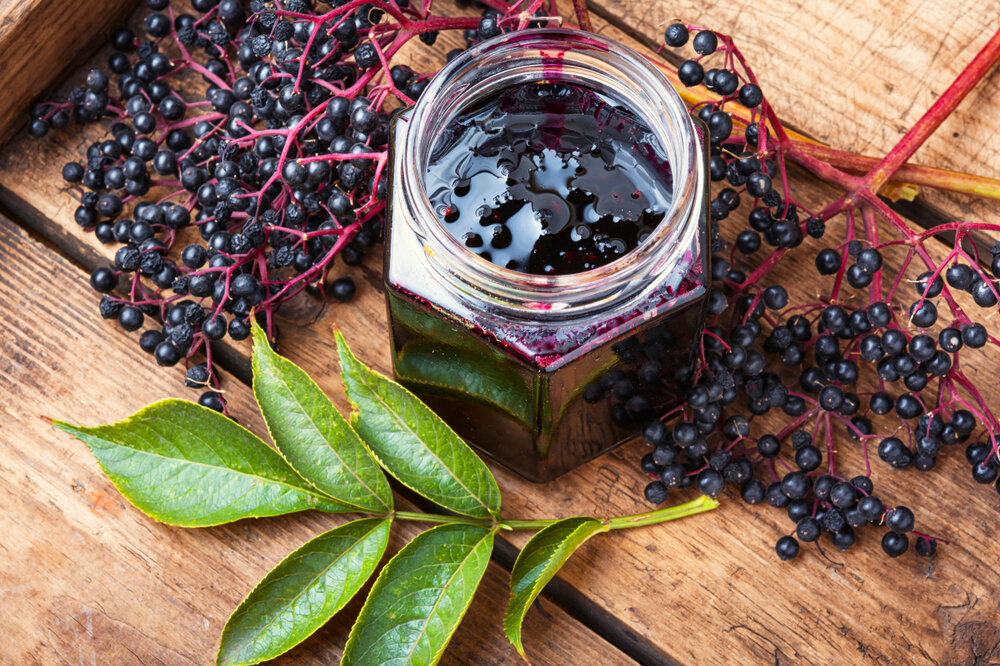
A standardised berry extract absorbs quickly, keeps well, and is easy to dose. In the flu trials it was taken at the first sign of symptoms and continued for about five days — commonly around 15 mL of syrup up to four times daily for adults [1]. Many people also take it briefly after a known exposure, before symptoms start.
Syrup has a bonus the plain extract doesn’t: its thick, soothing base coats a raw throat while it delivers the actives to the inflamed upper airway, and it tastes good enough for children (dosed conservatively) and reluctant adults alike. Whatever the form, the rule is the same — get it in during the first 24–48 hours, because once a virus is well established no cold-and-flu remedy, herbal or pharmaceutical, does much.
Herbalists often pair elder with complementary herbs — ginger to warm and settle the stomach, echinacea or Chinese skullcap for extra immune support, or the traditional elderflower–yarrow–peppermint tea to encourage a healthy sweat through a fever.
What Else Elder Is Good For
Elder’s antiviral reach isn’t limited to influenza in the lab — a standardised extract showed activity against a range of enveloped viruses and respiratory pathogens, and the same surface-binding action plausibly extends to them [8]. It also has a long traditional role as a cough-soother, which fits both its syrup form and its respiratory reputation. And beyond infection, elder’s deeply pigmented berries are a rich source of antioxidant anthocyanins now being studied for effects on cholesterol and blood-sugar handling — a side of elder covered in the elderberry monograph.
Frequently Asked Questions
Does elderberry really work for the flu?
When should I take it?
Can I just use raw berries or make my own?
How is it different from a flu drug like Tamiflu?
Is it safe to take alongside a prescribed antiviral?
Why does elder sometimes cause nausea?
- Always cook it. Raw berries, and all leaves, bark, unripe fruit and seeds, contain cyanogenic glycosides and emetic proteins. Heat neutralises them — so heat-processed extracts and syrups are both the safe and the effective form [10].
- Nausea means too much or too raw. Elder’s one common side effect is nausea; ease off the dose, choose a heat-treated product, or pair it with ginger [11].
- Children: cooked preparations, conservative doses. Use only heated ripe-berry or flower products and dose down for kids.
- Alongside, not instead of, prescribed care. Elder is a support for an early cold or flu — if you’re given a flu antiviral, keep taking it [5].
- Pregnancy & breastfeeding: cooked culinary amounts are widely eaten, but medicinal-strength extracts haven’t been studied — avoid concentrated products and never use raw plant material.
For the full botanical picture, see the elderberry monograph; for how the virus itself works and the wider self-care picture, the influenza and common cold guides.
References
- Zakay-Rones, Z., Thom, E., Wollan, T., & Wadstein, J. (2004). Randomized study of the efficacy and safety of oral elderberry extract in the treatment of influenza A and B virus infections. Journal of International Medical Research, 32(2), 132–140. Link
- Zakay-Rones, Z., Varsano, N., Zlotnik, M., et al. (1995). Inhibition of several strains of influenza virus in vitro and reduction of symptoms by an elderberry extract during an outbreak of influenza B Panama. Journal of Alternative and Complementary Medicine, 1(4), 361–369. Link
- Tiralongo, E., Wee, S. S., & Lea, R. A. (2016). Elderberry supplementation reduces cold duration and symptoms in air-travellers: a randomised, double-blind placebo-controlled clinical trial. Nutrients, 8(4), 182. Link
- Hawkins, J., Baker, C., Cherry, L., & Dunne, E. (2019). Black elderberry (Sambucus nigra) supplementation effectively treats upper respiratory symptoms: a meta-analysis of randomized, controlled clinical trials. Complementary Therapies in Medicine, 42, 361–365. Link
- Macknin, M., Wolski, K., Negrey, J., & Mace, S. (2020). Elderberry extract outpatient influenza treatment for emergency room patients ages 5 and above: a randomized, double-blind, placebo-controlled trial. Journal of General Internal Medicine, 35(11), 3271–3277. Link
- Wieland, L. S., Piechotta, V., Feinberg, T., et al. (2021). Elderberry for prevention and treatment of viral respiratory illnesses: a systematic review. BMC Complementary Medicine and Therapies, 21(1), 112. Link
- Roschek, B. Jr., Fink, R. C., McMichael, M. D., Li, D., & Alberte, R. S. (2009). Elderberry flavonoids bind to and prevent H1N1 infection in vitro. Phytochemistry, 70(10), 1255–1261. Link
- Krawitz, C., Mraheil, M. A., Stein, M., et al. (2011). Inhibitory activity of a standardized elderberry liquid extract against clinically-relevant human respiratory bacterial pathogens and influenza A and B viruses. BMC Complementary and Alternative Medicine, 11, 16. Link
- Barak, V., Halperin, T., & Kalickman, I. (2001). The effect of Sambucol, a black elderberry-based natural product, on the production of human cytokines: I. Inflammatory cytokines. European Cytokine Network, 12(2), 290–296. Link
- Jiménez, P., Tejero, J., Cordoba-Diaz, D., et al. (2015). Ebulin from dwarf elder (Sambucus ebulus L.): a mini-review. Toxins, 7(3), 648–658. Link
- Vlachojannis, J. E., Cameron, M., & Chrubasik, S. (2010). A systematic review on the sambuci fructus effect and efficacy profiles. Phytotherapy Research, 24(1), 1–8. Link
Clinical herbalist and the writer behind The Sunlight Experiment — an evidence-based pharmacopoeia of herbs, supplements, and the chemistry behind them.