
Compound Monograph
[10]-Gingerol
[10]-Gingerol is the longest-chain minor gingerol homolog of fresh ginger — less abundant and less studied than 6-gingerol, but with a notable isolate-level signal in triple-negative breast cancer and against oral bacteria, and often more potent than 6-gingerol in the same in-vitro assays.

Sources · 1
Where Does It Come From?
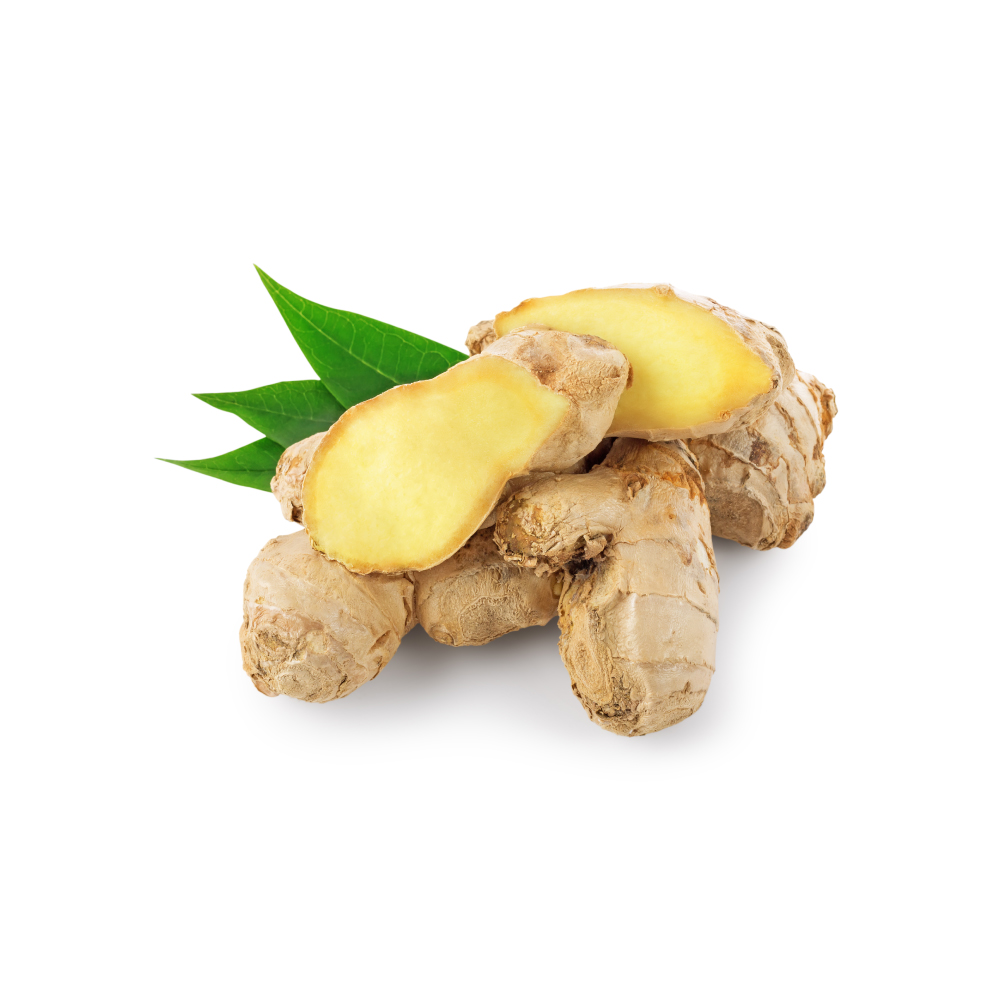
[10]-Gingerol is a naturally occurring gingerol homolog (vanilloid phenol / β-hydroxy alkanone), found in Ginger. It is well tolerated orally (low toxicity).
Concentration
Content by Source
Concentrations not reported. No percent-dry-weight or mg/g figures have been published for this compound in its source plants.
[10]-Gingerol at a Glance
10-Gingerol is the longest-chain of the common gingerol homologs — the pungent phenolic principles of fresh ginger rhizome. It sits alongside the dominant 6-gingerol and the intermediate 8-gingerol, differing only in the length of the alkyl side chain (the number counts its carbons). It is the least abundant and least studied of the three 3Reference 3Comparative antioxidant and anti-inflammatory effects of [6]-gingerol, [8]-gingerol, [10]-gingerol and [6]-shogaolView study →.
Despite that, 10-gingerol has a real isolate-level research footprint, which is the point: where the homologs have been compared head-to-head, the longer side chain often makes 10-gingerol more potent than 6-gingerol — in antioxidant assays, in T-lymphocyte and adipocyte anti-inflammatory work, in antibacterial testing against oral pathogens, and in breast-cancer cell models 2,
As with all the gingerols, the caveat is decisive: the human efficacy evidence belongs to whole ginger, not to purified 10-gingerol, and gingerols are near-completely conjugated on absorption, so free 10-gingerol barely reaches plasma 8Reference 8Clinical trialPharmacokinetics of 6-gingerol, 8-gingerol, 10-gingerol, and 6-shogaol and conjugate metabolites in healthy human subjectsView study →.
10-Gingerol vs. 6- and 8-Gingerol
The three gingerols are the same molecule with a different tail: 6-, 8- and 10-gingerol carry progressively longer, more lipophilic alkyl side chains. That single structural difference is the recurring theme of the isolate literature — potency tends to rise with chain length.
- Antioxidant capacity climbs with the chain. In a direct comparison, DPPH-radical IC₅₀ values fell from 26.3 µM for 6-gingerol to 19.5 µM for 8-gingerol to 10.5 µM for 10-gingerol, with the same ordering for superoxide and hydroxyl radicals — 10-gingerol was the most potent of the three gingerols tested (only 6-shogaol beat it) 3Reference 3Comparative antioxidant and anti-inflammatory effects of [6]-gingerol, [8]-gingerol, [10]-gingerol and [6]-shogaolView study →.
- Immune and anti-inflammatory potency, too. 10- and 8-gingerol suppress T lymphocytes more strongly than 6-gingerol 3Reference 3Comparative antioxidant and anti-inflammatory effects of [6]-gingerol, [8]-gingerol, [10]-gingerol and [6]-shogaolView study →, and the isolated 10 homolog raises antioxidant enzymes and re-balances adipokines in inflamed adipocytes 6Reference 6Preciado-Ortiz ME, Martínez-López E, Pedraza-Chaverri J, Medina-Campos ON, Rodríguez-Echevarría R, Reyes-Pérez SD, Rivera-Valdés JJ (2024). 10-Gingerol increases antioxidant enzymes and attenuates lipopolysaccharide-induced inflammation by modulating adipokines in 3T3-L1 adipocytes. Antioxidants (Basel). https://pubmed.ncbi.nlm.nih.gov/39334752/View study →.
- Anticancer potency. In breast-cancer cell lines the reported potency order is 10 > 8 > 6-gingerol for inhibiting proliferation 2Reference 2Bernard MM, McConnery JR, Hoskin DW (2017). [10]-Gingerol, a major phenolic constituent of ginger root, induces cell cycle arrest and apoptosis in triple-negative breast cancer cells. Experimental and Molecular Pathology. https://pubmed.ncbi.nlm.nih.gov/28315687/View study →.
The trade-off is pharmacokinetic: the same lipophilicity that helps in a dish does not translate into higher free plasma levels in people, because gingerols are rapidly glucuronidated (see Pharmacokinetics) 8Reference 8Clinical trialPharmacokinetics of 6-gingerol, 8-gingerol, 10-gingerol, and 6-shogaol and conjugate metabolites in healthy human subjectsView study →. So “more potent in vitro” should not be read as “more effective in humans.”
What It's Used For
Almost all of 10-gingerol’s evidence is isolated-molecule, preclinical work — cell lines and a small number of animal models. There is no human trial of purified 10-gingerol; the whole-ginger clinical record (nausea, inflammation, dysmenorrhea) sits on the ginger and gingerols pages, not here.
Support is an experimental score — weighted by study type (human > animal > in vitro) and volume. A beta, not a validated metric. Every score here is capped low because the data are preclinical isolate studies; whole-ginger human evidence lives on the ginger page. Each application links to its write-up.
10-Gingerol’s marquee signal, and the one place its isolate data reach an animal model. In triple-negative breast cancer cells the isolated molecule triggers caspase-3-dependent apoptosis and cell-cycle arrest, and is more potent than 6-gingerol and at least as potent as 8-gingerol 2Reference 2Bernard MM, McConnery JR, Hoskin DW (2017). [10]-Gingerol, a major phenolic constituent of ginger root, induces cell cycle arrest and apoptosis in triple-negative breast cancer cells. Experimental and Molecular Pathology. https://pubmed.ncbi.nlm.nih.gov/28315687/View study →.
In a syngeneic mouse model it was well tolerated, slowed orthotopic tumor growth, and inhibited spontaneous metastasis to lung, bone and brain — with brain-metastasis suppression persisting after removal of the primary tumor 1Reference 1AnimalMartin ACBM, Fuzer AM, Becceneri AB, et al. (2017). [10]-gingerol induces apoptosis and inhibits metastatic dissemination of triple negative breast cancer in vivo. Oncotarget. https://pubmed.ncbi.nlm.nih.gov/29069785/View study →.
Mechanistic follow-ups implicate lipid-raft-associated PI3K/Akt signaling in radio-resistant TNBC cells 7Reference 7Ediriweera MK, Moon JY, Nguyen YT, Cho SK (2020). 10-Gingerol targets lipid rafts associated PI3K/Akt signaling in radio-resistant triple negative breast cancer cells. Molecules. https://pubmed.ncbi.nlm.nih.gov/32664351/View study →, and the molecule also arrests ovarian cancer cells in G2 by lowering cyclins A, B1 and D3 5Reference 5Rasmussen A, Murphy K, Hoskin DW (2019). 10-Gingerol inhibits ovarian cancer cell growth by inducing G2 arrest. Advanced Pharmaceutical Bulletin. https://pubmed.ncbi.nlm.nih.gov/31857975/View study →.
Gap: all of this is isolate-level cell and mouse work — there is no human trial, no established oral dose, and the “notable breast-cancer signal” is preclinical. A separately-flagged aromatase-inhibition claim was not confirmed to the 10 homolog in verifiable sources and is left out.
Where the gingerols are compared as isolates, 10-gingerol is a strong antioxidant — DPPH IC₅₀ ~10.5 µM, superoxide ~1.7 µM, hydroxyl ~1.4 µM, ahead of both 6- and 8-gingerol 3Reference 3Comparative antioxidant and anti-inflammatory effects of [6]-gingerol, [8]-gingerol, [10]-gingerol and [6]-shogaolView study →. It also suppresses T lymphocytes more strongly than 6-gingerol 3Reference 3Comparative antioxidant and anti-inflammatory effects of [6]-gingerol, [8]-gingerol, [10]-gingerol and [6]-shogaolView study →, and in LPS-inflamed 3T3-L1 adipocytes the isolated molecule raised antioxidant enzymes and shifted adipokines — increasing adiponectin and leptin while lowering resistin and TNF-α 6Reference 6Preciado-Ortiz ME, Martínez-López E, Pedraza-Chaverri J, Medina-Campos ON, Rodríguez-Echevarría R, Reyes-Pérez SD, Rivera-Valdés JJ (2024). 10-Gingerol increases antioxidant enzymes and attenuates lipopolysaccharide-induced inflammation by modulating adipokines in 3T3-L1 adipocytes. Antioxidants (Basel). https://pubmed.ncbi.nlm.nih.gov/39334752/View study →.
Gap: these are in-vitro and cell-culture assays of the isolate; no human antioxidant or anti-inflammatory outcome rests on 10-gingerol specifically, and the free molecule barely survives absorption intact 8Reference 8Clinical trialPharmacokinetics of 6-gingerol, 8-gingerol, 10-gingerol, and 6-shogaol and conjugate metabolites in healthy human subjectsView study →.
One of the few applications tested on the purified homolog rather than whole ginger. 10-gingerol and 12-gingerol — the more heavily alkylated gingerols — isolated from the rhizome inhibited three Gram-negative periodontal anaerobes (Porphyromonas gingivalis, Porphyromonas endodontalis, Prevotella intermedia) at MICs of ~6–30 µg/mL 4Reference 4Antibacterial activity of [10]-gingerol and [12]-gingerol isolated from ginger rhizome against periodontal bacteriaView study →. The longer alkyl chain again tracked greater activity.
Gap: a single in-vitro study against oral pathogens; there is no in-vivo antibacterial data and no clinical (e.g. periodontal) trial of the isolate 4Reference 4Antibacterial activity of [10]-gingerol and [12]-gingerol isolated from ginger rhizome against periodontal bacteriaView study →.
Mechanisms
| Target / pathway | Effect | Relevant to |
|---|---|---|
| Caspase-3 / intrinsic apoptosis | activation → programmed cancer-cell death | anticancer |
| Cell cycle (cyclins A / B1 / D3) | G2 arrest, reduced proliferation | anticancer (ovarianbreast) |
| Lipid-raft-associated PI3K/Akt | suppression in radio-resistant TNBC cells | anticancer |
| Reactive oxygen species (DPPH / superoxide / hydroxyl) | radical scavenging (potency rises with chain length) | antioxidant |
| Adipokines (adiponectin, leptin ↑; resistin, TNF-α ↓) + antioxidant enzymes | re-balances inflamed adipocytes | anti-inflammatory / metabolic |
| T-lymphocyte activation | suppression (stronger than 6-gingerol) | immune / anti-inflammatory |
| Bacterial growth (Gram-negative anaerobes) | inhibition at MIC ~6–30 µg/mL | antibacterial |
The load-bearing caveat is that these targets are demonstrated for the isolated molecule in vitro / in animals; the human gingerol story is a whole-ginger and pharmacokinetic one.
Pharmacokinetics
10-Gingerol shares the gingerols’ defining pharmacokinetic problem, exaggerated by its size. It is highly lipophilic, but in a human study of 2 g ginger extract the free gingerols were not detected in plasma — only their glucuronide (and sulfate) conjugates appeared, meaning 10-gingerol circulates essentially as a conjugated metabolite rather than the free phenol that shows all the in-vitro potency 8Reference 8Clinical trialPharmacokinetics of 6-gingerol, 8-gingerol, 10-gingerol, and 6-shogaol and conjugate metabolites in healthy human subjectsView study →. This near-complete first-pass conjugation is the single biggest reason isolate potency (µM in a dish) should not be assumed to carry into people. No dedicated absorption, half-life or tissue-distribution dataset exists for the isolated 10 homolog beyond its detection as a conjugate in these mixed-gingerol studies 8Reference 8Clinical trialPharmacokinetics of 6-gingerol, 8-gingerol, 10-gingerol, and 6-shogaol and conjugate metabolites in healthy human subjectsView study →.
Clinical Trials
There are no clinical trials of isolated 10-gingerol. Human ginger trials dose whole or standardized rhizome, in which 10-gingerol is a minor constituent; those results belong to the ginger monograph.
| Completed | Planned | Terminated | Preclinical |
|---|---|---|---|
| —(whole ginger only) | — | — | Anticancer(breast, ovarian), antibacterial, antioxidant/anti-inflammatory |
Last checked: July 2026.
Isolate vs. Plant Studies
10-gingerol is an unusually clean example of the isolate-vs-plant split. The mechanistic and preclinical work here really is on the isolated molecule — the TNBC apoptosis and metastasis studies, the periodontal-bacteria MICs, the comparative radical-scavenging IC₅₀s and the adipocyte experiments all used purified 10-gingerol 1,
Prevalence in Nature
10-gingerol is, as far as the literature records, effectively specific to ginger (Zingiber officinale) and its close Zingiber relatives, where it occurs as a minor member of the gingerol series in the fresh rhizome — quantitatively well behind the dominant 6-gingerol, and typically the smallest of the three common homologs 3Reference 3Comparative antioxidant and anti-inflammatory effects of [6]-gingerol, [8]-gingerol, [10]-gingerol and [6]-shogaolView study →. Like the other gingerols it is thermally labile: drying and heating dehydrate the gingerols toward the sharper shogaols, so the fresh rhizome carries more gingerol and dried/cooked ginger relatively more shogaol. Exact per-cultivar concentrations for the 10 homolog are not well quantified in the sources reviewed (see gaps).
Discovery & Synthesis
10-gingerol was not discovered as a stand-alone molecule but characterized as part of the gingerol homolog series — the family of pungent principles isolated from ginger and distinguished by the length of their alkyl side chain, the bracketed number in the formal name (the 6, 8 or 10) counting the carbons. The separate first isolation and naming of the 10 homolog is not well documented in the accessible literature. It is obtained today by chromatographic separation from ginger extract rather than by dedicated total synthesis; because it is a minor rhizome component, isolated 10-gingerol is a specialty research chemical, not a bulk commercial product.
Patents: not yet researched.
Toxicity & Safety
10-gingerol carries a low toxicity flag. It is a constituent of a widely-eaten food, and the one in-vivo study to dose it reported it was well tolerated in mice at anticancer-active doses 1Reference 1AnimalMartin ACBM, Fuzer AM, Becceneri AB, et al. (2017). [10]-gingerol induces apoptosis and inhibits metastatic dissemination of triple negative breast cancer in vivo. Oncotarget. https://pubmed.ncbi.nlm.nih.gov/29069785/View study →. No isolate-specific human safety, genotoxicity or repeat-dose dataset exists, so the box below states what is known and flags what is not.
- Food-derived ginger phenolic, well tolerated in the one animal study to test it at active doses 1Reference 1AnimalMartin ACBM, Fuzer AM, Becceneri AB, et al. (2017). [10]-gingerol induces apoptosis and inhibits metastatic dissemination of triple negative breast cancer in vivo. Oncotarget. https://pubmed.ncbi.nlm.nih.gov/29069785/View study →.
- No human safety data on the isolate. All human exposure to date is via whole ginger, not purified 10-gingerol; interactions have not been characterized for the isolate.
- Gingerol-class caution carries over. Ginger constituents can have antiplatelet activity; the theoretical bleeding-risk/anticoagulant-interaction caution documented for ginger and 6-gingerol should be assumed until the 10 homolog is separately studied.
Dosage
There is no established human dose for isolated 10-gingerol. Research figures are either in-vitro concentrations (low-micromolar in the antioxidant, anticancer and immune assays 2,
References
- Martin ACBM, Fuzer AM, Becceneri AB, et al. (2017). [10]-gingerol induces apoptosis and inhibits metastatic dissemination of triple negative breast cancer in vivo. Oncotarget. https://pubmed.ncbi.nlm.nih.gov/29069785/
- Bernard MM, McConnery JR, Hoskin DW (2017). [10]-Gingerol, a major phenolic constituent of ginger root, induces cell cycle arrest and apoptosis in triple-negative breast cancer cells. Experimental and Molecular Pathology. https://pubmed.ncbi.nlm.nih.gov/28315687/
- Dugasani S, Pichika MR, Nadarajah VD, Balijepalli MK, Tandra S, Korlakunta JN (2010). Comparative antioxidant and anti-inflammatory effects of [6]-gingerol, [8]-gingerol, [10]-gingerol and [6]-shogaol. Journal of Ethnopharmacology. https://pubmed.ncbi.nlm.nih.gov/19833188/
- Park M, Bae J, Lee DS (2008). Antibacterial activity of [10]-gingerol and [12]-gingerol isolated from ginger rhizome against periodontal bacteria. Phytotherapy Research. https://pubmed.ncbi.nlm.nih.gov/18814211/
- Rasmussen A, Murphy K, Hoskin DW (2019). 10-Gingerol inhibits ovarian cancer cell growth by inducing G2 arrest. Advanced Pharmaceutical Bulletin. https://pubmed.ncbi.nlm.nih.gov/31857975/
- Preciado-Ortiz ME, Martínez-López E, Pedraza-Chaverri J, Medina-Campos ON, Rodríguez-Echevarría R, Reyes-Pérez SD, Rivera-Valdés JJ (2024). 10-Gingerol increases antioxidant enzymes and attenuates lipopolysaccharide-induced inflammation by modulating adipokines in 3T3-L1 adipocytes. Antioxidants (Basel). https://pubmed.ncbi.nlm.nih.gov/39334752/
- Ediriweera MK, Moon JY, Nguyen YT, Cho SK (2020). 10-Gingerol targets lipid rafts associated PI3K/Akt signaling in radio-resistant triple negative breast cancer cells. Molecules. https://pubmed.ncbi.nlm.nih.gov/32664351/
- Zick SM, Djuric Z, Ruffin MT, et al. (2008). Pharmacokinetics of 6-gingerol, 8-gingerol, 10-gingerol, and 6-shogaol and conjugate metabolites in healthy human subjects. Cancer Epidemiology, Biomarkers & Prevention. https://pubmed.ncbi.nlm.nih.gov/18708382/



