
Compound Monograph
[8]-Gingerol
[8]-Gingerol is a minor pungent homologue of 6-gingerol in ginger, with two extra carbons on its side chain. Isolated studies give it antioxidant, anti-inflammatory, TRPV1-agonist, cardioprotective and anticancer activity — but all of it is preclinical, and it is far less studied than 6-gingerol.

Sources · 1
Where Does It Come From?
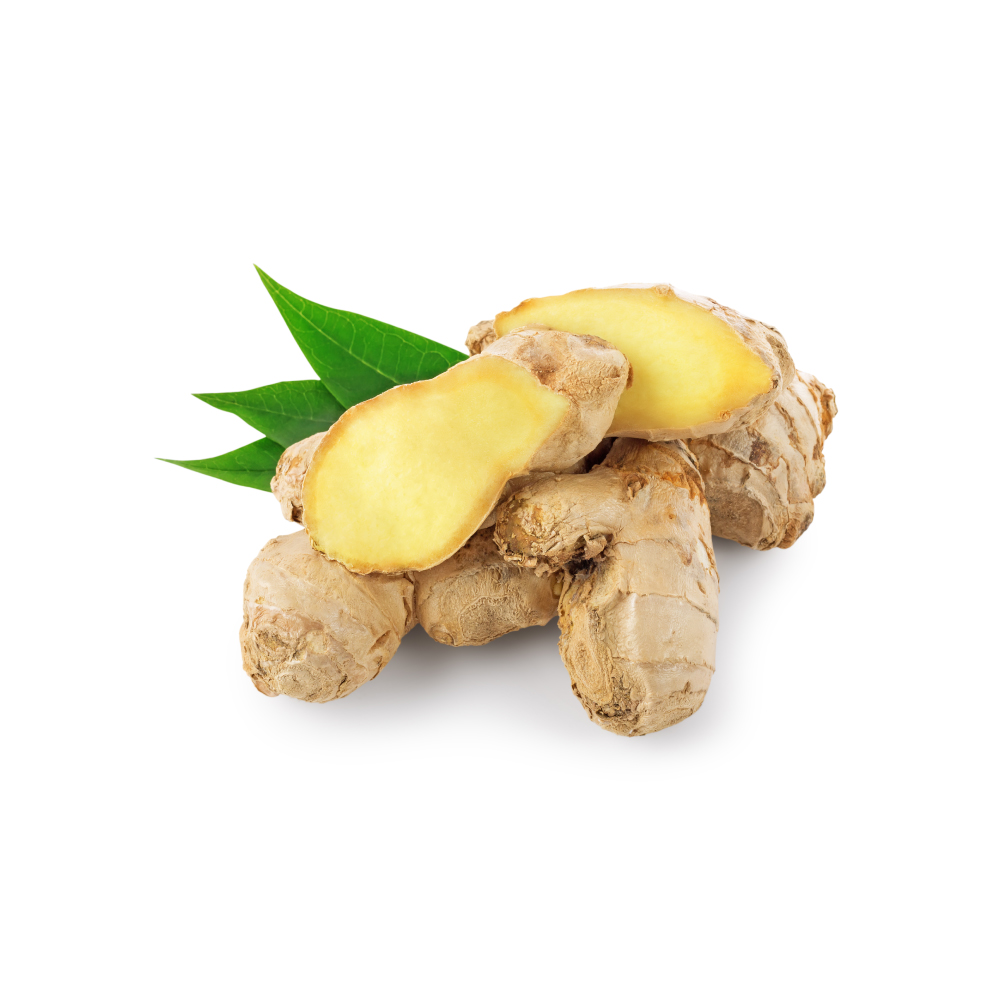
[8]-Gingerol is a naturally occurring gingerol homologue (vanilloid phenolic ketone), found in Ginger. It is well tolerated orally (low toxicity).
Concentration
Content by Source
Concentrations not reported. No percent-dry-weight or mg/g figures have been published for this compound in its source plants.
8Reference 8A re-examination of gingerol, shogaol, and zingerone, the pungent principles of ginger (Zingiber officinale Roscoe)View study →-Gingerol at a Glance
8Reference 8A re-examination of gingerol, shogaol, and zingerone, the pungent principles of ginger (Zingiber officinale Roscoe)View study →-Gingerol is one of the pungent phenolic ketones of ginger (Zingiber officinale) and a direct homologue of 6-gingerol — the same vanilloid head group and β-hydroxy ketone, but with an aliphatic side chain two CH₂ units longer (C₁₉H₃₀O₄ versus C₁₇H₂₆O₄). 6-gingerol is the dominant and by far the best-studied gingerol; 8-gingerol and its longer sibling 10-gingerol sit alongside it as minor components of the same series 1Reference 1Comparative antioxidant and anti-inflammatory effects of [6]-gingerol, [8]-gingerol, [10]-gingerol and [6]-shogaolView study →.
Where a study has actually resolved the isolate, 8-gingerol shows the profile you would expect of a mid-chain gingerol: antioxidant and anti-inflammatory activity intermediate between 6Reference 6Xue Y, et al. (2021). 8-Gingerol ameliorates myocardial fibrosis by attenuating reactive oxygen species, apoptosis, and autophagy via the PI3K/Akt/mTOR signaling pathway. Frontiers in Pharmacology. https://pubmed.ncbi.nlm.nih.gov/34393792/View study →- and 10-gingerol 1Reference 1Comparative antioxidant and anti-inflammatory effects of [6]-gingerol, [8]-gingerol, [10]-gingerol and [6]-shogaolView study →, agonism at the TRPV1 “capsaicin” channel 2Reference 2Structural mechanisms underlying activation of TRPV1 channels by pungent compounds in gingersView study →, and — in cell and animal models only — anticancer 4Reference 4Hu SM, et al. (2020). 8-Gingerol regulates colorectal cancer cell proliferation and migration through the EGFR/STAT/ERK pathway. International Journal of Oncology. https://pubmed.ncbi.nlm.nih.gov/31814036/View study → and cardioprotective 5,
The honest headline is that this is a thinly studied minor molecule. It has no clinical trials of its own, essentially all of its efficacy data are preclinical, and the one human dataset that names it is a pharmacokinetic study showing it circulates almost entirely as inactive conjugates 3Reference 3Clinical trialPharmacokinetics of 6-gingerol, 8-gingerol, 10-gingerol and 6-shogaol and conjugate metabolites in healthy human subjectsView study →. Read it as a homologue of 6-gingerol whose independent evidence is early-stage.
The Gingerol Homologous Series
The point of a separate 8-gingerol page is the homologous series it belongs to. Gingerols share an identical guaiacol (4-hydroxy-3-methoxyphenyl) head and a 3-oxo, 5-hydroxy backbone; they differ only in the length of the alkyl tail. The bracketed number is a shorthand for that chain: 6-gingerol is the shortest common member, 8-gingerol adds two carbons, and 10-gingerol adds two more 1Reference 1Comparative antioxidant and anti-inflammatory effects of [6]-gingerol, [8]-gingerol, [10]-gingerol and [6]-shogaolView study →.
That single structural variable tracks measurable shifts in activity:
- Antioxidant / radical scavenging. In a head-to-head comparison, potency rose with chain length — 10-gingerol > 8-gingerol > 6-gingerol on both DPPH and superoxide radical assays, with 8-gingerol sitting in the middle (DPPH IC₅₀ ≈ 19 µM vs. ≈ 26 µM for 6Reference 6Xue Y, et al. (2021). 8-Gingerol ameliorates myocardial fibrosis by attenuating reactive oxygen species, apoptosis, and autophagy via the PI3K/Akt/mTOR signaling pathway. Frontiers in Pharmacology. https://pubmed.ncbi.nlm.nih.gov/34393792/View study →- and ≈ 10 µM for 10-gingerol) 1Reference 1Comparative antioxidant and anti-inflammatory effects of [6]-gingerol, [8]-gingerol, [10]-gingerol and [6]-shogaolView study →.
- TRPV1 activation. Structural work on how ginger compounds open TRPV1 attributes much of the binding to van der Waals contacts made by the aliphatic tail; the shorter, hydroxyl-bearing 6-gingerol tail sits less snugly in the pocket, which is the structural basis for longer-tailed homologues engaging the channel at least as effectively 2Reference 2Structural mechanisms underlying activation of TRPV1 channels by pungent compounds in gingersView study →.
- NLRP3 inflammasome. Chain length is not uniformly “longer is better” — in an inflammasome IL-1β assay the gingerols were the weaker class overall and 8-gingerol was not a standout, showing the structure–activity relationship is target-dependent 7Reference 7Comparison of inhibitory capacities of 6-, 8- and 10-gingerols/shogaols on the canonical NLRP3 inflammasome-mediated IL-1β secretionView study →.
Because so few papers isolate 8-gingerol, this series relationship is often the most defensible thing to say about it: it behaves like a 6-gingerol with a longer tail, and the properties that scale with tail length scale in the direction its structure predicts.
What It's Used For
The evidence for 8-gingerol is preclinical across the board. What distinguishes the citations below is whether the study genuinely resolved 8-gingerol as an isolate (several did) versus reporting “ginger.”
Support is an experimental score — weighted by study type (human > animal > in vitro) and volume. A beta, not a validated metric. Every score here is low by design: the data are preclinical, and 8-gingerol is a minor, lightly-studied homologue.
The best-resolved 8-gingerol datapoint. In a comparative study of the pure gingerols, 8-gingerol scavenged DPPH radicals with an IC₅₀ of about 19 µM and superoxide with an IC₅₀ of about 2.5 µM — placing it between 6-gingerol (weaker) and 10-gingerol (stronger), so radical-scavenging potency rose with side-chain length across the series 1Reference 1Comparative antioxidant and anti-inflammatory effects of [6]-gingerol, [8]-gingerol, [10]-gingerol and [6]-shogaolView study →. This is an isolate result, not an “extract” result.
Gap: it is an in-vitro chemical assay of pure compound; no antioxidant outcome (tissue, animal or human) rests on isolated 8-gingerol, and its very low free-drug plasma exposure 3Reference 3Clinical trialPharmacokinetics of 6-gingerol, 8-gingerol, 10-gingerol and 6-shogaol and conjugate metabolites in healthy human subjectsView study → limits in-vivo relevance.
The same comparative study reported anti-inflammatory activity (inhibition of inflammatory mediators) tracking the antioxidant ranking, again with 8-gingerol intermediate in the series 1Reference 1Comparative antioxidant and anti-inflammatory effects of [6]-gingerol, [8]-gingerol, [10]-gingerol and [6]-shogaolView study →. A separate assay of the canonical NLRP3 inflammasome (LPS/ATP-stimulated macrophages) tested 8-gingerol directly but found the gingerols weaker than their shogaol counterparts, with 8-gingerol not among the more active members 7Reference 7Comparison of inhibitory capacities of 6-, 8- and 10-gingerols/shogaols on the canonical NLRP3 inflammasome-mediated IL-1β secretionView study →.
Gap: in-vitro isolate data only, and target-dependent — 8-gingerol was appreciable in one anti-inflammatory readout 1Reference 1Comparative antioxidant and anti-inflammatory effects of [6]-gingerol, [8]-gingerol, [10]-gingerol and [6]-shogaolView study → but unremarkable in another 7Reference 7Comparison of inhibitory capacities of 6-, 8- and 10-gingerols/shogaols on the canonical NLRP3 inflammasome-mediated IL-1β secretionView study →. No animal or human anti-inflammatory endpoint uses the isolate.
Two rodent studies isolate 8-gingerol in a cardiac model. In an isoproterenol-induced myocardial ischaemia model in rats, 8-gingerol reduced injury via modulation of MAPK signalling and inhibition of L-type Ca²⁺ channels, lowering calcium overload and cardiomyocyte apoptosis 5Reference 5AnimalXue Y, et al. (2021). [8]-Gingerol exerts anti-myocardial ischemic effects in rats via modulation of the MAPK signaling pathway and L-type Ca²⁺ channels. Pharmacology Research & Perspectives. https://pubmed.ncbi.nlm.nih.gov/34390539/View study →.
A companion study in mice reported that 8-gingerol attenuated isoproterenol-induced myocardial fibrosis by reducing reactive oxygen species, apoptosis and autophagy through the PI3K/Akt/mTOR pathway (down-regulating MMP-9, caspase-9 and Bax; up-regulating Bcl-2) 6Reference 6Xue Y, et al. (2021). 8-Gingerol ameliorates myocardial fibrosis by attenuating reactive oxygen species, apoptosis, and autophagy via the PI3K/Akt/mTOR signaling pathway. Frontiers in Pharmacology. https://pubmed.ncbi.nlm.nih.gov/34393792/View study →.
Gap: both are animal models from a single group; there is no clinical cardiovascular evidence for 8-gingerol, and the doses used bear no defined relationship to dietary ginger intake.
The first report of 8-gingerol’s own anticancer activity: in colorectal cancer cell lines, 8-gingerol inhibited proliferation, migration and invasion via cell-cycle arrest and apoptosis, acting as an inhibitor of EGFR/STAT/ERK signalling, with the effect scaling with EGFR expression; it also lowered the effective dose of 5-fluorouracil in combination 4Reference 4Hu SM, et al. (2020). 8-Gingerol regulates colorectal cancer cell proliferation and migration through the EGFR/STAT/ERK pathway. International Journal of Oncology. https://pubmed.ncbi.nlm.nih.gov/31814036/View study →.
Gap: cell-line data only, from one study. As with the other applications, near-complete first-pass glucuronidation 3Reference 3Clinical trialPharmacokinetics of 6-gingerol, 8-gingerol, 10-gingerol and 6-shogaol and conjugate metabolites in healthy human subjectsView study → makes the systemic concentrations needed for these effects implausible from oral ginger.
Mechanisms
| Target / pathway | Effect | Relevant to |
|---|---|---|
| TRPV1 (vanilloid channel) | agonism; aliphatic tail contributes van der Waals binding to the pocket | sensory/GIthermogenic (shared gingerol mechanism) |
| Radical scavenging (DPPH, superoxide) | direct antioxidant; potency rises with chain length across the series | antioxidant |
| MAPK signalling / L-type Ca²⁺ channels | reduced calcium overload and cardiomyocyte apoptosis | cardioprotective (rodent) |
| PI3K/Akt/mTOR; MMP-9, caspase-9, Bax ↓ / Bcl-2 ↑ | attenuated ROS, apoptosis, autophagy and fibrosis | cardioprotective (rodent) |
| EGFR/STAT/ERK | inhibited proliferation/migration; cell-cycle arrest and apoptosis | anticancer (colorectal cells) |
The TRPV1 and antioxidant mechanisms are shared with 6-gingerol and scale with tail length; the cardioprotective and anticancer pathways come from single preclinical studies and should be read as leads, not established actions.
Pharmacokinetics
The one human study that names 8-gingerol is pharmacokinetic, not efficacy. When healthy volunteers took single oral ginger doses, no participant had detectable free 6Reference 6Xue Y, et al. (2021). 8-Gingerol ameliorates myocardial fibrosis by attenuating reactive oxygen species, apoptosis, and autophagy via the PI3K/Akt/mTOR signaling pathway. Frontiers in Pharmacology. https://pubmed.ncbi.nlm.nih.gov/34393792/View study →-, 8Reference 8A re-examination of gingerol, shogaol, and zingerone, the pungent principles of ginger (Zingiber officinale Roscoe)View study →- or 10-gingerol (or 6-shogaol) in plasma — all circulated essentially entirely as glucuronide and sulfate conjugates, appearing within about an hour and clearing over roughly 1–3-hour half-lives 3Reference 3Clinical trialPharmacokinetics of 6-gingerol, 8-gingerol, 10-gingerol and 6-shogaol and conjugate metabolites in healthy human subjectsView study →. This “conjugated, not free” pattern — the same limit seen for 6-gingerol and curcumin, whose own poor absorption is famously chased with piperine — means the low-micromolar concentrations at which 8-gingerol is active in vitro are unlikely to be reached as free drug in tissue after eating ginger.
Clinical Trials
There are no clinical trials of isolated 8-gingerol. Human ginger evidence is for whole or standardized rhizome, within which 8-gingerol is a minor constituent; the only human data naming it are pharmacokinetic 3Reference 3Clinical trialPharmacokinetics of 6-gingerol, 8-gingerol, 10-gingerol and 6-shogaol and conjugate metabolites in healthy human subjectsView study →.
| Completed | Planned | Terminated | Preclinical |
|---|---|---|---|
| —(isolate); human PK only 3Reference 3Clinical trialPharmacokinetics of 6-gingerol, 8-gingerol, 10-gingerol and 6-shogaol and conjugate metabolites in healthy human subjectsView study → | — | — | Antioxidant, anti-inflammatory, cardioprotective, anticancer |
Last checked: July 2026.
Isolate vs. Plant Studies
8Reference 8A re-examination of gingerol, shogaol, and zingerone, the pungent principles of ginger (Zingiber officinale Roscoe)View study →-Gingerol is unusual among ginger constituents in that a meaningful share of its (small) literature does resolve the isolate: the antioxidant/anti-inflammatory comparison 1Reference 1Comparative antioxidant and anti-inflammatory effects of [6]-gingerol, [8]-gingerol, [10]-gingerol and [6]-shogaolView study →, the inflammasome assay 7Reference 7Comparison of inhibitory capacities of 6-, 8- and 10-gingerols/shogaols on the canonical NLRP3 inflammasome-mediated IL-1β secretionView study →, the two cardiac studies 5,
The caveat is the opposite one: none of it is human, and none of it is outcome data. All the isolate work is in vitro or in rodents, while the human efficacy evidence — antiemetic, anti-inflammatory, metabolic — belongs to whole ginger and is dominated by 6-gingerol and the shogaols. 8-gingerol’s own human footprint is a single pharmacokinetic study showing negligible free-drug exposure 3Reference 3Clinical trialPharmacokinetics of 6-gingerol, 8-gingerol, 10-gingerol and 6-shogaol and conjugate metabolites in healthy human subjectsView study →. So the transferability problem here is not extract-versus-isolate; it is preclinical-versus-clinical, compounded by poor systemic bioavailability.
Prevalence in Nature
8Reference 8A re-examination of gingerol, shogaol, and zingerone, the pungent principles of ginger (Zingiber officinale Roscoe)View study →-Gingerol occurs in the rhizome of ginger (Zingiber officinale) as a minor member of the gingerol homologous series. 6-gingerol is the dominant pungent gingerol; 8Reference 8A re-examination of gingerol, shogaol, and zingerone, the pungent principles of ginger (Zingiber officinale Roscoe)View study →- and 10-gingerol are consistently reported at lower concentrations 1Reference 1Comparative antioxidant and anti-inflammatory effects of [6]-gingerol, [8]-gingerol, [10]-gingerol and [6]-shogaolView study →. Like the other gingerols it is most abundant in the fresh rhizome and, on drying or heating, dehydrates to the corresponding shogaol (8-shogaol), so dried ginger shifts the balance away from the gingerols.
Reliable quantitative figures for 8-gingerol specifically (as a percentage of dry weight, and how it varies with cultivar, maturity and processing) are not well established in the sources reviewed — a gap noted for a later content-by-source pass rather than guessed at here.
Discovery & Synthesis
8Reference 8A re-examination of gingerol, shogaol, and zingerone, the pungent principles of ginger (Zingiber officinale Roscoe)View study →-Gingerol was not “discovered” as a single event so much as resolved out of the gingerol homologous series. The pungent principles of ginger were clarified by D. W. Connell and M. D. Sutherland in 1969, whose re-examination of gingerol, shogaol and zingerone described ginger’s pungency as arising from a series of S-(+)-gingerols differing in side-chain length rather than a single “gingerol” 8Reference 8A re-examination of gingerol, shogaol, and zingerone, the pungent principles of ginger (Zingiber officinale Roscoe)View study →. 8-gingerol is the 8Reference 8A re-examination of gingerol, shogaol, and zingerone, the pungent principles of ginger (Zingiber officinale Roscoe)View study → member of that series (CAS 23513-08-8; PubChem CID 168114), with the (5S) configuration shared by the natural gingerols.
Manufacture today is essentially isolation from ginger — 8-gingerol is obtained by chromatographic separation of the gingerol fraction for use as an analytical standard and research chemical, rather than by dedicated total synthesis; gingerols can be prepared synthetically (via aldol-type coupling of a vanillin-derived ketone with the appropriate aldehyde), but there is no large-scale synthetic industry for this minor homologue specifically.
Patents: not yet researched.
Toxicity & Safety
8Reference 8A re-examination of gingerol, shogaol, and zingerone, the pungent principles of ginger (Zingiber officinale Roscoe)View study →-Gingerol carries a low flag. It is a minor constituent of a food (ginger) with a long history of safe culinary and supplemental use, and no isolate-specific toxicity signal has emerged from the preclinical work — the cardiac and cancer studies used it as a protective/anti-proliferative agent 4,
- Minor constituent of a well-tolerated food. Ginger is Generally Recognized as Safe at culinary levels, and no isolate-specific toxicity signal is reported for 8-gingerol.
- Shared gingerol cautions apply by inference. Gingerols as a class have antiplatelet activity, so ordinary caution around anticoagulants/antiplatelets and surgery that applies to ginger extends, in principle, to concentrated gingerols.
- No dedicated toxicology. Repeat-dose, genotoxicity and reproductive data for the isolated molecule are not characterised; safety is inferred from ginger, not demonstrated for 8-gingerol.
Reproductive and developmental data specific to isolated 8-gingerol are not available; pregnancy and lactation decisions belong to the ginger monograph and any product page, where intake is actually decided, not to this molecule page.
Dosage
There is no established human dose for isolated 8-gingerol. It has never been dosed as a stand-alone agent in people; human exposure is entirely as a minor component of whole or standardized ginger (efficacy trials cluster around 0.5–2 g/day of dried rhizome, within which 8-gingerol is a small fraction). The concentrations at which it is active in the preclinical studies above are laboratory figures, not doses. Nothing here is a personal recommendation.
References
- Dugasani S, et al. (2010). Comparative antioxidant and anti-inflammatory effects of [6]-gingerol, [8]-gingerol, [10]-gingerol and [6]-shogaol. Journal of Ethnopharmacology. https://pubmed.ncbi.nlm.nih.gov/19833188/
- Yin Y, et al. (2019). Structural mechanisms underlying activation of TRPV1 channels by pungent compounds in gingers. British Journal of Pharmacology. https://pubmed.ncbi.nlm.nih.gov/31207668/
- Zick SM, et al. (2008). Pharmacokinetics of 6-gingerol, 8-gingerol, 10-gingerol and 6-shogaol and conjugate metabolites in healthy human subjects. Cancer Epidemiology, Biomarkers & Prevention. https://pubmed.ncbi.nlm.nih.gov/18708382/
- Hu SM, et al. (2020). 8-Gingerol regulates colorectal cancer cell proliferation and migration through the EGFR/STAT/ERK pathway. International Journal of Oncology. https://pubmed.ncbi.nlm.nih.gov/31814036/
- Xue Y, et al. (2021). [8]-Gingerol exerts anti-myocardial ischemic effects in rats via modulation of the MAPK signaling pathway and L-type Ca²⁺ channels. Pharmacology Research & Perspectives. https://pubmed.ncbi.nlm.nih.gov/34390539/
- Xue Y, et al. (2021). 8-Gingerol ameliorates myocardial fibrosis by attenuating reactive oxygen species, apoptosis, and autophagy via the PI3K/Akt/mTOR signaling pathway. Frontiers in Pharmacology. https://pubmed.ncbi.nlm.nih.gov/34393792/
- Ho SC, et al. (2018). Comparison of inhibitory capacities of 6-, 8- and 10-gingerols/shogaols on the canonical NLRP3 inflammasome-mediated IL-1β secretion. Molecules. https://pubmed.ncbi.nlm.nih.gov/29466287/
- Connell DW, Sutherland MD (1969). A re-examination of gingerol, shogaol, and zingerone, the pungent principles of ginger (Zingiber officinale Roscoe). Australian Journal of Chemistry. https://doi.org/10.1071/CH9691033



